
Creecy announces improved environmental assessment process for solar energy
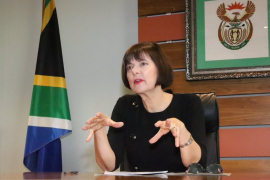
Forestry, Fisheries and the Environment Minister, Barbara Creecy, has announced initiatives for further streamlining the environmental assessment process for renewable energy projects in South Africa.
The initiatives, announced during a virtual stakeholder engagement held on Thursday, will improve the efficiency of the environmental assessment processes to facilitate the development of Solar PV (photovoltaic) and associated infrastructure in areas of low to medium environmental sensitivity.
Creecy said the initiatives to be implemented will exempt developers from obtaining environmental authorisation for certain listed or specified activities for the development of solar facilities.
“These initiatives are in addition to the interventions introduced since 2014 to streamline EAs related to renewable energy projects like gazetting of 11 Renewable Development Zones (REDZ), five electricity transmission corridors and gas corridors, as well as the implementation of a Generic Environmental Management Programmes for grid and substation development and expansion,” Creecy said.
In addition, she said, gazetted Strategic Infrastructure Projects (SIPs) are processed in terms of the legislated 57 days as per the Infrastructure Development Act.
Creecy said the Standard for the Development and Expansion of Power lines and Substations in identified geographical areas will be gazetted for implementation by the end of July 2022.
“Based on compliance with this Standard the development and expansion of power lines and substations will be excluded from the need to obtain an EA prior to commencement when developed in areas of “low” and “medium” environmental sensitivity as identified by the national environmental screening tool, and within the five strategic electricity corridors,” Creecy said.
She noted that the exclusions will be subject to a registration process, which will allow for compliance monitoring.
The Minister will in August 2022, gazette two notices calling for public comment that are aimed at simplifying the deployment of Solar PV facilities.
“The registration process will reduce timeframes from 300 days and 147 days respectively to approximately 60 days from inception of the project,” Creecy said.
The exclusion of Solar PV facilities from an EA based on compliance with an adopted environmental instrument will be subject to:
- The appointment of an independent environmental assessment practitioner and of specialists (agricultural, terrestrial and aquatic biodiversity; cultural heritage and paleontology);
- Confirmation of the environmental sensitivity rating through inspection by the various specialists and the preparation of a site sensitivity verification report by the environmental assessment practitioner which confirms the sensitivity rating and compliance with the allowable development limits; and
- The preparation of an environmental management programme by the specialists and the environmental assessment practitioner.
It will also include the signing of a declaration that the site sensitivity verification report is a true representation of the findings and is of medium or low environmental sensitivity for all themes; and that there is an environmental management programme in place and that the developer will implement the mitigation measures identified in the environmental management programme.
Creecy said additional planned interventions to simplify the environmental authorisation process for renewable energy application will ensure that environmental sensitivities on a potential site are identified alongside the introduction of a rating of site sensitivities in line with the screening tool requirements.
“These areas will be mapped and located on the environmental screening tool and a generic environmental management programme (EMPr) will be developed for each site,” Creecy said.
Unconventional Gas Regulations hearings kick off in N Cape

The Department of Water and Sanitation (DWS) will next week kick-off public engagements on Unconventional Gas Regulations in the Northern Cape.
The published Unconventional Gas Regulations, which were developed in line with Section 38 of the National Water Act of 1998, prescribe requirements and procedures when using water for unconventional gas activities.
The department said it has met with internal and external stakeholders on the published Unconventional Gas Regulations, and public engagements are now getting underway particularly with affected communities where unconventional gas activities are being piloted or are envisaged for future use.
“The Department of Water and Sanitation will meet with the community of Richmond and surrounding areas in the Northern Cape next week on 12 July 2022 as part of engagements with the public on the published Unconventional Gas Regulations.
“Information brochures will be distributed to the public and inputs and comments solicited through meetings and recorded comments. Communities in the affected areas are expected to make inputs before the final gazetting of the regulations,” department spokesperson, Sputnik Ratau, said.
The public engagements will take place from 11-20 July 2022 in the following communities:
11 July 2022 – Theunissen in the Free State
12 July 2022 – Richmond in the Northern Cape
13 July 2022 – Beaufort West in the Western Cape
18 July 2022 – Lephalale in Limpopo
19 July 2022 – Volksrust in Mpumalanga
20 July 2022 in Matatiele in the Eastern Cape.
Municipalities receive R33.9bn tranche for basic services

Municipalities across the country have received their share of the R33.9 billion first tranche of the Local Government Equitable Share (LGES).
Cooperative Governance and Traditional Affairs spokesperson, Lungi Mtshali, said the tranche was transferred to the primary bank accounts of the municipalities.
In a statement, the ministry said the LGES allocation will be transferred in three tranches during the current local government financial year, which begins in July.
The transfer of the LGES to all municipalities is premised on Section 216 of the Constitution. The section provides for national government to transfer resources to municipalities in terms of the annual Division of Revenue Act (DORA) to assist them in exercising their powers and performing their functions.
Mtshali said the equitable share provides funding for municipalities to deliver free basic services to poor households and subsidises the cost of administration. It also covers other core services for those municipalities with the least potential to cover these costs from their own revenues.
“The basic services component of the LGES provides a subsidy of R488.42 per month in 2022/23 for the cost of providing basic services to each of these poor households,” said Mtshali.
The subsidy includes funding for the provision of:
– Free basic water (six kiloliters per poor household per month) (R168.22 per household below the affordability threshold).
– Energy (50 kilowatt-hours per month) (R107.04 per household below the affordability threshold).
– Sanitation (R115.95 per household below the affordability threshold).
– Refuse removal (R97.20 per household below the affordability threshold).
“The allocation to municipalities will assist them in, amongst other things, delivering free basic services to poor households through, for example, indigent support programmes.
“These programmes ensure that qualifying households, who are unable to pay for certain basic services, and have access to water, electricity, sanitation and refuse removal receive these services for free or at greatly reduced rates,” said Mtshali.
He said COGTA Minister, Dr Nkosazana Dlamini Zuma, called on those households who are unable to pay for basic services to contact their local municipalities to determine if they qualify to be beneficiaries of their local indigent support programme.
The Minister has further urged municipal councils to ensure that Municipal Public Accounts Committees (MPACs) are established and fully functional to facilitate the proper oversight of expenditure in municipalities, as stipulated in the Municipal Structures Act.
Mtshali said the department will continue to coordinate national and provincial government support for local municipalities to deliver basic services and to put in place better audit mechanisms, as this is a major challenge facing the sector.
The department, he said, “is coordinating and collaborating with sector departments to support municipalities, as envisaged by Section 154 of the Constitution, through the District Development Model (DDM) approach”.
“Notwithstanding the transfer of the LGES to municipalities, revenue collection remains a critical determinant of the financial viability of municipalities. Citizens are still responsible for paying municipalities for the services they receive.
“We urge citizens to pay for the services they receive so that municipalities can collect revenue and provide quality services to the communities, as municipalities need to have access to adequate sources of revenue to enable them to undertake the functional responsibilities assigned to them,” he said.
Report an opportunity to break with the era of state capture

State capture was an assault on South Africa’s democracy and violated the rights of every man, woman and child in the country.
This is according to President Cyril Ramaphosa who on Wednesday received and publicly released the final part of the report of the Judicial Commission of Inquiry into Allegations of State Capture, Corruption and Fraud in the Public Sector at the Union Buildings in Pretoria.
The commission was appointed to investigate the corruption that took place during the state capture era.
“Through the various reports released by the commission, we have come to understand what happened, who was involved, and what effect state capture has had on our state, our economy and our society… The report is far more than a record of widespread corruption, fraud and abuse; it is also an instrument through which the country can work to ensure that such events are never allowed to happen again.”
WATCH | 
In line with the directive of the High Court, the President will within four months formally present to Parliament the full report of the commission together with an indication of his intentions on the implementation of the commission’s recommendations.
He said it has been arranged for the administrative work needed to secure the archive of the work done by the commission, and ensure relevant institutions have access to the extensive evidence it has collected.
“This report provides us with the opportunity to make a decisive break with the era of state capture. I call on you, one and all, to support the measures that all the structures of state will take to return our country to the path of integrity, transformation and progress,” said President Ramaphosa.
He said the nation owes a great debt of gratitude to the Chairperson of the Commission, Chief Justice Raymond Zondo, for the monumental task that he and the evidence leaders, the investigators, the lawyers and the researchers have all undertaken over these past four years in the service of their country.
He also thanked the Secretary of the Commission Professor Itumeleng Mosala and the other commission staff for the valuable contribution they have made to the national effort to confront state capture.
“I wish to thank the many people who gave evidence before the commission, and to the whistle-blowers, academics, investigators and journalists whose work contributed to uncovering many of the matters before the commission.
“I wish to acknowledge the critical contribution of Adv Thuli Madonsela, whose courageous and unflinching investigation set in motion the process to uncover these misdeeds,” said the President.
The submission of the final report today brings to an end the work of the commission and marks the fulfilment of the weighty mandate given to Chief Justice Zondo in January 2018, said the President.
Meanwhile, following the release of Parts V and VI of the final report of the Judicial Commission of Inquiry Into Allegations of State Capture, the Presidency’s website has been affected by high volumes of visitors.
The report is, however, available on various social media platforms as well as www.gov.za – https://tinyurl.com/4dhmpyck and www.gcis.gov.za – https://tinyurl.com/7yv469w9.
Cabinet commends moves to enforce immigration laws

Cabinet has welcomed the recent arrest of a Home Affairs official stationed at the Benoni office for issuing a fraudulent passport to a Bangladeshi national.
The official, Sibongile Simelane, was granted R5 000 bail in the Benoni Magistrate’s Court on Tuesday, and the Bangladeshi national, Fahim Kazi, was arrested while trying to leave the country on 12 May 2022, under the name of Lebogang Ndlovu.
The Department of Home Affairs (DHA) has also recently deported Lithuanian actress, Leva Andrejevaite, who sought to abuse South Africa’s refugee management regime when she fabricated a story of wanting to apply for asylum because of the “war in Ukraine”.
Speaking during a post-Cabinet media briefing on Thursday, Minister in the Presidency, Mondli Gungubele, said that cabinet commends the work being done by the DHA’s Counter Corruption Unit.
“It applauds and encourages ordinary South Africans to continue to report such criminal acts. The unlawful acts of South Africans who sell their identities have far-reaching negative implications for the country’s security and socio-economic status.”
Gungubele emphasised that government will continue to deal harshly against anyone involved in illegal acts that undermine South African immigration laws, without fear or favour.
Cabinet has also welcomed the recent conviction and sentencing of a Durban teacher, Nomusa Precious Gabuza (37) – who was sentenced to three years’ correctional supervision and four years’ imprisonment, wholly suspended for three years, in the Umlazi Regional Court in KwaZulu-Natal – for contravening the Local Government Municipal Electoral Act, 2000 (Act 27 of 2000).
As a teacher at the school which was used as a voting station during the Municipal Elections in October 2021, Gabuza pleaded guilty for fraudulently casting 24 votes, including 12 for the Municipal Elections and 12 for the Ward Elections.
Cabinet said that the conviction and sentencing underscored the Electoral Commission of South Africa’s commitment to intervene timeously and apply consequence management.
“This is also a strong affirmation of the electoral systems, which have since been strengthened with the introduction of the Voter Management Device that prevents double voting.
“Cabinet affirmed that elections are the cornerstone of our democracy and must be protected at all costs,” said the Minister.
PRASA awards contract to maintain ageing trains
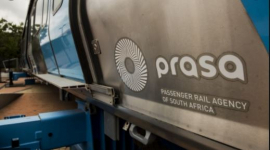
The Passenger Rail Agency of South Africa (PRASA) has announced the awarding of the five-year General-Overhaul contract that will now allow for the heavy maintenance and repairs of train-sets which will help clear the backlog.
“Under the General Overhaul programme, about 380-400 coaches will undergo heavy maintenance and rehabilitation work every year for the next five years,” PRASA said on Wednesday.
The contract was awarded to five contractors nationally.
“Many of our train sets are out of commission due to the lifespan of our coaches and the vandalism of our coaches, making our trains hazardous and unsafe for our commuters.
“Therefore, this is a positive development for PRASA and commuters because we can now start maintenance and refurbishment work and increase the availability of trains as we recover our lines,” PRASA said.
The lifespan of a coach is about 40 years. However, the majority of PRASA’s fleet is generally over 50 years old.
In the asset lifecycle of trains, individual coaches need to undergo general maintenance every 9 to 10 years.
The General Overhaul programme not only supports the Corporate Strategy to provide a safe, reliable, and comfortable service to commuters, but also supports PRASA’S Modernization Programme.
“As we transition to the new electrical trains manufactured at the Gibela manufacturing plant, the current fleet needs to be maintained until new electrical motor units are finally acquired and fully incorporated into service by estimated 2033.
“The current fleet is expected to still be operational and systematically phased out by then. The economic benefit of this R7.5 billion contract cannot be understated as this has breathed new life into an industry that was almost left decimated,” PRASA said.
This contract has the potential to revive and ignite our economy as over 2 000 direct jobs are expected to be created.
“This is a true testament that we at PRASA, move beyond our primary mandate of transportation. This milestone has given our ageing fleet a new lease of life and set to increase productivity, boost confidence and staff morale within our organization. This also gives PRASA an opportunity to innovate as we expedite the deployment of the new electrical trains,” the agency said.
PRASA addresses concerns of traders
The Passenger Rail Agency of South Africa (PRASA) says it is clamping down on traders who lease out their allocated space at its stations to people who should not be trading.
This comes after allegations made in the media by someone who purports to be a member of Operation Dudula claiming that South Africans are excluded from trading opportunities at its various premises/stations.
In a statement on Tuesday, PRASA said it works with various informal trading associations to provide informal businesses and micro entrepreneurs with trading opportunities at various PRASA stations.
“Informal Traders belong to an association that liaise with PRASA on behalf of its members. Demarcation and allocation of trading space is done by PRASA. To trade at our facilities one would need to be registered with an association.
“It has also come to our attention of a practice where some traders lease out their allocated space to people who should not be trading on the spaces. We are clamping down on this practice through our own internal processes,” the agency said.
Recently the PRASA board approved the PRASA Informal Trading Policy, which seeks to further regulate the allocation of demarcated spaces and improve on the spatial areas where informal trade is allowed within the confines of the laws of the country and the Conditions of Carriage that set out the Terms and Conditions of using our premises.
“We are currently engaging all relevant stakeholders about the policy. PRASA supports economic development initiatives and will not discriminate micro entrepreneurs based on their race, gender, or nationality.
“However, only people who meet the criteria can operate on our spaces and the policy will ensure that any acts of illegality or criminality are prevented. PRASA has no control over trading spaces on other public spaces outside of our premises.
“It is within the ambit and jurisdiction of the said Metros and Municipalities to regulate public spaces outside of PRASA’s jurisdiction,” the agency said.
No request for assistance from Namibia, says Justice Ministry
The Ministry of Justice and Correctional Services says there is no official record of the Namibian Police Force concerning a request for mutual legal assistance in respect of a suspect by the name of David Imanuwela.
Imanuwela is allegedly linked to a robbery that reportedly took place at President Cyril Ramaphosa’s farm in February 2020.
In a statement, the Ministry said there are established procedures for serving requests for mutual legal assistance.
The first service process was the requesting State submitting the request at the South African Embassy or High Commission in that particular State.
“The South African Embassy or High Commission would then submit the request to the Department of International Relations and Cooperation (DIRCO). DIRCO then provides a proof of receipt and then transmits the request to the Central Authority, being the Director-General of the Department of Justice and Constitutional Development,” said Ministry spokesperson Chrispin Phiri.
The second service process, he said, sees the requesting State serve the request for mutual legal assistance via its Embassy or High Commission in the State from which it seeks information or assistance.
“The requesting State’s Embassy or High Commission will serve the request on DIRCO. DIRCO then provides proof of receipt and transmits the request to the Central Authority.
“When reference is made to diplomatic channels, these are the processes that are being referred to.”
To date, he said, all requests for mutual legal assistance have followed these processes without any complications between the two states of Namibia and South Africa.
“South Africa and its sister Republic Namibia continue to work together in a collaborative manner on issues of mutual legal assistance in accordance with the Southern African Development Community Protocol and other related bilateral treaties. So far there has not been any development that necessitates any change of approach when dealing with matters of this nature,” said Phiri.
Presidency rejects judicial interference amid State Capture report delay
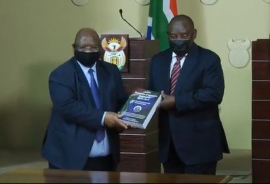
The Presidency has rejected claims that President Cyril Ramaphosa has in any manner interfered with the work of the Judicial Commission of Inquiry into Allegations of State Capture of the judiciary as speculated by some opposition parties.
In a statement, which the Presidency said to avoid any confusion or misunderstanding on the matter, the Presidency had outlined the sequence of events with respect to the submission of the final part of the report of the commission.
It confirmed that, as at 11pm on Monday, it had still not received any form of copy of the final report from the commission.
The final part of the commission’s report was due to be handed over to President Cyril Ramaphosa by 15 June 2022. The commission chair, Chief Justice Raymond Zondo, communicated to President Ramaphosa on Thursday the delay and undertook to finalise the report as soon as possible.
The Presidency said this led to the media statement from the commission dated 18 June 2022 in which the commission stated that it was “not able to submit the final volume of its Report to the President on 15 June 2022, due to certain “challenges”.
“The commission further stated that the electronic report will be submitted to the President on the evening of the 19th of June 2022. This did not unfortunately happen.
“In the morning of the 20th of June 2022, President Ramaphosa and Chief Justice Zondo held a brief telephone call in which the Chief Justice offered reassurance on the delivery of the report and discussed the coordination for the handover ceremony,” reads the statement.
The commission’s team had informed the Presidency that the report would be finalised after the sitting of the Judicial Service Commission on Monday 20 June 2022 but not in time for the promised handover at 6pm on the same day.
“No handover of the report can take place until and unless the Chief Justice has finalised his work,” the Presidency said.
A tentative date of Wednesday 22 June 2022 was therefore agreed due to this further delay, and to President Ramaphosa being scheduled to deliver the eulogy at the Official Funeral of King Zanozuko Sigcau on Tuesday, 21 June 2022 in Flagstaff, Eastern Cape.
The Presidency added that in its communication on Monday, the commission stated that “due to challenges in processing Part V and VI of the Report on time for the handover to the President by 18h00 today, 20 June 2022, it has been agreed to move the event to Wednesday, 22 June 2022 the original handover date in Cape Town”.
The Presidency said therefore it rejected claims that the President had in any manner interfered with the work of the commission or the judiciary as speculated by some opposition parties.
Communication between the Chief Justice and the President has been over the delays in the delivery of the report and finalising the date for the official handover of the report.
President Ramaphosa has thus far received Part One to Part Four of the reports. The first part of the report was handed over to the President by the Chief Justice on 4 January 2022.
The second, third and fourth reports were handed over on 1 February 2022, 1 March 2022 and 29 April 2022 respectively to Director-General in The Presidency, Phindile Baleni.
The Presidency said it would make an announcement once it has received the final report of the Judicial Commission of Inquiry into Allegations of State Capture.
Government to support Eskom’s credible maintenance plan
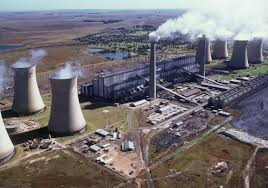
Deputy President David Mabuza says government has begun implementing solutions to ensure that there is energy security at power utility Eskom.
Participating in a debate of the Presidency budget vote on Thursday, the Deputy President said as a caring government, the Presidency was aware of the inconvenience and hardship that load-shedding caused to people’s lives.
“As government, we are well aware of the detrimental effect load-shedding has on the economy, as well as the inconvenience and hardship it causes for the country, its citizens, and businesses.
“Under the stewardship of the Eskom Political Task Team, we have begun implementing solutions to ensure energy security and long-term viability of Eskom.
“Government will also continue to support Eskom’s implementation of a credible and transparent national maintenance programme, which will ensure that power generation plants operate at optimal levels to reduce the negative impact of electricity supply interruptions,” he said.
The Deputy President said government was also exploring and implementing alternative energy generation measures to enhance the nation’s capacity to provide uninterrupted electricity for economic growth and development.
Accelerating Land Reform Programme
The Deputy President said linked to the provision of energy supply is the creation of a predictable environment for investment by ensuring that land reform is accelerated to unlock economic development prospects.
He said this will be accomplished through the redistribution of land for agricultural production to ensure food security for the country, human settlements provision and industrial development.
“These efforts are also about resolving historic challenges to achieve spatial justice towards the realisation of this right for all people.
“The implementation of our land reform programme continues along a constitutionally-defined path, hence the unfolding parliamentary process of addressing land inequality, displacement, and dispossession.
“As government, we will continue to respond to the imperatives of restorative justice, economic inclusion, and social cohesion,” he said.
The Deputy President said considerable progress is being made in the implementation of the recommendations of the Advisory Panel on Land Reform and Agriculture to address land injustice.
He said government has since enacted a number of legislative and policy interventions, including but not limited to:
• The Land Allocation and Beneficiary Selection Policy;
• The Comprehensive Producer Support Policy;
• The Land Donations Policy;
• The Upgrading of Land Tenure Rights Amendment Bill of 2020; and
• The Expropriation Bill.
“We have travelled the length and breadth of our nation to promote the programme of accelerating restitution and redistribution, and this year will see the introduction of numerous similar initiatives.
“Government will release land parcels in the hands of State-Owned Companies and Municipalities for integrated human settlements and socio-economic development.
This work also entails integrating rural areas into global value chains, thereby ensuring that the people drive the economic growth we seek.”