
Learners get water wise
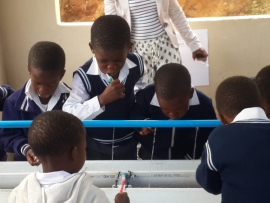
Learners will get an opportunity to learn to improve the way they use water and protect water resources through the Water and Sanitation Education Programme (WSEP).
Launched by the Department of Water and Sanitation (DWS) at Bukhosibetfu Inclusive Primary School in Driekoppies, Mpumalanga, the programme aims to educate learners about water use efficiency, protection of water resources, health and hygiene, and invasive alien plants.
The programme engages learners and educators on various educational projects where they identify water and sanitation related challenges in their schools and communities, conduct research, come up with recommendations and implement solutions.
WSEP is one of the most important initiatives in ensuring that water and sanitation education is achieved within the public schooling system to encourage water literacy, and change the attitudes and behaviour of learners towards wise water use and value water.
WSEP replaces the 2020 Vision for Water and Sanitation Programme.
The WSEP is implemented through the projects, including Baswa Le Meetse, Aqua Enduro, Public Speaking, Curriculum Support, Intervention Projects, Career Promotion and Celebration of Special Days.
The Water and Sanitation Education Programme also responds to the National Water Resource Strategy II (Chapter 15), Strategic Action 15.5.4 and National and Sanitation Master Plan Chapter 11 (Key Action 2.3.8) in that it creates public awareness and teaches water literacy, with a particular focus on efficient water use and management.
It further lays a foundation for the development of critical skills and exposure to emerging innovations in the water sector.
Director at the Department of Water and Sanitation, Curtis Mabena, further highlighted the key successes of the 2020 Vision for Water and Sanitation Programme, as a benchmark going forward.
“We have mobilised and supported 3 500 schools, 800 bursaries have been awarded for learners to pursue careers in the water and sanitation sector, and 55 media classrooms were awarded through a partnership with the MTN Foundation for Baswa Le Meetse national winners,” Mabena said.
The programme was also recognised for its achievement by the United Nations and awarded the Water for Life Best Practice Award in 2015.
Mabena also called on learners not to play with water, especially on Spring Day.
“Learners, I know you have the tendency of pouring water on each other on Spring Day. South Africa is a water scarce country and every drop counts. I am begging you not to play with water,” Mabena said.
MT Khoza, from the Department of Education in Khulangwane Circuit, said the department fully supports the Water and Sanitation initiative brought to the learners and educators.
Khoza said she hopes the information brought with the launch of the programme will spread to other schools in the circuit, and the whole of Nkomazi Local Municipality and Mpumalanga province.
“We appreciate that the programme will assist learners and educators to understand the importance of water…. The message must be [communicated] every day in order to sink in,” Khoza said.
Land redress key to rectifying spatial, socio-economic imbalances
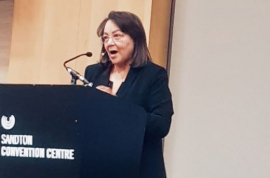
Public Works and Infrastructure Minister, Patricia de Lille, says land redress is one of the key drivers to address spatial and socio-economic imbalances, and ensure that public land is used for public good.
“The need for land in our country is great and greater urgency needs to be put in by all spheres of government for this work of releasing land to achieve land reform and ensure that more public land is used for public good,” De Lille said.
In a statement, the Minister said to date the Department of Public Works and Infrastructure (DPWI) has released 2 556 hectares of land (44 parcels) to the Housing Development Agency (HDA) for human settlement development purposes.
“Power of Attorney for these parcels of land has been given to the HDA for development planning purposes,” De Lille said.
Over and above the release of the 44 land parcels, the DPWI has also released an additional 17 land parcels, measuring 533 hectares, for human settlement purposes.
In support of infrastructure development, 15 hectares (11 land parcels) were approved for registration of servitude for roads, water, electricity and gas pipeline servitudes in this past financial year.
De Lille said her department has released 214 land parcels, measuring 30 277 hectares, for restitution. Last year’s target for restitution was 10 000 hectares “and this was substantively exceeded”.
“The DPWI has released 25 549 hectares of agricultural land (125 parcels) for the redistribution programme,” the Minister said.
According to De Lille, for this financial year, the projected targets for release include 7 100 hectares in various provinces for human settlement development purposes; 180 hectares for socio-economic purposes that will support Eskom and SANRAL programmes, and 154 745 hectares under land reform for restitution to support land ownership.
“This amounts to over 162 000 hectares targeted for release by the DPWI nationally for the new financial year,” De Lille said.
So far, for the 2022/23 financial year, of the 162 000 hectares of land targeted for release, the department has approved the release of the following: four parcels of land for human settlements in KwaZulu-Natal province for residents affected by the flooding earlier this year, and 1539.3 hectares for land reform.
De Lille said her department will continue to work hard to release national State-owned land for land reform purposes.
Dlamini Zuma welcomes promulgation of Municipal Systems Amendment Act
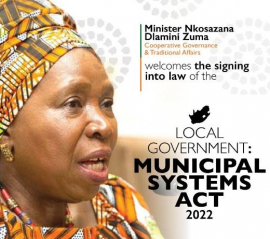
Cooperative Governance and Traditional Affairs (CoGTA) Minister, Dr Nkosazana Dlamini Zuma, has welcomed the signing into law of the Local Government: Municipal Systems Amendment Act, 2022.
This comes after President Ramaphosa signed the act into law on Friday.
The Act is part of a suite of legislation meant to ensure effective and efficient functioning municipalities, and a professional local public administration.
The Ministry in a statement said the Amendment Bill, with corresponding provisions as the invalidated Act, was reintroduced to Parliament on 6 February 2019 in terms of the Joint Rules of Parliament.
“The Bill repeals the Amendment Act and has been properly tagged as a section 76 Bill to address the procedural defect referred to above. The Bill was approved by Parliament on 3 May 2022 with further amendments following comprehensive public participation processes at both national and provincial levels.
“The Local Government: Municipal Systems Amendment Act, 2022 (Act No.3 of 2022) was assented to by the President on 16 August 2022,” said CoGTA spokesperson, Lungi Mtshali.
In addition, the Act disallows municipal officials from holding political office.
The amendments provide for procedures and competency criteria for the appointment of municipal managers and other senior managers and the consequences of appointments made in contravention of the Act.
The amendments, reads the statement, further provides timeframes within which performance agreements of municipal managers and managers directly accountable to municipal managers must be concluded.
The Act also makes further provisions for evaluating the performance of municipal managers and managers directly accountable to municipal managers.
“Employment contracts and performance agreements of municipal managers and managers directly accountable to municipal managers are now also required to be consistent with the Act and any regulations made by the Minister of Cooperative Governance and Traditional Affairs,” he said.
Mtshali said the Minister is now able to prescribe frameworks to regulate human resource management systems for local government and mandates for organised local government. Furthermore, the Act extends the Minister’s powers to make regulations relating to municipal staff matters.
Dlamini Zuma urged all stakeholders to support municipalities and ensure that the Act is implemented fully.
SA must deal with poverty, joblessness: Pandor

International Relations and Cooperation Minister, Dr Naledi Pandor, says South Africa is working around the clock to set the economy on a new trajectory of growth and development to bring a better life for all.
The Minister said this in her opening remarks with the Secretary of State of the United States, Antony Blinken, at the South Africa-United States Strategic Dialogue held on Monday.
She admitted that the country continues to deal with the triple challenges of inequality, poverty and unemployment linked to apartheid.
“These are challenges we must address to avoid social strife,” she said.
She described South Africa’s relations with the United States as broad and deep and aligned to the country’s national priorities.
Pandor acknowledged the United States’ (US) significant contribution to addressing many of the socio-economic hurdles faced by the majority by providing access to equal and quality education, decent housing and essential healthcare services to the most vulnerable in society.
She also acknowledged the backing the country continues to receive from the US to combat the COVID-19 pandemic.
The Minister reminded delegates that South Africa is Africa’s largest US trade partner.
“The significant presence of US companies operating within our borders, including historic investors such as General Electric and Ford, to name but two, in helping to upskill our youth, creating jobs and incomes, has made the US private sector a key partner in supporting South Africa’s socio-economic growth.”
She also took the time to thank the support shown by American companies for President Cyril Ramaphosa’s investment drive.
“It has demonstrated the belief that the US still has in the future of our country and the value proposition that we offer as a key investment destination and trade partner, despite the setback of the COVID-19 pandemic.”
Trade
Meanwhile, Pandor welcomed the growth in two-way trade in goods from US$13.9 billion in 2010 to US$21 billion in 2021.
In 2021, the United States ranked as the second largest destination for South Africa’s exports globally, while South African firms have also emerged as significant foreign investors.
Investments from South Africa into the United States are on the rise, accounting for 17.4% of total South African outward foreign direct investment to the world.
“There is, however, much more we can – and should do.”
However, she said both parties needed to solve the longstanding unresolved trade issues around market access, including removing Section 232 tariffs on South African steel and aluminium imports into the United States.
“The President and his economic team, as we will hear later during our deliberations, have been hard at work making it easier for foreign investors to invest in our country and to advance our trade and investment relations for mutual benefit.”
Food security
Meanwhile, she said many countries have to contend with high costs for fuel, food and transport.
According to the Minister, these challenges, including climate change, have a huge implication for food security and agricultural systems, especially in Africa.
“The present moment, which has given rise to widespread uncertainty and fear, requires us as leaders to come together and chart a way forward that will give hope and inspiration to our respective peoples.”
She has called on the undertakings made at the United Nations, the G7 and G20 to address food insecurity, global health, peace and security, sustainable and just energy transition, as well as human security to be addressed meaningfully.
“We must continuously reinforce our common commitment to multilateralism, democracy and human rights – and use the proven tools of diplomacy, peace-building dialogue and mediation to resolve conflict and end the intolerable and unnecessary human suffering as a result of wars and other forms of conflict.”
Secretary of State, Blinken acknowledged the important role that South Africa plays in the G7 and G20 and on global health, climate change and food and security.
“What South Africa says, what South Africa does, has powerful global implications.”
In addition, he said the United States would continue to work with local government during the pandemic and beyond.
He also thanked South African scientists for discovering the Omicron variant and said that President Joe Biden is looking forward to hosting President Ramaphosa next month.
Women challenged to find solutions to climate change

South African women have been challenged to take part in conversations aimed at finding solutions to mitigate the impact of climate change.
Member of the Presidential Climate Change Commission, Princess Tsakani Nkambule, said women must be at the centre of decision making because they endure the most of the adverse effects of climate change.
“As women, we need to prepare [ourselves] on how we will be impacted by this climate change conditions, [and] how do we adjust our businesses in our environment to respond to the impact of climate change.
“Women in South Africa, especially women in rural areas are vulnerable and at the worst conditions. Women, children and the unemployed form part of society that need to ensure that during transition they are not left behind,” Nkambule said on Friday.
Nkambule was speaking at a webinar on the impact of climate change on women.
The webinar, hosted by the Government Communication and Information System (GCIS) as part of Women’s Month celebrations, provided a conversational space for women to reflect on the unique ways in which they are impacted by climate change, including ways in which different industries can adapt their operations to respond to the effect of climate change.
WATCH | 
Nkambule noted that the country is pursuing an energy mix that includes renewables.
“As women where are we? How do we participate in this environment, how do we transform our businesses as we are operating today and move towards the green economy? How do we ensure that in our environment there’s upskilling to allow us to participate in this economy?”
Farmer Thandiwe Mchunu, from Amahlongwa near Umkomaas, on the KwaZulu-Natal south coast, insisted that there is no need to take organic waste to landfills.
Instead, she said, households can use their vegetable peels.
“What we need to do, even at household level, whenever you are in the kitchen peeling that onion, or just eating your banana or orange, do not take the peels to the bin. We are turning food waste into fresh food, we have the skills and strength [and] even support from our communities and families. Ours is to access the market to grow from small scale to big scale farmers,” Mchunu said.
She also admits that while there is plenty of land in rural areas to be used for farming, it is not easy for women to access it.
“Everyone needs to come into [the] economic war and fight to enter the space, whether you are in rural areas or in the township, you need to be able to ask yourself what are you contributing to mitigate climate change,” Mchunu said.
Mchunu, who is currently studying towards a Master’s Degree in Chemical Engineering, also noted that South Africa has many women graduating in engineering, even in the Science, Technology, Engineering, and Mathematics (STEM) areas. She said these are change maker careers that can come up with solutions to address climate change.
Just Energy Transition Framework
Last month, the Presidential Climate Committee (PCC) presented the Just Energy Transition (JET) Framework to President Cyril Ramaphosa, which will serve as a key evidence-based guide for policy making for South Africa’s transition from a carbon intensive economy towards a greener and cleaner economy.
President Ramaphosa said as the framework underscores, combating climate change is not only an environmental imperative, but an economic one as well.
“This framework is an evidence-based document and a victory for evidence-based policymaking. The publication of this framework must now serve as a call to action to each of us to embrace the opportunities presented by a low-carbon, inclusive, climate resilient economy and society,” the President said at the time.
The PCC has held stakeholder engagements, community dialogues and colloquiums in a bid to conduct robust research and analysis and hear views on South Africa’s transition in a bid to leave no one behind.
Government, private sector called to coordinate transformation programmes
As the country observes Women’s Month, the Portfolio Committee on Women, Youth and Persons with Disabilities has called on government and the private sector to coordinate their transformation programmes to achieve the desired outcomes.
Committee Chairperson, Nonhlanhla Ncube-Ndaba, emphasised that implementing policies to achieve gender transformation is of paramount importance.
“Women’s empowerment talk and policy reviews have not helped the situation. These programmes must translate into sustainable development and impact on the lives of women and the girl child,” Ncube-Ndaba said.
Ncube-Ndaba also called on South Africans to replicate the revolutionary behaviour of women who marched to the Union Buildings in 1956, and their vision for a better life for all South Africans.
“These gallant women were united and spoke in one voice in their struggle for the empowerment and emancipation of women,” she said.
The chairperson welcomed Women’s Month on a sad note amid several violent crimes committed every day against women and girl children in the country.
She said that South Africa has become an unsafe place for women and girl children.
“It is unacceptable that every day acts of violence are committed against children as young as two. Our country has become a haven for thugs, men who behave as reliable fathers during the day, who speak against Gender-Based Violence (GBV) and all forms of abuse and promote human rights for women and children, but who abuse women and girl children in their homes.
“Something drastic needs to happen and those who are responsible for perpetuating crimes against women and children must face severe consequences. Work places, schools, institutions of higher learning, government institutions and political parties are all affected by this demon,” Ncube-Ndaba said.
She added that while the government and civil society search for the root causes of GBV and other crimes against women and children, “the perpetrators of these crimes should be dealt with harshly”.
Ncube-Ndaba further urged organisations involved in activities that fight against GBV to also conduct their programmes in prisons and rural areas.
This year’s Women Month is celebrated under the theme “Women’s Socio-Economic Rights and Empowerment: Building Back Better for Women’s Improved Resilience”.
The concept of Generation Equality is a global campaign and links South Africa to global efforts to achieve gender equality by 2030.
Support young people in business, urges Creecy

Minister of Forestry, Fisheries and the Environment, Barbara Creecy, has emphasised the importance of supporting young people with business ventures, as they are in a position to lead the search for sustainable solutions.
“In this regard, we are mindful that by supporting youth entrepreneurs in the green economy space, we are also opening up the possibility for them to participate in relevant areas of the Economic Reconstruction and Recovery Plan and recent developments in the renewable energy sector,” Creecy said on Tuesday.
She was addressing an award ceremony for green entrepreneurs in the Driving Force for Change (DFC) II Youth Challenge at the Birchwood Conference Centre in Boksburg.
The DFC II Youth Challenge builds on the 2020 DFC Youth Initiative to create opportunities for young green entrepreneurs/Small, Medium and Micro Enterprises (SMMEs) to access the much-needed business acumen support (develop early-stage entrepreneurship skills and competencies) and further develop/refine their businesses plans.
“It remains our responsibility to provide our youth with as much support to turn ideas into reality and to create a conducive environment wherein green and sustainable business ventures may contribute in driving our country’s economy forward. Let us continue to support and motivate our youth to do more and achieve more,” the Minister said.
Creecy encouraged young women entrepreneurs to take up green business opportunities being made available through similar initiatives in the future.
“The trend from the first two calls for proposals clearly shows there is indeed an appetite for such initiatives among women, although fewer women than men applied in both rounds of the Initiative,” the Minister said.
Through the DFC II Youth Challenge, 13 youth entrepreneurs, five of whom were women, were provided with a financial incentive and business acumen skills training to support them in developing their respective business ventures.
These start-ups had a range of focus areas, including monitoring municipal water quality, focusing on waste management, and conservation and ecosystem services.
“Central to the approach guiding the Driving Force for Change is an understanding that climate change, biodiversity loss and environmental pollution are putting the future sustainability of our planet in jeopardy,” the Minister said.
The programme aims to identify constructive solutions to what are otherwise overwhelming and existential problems.
“Green and circular economy approaches are recognised as global best practice, and are being integrated into climate change mitigation and adaptation strategies around the world.
“Government’s partnership with the Youth for Change Initiative is an example of how we can build social and economic resilience. We recognise that young people, as the future custodians of our planet, are in a unique position to lead the search for sustainable solutions,” Creecy said.
The Minister launched Driving Force for Change II Youth Challenge in August 2021 in partnership with the International Labour Organisation (ILO), through the Partnership for Action on Green Economy (PAGE) Programme, the Deutsche Gesellschaft für Internationale Zusammenarbeit (GIZ) on behalf of the German Federal Ministry for the Environment, Nature Conservation and Nuclear Safety (BMUZ), and in collaboration with the Departments of Employment and Labour (DEL) and of Small Business Development (DSBD) and with support from the National Business Initiative (NBI).
Two pots retirement reform proposals published

The National Treasury has called on the public to comment in writing on the 2022 Draft Revenue Laws Amendment Bill and all other draft tax bills.
This as the National Treasury published for public comment the 2022 Draft Revenue Laws Amendment Bill, which contains key amendments on retirement reform to move towards a “two-pot” retirement system.
“The amendments enable South Africans to also save for non-retirement purposes (e.g. emergencies) via their retirement funds, whilst preserving more of their savings for retirement,” the National Treasury said on Sunday.
The National Treasury released the set of four draft Tax Bills for public comment, which give effect to the 2022 Budget tax proposals.
These include the 2022 Draft Rates and Monetary Amounts and Amendment of Revenue Laws Bill (2022 Draft Rates Bill), the 2022 Draft Revenue Laws Amendment Bill, the 2022 Draft Taxation Laws Amendment Bill (2022 Draft TLAB) and the 2022 Draft Tax Administration Laws Amendment Bill (2022 Draft TALAB).
They were published on 29 July 2022.
“These amendments aim to encourage members to preserve their retirement savings by making it more flexible to accommodate unforeseen pressures that members face during the span of their working life.
“It makes it possible for workers not to resign from their employment merely to access their retirement funds and would have assisted members during a crisis like the COVID-19 pandemic, when many employees faced reduced salaries or were not paid at all during that time,” National Treasury said.
The legislative proposals follow an intensive process of consultations, where various risks, challenges and possible perverse outcomes were identified.
“These amendments are the culmination of several years of consultations and engagements that took place between National Treasury, Labour, and Business stakeholders, and reflects input received from the public after the release of the discussion paper Encouraging households to save more for retirement in December 2021.
“The amendments are technically complex, as they attempt to fit a pre-retirement withdrawal scheme into existing retirement savings vehicles primarily meant to cater for long term savings,” National Treasury said.
Process to enact Bills following public comments
The process for enacting any amendments following publication involves taking public comments.
“After receipt of written comments, National Treasury normally engages with stakeholders through public workshops to discuss the written comments on the draft bill.
“The Standing Committee on Finance (SCoF) and the Select Committee on Finance (SeCoF) in Parliament are expected to make a similar call for public comment and convene public hearings on the 2022 draft bills before their formal introduction in Parliament,” National Treasury said.
Thereafter, a response document on the comments received will be presented at the Parliamentary committee hearings, after which the bills will then be revised, taking into account public comments and recommendations made during committee hearings, before they are introduced formally in Parliament for its consideration.
The public has been encouraged to submit written comments to the National Treasury’s tax policy depository at 2022AnnexCProp@treasury.gov.za and SARS at acollins@sars.gov.za by close of business on 29 August 2022.
Comments and queries on the proposed two-pot system should also be sent to retirement.reform@treasury.gov.za.
Eskom meets with business, JSE
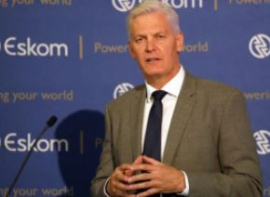
Eskom has met with Chief Executive Officers (CEOs) and top leadership from at least 70 businesses n a Johannesburg Stock Exchange (JSE) and Business Leadership South Africa (BLSA)-led session.
The session is part of the state power utility’s efforts to find solutions to its ailing power generation issues.
During the session Eskom CEO André de Ruyter mapped out the strategies currently in place to ensure that there is enough power supply on the grid.
“The purpose of the discussions was to identify initiatives where the parties can collaborate and plant the seeds of opportunity to leverage private sector investment capacity and harvest the low hanging fruit in the electricity industry,” de Ruyter said.
The Eskom CEO called on the business leaders to support the power utility’s electricity strategy by “pursuing opportunities to make investments and realising savings benefits from the reforms of the electricity industry” that were announced by President Cyril Ramaphosa recently.
Group CEO of the JSE, Leila Fourie, highlighted the importance of private business and government working together to make sure that the electricity crisis is addressed.
“We are at a very important inflection point as a country and today we took the opportunity to unpack some of the proposed solutions for business-to-business partnerships in the generation of electricity. President Ramaphosa’s plan literally opens the door for investors and entrepreneurs to provide solutions that can have many other indirect and positive consequences for our country, especially when it comes to creating jobs.
“We need to work together to address the energy generation challenge to the benefit of all South Africans,” Fourie said.
According to Eskom, the session identified four areas where private business can make an impact including:
- Opportunities to invest in own-generation projects and Independent Power Producers (IPPs) through land leasing and wheeling arrangements
- Encourage the use of electricity sparingly to safeguard the national grid through co-ordinated energy efficiency campaigns
- Provide support for security interventions to protect the electricity infrastructure from vandalism and theft
- Contribute to the development and alignment of enabling policies related to the fiscus and environmental, energy and industrial sectors
“During a robust Question-and-Answer session, company CEOs expressed their appreciation of Eskom’s transparency on the key issues, offered practical solutions to unlock generation capacity and pledged their support of the public utility’s plan in partnership with the relevant government role players. Through BLSA, a framework for delivery will be tabled with companies to ensure traction on the agreed initiatives.
“The parties have committed to extending the discussions to stakeholders based in both Cape Town and Durban, where some of the large electricity users and potential electricity investors are based,” Eskom said.
SARS commits to resolve wage negotiation impasse

The South African Revenue Service (SARS) has reiterated its commitment to resolving the ongoing industrial action with organised labour.
SARS staff have been on strike since May over a wage negotiation impasse.
In May, SARS said it did not have the resources to meet the labour demand of CPI plus 7%.
After engaging with organised labour, SARS made a proposal to reach a final settlement.
This included an across-the-board increase of 1.5% for permanent employees in the bargaining unit, backdated to 1 April 2022.
In a statement on Wednesday, SARS said this was on condition that should the broader public sector negotiations be resolved at an increase of higher than the 1.5%, National Treasury will accordingly make additional funding available towards the settlement agreement.
“SARS will be guided by this, and adjust its offer to its employees to be on equal terms,” it said.
Beyond this was a commitment to engage and conclude the broader Employee Value Proposition, which will include financial and non-financial elements; and other items tabled by the unions during the negotiations at the SARS National Bargaining Forum (NBF).
SARS said: “The slight adjustment to the across-the-board proposal is possible due to projected savings from a delay in recruitment against an initial plan. In the spirit of transparency and a commitment to resolving the dispute, SARS management has decided to allocate the savings towards the increased salary proposal.
“Parties agreed that the unions embark on a mandate-seeking process on this offer. Strike action was suspended by the Public Servants Association (PSA) during this mandate-seeking process, while NEHAWU [National Education, Health and Allied Workers’ Union] has not formally communicated its intentions to SARS.”
The revenue collector said it had noted with concern various isolated incidents of intimidation and violence committed by some strikers.
In this regard, SARS said it would will take necessary action against the strikers that are violating its Code of Conduct, and/or those who have broken the law.
“SARS reaffirms its commitment to respect the right of employees to strike. The strikers are enjoined by labour law provisions to exercise this right peacefully, and respect the rights of employees who choose to work, as well as taxpayers who seek to fulfil their obligations in law.
“SARS has put contingency measures in place to mitigate the negative impact on services as far as possible. We thank taxpayers for their patience during this challenging period, and apologise unreservedly for any delayed response to service requests. We request taxpayers and traders, as far as possible, to avoid coming to SARS branches, but to instead continue to interact with SARS through our self-help digital channels.
The movement of cargo from the land and sea ports of entry have continued without any hindrance.”
The revenue collector said it remains empathetic to the plight of many South Africans, including its own employees, who face economic hardships and rising prices of food and fuel.
“We remain sincerely appreciative to those SARS employees who, through this period, contribute to our success, and for their continued commitment to deliver the essential service in support of our mandate,” read the statement.