
SA forges ahead with 4IR strategy
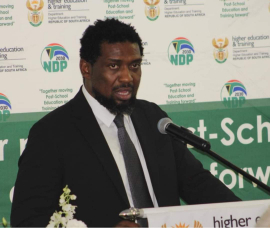
Higher Education, Science and Innovation Deputy Minister, Buti Manamela, has officially launched a Fourth Industrial Revolution (4IR) micro-laboratory at Goldfields Technical and Vocational Education and Training (TVET) college in Welkom, Free State.
Manamela described the launch of the third 4IR Centre of Excellence in South Africa as the country’s “gateway to create skills development, innovation, and entrepreneurship”.
“There is no question about the fact that 4IR is now upon us. The advent of the 4IR is not just changing the labour market, but the very world we live in and how we function within it.”
The Deputy Minister said all industries are rapidly transforming, while many occupations are becoming obsolete.
“New ones are being born in areas such as artificial intelligence, cloud computing, robotics, 3D printing and advanced wireless technologies.
“We are also seeing how these rapid advances in technology are fundamentally altering the skills requirements for various jobs.”
Citing World Bank data, Manamela said 65% of children entering primary school today would ultimately end up working in completely new jobs that do not exist yet.
“As is evident, the 4IR is all about new solutions and new technologies that can provide new, better, and faster solutions. This is why it is also anticipated that a wide range of occupations will require a higher degree of cognitive abilities, such as creativity, logical reasoning and problem solving, as part of their core skills.”
The Deputy Minister said his department has embraced President Cyril Ramaphosa’s call and the recommendations of the 4IR Commission.
“As a product of these discussions, we agreed to roll out the 4IR concept at TVET colleges in our country. We agreed to sponsor 10 TVET colleges to establish 4IR Centres of Excellence in them.”
As a result, the department has since identified several TVET colleges where these centres will be located. These include Ehlanzeni in Mpumalanga, Ikhala in the Eastern Cape, Lephalale and Vhembe both in Limpopo, Vuselela in the North West, Northern Cape Urban in the Northern Cape, Western College in Gauteng, uMgungundlovu from KwaZulu-Natal, Wes Coast from Western Cape and Goldfields in Free State.
“In rolling our 4IR centres at TVET colleges, we have adopted a multi-pronged approach.”
Industry-Partnered Learning Factories
Meanwhile, the department’s entities — the Council for Scientific and Industrial Research (CSIR) and the Manufacturing, Engineering and Related Services Sector Education and Training Authority (merSETA) — have also collaborated to establish 18 Industry-Partnered Learning Factories (IPLFs).
According to Manamela, two IPLFs in each province, at a cost of about R120 million, will support 4IR skills development, innovation and entrepreneurship.
“These learning factories will also serve as platforms for upskilling and re-skilling of the industry workforce through short courses to support the adoption of advanced technologies.”
Meanwhile, as part of this partnership, 261 students and 51 instructors have been trained, while 10 TVET colleges have been approved to offer a new stream on robotics programme from 2023.
The Deputy Minister announced that the department has also partnered with Intel South Africa to provide information and communications technology (ICT).
“The pilot project was started with Orbit College in the North West to develop a blueprint for the implementation of the project. The project consists of two aspects, which are ICT infrastructure and comprehensive 4IR training at different levels.”
He believes that the academic staff and the students here at Goldfields TVET college will benefit greatly from this investment.
“We are making significant progress in our efforts to ensure that students in the TVET colleges are empowered to respond creatively to the challenges and opportunities of the 4IR.”
Government to continue to ensure access to electricity

Department of Mineral Resources and Energy Minister, Gwede Mantashe, says government will continue to take the lead in ensuring access to and supplying electricity and not put complete responsibility on the private sector to provide additional capacity.
Mantashe was speaking during a virtual National Assembly debate of the Just Energy Transition (JET) on Thursday.
“[Energy] is a public good. The state must continue playing its role in ensuring that people have access to this public good. Hence the talk of the generation which should be a public entity that continues to develop baseload capacity.
“It must therefore be clear that Eskom is not for sale. It remains the country’s baseload energy generator. The disaggregation of Eskom into three utility divisions…forms part of our plan to secure energy supply to society,” he said.
Turning to the JET, Mantashe reiterated his stance that a “combination of energy technologies” – an energy mix – is the most “reliable solution” to addressing energy supply needs while embarking on a transition from high carbon emissions to a low carbon economy.
“We ought to guarantee baseload energy supply through a combination of gas, nuclear, coal and hydro. A pendulum swing from coal powered energy generation to renewable energy does not guarantee baseload stability. It will sink the country into a baseload crisis.
“The pressure to abandon coal instantly must be resisted and opt for a systematic step by step transition that we can afford.
“The work done by the Council for Geoscience in collaboration with the World Bank on carbon capture, utilisation and storage gives us hope that coal will continue to play a critical part in our Just Energy Transition,” he said.
The Minister emphasised that South Africa’s JET must bear in mind the livelihoods of those working in and benefitting from the coal industry.
“The Just Transition debate is a complex and contested terrain in which countries across the globe seek to advance their own national interests. We accept that a transition is a journey and not an event.
“It is a journey that must be ‘just’. Justice must be seen to be done, it must be people centred and not just about numbers and it must take into consideration socioeconomic conditions of communities that will be affected.
“It is our collective responsibility to ensure that the people of South Africa are cushioned from the dire consequences associated with the Just Energy Transition, including job losses in carbon intensive industries. Our transition must be geared towards advancing our national interests…not hinder the country’s pursuits of its socioeconomic objectives.”
Renewable energy
Although coal is expected to play a role in future energy supply, government continues to sign renewable energy power purchase agreements (PPAs) to boost the ailing national grid.
“Just [on Thursday] we signed power purchase agreements with at least three IPPs [Independent Power Producers] under bid window five which will add over 300MW to the national grid once completed over the next 12 to 18 months.
“We intend to be signing PPAs with other preferred bidders under this window,” said Mantashe.
Trade union Solidarity fails to stop preparations of NHI

The Department of Health says it welcomes the judgement delivered by the North Gauteng High Court on Thursday, in which the Solidarity trade union’s legal challenge to prevent the government from implementing the National Health Insurance (NHI), failed.
“This follows an attempt by Solidarity to interdict the department, through an urgent court application, from filling the advertised 44 vacancies as part of efforts by the department to establish a fully functioning NHI branch, while the legislative process on the NHI Bill is underway,” the department explained.
The union, according to the department, filed an urgent court application in the North Gauteng High Court on 11 October 2022, interdicting the department from making appointments of competent technical specialists to the NHI branch to assist with the preparations for the functioning of the NHI Fund.
“The judge has dismissed the application by applicant, Solidarity, with costs.”
The department explained that the objectives of the NHI are to provide universal access to quality and affordable health care for all South Africans, irrespective of their socioeconomic status by ensuring that the use of health services does not result in financial hardship for individuals and their families.
However, Solidarity argued that such advertising, while the Bill still has to pass parliamentary processes, was unlawful.
“The department’s advertisements indicate that it is recruiting competent specialists to assist with preparations for the functions of the NHI Fund. It is, therefore, obvious that the government views the passing of the NHI Bill as a fait accompli and is taking steps while the Bill to operationalise the NHI has not yet been adopted. Such an approach is irrational, unconstitutional and unlawful,” said the Head of the Solidarity Research Institute, Connie Mulder, last month.
In a statement released on Thursday, the department said, it applauds the court for ruling in the best interest of more than 84% of the population who are without medical aids and rely on the public health system to receive health services.
Deputy President’s Office responds to Free State allegations
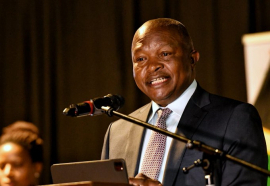
The Office of Deputy President David Mabuza says it has noted the unfortunate and misleading statement issued by the Congress of South African Trade Unions (COSATU) in the Free State.
This comes after COSATU accused Mabuza’s office of neglect amid ongoing water and electricity outages in Maluti-a-Phofung Local Municipality and the provision of other basic services to the residents of Phuthaditjhaba and surrounding areas.
“While the frustrations on the ground as a result of the disruption of basic services and livelihoods are understandable, the statement by COSATU bears misrepresentations around this matter,” the Deputy President Office’s statement read on Wednesday.
“It lacks basic facts on the chronology of events and the work that has been done in dealing with issues of provision of basic services in the municipality.”
In its statement, the Deputy President’s Office said COSATU “unfairly” attacks the second-in-command and disregards ongoing negotiations towards the finalisation of the Active Partnering Agreement between Eskom and the municipality.
“This agreement is aimed at assisting the municipality with the maintenance of infrastructure and revenue collection to enable payment of the bulk electricity account and reduce escalating debt while restoring reliable electricity and water supply.”
The Deputy President’s statement further stated that the “unfortunate” assertions lack appreciation for intergovernmental relations and their complexities.
“The provincial and national CoGTA departments have a constitutional mandate to intervene in the event of a municipality’s collapse. However, the legislation is also clear on a need to first identify the challenges facing a municipality in order to provide the necessary support, before rushing to interventions.”
In the case of Maluti-a-Phofung Local Municipality, the Office said the role of the convener is to bring together the key players to look at the best ways to assist the municipality to get back to full operation so that it can serve the people and meet the needs of the community.
“That is why the Deputy President began by holding engagements with the Premier and the Municipal Council at the time, including various local stakeholders, community representatives, business leaders, labour leaders and traditional leaders.”
In these engagements, the Office said it was established that the municipality had a myriad of challenges that had brought municipal operations to a halt, leading to sporadic protests and unrest.
Resolving challenges
Meanwhile, Mabuza has also appointed a multi-sectoral team of technocrats under the auspices of the then Eskom Political Task Team to facilitate a resolution on the challenges in the municipality as raised by Parliamentarians.
“This intergovernmental process entailed a series of engagements by the three spheres of government to implement measures to mitigate service delivery challenges in Maluti-a-Phofung Local Municipality, while a sustainable solution to the municipal debt was being finalised.”
The adopted immediate intervention measures and roadmap to stabilise the situation and address governance and operational deficits include an electricity supply improvement framework and a better mechanism to deal with the Eskom debt.
In addition, government is also looking at a water supply intervention framework, revitalisation of the industrial parks and special economic zone, and promoting commercial, solidarity economy, and informal business initiatives.
“Interventions on the electricity supply are at an advanced stage, including the construction of a new substation.”
These efforts both at political and technical levels were premised on fostering collaboration between government and social partners in order to get the municipality to full operation.
“The Deputy President remains committed to the process, as evidenced by the three visits to the municipality with a delegation that included the Premier of the Free State, members of the provincial and national governments, and senior executives of Eskom and the affected water boards.”
Government puts measures in place to mitigate impact of strike
The Department of Public Service and Administration (DPSA) says government has put measures in place to mitigate the impact of strike action by public servants on Thursday.
This is after public servants affiliated to the Public Service Association (PSA) have indicated to the employer their intention to strike on Thursday.
The department said all provisions related to the management of employees participating in the protected strike shall apply.
“The State, as the employer, calls upon trade unions to return to the bargaining chambers to start negotiations for the 2023/24 financial year in order to conclude the process before the Minister of Finance tables the final budget in February 2023.
“This further demonstrates the department’s commitment to re-align the negotiations to government’s planning cycle,” the DPSA said in a statement.
Having considered the risks of public servants not receiving any salary increases for this financial year if the processes of wage negotiations are not concluded in time for the 2022 MTBPS, as outlined by the Minister of Finance, Acting Public Service and Administration Minister, Thulas Nxesi, said he would implement the last salary offer for public servants, which was tabled at the Public Service Coordinating Bargaining Council (PSCBC) after the facilitation process by both trade unions and the employer at the PSCBC.
Nxesi said the implementation of the offer should not be seen as undermining collective bargaining and the processes of the PSCBC.
The Minister indicated that this would be in the interest of public servants and government’s planning cycle.
He said he is cognizant of the dispute resolution processes that are already underway at the PSCBC.
DPSA reiterated that government will continue with the current non-pensionable cash allowance until 31 March 2023 for all employees on salary levels 1 to 12, including those covered by the Occupation Specific Dispensation (OSD), employed in the public service, and a 3% pensionable increase for all employees on salary levels 1 to 12, including those covered by the OSD employed in the public service, backdated to 1 April 2022.
According to the department, the date of payment is 17 November 2022.
The department said the implementation of the non-pensionable cash allowance and 3% pensionable increase for members of the Senior Management Service (SMS), with effect from 1 April 2022, will be implemented as soon as the cost of living adjustment (COLA) for non-SMS is concluded.
Mabuza visits Western Cape to engage military veterans
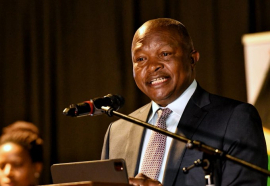
Deputy President David Mabuza, in his capacity as the Chairperson of the Presidential Task Team on Military Veterans, will on Thursday visit the Western Cape, to hold engagements with military veteran associations.
“Since its establishment, the Task Team on Military Veterans has been seized with the task of facilitating the delivery of services and coordinating activities aimed at recognising the contribution by military veterans to the attainment of freedom in South Africa,” the statement read.
In this regard, the Deputy President’s Office said the task team working together with provincial governments, has established a framework for the implementation of the national policy and standards governing military veterans’ affairs to improve the quality of their life and dependants’ well-being.
“The visit by the Deputy President will therefore provide a platform for the task team to provide updates on progress achieved in facilitating access for the rollout of services and benefits to military veterans and their dependents, such as a military pension, housing, access to healthcare services, skills acquisition and education support, burial support and counselling, amongst others.”
The Minister of Defence and Military Veterans, Thandi Modise, Deputy Minister of Defence and Military Veterans, Thabang Makwetla, together with senior government officials, will join Deputy President Mabuza.
Members of the media are invited to cover the engagement at the Castle of Good Hope at 11:00.
President Ramaphosa calls for innovative ways to fund Just Transition

President Cyril Ramaphosa has called for bolder and innovative ways to finance Just Transition projects in developing countries, saying a “one-size-fits-all approach” will not work.
“We need to be bolder and more innovative in reducing project risk and crowd in private sector finance for climate and just transition projects.
“A one-size-fits-all approach to financing the transition that disregards African realties is neither just nor equitable and will not work,” President Ramaphosa said.
The President was speaking during the high-level roundtable on Just Transition at the COP27 climate conference in Sharm el-Sheikh, Egypt.
The President called on commercial financial institutions to do more to support these efforts by structuring project financing instruments that take into account the specific needs and circumstances of developing economy countries.
President Ramaphosa said that there is a need to promote the use of non-debt instruments to ensure that developing economy countries do not have to shoulder an even greater debt burden.
The President further called on a just transition financing framework or pooled financing mechanism to support transition pathways.
He said that this entity could play the role of facilitator between the various funding sources and separate funds to ensure there is coherence in just transition financing.
“The fact that the global community was able to mobilise fiscal measures worth an estimated US$ 17 trillion within two years in response to the COVID-19 pandemic, indicates that the resources to meet climate finance commitments exist, provided there is political will.
“It is our task at this COP27 to harness the political will and mobilise the resources for the just transition. The scale of climate finance must reflect the level of ambition.
“This is critical if we are to effectively reduce emissions, respond meaningfully to the effects of climate change on the vulnerable and ensure that no person, no community and no country is left behind,” the President said.
Inclusive low carbon transition vital for developing economy countries
The President told the roundtable that the imperative of a low-carbon transition that is just and inclusive is particularly important for developing economy countries, which are the worst affected by climate change.
Although Africa carries the least responsibility for climate change, he said that the continent experiences much of its harshest effects.
“The same is true for vulnerable countries and communities in other parts of the world, including small island states.
“Extreme weather like floods and droughts are driving food insecurity, displacing populations, causing damage to infrastructure and leading to the loss of livelihoods,” he said.
He highlighted that African economies are losing between 3% and 5% of their GDP due to the effects of climate change.
“Our common starting point is that all parties should honour their undertakings and commitments in line with the guiding principle of Common but Differentiated Responsibilities and Respective Capabilities.
“For transitions to be just, vulnerable workers and communities need to be included in designing solutions. These same constituencies must share the benefits and not just the risks of transitions,” the President said.
Because climate transitions are whole-of-society transitions, President Ramaphosa said that it is important for countries to establish institutions that enable government, business, civil society and organised labour to jointly identify vulnerable sectors and plan together for their transition.
“In our country, this has taken the form of the Presidential Climate Commission, which represents all key stakeholders.
“Equally important is a regulatory framework that harnesses the energies and resources of all aspects of government towards a common climate goal,” he said.
The President added that the reality is that developing economy countries have not received the required multilateral support to face the climate challenge, including for loss and damage.
“We need to acknowledge that the multilateral development banks and international financing institutions need to be reformed to meet the climate financing needs of developing economies.
“Their business models must be modernised so that they can efficiently mobilise financing at scale and deploy a full suite of instruments from grants to guarantees, across the entire range of countries they work with,” he said.
Skills audits for public servants in the KZN administration
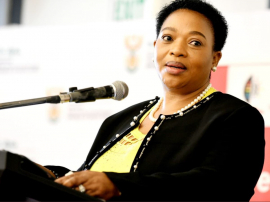
KwaZulu-Natal Premier, Nomusa Dube-Ncube, says skills audits are being conducted for all public servants in the provincial administration, including municipalities, which have more than 200 000 employees.
Dube-Ncube said the skills audits are aimed at delivering high quality services to citizens, while building a capable and competent workforce.
“The skills audit will assist us to ascertain whether as the KwaZulu-Natal provincial administration we have the required skills set to deliver services to our people. The skills audit in all the municipalities has been finalised, while the skills audit in government departments will be finalised in 2023,” Dube-Ncube said.
The Premier was speaking during the first day of the Government Capacity and Performance Review Conference, which is underway at the University of KwaZulu-Natal (UKZN).
The three-day conference, being held from 7 – 9 November 2022, is informed by the 10-year anniversary of the adoption of the National Development Plan (NDP) developed in 2012.
Hosted by the Department of Public Service and Administration (DPSA), in partnership with the KwaZulu-Natal Office of the Premier, University of KwaZulu-Natal and the National Planning Commission, the conference is centred on this commitment by the government over the last 10 years through the NDP.
It seeks to ascertain the extent to which government has manifested this commitment 10 years later.
Chapter 13 of the NDP commits government to building its own capacity for the efficient and effective delivery of services, and to close the trust deficit between the government and citizens.
Addressing the delegates, Dube-Ncube said the conference confronted the challenge of uneven implementation that arises out of capacity inadequacy across the state and manifesting in uneven outcomes at local, provincial and national government.
“We are clear that these skills gaps lead to, and are also a result of weak accountability, persistent corruption emanating from a leadership skills deficit. A functional and integrated government requires a professional, responsive and meritocratic public service cadre that is obsessed with efficiency and citizen-focused delivery,” Dube-Ncube said.
She emphasised that to be able to lead a state that is capable of playing a developmental and transformative role, public service must be immersed in the development agenda, but must be insulated from undue political interference.
“These factors must interact together in one direction to achieve the National Development Plan goals, and to lead the thorough-going transformation of our country at all levels,” the Premier said.
In addressing this challenge in KwaZulu-Natal, the Premier said at least 100% of municipal officials have been audited for skills and revealed training needs for senior managers in financial management; strategic capability and leadership; risk management; change management; policy development; and monitoring and evaluation, among others.
Framework for Mentorship and Coaching
She said the province has developed a Framework for Mentorship and Coaching to address the findings of the skills audit.
Councillors are currently being capacitated on the complexities of the District Development Model, through the Integrated Councillor Induction Programme and Sector Based Councillor Orientation Workshops.
“The capacity development of public servants has been conducted with 791 officials already trained. The repositioned Provincial Training Academy is prioritising key skills and capacity building interventions to improve service delivery in partnership with the National School of Governance (NSG) and other institutions.
“Our partnerships are not only ensuring that the curriculum offered in universities responds to the economy and skills needed by the province but to partner with university and NSG in the skilling, reskilling and upskilling of public servants,” Dube-Ncube said.
The Premier announced that the Provincial Anti-Corruption Implementation Plan has been drafted based on the National Anti-Corruption Strategy that was approved in 2020.
In addition, the Office of the Premier, together with the Department of Cooperative Governance and Traditional Affairs, the Special Investigations Unit, the Hawks and National Prosecuting Authority are working together as a forum in conducting the ethics and anti-corruption awareness campaigns.
The conference brings together a variety of stakeholders working in the field of state capacity and government performance. These include academics from across South African universities, researchers, public servants and cabinet leaders.
Public hearings into water agency bill kick off

Water and Sanitation Director-General, Dr Sean Phillips, has emphasised that the National Water Resource Infrastructure Agency (NWRIA) is not the solution to the current challenges facing the country, but it would work simultaneously with other projects to alleviate water issues.
Phillips was speaking during a public consultation held in Boksburg to present the draft National Water Resource Infrastructure Agency (NWRIA) Bill.
The Director-General recently kicked off the national public consultation for the draft NWRIA Bill for public comment and input from sector stakeholders.
The Bill seeks to establish the NWRIA, which will result in the bulk water infrastructure, its asset management and revenue collection functions integrated, owned, and managed under one entity and be able to raise finance for requisite further infrastructure development.
The NWRIA is to be registered as a State-owned company in terms of the Companies Act, 2008 (Act No. 71 of 2008) and listed as a major public entity in terms of schedule 2 of the PFMA.
Phillips said the aim of agency is to get a better method of funding than what the department is currently managing.
He said an agency would be better positioned to raise funds from sources other than the fiscus, from which the department is currently dependent.
“In terms of Public Finance Management Act (PFMA), listing and authority, credit rating and condition of assets, the agency could raise commercial and development finance, domestically and internationally, while for some projects, it could also enter public-private partnerships.
“Other rationale for the establishment of the agency include governance and transparency. Establishing the NWRIA will strengthen governance and transparency in the water sector by separating the roles of player and referee. The NWRIA will [also] address the current fragmentation of asset management and revenue collection functions for national water resource infrastructure,” Phillips explained.
The mandate of the NWRIA is to:
- Implement water resource management infrastructure as identified in water resources planning processes within Department of Water and Sanitation;
- Manage national water resources infrastructure of both economic and social nature;
- Generate and collect revenue from the sale of water as its primary source of income;
- Develop options to increase the sources of revenue, e.g., recreational use of assets and hydropower;
- Raise commercial funding on the strength of its balance sheet and operational cash flows (actual and projected) for commercially viable projects; and
- Facilitate public-private partnerships.
Phillips said the department is also planning and implementing a range of major projects to augment national bulk water resource infrastructure, these including Lesotho Highlands Phase 2 and uMkhomazi projects, amongst others.
“This, coupled with the addressing of non-revenue water at municipal level and improving billing and revenue collection across the water value chain, among many others,” said the DG.
The draft bill has been published for public comments before being sent to Cabinet for approval.
President hands in Section 89 submissions
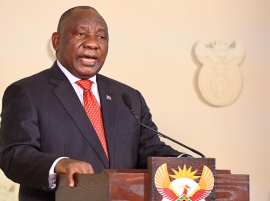
President Cyril Ramaphosa has made submissions to Parliament’s Section 89 independent panel assessing his conduct following a robbery at his Phala Phala game farm in February 2020.
The panel is headed by former Chief Justice, Sandile Ngcobo, with other members of the panel being Judge Thokozile Masipa and Advocate Mahlape Sello.
“On Sunday, 6 November 2022, President Cyril Ramaphosa delivered his submission made in terms of rule 129g(1)(c)(iii) of the National Assembly rules, to the independent panel appointed in terms of rule 129d of the National Assembly rules. The President’s submission affirms his committed cooperation with due process,” the Presidency said in a statement.
The Presidency emphasised that the President is committed to the rule of law and reiterated his position that he committed no wrongdoing.
“President Ramaphosa has always made certain that throughout his tenure as President, he abides by his oath of office and set an example in his respect for the Constitution, its institutions, due process and the rule of law.
“President Ramaphosa categorically denies that he violated this oath in any way and denies that he is guilty of any of the allegations made against him,” the statement read.