No security threat to SA

Police Minister Bheki Cele has told a joint sitting of Parliament that there is no security threat to the country.
He said this when he participated in a debate on the State of the Nation Address on Monday.
“Allow me to reiterate and reaffirm our strong position as the security cluster, without fear of contradiction, that there is no threat to the stability of this country.
“I repeat, there is no threat to the stability of this country. Some components of the security services of this country may be limping but they are not down and they are certainly not out!” said the Minister.
This comes after President Cyril Ramaphosa said that following the report of the expert panel on the July 2021 unrest, government will begin a process of putting together a response plan to address the weaknesses that the report identified.
Participating in the debate, Cele said mopping up a mess that was deliberately created to weaken the country’s security agencies and law enforcement will take some time.
“But, rest assured, the work has started and it will be done. Those criminals who were hell bent on seeing this country go under, during the July attempted insurrection, failed.
“They failed because the police acted and did what they could in the most difficult of circumstances.
“The men and women in blue of this country, did all they could in the hardest of times. Our “security cluster” is functional; this is why our prisons are full as we speak. [Justice and Constitutional Development] Minister Ronald Lamola can attest to this. Those incarcerated criminals did not walk [in] there on their own free will,” said Cele.
Public comment sought on 2021 Draft Tax Bills
The National Treasury and the South African Revenue Service (SARS) are inviting the public to comment on the 2021 Draft Tax Bills.
Treasury on Wednesday published for public comment the 2021 draft Rates and Monetary Amounts and Amendment of Revenue Laws Bill (2021 draft Rates Bill), the 2021 draft Taxation Laws Amendment Bill (2021 draft TLAB) and the 2021 draft Tax Administration Laws Amendment Bill (2021 draft TALAB).
These draft tax bills contain tax proposals made in the 2021 Budget on 24 February 2021. The 2021 tax bills will be introduced in Parliament later this year.
“For legal reasons, the draft tax amendments continue to be split into two bills, namely a money bill (section 77 of the Constitution) dealing with money bill issues and an ordinary bill (section 75 of the Constitution) dealing with issues relating to tax administration,” said Treasury in a statement.
The National Treasury and SARS solicit written comments on tax proposals contained in the 2021 draft tax bills.
“After receipt of the written comments, National Treasury and SARS normally engage with stakeholders through public workshops to discuss the written comments on the draft tax bills.
“However, due to the national lockdown regulations as a result of the COVID-19 pandemic, further information will be provided on the manner and platform of public engagement for purposes of discussing the written comments.
“The Standing Committee on Finance and the Select Committee on Finance in Parliament are expected to make a similar call for public comment, and convene public hearings on these draft tax bills before their formal introduction in Parliament.”
Thereafter, a response document on the comments received will be presented at the parliamentary committee hearings, after which the bills will then be revised, taking into account public comments and recommendations made during committee hearings, before they are tabled formally in Parliament for its consideration.
“The 2021 draft Rates Bill, which was first published on Budget Day (24 February 2021), contains tax announcements made in Chapter 4 and Annexure C of the 2021 Budget Review that deal with changes to the rates and monetary thresholds and increases of the excise duties.”
The 2021 draft TLAB and the 2021 draft TALAB provide the necessary legislative amendments required to implement the more complex tax announcements made in Chapter 4 and Annexure C of the 2021 Budget Review that will require greater consultation with the public.
Key tax proposals contained in the 2021 draft Rates Bill include changes in rates and monetary thresholds to the personal income tax tables, and increases of the excise duties on alcohol and tobacco.
Key tax proposals contained in the 2021 draft TLAB include the following:
- Strengthening the rules dealing with limitation of interest deductions in respect of debt owed to persons not subject to tax
- Restricting the set-off of the balance of assessed losses in determining taxable income
- Refining the timeframes of compliance requirements of the industrial policy projects tax incentive
- Curbing the abuse of the Employment Tax Incentive
- Applying tax on retirement fund interest when an individual ceases to be a tax resident
- Strengthening anti-avoidance rules in respect of loans between trusts
- Refinements to the corporate reorganisation rules
- Clarifying the scope and definition of carbon sequestration
Key tax proposals contained in the 2021 draft TALAB include the following:
- Administrative non-compliance penalties based on estimates for non-submission of six-monthly employees’ tax returns
- Removal of double-penalty for the same incidence of non-compliance relating to employees’ tax
- Expanding the purposes for which air cargo may be removed to degrouping depots
- Amendments related to changes in the accreditation system
- Increasing the caps for refunds and underpayments of duties
The 2021 draft tax bills and the accompanying draft explanatory memoranda containing a comprehensive description of the proposed tax amendments contained in the 2021 draft TLAB and the draft TALAB, can be found on the National Treasury (www.treasury.gov.za) and SARS (www.sars.gov.za) websites.
General information underlying the changes in rates, thresholds or any other tax amendments can be found in the 2021 Budget Review, available on the treasury website.
Comments in writing can be emailed to 2020AnnexCProp@treasury.gov.za and SARS at acollins@sars.gov.za by close of business on 28 August 2021.
From the desk of the President (18 November 2019)
Dear Fellow South African,
 The three life sentences handed down to the rapist and killer of UCT student Uyinene Mrwetyana by the Cape High Court are befitting of this heinous crime. The life sentences serve the cause of justice and must act as a deterrent to men who rape and kill the women of our country.
We remain firm in our resolve that a life sentence must mean life. Those who commit crimes against women and children must know that they will be caught and tried, and that our courts will act firmly against those found guilty.
The pain we felt as a nation at the brutal killing of Uyinene, of Jesse Hess, of Leighandre Jegels, of Janika Mallo and of the many other slain women and children remains fresh. We dare not rest.
The violence perpetrated by men against women remains a scourge and national crisis that we must act urgently to end.
The Emergency Action Plan to deal with the scourge of gender based violence that I announced at a special joint sitting of Parliament in October is being implemented. The women of our country demanded that financial and other resources should be made available to address this national crisis. I directed that government should respond the call that had been made by the women of our country. The government has responded. The responsible government departments have together reprioritised R1.6 billion for the plan to be resourced and implemented.
The plan focuses on improving access to justice for survivors of violence and prevention campaigns to change attitudes and behaviour. It involves measures to strengthen the criminal justice process and to prioritise the creation of economic opportunities for women who are vulnerable to abuse.
I have directed that I be given weekly reports on the implementation of the plan. There has been notable progress on a number of aspects of the plan.
We are on track to achieve our target of establishing 11 more sexual offences courts by the end of the current financial year. A new Sexual Offences Court has been opened in Sibasa in Limpopo and eleven regional courts across all provinces have been identified for upgrade.
To protect the rights and dignity of child survivors and mentally disabled survivors, CCTV systems have been upgraded at 38 regional courts. Two weeks ago I opened the High Court in Mpumalanga and I was pleased to see that the court has the appropriate facilities to protect the rights and dignity of child survivors and mentally disabled survivors. Such facilities allow testimony to be given without having to face assailants in an open courtroom.
We are in the process of establishing three new Thuthuleza Care Centres centres in the Eastern Cape, KwaZulu-Natal and Gauteng. Provinces are identifying underutilised buildings that can be refurbished and used as shelters.
Clearing case backlogs is a priority. The National Prosecuting Authority is implementing a 100 day rapid results approach to speed up case turnaround times. Courts with significant backlogs in the North West, Eastern Cape and Limpopo have been identified for roll-out.
National and provincial 24-hour call centres to deal with complaints against police officials, prosecutors and magistrates on gender-based violence and femicide cases are now up and functioning. We are working to reduce the GBV case backlogs at forensic laboratories and are developing a tracking mechanism that will be rolled out in January 2020.
The SAPS has allocated 312 new recruits currently undergoing basic training to the Family Violence, Child Protection and Sexual Offences Units. To date, 7,000 rape evidence collection kits have been distributed to police stations across the country. A project to reopen unresolved murder and sexual offences cases (so-called cold cases) will soon be operational. It has already begun in the Eastern Cape.
Government employees who work with children and mentally disabled persons are being vetted against the National Register of Sex Offenders. To date, 1,222 officials have been vetted, including prosecutors and members of the SAPS.
Legislative reform is underway to tighten conditions around bail and sentencing for perpetrators of gender-based violence, as well as provisions that extend the protection afforded to women and children.
We are rolling out an education, awareness and prevention campaign on various media platforms. This includes providing information on how to access the Thuthuzela Care Centres and the gender-based violence command centre.
The women of our country are tired of living in fear. It is their rightful expectation that they should be protected from violence, and that perpetrators of such acts should be imprisoned.
I have taken personal responsibility to ensure the emergency plan is implemented, and I will provide our citizens with regular reports on our progress.
Gender-based violence is not a problem of the rich or the poor. It is not a problem of the townships or the suburbs or the villages. It impacts us all, and we have had enough of its deeply harmful effects: broken families, ravaged communities and lives destroyed.
Our success depends on the involvement of each South African. It is a responsibility none of us should abdicate. We must all get involved. Let us not look away.
Let us work together, in the words of the Freedom Charter, ‘sparing neither strength nor courage’ to eradicate this evil from our country.
With best wishes,
Cyril Ramaphosa is the President of South Africa.
From the desk of the President (04 November 2019)
By President Cyril Ramaphosa
Dear Fellow South African,
The sight of Springbok captain Siyamthanda Kolisi lifting the cup at the Yokohama Stadium on Saturday filled me with great pride. I could see the undisguised emotion on the face of his father, Fezakele Raymond Kolisi watching from the stands. There was his son, the first black captain of the Springboks, making history.
Siya Kolisi was born on a day of profound significance in our country, 16 June, when we remember the valiant students who lit the path for our freedom. Siya’s captaincy not only epitomises the transformation of a sport that was once racially segregated; it is the power of a dream fulfilled. This is the dream of a young man of humble circumstances to one day wear the green and gold jersey, and of a country that has enabled him to see it realised.
At a time when South Africa is experiencing profound challenges, we have rallied around the victory in Japan. The outpouring of support for the Springboks on the road to the final once again showed the immense potential of sport to unite us as a people.
When Caster Semenya crosses the finish line, when Banyana Banyana find the back of the net, when Chad le Clos lifts his gold medal, when our national netball team, the Proteas are crowned Africa champions, all of South Africa is cheering on the sidelines. After generations of division, we have become a people with a great sense of national pride.
But we are not only united by the achievements of our sportstars or internationally acclaimed performers, like the Ndlovu Youth Choir. We are also united by a shared desire for a country where all can live in peace and comfort, where all have an equal chance to achieve their potential.
We are united by the vision of a country where the divisions of the past can be overcome, a nation of equality, dignity and respect for human rights. Over the past 25 years, we have been working together to build that nation. And while this is still very much a work in progress, we are firmly on the path to unite, renew and transform our society.
The spectre of racism, sexism, tribalism, xenophobia, homophobia and other forms of intolerance has on occasion taken root in our society and has blindsided us as we strive towards our national objective of creating a non-racial, non-sexist, democratic, prosperous and tolerant society.
But we have always come back, even when we stood at the brink of tipping over. Saturday was a triumphant day as it confirmed what we are as a nation, firm in its resolve to find unity in its diversity, as exemplified in our national rugby team which is transforming beautifully, being presented to the world with its first black captain.
We often fail to appreciate just how far we have come since that iconic moment in 1995 when a South African first held aloft the Rugby World Cup Trophy in building a society that offers equal opportunity to all regardless of race, gender or social circumstances.
Just last week I attended a businesswomen’s summit in Johannesburg and was in awe of the breadth of occupations and ventures our country’s women have entered. We had among us shipping company CEOs, tech entrepreneurs, DNA specialists and production company owners. This has been made possible by the progressive policies of this government and the opportunities it has afforded its people.
We are proud of South Africa and what it has become. But there is much more that we need to do to make this a country where the black child and the white child can attain the heights they always dream of.
We must do more to foster social cohesion in our society. Our national broadcaster – indeed all broadcasters – should commission more content that reflects the values of tolerance and multiculturalism. Leaders of faith organisations, traditional bodies, political parties, cultural organisations, sports organisations and business bodies should all work together to foster a more inclusive and cohesive society.
Public sports and recreation facilities must be better resourced, especially in rural areas, so that young men and women who cherish dreams of sporting success attain their goals. The youth should be able to explore and appreciate their history, traditions and languages.
This week, South Africa will be hosting its second Investment Conference as part of our ambitious drive to set our country on a path of faster growth and to create the many jobs that our people need. As we welcome over 1,500 investors and business people to explore the many investment opportunities in our country, let us be as united and as determined as we were on Saturday in Japan.
To mobilise the investment we need requires a massive effort from us all. More than ever, we need to be single-minded in our determination to build an economy that can benefit all our people. So let each of us, wherever we find ourselves, become part of the campaign to build a better South Africa.
As we held our breath on Saturday and awaited the final whistle, we momentarily forgot our woes. And now, our sails swelled by the wind of victory, our pride must not deflate, our euphoria must not dissipate and our optimism must endure.
Let the goodwill brought by our success at Yokohama inspire us to put our collective shoulder to the wheel as we confront our economic, political and social challenges together – and overcome them.
As Siya Kolisi said: “We can achieve anything if we work together as one.”
Best wishes,
Cyril Ramaphosa is the President of South Africa.
Second South Africa Investment Conference (SAIC)
Every Rand that is invested in our economy by local and international investors helps create new jobs, expands the local market and boosts economic activity. It sets in motion a new wave of growth that filters across our economy.
A growing economy provides us with the means to drive back the triple challenge of unemployment, poverty and inequality. It is therefore in the interest of every South African to make our country the destination of choice for investors.
To attract more investments, government is convening the second South Africa Investment Conference from 5 to 7 November this year at the Sandton Convention Centre. It builds on the success of the inaugural conference that was held last year and sends a clear message that South Africa is open for business.
Moreover, the conference allows potential investors to directly engage with government and business representatives on new investment opportunities. It is also an opportunity to share progress on our work around the ease of doing business in the country.
The first South Africa Investment Conference was attended by investors in mining, forestry, manufacturing, telecommunications, transport, energy, agro-processing, consumer goods, pharmaceuticals, infrastructure, financial services, energy, ICT and water. It received investment commitments of nearly R290 billion in addition to the pledges of over R400 billion.
The inaugural conference also kicked off a significant work programme for our country’s investment institutions such as Invest SA as well as all government departments and entities.
The second conference is anchored in wave of renewal and positive change that is taking place in our nation. We have therefore made a call to international and domestic investors to join in our new momentum.
In our drive to attract R1.2 trillion in investment over five years we have laid the foundation for more investment into the digital and telecoms sectors by issuing a policy directive for the release of high demand spectrum.
We have introduced measures to reduce the financial costs of doing business which includes lower port and rail tariffs. There is policy certainty with the finalisation of the Mining Charter and the draft Oil and Gas Bill which will guide the development in this new sector.
Importantly, a process is underway to finalise a critical skills list to attract highly skilled professionals who will help us grow South Africa. To attract more tourists government has recently issued a list of countries that will receive visa waivers.
Government has also set aside R100 billion over 10 years for a National Infrastructure Fund and will be working with private investors and international financial institutions to leverage further finance for infrastructure.
There is immense investment potential in economic infrastructure like energy plants, transportation, telecoms and fibre optics. We are also upgrading roads, schools, dams, hospitals, clinics and human settlements which are key to social upliftment and job creation.
Through our Public-Private Growth Initiative we have developed investment projects in over 19 sectors. All of these measures to grow our economy are underpinned by our firm commitment to fiscal prudence, stabilising public finances and to managing the national debt-to-GDP ratio.
Moreover, the new macro organisation of government will assist in reducing the cost of government. It will enable us to review and where necessary dispense with government entities and programmes that have proven to be unviable or not cost-effective.
In growing our economy we understand that our destiny is intrinsically linked to that of the rest of the Continent. We are already working with a number of African countries to grow business, trade and investment.
South Africa is one of the countries that has ratified African Free Trade Agreement and is expected to benefit from this agreement. AfCFTA has the potential to act as a catalyst to South African economic growth and will benefit investors in our economy.
Government is committed to creating a stable, vibrant and investor friendly environment for investment to flourish. We are supporting companies that want to take advantage of our many lucrative opportunities through various incentives.
Investors are supported through our Invest SA: One Stop Shop where trained specialists assist investors with applications, from permits in water or electricity services, tax matters and licencing. An investor will simply make an appointment and explain the services they require to start their business.
In removing barriers to start and operate a business, government is confident that it will enhance the business environment and develop a sustainable and competitive economy.
South Africa is open for investment and is ready to showcase our new investment prospects in an economy with vast potential. We look forward to welcoming investors from across the spectrum to our second South Africa Investment Conference.
From the desk of the President (28 October 2019)
By President Cyril Ramaphosa
Dear Fellow South African,
Last week, I led a government delegation to the first Russia-Africa Summit, convened in the Black Sea resort city of Sochi.
For two days, heads of state from 43 African countries and their host, President Vladimir Putin, discussed how to increase trade and cooperation between the Russian Federation and Africa. The summit was preceded by a Business Forum attended by investors and business people looking at ways to scale up investment in various countries on the African continent.
The Summit was a sign of the growing economic importance of Africa on the world stage. The summit took place on the back of the 7th Tokyo International Conference on African Development in Yokohama in August. The G20 countries launched their Compact with Africa in 2017 to promote private investment in Africa.
What we are witnessing is a dramatic rebalancing of the relationship between the world’s advanced economies and the African continent. We have consistently affirmed that Africa no longer wants to be passive recipients of foreign aid. African countries are developing and their economies are increasingly in need of foreign direct investment.
It would be wrong, as some have done, to label initiatives like the Russia-Africa Summit as an attempt by world powers to expand their geopolitical influence. Some have even argued that a number of countries in Africa are being led into a debt trap as they take up loans to fund a number of projects in their countries. One need only look at initiatives such as the Forum on China Africa Cooperation, which was last held in Beijing last year, to see that the focus is now on partnership for mutual benefit, on development, trade and investment cooperation and integration.
China, Russia, the OECD countries and other large economies are eager to forge greater economic ties with African countries because they want to harness the current climate of reform, the deepening of good governance, macro-economic stability and the opening up of economies across the continent for mutual benefit.
With the IMF 2019 World Economic Outlook placing six of the fastest growing economies in Africa, these advanced economies want to take advantage of the many investment opportunities on offer, be they in infrastructure, energy, natural resource extraction, manufacturing or agriculture and agribusiness.
The opportunities for international investors will be further boosted when the African Continental Free Trade Area becomes operational next year. This interest in the continent’s rapidly growing economies should encourage African countries to engage with various trade blocs on a more equal footing and on their own terms.
We are ever mindful of our colonial history, where the economies of Europe were able to industrialise and develop by extracting resources from Africa, all the while leaving the colonies underdeveloped. Even now, African countries are still trying to stop the extraction of its resources, this time in the form of illicit financial flows through commercial transactions, tax evasion, transfer pricing and illegal activities that cost the continent over $50 billion a year.
The message from African leaders at the Russia-Africa summit was clear: Africa needs greater levels of investment. It wants access to markets for its products, goods and services. It wants to forge economic relationships of mutual benefit that develop our respective countries and uplift our people. The age where ‘development’ was imposed from outside without taking into account the material conditions and respective requirements of our countries is now past.
Four months after he was released from prison, President Nelson Mandela met with a group of business people in the US to mobilise support for the national democratic project back home. He laid out a vision for South Africa’s economy, and of it “playing an important part in the regeneration and expansion of the economy of Southern Africa as a whole.”
The private sector, both domestic and international, he said, will have a vital contribution to make to the country’s economic and social reconstruction. “We count on you,” he concluded, “to take the decision that you will become part, an important part, of the future South African economy.”
President Mandela’s words affirmed what the nations of Africa have long said: that we want trade more than aid. That we are determined to lift ourselves up, and that we neither expect nor want handouts.
In his iconic 1963 speech on African unity, Ghana’s President Kwame Nkrumah lay down the gauntlet to gathered African nations to look beyond political independence towards economic independence.
“Our economic independence resides in our African union,” he said. Nkrumah called on independent African states to harness their financial structure and banking institutions for their national development, and to use their material resources and human energies to meet their own national aspirations.
Next year South Africa assumes the chair of the African Union. It does so at an opportune time, as the African Continental Free Trade Area comes into operation. Not only will we have the opportunity to guide and oversee its implementation, but we will be taking on this responsibility in this new era of an emboldened Africa.
It is an era of a confident Africa, of a growing Africa that knows its potential and its worth. This is an Africa that is able to trade and engage on its own terms. An Africa that has finally come into its own.
All the best,
Cyril Ramaphosa is the President of South Africa.
Celebrating 25 years of media freedom
By Phumla Williams
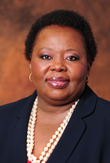
Those who were fortunate enough to live through our democratic change in the months leading up to April 1994, literally saw history unfolding before their very eyes.
The birth of our democracy brought many changes and ushered in an era of free and independent media.
We should, however, never forget that we come from a history of exclusion and media restrictions. Before 1994, our society was characterised by a culture of secrecy, disinformation and restrictions on press freedom.
Many of the freedoms that we today take for granted were unheard of, and the notion of a free media seemed fanciful.
The democratic government knew instinctively that our new democratic order had to be built on a commitment to freedom, democracy and the free flow of information. Key to this was a free media that our founding fathers knew was the lifeblood of any democracy.
Since 1994, our story of democracy is in many ways mirrored by the story of the free media over the past 25 years.
Just as the country has evolved, so too has the media. What has been particularly noticeable is the rise of community and regional media across print, radio and TV.
Similarly, the changing character of newsrooms has resulted in a plurality of views that better reflect the face of our nation.
At the birth of our democracy, the internet in South Africa was still in its infancy, and traditional mediums such as print, radio and TV reigned supreme.
Today, however, the media landscape is far different. The growth of online and social media has disrupted centuries-old industries, and media like the rest of society is constantly redefining itself.
What will nonetheless remain constant is our commitment to a free and vibrant media. It is also vitally important that we commemorate milestones such as these so that we may jointly assess the state of our media.
Unlike in the past where the apartheid government clamped down on the media in October 1977 and banned the World and the Weekend World newspapers, our government cherishes a robust free media. Freedom of expression and freedom of the press and other media is enshrined in our Constitution.
It is important that the media continues to shine a light on the challenges, successes, and the hopes and dreams of our young nation.
Our society has been made stronger by the media, and our journey from the heart of darkness to a vibrant democracy has been captured in the words, pictures, film and voice of the media.
However, much remains to be done if we are to build the nation of our collective dreams. The journey ahead is bound to be daunting and there will be times when we will falter. As we move into the next phase of our democracy we will need the collective wisdom of all role-players in society.
Collectively, we should do more to realise our vision of a united, non-racial, non-sexist, democratic and prosperous society which respects human dignity and rights as envisioned in both the Constitution and National Development Plan.
Phumla Williams is the Acting Director-General at GCIS
New district model will revolutionise service delivery
By Phumla Williams
Less than four weeks ago, a new district development model that will revolutionise the way local government works and interacts for the benefit of South Africans was launched in Lusikisiki, Eastern Cape.
Following that success, President Cyril Ramaphosa will on Friday (18 October 2019) launch the second pilot of the model in eThekwini Metro, KwaZulu-Natal.
The model is inspired by our commitment to fast-track service delivery and do away with the fragmented approach to development and service delivery. At the heart of the model is a new integrated district based approach to address the “pattern of operating in silos” in the three spheres of government.
The model is a call to action towards improving the coherence, efficiency and effectiveness in the implementation of government programmes. It identifies 44 districts and eight metros around the country that will be used to speed up service delivery and economic development, including job creation.
The launch of this district coordination model fulfils the commitment made by President Cyril Ramaphosa to focus on unlocking bottlenecks to fast track service delivery. By focusing on implementation at a district level, we will also have a clearer line of sight to what we need to do to remedy failures at a local government level but significantly ensure development is driven in consultation with the citizens at grassroots level.
Because implementation will be tracked more closely under this new integrated district-based system, we will be able to pinpoint with precision our level of intervention to make local government more effective. Some might argue that the introduction of this model is proof that government is failing to perform its functions.
To the contrary, it is a testament that we have heard the voices of the people who are frustrated about the slow pace of service delivery and inefficiencies in the way government operates at times. Audit outcomes of municipalities call for an intervention that will place them on a path to improved performance and thereby improve the living conditions of communities.
Therefore, the district-driven model is directed at addressing some of these challenges by turning plans into action, and ensuring proper project management and tracking. Through it, the three spheres of government will cooperate in a coordinated manner led by the inter-ministerial committee on district level service delivery.
This committee was established by the president to provide political oversight on the implementation of measures to accelerate service delivery and support to municipalities. Under the model, the three spheres of government will also work from a single plan for each district and metro.
That plan should provide details of the transformation processes required to achieve long-term strategic goals and a desired future in each district and metro.
The approach will also ensure cost effective expenditure throughout the spheres of government.
Some of the issues the plans should prioritise include managing urbanisation, growth and development; supporting local economic drivers; accelerating land release and land development; investing in infrastructure for integrated human settlements, economic activity and the provision of basic services.
The development of rural and township economies will be prioritised to ensure that small business activities are supported and properly regulated. Regulations and bylaws will also be strengthened to encourage fair competition and prevent clashes between local small- and foreign owned businesses.
The intervention is also in line with the National Development Plan, which outlines the importance of building a capable state in partnership with the citizens of this country. This requires well-run and effectively coordinated state institutions staffed by skilled public servants who are committed to the public good and capable of delivering consistently high-quality services for all South Africans.
We therefore call on all South Africans to play an active role in identifying problems and developing solutions in their areas. Those solutions and input will be incorporated into the plans that are aimed at growing the country.
Phumla Williams is the Acting Director-General at GCIS
From the desk of the President (21 October 2019)
By President Cyril Ramaphosa
Dear Fellow South African,
The unexpected load-shedding last week disrupted the lives of millions of people in their homes, workplaces and businesses.
The cost to our economy of power outages is significant. It contributes to investor unease at a time when we are trying to attract more domestic and foreign capital to South Africa and to improve our global rankings on ease of doing business. It is also understandable that South Africans became frustrated and angry.
This latest round of load-shedding makes even clearer the urgency with which we must act to protect our energy supply.
While technicians are working around the clock to fix problems at several power stations and restore the grid to stability, government last week released the updated Integrated Resource Plan (IRP). It is our policy blueprint for the country’s industrial, commercial and household energy needs until 2030. It provides clarity and certainty on a crucial part of our development path.
The plan focuses on affordable electricity, reduced emissions and water consumption and a diversity of generation sources. Significantly, given the events of the last week, the updated IRP takes into account the constraints facing Eskom, and deals with the desire by electricity users to have alternatives to meet their energy requirements.
The IRP supports a diversified energy mix that includes coal, natural gas, renewable energy, battery storage and nuclear power. Because coal remains the dominant energy source for our country, we will be focusing on attracting investment in high efficiency low emissions coal technologies. South Africa has to reduce its carbon emissions in line with our commitments at the climate change conference held in Paris in 2015. Many other nations have made commitments to reduce their own carbon emissions.
The IRP envisages a move towards steadily reducing emissions through a greater uptake of renewables. Alongside this, we need to implement a ‘just transition’ to ensure that communities and workers whose livelihoods depend on the fossil fuel industries are not left behind.
That is why we will be developing a clear framework for the process of decommissioning coal fired power stations that have reached the end of their operational cycle.
The global energy transition will present challenges for communities and workers in the areas where fossil fuel powered energy generation takes place. However it also presents opportunities for those affected to have access to technologies that are more cost-effective and better for human health. It also presents significant investment opportunities in cleaner energies.
For example, the recent natural gas find in the Outeniqua Basin off the Southern Cape Coast gives great hope for future discoveries of coastal gas, including recoverable shale. Opportunities also exist in the fields of biomass, biogas and cogeneration.
While the IRP spells out our long-term plans, we must address our immediate and most pressing challenge to get the lights back on and keep them on. This means we need to get the utility back on sound financial and operational footing.
Though there has been progress in implementing its nine-point plan, Eskom’s financial position remains untenable and its current operational model difficult.
We will soon be announcing the appointment of a permanent Eskom CEO who, together with a strengthened board, will be tasked with turning the entity around. They will be guided by the path set out in the special paper on Eskom, which will be released shortly.
The restructuring of Eskom into three entities – generation, transmission and distribution – is critical if we are to respond effectively to the evolving technologies and developments in the global energy industry. Eskom needs improve its credit rating so that it can raise funding for both his operational and capital expenditure.
The sheer scale of Eskom’s debt is daunting. Further bailouts are putting pressure on an already constrained fiscus. As government has made clear, the most recent support to Eskom comes with stringent conditions. Fruitless and wasteful expenditure must be stopped.
We also must attend to the debt owed to Eskom with urgency. Currently, Eskom is owed in excess of R23.5 billion by defaulting municipalities, and this continues to increase. This municipal debt and that from national government departments must be recovered.
Eskom is also owed huge amounts of money by individual users. This is the time for a frank discussion on the payment of owed money to Eskom by individual users. The culture of non-payment exists in several parts of the country. Boycotting payment for services had a place in apartheid South Africa. It was an effective tool to mobilise communities against an unjust system. But it has no place in present day South Africa. If public utilities like Eskom are to survive, then all users need to pay for the services they receive.
As government, we will continue to do all within our means to restore the viability of Eskom. Tough decisions will have to be made. There will have to be trade-offs. All sectors of society, especially government, business and labour, must work together to bring this crisis to an end.
Our citizens deserve to be able to conduct their lives, go to school and operate their businesses confident that they will not be plunged into darkness without warning. At the same time, as citizens, we must understand that when we do not pay, we are part of the problem.
In trying to improve our own standards of living and those of our communities we all have a contribution to make. Our collective future depends on it.
All the best,
Cyril Ramaphosa is the President of South Africa.
From the desk of the President (14 October 2019)
By President Cyril Ramaphosa
Dear Fellow South African,
In everything that we do to grow our economy, our main aim must be to improve the lives of South Africans. We want to build an inclusive economy that has a real impact on the quality of life of poor and working-class people.
As we work to create jobs and employment opportunities, we are also working to reduce the cost of living. This explains our efforts to bring down the cost of electricity, data, public transport, health care and education.
One of our tasks is to grow our economy by reducing the cost of doing business.
This morning, I am in London addressing the Financial Times Africa Summit 2019, a gathering of business people, investors and decision-makers. This event, taking place far from our shores, is important for the work we are doing to improve the lives of our people.
As we have all recognised, if we are to create jobs and reduce poverty, we need to grow our economy at a much faster pace. For that, we need much more investment, from both local and international business. We are using every available opportunity to reach out to investors to talk about the great business potential both in South Africa and across the African continent.
To attract investment we need to make it easier to do business in South Africa. In a competitive global environment, investors are looking for countries that can provide stable and sustained returns, while minimising risks and cost.
It is significant that the World Economic Forum in its 2019 Global Competitiveness Report, which was released last week, showed that South Africa has improved its ranking, climbing seven places since the previous year. This is a noteworthy achievement within a relatively short period of time.
The report is an annual assessment of the drivers of productivity and long-term economic growth in 141 economies. It ranks the respective economies on the strength of their institutions, infrastructure, adoption of information technology, financial systems, macroeconomic stability and business dynamism.
Ours is a bold vision. We want to be a destination of choice for foreign direct investment. Next month we will be hosting the second South Africa Investment Conference as part of our drive to attract R1.2 trillion in new investment over five years. The inaugural conference last year raised around R300 billion in committed investments, but we know that we need far-reaching reforms to achieve our target.
This is important for attracting foreign direct investment, but it is equally important – if not more so – for cultivating a new crop of home-grown companies. The most effective way to reduce poverty and create economic opportunities for South Africans living in townships and rural areas is by enabling them to start up and grow their own businesses.
While many entrepreneurs struggle to mobilise capital and access markets, they also find it difficult and costly to meet the regulatory requirements for starting and running a business. Key to this will be the introduction of a common application form across our development funding institutions. We are working to make business easier for both the person starting out in their garage and for the multinational looking to open a new factory.
We are making it easier to start a business, register a property, deal with construction permits, pay taxes and trade across borders. To promote greater efficiency, we are reducing the time it takes to grant licences and permits. We are working with business to ensure that the conditions attached to licences are not too onerous or costly. We have prioritised immigration reform to attract more skilled workers and to grow tourism.
Technology presents great opportunities to reduce costs and improve efficiencies. Visitors to our country will soon be able to apply for an e-visa online. I recently signed a law to establish an Electronic Deeds Registration System that will improve turnaround times, enhance accuracy and make information more readily available.
Improving competitiveness is not only about the cost and ease of doing business. It is about institutional quality, restoring the balance of powers across different state entities, enhancing administrative efficiency and governance.
Perhaps the most important area of progress has been the renewed collaboration among all social partners on this programme of reform. At the meeting I have with leaders of business, labour and communities on the first Monday of each month, we are attending in detail to the measures that will make our economy more competitive. These measures are important not only to business, which is seeking decent returns on investment, but also to unions, who want more jobs and better working conditions, and to communities, who want to see living standards rise.
The path towards change is a difficult one and our challenges are significant, but we must forge ahead with our economic reforms because they are yielding results.
South Africa is steadily becoming a better place to do business.
Best wishes,
Cyril Ramaphosa is the President of South Africa.