
National Council on Gender-Based Violence and Femicide Bill gazetted

Minister in the Presidency for Women, Youth and Persons with Disabilities, Maite Nkoana-Mashabane, has published the gazetted National Council on Gender-Based Violence and Femicide (NCGBVF) Bill, 2022.
The Minister intends to introduce the Bill in Parliament, in terms of section 73 of the Constitution.
Nkoana-Mashabane said the gazetting of the Bill is a major step forward in driving a multi-sectoral, coherent strategic policy and programming framework to ensure a coordinated national response to the crisis of GBVF by the government of South Africa and the country as a whole.
She said the National Council on Gender-Based Violence and Femicide, once established, will be the custodian of the National Strategic Plan on GBVF (GBVF-NSP) and will be responsible for driving its implementation.
“Currently, the implementation of the NSP on GBVF is being driven by the End GBVF Collective – a volunteerism-based collective of government, civil society, development partners, business individuals, who have banded together under the pillars of the National Strategic Plan on GBVF to respond to a stubborn pandemic that continues to impact the lives of women and girls daily,” Nkoana-Mashabane said.
She said the process of developing this legislation is in line with the declaration of the Presidential Summit Against GBVF, held on 1 and 2 November 2018 and the GBVF-NSP.
Nkoana-Mashabane, in her capacity as the chairperson of the Inter-Ministerial Committee on Gender-Based Violence and Femicide, welcomed this step, saying that the National Strategic Plan envisages a National Council on Gender-Based Violence and Femicide that is based on a multi-sectoral approach.
“Once established and operational, the council will work with key government departments, civil society organisations and the private sector. This will contribute to building ongoing national, provincial and local accountability for urgent, comprehensive and all-inclusive response to Gender-Based Violence and Femicide.
Director-General of the Department of Women, Youth and Persons with Disabilities, Advocate Mikateko Joyce Maluleke, commended the gazetting of the Bill as critical step in realising the goals set out in the NSP on GBVF.
Maluleke said as far back as 1998, the South African government promulgated the Domestic Violence Act, which covered a wide range of abuses, from physical and sexual, to economic, psychological, stalking, and damage to property, amongst others.
“More recently… the Department of Justice and Constitutional Development [made] amendments to the Criminal Law (Sexual Offences and Related Matters) Amendment Bill (NRSO), Domestic Violence Bill, and the Criminal Matters Amendment Bill.
“The Department of Social Development also opened up the Victim Support Services Bill for public comment.
“Amongst its scope, this Bill also proposes to make it a legal requirement that all service providers deal with victims of abuse in a professional manner, ensuring the dignity of the victim is preserved at all times during the process. These Bills strengthen the legal environment that provides justice for survivors of GBVF,” said Maluleke.
Drafting of the Bill
Government drafted the Bill in consultation with multiple stakeholders, in line with the Development of Public Policy and Subordinate Legislation guidelines.
Between June and September 2020, the department held public consultation webinars to share the status quo with regards to establishing the NCGBVF, and government’s thinking on the NCGBVF’s Terms of Reference (TOR).
During the webinars, the department also shared the legislative framework and government’s representation on the NCGBVF. This was also an opportunity for civil society to share its thinking on the NCGBVF’s TORs, the legislative framework and all other matters related to the NCGBVF.
In September 2020, Nkoana-Mashabane met with business associations to deliberate on the process of establishing the National Council on Gender-Based Violence and Femicide.
The webinar solicited inputs on the draft Terms of Reference and the selection criteria for members to form part of the National Council on Gender-Based Violence and Femicide, as well as other measures to speed up the implementation of the National Strategic Plan.
In October 2020, the department held a roundtable discussion to engage on realising the outcomes of the NSP on GBVF.
The roundtable centred on the Terms of Reference for establishment of the NCGBVF.
In October 2021, the department published the Bill in the government gazette to solicit public inputs and comments. In addition, in November and December 2021, provincial consultations were held to solicit inputs into the Bill.
The Bill has been supported by the National Economic Development and Labour Council.
The Bill was certified as constitutionally sound by the Office of the Chief State Law Adviser and having met all legal drafting requirements.
Nkoana-Mashabane has thanked the stakeholders who worked on drafting the Bill, made contributions, and worked with the department in reaching this milestone.
The National Strategic Plan on Gender-Based Violence and Femicide can be found at: https://www.dwypd.gov.za/index.php/resource-centre/gender-based-violence-femicide; and the National Council on Gender-Based Violence and Femicide Bill (NCGBVF) can be found at: https://www.dwypd.gov.za/index.php/resource-centre/gender-based-violence-femicide.
You can also learn more about how a Bill becomes a Law at: https://pmg.org.za/page/legislativeprocess.
Panel established to attract investments in North West
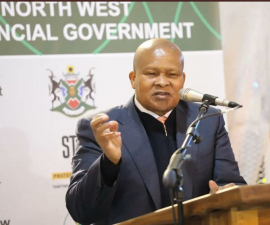
North West Premier Kaobitsa Bushy Maape has appointed a panel of experts to help the province lure investments and drive the economy to full recovery.
This will be done through the resuscitation of the Growth and Development Strategy.
“The panel will also be responsible to look at the status of the provincial State-Owned Enterprises (SOEs) and make recommendations to the provincial government on how these institutions can contribute in driving the provincial economy to full recovery.
“With the provincial unemployment rate currently sitting at around thirty-four percent (34 %) government believes SOEs can play a meaningful role in repositioning the provincial economy by partnering with various financial and commercial institutions to attract investments,” the provincial government said on Thursday.
The panel will also be expected to advise government on the feasibility of resuscitating old and abandoned projects by turning them into mega projects.
This includes exploring and devising strategies in initiating new mega projects through various infrastructural projects.
The appointment of these experts forms part of a broader strategy by government to create employment and address the scourge of poverty and income inequalities afflicting many communities across the province.
The Premier said the resuscitation of the Growth and Development Strategy is a step in the right direction to attract investments and create opportunities for locals.
“There is a glimmer of hope in what we are trying to achieve. In the past few months, I have been crisscrossing the province speaking to different stakeholders on how we can resuscitate the economy. All of them have made a commitment to work with us in achieving our intended objectives,” Maape said.
The Premier believes that through infrastructure development the provincial government will be able to respond to a number of challenges confronting the province and reposition the province as a viable destination for investments.
“Through this initiative we will be able to contribute to the province’s Gross domestic product (GDP) and this will in turn create opportunities for upcoming entrepreneurs. Critically this will put us in a better position to create jobs for our people so that they can be self-sufficient,” Maape said.
The panel of experts include professionals from various academic backgrounds as well as industries and organizations.
They will work hand in glove with senior government officials in seeing to the full implementation of the aforementioned plans.
Poppy Khoza appointed as ICAO President
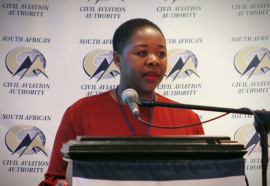
Minister in the Presidency for Women, Youth and Persons with Disabilities, Maite Nkoana-Mashabane, has congratulated South African Civil Aviation Authority (SACAA) CEO, Poppy Khoza, on her appointment as the first female president of the elective International Civil Aviation Organisation (ICAO) Assembly.
Established in 1944, the ICAO is a specialised agency of the United Nations (UN) responsible for safety and security of the Aviation Industry globally.
The agency must foster cooperation in the growth of the aviation industry to ensure safety and security at all times.
Nkoana-Mashabane said the appointment of Khoza is welcomed, as not many women are present in leadership roles in the aviation sector.
“This serves as another stride forward in the transformation of gender roles in leadership and the development of women in South Africa.”
“We are excited by the appointment of Khoza as the first female president of ICAO. This is a victory in a sector dominated by men and it proves that women are able to lead.
“We wish Khoza success in her role and we are confident that her set of skills will guide the international aviation sector safely into the future,” Nkoana-Mashabane said.
During her seven years at the wheel of SACAA, Khoza has received seven clean audits and awards from Auditor General SA (AGSA) and 87, 3% for Aviation safety against the world average of 65% audited by ICAO.
Expropriation Bill not intended to seize land – De Lille

Public Works and Infrastructure Minister, Patricia de Lille has moved to assure South Africans that government has no intention of using the Expropriation Bill to arbitrarily seize land from private owners.
She was speaking during a National Assembly debate on the bill on Wednesday evening.
The bill was passed in the house on Wednesday, 14 years after it was first introduced and is aimed at replacing the Apartheid era Expropriation Act of 1975.
“I am certain we can agree [arbitrary expropriation] is not the kind of pain and injustice that democratically elected representatives will subject South Africans to again. It is our responsibility to correct the historic injustice of land ownership patterns in South Africa.
“It is extremely dangerous to suggest that government will arbitrarily take people’s property such as their homes. [Land] is an emotive issue. Across the country, there is still great pain being felt by people of colour who were stripped of their homes and denied the right to own property under the Apartheid regime.
“We can debate our points but what is wrong is to instil fear mongering and distort the facts in a debate about land and this is done all too often. Many times, those against the Expropriation Bill have been people who were never subjected to laws that stripped people of their property or rights to own property,” de Lille said.
De Lille, however, emphasised that the “injustices of the past” must be corrected in democratic South Africa.
“We must remember that still, today, mainly people of colour live on the outskirts of our towns and cities, far away from economic opportunities and do not own any land, thanks to the apartheid regime’s draconian laws.
“It is our responsibility to correct this historic injustice. These are the wrongs of our past that we have been working to remedy since the advent of South Africa’s democracy in 1994,” she said.
She explained that the new bill has been drafted in order to ensure that legislation is in line with Section 25 of the Constitution.
“The 1975 Act is inconsistent with the Constitution in many respects. The current bill proposes to bring the law in line with the Constitution.
“The Constitution provides that compensation for expropriation must be “just and equitable” having regard to all relevant circumstances.
“The bill outlines circumstances when it may be just and equitable for nil compensation to be paid. It does not prescribe that nil compensation will be paid in these circumstances. The bill provides that the amount of compensation will be determined by the courts,” she said.
SA contributes vaccines to West Africa
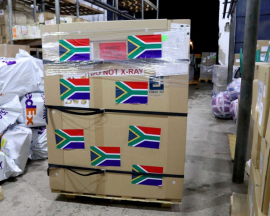
Deputy Minister of International Relations and Cooperation, Candith Mashego-Dlamini, will hand over vaccines in Liberia and Sierra Leone this week.
“It is envisaged that South Africa’s contribution of 79 200 doses of the COVID-19 Johnson & Johnson vaccines shall deepen the mutually beneficial cooperation with Liberia and enhance our friendship and relations with the people and government of Liberia,” the Department of International Relations and Cooperation said.
The Deputy Minister’s travel started on Monday and will conclude on Friday.
Government has signed an agreement with the African Vaccination Acquisition Trust (AVAT) to contribute a total of 2 030 400 doses of the Johnson & Johnson COVID-19 vaccine to African countries. The agreement was signed through the African Renaissance Fund (ARF).
AVAT was formed following the establishment of the African Union’s COVID-19 African Vaccination Acquisition Task Team (AVATT) in November 2020 by President Cyril Ramaphosa as the then Chairperson of the AU.
The contribution, which will be made to the people of Liberia by the South African government, was produced at the giant pharmaceutical manufacturing plant in Gqeberha, South Africa, operated by Aspen Pharma.
The department said South Africa and Liberia enjoy strong bilateral relations.
NSFAS 2023 application cycle opens

The National Financial Aid Scheme (NSFAS) 2023 application cycle has opened.
Higher Education, Science and Innovation Minister, Dr Blade Nzimande, made the announcement of Wednesday’s (28 September) opening of the application process at a briefing on Tuesday.
Briefing the media, Nzimande said the scheme resolved to open the application cycle early, as opposed to the previous year, in order to give prospective applicants enough time to submit their applications and supporting documents.
Giving an update report on NSFAS funding for the 2022 academic year, Nzimande said a budget of R43 billion was allocated to the scheme towards the beneficiaries’ tuition fees, including food and travelling allowance, and study material.
He said 985 672 applications were received with approximately 140 636 application unsuccessful.
Of the applications received, 739 526 applications were provisionally funded pending registration from their respective institutions.
“[The] majority of unsuccessful applicants failed to provide sufficient evidence to support their application for funding; exceeded the financial eligibility threshold; already achieved the highest level of qualification that NSFAS funds, exceeded the N+ rule and being non-compliant to the academic pathways of the TVET college sector,” Nzimande explained.
Over 200 000 SASSA beneficiaries received instant approvals
As part of the system’s improvements, Nzimande said NSFAS introduced real-time response to funding applications from applicants who are beneficiaries of South African Social Security Agency (SASSA), and 287 217 of those applicants received instant approvals because “beneficiaries in the SASSA category often receive automatic qualification for funding.”
“Currently, approximately 708 147 applicants are being funded by NSFAS across our 26 public universities and 50 Technical Vocational Education and Training (TVET) colleges. We are also working with the National Treasury to ensure that we align the Post School Education and Training (PSET) calendar with government funding calendar to ensure that NSFAS has reserve funds prior to the reopening of PSET institutions.
Improving the application system
In a bid to improve its application system and process to simplify it for prospective applicants, Nzimande said this year, NSFAS has implemented a number of enhancements to the system to ensure a seamless application experience.
He said the NSFAS online application portal was redesigned to be more user friendly and closer to other platforms that prospective applicants are accustomed to such as WhatsApp, Twitter, Facebook, Instagram.
“The application process itself has been simplified and the questions asked are easier to understand by the public. Additionally, applicants can pause the process and continue at a later stage without restarting from scratch, something that was not possible in previous cycles.
“Over and above the enhancements, NSFAS developed additional channels of application to cater for applicants from diverse backgrounds, also keeping in mind that most of the prospective applicants are young people who embrace the digital way of doing things,” Nzimande said.
The new channels include a mobile App, USSD and WhatsApp, where one can apply for NSFAS funding, track application status and cancelling applications amongst other things, which is normally done through the web portal.
Furthermore, to ensure that no applicant is left behind, Nzimande said NSFAS will embark on an outreach campaign, to ensure that individuals who do not have access to technological devices that enable them to apply online are given the necessary resources and support to apply.
How to access NSFAS bursary
You qualify for a NSFAS bursary if you are a South African citizen who plans to study in 2023 or you are already studying at a public university or TVET college and you meet the following requirements:
- You are SASSA grant recipients or
- Your combined household income is not more than R350 000 per year or
- If you are a person living with a disability, your combined household income should not be more than R600 000 per year or
- If you are a student who begun their university studies before 2018 and their household income is not more than R122 000 per year.
Visit the NSFAS website at www.nsfas.org.za for more information on the required supporting documents and the application process.
Good governance leaves little room for corruption
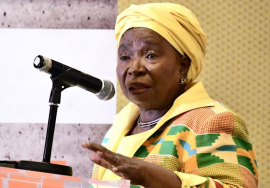
If unethical practices continue to plague local governance, the country will not be able “investigate and prosecute” away crippling government corruption, says National Director of Public Prosecutions, Advocate Shamila Batohi.
Batohi was addressing the launch of the Local Government Anti-Corruption Forum (LGACF) and the Local Government Ethical Leadership Initiative by Cooperative Governance and Traditional Affairs (CoGTA) Minister, Dr Nkosazana Dlamini Zuma.
The LGACF was established in October 2020 under the chairship of the Special Investigating Unit (SIU), supported by the Department of Cooperative Governance (DCOG) as the Secretariat.
The forum was formed with the intention to foster collaboration and coordination amongst the various stakeholders at the local government level on anti-corruption matters.
Delivering the keynote address, the Dlamini Zuma said where there is good governance, there is “little room for corruption”.
“If there’s accountability, you minimise corruption. If there’s integrity, you minimise (corruption). If you are value-driven, you also minimise corruption. So we can’t just talk about the end result, you must talk about the whole value chain.
“If the value chain is right, the end result will be right. If the value chain is wrong, then the end-result will be wrong. We must have ethics, integrity, accountability and good governance,” she said.
Corruption, she said, was “an end result of an unethical behaviour, bad governance and non-accountable leadership”.
She urged leaders across society to “do the right thing”.
“As leaders, we must be the conscience of the organisation. We must make sure that in the organisation, the right thing is done. You must make sure that there is accountability.
“At the end of the day, you must be prepared to take responsibility for the wrongdoing. It is people who do wrong, it is not local government as a sphere. It is not government as an institution, it is people who do wrong,” said Dlamini Zuma.
She said it is critical for society to be ethical, disciplined and transparent.
On law enforcement, she said agencies should be accountable and impartial.
She decried the time it takes for cases to be finalised in court after the initial arrest of suspects, saying this has the potential to discredit police investigations and prosecutions.
“It erodes the trust in (law enforcement systems),” she said.
Special Investigating Unit (SIU) head, Adv. Andy Mothibi, said corruption is prevailing in every sector of society, and not just local government.
An anti-corruption vulnerable sector risk assessment conducted by the National Anti-Corruption Local Government Ethical Leadership Initiative (LGELI) found that corruption is perverse in all sectors of society.
The exercise identified risks in the health, local government, infrastructure, border management, State-owned entities, education, NPOs, and energy sector, among others.
Batohi said while government has good crime fighting strategies, the country often does not implement these.
“Together in law enforcement, we are working really hard on the reactive side of fighting corruption. But let us [face facts]: the root cause – particularly in the local government space – is a lack of good governance and ethical leadership. That is where we need to focus,” she said.
The NDPP reiterated that the country cannot “investigate and prosecute” itself from the problem of corruption, “as long we do not attend to the root cause”.
“If you look at our anti-corruption strategy, there is a huge part of it that deals with the preventative side, which requires a huge range of government stakeholders to come to the party,” she said.
Deputy President to reply to oral questions in National Assembly
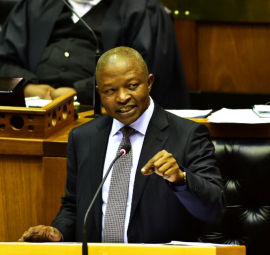
Deputy President David Mabuza will this afternoon respond to questions for oral reply in the National Assembly.
“Questions posed to the Deputy President by members of political parties represented in Parliament cover issues on Eskom and the transformation of the energy sector to achieve long-term energy security,” his office said on Wednesday.
The session is due to take place today at 14:00 and will be live broadcast on Parliament TV on DStv channel 408.
Mabuza will also offer a response on the specific measures underway to curb illegal mining activities.
“To this end, Deputy President Mabuza will outline various measures that government, through the Justice, Crime Prevention and Security Cluster, has taken to deal with the economic crimes that are negatively affecting the mining environment and the economy.
In addition, his office said the country’s second-in-command will also brief Parliament on the outcomes of the recent Communal Land Summit and how government intends to translate the summit resolutions into practical actions that will develop and grow rural economies.
“Furthermore, as Chairperson of the Presidential Task Team on Military Veterans, the Deputy President will apprise Parliament on progress made in resolving the issues raised by the military veterans.”
Summit to place spotlight on capacitating local government
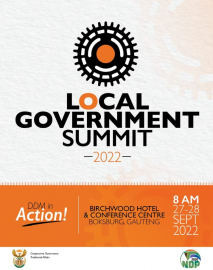
Government will later this month host the Local Government Summit in an effort to strengthen capacity for an ethical and developmental state.
This said the Department of Cooperative Governance and Traditional Affairs (CoGTA), will be along the lines of resilient, sustainable, coherent, cohesive, integrated, non-sexist, vibrant and climate-smart communities.
The two-day Summit will run from 27 to 28 September 2022, under the theme – “DDM in Action – Towards an Ideal Municipality”.
It will be held at the Birchwood Conference Centre, in Boksburg, in Gauteng.
CoGTA spokesperson Lungi Mtshali said the summit will draw participation from multiple perspectives including senior government leaders across all spheres of government as well as legislatures.
“Most importantly, key stakeholder representatives from business, academia, traditional leaders, civil society, women, youth and persons with disabilities, to cite but a few,” he said.
He added that the summit aims to strengthen local government.
“The Constitution enjoins the three spheres of government to recognise their distinct mandates with due appreciation of their interdependencies and interrelatedness. The summit, therefore, aims to strengthen and support the local government as per section 154 of our Constitution. In terms of the act, the national government and provincial governments are obligated to support and strengthen municipalities to manage their own affairs and perform their functions.
“Our State of Local Government Report, amongst other matters, confirms the underlying root causes of the less ideal municipality and the shortcomings of cooperative governance that manifest at the coalface of government – in municipalities where communities experience government,” said Mtshali.
The summit comes in the wake of the recent promulgation of the Municipal Systems Amendment Act 2022, which signified an era of demonstrable interventions to strengthen municipalities to exercise their powers to the benefit of communities.
“The summit will serve as a coalescent platform to hone good practices for replication and an opportunity to find sustainable solutions to challenges facing local government and cooperative governance by extension.
“The summit will bring to the fore the importance of institutionalising the District Development Model (DDM) as an operating model for cooperative governance. Through the DDM, all spheres of government operate coherently guided by an integrated plan ‘One Plan’ in collaboration with social partners in every district and metro space to build inclusive local economies and improve the lives of citizens,” he said.
He added that key to the summit will be to emerge with a collective programme of action to enable an ideal municipality that strategically demonstrates the pursuit of a long-term development trajectory anchored on the transformational areas of the One Plan. These, he said, “pertain to governance and financial management as well as integrated service delivery to bolster economic positioning through infrastructure engineering and spatial restructuring”.
R7.7bn Sappi Saiccor upgrade project a boost for KZN
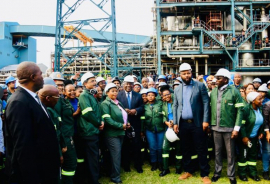
President Cyril Ramaphosa has lauded the opening of the R7.7 billion Sappi Saiccor Mill upgrade and expansion project in Umkomaas, KwaZulu-Natal.
The Sappi Saiccor upgrade and expansion project is aimed at increasing the capacity and global competitiveness of Sappi Saiccor Mill, while also creating employment opportunities in the short- and lon- term.
The project marks the fulfilment of a commitment the company made at the first South Africa Investment Conference in 2018, when President Ramaphosa called for investments into the South African economy.
The first Investment Conference was convened with the aim of raising R1.2 trillion in new investments over five years and four years later, more than R1.1 trillion worth of investment commitments has been achieved.
On Tuesday, President Ramaphosa said the opening of this project demonstrates just what the commitments made at the Investment Conference mean in reality.
“Today, we are witnessing far more than a financial investment. We are witnessing an investment in infrastructure, people, innovation, technology and sustainability. It is an investment in community development, in the local economy, in our export capacity and in the industrialisation of our economy,” the President said.
The Sappi Saiccor Mill is a major role player in KwaZulu-Natal, contributing over R6.7 billion annually to the local economy. The mill employs more than 1 200 staff and 700 contractors.
The President said this project and many others are an example of the impact of the investment drive. He said these projects show that South Africa’s economy is on the road to recovery.
“These investments have been made possible, thanks to the partnership between government and business to drive growth and industrial development.
“The opening of this expansion project is the result of hard work, persistence, corporate vision and above all, is a testament to the enduring commitment of companies like Sappi to South Africa and its people,” he said.
WATCH |President arrives in Umkomaas  Ceremonial ribbon-cutting at Sappi Saiccor Mill
President Ramaphosa said the project supports a number of the country’s national economic priorities.
Firstly, he said it supports sustainability and moving towards a circular economy.
“This facility supports our national carbon reduction goals. I am told that by using the best available technology, the aim is to halve CO2 fossil fuel emissions, significantly reduce plant CO2 emissions, reduce water consumption and reduce waste to landfill from coal ash by 48%.
“It is noteworthy that Sappi continues to use recycled and sustainable wood sources to produce circular and innovative bio-based products,” he said.
Secondly, the President said the project contributes to beneficiation.
“Through this mill, Sappi is taking a product from South Africa’s soil and producing dissolving pulp.
“More than that, this mill is producing employment, developing skills and adding economic value to an important raw material,” the President said.
The project further contributes to rural and enterprise development by sourcing the much raw material feedstock from rural communities.
The President added that the realisation of Sappi’s investment in Umkomaas sends the strongest signal that “our home-grown multinationals are taking the lead in investing in our economy”.
He said this demonstrates confidence to other potential investors that South Africa is indeed a favourable place to invest in and to do business.
“It shows that you are ready and willing to play your part in developing our communities by employing more people and giving greater opportunities to small businesses.
“I look forward to seeing this project expand and thrive, and to witness its benefits for the people of Umkomaas, the economy of KwaZulu-Natal and the progress of our nation,” he said.