
National Assembly approves Fazel for Inspector-General of Intelligence
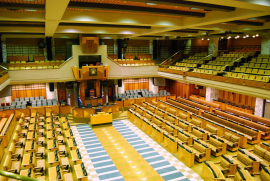
The National Assembly (NA) has approved the nomination of Imtiaz Ahmed Fazel for appointment as the Inspector-General of Intelligence (IGI) of South Africa.
In a statement, Parliament said: “The [Intelligence Services Oversight] Act mandates the Joint Standing Committee on Intelligence (JSCI) to recommend a candidate for approval by at least two thirds of the National Assembly Members.
“Once the House approves the recommendation, the name is then sent to the President of the Republic of South Africa to consider the nominee for appointment as an IGI. The IGI position became vacant on 15 March 2022.”
Parliament said JSCI embarked on a thorough appointment process, which included the publishing of an advertisement in national and local newspapers in all official languages on 2 June 2021.
“A number of inquiries were received after the closing date and necessitated the committee to extend the closing date to enable those who missed the advertisement an opportunity to apply for the position.
“The committee extended the deadline to 30 September 2021 to ensure maximum public consultation and participation on the work of Parliament, as it was cognisant of the importance of the position.
“The committee received a total of 25 applications for the position, which, following a thorough screening process, were found to meet the requirements, in terms of the Intelligence Services Oversight Act.
“The JSCI shortlisted 12 candidates for interviews in relevant areas regarding the role and functions of the IGI, based on the Constitution, the Act, other relevant legislation, and other matters such as the High-Level Review Panel report.”
Following deliberations, the JSCI resolved by a simple majority of members present to nominate Mr Imtiaz Ahmed Fazel for approval by the National Assembly, and for recommendation to the President for appointment as the IGI.
The sitting also approved a report of the Portfolio Committee on Communications for the appointment of four candidates to serve on the Independent Communications Authority of South Africa (ICASA) Council in terms of f section 5(1B) of the Independent Communications Authority of South Africa Act (Act No 13 of 2000).
The four candidates are: Ms Nompucuko Nontombana, Ms Dikeledi Mushi, Ms Thabisa Faye and Ms Ntombiza Sithole.
Dlamini-Zuma calls for policy coherence across government
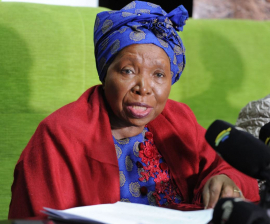
Cooperative Governance and Traditional Affairs Minister, Dr Nkosazana Dlamini-Zuma, has appealed for policy coherence that includes joint planning, monitoring and evaluation – by all the three spheres of government – for the advancement of the developmental agenda of the country.
She made the call while delivering a keynote address at the two-day Local Government Week 2022 at the Lagoon Beach Hotel in Cape Town on Tuesday.
The week, which was launched in 2012, is hosted by the National Council of Provinces (NCOP), in partnership with the South African Local Government Association
Addressing delegates, the Minister said government’s District Development Model (DDM) seeks to achieve policy coherence, as it helps municipalities comply with legislation and further aims to professionalise the sector.
She said the DDM seeks to ensure professionals occupying strategic positions in this sphere of government have the requisite skills in ongoing policy and legislative consideration. The DDM also seeks to meet the corporate needs of municipalities and high-level standards of service delivery.
According to the Minister, in many municipalities, government is the biggest source of jobs, economic opportunities, and any prospect of upward social mobility.
She said the only means by which we can realise common prosperity is by having a strong and vibrant economy in each local area that harnesses the local endowments for its residents.
Dlamini-Zuma contended that collective oversight and accountability, through the local sphere of government, can bear the desired impact when the oversight is cross-sectional.
NCOP Chairperson, Amos Masondo, lauded the Municipal Systems Act as a legal weapon to professionalise the municipal sector.
The Act, which sets procedures and criteria for the appointment of municipal officials, empowers municipalities to meet their constitutional mandate of service delivery outcomes and bring about a new chapter of development.
Masondo underscored the failure of municipalities to acquire the necessary capacity to function optimally as a breach of their constitutional mandates. He called on local government practitioners to pull all the stops to ensure that the local sphere of government receives the required support and has the capacity to carry out its functions.
He said the support given to municipalities must include the empowerment of the people to help influence and ensure the kind of development they would like to see in their respective communities.
The programme is intended to provide a platform for sharing experiences and best practices, and is an opportunity for national reflection on issues affecting local government.
The overall mission was to deliberate on the ways and means to improve the lives of the people by taking the appropriate steps to strengthen local governance to enhance service delivery.
Masondo also conceded that with the benefit of hindsight in designing the local government structures, certain assumptions were made which ought to be revisited. These include assumption that municipalities would have the capacity to raise revenue to fund their services.
He said: “We know now that some of our municipalities do not have a meaningful revenue base – that some have no tax base at all. Yet, they still need resources to fulfil their constitutional responsibilities towards citizens, irrespective of the circumstances.”
However, he agreed that the audit regressions recorded by the Auditor-General’s report in 61 municipalities are telling of the capacity and accountability challenges that municipalities are faced with in upholding expected service standards prescribed in the Constitution.
He further highlighted the continued support that Parliament gives to municipalities through various committee activities, among them the Provincial Week, which was held in April this year under the theme ‘Assessing the State Capacity to Respond to the Needs of Communities’.
The programme continues on Wednesday with the NCOP House Chairperson, Jomo Nyambi, Secretary to Parliament, Xolile George, and a number of MECs among the speakers and panellists on a range of topics.
Government concerned about GDP figures

Minister in the Presidency, Mondli Gungubele, has expressed concern at the results of the Gross Domestic Product for quarter two, which show that the GDP decreased by 0.7% after two consecutive quarters of positive growth.
“As a country, we have experienced slow growth and rising unemployment. Nonetheless, in the midst of these difficulties, our general public and economy has shown to be strong,” Gungubele said on Tuesday.
The Statistician-General attributed the contraction of the GDP to a number of factors that include load shedding, the floods in KwaZulu-Natal and Eastern Cape, as well as the higher cost of living and inflation.
“As indicated by Stats SA, manufacturing is the largest industry in KwaZulu-Natal and the damage caused to factories and plants, and disruptions to logistics and supply chains, decreased national manufacturing output by 5.9%.
“It was also a heightened period during which the globe experienced slow economic growth. South Africa, like many countries around the world, experienced increases in the prices of food, housing and fuel, which were events beyond the control of government,” the statement issued by the Government Communication and Information System (GCIS) said.
Although the GDP contracted, Gungubele noted that there are signs that the economy is on the road to recovery.
“The latest employment figures, specifically, bear testament that our plans are beginning to bear fruit,” the Minister said.
According to the latest results published by Stats SA, 648 000 jobs were gained between the first quarter of 2022 and the second quarter of 2022.
“The figures indicate that the priority areas of the Economic Reconstruction and Recovery Plan, such as mass public employment, economic reform and infrastructure development, are having an impact on job creation,” GCIS said.
Since the national energy plan was announced, government has been working with various stakeholders on implementation and policy reform.
The proposed amendment to remove the licensing threshold for electricity generation facilities has been published for public comment.
“Government is hard at work to increase our energy capacity through private sector generation, which will ensure that the country has constant supply at affordable prices.
“In addition, government’s drive to create black industrialists is gaining momentum through sectoral masterplans, which drive localisation that benefits black-owned businesses.
“As part of government’s Poultry Masterplan, 10 black contract growers have been established, with an investment of R336 million. The Black Exporters’ Network further connects black-owned companies in food, engineering products, auto components and beauty products,” GCIS said.
Furthermore, to alleviate the burden on motorists, government introduced the temporary suspension of the general fuel levy to assist in the impact of higher fuel prices during the second quarter.
Government extended the temporary reduction of the general fuel levy by R1.50 per litre, which allowed the economy to adjust to the new reality of higher fuel prices from rising crude oil prices.
“We also welcome the decrease of the fuel prices, as announced by the Department of Mineral Resources and Energy. This was because of lower oil prices and a stronger rand against the dollar. The news will make it slightly easier for consumers, on the cost of logistics in the country, and provides an opportunity to boost local tourism,” Gungubele said.
The GCIS said while only moderate, these gains show that the economy remains robust and that interventions such as the Economic Reconstruction and Recovery Plan (ERRP) are working.
“The country’s macro-economic interventions have been crucial in restoring financial stability through better revenue collection and fiscal prudence. Government remains confident that through collaborative efforts, and implementation of the ERRP, we can improve our economic growth.”
South Africans urged to explore their own backyard
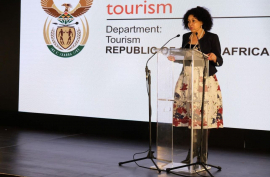
Tourism Minister Lindiwe Sisulu has called on South Africans to travel domestically to get a better understanding of the affordable, exciting and world class attractions that are available on our own doorstep.
“It also serves as an opportunity to promote domestic tourism and create a culture of travel amongst South Africans,” Sisulu said.
Speaking at the launch of Tourism Month in the Western Cape, Sisulu said the country celebrates Tourism Month to highlight and bring to the fore the importance of the tourism sector, its contribution to the economy and the potential it has to transform the trajectory of the country.
“Tourism Month is in line with our country’s vision to ignite inclusive economic growth, sustainable job creation, and transformation, which are all critical for our industry and we need to aim to continue with our collective efforts in driving this,” Sisulu said.
Sisulu explained that Tourism Month aims to generate awareness of the enormous contribution that the tourism industry makes to provincial and national economic growth and job creation.
“This is also the month that we host our annual domestic campaign, Sho’t Left Travel Week, to encourage South Africans to travel and explore their country at discounted rates. We do this by partnering with tourism trade, to negotiate the best rates for South Africans, making tourism accessible to them.”
The Minister said South Africans supported and sustained the tourism sector when the world was not coming.
She added that domestic tourism has been leading the sector’s recovery.
“This recovery is evident in the domestic tourism performance figures for the first half of 2022, with holiday trips increasing tremendously.
“Domestic travel figures have exceeded 2019 which is really fantastic and in the first half of the year, South Africa recorded over a 100% increase in domestic trips compared to the same period in 2021.”
The Department of Tourism recently put out the Draft Framework for Community Participation in Tourism (FCPT) for public comments and is in the process of finalising it.
“The FCPT in line with the Tourism Sector Recovery Plan, emphasises the importance of developing and reinforcing domestic, regional, and local tourism that is inclusive and prioritises community well-being.
“The objective is to ensure that tourism provides maximum benefit to communities where tourism serves as a catalyst.
“The goal of this FCPT is to guide the department, provincial tourism departments, and other key tourism stakeholders in their efforts to encourage community participation in the tourism sector and, as a result, to increase the positive impact tourism can have on local economic development and community quality of life,” Sisulu said.
Police Ministry satisfied with improved safety and security in Krugersdorp
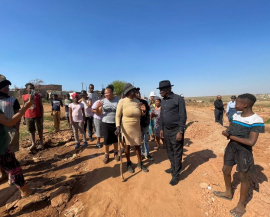
The Police Ministry says it is encouraged by the strides made in improving the safety and security of residents in Krugersdorp, West of Gauteng, since the deployment of specialised SAPS units to the area.
The West Rand is the epicentre of illegal mining activities in the Gauteng province and has seen an increase in crimes associated with illegal mining.
In July, eight women were raped allegedly by a group of armed men, believed to be illegal miners or so-called ‘zama zamas’, operating in the mining town of West Village.
On Sunday, the ministry and SAPS management – led by Police Minister, General Bheki Cele and National Police Commissioner, General Fannie Masemola – conducted a walkabout in West Village and Reitvallei in the West Rand, where they interacted with residents to assess police progress in addressing community safety concerns.
Police have arrested 14 people linked to the gang rape, including a minor and all suspects are going through court processes, facing multiple charges of rape, sexual assault, robbery with aggravating circumstances and the Contravention of the Immigration Act.
The suspects are expected back in court on 28 September 2022.
Many residents in both areas revealed that their safety has improved drastically since many illegal mining operations have been halted. At the same time, some members called for more police operations focusing on the areas where illegal miners are still operating.
Cele assured the communities that police deployments to improve their safety will remain indefinitely.
“We have come to listen to these communities and hear for ourselves about people’s lived experiences since we have put in the specialised units of the SAPS in the West Rand.
“What is important now is for the SAPS to sustain the momentum at which the operations started on, and this will ensure that illegal mining and general criminality is kept at a minimum and eventually stopped altogether,” Cele said.
The Police Ministry has welcomed the continued police operations targeting illegal mining in the West Rand, leading to the arrests of scores of suspects each week.
The arrests are related to, among other crimes, the Contravention of the Immigration Act and Contravention of the Precious Metal Act. This after some suspects were found in possession of gold bearing materials associated with illegal mining.
Public Works comments on legal council building fire
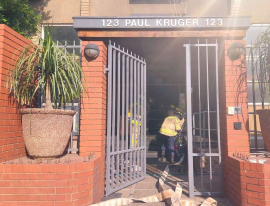
The Department of Public Works and Infrastructure (DPWI) says it is aware of a fire that broke out at the Legal Practice Council building located at 123 Paul Kruger Street in Pretoria.
According to the department, the fire started at approximately around 08:20 on Monday.
“It is worth noting that the fire did not spread over to the North Gauteng High Court building that is situated right next to the Legal Practice Council building. None of the buildings that are under the custodianship of DPWI were affected by the fire outbreak,” the department said in a statement.
It added that there was no evacuation that was conducted at the North Gauteng High Court and that court proceedings continued uninterrupted by the incident.
“As DPWI, we will, however, monitor the situation in order to prevent any flares to the properties under our custodianship,” the department said.
In a tweet, City of Tshwane Mayor, Randall Williams said firefighters speedily managed to put out the fire.
Government condemns discrimination based on nationality in healthcare
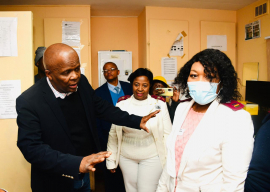
Government has condemned the actions of citizens who have been preventing people from other countries accessing healthcare services at Kalafong Hospital in Atteridgeville, Pretoria.
“These actions by a few are infringing on basic human rights. They go against the tenets of hard fought democracy,” government said in a statement.
In South Africa, the right to access basic health services is a basic human right that is guaranteed by the Constitution.
“South Africa is governed by the rule of law, which makes provision for every person in the country, regardless of their nationality or documentation status to access healthcare.
“The victimization of patients and hospital employees, who are suspected of being foreign nationals should be condemned by all.
“The Southern African Development Community Agreements, to which South Africa is a party, allows foreign nationals from member states to receive the same care as all South Africans.
“Preventing access to healthcare can have dire consequences to patients and have a negative impact on the public health system and to citizens at large.
“We understand that the public health system is overburdened because of a myriad of challenges, however, doctors and healthcare workers have an obligation to provide healthcare to those in need,” said Minister in the Presidency, Mondli Gungubele.
Gungubele said the Hippocratic Oath guides the actions of doctors, which includes them not withholding services because of religion, nationality, race, politics or social standing.
“Government is hard at work to improve our healthcare system and deal with challenges. South Africa subscribes to its constitutional principles which protect the human rights of all people leaving in the country.
“South Africans should strive to live in harmony with fellow Africans and be part of building a better South Africa and a better Africa,” Gungubele said.
DPSA announces funded courses for public servants

Public Service and Administration acting Minister, Thulas Nxesi, on Wednesday announced the roll out of a suite of funded courses for public servants offered by the National School of Government to be delivered at no cost to government departments.
The courses will be delivered as part of promoting the professionalisation of the public service and improving the performance of public servants in their respective roles and responsibilities in the three spheres of government, which are national, provincial and local.
These courses will be allocated and shared per province and national departments.
The following funded courses are available for immediate enrolment by public servants in the three spheres of government:
- Citizen-centred Service Delivery: This programme will help public servants to re-engineer their relationship with the public and reflect on how they are delivering services to the citizens.
- Art of Facilitation for progressive realisation of socio-economic rights: Empower Traditional Leaders to act as economic change agents in their communities and be able to create sustainable jobs and community wealth while also building an active rural citizenry who participate in and support economic development. It will also support Traditional Leaders to identify and utilise local natural resources in an environmentally sustainable way.
- Art of Facilitating Participatory Community Engagement: To build active citizens who know and assert their rights and can hold government accountable and to promote societal progress through building an understanding among government officials on how to engage communities.
- Youth Development (Personal Mastery): To prepare young people, especially interns for work beyond government with generic employability skills such as self-management, emotional intelligence, critical thinking and decision-making, networking as well as applying for jobs in the public service.
- Supply Chain Management for Public Service: To develop public sector supply chain management skills in order to accelerate service delivery and alleviate adverse supply chain management related findings in departments and public entities.
- Avoiding Irregular, Fruitless and Wasteful Expenditure: Empower public officials with skills required for managing government expenditure in order to prevent irregular, unauthorised, fruitless and wasteful expenditure.
- Programme and Project Management: To empower public servants to design and deliver programmes aimed at advancing the National Development Plan Vision 2030.
- Coaching for Leadership Development: To empower public servants with coaching skills and tools to enhance management individual development skills sets as well as organizational development.
- Evidence-Based Policy Making and Implementation: To empower officials with technical skills to be able to use a range of tools to support policy development and implementation processes.
Minister Nxesi emphasised the need for ongoing education, training and development of public servants.
“Government is serious about building a capable state and a public service that has the requisite skills to serve the public efficiently, effectively and with courtesy.
“We will continue to invest in the training and development of public servants so that they can fulfil their tasks empowered by the necessary knowledge and expertise. We invite government departments in the three spheres to make use of this opportunity and enrol officials for this much-needed training,” said Minister Nxesi.
Enquiries on the courses should be made to the following email address: fundedprogrammes@thensg.gov.za.
Celebrating the magic of women

With Women’s Month drawing to a close today, South African women continue to carry the torch for a better tomorrow.
Businesswoman Khosi Kumkani says that there’s an innate magic to women.
“We are creators and we should start thinking like that, even in the business space. We have so much magic inside us,” she told SAnews.
Kumkani is the owner of RenewablesZA a drop shipping platform for suppliers and manufacturers that offer products of bioenergy like wood pellets and bricks for heating applications.
The mother of two urged women to not let gender be an obstacle to finding success in business.
“Business has never been a gender issue. I have learnt that women can be successful in any kind of business about which they are passionate,” she said of the company she started in 2017.
In his Women’s Day address earlier this month, President Cyril Ramaphosa said women entrepreneurs need companies, departments, and customers to buy their products and services.
Government, he said, has committed to set aside 40% of public procurement spend to women-owned businesses. This is in addition to workshops being held countrywide to equip women with skills to do business with both government and the private sector.
In addition, government will not spare any effort to build a non-sexist society in which men and women have equal opportunities and prospects.
Kumkani adds that things are not easy for women to scale up their businesses. This as many women still shoulder the majority of household responsibilities.
”There is a subtle but strong belief and expectation that the woman will be the parent who raises the children, while the man works. The oldest daughter is often given the role of the childminder, particularly in rural areas.”
She added that while government has done a lot in promoting woman in business, women’s responsibilities and a lack of support at home are often major obstacles to running a business.
“We need support beyond just funding,” she said.
The President said the country commemorated Women’s Month deeply aware of the many challenges that women are confronted with on a daily basis. Poverty, discrimination and violence continue to hold back the progress of the country’s women and girls.
Throughout the month, government has held various events highlighting the successes that women continue to make in their communities while also taking cognisance of the challenges that continue to beset women.
The year’s Women’s Month marked the 66th anniversary of the march of approximately 20 000 women to the Union Buildings to petition against the pass laws of the country at the time.
The month’s programme is based on the ongoing interventions across the work of government, civil society and the private sector within the context of the national priorities outlined by government.
Hosted under the theme, ‘Women’s Socio-Economic Rights and Empowerment: Building Back Better for Women’s Resilience!’, this year’s Women’s Month was a call to action to all of society, government and partners to take tangible steps forward in responding to the most persistent challenges affecting the lives of women and girls.
President to update Parliament on key national issues
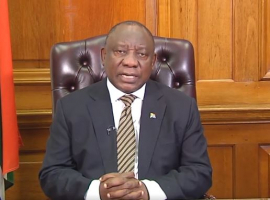
President Cyril Ramaphosa will this afternoon appear in the National Assembly to reply to oral questions on a wide range of key national issues, including South Africa’s response to illegal migration and actions at local government and community level to combat the prevalence of rape and other forms of gender-based violence.
The President will also outline the importance of the recent Presidential Social Sector Summit in enabling civil society to be effective in tackling poverty and inequality as part of the national effort to overcome the many social ills that confront communities.
In a statement, The Presidency said the President will interact with Members of Parliament on a virtual platform during the hybrid session due to his preparation in Gauteng for public and other engagements during the course of this week.
“As part of his replies, the President will brief Parliament on how Eskom is preparing to integrate renewable energy capacity into the national grid as part of increasing energy supply and reducing the risk of load shedding.
“Members of Parliament have also submitted questions on the investigation by law enforcement agencies into allegations around the President’s Phala Phala game farm, as well as whether the South African National Defence Force has a role to play in combating criminality in the country,” the statement read.