
Parliament calls for public engagement over beleaguered Lekwa municipality
Parliament’s Portfolio Committee on Cooperative Governance and Traditional Affairs (COGTA) has appealed to sector departments to assist the embattled Lekwa Local Municipality in Mpumalanga to deliver basic services.
The appeal was made on Thursday when the committee engaged with various Lekwa Local Municipality public stakeholders on a variety of issues, including service delivery and infrastructure.
The committee said after engaging with the stakeholders, it noted that there is still a lot that needs to be done regarding the stabilisation of the leadership and administration of the municipality.
“The committee heard various complaints from the residents, including non-delivery of basic services such as water and sanitation, refuse collection and non-provision of electricity.
“The committee also heard about the lack of implementation of by-laws, corrupt allocation of housing and poor service from municipal officials. The committee expresses its concern on the crumbling road infrastructure, which is riddled with potholes within the municipality.”
The committee will follow up on the specific issues that have been raised by stakeholders, particularly those that affect the Department of Cooperative Governance and Traditional Affairs.
“The committee also calls on critical sector departments to assist the municipality, particularly with services such as cleaning, roads, water and sanitation, as the municipality is very dirty.
“It was highlighted during the engagement that the municipality needs stable and visionary political and administrative leadership to uncover the municipality’s economic growth and development potential.
“After today’s engagement, the committee will table a report to the National Assembly with recommendations of what should be done.
“The committee will also continue to perform its oversight duties by demanding monthly reports on the status of the municipality from the relevant department and from the Ministers of Finance and COGTA, who are deployed by Cabinet to the Lekwa Local Municipality.
“Furthermore, the committee will continue to monitor whether action is taken on the issues that have been raised by the community,” the committee said.
On Wednesday, the committee heard that several sector departments had shown willingness to assist the municipality. It calls for that assistance to be provided in a coordinated manner with the Department of COGTA at the centre.
“To this end, the committee will also meet with the sector departments to ascertain their plans to assist the municipality.
“Committee members also urged the stakeholders to file formal complaints against municipal officials who are not doing their work. It is one of the ways residents can ensure that they have accountable and responsive municipal administration,” the committee said.
Ministers and Deputy Ministers pay for electricity, water at private residences
Government says Ministers and Deputy Ministers pay for the usage of electricity and water at their private residences, while the Department of Public Works and Infrastructure pays for the usage of water and electricity of state-owned buildings, such as official residences.
This comes after government noted an article published in the City Press newspaper dated 09/10/2022 saying “ministers pay nothing for water and electricity”.
Government said that, as stipulated in the Ministerial Handbook which contains guidelines for members of the executive, the Department of Public Works and Infrastructure (DPWI) is responsible for the costs associated with the provision of water and electricity to any state-owned residence.
A statement released by Government Communication and Information System (GCIS) said the Department of Public Works and Infrastructure is bound by government prescripts to accommodate members of the Executive.
“The Department of Public Service and Administration sets out the provisions in the ministerial handbook. These provisions are part of the package that comes with being a member of the Executive as they are living in state-owned houses in service of the country.
“The only facilities exempt from load shedding are the seat of government, which is the Union Buildings, as well as the House of Parliament. The other facilities exempt from load shedding are mines that supply Eskom with coal,” the statement read.
Government further said that people in the proximity of these facilities, may also be exempt from load shedding.
“Hospitals are required by law to have their own backup power, however, due to the continued load shedding; government is working on a plan to exempt certain hospitals in the country,” GCIS said.
Government further urges consumers to continue to pay for the services they receive so that municipalities are able to collect revenue, meet their debt obligations, and provide quality services to communities.
Government, GCIS said, will continue to provide free basic services to all indigent households.
Government consults Mpumalanga communities on just transition programmes
The Presidential Climate Commission (PCC) will hold community consultations towards the implementation of a just transition framework for South Africa in Mpumalanga this week.
The consultations are intended to mitigate the social and economic impacts of the climate transition and to improve the livelihoods of those most vulnerable to the effects of climate change.
The consultations will take place in the Emalahleni Local Municipality on Wednesday and in the Govan Mbeki Local Municipality on Thursday.
This follows the approval of the framework by Cabinet. The framework puts South Africa on a path towards reaching climate and development aspirations, implementing policies and measures that support environmental justice and equity, and ensuring progress toward the national goal of reaching climate resiliency and net-zero carbon emissions by 2050.
The PCC said the consultations will have undertakings from different social partners such as labour, youth, non-governmental organisations, business, faith-based communities and local government.
They will particularly focus on just transition programmes and initiatives in the Mpumalanga province such as the Mpumalanga Provincial Climate Compact and the Decommissioning of the Komati Power station, with responses from National Government, Local Government and Eskom.
The PCC will also give feedback on the issues raised in the last consultations in the province and work with the communities to come up with next steps for implementing the just transition framework.
ECD centres critical to nurturing SA’s future leaders
President Cyril Ramaphosa says Early Childhood Development (ECD) centres play a critical role in laying solid foundations for South Africa’s future leaders.
The President was addressing the nation through his weekly newsletter just days after opening the Little Flower ECD centre in Bizana, in the Eastern Cape.
The President emphasised that children in these centres must be nurtured.
“The young children in these centres are the next generation of South Africans who must be able to live up to their full potential as responsible, capable and outstanding citizens.
“They must be able to pursue their dreams so that we all may achieve our shared dream of a free, prosperous and happy nation,” he said.
The President added that although government does what it can to assist ECD centres, society also has a role to play in the development of South Africa’s youngest citizens.
“Preparing our youngest citizens with the tools they need to succeed in life is a responsibility we must collectively shoulder. We must continue to do all we can, as government, the private sector and development organisations, to support early childhood development.
“With the many valuable services it provides, whether it is educating our children, providing childcare for working parents or creating opportunities for entrepreneurs, ECD makes a huge contribution to the achievement of many of our developmental goals,” he said.
The President emphasised that ECD centres also contribute immensely to the upliftment of society.
“Early childhood development centres don’t just prepare our country’s youngest citizens to succeed in school; they are also an important source of entrepreneurship and job creation. These centres are an important part of the care economy. They sustain livelihoods, especially for women, which contributes to job creation in many communities.
“Since the care economy is mainly driven by women, such support goes a long way towards helping women, especially in disadvantaged communities, to become financially secure and independent,” he said.
President Ramaphosa highlighted that government has recognised the importance of ECD centres and taken steps to ensure that these centres are given the tools needed to succeed.
“As government, we have taken up the task to improve the standards of care and make resources available for ECD centres to run suitable activities for young children to prepare them for formal education. In April this year, we completed the move of the ECD function from the Department of Social Development to the Department of Basic Education.
“This is to link early childhood development to the formal school curriculum and to provide training, education and development to staff in ECD centres around the country,” he said.
Home Affairs announces new fees for passports, travel documents

Home Affairs Minister, Dr Aaron Motsoaledi, has announced new fee amendments for South African passports and travel documents in terms of section 4(1)(e) of the South African Passports and Travel Documents Act, 1994 (Act No. 4 of 1994), and in consultation with the Minister of Finance.
The amended fees, which were published in the Government Gazette No. 47256 (attached) on 06 October 2022, come into operation on 1 November 2022.
Section 4(1)(e) of the South African Passports and Travel Documents Act, 1994, enables the Minister of Home Affairs to make regulations regarding the fees payable for the issuance of a South African Passport or Travel Document, in consultation with the Minister of Finance.
The changes to passport and travel document fees were informed by the outcome of a bench-marking exercise with other countries which found that South African tariffs were up to three times lower.
The decision was also informed by the fact that production costs are much higher than what people are paying for passports. This means the Government is heavily subsidising passport holders when such a subsidy is not realised for ordinary ID applicants.
“We believe that the people who are able to travel out of the country are financially better off than ordinary citizens and they don’t need to be subsidised in the manner we have been doing,” said Minister Motsoaledi.
The fees payable for the issuing of South African passports and travel documents were last adjusted in 2011.
There are different fees for applications made in South Africa and those coming from abroad.
The fees payable in respect of applications for a South African passport or travel document made within the Republic are as follows:
• Adult passport R600 for 32 pages (current fee R400); R1 200 for 48 pages (maxi, current fee R800).
• Child passport R600 (current fee R400).
• Official passport R600 (currently no charge).
• Diplomatic passport R600 (currently no charge).
• Document for travel purposes R600 (current fee R300).
• Crew member certificate R600 (current fee R350).
The fees payable in respect of applications for a South African passport or travel document made outside of the Republic, at Missions, Embassies or Consulates, are as follows:
• Adult passport R1 200 for 32 pages (current fee R400); R2 400 for 48 pages (maxi, current fee R800).
• Child passport R1 200 (current fee R400).
• Emergency travel certificate R140 (current fee R140).
“Once more, we wish to advise our people that there is nothing called an emergency passport. The emergency travel certificate mentioned above is a document available only to South Africans stranded abroad. It helps them to come back home and when they arrive, the usefulness of the document lapses.
“There is no emergency travel certificate for South Africans who need to travel abroad,” said Minister Motsoaledi.
Reprieve at petrol pumps
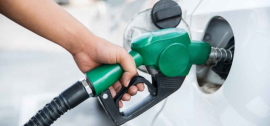
Motorists will breathe a sigh of relief at the pumps this week as the price of all grades of petrol is set to come down by between 89 cents and R1.02 a litre.
This marks the third consecutive month of decreases following increases experienced this year.
The Department of Mineral Resources and Energy (DMRE) on Monday announced that the price of petrol (both 93 ULP & LRP) will come down by 89 cents a litre while the price of petrol (both 95 ULP & LRP) will come down by R1.02 cents a litre.
The adjustment means that a litre of 95 ULP, which currently costs 23.38 in Gauteng, will now cost R22.36 as of Wednesday.
However, the price of diesel (0.05% sulphur) will increase by 10 cents a litre while the price of diesel (0.005% sulphur) will go up by 15 cents a litre.
The wholesale price of illuminating paraffin will decrease by 61 cents per litre.
The price of illuminating paraffin (SMNRP) will come down by 82 cents, while the Maximum Retail Price for LPGAS will increase by 19 cents per kilogram.
The DMRE said average Brent crude oil prices decresed from $94 per barrel to $89.79 per barrel during the period under review.
SASSA encourages non-smart phone owners not to choose EFT payment method
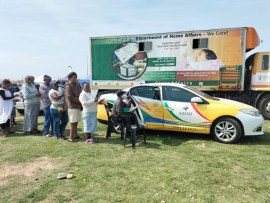
The South African Social Security Agency (SASSA) has appealed to all special SRD-R350 grant beneficiaries or applicants who do not own a smart phone not to choose the EFT payment method.
In a statement on Tuesday, the agency said the EFT payment method requires smart phones with the corresponding apps for such transaction.
“The customer care unit in Mpumalanga has received numerous complaints from beneficiaries where they fail to process the EFT payment.
“The agency has discovered that all those beneficiaries who cannot process their EFT payment, it is because their phones have little to no computing or internet capacity. The agency is cautioning beneficiaries to choose a suitable method of payment to avoid any inconvenience,” SASSA said.
All the applicable methods of payment can be accessed on the SASSA official website on https://srd.sassa.gov.za.Beneficiaries.
Applicants can choose to receive payment through official selected merchants and financial institutions.
“Beneficiaries or applicants must ensure that they update personal information such as cell phone numbers, surnames and financial accounts, if there are any changes. This will guarantee the right recipient and avoid payment disapproval,” the agency said.
SASSA has also urged beneficiaries to avoid asking for assistance from strangers when updating their personal information.
The agency said strangers can use the beneficiary’s personal details for fraudulent activities.
For more information, applicants can contact the agency’s toll free number: 0800 60 10 11 or [013] 754 – 9428/9363 from 08:00 – 16:00 during weekdays.
Developed nations urged to prioritize climate change adaptation

Minister of Forestry, Fisheries and the Environment, Barbara Creecy, has called on developed countries to meet their commitments towards climate change adaptation.
“We need everybody to show progress in the implementation of their Nationally Determined Contributions (NDCs) and need new finances for our Just Transitions, including direct budget support for developing countries to build adaptation and resilience, and to address losses and damages brought about by climate change,” the Minister said on Monday.
Addressing the Pre-27th Conference of the Parties of the UNFCCC (COP27) negotiations in the Democratic Republic of the Congo, Creecy noted with disappointment the failure by developed countries to meet their commitment of mobilising US$ 100 billion by 2020.
She emphasised the importance of developing nations delivering the $100 billion per year, from now through to 2025, for building trust and faith in the multilateral process.
“Our call for developed countries to deliver on their commitments to meet their goal and ensure progression of efforts in the ongoing mobilisation of climate finance is a fair one.
“COP27 needs to be a watershed moment for implementation by securing the Means of Implementation, in the form of climate finance, technology transfer and capacity building, for African and other developing countries. This is important if we are to transition from negotiations to implementation,” the Minister said.
The government of the Arab Republic of Egypt will host COP27 with a view to building on previous successes and paving the way for future ambition to effectively tackle the global challenge of climate change.
The Minister said the urgent need is to adapt now, while nations build resilience for the future.
She appealed for focus to be placed on the most vulnerable people and communities in order to support health and well-being; food and water security; infrastructure and the built environment, as well as ecosystems and linked services.
“COP27 is thus a critical moment for all of us in Africa. This COP, which is taking place on African soil, must deliver meaningful and substantive progress on adaptation; loss and damage, and means of implementation support for African and other developing countries. COP27 further needs to focus on supporting a people-centred, just and equitable transition in the developing world.
“For too long, these issues of critical importance to Africa have seen only process-related outcomes in the United Nations Framework Convention on Climate Change (UNFCCC) negotiations, due to the mitigation-centric approach of developed countries,” the Minister said.
Creecy said COP27 must ensure that the outcome on Global Goal on Adaptation (GGA) increases the actual resilience of the population to the adverse impacts of climate change by at least 50% by 2030 and by at least 90% by 2050.
“We also need an outcome on a key set of adaptation finance goals as part of the GGA, focusing on core adaptation support in a range of sectors, and also as part of the deliberations on a new collective quantified goal on finance, and present a clear roadmap to deliver on the Glasgow decision to double adaptation finance by 2025.
“This roadmap, as stated in the AMCEN Dakar decisions, should include projected annual contributions, the timing of such contributions, and the multilateral institutions that will channel these resources to developing countries.
“We need everybody to show progress in the implementation of their NDCs and need new finances for our Just Transitions, including direct budget support for developing countries to build adaptation and resilience, and to address losses and damages brought about by climate change,” the Minister said.
SARS records significant R7.18bn trade surplus

The South African Revenue Service’s (SARS) trade statistics for August 2022 recorded a preliminary trade balance surplus of R7.18 billion.
These statistics include trade data with Botswana, Eswatini, Lesotho and Namibia (BELN), the revenue collector said in a statement.
“The year-to-date (01 January to 31 August 2022) preliminary trade balance surplus of R163.36 billion is a deterioration from the R325.06 billion trade balance surplus for the comparable period in 2021. Exports increased by 11.9% year-on-year whilst imports increased by 44.9% over the same period,” said SARS.
The R7.18 billion preliminary trade balance surplus, was attributable to exports of R175.37 billion and imports of R168.19 billion.
During this period, SARS said exports decreased by R1.83 billion (1.0%), while imports increased by R15.80 billion (10.4%) over the same period.
“Exports for the year-to-date increased by 11.8% to R1 330.18 billion from R1 189.46 billion over the same period during 2021. Imports for the year-to-date of R1 166.82 billion were 35.0% more than the R864.40 billion imports recorded during the same period in 2021.
“The cumulative trade balance surplus for 2022 is R163.36 billion. On a year-on-year basis, the R7.18 billion preliminary trade balance surplus for August 2022 was a deterioration from the R40.61 billion trade balance surplus recorded in August 2021. Exports of R175.37 billion were 11.9% more than the R156.71 billion exports recorded in August 2021. Imports of R168.19 billion were 44.9% more than the R116.10 billion imports recorded in August 2021.”
The July 2022 preliminary trade balance surplus was revised upwards by R0.05 billion due to the ongoing Vouchers of Correction (VOC). The revision was from the preliminary trade balance surplus of R24.76 billion to the revised trade balance surplus of R24.81 billion.
South Africa an investment value proposition

Trade, Industry and Competition Minister, Ebrahim Patel, has opened the 9th session of the South Africa-Saudi Arabia Joint Economic Commission (JEC) and the South Africa-Saudi Arabia Trade and Investment Forum in Pretoria.
The forum aims to provide South African and Saudi Arabian companies with a strategic platform to engage on bilateral trade and investment opportunities in both markets, while simultaneously affording them access to senior decision-makers and stakeholders.
Patel told the forum – which was attended by delegations of business people from both countries – that South Africa presents an array of investment areas, from manufacturing to pharmaceuticals.
“South Africa is a strong value proposition for investments from many parts of the world. Last year, the Ford motor company decided to invest $1 billion in expanding the auto production plant in South Africa. The decision led, in turn, to 10 large component suppliers of Ford deciding to bring their investments to South Africa.
“Last October, we launched the new Toyota Corolla Cross – the first hybrid vehicle produced at commercial scale on the African continent. Mercedes Benz rolled out the new C-Class series produced locally. Aspen… has been producing the J&J COVID-19 vaccine in South Africa.
“I raise these examples… to show the capability in the South African market, ranging from advanced manufacturing to industrial innovation. To scale these up, we look for partnerships, investment partnerships from Saudi businesses.
“I will be finalising discussions with my counterpart on a joint investment fund that we hope to announce at the time of the planned State visit,” he said.
Patel said South Africa presents opportunities for investors to reach other markets through the country.
“South Africa has a free trade deal with the European Union and the United Kingdom, and we have duty-free access for a large number of products to the United States market. We are busy completing the African Continental Free Trade Area, which will be a large free trade agreement knitting together some 54 African countries.
“When you invest in South Africa, you are investing in an opportunity to reach that much wider market,” he said.
The Minister said although South Africa and Saudi Arabia maintain strong trade links, it is important to bring more balance to the trade surplus between the two countries.
In 2021, trade between South Africa and Saudi Arabia stood at R66.15 billion.
South African exports stood at some R5.54 billion, with imports from Saudi Arabia amounting to at least R60 billion.
“We want to focus on improving trade and investment links [between the two countries], so that we can increase [exports and imports] further.
“Saudi Arabia has a trade surplus with South Africa due to its large oil exports. We can help to improve the trade balance with greater manufacturing and food product exports both to the Saudi market and using Saudi as a… gateway for exports to the rest of the Middle East.
“We can buy more fertilisers, as well as the derivatives of petroleum products. We see an opportunity for significant new investment from Saudi Arabia in a number of South African value chains in manufacturing, in hotels, and entertainment, working through joint ventures and with the investment fund that the two governments are working on,” he said.
The forum continues on Tuesday.