SARS collects R2.155 trillion in taxes

While South Africa’s economy continues to face challenges of load shedding and impaired port and logistics operations, the South African Revenue Service (SARS) has collected a gross tax revenue of R2.155 trillion for the 2023/24 financial year.
Addressing a media briefing on the preliminary revenue outcome for the 2023/24 financial year, SARS Commissioner Edward Kieswetter said this amount was in line with the revised estimate representing a year-on-year growth of 4.2% against a nominal gross domestic product (GDP) of 4.9%.
“Net revenue, which is the revenue after refunds have been paid to tax payers amounts to R1.741 trillion, which exceeds the revised estimate set by the Minister of Finance by some R10 billion, representing a year on year growth of 3.2% (or R54.2billion) more than last year.
“This revenue performance translates to a tax-to-GDP ratio of 24.7% and a provisional tax buoyance ratio of 0.9% at gross level and 0.7% at net revenues,” Kieswetter said.
The revenue service refunded taxpayers with an amount of R414 billion, representing a year-on-year growth of 6%, which is the highest quantum of refunds paid out in the history of SARS. It increased by R33 billion from the prior year.
Vat refunds amounted to R343 billion, which represents a growth of 7.5% since the prior year.
“Noteworthy is that those refunds represent about 6% of GDP. It is therefore pleasing that R120 billion of these refunds were directed to Small, Medium and Micro Enterprises (SMMEs) and R37 billion to individuals. This is good for when business and individuals remain cash strapped. Refunds are often a form of funding during troubled times.
“Whilst we are pleased that the R414 billion returned into the hands of taxpayers is good for the economy, I remain concerned about fraud and abuse of our refund system. In the period under review, SARS was able to prevent the outflow of R101 billion of impermissible or fraudulent refunds and secure a number of successful prosecutions,” he said.
In trade facilitation for the period under review, SARS Customs facilitated a total of R8.5 million trade transactions amounting to R3.96 trillion. Exports amounted to just over R2 trillion, whilst imports were R1.937 trillion, resulting in a trade balance surplus of R11 billion.
“Our programme for Authorised Economic Operators (AEO), which is designed to give traders a green lane experience should they be accredited and maintain the high level of compliance, this year we added R145 new licensees, bringing the total number to 304 AEO.
“In our compliance environment, an encouraging trend is that we have increased our voluntary compliance index from 61.6% to 63.9%. This index was developed in 2020 in support of our strategic intent of our voluntary compliance and measures the overall compliance behaviour of tax payers across the compliance value chain of registration, filing declaration and payment,” the Commissioner said.
Revenue by tax products
Compared to the 2022/23 fiscal year, total tax revenue increased by R54.2 billion (3.2%), driven by personal income taxes of R49.5 billion (8.2% year on year or y/y) on the back of higher than estimated compensation of employees, as well as higher domestic VAT of R39.3 billion (8.1% y/y).
“Net Personal Income Tax, which accounts for 37.3% of total revenue, grew by R49.5 billion 8.2% in 2023/24, as employment improved year-on-year from and average wage settlement rates improved from an annual average of 6.0% in 2022 to 6.3% in 2023. PAYE collections from incentives and bonus payments predominantly from the finance sector also boosted PIT revenue.
“Net Corporate Income Tax (CIT) contracted by R31 billion (-8.9%) in 2023/24, while the mining sector saw a decline R42 billion, which is lower than the PY by 49.0%. The CIT contribution of large businesses contracted by 17.5%, while the contribution from small businesses increased by 8.8%. CIT collections accounted for 18.0% of total revenue,” he said.
The Net Value-added Tax (VAT) growth of R25.4 billion (6.0%) is largely attributable to Domestic VAT (up by R39 billion (8.1%), import VAT (higher by R10.0 billion (3.9%) and higher outflow of VAT Refunds R23.9 billion (7.5%).
“SARS is determined to make it hard and costly for taxpayers who willfully fail to meet their obligations. The SARS compliance programme contributed R293.7 billion as at end of March (preliminary). This is an increase of R61.9 billion (26.7%) from the previous year’s R231.8 billion,” the Commissioner said.
Since its inception, SARS has collected R21.6 trillion in net tax revenues.
“The R21.6 trillion tax collections represents a compound growth of 9.9% per year since the inception of SARS in 1997. This has funded the South African democracy and touched the lives of millions who would be destitute without government support and services.
“We, who have the privilege to work at SARS, are justly proud of these achievements because these efforts contribute directly to nation-building and sustain our democracy,” Kieswetter said.
He said the revenue achievements of the past 30 years would not have been possible if it were not for the effective and beneficial partnerships established by working with compliant stakeholders in the tax and Customs ecosystems that deliver maximum benefits for taxpayers, traders, government, and citizens.
“Ultimately, we are augmenting the work of our employees, with the investment in data science, technology, and artificial intelligence, towards the goal of making the fulfilment of tax obligation a seamless process,” Kieswetter said.
Presidency releases Energy Action Plan update

The Presidency has released the 18-month update on the implementation of the Energy Action Plan (EAP).
The EAP was introduced by President Cyril Ramaphosa in July 2022 and is coordinated by the National Energy Crisis Committee under the leadership of Electricity Minister, Dr Kgosientsho Ramokgopa.
The EAP’s key interventions are to:
- Fix Eskom and improve the availability of existing supply.
- Enable and accelerate private investment in generation capacity.
- Fast-track the procurement of new generation capacity from renewables, gas and battery storage.
- Unleash businesses and households to invest in rooftop solar.
- Fundamentally transform the electricity sector to achieve long-term energy security.
The President’s spokesperson, Vincent Magwenya, said the EAP update highlights “significant progress” made.
“The detailed update on the Energy Action Plan shows that significant progress has been achieved over the last six months in implementing government’s plan to end load shedding.
“Government is working towards the full implementation of the Energy Action Plan to bring an end to load shedding once and for all,” he said.
Magwenya highlighted some of the milestones made over the past six months.
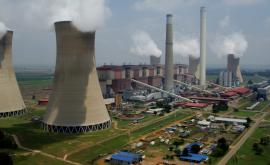
“Some of the achievements achieved in the past six months include the return of the three units at Kusile Power Station months ahead of schedule, the amount of rooftop solar installed by businesses and households, more than doubling to over 5 000MW, helping to reduce demand on the grid.
“In December, three further Independent Power Producer [IPP] bid windows were released for 7 615MW of new capacity from solar, wind, gas and battery storage,” Magwenya said.
Other key milestones reached include the following:
- Eskom has launched the Cross Border Standard Offer Programme (CBSOP), which will procure up to 1000 MW in additional power from neighbouring countries for a period of three years.
- The first project from Eskom’s Battery Energy Storage System (BESS) programme has been connected to the grid, and will provide 100 megawatt hours (MWh) of storage capacity. Seven other projects are in construction as part of Phase 1 of the programme, which will together provide a total of 833MWh of capacity.
- An additional 3 400MW of grid capacity has been immediately unlocked in the Cape region through the implementation of curtailment, which enables Eskom to fit more generation capacity onto the grid.
The full report can be accessed on this link https://rb.gy/0ebd2b.
Meanwhile, Eskom has suspended load shedding until Sunday.
“Due to the sustained available generation capacity and the planned return to service of 2 300MW of generation capacity by Friday, along with the anticipated low demand over the long weekend, load shedding will remain suspended until Sunday at 4pm.
“Eskom will provide an update for the week ahead on Sunday afternoon or communicate should any significant changes occur,” the power utility said on social media platform, X.
Social Development to monitor children’s safety at borders this Easter weekend

The Department of Social Development says it is working closely with the Border Management Authority (BMA) to ensure the protection of children as they move across the border between South Africa and Zimbabwe during the Easter long weekend.
The department held its cross-border quarterly meeting with its counterparts from Zimbabwe to discuss the protection and care of children.
The meeting held on Tuesday was attended by officials from the National Department of Social Development, Musina and Vhembe District Offices, the Limpopo provincial office as well as the Red Cross and Save the Children.
“Officials from the Department of Social Development will be on-site in Beitbridge and Groblersbridge over Easter to make sure that the processing of children is in accordance with the law,” the department said.
The department said it is obligated to make sure that all children within its borders get the necessary care and protection.
“South Africa is obligated through the Children’s Act, the United Nations Convention on the Rights of the Child (UNRC), and the African Charter on the rights and welfare of the child [that] any child found to be undocumented and/or unaccompanied must receive the necessary care and protection. This includes a thorough assessment before they can be safely integrated with families in their home countries,” the department said.
During the meeting on Tuesday, officials agreed on the mechanisms to be implemented to strengthen the safety of children. These include referral mechanisms, fast tracking of family tracing and re-unification, and after care and support post repatriation to the families to avoid recurrence of children crossing over again to South Africa.
The department said it has a cross-border Memorandum of Understanding (MOU) with Zimbabwe and Lesotho on children. The MOU is about cooperation in relation to the provision of social services between the two countries.
In the realisation of this cooperation, the countries convene cross-border meetings held quarterly to discuss issues faced by unaccompanied and separated children on the move and seek solutions and unblocking challenges that are in the best interest of the child.
“The department continues to engage the respective country authorities through the MoU to intensify their efforts during every holiday season to make sure all children are documented and accompanied before entry into South Africa,” the department said.
It further works with international organisations like Save the Children and UNICEF to make sure that the rights of children on the move are protected.
The department will also send officials who work in the Directorate of Trafficking in Person and Victim Empowerment Programme to the borders to monitor and prevent any person from being trafficked.
The department is the custodian of the Trafficking in Persons Act and leads Pillar 4 of the Gender-Based Violence and Femicide National Strategic Plan (NSP on GBVF).
“The role of the Department of Social Development is the protection, care, and support of victims of trafficking. Trafficking victims are accommodated soon after identification and receive psychosocial support with focus on dealing with the trauma they experienced during exploitation by traffickers,” the department said.
President welcomes UNSC resolution on Gaza ceasefire

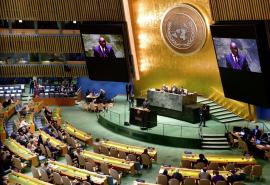
President Cyril Ramaphosa is the latest world leader to back the United Nations Security Council (UNSC) decision which demands an “immediate ceasefire” between Israel and the Palestinian group Hamas in Gaza.
This follows the UNSC’s adoption of Resolution 2728 (2024) on Monday, which demands an immediate ceasefire in the Gaza Strip for the duration of the Muslim holy month of Ramadan, ending in two weeks.
The United States abstained from the vote, with the 14 other council members all voting in favour to none against the Security Council ceasefire resolution.
“We must seize the opportunity presented by this Security Council resolution to create a firm foundation for a permanent ceasefire and the resumption of negotiations. We need to stop the carnage and begin walking a path to peace,” said President Ramaphosa in a statement.
READ | SA welcomes adoption of the UNSC resolution on Gaza ceasefire
The recent passing of this resolution marks the first of its kind in the nearly six-month-long war.
Resolution 2728 also notes an “urgent need to expand the flow of humanitarian assistance and to reinforce the protection of civilians in the entire Gaza Strip”.
The Council also demands lifting all barriers to providing humanitarian assistance in line with international humanitarian law, as well as Resolution 2712 (2023) and 2720 (2023).
The first citizen has since called on the UNSC to ensure compliance with the resolution binding on the parties.
Meanwhile, he said South Africa remains concerned that in over five months since the escalation of the conflict, thousands have lost their lives, including over 13 000 children.
As per a Reuters article, at least 32 333 Palestinians have been killed in Israel’s retaliatory military campaign in Gaza, with thousands more feared buried under rubble.
“It is, therefore, vital that the parties comply with the Security Council,” the President added.
Have your say in eThekwini service delivery plan

Residents of eThekwini are invited to submit their comments on the draft Integrated Development Plan (IDP) for the 2024/2025 financial year – a key city strategy that informs and guides all service delivery and development in the region.
All planning, including budgeting, management and decision-making related to delivering services and development in the municipal area, is considered in this important city business plan.
“The IDP considers the challenges facing the city and the strategic approach to resolving these as underpinned by city’s long-term development plan and informed by global, national and provincial policies such as the Sustainable Development Goals (SDGs), the National Development Plan (NDP) and the provincial Growth and Development Strategy,” the municipality said in a statement.
The IDP consists of eight plans that will help the city achieve its vision of becoming Africa’s most caring and liveable city.
“These plans are all inter-related and include actions to develop and sustain our spatial, natural and built environment; develop a prosperous, diverse economy and create employment; and creating a quality living environment.
“The IDP also takes into consideration building a socially cohesive environment, developing the skills of our communities, fostering good governance, ensuring a financially accountable and sustainable city,” the municipality highlighted.
The municipality added that each plan has a set of deliverables which informs the city’s budget and with which its performance is monitored.
“A Service Delivery Budget Implementation Plan (SDBIP) is thereafter compiled to monitor the implementation of the various programmes and projects contained within each plan. The SDBIP provides both financial as well as non-financial performance indicators which are used to monitor and evaluate quarterly and yearly service delivery targets,” the municipality said, adding the document also forms part of the IDP.
The municipality said public consultations on the draft plan will be taking place together with the draft budget.
“It is a critical opportunity for the public to provide input into the future development of the city and make sure that their community needs are raised.”
The draft IDP is available on the municipality’s website: durban.gov.za.
Comments can be sent to comments2021@durban.gov.za
The closing date for comments submission is 23 April 2023.
Independent and political party candidates lists available for inspection

The Electoral Commission (IEC) will today and tomorrow between 09:00 and 17:00 make the lists with the names of independent and political party candidates available for inspection at its national office, at all its nine provincial offices and at local municipal offices.
Parties intending to contest the elections had until 17:00 on Monday to revise their lists and inform the commission if they had nominated candidates who also appeared on the list of another party or who were nominated as independent candidates.
In all, there were 42 candidates appearing on more than one party list implicating 39 parties. Furthermore, one candidate was nominated as an independent candidate and also appeared on a list of a party.
“The focus in the evolving candidate nomination process shifts to a period within which interested persons may inspect the lists of candidates and raise objections against candidates.
“To this end, the Commission will today and tomorrow, between 09:00 and 17:00 make the lists with the names of independent and political party candidates available for inspection at its national office, and in all its nine provincial offices and in local municipal offices.
“Copies of the documents accompanying the lists are available for inspection at the commission’s national office between 09:00 and 17:00,” said the commission in a statement.
In all, 14 662 candidates have been nominated to contest the 887 seats available in the National Assembly and the nine legislatures. The spread of the candidates is as follows:
- 4 323 candidates have been nominated to contest the compensatory seats in the National Assembly (contested by parties only),
- 3 596 candidates have been nominated to contest the regional seats in the National Assembly (contested by party candidates and independents) and
- 6 743 candidates have been nominated to contested seats in the provincial legislatures (contested by party candidates and independents).
The biggest ballot paper will contain 56 contestants. This is the ballot for the compensatory seats in the National Assembly. The biggest regional election ballot will be in the Gauteng region with 40 political parties and 2 independent candidates.
Similarly, the biggest ballot in respect of provincial legislature elections will be in Gauteng with 42 political parties and 2 independent candidates.
Seven independent candidates will contest the regional elections and six will contest the provincial legislature elections. The region with the most number of independent candidates is the Limpopo region with three candidates.
Any person may object to the nomination of a candidate. Such objections must be lodged with the commission by 17:00 on 27 March 2024.
An objection may be raised on the basis that an independent candidate or nominating party has failed to submit the signed prescribed acceptance of nomination or that there is no signed prescribed undertaking, that the candidate is bound by the electoral code of conduct, the commission said.
An objection may be on the basis that a candidate is not qualified to stand in the election. In this regard section 47 and 106 of the Constitution are instructive.
The sections provide that every citizen who is qualified to vote for the National Assembly is eligible to be a member of the Assembly, except:
(a) Anyone who is appointed by, or is in the service of the state and receives remuneration for that appointment or service
(b) Permanent delegates to the National Council of Provinces or members of a provincial legislature or a Municipal Council
(c) Unrehabilitated insolvents
(d) Anyone declared to be of unsound mind by a court of the Republic or,
(e) Anyone who, after this section took effect, is convicted of an offence and sentenced to more than 12 months imprisonment without the option of a fine, either in the Republic, or outside the Republic if the conduct constituting the offence would have been an offence in the Republic, but no one may be regarded as having been sentenced until an appeal against the conviction or sentence has been determined, or until the time for an appeal has expired. A disqualification under this paragraph ends five years after the sentence has been completed.
The commission will decide the objections by 28 March 2024. The objector, registered party or nominated candidate may appeal against the decision of the Commission to the Electoral Court by 2 April 2024.
The final list of candidates contesting the elections will be published by the Commission on 10 April 2024.
Voters are reminded that they may only vote at a voting station in which they are registered.
Voters who will unavoidably be away from their voting districts on Election Day may give notice of their intention to vote at another identified voting station by 17 May 2024.
Employment programmes make a difference

The Presidential Employment Stimulus (PES) and the Presidential Youth Employment Intervention (PYEI) have made a difference in the lives of the 1.7 million people reached through the two programmes.
This is according to President Cyril Ramaphosa, who was addressing the National Assembly during the Questions for Oral Reply session held in the house on Tuesday.
“Between October 2020 and December 2023, the Presidential Employment Stimulus has created work and livelihood opportunities for over 1.7 million people. Of the participants in the various programmes, 65% are women and 85% are young people.
“The Presidential Employment Stimulus and the Presidential Youth Employment Intervention have made a real difference in the lives of millions of young people,” the President said.
President Ramaphosa said although the PES has “built an institutional architecture that is able to scale rapidly”, fiscal constraints have slowed its ability to expand although it has been expanded to March next year.
“The focus in the coming year is therefore on taking the quality of outcomes to the next level, focusing on enhancing the work experience for participants as well as on the quality of the social value they create for communities.
“This includes skills development – both ‘soft’ skills derived from work experience as well as more formal skills development,” he said.
The PYEI initiative was announced in 2020, and in February 2024, the President held a presidential youth engagement in Cape Town reflecting on the three years since the initiation of the Presidential Employment Stimulus (PES) and PYEI.
Honing in further on skills development on Tuesday, President Ramaphosa highlighted that government driven programmes such as the Social Employment Fund and the Basic Education Employment Initiative also serve the same skills development objective in different ways.
“The Presidential Youth Employment Intervention’s approach to skills development focuses on demand-led skilling, which is about increasing the relevance and delivery of interventions that address current skills gaps and emerging needs.
“To take forward this work, the Department of Higher Education and Training, with the support of the Presidency, has established demand-led skilling workstreams in priority growth sectors. This is to ensure that skilling interventions respond to demand and encourage inclusive hiring for young people and marginalised communities.
“The Presidential Youth Employment Intervention, in partnership with the National Skills Fund, has also launched [the] Jobs Boost, a R300 million outcomes fund that will fund implementing organisations to skill 4 500 marginalised young people and place them in sustainable, quality job[s],” he said.
President Ramaphosa said the work done through these initiatives has “established a firm foundation for these initiatives to make an even greater contribution to addressing poverty, unemployment and inequality in our country”.
eThekwini Municipality tackles hijacked, unsafe buildings

The eThekwini Metropolitan Municipality has intensified its collaboration with property owners in a bid to eradicate unsafe buildings within the inner city.
This comes after the establishment of a new unit, the Problem Buildings Division, which is dedicated to tackling unsafe buildings.
“Problem buildings” are defined as derelict, abandoned, hijacked, structurally unsound and unlawfully erected, among other things.
Through the Problem Buildings Division, the city’s vision is to create a vibrant inner city, underpinned by well-managed buildings.
The division encourages property owners, whose buildings have been deemed unsafe for occupation, to contact them or face future closure.
Deputy City Manager of Economic Development, Lihle Phewa, said these buildings present social issues, which include homelessness, crime and drugs, which are often found in such buildings.
Phewa said the division has already identified approximately 40 buildings within the city and has started the process to serve relevant notices.
This is done in accordance with the National Building Regulations and Standards Act, and the Problem Building by-laws.
“If there is non-compliance by the property owner after the notice period has expired, the municipality will approach the High Court to carry out remedial work, apply for a demolition order, request for the appointment of a judicial administrator, request for a sale in execution, or expropriate the property and building.
“All costs incurred will be to the owner’s account. Owners can however, partner with the municipality to put together an action plan with time frames on how to turn the problem building around,” Phewa said.
Phewa highlighted the recent eviction of illegal occupants from Crieff Place Building, South Beach, as among the division’s successes.
Following a court process, the owner of the property was able to evict the illegal occupants and proceeded to demolish the vacant building. However, the owner left a portion of the superstructure and did not fully secure the property.
The owner had also left rubble from the demolition process on site to ensure that the site was not occupied again, but the sheltered portion of the remaining superstructure was occupied shortly after.
“The Problem Building Division engaged unsuccessfully with the owner to secure the property. The division took the decision to remedy the works on site by removing the rubble, repairing, and closing all the openings to the site, and installing barbed wire to the tops of the boundary wall to prevent any person from occupying the site,” Phewa said.
Government has acted decisively to respond to State Capture recommendations – President Ramaphosa

President Cyril Ramaphosa has told Members of Parliament that the recommendations made in the State Capture report are currently receiving attention from law enforcement agencies and the other bodies.
The President was speaking in the National Assembly during his oral replies to questions on Tuesday.
He said that his administration has acted decisively and with purpose to respond to the findings and recommendations of the State Capture Commission.
“As has been reported on several occasions to this Parliament and to the public more broadly, these recommendations are currently receiving attention from law enforcement agencies and the other bodies.
“Therefore, with regards to the recommendations in respect of criminal investigation and possible prosecution and other actions against individuals, the President has fully acted upon the recommendations of the Commission.
“As I indicated in a written reply to this House on 17 November 2022, any actions that I take with respect to members of the Executive about whom the Commission made findings will be informed by the outcomes of the processes undertaken by the relevant entities,” the President said.
On 22 October 2022, the President submitted to Parliament his intentions with regards to the implementation of the recommendations of the State Capture Commission.
Among other things, the State Capture Commission made over 200 recommendations with respect to criminal investigation and possible prosecution of individuals, entities and named groups of people.
The President highlighted that these recommendations were directed by the Commission to law enforcement agencies. The Commission also made recommendations with respect to further investigation of and possible action by the relevant bodies against individuals and entities for disciplinary offences, tax offences, delinquency of directors and other activities.
“The Presidency provided each of the bodies to which such recommendations were directed with copies of each part of the State Capture Commission Report as they were received by the Commission, so that they may act on the recommendations in line with their respective mandates.
“The extensive actions that this administration has taken on the recommendations of the State Capture Commission, including the introduction of draft legislative changes that are currently before this House – have been detailed in several public reports,” he said.
President Ramaphosa told the House that the most recent comprehensive report was published in November 2023, and there is a searchable online database that enables members of the public and indeed Members of Parliament to track progress.
The report and the database may be found at: www.stateofthenation.gov.za.
Emphasis placed on investing in climate-resilient infrastructure projects

While South Africa has taken meaningful steps to invest in infrastructure projects, Deputy Minister of Finance, Dr David Masondo, says the fiscus cannot afford to financially support the amount of investment required for climate-resilient infrastructure.
“We therefore need to discuss other innovative financing mechanisms such as green bonds and carbon credit to fund these climate-resilient infrastructure projects,” Masondo said on Monday in Johannesburg.
He made these remarks during the second in a series of Southern Africa – Towards Inclusive Economic Development (SA-TIED) policy dialogues entitled “Financing infrastructure development in the context of climate change”.
“In South Africa, we feel the negative impact of climate change in important sectors such as agriculture, water, and energy. The frequency of natural disasters and the results thereof are felt every day in our country.
“Investments in renewable energy sources, water conservation systems, and sustainable urban development are key to mitigating and adapting to climate impacts,” the Deputy Minister said.
Masondo said the Infrastructure Fund is a testament to South Africa’s commitment to stimulating infrastructure investment and blending public and private financing to build a better, more sustainable future.
“The Infrastructure Fund stands out as a pivotal move, designed to stimulate investment across various critical sectors. This approach seeks to mobilise public and private resources, mitigate risks for private investors and foster an environment where collaborative financing models can thrive.
“Such measures are part of a broader effort to ensure that infrastructure development not only supports South Africa’s immediate economic needs but also lays the groundwork for long-term resilience and progress.
“Yes, challenges exist such as securing funding. However, ensuring sustainability, and integrating the latest technologies are other additional challenges. These challenges should be treated as opportunities for innovation and forging robust public-private partnerships. This is also an opportunity for leveraging the power of technology in our infrastructure development goals,” Masondo said.
He said the groundbreaking research produced by the SA-TIED program has shed light on critical areas like water, and energy, and the broader connections between them.
“It is this type of research that directly shapes our infrastructure strategies, informing decisions to maximise impact and create the conditions for sustainable growth. The research informs our policy decision-making. It is this type of research that directly shapes our infrastructure strategies, informing decisions to maximize impact and create the conditions for sustainable growth,” the Deputy Minister said.
He said infrastructure development is the cornerstone of any thriving economy.
“Infrastructure fuels productivity (e.g. people arrive late to work because public transport is poor). Infrastructure also enhances the quality of life for our citizens (clean air, and clean water are important for our health) and lays the foundation for long-term growth.
“Our government recognises this. We have made significant investments in critical infrastructure. These investments are not just about roads and bridges. They are also about creating jobs, reducing poverty, and making South Africa a competitive player in the global economy,” the Deputy Minister said.