
Motshekga condemns violence against teachers
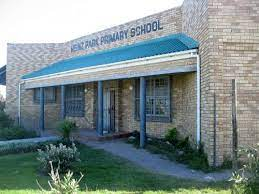
Basic Education Minister Angie Motshekga has expressed shock and sadness at the gruesome murder of a teacher at Heinz Park primary school in Philippi, Western Cape.
The teacher was gunned down on the school premises on Tuesday.
Motshekga has condemned the number of violent crimes taking place against teachers in schools and else in the communities.
“We condemn any form of violence in our schools. We are working with the police to ensure the safety of our teachers, learners and the entire school community against criminals who continue to terrorise them in a safe environment that school premises are supposed to be,” Motshekga said.
The Minister said the department’s programme of safety in schools continues to advocate for no violence of any form in schools.
“Government, led by the Deputy Minister of Basic Education, Dr Reginah Mhaule, and other Deputy Ministers from the South African Police Service, Justice and Constitutional Development, Social Development and many other partners will intensify the campaign against violence in schools, including gender-based violence, in Limpopo on 15 October 2021,” the Minister said.
She said the safety of teachers, learners and staff is a collective responsibility of the entire society and everyone must play their part to end the violence and criminal activities that occur, especially on school premises.
The Minister conveyed her condolences to both the family of the deceased teacher and the school.
Motshekga has called upon the police to ensure that those who carried out this brutal murder are arrested, charged and jailed as soon as possible.
SA to participate in UNGA76
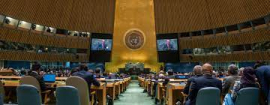
President Cyril Ramaphosa will participate virtually in the General Debate of the 76th Session of the United Nations General Assembly (UNGA76).
UNGA76 refers to the 76 years of existence of the United Nations, which was established in 1945 in the aftermath of World War II.
UNGA76 takes place from 21 – 27 September 2021 under the theme, ‘Building resilience through hope – to recover from COVID-19, rebuild sustainably, respond to the needs of the planet, respect the rights of people, and revitalise the United Nations’.
Due to challenges arising from the COVID-19 pandemic and the scale of the event, the General Debate and high-level meetings of UNGA76 will be held in a hybrid format, combining in-person and virtual participation.
The overarching issues that are expected to be dominant and of relevance to South Africa during UNGA76 include:
– Recovery from the COVID-19 pandemic;
– Discussions on the UN Secretary-General’s report entitled ‘Our Common Agenda’, following the 75th anniversary of the United Nations;
– The implementation of the 2030 Agenda on the Sustainable Development Goals (SDGs);
– Climate change and the upcoming Conference on Climate Change (COP26) to be held in Glasgow in November 2021;
– Reform of the United Nations and
– Peace and security matters.
New CEO for Supported Employment Enterprises
The Department of Employment and Labour has announced the appointment of Sibusiso Phakathi as its new head for Supported Employment Enterprises (SEE).
SEE is an entity that promotes supported employment for persons with long-term physical, mental or sensory impairment disabilities.
In a statement on Wednesday, the department said that Phakathi has been appointed on a five-year renewable contract with effect from 01 September 2021.
Phakathi replaces the department’s Public Employment Services (PES) branch Deputy Director-General, Sam Morotoba who has been acting in the position since the departure of former CEO Silumko Nondwangu more than three years ago.
He has a BCom Honours in Economics and Strategic Management from the University of Western Cape. He also has an Advanced Diploma in Business Administration from UWC and a Masters in International Trade Law.
The newly appointed CEO for SEE has appealed to government departments to intentionally support the entity so that it can thrive and fulfil its mandate.
“I am privileged to join SEE at this time. There is more investment that has just been made in factory infrastructure. I have an abiding faith in the management team I found here,” Phakathi said.
Phakathi said his immediate focus was to make sure that all business directorates such as Business Development, the Human Resources and Finance are strategically aligned towards a common objective.
“Once we drive all those strategic imperatives, our plea is to have government departments and agencies spend at least 10 percent of their revenue procuring from us. Yes, we want to deal with in-house problems. The investment made in new machinery, delivery trucks has laid a solid foundation to drive efficiencies,” Phakathi said.
SEE currently has a budget of R153 million, a grant from National Treasury. Its budget has in recent years been reduced due to austerity measures.
The factories employ about 1050 people and a further 159 that have been seconded by the Department of Employment and Labour to assist in administrative work.
Phakathi said that SEE’s Vision 2025 seeks to create at least 400 employment opportunities for people with disabilities.
The SEE formerly known as the Supported Employment Factories (SEF) was established in 1949 as a government post-Second World War intervention to alleviate the plight of returned soldiers and the disabled people in general to play an active role in the labour market.
The SEE has 13 factories in South Africa operating in eight provinces, except Mpumalanga. The factories are located in Bloemfontein, Cape Town, Durban, East London, Johannesburg, Kimberley, Pietermaritzburg, Port Elizabeth, Potchefstroom, Pretoria and Polokwane.
In 1994, the department assumed responsibility of the factories and had to continue to provide a subsidy to the factories through the National Treasury for the payment of salaries and the procurement of raw materials to manufacture finished goods.
The factories manufacture furniture, textiles, hospital linen, metal work; leather work, book binding; and screen printing among a catalogue of goods. Recently, they added the manufacturing of protective personal equipment (PPEs).
SA has over 8 million fully vaccinated adults
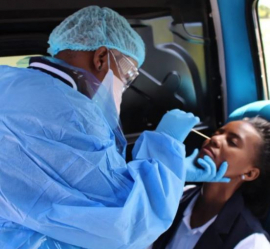
South Africa on Tuesday crossed the eight million mark for adults who are fully vaccinated.
According to the Department of Health, the country administered 178 685 COVID-19 jabs in the past 24 hours, of which 100 853 people were fully jabbed.
This brings the total number of administered doses to 16 358 076, while those who have received the single-dose Johnson & Johnson or the second shot of the Pfizer vaccine stands at 8 108 520.
The latest data shows that there are now 11 848 356 citizens who have been vaccinated out of the 39 798 201 individuals that government is targeting before the end of December.
Meanwhile, the COVID-19 cases continue to drop, with 2 197 new infections identified in South Africa, which brings the total number of laboratory-confirmed cases to 2 886 331.
According to the National Institute for Communicable Diseases (NICD), the bulk of the new cases were reported in KwaZulu-Natal after 594 people were confirmed to have contracted the virus.
The province is followed by 366 cases in the Western Cape, 329 in Eastern Cape, 297 in the Free State and 256 in Gauteng.
The NICD said the increase represents a 6.1% positivity rate.
In addition, 160 patients succumbed to the disease, pushing the death toll to 86 376 to date.
“There has been an increase of 175 hospital admissions in the past 24 hours,” the NICD said, adding that the seven-day moving average daily number of new cases has dwindled.
The information is based on the 17 410 204 tests conducted in both public and private sectors.
Globally, as of 21 September 2021, there have been 228 807 631 confirmed cases of COVID-19, including 4 697 099 deaths, reported to the World Health Organisation (WHO).
Global view
According to the WHO, the numbers of weekly COVID-19 cases and deaths continued to decline this week, with over 3.6 million infections and under 60 000 deaths reported between 13 and 19 September.
The African and the European regions reported numbers of cases similar to those of the previous week, while other regions recorded decreases, with a substantial drop in the Eastern Mediterranean (22%) and South-East Asia regions (16%).
In terms of COVID-19 mortality, the WHO said nearly 60 000 deaths were logged in the past week, a 7% decrease as compared to the previous week.
The African, Eastern Mediterranean and South-East Asian regions reported decreases in weekly mortality over the past week.
Meanwhile, the South-East Asia region logged the largest percentage decrease (27%) compared to the Western Pacific region, which registered a 7% increase.
The highest numbers of new cases were reported from the United States (1 017 644 new cases, similar to last week), India (211 242 new cases, 15% decrease), the United Kingdom (203 077 new cases, 21% decrease), Turkey (183 962 new cases, 16% increase), and the Philippines (141 522 new cases, similar to last week).
SA explores tech solutions to water challenges
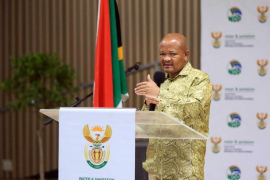
Water and Sanitation Minister Senzo Mchunu has pleaded with stakeholders in the water sector to rally behind ensuring that water supply exceeds demand.
Mchunu made the call while addressing the 5th Water Research Commission Symposium held on Monday.
“Our mantra, as the Department of Water and Sanitation, says: ‘Water is life. Sanitation is dignity’. This highlights the importance of our mandate, as it is anchored on two very fundamental human rights – the right to life and the right to human dignity,” Mchunu said.
He said the ongoing drought that continues to be experienced in some parts of the country and the COVID-19 pandemic have exacerbated water and sanitation challenges.
Mchunu further urged the Water Research Commission to continue addressing water quantity and quality challenges through innovation and new technologies.
Mchunu said sustained investments in cutting-edge innovative technologies and solutions will transform sanitation.
“Technologies that can use less water or no water at all are the future of our country, the continent, and the global community. As the water sector, we need to embrace technological innovations and recognise them as the game changer we need in order to secure our water, now and in the future,” the Minister said.
He encouraged the sector to be open to new ideas and approaches to deliver water services, stressing the importance of embracing the 4th Industrial Revolution and new ways of doing things.
The symposium was attended by Kenyan High Commissioner, Beatrice Karago; the Deputy Ministers of the Department of Water and Sanitation, Dikeledi Magadzi and David Mahlobo; the Deputy Minister of CoGTA, Thembi Nkadimeng; the chairperson of the Water Research Commission, Dr Nozi Mjoli, and the CEO of the Water Research Commission, Dhesigen Naidoo, amongst others.
Have your say on National Minimum Wage adjustment
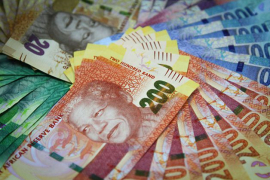
All parties interested in the annual review of the National Minimum Wage (NMW) for 2022 have until 1 October 2021 to submit written representations concerning possible adjustments.
The Department of Employment and Labour said in a statement that these representations will be considered by the National Minimum Wage Commission before it publishes its annual report, and recommendations on the annual review of the national minimum wage later in the year.
The NMW Act of 2018 enjoins the NMW Commission to annually review rates and make recommendations to the Employment and Labour Minister on any adjustment to the National Minimum Wage, while also reflecting on alternative views, including those of the public.
In February, Minister Thulas Nxesi announced that the National Minimum Wage for each ordinary hour worked has been increased from R20.76 to R21.69 for the year 2021, with effect from 1 March 2021.
The department said in terms of the NMW Act of 2018, the policy instrument is a floor level below which no employee should be paid.
“It is illegal and an unfair labour practice for an employer to unilaterally alter hours of work or other conditions of employment in implementing the NMW. The NMW is the amount payable for the ordinary hours of work and does not include payment of allowances (such as transport, tools, food or accommodation), payments in kind (boarding or lodging), tips, bonuses and gifts.
“In considering the annual adjustment, the NMW Commission takes into account the following factors: inflation, the cost of living, and the need to retain the value of the minimum wage; gross domestic product; wage levels and collective bargaining outcomes; productivity; ability of employers to carry on their businesses successfully; the operation of small, medium or micro-enterprises and new enterprises; likely impact of the recommendation adjustment on employment or the creation of employment.”
Interested parties are requested to send their comments and representations should reach the directorate: Employment Standards, Department of Employment and Labour, Private Bag X117, Pretoria, 0001 or be sent to nmwreview@labour.gov.za by 1 October 2021.
Africa ramps up drive to revive tourism

Tourism Minister Lindiwe Sisulu says she is pleased that discussions are underway to find ways of getting the country and the continent out of the pandemic and revive the tourism sector.
“I am glad that we are having this African Travel and Tourism Summit, hosted by South Africa, to rethink, recalibrate and find our way out of this situation we are in, where the pandemic has strangulated the tourism industry,” Sisulu said.
Addressing the African Travel and Tourism Summit on Monday, Sisulu said the COVID-19 pandemic has had a more negative impact on tourism activities in the first half of 2020 than anticipated.
Sisulu said although recovery has begun, even though the pandemic is continuing to spread, many countries have been slow to re-open, with some reinstating partial or complete lockdowns to protect susceptible populations.
“It is befitting that the launch of the Africa Travel and Tourism Summit is taking place during Tourism Month, when South Africa celebrates tourism and heritage.
“This summit enjoys the participation of the African community delegates, who aim to understand how tourism has shifted in the African continent and identify new opportunities.
“This summit unpacks the four main themes of Best Practice for Brand Africa, Sectoral Transformation, Leisure and Business Opportunities, and Strengthening and Enabling Economic Capabilities,” Sisulu said.
Sisulu said before the COVID-19 pandemic, the dream and narrative around Africa’s tourism sector was “inspiringly vivid”.
“It was a dream of a continent rising and freeing itself from the shackles of stigmatisation of us as unsafe, uncouth and unwelcoming.
“Today, we celebrate the rising giant that is Africa. We celebrate her natural vast wonders, ranging from the plains and woodlands of the Serengeti, to the arid Kgalagardi Transfrontier Park, to the beach elephants of the greater St Lucia and the Pyramids of Giza,” Sisulu said.
Sisulu said the summit affords Africa’s tourism leaders a platform to create solutions for Africa and contribute to global solutions for the industry in efforts to awaken a new beginning for Africa.
Before the COVID-19 pandemic, the World Travel & Tourism Council (WTTC) indicated that Africa’s tourism industry was robust. It reported that tourism generated in excess of US$200 billion (approximately R3 trillion), accounting for 6.9% of Africa’s GDP, whilst supporting 24.7 million jobs.
Following the outbreak of the pandemic, the WTTC statistics showed a decrease of US$83 billion (or R1.2 trillion) and a loss of 7.2 million jobs. This downturn trend was experienced by all tourism sectors across the globe.
Collect your R350 grant from Pick n Pay, Boxer or Post Office

The South African Post Office (SAPO) has announced that approved recipients of the R350 Social Relief of Distress (SRD) grant can now collect their benefit from Pick n Pay and Boxer stores nationwide from Wednesday, 22 September.
However, according to the national postal service, this is only open to grant recipients who have received an SMS from the South African Social Security Agency (SASSA) confirming their collection payout point as either Pick n Pay or Boxer.
“Pick n Pay and Boxer are proud to assist grant beneficiaries access their funds more conveniently and safely, ensuring they receive much-needed relief quicker than before,” said Pick n Pay’s Head of Omnichannel, John Bradshaw.
The national postal service has since welcomed the move and said it will relieve pressure on its Post Offices.
According to SAPO, Pick n Pay and Boxer do not manage the application and approval of grant funds, or when and where collections can be made.
“This process is run entirely by Postbank,” it explained.
Pick n Pay collection points excludes BP Pick n Pay Express, Pick n Pay Clothing and Pick n Pay Liquor stores.
SAPO said during the previous payment period of SRD grants, about five million South Africans received the grant each month.
Here is a step-by-step process to collect the SRD grant from Pick n Pay or Boxer:
- The grant applicant will receive an SMS from SASSA confirming their successful application.
- A grant beneficiary will receive an SMS message from SASSA confirming the collection point and advising on the day of collection.
- The beneficiary must take their ID and physical cellphone along to the store when collecting their grant.
- Enter ID number and the registered SASSA cellphone number at the till point to confirm the funds are available for collection.
- Beneficiary immediately receives a USSD message to which they must approve on their cell phone before the cash is handed over.
- Beneficiaries will never be asked to enter personal information on their cell phones or to click on a link.
No ransom paid to alleged hackers – Department of Justice

The Justice and Constitutional Development Department has clarified a media report that hackers demanded a R33 million ransom, following a ransomware attack on the department’s Information Technology systems, earlier this month.
According to the report, hackers allegedly encrypted all information on the department’s electronic system, including backups and demanded the ransom be paid – an allegation the department strongly denied.
“The [department] would like to place it on the record that it has not received any ransom demand following the ransomware attack as suggested by an article…published on 20 September 2021. The article to this effect is completely untrue,” the department said.
Meanwhile, the department said it has recovered some functionality on its MojaPay system which controls its child maintenance payment system and these have been administered.
The restoration of other services is still underway.
“To date, great progress had been made to contain the spread, while restoring critical services to the public. While the department is not yet in a position to determine the exact date when all systems will be restored, it is encouraged by the progress made by the IT experts thus far,” the department said.
In the courts, the department has introduced manual systems to ensure that proceedings are not negatively affected.
“The Department’s IT team, working closely with IT Coordinators and Directors for Court Operations at the Regional Offices, has introduced standard operating procedures for manually operating the Court Recording Technology (CRT) systems to ensure that the safety of the court records is guaranteed. All courts are expected to operate normally without any challenges related to the CRT systems,” the department said.
Cabinet approves extension of Hydrogen Society Roadmap

Following its Special Cabinet Meeting last week, Cabinet has approved the extension of the Hydrogen Society Roadmap (HSRM) for the next 10 years.
The HSRM gives effect to the Hydrogen South Africa Strategy that was approved by Cabinet in 2007 to prepare the country for a hydrogen economy.
The HSRM builds on what has been achieved in the past 10 years to prepare South Africa to move from research and development to manufacturing and commercialisation.
In a statement, Cabinet says the HSRM effectively integrates all hydrogen-related technologies in various sectors of the economy and also fosters an inclusive economic growth.
It further positions South Africa as a destination with sustainable hydrogen economic capability and to also expand export markets on hydrogen technologies.
“Local manufacturing of hydrogen products and components will contribute towards job creation and skills development, and also enhance economic transformation that will benefit the previously marginalised sector of society, particularly women and youth.
“The HSRM also provides interventions that will contribute towards the reduction of greenhouse gas (GHG) emissions. It will, amongst others, enhance the provision of renewable energy to the main electricity grid and it proposes interventions in the Heavy-Duty Transport sector, which is one of the contributors in GHG emissions,” Cabinet said in a statement.
Cabinet added that the roadmap went through extensive consultation with all relevant stakeholders, including government departments, academia, private sector and science councils.
It provides a coordination framework to ensure an integration of all hydrogen-related technologies and skills development for the country. The document will be made accessible through the Department of Science and Innovation website: www.dst.gov.za.
Convention on the Physical Protection of Nuclear Material (CPPNM)
Meanwhile, Cabinet has also approved the submission of the amended Convention on the Physical Protection of Nuclear Material (CPPNM) to Parliament for approval, in terms of Section 231(2) of the Constitution of the Republic of South Africa of 1996.
“The amendments made by the International Atomic Energy Agency (IAEA) strengthen the global minimum physical protection of facilities and nuclear material used for peaceful purposes. As a member of the IAEA, South Africa had signed this convention and subsequently ratified it in 2007,” Cabinet said.
Cabinet notes that the amendments to the convention strengthens the national security of the member states, including the physical protection requirements for nuclear facilities and material.
“It provides a list of offences such as the import and export of nuclear material without prior authorisation. It enhances cooperation amongst member states in the sharing of information in respect of illegal activities on nuclear material,” Cabinet said.
Replacement of SAFARI-1 nuclear research reactor
Cabinet further approved the setting up of the multi-purpose nuclear reactor project to replace the current SAFARI-1 nuclear research reactor owned by the South African Nuclear Energy Corporation (NECSA).
The reactor has been in operation from 1965 and its lifespan is due to end in 2030.
“SAFARI-1 is one of the four leading producers of medical radioisotopes in the world used to treat millions of patients annually. It also provides the country with support in science research, development and innovation in medicine, agriculture, paleontology and bioscience,” Cabinet said.
The replacement is said to ensure South Africa remains one of the leading countries in these fields and benefit from the new technologies in this environment.
The project will be led by a number of related departments and NECSA as the main client.
SA’s 4th Biennial Update Report
Cabinet has also approved the submission of the country’s 4th Biennial Update Report which provides an update on the country’s efforts to mitigate and adapt to climate change to the United Nations Framework Convention on Climate Change (UNFCCC).
The report outlines the policies implemented as well as the measures and actions undertaken by the country to reduce GHG emissions.
It also provides an update on the transitioning interventions towards a lower carbon economy guided by the National Climate Change Response Policy White Paper.
“South Africa has made a commitment to contribute fairly to the global efforts to stabilise GHG emissions within the country’s developmental priorities. As a signatory to the UNFCCC, South Africa is expected to submit these updated reports regularly,” Cabinet said.
Nationally Determined Contribution (NDC)
“Cabinet approved South Africa’s revised NDC climate change mitigation target range for 2030 for submission to the UNFCCC. South Africa has revised its target range for 2025 to 398 to 510 and for 2030 to 350 – 420 Metric tons of Carbon Dioxide equivalent (Mt Co2-eq),” the Cabinet statement said.
Under the Paris Agreement, all parties are required to deposit NDCs every five years. South Africa deposited its first NDC with the UNFCCC in October 2015, committing to keep national GHG emissions within a range from 398 to 614 Mt CO2-eq for 2025 and 2030.
The Paris Agreement also seeks to lower the global temperatures to well below two degrees Celsius and pursue efforts to 1.5 degrees Celsius.
“All parties were expected to update their 2015 targets in 2020 to ensure they are aligned to the latest science. The revised target range takes into account the latest reports of the Intergovernmental Panel on Climate Change, and is aligned with all the stakeholders that contribute towards the country’s efforts.”
Bills
Cabinet has approved the Marine Pollution (Prevention of Pollution from Ships) Amendment Bill of 2021 for public comment. The Amendment Bill seeks to amend the Marine Pollution (Prevention of Pollution from Ships) Act, 1986 (Act 2 of 1986) and align it to the revised International Convention for the Prevention of Pollution from Ships (MARPOL).
The Amendment Bill will contribute towards the preservation of the marine environment by eliminating pollution of the sea by ships dispensing oil and harmful substances.
Cabinet has also approved the publication of the Companies Amendment Bill of 2021 for public comment. The Bill amends the Companies Act, 2008 (Act 71 of 2008).
“Cabinet approved the current Bill for public consultation in August 2018 and the outcome thereof led to the redrafting of the amendments. The revised amendments provide more clarity in a number of clauses of the Bill, which seeks to reduce regulatory regime on businesses; tighten anti-money laundering gaps; strengthen the disclosure requirements and enhance the shareholder powers in a company.”
Furthermore, Cabinet approved the submission of the National Climate Change Bill to Parliament. The Bill seeks to provide a legal instrument towards the implementation of the National Climate Change Response Policy.
“It allows for the alignment of policies that will influence the country’s climate change response. It also provides for the transitional arrangement for the country to move towards a lower carbon and climate-resilient economy,” the Cabinet statement said.
The Bill is said to have already gone through an extensive public consultation process involving relevant stakeholders.
Appointments
Cabinet also announced two appointments which are subject to the verification of qualifications and the relevant clearance. The appointments are those of Smunda Mokoena who has been appointed as Chairperson of the National Energy Regulator of South Africa and Dr Margaret Mkhosi-Motsaathebe, who has been appointed as Chief Executive Officer of the National Radioactive Waste Disposal Institute.