
Disease management area affected by foot-and-mouth diseases reduced
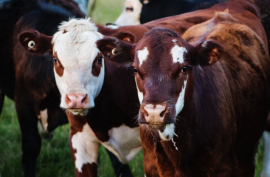
Agriculture, Land Reform and Rural Development Minister Thoko Didiza, has announced the reduction of the size of the disease management area (DMA) affected by foot-and-mouth diseases (FMD) in KwaZulu-Natal.
This follows the conclusion of the second round of serological surveillance, where it was established that the disease, within the DMA, is still confined to two clusters of diptanks in Mtubatuba and Nongoma.
This shows that the restriction on the movement of animals out of, within, through, and into the DMA was sufficient to prevent the disease from spreading.
“Since the disease did not spread within or outside of the DMA, the size of the KZN DMA can now be decreased. This will release areas that remained free of the disease from movement restrictions, while still maintaining restrictions on those areas where the disease is still present,” Didiza said in a statement.
The Minister declared in the Gazette the new KZN DMA, which includes the following areas:
- The portions of the Pongola local municipality east of the R66, and south and west of the N2;
- The whole of the Nongoma local municipality;
- The portions of the Big Five Hlabisa local municipality west of the N2;
- The whole of the Mtubatuba local municipality;
- The whole of the Mfolozi local municipality;
- The portions of the uMhlathuze local municipality north of the R34; and
- The whole of Hluhluwe uMfolozi Park.
In total, FMD was detected and confirmed in 29 locations, including two clusters of diptanks in communal grazing land.
The local municipalities of Umhlabuyalingana, Jozini, eDumbe, Abaqulusi, Ulundi, Nkandla, Mthonjaneni and uMlalazi, are now released from movement restrictions.
The Minister has commended the farmers and communities that have adhered to the movement restrictions imposed upon them, saying this has now made it possible to reduce the area under restrictions.
Movement of cloven-hoofed animals allowed on permit
The Minister added that there are still signs of circulating FMD virus within the two clusters, and the movement protocol and permit system for movement of cloven-hoofed animals remains in place in the revised DMA.
“Movement of cloven-hoofed animals and their products into, out of, through, or within the DMA is still only allowed on authority of a permit issued by the Veterinary Services of the area. The movement protocol can be obtained from KZN Veterinary Services.
“Visible Veterinary Patrols and roadblocks will remain in place in the reduced DMA to control the movement of livestock and to monitor adherence to the movement protocol. Livestock owners are encouraged to submit all applications for movement to the Provincial Veterinary Movement Control Officers for evaluation and risk assessment. Applications and queries can be submitted to fmdpermitskzn@gmail.com,” Didiza explained.
She reminded all stakeholders to continue abiding by the movement restrictions still in place in the reduced DMA, as “these restrictions are deemed necessary to prevent the escape of the virus out of the affected areas.”
“As soon as it is clear that there is no longer circulating virus in these areas, the remaining movement restrictions can also be reconsidered.”
Zikalala orders police to hunt down killers of three Inanda women

KwaZulu-Natal Premier Sihle Zikalala has called on the police to hunt down the suspects linked to the murder of three women in Inanda on Saturday.
According to reports, the women met their untimely death during an African National Congress (ANC) activity, in preparation for the upcoming elections.
It is believed that while the three women were standing in a queue, an unknown gun assailant fired shots randomly and killed them, while others managed to escape the gun fire.
“We are deeply shocked, concerned and saddened by this brutal assassination of innocent citizens. We believe this is the work of thuggish elements that kill with impunity. We must not allow them to find a place to hide in this province,” Zikalala said.
The Premier said the killings bear the hallmarks of a desperate effort to use intimidation and violence “as a way of frustrating the will of the people and subvert democracy.”
He called on the police to hunt down the criminals who thrive on such violence.
“There is no election or vote that is worth the blood of our innocent citizens. We call upon the community to unite and work with the police to expose those who seem to believe that winning an election or becoming a candidate must happen at all costs, even if it means jumping over the corpses of innocent people,” Zikalala.
Zikalala extended his heartfelt condolences to the affected families and the community.
SAHPRA approves Pfizer vaccine for children aged 12 and older
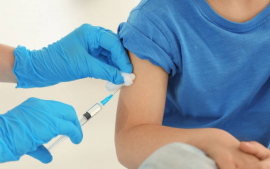
The South African Health Products Authority (SAHPRA) has given the green light for children aged 12 and older to receive the Pfizer COVID-19 vaccine.
According to the local drug watchdog, the approval is in terms of Section 21 of the Medicines and Related Substance Act 101 of 1965, also known as the Medicine Act.
“This was as a consequence of the review of updated safety and efficacy information submitted as conditions of Section 21 initially authorised on 16 March 2021,” SAHPRA said.
In addition, the watchdog said, Section 21 of the Medicines Act is a mechanism that enables emergency use access and allows it to authorise the use of medicine, subject to certain conditions.
“The regulatory decisions of SAHPRA do not translate into a procurement decision, as SAHPRA’s mandate is limited to safety, quality and efficacy of health products.”
In March, SAHPRA has approved the Section 21 application for the Pfizer vaccine for adults.
University of KwaZulu-Natal Acting Deputy Vice-Chancellor for Research and Innovation, Professor Mosa Moshabela, told the SABC that there is now a strong case for vaccinating children.
“Initially, we thought COVID-19 doesn’t affect children very much from the first wave but that has changed over time. We now know that the Delta variant, the burden on children was quite high, where they can suffer from long COVID,” he said.
Meanwhile, he said the burden has shifted to children now that more adults are getting vaccinated and are protected.
“We’ve seen outbreaks in South Africa in schools and this has limited the possibility of children catching up in terms of learning. I think, therefore, there’s a strong case to be made for children to be vaccinated, especially because schools are daily gatherings and social gatherings, and can contribute to reinfections in the households, as well as most from schools to households through these children.”
Moshable has also welcomed the launch of the main phase of a global COVID-19 vaccine study on children and teenagers, led by Chinese Coronavirus-vaccine maker, Sinovac Biotech.
The trials will be conducted on 2 000 children aged six months to 17 years, based on international data.
According to reports, the trials will enrol 14 000 children from South Africa, Chile, the Philippines, Malaysia and Kenya.
“I think SAHPRA should engage the public on the data that they have used to make this decision because it’s not something that originated in South Africa, and there’s a lot more effort on the side of SAHRPA to actually convince the South African public why they made that decision and how safe it is for the kids.”
Moshabela believes that the country needs to show that the data is there and it is compelling.
President: GBV perpetrators cannot go unpunished

President Cyril Ramaphosa says the approval of three critical pieces of legislation will strengthen the criminal justice system and ensure harsh penalties for those found guilty of GBV.
“These gruesome acts of violence cannot go unpunished. They must strengthen our resolve to end gender-based violence in all its forms. We must strengthen our efforts across all fronts,” President Ramaphosa said on Sunday evening during his address to the nation.
On 1 September, the National Council of Provinces (NCOP) passed three bills – namely the Criminal and Related Matters Amendment Bill, Domestic Violence Amendment Bill and the Criminal Law (Sexual Offences and Related Matters) Amendment Act Amendment Bill – which will change the landscape in terms of how government departments, law enforcement and the courts deal with cases of violence against women and the vulnerable.
The House passed two of the bills – the Domestic Violence Amendment Bill and Criminal Law (Sexual Offences and Related Matters) Amendment Bill with amendments, and the two Bills were scheduled to be sent back to the National Assembly. The Criminal and Related Matters Amendment Bill, meanwhile, was scheduled to be sent to the President for assent.
In his address on Sunday, the President lamented that Women’s Month witnessed many GBV cases, at a time when the country had planned to celebrate the success of women in many fields.
Among other cases, Fort Hare law student, Nosicelo Mtebeni, was murdered and dismembered in East London; a Grade 1 pupil from Khensani Primary School in Soshanguve was raped in the school’s toilets; Palesa Maruping, was found hanging from the ceiling of a house in Khuma Location in the North West, and Pheliswa Sawutana was strangled to death in Kosovo informal settlement in Cape Town.
“The courts are increasingly handing down judgements for life imprisonment for statutory rape, robbery and aggravating sentences that involve rape.
“We continue to implement all the pillars of the National Strategic Plan against Gender-Based Violence and Femicide. Ultimately, the success of this work depends on the actions that we all take to end this pandemic of violence against women and children,” President Ramaphosa said.
He called on men to understand that the rights and freedoms guaranteed by the country’s Constitution belong to all people, men and women alike.
Social Relief of Distress
Touching on the recent public violence that occurred in Gauteng and KwaZulu-Natal, where a number of businesses were looted and destroyed, President Ramaphosa said government continues to implement measures to assist households, employees and businesses that have been affected by the pandemic and by the public violence.
“Since we reopened applications for the special Social Relief of Distress grant in the first week of August, we have received nearly 13 million applications. Of these, 8.3 million applications have been approved, and payments have started to these recipients,” the President said.
According to President Ramaphosa, just over 3.7 million applications were declined, mainly because applicants have other identified sources of income or are registered for assistance like the UIF and NSFAS.
“Around 845 000 applications are still in the validation process. Along with the other measures we have put in place, this grant is providing critical assistance to unemployed South Africans at this most difficult time,” the President.
Kubayi declares war on housing contractors who don’t deliver
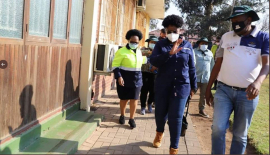
Human Settlements Minister, Mmamoloko Kubayi, has issued a strong warning to all implementing agents and contractors who perform poorly and do not deliver on housing projects.
“We can no longer allow, under such a constrained fiscal environment, project developers and contractors to waste public resources on poorly implemented or incomplete projects,” Kubayi said.
The warning follows the Minister’s inspection of human settlements projects, where some have been running for years without completion and others abandoned, leaving poor and indigent potential beneficiaries without shelter.
Kubayi warned that from now on, the department is going to tighten contract management such that consequence management is integral in every contract.
“Any contractor who, without a reasonable explanation, is found to have violated contractual obligations will be dealt with accordingly,” she said.
The Minister also implored provinces to pay contractors who are delivering within 30 days in order to accelerate housing delivery.
“We are at the coalface of service delivery and people expect nothing but the best from us. We should strive to ensure that the Department of Human Settlements is an employer of choice because it gives people hope and restores their dignity.”
Kubayi concluded a two-day visit to Buffalo City Metropolitan Municipality in the Eastern Cape on Friday, where she assessed housing delivery in the province.
She also visited a number of human settlements projects in the province, including the Duncan Village Revitalisation Initiative, Komga 570, Potsdam Village 500, and three destitute families in Amathole and Buffalo City Municipalities.
SA to head to the polls on 1 November 2021
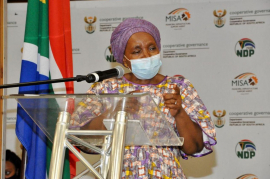
South Africans will head to the polls on 1 November 2021 to elect the political leadership of the country’s 257 municipalities, Cooperative Governance and Traditional Affairs (CoGTA) Minister Dr Nkosazana Dlamini-Zuma announced.
The announcement of the election date came after the Constitutional Court on Friday refused the Electoral Commission of South Africa’s (IEC) application for the postponement of the elections.
The IEC in May appointed former Deputy Chief Justice Dikgang Moseneke to lead the process of evaluating the impact of COVID-19 on conditions conducive for free and fair Local Government Elections on 27 October 2021.
Moseneke undertook an urgent appraisal of all the relevant legal, socio-political, health, practical and other considerations, and submitted the report to the Commission in July.
In his report, Moseneke found that holding the elections within the Constitutionally mandated 90 day period was “not reasonably possible” as they were unlikely to be held in a free and fair manner. He recommended that the elections be held no later than February next year.
Addressing the media on Wednesday, Dlamini-Zuma said: “On the 3rd of August, I proclaimed that the date for the local government elections would be the 27th of October, 2021.”
Subsequently, the IEC filed papers in the Constitutional Court to ask for a postponement of the 2021 municipal elections. The CoGTA Minister was cited as the first respondent, on the application, in which the IEC asked the court to authorise her to withdraw the proclamation of an election date, and issue a fresh notice for a date before the 28 February 2022.
During the briefing, she said: “The consequence of setting aside the proclamation is that it opens the voters’ roll. So as we speak, voter registration is allowed, and is progressing.”
The court also instructed the IEC to determine whether it was practical to hold a voter registration weekend. It also directed elections to be held any day between the 27 October and 1 November 2021.
“I affirmed the commitment, as stated in my explanatory affidavit, to abide by the decision of the Constitutional Court. Therefore, I accept the Constitutional Court’s decision to set aside the proclamation,” she said.
In complying with the Constitutional Court order, the IEC this week announced that a physical registration weekend was necessary and would be held on the weekend of 18 and 19 September.
“So, after consultation with the IEC, we’ve come to the determination that this year’s Local Government Election will be held on 1 November 2021,” she said, adding that this would be in accordance with the Constitution. In this regard, the Constitution would be read with the Municipal Structures Act, which prescribes that the election must be held within 90 days from the end of the five year term of local government.
She said she would officially proclaim the election date on 20 September, after the voters’ roll registration weekend.
“We could have chosen the original proclaimed date of the 27th of October, but to have chosen the most outer date as the IEC has indicated that it needed as much time as possible to prepare for the election,” she said.
The Minister emphasised that the local government remained “very important” as it was the sphere closest to the public and at the “bare face of service delivery”.
A caring hand for vulnerable, orphaned children
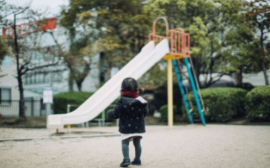
The Department of Social development will on Friday officially launch a community-based programme to care for orphaned and vulnerable children.
Known as RISIHA, the prevention and early intervention programme will be launched by Social Development Minister Lindiwe Zulu and the MEC of Social Development in Mpumalanga, Lindiwe Ntshalintshali, in Kwa Guqa, Emalahleni.
The programme is already operational, and is aimed at protecting orphans and vulnerable children, some of whom are living in child- and youth-headed households or with chronic health conditions, as well as those living and working on the streets.
The department said when initially conceptualised, the programme was targeted at providing care and support services for children affected by HIV and Aids, as many were left without parents/primary caregivers.
“With the rise in the number of vulnerable children, its scope has since been extended to include all children in need of care and protection, in terms of Section 150 (1) of the Children’s Act (Act No. 38 of 2005).
“The programme seeks to strengthen families and communities as the first line of response in the child protection system, with particular focus on children living in disadvantaged communities,” the department said.
The programme is implemented through the deployment of child and youth care workers, a cohort of social service professionals who render direct, day-to-day, prevention, early intervention, and care and support services within the life spaces of children.
The department said despite the closure of access points during lockdown level 5, the programme provided services to 192 741 children within their homes.
“The official launch of the programme in the midst of the COVID-19 pandemic, which has heightened the vulnerabilities of children, will further strengthen South Africa’s child protection system,” the department said.
Recently, Emalahleni has experienced reported cases of violent crimes against children, including the gruesome killing of Gabisile Shabane, a girl with albinism, for muti purposes. The case of a mother who poisoned her four children was also reported in the area.
The launch of RISIHA seeks to address these challenges and to strengthen community-based interventions to protect orphans and vulnerable children.
GDE Grade 1 and 8 online admissions open on Monday

The 2022 phase 2 online admissions for Grade 1 and 8 learners will commence on Monday, 13 September 2021 and end on Friday, 8 October 2021.
The Gauteng Department of Education (GDE) says phase 2 will be for parents and guardians with children going to Grade 1 or Grade 8 in the 2022 academic year, but are currently not in a public school in Gauteng.
“We are also glad to announce that parents and guardians, who were not able to apply on time during phase 1 for learners in Grade 7 at public schools in Gauteng, will be able to apply under phase 2,” the department said.
Parents and guardians applying in phase 2 are urged to prepare the necessary documentation and ensure that it is all certified and correct. The following documents are needed when applying:
1. Parent and child ID or passport
2. Refugee Permit
3. Asylum Seeker Permit
4. Permanent Residence Permit
5. Study Permit
6. Your South African Birth Certificate
7. Proof of Home Address
8. Proof of Work Address
9. Latest School Report
10. Clinic Card/Immunization Card (Grade 1 only)
Parents and guardians are urged to upload these documents onto the system or submit them at the school they applied to within seven days of applying.
The department said they recorded a total of 351 169 applications when phase 1 applications officially closed on 3 September 2021.
Gauteng Education MEC, Panyaza Lesufi, expressed his gratitude towards parents and guardians who managed to successfully apply, and the patience they displayed throughout the process. He also thanked the GDE team who helped to make phase 1 applications a success.
“We have outdone ourselves this year, not just as the department but as stakeholders, parents and guardians in having made the new two-phased approach a success so far. We wish every parent and guardian applying under phase 2 the very best and we assure them that our team will be there to assist them every step of the way,” Lesufi said.
The GDE team will be available for assistance during phase 2 applications on all the department’s social media platforms, the decentralised walk-in centres and call centre on 0800 000 789.
SIU granted R42 million preservation order against NHLS contractor
The Special Tribunal has granted the Special Investigating Unit and the National Health Laboratory Services (NHLS) an order to freeze R42 million worth of luxury properties and funds linked to Johannesburg businessman Hamilton Ndlovu.
This was hot on the heels of a similar preservation order obtained by the South African Revenue Services (SARS) seizing R60 million.
The Special Investigating Unit (SIU) has over the past year investigated corruption allegations and the circumstances in which eight companies directly and indirectly linked to Ndlovu, obtained contracts worth a total of R172 million for the procurement of Personal Protective Equipment (PPE) from the NHLS.
In a statement on Thursday, the SIU said: “The properties and money are preserved pending a review application which will be brought by the SIU and the NHLS to set aside the procurement transactions and to require Mr. Ndlovu and the recipients of the funds to pay back the money.
“The SIU and NHLS have ascertained that the transactions were obtained by abusing the emergency procurement procedures that were adopted by the NHLS in order to respond to the COVID-19 disaster during the first half of 2020.”
In terms of the order, Ndlovu and other respondents are prohibited from dealing in any manner with the funds and properties (including selling or transferring or mortgaging the properties) pending the final resolution of review proceedings to be brought by the SIU and the NHLS.
SA crosses 14 million mark for COVID-19 jabs
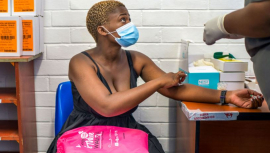
South Africa has now administered over 14 million COVID-19 jabs, with more than six million people fully vaccinated as of 8 September 2021.
According to the latest data by the Department of Health, the country administered 217 613 vaccines on Wednesday.
This means there are now 14 126 008 administered vaccines, translating to 10 359 616 people who have either received a shot of the Johnson & Johnson or Pfizer, of which 42% are men and 57.75% are women.
In addition, the number of adults that have been fully vaccinated stands at 6 888 163. Of these, 127 651 people were fully jabbed in the past 24 hours.
Meanwhile, National Institute for Communicable Diseases (NICD) said there are 7 338 people who tested positive in the last 24 hours, bringing the total number of laboratory-confirmed cases to 2 836 773.
According to the NICD, this increase represents a 13.3% positivity rate.
However, the public health institute, noted that the current surge in COVID-19 infections seems to be showing signs of a “sustained” downward trend.
“Although the total number of cases today is higher than yesterday and higher than the average number of new cases per day over the previous seven days, the number of new cases and positivity rate have decreased nationally compared to last week,” the NICD Acting Executive Director, Professor Adrian Puren, said on Wednesday.
While there have been provincial disparities in the timing and extent of the third resurgence, Puren said all nine provinces are currently displaying a drop in daily new cases.
“The provinces of Gauteng and Limpopo have already met the end-of-wave threshold criteria.”
While the latest trends certainly provide some good news, Public Health Surveillance and Response Head, Dr Michelle Groome, cautions that “now is not the time for complacency”.
She added that wearing masks, hand hygiene and social distancing remain important measures to prevent the spread of the virus.
Meanwhile, the number of hospitalisations and deaths have also decreased compared to last week, while 253 more people lost their lives, pushing the death toll to 84 152.
According to Groome, high vaccine coverage is essential to limit the impact of the virus on the lives and livelihoods in the coming months.
“We all have a part to play by getting vaccinated and encouraging our family, friends and colleagues to do the same,” appealed Groome.
The information is based on the 16 878 061 tests, of which were 55 355 performed since the last reporting cycle.
Globally, as of 8 September 2021, there have been 221 648 869 confirmed cases of COVID-19, including 4 582 338 deaths, reported to the World Health Organisation.