
Load shedding suspended, to return in the evening

While load shedding has been suspended, it will be implemented again on Monday night.
Eskom implemented Stage 2 load shedding at the weekend due to breakdowns, numerous trips and delays in returning previously broken down units to service.
The power utility will implement load shedding on Monday and Tuesday night at 9pm until 5am.
“Eskom has made some progress in replenishing the emergency generation reserves. However, due to the loss of Koeberg Unit 1, we anticipate the need to utilise emergency reserves extensively during the next few days to avoid load shedding. In order to achieve this, Stage 2 load shedding will be required during Monday and Tuesday nights in order to replenish the emergency reserves for the following day,” the utility said.
The entity said the trip at Koeberg power station – a nuclear power station – was “as a result of a fault on a feed water pump” and the plant was shutdown in accordance with safety protocols.
“There are no nuclear safety concerns on the reactor side of the plant, which is ready to be restarted once the feed water pump fault has been resolved. The investigation into the feed water pump fault is in progress.
Nation urged to support matrics
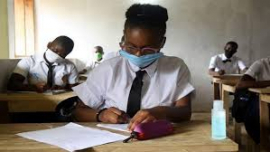
Parents and learners across the country have signed a commitment agreement, where they bind themselves to the conditions listed in the pact ahead of the start of the final Grade 12 examinations this week.
Basic Education Minister Angie Motshekga and Deputy Minister Reginah Mhaule hosted the NSC pledge signing ceremonies in Bethlehem, Free State and Mothibistad, Northern Cape, on Friday.
The 2021 National Senior Certificate (NSC) examination will officially commence on Wednesday, with 124 065 candidates writing English Home Language, 609 830 candidates writing English First Additional Language and four candidates writing the English Second Additional Language paper.
A total of 897 786 candidates will sit for the November 2021 NSC examinations, comprising 735 677 full-time candidates and 162 109 part-time candidates.
The department has urged South Africans to rally behind the class of 2021 and offer them the necessary support, while making sure they do not engage in any irregular activities.
“Parents are requested to be extra vigilant to ensure that learners do not resort to engaging in any activity relating to examination irregularities,” the department said in a statement.
The department said it is fully aware that the majority of learners are honest and will comply with these rules in order to eradicate any irregular practices.
These are the key conditions of the Commitment Agreement:
(a) Any deviation from or contravention of the regulations by a candidate registered to sit for the 2021 National Senior Certificate examination will compromise the integrity of the examination and the results of the candidate could be declared null and void, and the candidate could be barred from writing one to three subsequent examinations. Criminal prosecution could be imposed should it be found that the candidate is involved in the leakage of any examination question paper.
(b) Candidate must report any information or rumour regarding examination irregularities to the examination hotline established for this purpose. The examination hot-line will be a 24-hour service. In addition, to reporting to the examination hotline, this information must be brought to the attention of the school principal. The number of the WhatsApp hotline is 069 335 2818. The information provided on this WhatsApp line will be treated with confidentiality.
(c) In cases where a question paper, or part(s) of a question paper, is forwarded to a candidate via e-mail, SMS, WhatsApp or through any other electronic means, and the candidate fails to report such an incident to the school principal or the WhatsApp hotline, they will be deemed as being complicit.
(d) All candidates will be required to complete the Electronic Devices Register, which will be managed by the school. The register will require all candidates to record all details of the cell phone or any other electronic device that they will be using during the examination period.
(e) Candidates and parents/guardians must be aware that should a candidate agree to any assistance, irrespective of who provided the assistance (i.e. the educator, invigilator or fellow learner), they shall be considered to have colluded with the person who provided the assistance, and therefore the appropriate sanction will be imposed.
(f) A candidate who is alleged to have had access to the question paper or parts of the question paper, prior to the examination, will be required to submit his/her cell phone or any other electronic device to the department for further investigation.
The department reiterated that the national examination system is ready to administer a credible public examination and it is geared to accommodate any change that may be warranted by the current environment.
“It should be noted that despite the abnormal context, the Class of 2021 will be subjected to the same high quality examination that previous cohorts were subjected to, and the Quality Assurance Council, Umalusi, has confirmed that the national examination system is ready to administer the 2021 NSC examination,” the department said.
The department said that it has learnt valuable lessons from the previous examinations and is therefore more confident in administering this examination.
“Candidates that demonstrate COVID-19 symptoms, as well as candidates that test positive, will be allowed to write their examination at special isolation venues that have been arranged.
“To accommodate the negative effects of COVID-19, measures such as the provision of supplementary material, vacation classes, after-school programmes, teacher content training and placement of volunteer teachers were implemented,” the department said.
The department has commended all learners, teachers and school management teams for the resilience they have shown in braving the pandemic, with the single goal of ensuring that the Class of 2021 receives optimum support.
“The department would like to further extend sincere gratitude to the provinces, partners, educational stakeholders, parents and civil society (NGOs) for going beyond the call of duty to assist and support Grade 12 learners,” the department said.
The department wished well all candidates sitting for the 2021 NSC examination.
Nzimande saddened by drowning of Nelson Mandela University students
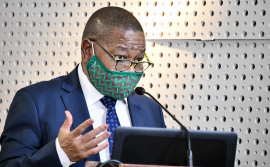
Higher Education, Science and Innovation Minister, Dr Blade Nzimande, has expressed sadness at the drowning of two Nelson Mandela University students whilst swimming in Sardinia Bay on Saturday.
According to reports, one of the students, after experiencing difficulty, managed to swim to shore. However, she passed away, while being attended to by the paramedics and the other student is yet to be found.
Nzimande has urged all students to remain vigilant at all times, even when involved in any recreational activities outside university premises.
“Safety is an individual and a collective responsibility which at all material times must be safeguarded,” Nzimande said in a statement on Sunday.
He also urged those who arrange any other activities that involve students to take extra care and ensure safety.
“Organisers should regard themselves as guardians and parents until all return to safety at their institutions.”
The Minister has since directed Higher Health, an entity of the Department of Higher Education and Training and the Nelson Mandela University management to provide the necessary support and comfort to the affected students and their families.
He also conveyed well wishes to all divers and rescue teams in their search and rescue exercise, as they locate the other missing student.
The names of both students are being withheld until their families have been traced and notified.
Over 700 arrests in latest O Kae Molao operation
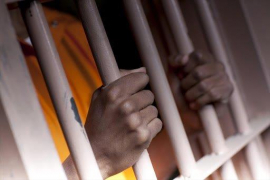
Over 700 suspects were arrested across Gauteng during an O kae Molao Operation this past week.
The weekly operation is integrated with different law enforcement agencies such as the South African Police Service (SAPS), the Traffic Department, Metro Police Department, Immigration from the Department of Home Affairs, Tracker, Fidelity, and Community Police Forums, among others.
Police Minister Bheki Cele, Gauteng Premier David Makhura and MEC for Community Safety, Faith Mazibuko at the weekend joined Gauteng SAPS Commissioner Lieutenant General Elias Mawela at an operation in Tshwane.
During the operation, the Minister, Premier and MEC assisted in stopping and searching vehicles at a roadblock and interacted with motorists.
“The operation saw over 700 people being arrested throughout the province for various crimes such as theft of motor vehicles, possession of illegal firearms, possession, car breaking,drunk driving, murder, rape and undocumented persons,” said the SAPS in a statement.
The Provincial Commissioner expressed appreciation to stakeholders for agreeing to join forces with Gauteng SAPS in ensuring the safety and security of the people of Gauteng. The public was also urged to continue adhering to lockdown level one regulations in order to minimise the spread of COVID-19.
New bridges officially opened in KZN

Transport Deputy Minister, Sindisiwe Chikunga, has officially opened four bailey bridges in the Ray Nkonyeni Local Municipality in KwaZulu-Natal.
Chikunga said the bridges are a result of the partnership between national, provincial and local government.
“This is reflective of [effective] inter-governmental cooperative governance, which we aim to achieve through the District Development Model, announced and launched by President Ramaphosa,” Chikunga said.
Chikunga said the handing over of the bridges comes at a time when the transport sector is engaged with the October Transport Month (OTM) campaign activities.
“This particular campaign seeks to showcase to South Africans and the world the strides that have been achieved so far in the provision of safer, affordable, accessible and reliable transport services, systems as well as world-class infrastructure for the country across all modes of transport.”
The Department of Public Works has committed to build bailey bridges, which are intended to ensure safe access to social services including schools, clinics, police stations and the South African Social Security Agency.
“The construction of the bailey bridges, especially in inaccessible rural areas of Kwa-Zulu Natal province, is part of government’s bailey bridge intervention programme managed by the national Department of Public Works and the South African National Defence Force (SANDF) acting as the implementing agent of the programme,” Chikunga said.
During the construction phase, various types of jobs benefiting local labour, student and graduate engineers, and mentors appointed by the Department of Public Works benefited from the project both in terms of earning wages and skills transfers.
Chikunga used the platform to announce another project, the Welisizwe Rural Bridge Programme, which was gazetted by the Minister of Public Works on 24 July 2021.
The programme is in line with the Strategic Infrastructure Project (SIP 26) and will be funded through the Presidential Job Stimulus. It will be implemented jointly by the Departments of Transport and Public Works.
The KwaZulu-Natal Department of Transport and Community Safety and Liaison has signed a Memorandum of Understanding with the KwaZulu-Natal Department of Public Works and SANDF to upscale the construction of bridges and improve mobility.
The SANDF, as the implementing agent of the programme, has completed several bridges in the province.
In the Ugu District Municipality, the construction of four bailey bridges has been completed, while 10 other bridges were constructed in other parts of the province, including uMzinyathi District Municipality and Pietermaritzburg.
Fight to combat GBVF is a societal one

Justice and Constitutional Development Deputy Minister John Jeffery says the fight against gender- based violence and femicide (GBVF) is not one that government can win alone.
He was speaking during the presentation of Social Change Assistance Trust’s (SCAT) research into GBVF.
The research aimed to identify and understand how community based advice organisations are dealing with GBVF and its impact in rural areas.
Jeffery highlighted that government has taken strides through legislation and other measures to fight the scourge but, communities also need to become involved.
“Over the past two years, South Africa has had to ask itself some tough questions in relation to GBV. Our country has some of the most advanced legislation in the world in dealing with GBV matters, so why are levels of GBV so high? What can be done to improve under-reporting?
“We cannot rely on legislation only in trying to combat and prevent GBVF – communities, civil society and religious institutions all have a role to play,” the Deputy Minister said on Wednesday.
Jeffery emphasised that addressing the root cause of GBV lies in engaging men and fighting the patriarchal systems that still exist.
“We have to talk to men and boys, because men have been the dominant perpetrators of GBVF. Men are often the problem – and therefore men have to be part of the solution.
“Studies have shown that patriarchal value systems are still prevalent in South African families and communities. Some men believe that male dominance and male entitlement is the norm. Some men believe that domestic violence is a private matter that happens behind closed doors and is therefore acceptable. These are the attitudes that we must change,” Jeffrey said.
He said the recognition of the need for dialogue has led to the department establishing “Under the Tree Dialogues” in communities.
“The aim is…to vigorously engage with men and boys to change the toxic attitudes and beliefs around masculinity and patriarchy that lead to violence against women and children.
“This is also where our schools, our religious institutions and our communities have a fundamental role to play and if a particular [community based advice organisation] identifies a need for such a dialogue to take place in a specific area or community, [they] should feel free to engage with us in order to make these dialogues a reality.”
Jeffery listed some key interventions that government has installed to fight GBVF and to “offer enhanced services and protection” to the survivors and victims of GBV. These include:
- Three anti-GBV Bills which were recently passed by Parliament to strengthen the response to GBV and to offer further protection to survivors of GBV.
- The establishment of Sexual Offences Courts, which offer victim-support services.
- The use of in-camera testifying services for children, persons with mental disabilities, and all traumatised victims.
- The approval of regulations, which set out a catalogue of support services and resources that must constitute a section 55A Sexual Offences Court. These services include court support, court preparation, emotional containment, trauma debriefing, counselling, private testifying service, intermediary services and information services.
Victims and survivors of GBVF can call the Gender-Based Violence Command Centre toll-free on 0800 428 428 for assistance or send a “please call me” at *120*7867# with a request that a social worker contact them or they can also sms the word “help” to 31531.
Govt meets Sheepmoor community water needs

The community of Sheepmoor in the Msukaligwa Local Municipality, Mpumalanga, is set to get a steady supply of clean water after the completion of a bulk water supply scheme project.
Officially handed over this week by Water and Sanitation Deputy Minister, David Mahlobo; Gert Sibande District Executive Mayor, Muzi Chirwa and Msukaligwa Executive Mayor, Buti Joseph Mkhaliphi, the R22 million Sheepmoor bulk water supply scheme project will benefit 526 households in the area, and also cater for increases in the community and future developments.
The project was co-funded with R15 million from the Department of Water and Sanitation, R5 million from the Gert Sibande District Municipality and R2 million from the Msukaligwa Local Municipality.
A bulk water supply pipeline was installed to extract raw water from the Usuthu River pipeline (URPL) to Sheepmoor to meet the required demand until year 2038.
The project also includes the upgrading and refurbishing of the existing water storage facility, the pump house and the construction of a new package water treatment plant. The package plant is designed to treat both the pipeline water and/or the ground water.
Boreholes were also refurbished to maximise performance in order to be used as the main supply.
The project was done in two phases where, phase 1 was implemented through co-funding from Gert Sibande District Municipality. A new 1 Ml/day package water treatment plant was constructed in this phase.
Phase 2 included the construction of a 7.1km pipeline from the Usuthu Vaal pipeline (UVPL) to the Sheepmoor community; refurbishment of the existing 2Ml steel reservoir and 85Kl elevated tank, the refurbishment/upgrading of the existing booster pump station and pipework to connect to existing reservoirs.
During the inspection of the plant, Mahlobo advised the municipality to look at a back-up power system to ensure that the community still receives water during electricity outages.
He advised the municipality to put money aside to buy spare parts for the critical elements of the plant to ensure that it does not take long to fix the plant when there are breakdowns.
“… Ensure that the parts and the spares for equipment with a short life span are always there, and someone is trained on how to [fit] the replacement,” Mahlobo said.
In his address, Chirwa reiterated the Deputy Minister’s sentiments that “the work is not over”.
“This is the beginning and the next phase is to build a waste water treatment plant so that the community can have waterborne flushing toilets, as they now have reliable water supply,” Chirwa said.
He urged the community to use water wisely and sparingly, as South Africa is a water scarce country.
Presidency condemns criminal attacks on journalists

Minister in the Presidency Mondli Gungubele has joined the South African National Editors’ Forum (SANEF), in condemning criminal attacks on journalists while out on assignments in various communities.
This comes after a news reporter and camera operator from eTV were robbed at gunpoint, by armed robbers on Monday in Khayelitsha, Cape Town.
In a statement on Wednesday, Gungubele noted with concern reports of an attack on eTV journalist Natalie Malgas and camera operator Lance Manjoro who were robbed outside a Khayelitsha Primary School while covering the build-up to the local government elections.
The Minister has wished the eTV crew a speedy recovery from the traumatic incident in which they were physically unscathed but were robbed of personal possessions and professional equipment.
Gungubele said that it is particularly deplorable and noteworthy that this incident occurred in a week in which our country observes Black Wednesday – the day in 1977 in which the apartheid state cracked down on the media and freedom of expression.
“The media are an important factor in our democratic order and in the lives of citizens. Criminals who victimise journalists are victimising communities for whom access to information is a right and an important form of empowerment.
“Communities suffer when journalists are unable to perform their assignments which often includes a focus on improving the living conditions of communities or giving a voice to people who would otherwise not be heard.”
The Minister also shared SANEF’s concern about cyber-bullying and the abuse of social media targeting journalists.
“We fought long and hard for media freedom and we will not take lightly opportunistic or targeted crime or abuse perpetrated against journalists,” he said.
City Power restores power to some suburbs
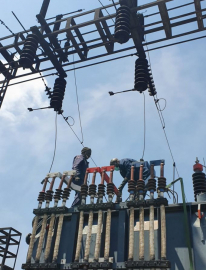
City Power has restored power distribution to at least five suburbs following a fire at the Robertsham substation on Monday evening.
At least 16 areas predominantly in the south of the city were left without power as a result – with City Power reporting extensive damage caused to infrastructure, including the two main transformers at the substation.
“By the end of [Tuesday] we had managed to back feed six distributors to restore electricity to Chrisville, Crown Gardens, Robertsham, West Turfontein and parts of Ormonde,” the power utility said.
Back feeding occurs when electricity is fed into the grid in the opposite direction from where it usually flows.
City Power said that it had also managed to “bring back two spare transformers” that were not damaged by the fire.
However, at least ten other areas remained without electricity as of Wednesday morning.
“We couldn’t back feed all of the customers from the available substations around due to the overloading that was going to trip the other substation,” City Power said.
The power utility is now in the process of testing two substations which could facilitate the complete restoration of power.
“We are finalising the tests on the protection between Robertsham and Fordsburg substations, where the damaged substation is fed from. If all goes well, they will bring the much needed capacity to start restoring to all outstanding customers,” the entity said.
The cause of the blaze is still being investigated.
Partnership to combat disinformation during municipal elections
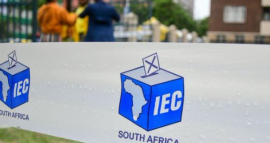
The Electoral Commission and Media Monitoring Africa (MMA) have joined hands with major social media platforms to fight the spread of disinformation, in the run up to, during and beyond the 1 November 2021 municipal elections.
The Commission and MMA, who in 2019 launched a joint action – to deal with disinformation, have reached an agreement with Google, Facebook, Twitter and TikTok to support its efforts to end the scourge of disinformation.
Commission Vice-Chairperson Janet Love said the framework was important because disinformation poses a threat to the exercise of various rights and to the access of constitutional protections, including freedom of expression, access to credible information and the freedom to make informed political choices.
“The dissemination of disinformation has huge potential to undermine the fairness and credibility of elections. It also threatens democratic political and policy-making processes. Credible information is the lifeblood of all democracies. Trustworthy information is crucial in the process that enables citizens to choose their leaders.
“There has already been commitment to and contributions from the platforms to providing training to enable the identification of disinformation and to maximise the positive communication opportunities that digital platforms potentially provide.
“This has been offered to a wide range of role-players, including political parties. Working to counteract misinformation and distortions from becoming the focus of citizens, the Electoral Commission and MMA have entered into this ground-breaking agreement to cooperate with the four major social media platforms,” Love said.
Real411 to deal with disinformation
The Commission and MMA will use Real411, a system developed by the MMA, as a key component of their respective and combined efforts to deal with disinformation and misinformation.
The Commission and MMA will also use a separate software – PADRE – to identify and eliminate misinformation and disinformation contained in advertisements published in all media.
“Disinformation goes against the Code of Conduct and the electoral laws. On Real411, once a complaint has been reviewed and points to constituting disinformation or misinformation, the Commission will notify the affected online platform.
“This notification will be acknowledged and processed as expeditiously as possible by the online platform,” said William Bird, MMA’s Africa Director.
“The social media platforms have appointed persons or teams during the election period to prioritise referrals from the Commission. Actions taken by the platforms are in terms of their policies and may include the removal of the content, the publication of an advisory warning and/or the delisting of the post.
“With regard to advertising content by contestants, PADRE will enable all stakeholders to make use of this transparent repository of political advertisements.
“All political advertisements, including those targeted at individuals or specific groups using online media, should also be available through the repository. The purpose of the repository is to increase transparency and to enable the verification of the authenticity of any political advertisement,” Bird said.
Disinformation is defined as false, inaccurate or misleading information designed to intentionally cause harm.
Within an election context this includes false information intended to unduly affect participation in, and the outcome, of elections.
The digital disinformation reporting platform – Real411 – forms part of the work of the Electoral Commission’s Directorate of Electoral Offences which was first established ahead of the 2016 Municipal Elections to investigate alleged breaches of the Code of Conduct and prohibited conduct as contained in the Electoral Act.
External legal firm to safeguard independence of IEC
The Commission’s Directorate operates when the Elections Timetable has been proclaimed. It consists of a panel of independent attorneys appointed to investigate complaints and make recommendations for possible further action to the Commission.
The appointment of an external legal firm is designed to safeguard the independence and the integrity of the Electoral Commission in relation to the investigation of such complaints.
Noting the power and speed of social media, the cooperation with online platforms will help to enable the rapid submission and consideration of any complaints received in relation to alleged disinformation.
Complaints will be considered by a panel of relevant experts including those with expertise in media law, social and digital media. They will make recommendations for possible further action for the consideration of the Commission.
Such action could include:
• Referring the matter to the Electoral Court
• Referring the matter to social media platforms to act upon in terms of their respective policies and undertakings
• Issuing media statements to alert the public and correct the disinformation
Fake news
In addition to the online reporting platform, the initiative will also include the respective disinformation-related policies of the different platforms and information to help educate voters about the dangers of disinformation and how to spot “fake news”.
The social media partners applauded the historic commitment to cooperate with the Electoral Commission and the MMA in the Real411 initiative.
The partners said they have policies and mechanism in place to counter disinformation and would continue to use these as contribution to the collective effort to eradicate falsehoods.
“Elections continue to be a priority for us at Facebook. Over the years we’ve dedicated unprecedented resources with protecting election integrity at heart, including our ongoing work in reducing misinformation, supporting civic engagement and increasing transparency in political advertising.
“We’re looking forward to receiving the final framework from the IEC,” said Nomonde Gongxeka-Seopa, Head of Public Policy, Southern Africa at Facebook.
“Twitter’s number one priority is the health of the public conversation and we are deeply committed to protecting and supporting election conversations around the world. We recognise the role Twitter plays in political discourse and will continue to ensure that those using the service are doing so in a safe and secure manner.
“Since 2019, we have banned political ads as we believe political reach should be earned, not bought,” said Emmanuel Lubanzadio, the Head of Public Policy, Sub-Saharan Africa at Twitter.
TikTok
“At TikTok, we do not permit misinformation that causes harm to individuals, our community, or the larger public regardless of intent.
“This applies across all content on our platform, irrespective of whether user-generated or paid ads. In fact, we have taken the additional step to prohibit paid political ads as we don’t believe this is part of the experience users come to TikTok for – as the last sunny corner of the internet,” said Fortune Mgwili-Sibanda, Public Policy and Government Relations at TikTok.
“We are supportive of the IEC and MMA’s efforts to combat the spread of non-legitimate information on online platforms in the lead up to the municipal elections.
“We continue to encourage our community to stay up-to-date with our community guidelines and safety centre resources, aimed at making the TikTok experience an enjoyable, creative and safe experience.
“We have also created a special hub on our platform’s Discovery page, where South African users are able to find all the information they need ahead of the elections,” said Mgwili-Sibanda.
“Google’s mission is to organise the world’s information and make it universally accessible and useful. Disinformation runs counter to that mission and, therefore, to our core business interest.
“That is why we invest heavily to counter efforts seeking to deceive, harm, or take advantage of users, and curb the spread of low quality information on our services,” said Charles Murito, Director for Government Affairs and Public Policy of Sub-Saharan Africa at Google.