
Employers urged to submit employment equity reports on time
The Department of Employment and Labour has urged employers to be diligent and punctual in their report submission of employment equity (EE) plans.
The department’s Senior Practitioner for EE, Robert Dzhombere said the department has updated its online reporting platform to ensure that stakeholders report successfully and avoid recurring mistakes.
Dzhombere was addressing the Employment Equity Directorate and Inspection and Enforcement Services (IES) branch joint EE virtual workshop on Wednesday.
The 2021 EE Online and Manual reporting season opened on 1 September 2021, with manual reporting closing on 1 October 2021 and online reporting on 15 January 2022.
“The Employment Equity Act 14 (EEA 14) form must be completed fully and signed by the Chief Executive/Accounting officer and accompanied by the relevant supporting documents. Employers who are no longer designated and do not want to report voluntarily may submit the EEA14 form with the latest Audited Financial Statement,” Dzhombere said.
The purpose of the Employment Equity Act is to achieve equity in the workplace by promoting equal opportunity and fair treatment in employment through the elimination of unfair discrimination and implementation of affirmative action measures to redress the disadvantages in employment experienced by designated groups. This is to ensure their equitable representation in all occupational categories and levels in the workforce.
The virtual EE workshops will run until 28 September 2021 under the theme ‘Real transformation makes business sense’.
Department to announce preferred bidder for 2 600MW renewable energy
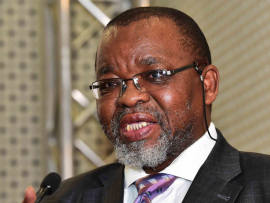
The Minister of Mineral Resources and Energy, Gwede Mantashe, says his department is planning to announce the preferred bidder for the procurement of 2 600 megawatts of renewable energy under Bid Window 5 by the end of next month.
The Minister said this when Ministers in the Economics Cluster responded to oral questions in the National Assembly on Wednesday.
“The department is in the process of procuring a further 6 800 megawatts of renewable energy. From this proposal, 2 600 megawatts will be under Bid Window 5, which is being evaluated, with the preferred bidder announcement planned for the month of October 2021.
“The remainder of the 6 800 megawatts capacity is planned for procurement before the end of March 2022,” the Minister said.
To date, the department has completed the procurement of 6 422 MW of renewable energy.
Through four bidding rounds, as at the end of June this year, 5 422 megawatts is already connected to the grid and is part of the energy supply.
Mantashe said renewable energy now accounts for just under 10% of electricity supply, with the country still heavily reliant on Eskom.
“In line with the Integrated Resource Plan 2019, additional renewable energy capacity will be released to Eskom and municipalities as and when requested, when requests for Section 24 determination are received.
“The biggest allocation for new generation capacity to be developed between now and the year 2030 is renewable energy.
“The Integrated Resource Plan 2019 provides for 14 400 megawatts of additional wind power, 6 000 megawatts of additional solar power and 2 088 megawatts of battery storage.
Renewable energy a necessity to the economy
Mantashe said, meanwhile, that one of the issues that need to be considered about renewable energy is that while it is expensive technology to be introduced, it is necessary to do so, as it contributes to economic growth.
“What we should always take into account is that renewable energy is relatively new technology in South Africa and if you look at Bid Window 1, 2, 3, and a little bit of Bid Window 4, one of the issues was that it was expensive to build renewable energy.
“But I always argue that that was a subsidy for introducing technology that was necessary in the economy.
“Therefore, it was not a cost, rather that it was a premium paid for introducing technology to the economy.”
Mantashe said the second inhibiting factor is the fact that the components of building renewable energy are manufactured outside of South Africa.
“That’s inhibiting, as it does not give South Africans optimal benefits of the technology and lastly, it is the fact that it is still dominated by foreign companies. We have a responsibility of ensuring that there is an increased participation of South Africans in the technology.”
To combat high costs, Mantashe said his department is working towards localising the manufacturing of renewable energy components in the country, which is expected to lead to job creation.
“The department is working with business, labour and community representatives to develop localisation and industrial plans that will make it possible for us to attract investment and develop local manufacturing capacity.
“Analysis of the potential jobs in renewable energy shows that large numbers of jobs will be created during the manufacturing and construction phase. It is crucial for us as a country to maximise economic opportunities that come with the planned power generation capacity,” Mantashe said.
Treasury, Presidency working on plan to reduce poverty gap
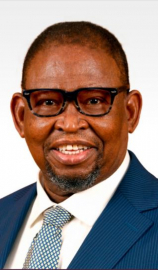
The National Treasury is working with the Presidency and the Department of Social Development to tackle the poverty gap, and this will include looking at an alternative for the R350 SRD grant, says Finance Minister Enoch Godongwana.
Godongwana said this when Ministers in the Economics Cluster responded to questions in the National Assembly on Wednesday.
“The National Treasury is working with the Presidency and the Department of Social Development and other partners to consider various options for reducing the national poverty gap.
“This includes considering of what might replace the R350 Social Relief of Distress (SRD) grant. However, all options also need to be considered with respect to their availability as well as their fiscal and revenue implications before a final decision can be made,” he said.
He said that in terms of achieving sustainable relief for vulnerable households, the baseline budget for a social assistance grant is about R205 billion for 2022 to 2023.
“The social wage comprising of a range of government interventions including social services, free basic service and others is around 60% of non-interest spending. This is about R1.5 trillion per annum.”
Treasury to announce economic reforms in medium term budget
Meanwhile, National Treasury will use the November Medium Term Budget Policy Statement (MTBPS) to announce economic reforms that form part of the economic reconstruction and recovery plan.
“What we are going to require to structure and change and make sure this economy can recover is mobilize all of South Africans to work together to ensure that this economy is brought into a better performance.
“To unlock the growth potential of the economy, our focus will be as National Treasury, accelerating the implementation of the Economic Reconstruction and Recovery Plan because we are working on the basis that government as a collective has agreed on a plan.
“Focus on growth and job-creating structural reforms; maintaining fiscal sustainability, which in our view, includes effectiveness and efficiency of spending with a greater emphasis on capital expenditure than on consumption expenditure, I think we will be dealing with this matter in detail in the MTBPS,” he said.
Godongwana also said government would also focus on strengthening the capacity of the state.
“Recent announcements, which demonstrate government’s commitment to accelerate the implementation of structural reform to support growth include among others, moving with speed to deal with bottlenecks blocking the release of spectrum,” he said.
FSCA warns public against Weownomy
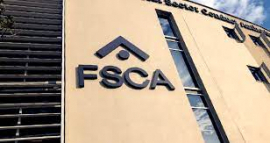
The Financial Sector Conduct Authority (FSCA) has urged the public to be cautious when conducting financial services business with Weownomy, a platform purporting to offer advisory services.
In a statement, the FSCA said Weownomy was not authorised to render any financial advisory and/or intermediary services in terms of the Financial Advisory and Intermediary Services Act No. 37 of 2002 (FAIS Act).
The FSCA said it received information from a member of the public that had raised material concerns.
“According to their platform (Weownomy.global), Weownomy is a social platform where users are offered the option of buying shares. Shareholders are then promised a portion of money paid by advertisers on the platform,” reads the statement.
The authority said Weownomy was not authorised as a financial services provider in terms of the FAIS Act.
“The FSCA is of the view that it is likely that the entity is conducting financial services business and requires a financial services provider licence from the FSCA, to conduct business in South Africa.
“It is therefore highly likely that they are conducting unregistered business, which is a criminal offence. Members of the public should always check that an entity or individual is registered with the FSCA to provide financial advisory and intermediary services and what category of advice it is that the entity is registered to provide,” it said.
The FSCA said there were instances where persons were registered to provide basic advisory services for a low-risk product and then offered services of a far more complex and risky nature.
The FSCA again warned consumers who wish to conduct financial services with an institution or person to check beforehand with the FSCA on either the toll-free number 0800 110 443 or on the website www.fsca.co.za as to whether or not such institution or person is authorised to render financial services, and in particular which financial products they are licensed for.
RTMC clarifies misleading reports on online booking
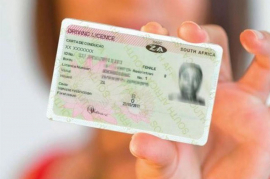
The Road Traffic Management Corporation (RTMC) has noted with concern misleading reports suggesting that the government intends to add a charge of R250 to make an online booking on the National Traffic Information System (NaTIS) system.
“The information emanates from the Organisation Undoing Tax Abuse (OUTA) misinterpretation of the proposed online charges gazetted on 3 September 2021 in the draft Road Traffic Management Corporation regulations 2021,” the RTMC said on Wednesday.
The corporation has denied that the charge is an additional fee levied simply to book a space online.
“Driving licence card holders are already paying this fee when renewing their credit card format driving licences at the licensing centres. It is money paid for the production of the credit card format driving licence.
“The proposed change seeks to make it convenient for driving licence card holders to make this payment online when making a booking to renew driving licence cards. It is therefore not new and it is not an additional fee,” said the RTMC.
In an effort to improve efficiency and to cut the time that members of the public spend queuing at licencing centres, government has proposed that the public will have an option to make online payments for the renewal of driving licence cards or vehicle licence disks and to have these documents delivered directly to the address of their choice.
“This will improve service delivery, cut the time spent on queues at the licencing centres and bring about much needed convenience to members of the public and other stakeholders. The R72 transaction fee has been in existence for many years and has not been changed in more than three years,” RTMC said.
To further streamline services, it is proposed that the registration of a vehicle by a title owner and the notification of change of ownership will in future be done online.
Insurance companies will also be able to access an electronic copy of an Accident Report.
RTMC said members of the public have called for these improvements and they are in line with the new way of doing business in the digital era.
“We call on OUTA and its allies; including the Automobile Association (AA) to stop misleading and confusing members of the public in this way, but to join us in efforts to improve service delivery at licencing centres,” RTMC said.
Preservation order granted against Transnet supplier

The Special Tribunal has granted the Special Investigating Unit (SIU) and Transnet a preservation order to freeze approximately R4.2 billion held in bank accounts linked to state capture corruption accused CRRC E-Loco Supply.
In a statement, the SIU said it believes that the funds were proceeds of unlawful activity and stand to be forfeited to the State.
The SIU, together with Transnet, approached the Tribunal to freeze the accounts following an intensive investigation, which were supported by interventions by the South African Reserve Bank (SARB) and the South African Revenue Service (SARS).
The SARB and SARS earlier raised suspicion that CRRC, a Chinese company, paid kickbacks, disguised as Business Development Services Agreements (BDSAs), to entities linked to allegations of State capture and/or allegations of maladministration and irregularities, ostensibly to influence the direction of tenders at Transnet.
“No evidence exists to suggest that the payments envisaged in the BDSAs were for services rendered, and the said payments are linked to the award of contracts and payments made by Transnet.
“It all started with blocking orders that were implemented by the SARB, where after SARS obtained a preservation order in the High Court, pending assessment of CRRC’s tax obligations and payments from the said amounts,” the SIU.
CRRC was awarded three contracts by Transnet to supply it with locomotives between 2011 and 2014 in respect of 95, 100 and 359 locomotives for a combined sum of approximately R25.4 billion.
Based on the findings in investigations conducted by Transnet and the SIU, the two entities have also instituted a review application in the High Court of South Africa, Gauteng Local Division in Johannesburg, under Case No. 21/11645, which is ongoing.
The preservation order, which was handed down on 31 August 2021, interdicts, restrains and prohibits CRRC from dealing in any manner with the funds (along with any and all interest that may be accruing to such funds) held by three banks in South Africa, and interdicts the said banks also from releasing the said funds, except for potential authorised releases, in respect of the funds to the SARB, SARS and SIU, based on the execution of their respective mandates.
The freezing order shall continue to operate in respect of any funds remaining in the accounts after the SARB Blocking Orders and/or the SARS tax assessments have been discharged and deducted.
Domestic Violence Amendment Bill revised to reflect gender-neutrality

The Domestic Violence Amendment Bill has been revised to reflect gender-neutrality.
The bill’s gender neutrality amendments were approved during a sitting of Parliament’s Justice and Correctional Services Portfolio Committee on Tuesday.
The move will make this South Africa’s second gender-neutral Act after the Cybercrimes Act.
In the bill’s amendments, traditional pronouns such as “he”, “she”, “him” or “her”, have been replaced by gender neutral terms such as “they”, “them” or “their” where appropriate.
Deputy Minister of Justice and Correctional Services, John Jeffery, said gender-neutral terms seek to include every person in society.
“A non-binary [term] is more inclusive because you don’t just have ‘he’ and ‘she’, you also have… intersex people or people who don’t identify as either. In the context of domestic violence, I think gender identity becomes very important,” the Deputy Minister said.
Committee chairperson, Gratitude Magwanishe, said language used in legislation is bound to evolve.
“I generally think that non-binary language is going to become a standard way of drafting [legislation] going forward… to ensure that our legislation is inclusive of everybody. So a lot of investment is needed in ensuring that [Members of Parliament] and officials in departments are trained to write in that way going forward. Society is evolving and our legislation should also evolve,” he said.
The committee also approved an amendment to the Criminal Procedure Act, which now reflects that the identity of an accused person, witness or victim under the age 18, may not be revealed.
The Criminal Procedure Amendment Bill and Sexual Offences and Domestic Violence bills will now go to the National Assembly due to meet on Friday for approval.
If approved, the bills will be sent to President Cyril Ramaphosa for assent.
Employers under scrutiny in E Cape blitz inspection
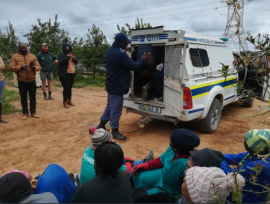
The Department of Employment and Labour has slammed employers in the wholesale and retail sector for non-compliance with the Basic Conditions of Employment Act in the Eastern Cape’s Sarah Baartman District.
The department is undertaking a two-week long blitz, which kicked off with 45 inspections conducted in different sectors in the Sarah Baartman District.
Twelve inspections were conducted in the wholesale and retail sector. Three were conducted in the hospitality sector, 21 in miscellaneous sectors and nine in the farm sector.
Four compliance orders and one written undertaking due to underpayment of employees were given out in the wholesale and retail sector, with the employers being given 14 days to comply.
“The inspections saw a total of alleged 71 foreign nationals apprehended by Home Affairs Department and SAPS, with 68 of them being male and three female. Amongst these immigrants are nationals of Lesotho, Malawi and Zimbabwe,” the department said.
The department said those who were arrested will appear in court on Wednesday.
Employment and Labour inspectors are scattered in operation, along with the Sarah Baartman District Municipality, Departments of Home Affairs and Health, as well as the South African Police Service (SAPS) in an effort to scrutinise compliance with labour legislation in and around Addo and Kirkwood.
The aim of the inspections is to educate and enforce compliance with labour legislation, ensure compliance with the National Minimum Wage Act, Basic Conditions of Employment Act, Compensation for Occupational Injuries and Diseases Act, including the Immigration Act, and administer on-site vaccination.
“The department has noted with concern the rife allegations of exploitation of workers, in particular foreign nationals within certain sectors of the economy and areas within Sarah Baartman District. It is therefore the responsibility of the law enforcers to ensure those found to be delinquent face the full might of the law,” said the provincial Head of Department, Nomfundo Douw-Jack.
Inspections will continue in Kirkwood and Addo until 17 September 2021.
W Cape govt steps in after Vredelus centre security breach

The Western Cape Department of Social Development is assessing its short- and long-term plans for the Vredelus Child and Youth Care Centre in Elsies River for girls who are in conflict with the law, after a group of armed suspects forced their way into the facility.
On Monday, a group of armed men overpowered security staff and attempted to access the girls in safe care.
“Emergency protocols were immediately activated, and all staff and residents were evacuated to a secondary, secure location. Staff and residents are receiving counselling, and parents of the girls are being contacted,” the department said.
The department extended its gratitude to the staff who acted swiftly to ensure the safety of the residents, the Department of Community Safety, security company personnel and the South African Police Service.
“Security measures have been put in place to protect infrastructure and the State Security Agency, as well as the Department of Community Safety, have been asked to assist with an investigation,” the department said.
The latest incident follows several prior attempts in August to access the facility by cutting through the perimeter fences, as well as ongoing safety incidents outside the centre.
As a result, the department is assessing possible alternative sites to accommodate girls in conflict with the law in the medium- and long term.
Reopening of voter, candidate registration for local elections welcomed
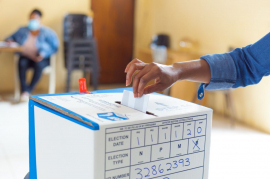
The Portfolio Committee on Cooperative Governance and Traditional Affairs (CoGTA) has welcomed the Electoral Commission of South Africa’s (IEC) decision to reopen the voter and candidate registration for the 2021 local government elections.
In a statement on Tuesday, the Committee said it is aware that the announcement came after the Constitutional Court dismissed the IEC’s application to postpone the elections until a later date, due to safety concerns as a result of the COVID-19 pandemic.
The Constitutional Court on Friday ordered the IEC to hold the local government elections by no later than 1 November 2021. The Committee noted that the IEC had since rescheduled a registration weekend for the weekend of 18 and 19 September 2021.
“The committee believes that this new registration weekend affords many South Africans who were unable to register as a result of precautions due to the pandemic an opportunity to register and update their voter registration details.
“The committee believes that it is vital that every eligible South African has an opportunity to register in a manner that is safe to their health,” reads the statement. The committee also noted that the IEC had taken a decision to allow political parties and independent candidates an opportunity to nominate candidates after the registration weekend has occurred and after the voters’ roll has closed.
It said it was aware of the contention around this decision from various parties. Committee chairperson Fikile Xasa said it was important to give the IEC “the space to navigate this period in a manner that will ensure that the country holds safe, free and fair local government elections”.
The committee has scheduled a meeting with the IEC for 22 September 2021 to assess its readiness for hosting the elections between 27 October and 1 November, as directed by the Court. The committee last met with the IEC on 6 April 2021 to discuss its preparations for the 2021 local government electoral cycle in the context of the COVID-19 pandemic and the then anticipated third wave of infections.
The committee has already engaged the Municipal Demarcation Board (MDB) to satisfy itself that the ward delimitation process in preparation for the elections has been completed. The MDB informed the committee that it handed over the final wards to the IEC on 1 December 2020.
The scheduled meeting of 22 September 2021 will provide an optimal opportunity for the committee to follow up with the IEC regarding the implementation of the Constitutional Court Order, as well as the challenges that may have been experienced in this regard.