
R1.5 billion approved to support businesses affected by July looting
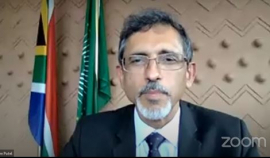
A total of R1.5 billion has been approved to support businesses affected by the looting and unrest in July, says Trade, Industry and Competition Minister Ebrahim Patel.
Patel was updating the media on the Department of Trade, Industry and Competition’s (dtic) interventions aimed at assisting businesses that had their property destroyed and operations disrupted due to the riots in KwaZulu-Natal and Gauteng.
The Minister said the Industrial Development Corporation (IDC), the Solidarity Fund and the National Empowerment Fund (NEF) provided the R1.5 billion to businesses affected by July’s looting.
According to Patel, the R1.5 billion in direct support would be broken down to 123 separate transactions representing 320 business sites.
“We have also worked with associations and groups. In the sugar industry, we got an application from sugar farmers whose cane was burnt and R85 million was made available to cover 192 sugar farmers. This has been approved and will get to the final beneficiary,” Patel said on Tuesday.
Measures to avoid double dipping and corruption have been put in place.
IDC Chief Executive Officer Tshokolo Nchocho said R700 million of the R1.5 billion was in grant form.
“Of the R1.5 billion, part of it was in debt form at a 5% rate and some of it was in grant form. We have set aside a dedicated team that goes in and assists with reconstruction of the processes,” Nchocho said.
Patel said most businesses had already received assistance or support. The unrest resulted in damages to hundreds of businesses in the two provinces.
Businesses that were ravaged during the violence and looting were encouraged to lodge claims to access packages after the department opened the application process.
A total of 320 business sites were affected by the riots. Earlier this month, the NEF and the Solidarity Fund established a R450 million SMME Support Programme for affected businesses.
NEF Chief Executive Officer Philisiwe Buthelezi-Mthethwa said they have worked with the dtic and the Solidarity Fund to build capacity needed to respond to businesses in need.
She said companies that are not in good standing with the South African Revenue Service (SARS) will still be assisted, taking into account that critical tax information may have been destroyed during looting
Comply with COVID-19 directions or face fines

The Department of Employment and Labour’s Inspection and Enforcement Services has appealed to employers, supported by employees and organised labour to comply with the COVID-19 occupational health and safety direction or face fines.
Published on 11 June 2021, the minimum requirements of the 4th Direction, “Occupational health and safety measures in workplaces, COVID-19, 2021,” applies to employers and workers in workplaces who are permitted to continue or commence operations under the Disaster Management Regulations.
These Directions apply for the duration of the national state of disaster and are subject to the employer’s obligations under the OHSA to conduct a risk assessment, while employers with less than 10 employees need only to apply Section 12 of Directions.
In a statement, the department’s Chief Inspector Tibor Szana said that if the employer employs more than 50 employees, that employer must submit a record of its risk assessment, to its health and safety committee and retain a written copy of that risk assessment, plan and policy.
“In addition to the other duties placed on the employer, an employer who employs more than 50 employees in a workplace must submit the following categories of data to the NIOH in the manner set out in the National Department of Health Guidelines,” Szana said.
The department says the employer must submit the data referred to hereunder in the following manner: Only once in respect of each employee’s status, for example, each employee’s vulnerability status for serious outcomes of a COVID -19 infection.
Before Tuesday of each week in respect of the data referred to hereunder for the previous calendar week commencing on Sunday, that is:
- details of the COVID -19 screening of employees who are symptomatic;
- details of employees who test positive in terms of a positive laboratory test;
- the number of employees identified as high risk contacts within the workplace if a worker has been confirmed as being positive; and
- details on the post-infection outcomes of those testing positive, including the return to work assessment outcome.
The Chief Inspector said that the employer must inform its employees of the submission made to the National Institute for Occupational Health (NIOH) or Department of Health and advise them of its adherence to the PoPI Act, 2013 (Act No.4 of 2013).
“The employer may submit the indicated data to an employer association if the association has entered into an agreement with the NIOH to receive, process and submit the data to the Institute; and undertaken to submit the data on behalf of the employer,” he said.
In relation to Section 16 of the Direction, the department said that the following should be taken cognisance of:
- If a person fails to comply with this direction, an inspector may perform any of the functions in section 29 of the OHSA and exercise any of the powers listed in section 30 of the OHSA in order to monitor compliance with this Direction.
- In so far as any contravention of these Directions constitutes a contravention of an obligation or prohibition under the OHSA, the offences and penalties provided for in section 38 of the OHSA apply.
“It is therefore a contravention not to comply with the Direction published by the Minister of Employment and Labour and is punishable by up to R100 000 or two years’ imprisonment or both in the case where an employee becomes injured or dies,” Szana said.
The data indicated above can be sent to the following:
For the data collection and transfer to commence, the business or organisation would need to be registered using the Occupational Health Surveillance Systems Web Portal (available through this link: https://ohss.nioh.ac.za/ ) so that a Unique Business ID is allocated to the business. This unique business identity would need to be provided in every data submission transaction to the NIOH.
For data reporting, the OHSS support desk can be contacted via email: OHSworkplace@nioh.ac.za or telephone: 0713981169 or 0723215503 and for technical queries, the IT support desk can be contacted via email: ohssupport@nioh.ac.za
Templates and more information on the OHSS can be found at: https://www.nioh.ac.za/covid-19/occupational-health-surveillance-system-ohss-business-portal/
Forty-two military veterans get bail

Forty-two of the 53 members of the military veterans accused of kidnapping two Cabinet Ministers and a Deputy Minister have been released on R500 bail.
The 42 received bail at the Kgosi Mampuru II Correctional Facility in Tshwane on Tuesday.
In a statement, the South African Police Service (SAPS) said the hearing was conducted with the 13 of the 52, who are first offenders and their addresses have been verified.
The group were arrested after allegedly holding Minister in the Presidency Mondli Gungubele, Defence and Military Veterans Minister Thandi Modise and her Deputy Thabang Makwetla hostage at St Georges Hotel in Irene, Centurion, last week. They were rescued by members of the Special Task Force team.
“Bail was set at R500 for them and the case postponed to the 1 February 2022 at Pretoria Central Magistrates Court,” said the SAPS.
The 13 are: Sizwe Maphumulo (50), Joseph Mthembu(50), Aaron Magooa(55), Abel Sekele(61), Johannes Modise(47), Nontyatyambo Samuel (female) (54), Thabiso Mashiya (47), Sibusiso Mazibuko (51), Kleinbooi Madontsela(51), Joseph Simelane(49), Dumisani Thwayo (49) and Alfred Seatlakgame (47).
After the court came back from recess, bail of R500 was also granted for the 27 accused who have previous convictions outstanding on minor cases but their addresses have not been verified. They also will appear in the Pretoria Magistrates Court on 1 February 2022.
The remaining 11 accused have relevant previous convictions on serious offences, which include murder, kidnapping, armed robbery and rape. These accused were remanded in custody and will appear again on Friday in the same court.
Education bolsters inmate rehabilitation

The Department of Correctional Services says education remains a key element in the rehabilitation of inmates at facilities.
This as 211 inmates prepare to sit for this year’s National Senior Certificate or final Grade 12 examinations.
“Access to education remains the pillar of rehabilitation and formal education ensures that offenders remain focused amid their circumstances as they strive for new beginnings.
“Education is regarded as an essential component of the reconstruction, development and transformation of South African society. Hence, formal education in DCS cannot only respond to the rehabilitation needs of inmates but be viewed as a tool that can radically transform our society and advance the development of the country,” the department said.
The department runs at least 17 Correctional Schools which offer basic education in line with the national curriculum.
Those sitting for examinations at correctional facilities have beaten the national pass average and recorded improved pass rates for the past two years.
The department said although preparations for this year’s examinations have faced “challenges brought by COVID-19”, inmates are well prepared.
“DCS educators…put in extra support classes and went beyond the allocated hours in a day’s work in an effort to ensure that inmates are not just ready but do achieve the best possible results.
“Working together with the Department of Basic Education, DCS can guarantee yet another credible examination process as all examination centres will be invigilated as per the rules governing exam procedures,” the department said.
KwaZulu-Natal Task Team secures conviction for multiple murderer

A man suspected to be involved in the murder of Orlando Pirates goalkeeper Senzo Meyiwa has been convicted for a reign of terror that claimed the lives of six people in 2016.
The Esikhaleni Regional Court, in KwaZulu-Natal, on Monday found Fisokuhle Ntuli guilty of the murders of Councillor Thami Goodwill Nyembe, Butiza Sandisa Mahlobo, Sphamandla Zungu and brothers Phiwayinkosi Mcebisi and Sibusiso Zulu.
Ntuli also shot and critically wounded Nolwazi Nyembe, the wife of Thami Nyembe, which resulted in the case of attempted murder.
He was further convicted of four counts of unlawful possession of a firearm and ammunition where one of the firearms stolen was from a policeman in Ezibeleni in Queenstown in 2011.
In a statement, the South African Police Service (SAPS) who welcomed the conviction, said that at the sentencing hearing the defence team requested that a pre-sentencing report from a parole officer and a social worker be presented to the court before sentencing is passed.
The judge granted the request and Ntuli is expected reappear in court on 9 Decemeber 2021 for sentencing.
A multidisciplinary integrated Political Task Team in KwaZulu-Natal began investigating Ntuli on one count of murder and another of attempted murder following the shooting of the Nyembe couple in KwaNongoma, KwaZulu-Natal in 2016. The Task Team comprised of Senior Public Prosecutors, SAPS Detectives, Directorate for Priority Crime Investigations (Hawks), Forensic Experts and Crime Intelligence
“Following intensive investigations by the team, Ntuli was linked to the other five murders.
The SAPS said Ntuli’s reign of power was not only carried out in the northern parts of the province, he is also a person of interest in several other cases in Gauteng, many of which are murders, including that of Senzo Meyiwa.
“The outcome of this case is expected to send out a clear message to potential anarchists of the seriousness with which the Criminal Justice System deals with serious and violent crimes throughout the country,” said the police.
AU to establish fund for future pandemics
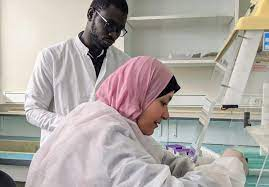
The African Union Health Commission has committed to establishing a response plan and fund as part of the overall strategy to tackle the risk of impending waves of COVID-19 and future pandemics.
The plan was outlined during a meeting last week with the African Union (AU) Champion on COVID-19, President Cyril Ramaphosa.
President Ramaphosa met with the members of the Secretariat and the Leads of the Working Groups of the Commission on Africa’s COVID-19 Response Strategy to discuss progress made by the expert panel.
Having recognised the difficulties that Africa faced in a multilateral context, the experts introduced a bold plan to establish an African Pandemic Preparedness and Response Authority (APPRA) and fund.
According to the Presidency, APPRA aims to secure the region’s capacity to respond to subsequent waves of COVID-19 and future pandemics.
“While the proposed global collaboration on pandemic preparedness was welcomed in principle, the COVID-19 pandemic exposed deep inequalities between wealthy and low- and middle-income countries that were not resolved through multilateralism,” the Presidency said.
President Ramaphosa thanked the panel for the progressive agenda and impactful work done not only to strengthen the continental response to COVID-19 but also to secure future health resilience for the continent.
“I am in full agreement with the tasks that you have set out and that the entities that have already been set up need to be strengthened and interlinked effectively with an African pandemic preparedness authority,” said President Ramaphosa.
According to the statement released by the Presidency on Tuesday, the commission has been working to meet its twofold mandate since its inaugural meeting on 22 June 2021.
This includes identifying gaps in the continental COVID-19 response strategy and putting forward evidence-based interventions and to generate evidence to assess its impact on social and economic harm on the continent and proposing ways to a strong recovery.
The experts also determined that the region needed an autonomous, coherent strategy to ensure it can independently protect its people in the event of future outbreaks.
The panel has since committed to supporting the accessibility of new lifesaving therapeutics and intensifying efforts to close the oxygen capacity gap by targeting areas of need.
Meanwhile, regional intelligence gathering and sharing were also highlighted as a key challenge on the continent.
In addition, the commission said it will tackle the interrelated pandemics of gender-based violence and COVID-19 by evidence-based advocacy to reform laws and policies. The commission said the ability of women and girls to exercise autonomy over their bodies is a challenge, particularly during crisis periods.
The panel believes that the pandemic sharply exposed the region’s lack of capacity to produce its stock for crisis response and resolved to respond to the call to establish biotechnological sovereignty for the protection of Africans.
In addition, emphasis has been placed on future health security by building on the achievements of President Ramaphosa’s chairship and the current championship on COVID-19.
The President expressed his support and readiness to champion the work of the expert panel, and to table the interventions at the AU mid-year coordinating meeting.
Ten key strategic areas where the panel will intervene:
1. Lobby for a treaty towards the APPRA and the establishment of a supporting fund.
2. Facilitate meaningful African representation on the proposed collaboration towards a global pandemic preparedness treaty.
3. Recognition of and full endorsement of the Partnership on Vaccine Manufacturing (PAVM) established under the AU through the Africa Centres for Disease Control and Prevention (Africa CDC).
4. Enhanced surveillance and antigen testing by deploying up to 200 million rapid diagnostic tests in the next six months.
5. Establishment of a central information open-source platform for threat analysis and response.
6. Establishment of a National Public Health Institution in every Member State.
7. Equitable access of all lifesaving COVID-19 tools through implementation studies of monoclonal antibodies and new therapeutics.
8. Position the region as an attractive health investment destination and mobilise governments to buy African biotech.
9. The establishment of a high-level accountability panel or council.
10. Evidence-based development of a framework for action to combat the escalation of violence against women and girls, and to recover sexual and reproductive health services.
NERSA, Eskom head to court over pricing

The National Energy Regulator of South Africa (NERSA) says it is studying a court application by Eskom, which seeks to compel the energy regulator to reconsider Eskom’s tariff increase application.
This as NERSA rejected Eskom’s multi-year electricity tariff increase application at the end of September.
On Monday, the power utility said it had filed an application in the High Court to review NERSA’s decision to reject the tariff increase, citing the move as its only option.
“Regrettably, this is the only available option to avoid extremely serious and negative consequences for Eskom and by necessary consequence, to National Treasury. The urgent High Court review requires NERSA to urgently process the Eskom revenue application for at least one year, as required by law.
“The proposed timeframe allows for a decision to be made in time for implementation by 1 April 2022,” Eskom said.
At the end of September, NERSA announced that it had rejected Eskom’s price application and had published a consultation paper on principles to be used when determining pricing.
“The new price determination approach will also take into consideration the rapid transformation of South Africa’s electricity sector, respond to the transformation of the Electricity Industry and associated energy security concerns, rising electricity prices as well as the increase in self and private sector electricity generation,” NERSA said at the time
Now Eskom says Nersa’s approach to price determination is “impossible” to apply.
“NERSA… requires Eskom to make a new application based on a methodology yet to be developed. This is impossible both from a legal process and timing point of view. It is hoped that NERSA will respond in a manner that allows for the stability of the country’s economy and the electricity industry,” the power utility said.
FBI, Hawks net R100m internet scam suspects
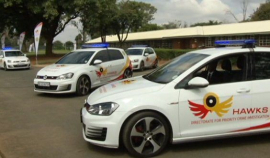
Eight foreign nationals, aged between 33 and 52, were on Tuesday morning arrested for their links to an alleged R100 million internet scam during a large-scale operation in Cape Town.
The group was arrested in a joint operation led by the Federal Bureau of Investigation (FBI), United State Secret Service (USSS) Investigations, Interpol and with assistance from the Hawks Serious Commercial Crime Investigation unit.
Also assisting in the operation was Crime Intelligence (CI), K9, National Intervention unit, Special Task Force (STF), Tactical Operations Management Section (TOMS), Criminal Record Centre and Cape Town Metro police.
The suspects are alleged to have been involved in money laundering and international-wide scale financial fraud.
In a statement, the Hawks said the operation was initiated based on the Mutual Legal Assistance from Central Authorities of the United States of America that was approved by the Republic of South Africa.
Hawks spokesperson, Colonel Katlego Mogale, said all suspects will be charged with a variety of financial crimes, including conspiracy to commit wire/mail fraud and money laundering.
“The suspects in this investigation are alleged to have ties to a transnational organised crime syndicate originating in Nigeria.
“It is alleged that these suspects preyed on victims, many of whom are vulnerable widows or divorcees, who were led to believe that they were in a genuine romantic relationships but were scammed out of their hard earned money.”
Mogale said the suspects used social media websites, online dating websites to find and connect with their victims.
Another modus operandi used by the suspects was business emails, where email accounts were diverted in order to change banking details.
“They assumed fake names and trolled dating sites.
“Once they had ingratiated themselves to their victims, they allegedly concocted sob-stories about why they needed money – i.e., taxes to release an inheritance, essential overseas travel, crippling debt, etc., and then siphoned money from victim’s accounts to the amount of R100 million.”
Mogale said the crimes allegedly committed by the suspects hit close to home.
“Neighbours, parents, friends and family would be targets of this organisation.
“The fraudsters intimidated and berated their victims, ruined their lives and then disappeared. We are confident that this investigation will have a significant impact on this region and beyond,” said Mogale.
The FBI estimates that more than 100 people lost more than R100 million in romance scams from 2011 till to date.
To report any suspected online scam fraud, file a report via the nearest police station.
Zikalala condemns shooting of Durban entrepreneur
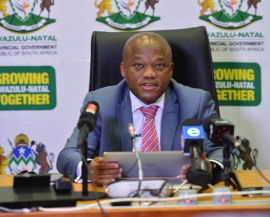
KwaZulu-Natal Premier Sihle Zikalala has warned that incidents such as the shooting of the owner of Max’s Lifestyle, has the potential of derailing government’s efforts of growing township tourism and the township economies in general.
Zikalala was reacting to the shooting of the owner of the world-renowned Shisanyama, Max’s Lifestyle in Umlazi, on Thursday night.
The Durban entrepreneur, Max Mqadi, was attacked by unknown gunmen, as he was leaving the establishment.
Despite being injured, Mqadi managed to drive himself to Florida Road in Durban where he received help.
The KwaZulu-Natal Provincial Government has strongly condemned the attack and called on police to act swiftly and ensure the arrest of suspects responsible for the shooting.
Zikalala warned that the provincial government will do everything possible to ensure that Mqadi’s shooting does not lead to negative sentiment towards township tourism in the province.
“Law enforcement agencies must ramp up efforts to hold accountable those behind this senseless attack. This barbaric act has left many citizens shocked and fearful.
“Incidents such as these have the potential of derailing our efforts of growing township tourism and the township economies in general,” Zikalala.
Zikalala added that Max’s Lifestyle remains one of the premier drawcards to local and international tourists, and has contributed immensely to creating jobs in uMlazi.
“Attacks such as these may therefore reverse the gains we have made in this regard. As part of government’s plan of building better communities, we will ensure that security especially in townships is strengthened and that the latest technology such as drone technology is used to police some of our areas.
“The province cannot afford to have gun totting thugs roaming our streets freely especially in our townships and rural areas where we are stimulating economies. Building safer communities remains one of our key priorities. We will be watching the developments around this case very closely,” the Premier said.
In a statement issued by Max’s Lifestyle Village family, Mqadi was discharged from hospital on Monday and he is recuperating.
“We wish Mqadi a speedy recovery, but most importantly we look forward to those behind this heinous act being brought to book,” Zikalala said.
SARS appoints High Wealth Individual Segment director
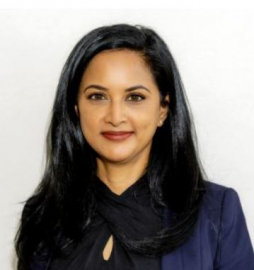
The South African Revenue Service (SARS) has announced the appointment of Natasha Singh, a chartered accountant with more than 20 years’ experience, as Director: High Wealth Individual (HWI) Segment.
Singh began in her new role on Monday, 18 October 2021.
She holds a Master’s degree, specialising in taxation. She joins SARS from Eskom where she served as Finance Executive: Group Insurance and Tax.
The revenue collector said Singh’s appointment was most opportune as it coincided with a number of recent reports that affect the critically important segment of taxpayers, including the recently released Pandora Papers.
In line with its strategic objective to make it easy and simple for taxpayers to comply with their legal obligations, SARS said Singh’s appointment “was of strategic importance to help improve compliance of wealthy individuals with complex financial arrangements”.
SARS Commissioner Edward Kieswetter said the revenue collector recognises the revenue contribution from this segment, in its various forms, to the Republic of South Africa.
“We also acknowledge the likely challenges that may arise, or currently exist with regards to the tax affairs and tax obligations of individuals and their families. Wealthy Individuals, tend to arrange their financial affairs in complex on- and off-shore structures, often masking their direct beneficial ownership and true income,” he said.
Kieswetter added that the continuing revelations from global media regarding the financial transactions of high wealth individuals across the world is a matter that needs proper investigation by suitably qualified experts such as Singh.
“Whilst our initial selection includes about 1500 wealthy individuals and their related entities, to ensure focus, we will continue to extend our reach to include more individuals and families.
“While SARS is committed to assisting taxpayers with their legal obligations, the organisation is equally determined to detect and deter non-compliance. In addition SARS will not tolerate wilful non-compliance and will make it hard and costly for such taxpayers without fear or favour,” Kieswetter said.
On her appointment, Singh said she was “deeply appreciative of and humbled by the rare privilege entrusted to me as the first Director of SARS’ High Wealth Individuals unit”.
“I am a public servant at heart, and a strong proponent of power of purpose. By marrying my passion for the public sector and hunger for purpose, I hope to honour and positively contribute to SARS’ Higher Purpose of serving the well-being of all South Africans,” she said.
The Commissioner introduced Singh to colleagues and staff at the Woodmead offices where the new unit will be co-located with the Large Business & International (LB&I) Segment.