
Minister Dlamini-Zuma welcomes ConCourt ruling
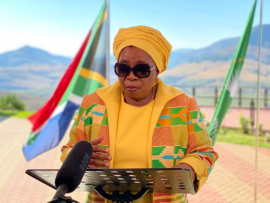
The Minister of Cooperative Governance and Traditional Affairs (CoGTA), Dr Nkosazana Dlamini Zuma, has welcomed the judgement handed down by the Constitutional Court in which she was cited as one of the respondents.
The Constitutional Court on Monday dismissed the Democratic Alliance’s (DA) application to declare the Electoral Commission of South Africa’s (IEC) decision to reopen candidate nominations for the Local Government Elections as invalid and unlawful and set aside.
“The Constitutional Court had previously dismissed an application by the IEC which sought an order to postpone the forthcoming municipal elections to February 2022,” the CoGTA department explained.
“In terms of paragraph 5(a) of that order, the IEC was ordered to determine within three days thereof, whether it was practically possible to hold a voter registration weekend to register new voters and change registered voters’ particulars on the national voters’ roll in time for the local government elections.”
The IEC subsequently determined it would be possible to hold a voter registration this past weekend.
“However, in addition to this, the Commission also advised that it would be amending the election timetable to include the re-opening of the candidate nomination process as this was necessary as a consequence of holding a voter registration weekend.”
According to the department, the Minister, as one of the respondents in this application, filed an affidavit.
“[The Minister] addressed the DA’s incorrect interpretation of the Constitutional Court order dated 3 September 2021, the correct source of the IEC’s powers, the DA’s application countenance a breach of the separation of powers and lastly the ambit of the order.”
In a unanimous judgement decided without an oral hearing by the Court, CoGTA said the highest court in the land stated that the proper approach to interpretation involves a unitary exercise in which a court seeks to ascertain the meaning of a provision in light of the document as a whole and context of admissible background evidence.
“The Court held that the proper interpretation to paragraph 5(a) of the order envisaged an amendment to the timetable in respect of registering voters,” the department added.
The department has since called on all eligible South Africans to exercise their democratic right and responsibility to vote during the 2021 Local Government Elections and to strengthen the country’s democracy.
Home Affairs minister welcomes Supreme Court of Appeal judgement
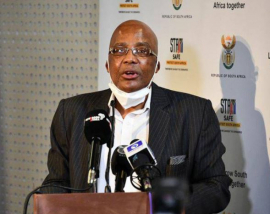
The Supreme Court of Appeal on Monday dismissed with costs an application for leave to appeal by New Dawn Technologies and Valor IT.
The matter involved a portion of a contract for an Electronic Document Management System for the Department of Home Affairs.
The Supreme Court of Appeal dismissed the application because it found that “there is no reasonable prospect of success in an appeal and there is no other compelling reason why an appeal should be heard”.
The summons of the two companies amount to R630 million, with New Dawn Technologies claiming R602 million and Valor IT, R28 million.
The sum of these monies amounts to about a third of the department’s audited contingent liability of R2.1 billion in the 2019/2020 financial year.
Contingent liabilities, being the amount of claims, are recorded when summonses are issued and are removed only once a judgment is made.
The R2.1 billion contingent liability is the value of claims against the department and not an amount owed.
The judgment comes after the Auditor-General warned in January 2021 that possible claims against the department were too high and could compromise operations and service delivery if they became payable during a financial year.
Home Affairs Minister Dr Aaron Motsoaledi on Monday welcomed the decision of the court.
“The judgment frees executive time and resources to allow senior managers to continue focusing on the urgent task of providing services to people and to fight corruption.
“It also helps us to implement the recommendations of the Auditor-General,” said Motsoaledi.
He said the judgment was also giving impetus to actively managing the risk of possible future claims against the department by taking outstanding claims to court or defending them, including looking at alternative dispute resolution mechanisms.
The Minister added that a lot of future possible claims against the department remained in the books of the department because they were not finalised in court.
Motsoaledi instructed the department’s management to be more pro-active and bring matters on the contingent liability list to court even where the plaintiff has failed to take any further action after issuing summons.
Last year, the Gauteng North High Court found that there was no legally binding contract between the department and the two companies for the provision of an Electronic Document Management System.
In his judgment, Judge J Davis ruled that: “Both New Dawn and Valour IT had been unsuccessful in their claims that agreements had come into being between them and the DHA regarding certain portions of an Electronic Document Management System in respect of which bids (RFB 458) had been made in 2005 with the closing date 31 January 2006.
“The tender in respect of EDMS was for a 3-year project, which period has long ago expired without the EDMS ever being implemented.
“On 26 November 2020, this Court found that no award which complies with the statutory prescripts and the terms contained in the bid documents had been made to either of the applicants. Accordingly, no binding agreement came into being between the two parties…”
New Dawn Technologies has since petitioned the Constitutional Court on the matter and the department is opposing the application.
Valor IT has since withdrawn its claim against the department.
Consequently, the Minister has instructed the department to pursue its legal costs against Valor IT, which date back to 2010 when the initial claim was filed.
The recovery of costs against New Dawn will be determined by the outcome of the Constitutional Court ruling.
Collaboration key to crime fighting in Gauteng
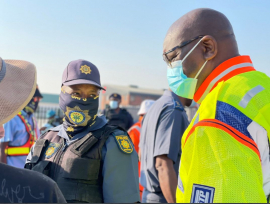
Gauteng Premier David Makhura says collaboration between law enforcement agencies and private security companies is critical for crime fighting.
He was speaking during the Operation O Kae Molao road safety and crime prevention blitz in Soweto.
“The police have been working with private security companies… on specific crimes and they committed to also help track perpetrators of specific crimes. We will see much more improved security and public safety when we see cooperation between law enforcement agencies and private security companies. They have done it before and they worked very well even when they were dealing with unrests,” he said.
Makhura also emphasised the importance of ensuring rigorous investigatons in order to secure convictions against those accused of crime.
“It doesn’t help to arrest a lot of people but then when they appear in court, proper detective work has not been done. We do want our police and crime intelligence to also shape up,” he said.
The Premier acknowledged internal weaknesses within law enforcement in the province but said these were being ironed out.
“We used to have serious weaknesses in the leadership of the [police] and all the units like the Hawks (Directorate for Priority Crime Investigation) and crime intelligence. So we met with all of them… and we can see the results of their actions. In Gauteng, there are major improvements with regard to crime intelligence and the Hawks in the province are also shaping up,” he said.
NSFAS gets unqualified audit report from Auditor-General

The National Student Financial Aid Scheme (NSFAS) has welcomed the report of the Auditor-General of South Africa (AGSA) for the unqualified audit opinion with findings for the year ended March 2021.
“This is a significant achievement and a step in the right direction. The unqualified audit opinion is the first for NSFAS since 2017 and two years of Administration from 2018 to 2020,” the NSFAS said in a statement.
The AGSA has noted that there was a significant improvement in the overall audit outcome when compared to prior years, with some challenges remaining particularly with the performance reporting.
The unqualified audit forms part of the action plan by the organisation on its road to transform into a responsive, efficient, effective and fit-for-purpose higher education and training financial aid administrator,” NSFAS said.
“Furthermore, this audit outcome paves a way for the NSFAS Board to intensify its fundraising objective to bridge the funding gap and cater for students not accommodated by the current funding criterion.
“This audit outcome should give confidence to current funders and potential funders, that NSFAS can account for the funds it manages.
“Therefore, the Board calls upon the private sector to come on board and be part of these initiatives, which have great potential to change lives and contribute to South Africa’s national and human resource development goals,” NSFAS said.
NSFAS says it continues to work tirelessly to support disadvantaged students and ensure that they are afforded the same opportunities as their counterparts who have access to funding and better resources.
Treasury studying plans to tackle country’s poverty gap

The National Treasury has commissioned a study to determine what long-term plan can be devised to narrow the country’s current poverty gap.
Addressing Parliament’s Select Committee on Appropriations (SCOA), Treasury said it was considering five options.
These included evaluating the current R350 grant; the Basic Income Grant; the Brazilian model that offers grants to poor households rather than individuals; an evaluation of the Presidential Employment Initiative and consideration of a job seekers’ grant.
Treasury, the Financial and Fiscal Commission (FFC) and the Parliamentary Budget Office (PBO) presented their perspectives on the Second Special Appropriation Bill to the SCOA on Wednesday.
In a statement, Committee chairperson Dikeledi Mahlangu cautioned that the country should not be turned into a welfare state.
She said there was a need for a sustainable strategic plan going forward and called for the avoidance of a recurrence of the bungle during the previous disbursement of the R350 grant.
She also called for a proper plan to be put in place to avert any possible fraud.
The Committee said in a statement that Treasury had assured the committee that “elaborate cross-reference checks” were in place, involving multiple government departments and agencies, which counter the previous inefficiencies and make it difficult for fraud to occur.
Mahlangu in the meeting also called on the National Treasury to support small business owners through the application procedures.
She reiterated that the committee always derives valuable inputs and technical expertise from its interactions with these entities.
“We value these interactions because it will go a long way in advancing the call for economic transformation and inclusive growth and to ensure that public finances are appropriated for their intended objectives and are managed more efficiently,” she said.
To address the impact of the civil unrest in Gauteng and KwaZulu-Natal in July and the third wave of the COVID-19 pandemic, a proposed R32.85 billion was set to provide funding allocations to the South African Special Risks Insurance Association (Sasria), the Department of Social Development, the Department of Police, the Department of Defence, and the Department of Trade, Industry and Competition.
In its presentation, the National Treasury explained to the committee why Sasria’s R3.9 billion injection request should be considered urgent.
Dr Mark Blecher from Treasury said the allocation to Sasria was meant to honour its insurance claims, estimated at well over R25 billion, emanating from losses incurred by its clients (shops, malls and factories) during the civil unrest in July.
Part of this Bill was an urgent request for R26.7 billion for the Department of Social Development, aimed at extending the R350 Social Relief of Distress (SRD) Grant to March 2022 for the benefit of 9.4 million eligible beneficiaries.
The FFC welcomed the R26.7 billion allocated to the Department of Social Development to extend the R350 SRD grant to March 2022.
National State of Disaster regulations remain a necessity in fight against COVID-19

President Cyril Ramaphosa says the National State of Disaster will be lifted only once regulatory measures for the prevention and spread of COVID-19 are in place or once there is no longer a need for the state of disaster.
He was responding to a question posed to him in the National Assembly by the leader of the official opposition in Parliament, John Steenhuisen, regarding which specific conditions need to be met in order for the National State of Disaster to be lifted.
As of Thursday, the country has been in lockdown for at least 539 days following the declaration of the National State of Disaster by the President in March 2020.
The country is currently on adjusted Alert Level 2 of the lockdown which has eased the restrictions on movements of people and gatherings.
In his written reply, President Ramaphosa said the current regulations in the National State of Disaster are necessary for the fight against COVID-19.
“The current measures contained in the regulations for dealing with the disaster in the context of the risk adjusted strategy, remain necessary to limit the negative impact of the COVID-19 pandemic. Once sustainable sectoral regulatory measures for COVID-19 response are in place or the need to invoke current extraordinary measures provided for under the state of disaster ceases, all the Regulations and Directions issued under the national state of disaster will cease to exist.
“Accordingly, ongoing assessments by the National Coronavirus Command Council and Cabinet will determine the satisfaction of conditions for terminating or allowing the state of disaster to lapse,” the President said.
President Ramaphosa highlighted that government must also work on how some regulations can be weaved into government policy in order to make preventative measures against COVID-19 the norm.
“All organs of state must develop sustainable regulatory measures for the control of COVID-19 beyond the state of disaster. Measures must be infused into policies and regulations to normalise COVID-19 preventative measures in the society,” the president said.
GBV dialogues hailed as game changer

The Department of Higher Education and Training, through Higher Health, is rolling out stakeholder engagement programmes in response to gender-based violence and mental health incidents in the Post-School Education and Training (PSET) sector.
The Minister of Higher Education, Science and Innovation, Dr Blade Nzimande, has hailed stakeholder engagement programmes targeting the youth as a “game changer”.
Nzimande said the massive roll-out of these programmes adds to the already released set of instruments to further strengthen the realisation of the policy framework on GBV within the PSET sector.
“Higher Health has established relationships with 21 campus-based radio stations and youth based regional and community radio stations to capacitate, train and run content 42 times a week on gender-based violence and mental health issues,” Nzimande said.
The Minister said these programmes add to Higher Health’s 24-hour toll-free helpline available in all 11 official languages that enable students to report GBV and mental incidents.
The line offers health, wellness and psychosocial risk assessment toolkits for early screening, empowerment and referral related to gender-based violence, mental health, HIV, TB and other matters.
“All our universities have measures in place to raise awareness and offer guidance and advice on GBV-related matters. These include, but not limited to, workshops or presentations during orientation weeks and during various parts of the year for students, roadshows, training, production and dissemination of brochures and other literature for the university community,” the Minister said.
The Minister said in addition to these initiatives, a large number of students have completed a curriculum on GBV prevention and mitigation, empowering them with knowledge and understanding of GBV.
The Ministerial Task Team established to advise the Minister and the Department of Higher Education and Training on gender-based violence held a series of consultation with institutions and established that not all of them have sufficient means to deal with GBV and other harm.
“The department and Higher Health will continue to support these institutions to address this challenge because GBV and associated harm is another pandemic that we must collectively defeat,” Nzimande said.
The rollout comes weeks after the death of Fort Hare Law student, Nosicelo Mtebeni, who was brutally murdered and dismembered by her boyfriend in East London.
Special Tribunal to hear application to set aside R11m in Eskom contracts

The Special Tribunal is expected to hear an application by the Special Investigating Unit (SIU) to review and set aside R11 million worth of contracts awarded to companies allegedly linked to Eskom senior manager Petrus Shaka Mazibuko.
According to a statement by the tribunal, it is alleged that Mazibuko received “unauthorised gratification” from Eskom supply companies while in the employ of the power utility.
“The [SIU] alleges that Mazibuko’s conduct constituted a violation of the Prevention and Combating of Corrupt Activities Act…and money laundering activities in that Mazibuko is also alleged to have not disclosed his business interests in terms of the Eskom Conflict of Interest Policy and that Commodity Logistix Managers Africa is a current active vendor of Eskom,” the statement said.
The Special Tribunal said papers before it allege that Mazibuko and Shadrack Mazibuko are cited as the signatories to an FNB bank account which holds the income of two Eskom suppliers.
“On 30 April…the Special Tribunal granted the interim interdict interdicting, prohibiting and restraining FNB to release the money in excess of R11 million to Mazibuko and/or any other person pending the institution and finalization of the review proceedings. It is contended that the amounts…amounted to unauthorized gratification as per the Prevention and Combating of the Corrupt Activities Act 12 of 2004,” the statement said.
The Special Tribunal said the review application will be heard on Thursday and Friday with proceedings to be held virtually.
Social Development raises Alzheimer’s awareness

The Department of Social Development is set to conduct dialogues on Alzheimer’s disease in Engcobo, Cofimvaba and Lady Frere in the Eastern Cape, from today until Friday.
This forms part of the build-up to World Alzheimer’s Day, which is commemorated annually on 21 September, where world organisations’ efforts are focused on raising awareness about Alzheimer’s and Dementia.
Alzheimer’s is a chronic neurodegenerative disease, which worsens gradually as senior citizens advance in years.
Common symptoms include difficulty in remembering recent events, problems with language, disorientation, mood swings and loss of motivation.
The department said it chose the area in the Eastern Cape due to the number of older persons accused of witchcraft and get killed as a result.
“The growing number of affected people causes an increased demand for services to persons affected by Alzheimer’s disease. Lack of information about Alzheimer’s has often led to many people, especially older persons, being accused of witchcraft and killed by their fellow community members because of a lack of understanding of the condition,” the department said.
Alzheimer’s is mostly prevalent amongst older persons, however, its onset may start as early as 30 years.
The condition affects the brain, thus leading to the eventual death of nerve cells and loss of brain tissue, which is regarded as the most common cause of dementia.
Every 68 seconds, someone develops Alzheimer’s disease. The condition is often called a family disease, because of the chronic stress of watching a loved one slowly deteriorating, which affects every member of the family.
Public lecture to support Free State tourism

To foster stakeholder engagements and partnerships as well as to gain expert industry insights, the Department of Small Business Development, Tourism and Environmental Affairs (DESTEA) in the Free State together with the Central University of Technology (CUT) will host the Tourism Month Public Lecture on Friday.
The lecture seeks to promote transparent and open dialogues between government and its stakeholders to achieve stability and support the tourism sector to get back to its glory days whilst operating under the new normal.
The department said that the expert panel members will be unpacking this year’s Tourism Month theme “Tourism for Inclusive Growth” as well as discussing and deliberating on the impact of COVID-19 in the Free State tourism sector.
“The Deputy Minister for Department of Tourism, Fish Mahlalela, will be joined by representatives from the tourism industry, product owners, academics, policy makers and practitioners in order to enhance strategies, planning, programmes and policy decision making within the tourism sector,” the department said.
The World Tourism Day is aimed at raising awareness among the international and local community about the importance of tourism and it’s social, environmental and economic values.
Globally, tourism stakeholders and organisations, as well as government agencies with a special interest in tourism, celebrate Tourism Day on the 27th of September each year.