
Close to 32 000 improperly benefit from SRD R350 grant

The South African Social Security Agency (SASSA) has told the Select Committee on Health and Social Services that at least 31 955 people had improperly benefitted from government’s R350 Social Relief of Distress grant at a cost of about R11 million.
This was in response to the Auditor General’s earlier finding that at least 67 000 people had improperly benefited from the R350 grant at a potential cost of R23 million to the state.
SASSA executive for Grants Administration, Dianne Dunkerley, told the select committee that following the AG’s findings, SASSA moved to investigate and ensure that the grants were immediately halted.
“As the AG identified these possible overpayments or payments to incorrect beneficiaries, we then stopped any future payments to those beneficiaries so that we didn’t lose any more money while we were doing the investigation,” she said.
The grant was earmarked for those who did not qualify for an existing social grant but are unemployed.
Dunkerley said more measures have been put in place to ensure that those receiving the grant are entitled to it.
“There are monthly validations done across all the databases that we have access to. So it doesn’t matter what the previous decision was. In the new month, we will go and validate those against the updated information that we have received to make sure that on a month by month basis, the beneficiaries do in fact qualify for the grant,” Dunkerley said.
She said an integrated government system that holds information about citizens would assist the agency to roll out programmes like the SRD grant more quickly.
This data, she said, would be used for poverty alleviation programmes in the future.
“One of the challenges in government is the need to have a single comprehensive view of citizens that really starts speaking to all government departments sharing their data. We have a complete data source with every single citizen in this country… that will really help to roll out programmes like the R350 grants a lot more efficiently,” Dunkerley said.
Eskom to deal with R35.3 billion municipal debt
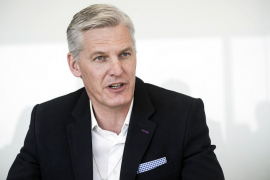
Eskom has reiterated its commitment to improving the arrear municipal debt that has ballooned to R35.3 billion for the financial year ending March 2021.
To address this, among other challenges, Eskom said it was working closely with the Political Task Team led by the Deputy President, David Mabuza.
Outlining its financial results on Tuesday, Eskom Chief Financial Officer, Calib Cassim, said the outstanding municipal debt rose by 26% to R35.3 billion.
“Cost savings alone is not a solution,” Cassim stressed.
In addition to working with the office of the Deputy President, the power utility is also embarking on active partnership agreements with some of the municipalities, in which it hopes to arrest the spiral in outstanding debt.
“Eskom’s capital position must be resolved. Cost-reflective tariffs and resolving the municipal arrear debt are required to achieve the successful implementation of Eskom’s turnaround and to ensure long-term financial sustainability. For its part, Eskom continues its concerted effort to reduce the debt and to improve gearing,” said Cassim.
Meanwhile, the State-owned entity has reported that it has so far secured R16.2 billion of its R41.6 billion funding requirement for the 2022 financial year.
In addition, the strengthening of the rand had a significant positive impact on results for the year, the entity said.
However, Cassim stated that Eskom’s liquidity remained a concern due to the high cost of servicing the outstanding debt, working capital requirements, escalating municipal arrear debt, and sub-investment grade level credit ratings, among other factors.
“This picture is likely to remain unchanged in the short- to medium-term. However, reliance on government support mitigates the material uncertainty regarding Eskom’s status as a going concern,” said Cassim.
Gross debt
Eskom admitted that the performance during the year under review was challenging.
While the SOE managed to reduce its gross debt by R81.9 billion, a 16.9% reduction, R401.8 billion outstanding debt remains remained.
According to Eskom, it attracted a net finance cost of R31.5 billion, turning an operating profit of R5.8 billion into a loss of R18.9 billion after tax.
Meanwhile, it achieved operational cost savings of R14.4 billion, against a target of R14.1 billion.
Although sales volumes were down, primary energy costs increased by 3.4% to R115.9 billion, while normalised operating costs increased by 1.6%.
Impact of COVID-19
Eskom said it was not spared from the worst effects of the COVID-19 pandemic.
“The slowdown of economic activity due to the pandemic led to an unprecedented decline in sales, which fell 6.7% from the previous year. Sadly, the losses Eskom suffered because of the COVID-19 pandemic were not limited to our finances,” said André de Ruyter, Eskom Group Chief Executive.
De Ruyter announced that the entity lost 153 staff members to the deadly virus, including 17 contractors as of August 2021.
“Our sincere condolences go to the affected families,” said De Ruyter.
However, he said believes that every crisis brings with it an opportunity.
“In this case, Eskom used unfortunate lower demand presented by the lockdown to conduct much-needed maintenance at some of our power stations.”
In addition, revenue increased to R204.3 billion during the year, from R199.5 billion the previous year.
This was mainly attributed to an 8.76% annual increase in the electricity tariff during the period, offset by a reduction of 6.7% in sales volume.
Vandalism
Eskom has also noted improvement in transmission and distribution network performance.
Meanwhile, high levels of asset vandalism, equipment theft, and overloaded networks continued to increase breakdowns and maintenance costs, limiting the return on investment and posing a safety risk.
However, the SOE said it was concerned by the increase in electricity theft and illegal connections, which has necessitated load reduction in areas with a high incidence of illegal connections.
De Ruyter explained that Eskom’s long-term objectives of achieving operational and financial sustainability are dependent on the successful implementation of the turnaround plan currently underway.
“The turnaround plan, which is overseen by a diverse executive committee, comprising 56% Black female representation, focuses on operations recovery, improving the income statement, strengthening the balance sheet, driving business separation, and bringing about a winning, can-do culture,” said De Ruyter.
Ex-Transnet executive ordered to repay R26 million

The Special Investigating Unit (SIU) and Transnet have welcomed a Special Tribunal judgment ordering that the rail, port and pipeline company’s former executive pay back R26.4 million to the utility.
Judge Lebogang Modiba made the order on Tuesday against Herbert Msagala, Transnet’s former group executive for capital projects.
In a joint statement, the SIU and Transnet said the Special Tribunal found that Msagala illegally received payments from Transnet service provider, IGS Consulting Engineers (Pty) Ltd while employed full time by Transnet.
The SIU and Transnet instituted civil matters in the Special Tribunal in July 2020 to order that Msagala pay the money he received from a tender with IGS Consulting between 2015 and 2016.
They said the judgment was “a key step in ensuring accountability and consequence management” for executives who may have been involved in criminal activity while employed at Transnet.
Transnet said it would continue to work with the SIU and other law enforcement agencies to ensure that justice is served on all those found guilty of wrongdoing.
“This is a continuation of implementation of the SIU investigations outcomes and consequence management to recover financial losses suffered by State institutions including State Owned Entities (SOEs) like Transnet. There are other cases enrolled in the High Court and in the Special Tribunal awaiting adjudication and will result in further recoveries for the State,” said SIU head Advocate Andy Mothibi.
Women political activists in conflict areas must be protected
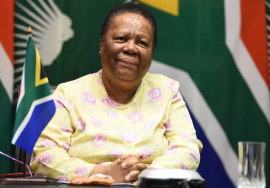
International Relations and Cooperation Minister, Dr Naledi Pandor, has called for the protection of women in countries affected by conflict.
Minister Pandor was speaking during a virtual event themed “Ensuring Protection for Full and Equal Participation in Peacebuilding and Political Spaces”.
“All women must be protected and should enjoy security from any form of harm. In fact, all political activists should be able to exercise their democratic right to protest and exercise all the civil and political rights we enjoy as South Africa by virtue of our Constitution,” she said.
The event was organised by the International Peace Institute and hosted in partnership with the Kenyan, South African, Swedish and the United States governments.
According to the department, the event focussed on the “protection of, and discrimination faced by women political activists, women peacebuilders, and women human rights defenders, particularly in conflict-affected environments”.
Minister Pandor said the international community has a duty to protect women and to create specific frameworks to guarantee their safety.
“We are disturbed by the inability of the international community to protect women who face threats. We believe that it’s important we look at the international frameworks that we have under the auspices of the United Nations because when we framed international law, humanitarian law, diversity was not incorporated into the key frameworks.
“So there is a need to look at how we might adjust in order to ensure that categories of persons that have not been incorporated, included or referred to in existing international frameworks enjoy reference in appropriate conventions and regulations so that there are institutions that have a legal mandate to ensure their protection,” she said.
Dr Pandor said women political activists should not have to “rely on the good graces of international friends in order to survive”.
“It must be part of the recognition of any government that it attaches to instruments of protection and that it is a requirement – by virtue of being part of the global family – that those instruments are respected not just in word but in practise. This we believe would be a means of ensuring greater protection for women activists, women peacemakers, women peace builders all over the world,” she said.
Women in law enforcement agencies commended
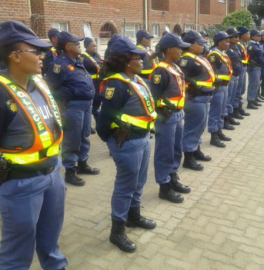
North West Acting Premier Motlalepula Rosho has commended women in law enforcement agencies for their sterling work of ensuring law and order in different communities, especial during the COVID-19 lockdown period.
Rosho, who was accompanied by Community Safety and Transport Management MEC Sello Lehari and Head of Department Botlhale Mofokeng, led two joint law enforcement operations with women in the South African Police Service, South African Defence Force and Traffic Management.
The operation, which started with a parade at the police headquarters in Mahikeng, marked the end of Women’s Month, and continuation of COVID-19 compliance monitoring, crimes against women and children, illegal immigration, human trafficking, as well as National Road Traffic Act.
During the event, Rosho applauded and expressed her appreciation for the great work that women do to keep residents safe during and beyond women’s month, while supported by men in the law enforcement agencies.
The Acting Premier encouraged women in uniform to continue to do great work, noting that it can only be through them that law and order is being restored.
“You continue to demonstrate commitment at all material times to protect our communities, to protect our women and children. Many don’t know what you go through just to ensure law and order. Just know that we appreciate the great work that you do and you inspire a lot of people,” Rosho said.
During a joint law enforcement operation, over 94 vehicles were stopped and inspected, and 205 people were searched.
Offences encountered included driving un-roadworthy vehicles, driving without a valid driver’s licence, driving without wearing a safety belt, overloading and driving a vehicle with worn-out tyres. Over 13 offences were registered and charges issued.
Rosho also emphasised a need to work with communities, especially young people to combat crime and deal with social ills.
“Let’s work with our communities so that they start to realise that crime combating efforts will become much easier if they work with law enforcement agencies. We need to work with young boys so that we begin to crack issues like usage of Nyaope and other drugs. Dagga is now sold as biscuits or chocolates, and it’s a serious problem,” the Acting Premier said.
Lehari said women in the police, defence and traffic management force are capable of delivering on their duties like their male counterparts.
“With this operation we want to show South Africans and residents of the province that women have the capacity and can do the work. It’s not a question of, you must be a women and be promoted, but it is because they are capable. Women of this country, women of this province can do the work,” Lehari said.
Ntshinga appointed Deputy National Commissioner for Crime Detection
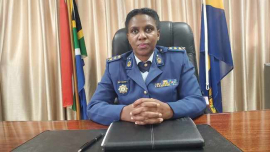
National Police Commissioner, General Khehla Sitole, has appointed Lieutenant General Liziwe Evelyn Ntshinga as Deputy National Commissioner (DNC) for Crime Detection.
In a statement, police spokesperson Brigadier Vishnu Naidoo said the post became vacant on 8 July following the untimely passing of Lieutenant General Sindile Mfazi.
Until last month, General Ntshinga was the Eastern Cape Provincial Commissioner, a post she had held since July 2016.
Naidoo said the General, who has a B-Tech degree in Policing after obtaining a National Diploma in Policing at Technikon South Africa, is currently studying towards a M-Tech degree in Forensic Investigation, with a particular focus on Project Management, Forensic Methods & Techniques and Intelligence.
“She brings with her a wealth of knowledge and experience, having served the organisation in various facets of policing from 1985 to date,” reads the statement.
Her career within the detective environment began in December 1992, when she served as an investigator between the ranks of Constable to Inspector (now Warrant Officer) in the Park Road Sexual Offences Unit and subsequently the Child Protection Unit.
In September 2001, Ntshinga continued as an investigator but this time in Organised Crime Investigations in Bloemfontein before becoming the Acting Provincial Commander of this Unit in 2003 at the level of Senior Superintendent.
In 2004, she was appointed as a Section Head at the level of Brigadier responsible for Policy Standard and Monitoring still within the field of Organised Crime investigations.
In 2010, Ntshinga was appointed as a Provincial Head of the Directorate for Priority Crime Investigation (DPCI) at the level of Major General in the Northern Cape Province.
Sitole has wished the Deputy National Commissioner well in her new role.
“Given her vast experience and knowledge of the detective and forensic field, I am confident that General Ntshinga will add much needed value within the detective and forensic environment,” he said.
Ntshinga takes up her post on 1 September 2021 and she will be responsible for the Division: Crime Intelligence, as well as the Division: Detective and Forensic Services.
UIF pays over R5.7m in benefits in North West
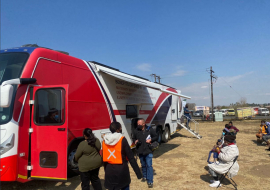
The Department of Employment and Labour’s Unemployment Insurance Fund (UIF) in the North West has paid over R5.7 million to UIF beneficiaries during a service delivery drive that started at the beginning of August.
In a statement, the UIF said the service delivery drive was made possible by the procurement of eight buses that were launched in June by Employment and Labour Minister Thulas Nxesi. The vehicles were distributed to different provinces.
The North West bus has been to 18 venues in four District Municipalities, servicing over 700 clients.
According to Selete Qhamakoane, North West Deputy Director, the Fund used the tour as a pilot to evaluate which areas needed more visits and how best they could service clients in far-flung areas without local offices.
“This was our debut tour and we have since learned and understand our dynamics better in terms of which areas we can extend our stay at and which ones can remain the same. Therefore, our schedule will change for the next coming months until we are satisfied that all the clients are covered,” said Qhamakoane on Tuesday.
She further indicated that the use of the bus had further improved and intensified the outreach programmes that the department has been using to reach out to far lying areas.
“This bus is equipped with a server that allows the rendering of all our UIF services possible. Our clients whom we have serviced can attest to our fast and efficient on-the-spot service they have been receiving. Singing, dancing and ululations have been a norm in this bus.”
The Fund said a new schedule is being developed and would be shared with clients through the normal channels that the department has been using to communicate.
“Clients are also reminded that the use of this bus is not a once-off service, it will remain in the province and service all the areas as it has been doing during the month of August,” said the department.
Call for law enforcement to act against perpetrators of crime

The Road Traffic Management Corporation (RTMC) has called on law enforcement to take action against the perpetrators of two incidents, which left two traffic officers dead, and another one injured.
This comes after two road traffic inspectorate inspectors from KwaZulu-Natal were shot and killed while on duty on the N2 on Monday.
Inspectors Sithole (46) and Lamula (36) were found dead at the scene after a community member who happens to be a member of the South African Police Services (SAPS) heard gunshots and reported the matter to the police.
In a statement on Tuesday, RTMC conveyed deepest sympathies to the families of the two inspectors.
In another incident, a female officer was assaulted by a male driver and sustained injuries to her head, face, eye and shoulder.
“The member of the JMPD K9 Unit was on patrol duty in Eloff Extension in Johannesburg South where she allegedly spotted a driver recklessly skipping a robot and almost crashing into the officer’s vehicle. The officer gave chase which lead to a confrontation with the motorist,” the RTMC said.
The RTMC has condemned abusive and inhumane behaviour towards officers.
Traffic officers are there to uphold the law and ensure our safety on the roads,” RTMC said on Tuesday.
The Corporation further wished a speedy recovery to the JMPD officer.
“The RTMC calls for swift action from law enforcement and demonstration of the full might of the law against perpetrators in both incidents.”
SA administers close to 250 000 vaccines on Monday

South Africa has administered 249 916 COVID-19 vaccines as the virus continues to spread, with over 5 000 new cases recorded on Monday.
According to the Department of Health, this means the country has now distributed 12 289 478 vaccines, translating to 9 252 975 people who have received their vaccination, of which 5 818 291 are now fully vaccinated.
Meanwhile, the National Institute for Communicable Diseases (NICD) said 32 040 tests were conducted in the last 24 hours, with 5 644 new cases reported.
The majority of new cases occurred in KwaZulu-Natal (1 982), followed by the Eastern Cape (931) and Western Cape (903).
According to the NICD, the additional infections represent a 17.6% positivity rate, while the seven-day moving average daily number of cases has decreased.
In addition, 235 more people lost their lives to the disease, pushing the death toll to 81 830 to date.
“There has been an increase of 127 hospital admissions in the past 24 hours,” the institute said, adding that this brings the total to 13 090 patients who are currently in hospital.
Globally, as of 30 August 2021, there have been 216 303 376 confirmed cases of COVID-19, including 4 498 451 deaths, reported to the World Health Organisation.
In addition, 5 019 907 027 vaccine doses have been administered worldwide.
Departments finalise skills, innovation strategies to support economic recovery
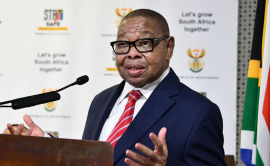
Higher Education, Science and Innovation Minister Blade Nzimande says different departments are finalising their skills and innovation strategies to support government’s Economic Reconstruction and Recovery Plan (ERRP).
“The Department of Higher Education and Training is finalising the Skills Strategy, whilst the Department of Science and Innovation is finalising the Innovation Strategy,” Nzimande said.
Nzimande said the Department of Higher Education and Training has generated the scarce, critical skills, and occupations in high demand lists to guide programme offerings and student enrolments in the Post School Education and Training (PSET) institutions.
While this work is underway, the Minister said targets are set for the placement of graduates in work places so that they are work-ready for easy absorption into the world of work, given that “the lack of work experience is often the barrier to securing gainful and permanent employment among young people”.
He said that entrepreneurship hubs are being established at Technical Vocational Education and Training (TVET) Colleges to support students to move into self-employment after completing their programmes.
The Minister said both the universities and TVET Colleges curricula are strengthened to be relevant to skills required by the national economy and that of the world.
“This is to ensure that the PSET sector produces world class graduates who, more importantly, are able to participate and grow the South African local economy and help in the local job creation drive and the implementation of the ERRP.
“At various intervals our universities align their study programmes to these national priorities, whilst our TVET colleges are gradually aligning their programme offerings to the needs of local employers and communities,” Nzimande said.
The Minister noted that some of these changes are happening within current programme offerings, whilst many colleges are introducing new occupational offerings that are in demand within their specific local economic context.
“In addition, there has been an extensive review of much of the TVET curricula to make them relevant and keep them current, and this will continue for the next several years. The focus at the moment is on digital and related skills to meet job demands driven by the 4th Industrial Revolution,” Nzimande said.
He added that the Department of Higher Education and Training also initiated different programmes aimed at encouraging young people to become artisans.
“In 2014 we launched the Decade of the Artisan at Ekurhuleni East TVET college which is a campaign that seeks to promote artisanship as a career of choice for South Africa’s youth as well as highlight skills development opportunities for artisans.
“This was aimed at developing qualified artisans to support the South African economy, particularly in light of the successful implementation of the Strategic Infrastructure Projects (SPIs). The theme of this campaign was “It’s cool to be a 21st century artisan,” Nzimande highlighted.
In 2017, the department started with the establishment of Centres of Specialisation in more than 20 colleges focusing on 13 designated trades.
Centres of Specialisation in the TVET College sector is a programme which aims to inform college differentiation, promote quality teaching and learning, facilitate responsiveness and provide a model for the implementation of Quality Council for Trades and Occupations (QCTOs) trade qualifications at the same time, as it develops artisanal skills.
In relation to artisan training, Nzimande said in the 2018/2019 financial year, the number of registrations was at 29 982. However, due to economic slowdown and COVID-19, the number dropped to 16 218 in 2019/2020 year and is expected to further drop in 2020/2021 year, due to the current pandemic.