
Another gold for Team SA at Tokyo Paralympics
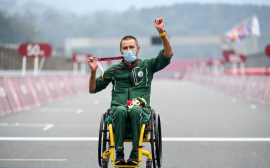
Minister of Sport, Arts and Culture Nathi Mthethwa has welcomed Team South Africa’s fourth medal achievement at the 2020 Tokyo Paralympics.
The news come after a world-class performance by the versatile South African para-cycling world champion Pieter du Preez who pocketed a gold medal during the Cycling Road Men’s T51, H1 competition – increasing the country’s medal tally to four.
Pieter du Preez, who previously broke the 10 000 metres T51 world record and went on to set new African records in the 200m, 1 500m and 10 000m, pocketed his 5th title by finishing at 43min 49.4sec, beating both Fabrizio Cornegliani (Italy) and Maxime Hordies (Belgium).
“I am elated with the impressive performance of our athletes at the Tokyo 2020 Paralympics. What we are currently witnessing is a sterling performance by our ambassadors in sport and I am convinced that we are destined to make a remarkable finish in the world rankings.
“I wish the remaining athletes the best of luck and I look forward to more celebrations,” the Minister said on Tuesday.
Alleged Deokaran murderers remanded in custody
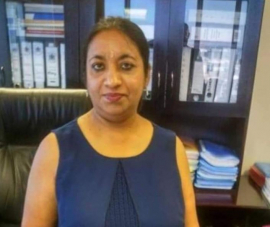
The six suspects linked to the murder of senior finance official at the Gauteng Department of Health, Babita Deokaran, have been remanded in custody.
In a statement, National Prosecuting Authority (NPA) regional spokesperson Phindi Mjonondwane said the six – Phakamani Hadebe, Zitha Hadebe, Nhlangano Ndlovu, Sanele Mbhele, Simphiwe Mazibuko and Phakanyiswa Dladla – were charged with murder, attempted murder, conspiracy to commit murder and possession of an unlicensed firearm and ammunition.
“The accused were arrested on 26 August in Rosettenville, with a seventh suspect who was not charged due to lack of evidence against him,” she said.
Deokaran was fatally wounded on 23 August 2021 outside her home in Winchester Hills, shortly after returning from dropping off her daughter at school.
She was in the company of another person, hence the charge of attempted murder.
All accused were remanded in custody until 13 September for bail application preparations.
On Monday, President Cyril Ramaphosa condemned Deokaran’s murder, saying regardless of the circumstances behind the tragedy, the senior finance official was a hero and a patriot. He also called for a better protection of whistleblowers.
July violence instigator released on R3 000 bail

Alleged public violence instigator, Zamaswazi Zinhle Majozi, has been released on R3 000 bail.
The 36-year-old mother of two was Monday released on bail by the Germiston Magistrate’s Court after she was arrested on 28 August in Leondale on charges of incitement of public violence.
Majozi is alleged to have incited public violence in the content she circulated on her social media accounts, which resulted in the looting and burning that occurred at Brookside Mall in Pietermaritzburg, KwaZulu-Natal.
Meanwhile, a 35-year-old suspect, who was arrested over the weekend, appeared in the Pietermaritzburg Magistrate’s Court on charges of incitement to commit public violence.
“The session was held in camera, therefore, his name cannot be divulged as yet. The case was held behind closed doors so as not to prejudice the identification parade, which is yet to be conducted,” said Hawks spokesperson Colonel Katlego Mogale.
The case was postponed to 6 September 2021 for possible bail application.
Thus far, about 18 suspects have been arrested by SAPS and the DPCI (Directorate for Priority Crime Investigation).
Mogale said some have already appeared in various courts in Gauteng, the Free State and KwaZulu-Natal. While some have been granted bail, others were remanded in custody.
Majozi was granted bail of R3 000 with conditions including the surrender of her passport, reporting to the nearest police station daily and ensuring that she informs the investigating officer when leaving the province.
The case was postponed to 18 October 2021.
Improving the state of provincial roads

In an effort to improve the state of provincial roads, government is rolling out a labour intensive road construction and maintenance programme.
The programme’s targets for physical works involves resealing, blacktop patching, including pothole repairs and maintenance of gravel roads.
“Amongst the outcomes we have committed to, is the maintenance of approximately 20 000 kilometres of roads in our secondary network by March 2024. These are Provincial roads that are in desperate need to be brought to an acceptable state of repair,” Transport Minister Fikile Mbalula said on Monday.
He was addressing the launch of the S’Hamba Sonke Programme, where he unveiled the first project on road D2091, from Marapyane at Dr. JS Moroka Municipality, in the Nkangala District of Mpumalanga leading to the Limpopo border.
“This is a block paving road project, through which the Mpumalanga Province will share their best practice experiences to other provincial Road Authorities and to showcase how more jobs can be created using labour intensive methods,” the Minister said.
Over the medium term, the maintenance of provincial roads, largely funded through the provincial roads maintenance grant, is set to receive R37.5 billion over the Medium-Term Strategic Framework (MTSF) period.
“In order to maximise impact, decisively address the maintenance backlog in the secondary network and contribute to sustainable livelihoods through job creation initiatives, we conceptualised the S’Hamba Sonke Programme.
“An initiative that allows national and provincial spheres of government to work towards common road maintenance targets while augmenting funding through the Provincial Roads Maintenance Grant,” Mbalula said.
He said the S’Hamba Sonke Programme must deliver tangible outcomes to South Africans and serve as a contribution towards eradicating poverty and create jobs.
Through the programme, government seeks to distribute road construction and maintenance budgets to achieve the maximum impact for reducing the transaction costs of South African products on international markets.
In addition, government intends to adopt best practice road construction and road maintenance methodologies to create cost efficient and cost effective job, Small, Medium and Micro Enterprise (SMME) and co-operative opportunities.
Government will also ensure that the public good associated with new access and mobility is maximised by prioritising those transport corridors that will impact on sustainable social and economic upliftment and by coupling road construction and maintenance programmes with people centred road safety initiatives.
“Over time, potholes and road crashes on South Africa’s secondary road networks drive public perceptions that financial resources meant for transport infrastructure do not always reach their destination.
“This is reinforced by the reality that that South Africa has a pristine and well-maintained primary road network managed by South African National Roads Agency (SANRAL) and a secondary road network, in dire straits and to a large degree, poor state of repair, managed by provinces.
“Our revamped programme means we will tighten collaboration and break down the artificial barriers created by a silo approach to service delivery,” the Minister said.
Labour slates poor service delivery at Alberton centre
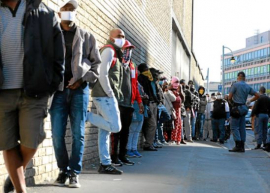
The Department of Employment and Labour has condoned reports of poor service delivery at the labour centre in Alberton, in Gauteng.
“Under no circumstances should clients be sent back without being assisted/helped by the staff at any one of our offices at any point in time,” the department said on Monday.
This was in the wake of reports of the public being turned away and not serviced during working hours.
“The incidents of poor service delivery experienced by clients at the Alberton Labour Centre is the antithesis of expected behaviour by officials of the government in general and the Department of Employment and Labour in particular.
“What is reported to have transpired at this particular labour centre should not have happened,” reads the statement.
The department said it was not the policy of the department to cut queues between 7:30am to 4pm during week days.
Gauteng chief provincial operations director, Tshepo Mokomatsidi, said: “We view this allegation in a serious light and will institute an enquiry to establish the facts and where necessary, will take appropriate action against any staff member found to have been involved in this unfortunate incident”.
Despite this, the department reiterated that the closure of its Germiston Labour Centre in 2018 had led to a client influx to the Alberton Labour Centre.
“Since 2020 all our offices in the province (Gauteng) had to operate with half of normal capacity of staff at all times. Because of the job losses that have been exacerbated by the onset of the pandemic, we find that we have high demand for our services and this has put a strain on our operations,” he said.
In order to overcome the influx of clients at the labour centres, the department came with different directives on how best it can assist the clients under COVID-19 restrictions. It introduced the appointment system where clients are given dates in which they can come to receive services at the labour centre.
This appointment system was augmented by a system called, “One Day Service Delivery”, which aimed to ensure that on the date of the appointment the client is able to leave our Labour Centres with the full knowledge of whether the application have been approved or not. This was done to minimise client traffic which could have exposed them and our officials to COVID-19.
Furthermore, the department also came up with a directive which introduced the use of ‘Pay Sheets’ to effect payment benefits without the need for clients to come to their offices to submit payment continuation forms. It is unfortunate that some clients prefer to come in person which has an impact on queues.
The department said it was committed to providing quality services to all its clients within the scope and of also adhering to the health and safety protocols to protect both clients and staff members from COVID-19 and in future would work hard to ensure that such unfortunate events do not happen again.
South Africa detects C.1.2 variant of interest
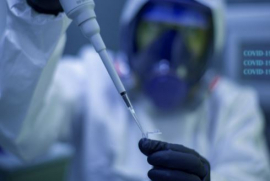
Recently published research has revealed that the new COVID-19 variant C.1.2 has been identified in South Africa.
According to the researchers, there are concerns that this SARS-CoV-2 variant of interest (VOI) has been associated with increased transmissibility, neutralisation resistance, and disease severity.
“Here we report the identification of a potential variant of interest assigned to the Pango Lineage C.1.2,” the preprint analysis published last week read.
The Pango, which stands for Phylogenetic Assignment of Named Global Outbreak Linages, refers to the software tool for sequence assignment used by researchers to track the transmission and spread of COVID-19.
“This lineage was first identified in May 2021 and evolved from C.1, one of the lineages that dominated the first wave of SARS-CoV-2 infections in South Africa and were last detected in January 2021.”
According to KwaZulu-Natal Research Innovation and Sequencing Platform (KRISP) Director at the University of KwaZulu-Natal, Professor Tulio de Oliveira, this was the work of dozens of scientists as part of the Network of Genomic Surveillance in South Africa (NGS-SA).
“The preprint analysis was led by National Institute for Communicable Diseases and KRISP,” he said, adding that it also involves young women scientists, including Catherine Scheepers, who is the first author.
“The reason why we decided to publish the preprint is that we see the C.1.2 persistence in South Africa and is now in another 10 countries. It is early days as only 95 genomes have been published at GISAID. However, we found that in this pandemic, [it is crucial to] share info quicker than later,” the Professor explained.
According to the analysis, C.1.2 has since been detected across the majority of the provinces in South Africa and several other countries in Africa, Europe, Asia, and Oceania.
“The emergence of C.1.2 was associated with an increased substitution rate, as was previously observed with the emergence of the Alpha, Beta and Gamma variants of concern (VOCs).”
Variant of interest (VOI)
The Centre for Disease Control and Prevention (CDC) defines a VOI as a variant where there is evidence of an increase in transmissibility, more severe disease, which may lead to hospitalisation or death.
The national public health agency of the United States said the significant reduction in neutralisation by antibodies generated during previous infection or vaccination, reduced effectiveness of treatments or vaccines, or diagnostic detection failures.
Meanwhile, VOCs are associated with specific genetic markers that have been associated with changes to receptor binding, reduced neutralisation by antibodies generated against previous infection or vaccination, reduced efficacy of treatments, potential diagnostic impact, or predicted increase in transmissibility or disease severity.
According to the US epidemiologist and health economist, Dr Eric Feigl-Ding, this means that this new variant has somehow mutated so fast and far that it is now the furthest mutated variant found to date.
“This C.1.2 is obviously a very fast-moving variant. We don’t know the exact transmission yet or the severity or vaccine efficacy yet. But the best advice that will serve us well is to take the precautionary principles as the approach — move fast,” he tweeted.
The Department of Health’s Deputy Director-General, Anban Pillay, told News Frame that the prevalence of the new variant in the samples that have been tested “is very low at this stage”.
“New variants are bound to develop as a natural evolution of the virus. The evidence to date indicates that the non-pharmaceutical interventions remain the key responses to these variants,” he added.
There are currently four VOCs, namely Alpha, Beta, Gamma, and Delta, and four VOIs, Eta, Iota, Kappa, and Lambda in circulation globally.
Mogalakwena officials, company directors arrested in R15m corruption

As part of the ongoing investigation into the allegations of corruption at the Mogalakwena Municipality, the Hawks’ Serious Corruption Investigation unit has on Monday pounced on 13 suspects, among them officials and business directors, accused of defrauding the council off R15 million.
“It is alleged that the officials received gratification from service providers and that other companies were paid money for services not rendered. The municipality has suffered a loss of over R15 million due to these illegal activities,” the Hawks said in a statement.
During the operation, a BMW 1 series belonging to the girlfriend of one of the suspects was seized as an affected gift.
National Head of the Directorate for Priority Crime Investigation, Lieutenant General Godfrey Lebeya, said: “I commend the investigation team for the hard work in securing the attendance of these group before court. The message that crime does not pay will soon be appreciated.”
The operation is still ongoing and more arrests are expected.
Expropriation Bill public hearings wrap up
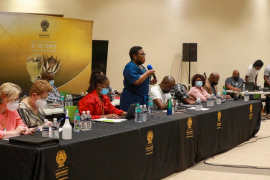
The Portfolio Committee on Public Works and Infrastructure says it is satisfied that it has conducted an extensive consultation process, as the nationwide public hearings into the Expropriation Bill come to an end.
Committee chairperson Nolitha Ntobongwana said in spite of measures to fight the spread of the COVID-19 pandemic, which that limited movement, the committee is satisfied by the quality of inputs made by many South Africans across the length and breadth of the country.
“We visited four districts in every province, and we are satisfied that we covered as wide an area in the country as is financially and logistically possible. We are thus reasonably satisfied that our hearings were extensive and all those who participated expressed their views openly without any restriction on any basis,” Ntobongwana said.
She said the committee will also in the foreseeable future invite stakeholders and individuals, who have made written submissions indicating an interest, to make oral presentations.
“We will, following the oral submissions process, discuss the views we got from the public hearings and written submissions to ensure that the report we table to Parliament is as inclusive as possible,” Ntobongwana said.
During the public hearings, the committee heard calls of access to land for different purposes from a diverse range of sectors, including pensioners, traditional healers and faith-based organisations.
The farming community, including commercial farmers, highlighted the risk posed by the Bill on the economic future of the country, while emerging farmers – who are forced to share small communal land and are unable to develop into fully-fledged commercial farmers – called for access to land.
The Khoi and San communities also called for recognition and land for their development to better their socio-economic conditions. Women also called for land availability for purposes including feeding their children.
Ntobongwana said the committee will take into consideration all these needs, as it continues with its legislative processes.
The public hearings were held in line with Section 59 of the Constitution, which compels Parliament to facilitate public involvement in the legislative and other processes of the National Assembly, and its committees, as well as Parliament’s strategic objective of enhancing access to its work, legislative-making process and improving public participation in general.
The committee resolved to visit all provinces to garner public views on the proposed legislation.
“The committee appreciated the willingness by the public, notwithstanding the threat posed by the waves of the COVID-19 pandemic and other challenges, to participate in the hearings and express their views on the Bill to ensure that the law that is finally agreed upon is responsive to the needs of the people,” Ntobongwana said.
More N Cape schools close due to rising COVID-19 cases
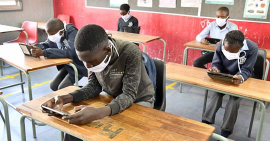
The Northern Cape Department of Education has again raised concern about the high COVID-19 infection rate among learners and school staff in the province.
The department has reported at least 339 new COVID-19 cases among teachers, school support staff and learners and six schools closed during the past week due to the virus.
Last week, 526 new COVID-19 cases in schools were reported with the national Health Department also raising concern about rising infections in young people between the ages of 10 and 19 in the province.
In a statement, the provincial Education Department implored parents to limit the movement of children while they are at home.
“The high infection rate, especially amongst our learners, is very concerning and we appeal to parents and school communities to limit movement or social interaction of our learners whilst at home.
“Schools are a microcosm of our society and at this stage mirror the level of infections in our communities. School communities must remain vigilant whilst we still find ourselves in the midst of the COVID-19 pandemic,” the statement said.
According to the department, plans are in place to ensure that learning at schools is not compromised during this period.
“The department is working tirelessly to normalise learning and teaching at our schools. Whilst the number of COVID-19 infections in our schools remain fairly high, we are satisfied with the manner in which our schools are managing and responding to these incidents at the level of our schools,” the department said.
The department reiterated the call for those over the age of 18 to get vaccinated against COVID-19.
“We urge parents, if your child is 18 years and above, to register them on the Electronic Vaccination Data System (EVDS) for the public vaccination programme for this specific age group.
“The vaccination has proven to be safe and it provides a mechanism through which we can protect ourselves against the COVID-19 pandemic. Let us continue to adhere to the non-pharmaceutical interventions by wearing our masks, sanitising and washing our hands regularly and maintaining social distance,” the department said.
Preparatory exams
Meanwhile, the department said Grade 12 preparatory examinations which start on Monday will not be affected by the rise in COVID-19 infections.
“The preparatory examinations will be conducted under strict COVID-19 regulations to limit any disruptions it may have on the Examinations. The Department has put systems in place to ensure that no learner’s academic performance are negatively affected, in cases where they cannot write due to the COVID-19 pandemic,” the department said.
Contingency plans are in place for learners who are affected or infected by COVID-19.
“In a case where a learner cannot write the common papers, due to a valid reason or COVID-19, he/she will receive an adjusted mark for the subject.
“In a case where a large group of learners are unable to write due to COVID-19, the school will reschedule a date for these learners to write a back-up paper. This is in line with the existing Examinations policies currently in place,” the department said.
Whistleblowers should be saluted, not murdered: President Ramaphosa

As government’s fight against corruption gathers momentum, it is clear that the state needs to urgently review its current approach not only to witness protection, but also to the broader protection of whistleblowers.
The President made the declaration on Monday in the latest edition of his weekly newsletter in the wake of the murder of senior Gauteng Health Department finance official, Babita Deokaran, last week. Seven suspects have since been arrested for their alleged role in the assassination.
Her murder, said the President, was “a stark reminder of the high stakes involved in government and society’s collective quest to remove and eliminate South Africa’s cancer of corruption”.
“While numerous systems are in place to enable whistleblowers to report anonymously, we need to tighten up existing systems and provide greater support to those who publicly come forward with information.
“As society, we need to identify where existing laws and policies are inadequate in protecting the livelihoods, reputations and safety of whistleblowers – and work together to address these.”
“The intent of the criminals who target whistleblowers is not only to silence particular individuals – it is also to send a message to other potential whistleblowers,” he said.
Without the bravery and principled interventions of whistleblowers, government would be unable to unmask those committing corruption.
He said: “Though much focus in recent times has been on whistleblowers in the public sector, we also owe a debt of gratitude to those in the private sector whose actions receive less attention, but are equally important.”
Emphasising the importance of whistleblowers, describing them as “guardians of our democracy”, he said they raise the alarm against unethical acts and practices in government and organisations.
“They speak out in good faith and with a reasonable expectation not only that action will be taken on their disclosures, but that they will be protected and not suffer victimisation or prejudice,” he said.
Over the past three years since the Commission of Inquiry into State Capture started its work, President Ramaphosa said the country had heard of the lengths to which the perpetrators of corrupt acts had gone to conceal their misdeeds.
“It has been an extremely complex undertaking to unravel the networks of influence that enabled corruption. Among other things, vast webs of front companies were established to move funds around and disguise payments made to politically-connected individuals.”
Similar patterns had emerged in several corruption investigations by the Special Investigating Unit, the Directorate for Priority Crime Investigation, the NPA’s Investigating Directorate and others.
As these investigations progressed and the net began to close on implicated individuals, witnesses began to be threatened, their families intimidated, being forced into hiding, and even killed, as was the case in Deokaran’s assassination last Monday.
“While we do not yet know the motive for her murder, she was a key witness in a SIU investigation into the procurement of personal protective equipment in the department,” said the President.
He commended police for apprehending seven suspects in connection to the murder. The docket has been transferred to the Hawks, and the investigation will yield further information on why Deokaran was murdered.
“Regardless of the circumstances behind this tragedy, Ms Deokaran was a hero and a patriot. As are the legions of whistleblowers who, at great risk to themselves, help to unearth instances of misdeeds, maladministration, cronyism and theft.
South Africa has extensive legislative protection for whistleblowers, including through the Protected Disclosures Act, Labour Relations Act, Companies Act, Protection against Harassment Act, and the Constitution itself.
In addition, the Department of Justice and Correctional Services, working with other law-enforcement agencies, administers the Office of Witness Protection to provide support to vulnerable and intimidated witnesses in any judicial proceedings.
The President said while entering witness protection was voluntary, and neither the SAPS nor the NPA can compel a witness to do so, he said highlighted that should a witness receive threats to their life or feel unsafe, they have to inform investigators and apply for admission to the programme.
“This successful programme has played a key role in securing successful prosecutions since its inception, particularly with regards to organised crime.
“Day by day, brave South Africans like Babita Deokaran are standing firm that they will not be party to corruption and they are prepared to bear witness against it.”
He said whistleblowers like Deokaran should be saluted for exposing corruption to the harshest of glares.
“They are doing so without expectation of acknowledgement or reward. Theirs is the highest form of public service.
“We cannot let them down. We must, and we will, ensure that their disclosures result in prosecutions and do much more to ensure that they are protected from harm,” he said.
The President warned that those behind the killing of witnesses and whistleblowers would be arrested and face the might of the law, as will all who are found guilty of the very corruption these assassins are trying to cover up.