
Seven arrested in Gauteng Health official murder
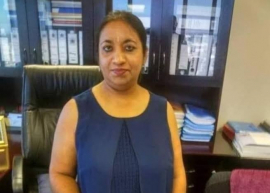
Swift police action has led to the arrest of seven suspects in connection with the recent callous murder of senior Gauteng Department of Health finance official, Babita Deokaran.
The breakthrough in the case was on Friday confirmed by National Police Commissioner General Khehla Sitole.
The late Chief Director was gunned down by unknown suspects in Winchester Hills as she was returning from dropping off her child at school. Deokaran was rushed to hospital, where she later succumbed to her injuries.
In a statement, South African Police Service (SAPS) spokesperson, Colonel Brenda Muridili, said the arrests were effected by the SAPS Gauteng Serious and Violent Crimes Unit, in collaboration with SAPS Johannesburg K9, Johannesburg East Crime Intelligence, Fidelity Specialised Services and Community Active Protection.
“[This came after the team] operationalised information received and conducted a takedown operation at the suspects’ hideouts in Johannesburg. During the arrests, the police recovered two firearms and two vehicles,” Muridili said.
She said a case of murder was registered by the Mondeor Police Station and transferred to Provincial Head Office for investigation by the Serious and Violent Crimes Unit.
“The team of experienced investigators caught a break in the case when they received information that led to the arrest of the suspects from Crime Intelligence,” Muridili said.
The case docket has been transferred to the Directorate for Priority Crimes Investigation for further investigation. There is a possibility of more charges being added to the charge of murder when the suspects appear in court soon.
The National Commissioner has commended the investigating team’s breakthrough in the case.
“I am confident that the Hawks will work tirelessly to ensure that justice is served,” said Sitole.
Bookkeeper arrested for R11m COVID TERS fraud

The Department of Employment and Labour has welcomed the arrest of a bookkeeper accused of swindling the Unemployment Insurance Fund COVID-19 Temporary Employer-Employee Relief Scheme (TERS) of R11.1 million.
The department in a statement said the 39-year-old suspect was scheduled to appear in the Palm Ridge Magistrate’s Court on 31 August 2021.
The bookkeeper allegedly submitted COVID-19 TERS claims on behalf of four clients but “conveniently forgot to make the clients aware” of the claims, said the department.
“Subsequently, an amount of R11.1 million was paid into the suspect’s business accounts.
“The intended clients realised something was not fine after they were harangued by their employees for not paying them TERS monies they had claimed and at this point, they reported the matter to the police,” the statement reads.
Following joint investigations between the UIF and the police, the suspect was traced and arrested in Durban on Wednesday. A luxury Audi Q2, suspected to be part of the proceeds of crime, was seized.
Acting UIF Commissioner, Advocate Mzie Yawa, has welcomed the swift arrest and commended law enforcement authorities for bringing the suspect to justice with speed.
“I hope the latest arrest sends a strong and clear message to other would-be fraudsters that the long arm of the law will catch up with you. Those who have helped themselves to the funds earmarked for workers during lockdown should always remember: The long arm of the law is creeping towards them and they will not have peace.
“Working together with law enforcement agencies, we will continue investigating every lead pointing us to suspected fraudulent activities, and we thank the public for being vigilant about the abuse of COVID-19 TERS funds.
“We cannot tolerate the siphoning off of workers’ benefits by unscrupulous individuals. All fraudsters are on notice and we hope more of these suspects will be arrested and sent straight to jail,” said Yawa.
The latest arrest comes against the backdrop of at least 17 suspects who have been apprehended and have appeared in various courts around the country for allegedly fleecing the UIF’s COVID-19 TERS Scheme.
The fund has also recovered around R827 million through the “follow the money” project and anticipates that more will be recovered as the project is extended a further 12 months.
KZN extends contracts for staff at COVID-19 sites
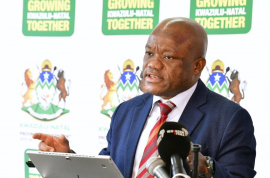
The KwaZulu-Natal Provincial Executive Council has approved the extension of contracts for staff appointed at COVID-19 sites for a further six months to help fight the third wave and potential fourth wave.
The Executive Council took the decision to retain more than 15 000 staff members, including nurses, administrative clerks, data capturers and general orderlies, to lead the provincial efforts against COVID-19 and achieve population immunity.
The Executive Council said the advent of COVID-19 has placed additional pressure on service delivery, and has resolved to intensify the implementation of the vaccination rollout programme to achieve population immunity.
“To this end, the Executive Council will add impetus in the acceleration of the vaccination drive across the province,” KwaZulu-Natal Premier Sihle Zikalala said.
SANRAL collaboration
The Executive Council also approved the finalisation of the Memorandum of Understanding between the KwaZulu-Natal government, represented by the Department of Economic Development, Tourism and Environmental Affairs (EDTEA), and the South African National Roads Agency Limited (SANRAL).
The MoU is intended to ensure that the two parties cooperate and collaborate at strategic and operational levels to:
- Create transparent opportunities for the participation of SMMEs and cooperatives in SANRAL infrastructure projects;
- Ensure the involvement of local communities;
- Ensure the seamless execution of road projects, and
- Ensure the transfer of skills through incubation and road maintenance projects.
The Executive Council noted that there are projects worth over R70 billion that are to be implemented by SANRAL over the Medium Term Expenditure Framework of three years.
“The scale and magnitude of these projects present opportunities for development and job opportunities,” Zikalala said.
Rebuilding moral core
The Council called on the provincial population to use Heritage Month to contribute to the rebuilding of the province’s moral core, and to help grow a society that is united in its diversity.
Zikalala said the Executive Council has resolved to host a #WeAreOneFestival, which will be used to unite and promote cohesion across the different cultures.
“Government hereby invites the people of KwaZulu-Natal to also use Heritage Month to engage in dialogues and programmes to focus on youth and women empowerment, teenage pregnancy and HIV, drug and substance abuse, and gender-based violence,” Zikalala said.
Government garage building renamed after Charlotte Maxeke
In line with this year’s Women’s Month, which is centred on the values and lessons of 150 years of Charlotte Mannya Maxeke, the Executive Council has approved the renaming the government garage building after Maxeke.
“This building, which is under the care of the Department of Social Development based in Durban, has been renovated and its renaming occasion will take place on 21 September 2021,” Zikalala announced.
Government looks at incentives to tackle youth unemployment
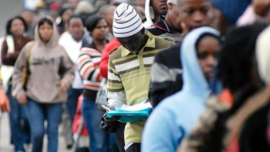
As the levels of youth unemployment reach alarming levels, Deputy President David Mabuza says government will look at incentivising discouraged work-seekers and employers to address the challenge.
The Deputy President said this when he responded to oral questions during a virtual sitting of the National Council of Provinces on Thursday.
“Moving forward and working with our social partners, it will be important to find practical measures of incentivising further discouraged young work-seekers and also scaling up our incentives to employers in both the public and private sectors to employ young people to gain a foothold and the requisite experience,” he said.
Recent unemployment statistics revealed a bleak picture for young people, with 64.4% of those aged between 15 to 24 being unemployed, and 42.9% of those aged between the ages of 25 and 35 finding themselves out of work.
Addressing provincial NCOP delegates, the Deputy President said government recognises that the COVID-19 pandemic has had a negative impact on efforts to create jobs, particularly for the youth and people with disabilities.
Since the advent of COVID-19 in March 2020, the share of young people under 35 years old in all employment levels has fallen from 56% before the pandemic to 50% today.
“Among the concrete measures is to ensure that there is high absorption capacity of young people and women, and set-asides in sectors such as agriculture and agro-processing, mining, tourism, the oceans economy and service industries,” Mabuza said.
At the recently held Fourth Human Resource Development Council Summit, social partners agreed on the urgent need to address the issue of young people that drop out at various points of their schooling prior to attaining their matric qualification, as they add to the tally of young people that are not in employment, education or training.
“We further agreed that our response should be comprehensive enough to ensure that we equip young people with skills that are relevant, and will close the prevalent gap of skills required and those available in the labour market.
“We are optimistic that through our coordination of the Human Resource Development Council, we will be able to find workable, long-term solutions to the skills gap and youth unemployment through convergences in the deployment of resources to achieve better outcomes.
“The importance of pragmatic public-private partnerships cannot be emphasised enough to empower and capacitate young people, for whom economic emancipation remains a deferred dream,” said Mabuza.
Transforming the N3 freight corridor

Gauteng MEC for Public Transport and Roads Infrastructure, Jacob Mamabolo, has emphasised the importance of securing the N3 as a Smart Freight Corridor.
“While this initiative is still at its early stage, our success to secure the N3 as a Smart Freight Corridor will serve as a benchmark and a standard for replication and expansion to other corridors,” the MEC said on Thursday.
Addressing a virtual freight workshop for participants to highlight the effects of the recent unrest and its impact on operations, Mamabolo said smart technologies for data management and security based on trust between stakeholders is critical for the initiative to grow the economy and create jobs.
The MEC joined the workshop under the theme, ‘Securing and Restoring the N3 as a Smart Freight Mobility Corridor’, as envisaged in the Growing Gauteng Together Through Smart Mobility Plan.
The plan looks at taking advantage of the province’s current standing as a gateway to Africa in order to position it as the freight and logistics hub for the country and the continent.
While the workshop was held in response to recent disruptions to freight movement along the N3, the department has been working on strengthening relations to ensure its development as a Smart Freight Corridor.
Forty key industry associations were present, marking the importance of the engagements. As its main objective, participants also engaged on practical solutions to making the N3 a safe corridor for movement of freight.
“The workshop also provided a safe platform for government and the broader industry to engage intensely to find ways to minimise risks that could lead to loss of or threat to life, food and medical security, damage to infrastructure and loss of livelihoods, as well as to build trust and confidence,” the department said.
In seeking a lasting solution, participants from the Road Freight Association, C-track (Transport and Freight Index), South African National Roads Agency, Department of Transport, Council for Scientific and Industrial Research (CSIR) and other partners from Logistics Indicator Development Partners, GESI – Germany, also reflected on the unrest, the corridor’s status quo and the way forward.
Issues covered included the elevation of the role of the N3 in the economy of the country; the deployment of available technologies to restore the stability of the corridor; the vision of the N3 as a smart freight corridor; the importance of safety and security to along the corridor; the role of data management and sharing for effective traffic management.
The meeting identified the need for collaborative logistics by both the public and private sector.
In the short-term, the stakeholders resolved that two key outcomes need to be delivered:
- The development of a concise and detailed project plan to be ratified by the Gauteng Freight Forum in its next sitting; and
- The partnering of the industry’s vaccination drive with that of the Department of Health.
The forum was established in July 2021 with the following organisations as members:
- The Consumer Goods Council of South Africa (CGCSA);
- The Road Freight Association (RFA);
- The South African Association of Freight Forwarders (SAAFF);
- The South African Express Parcel Association (SAEPA); and
- The Transport Forum.
Taking gender equality forward

While strides have been made to ensure gender equality over the years, work is continuing to accelerate these actions.
“In terms of the landscape, I can proudly say that South African women have been as a result of democracy, taking part in decision making processes and structures. We have women ministers; we have women in top management and women who own businesses. I think in 1994, this was not imaginable. The advent of democracy has made it possible for us to thrive,” says Charlotte Lobe.
Convener of the Gertrude Shope Women Mediators Network, Lobe says while progress has been made, “I must hasten to say that a lot still needs to be done.”
She believes that the incidents of civil unrest and looting seen in July in the provinces of Gauteng and KwaZulu-Natal revealed that women were disproportionately affected by the violence for the simple reason that it is largely women who are employed in the majority in the industries that were affected by the looting.
The network provided women and children with food and necessities such as sanitary towels among others.
She adds that South Africa faces several multi-faceted challenges – some as a result of socio-economic conditions.
“I think we must be alive to these challenges that made it possible for South Africans to behave in the manner that they behaved in, in KwaZulu-Natal and Gauteng.
“It is easy to use the genuine grievances of our people in order to create what we saw. Our message from the network has always been that in whatever conflict on the continent or any [other place], we must never find women used as cannon fodder. We should never find women being used as pocketknives for people who have different issues in society whether its service delivery issues or political challenges,” she says.
In the wake of the incidents of looting, the network held a virtual South African Women’s Peace Table, which discussed women’s role in driving peacekeeping efforts.
She says struggle stalwart Shope was extremely worried about these incidents. “She pushed us to convene the peace table because she wanted South African women to do something about what was happening.”
Ensuring peace
The work of the Gertrude Shope Women Mediators Network is a result of the United Nations (UN) Security Council Resolution 1325 adopted in October 2000 which reaffirms the important role played by women in the resolution of conflict, prevention as well as peace-building efforts, among others.
South Africa’s Department of International Relations and Cooperation (DIRCO) has been training women mediators since 2015, including women from the African continent and around 350 or more women have been trained, including Deputy Minister in the Presidency Pinky Kekana.
“Through the people being trained, a decision was taken in 2018 for us to form a Women Mediators Network. [This so as to] use the skills that women got out of the training to build peace and also their resources. For instance, The Lady of Peace Community Foundation, which is well resourced. The foundation has been using its resources to build peace in communities affected by unrest, particularly service delivery protests. We thought that if we could put those energies under one roof, we could be able to achieve something as a country. It is not only about these recent events, it is about us building a peaceful nation even before we had the unrest,” she says.
Celeste Diale who co-founded the Lady of Peace Community Foundation (LOPECO) with her mother Dieketseng in 2017, said the foundation is founded on connection, empowerment and advocating for the youth.
“As someone who participated in the peace table, we learned to understand where people come from. Young people want to be heard,” she says.
Lobe describes Shope, after whom the network is named, as a peacemaker and peacebuilder.
“When DIRCO took a decision to name its training programme after her, to name its dialogue forums, it was a result of the department acknowledging the role she played as a South African who lived in exile who also came back home. There are many stories about her in exile of how she nurtured youngsters. They were not only taught how to fight, but they were also taught how to make peace,” says Lobe in an interview with SAnews.
Experiences and best practice in peace and security have been shared at the annual Gertrude Shope Dialogue Forums that DIRCO has hosted since 2015 and this led to the formation of the network, which would create a platform for South African and African women mediators to continue to work for peace.
“I am really humbled to know her. She inspires us. Jewels like her are rare. She always acknowledges the tribe of women who are behind her, including young people,” says Lobe.
Shope celebrated her 96th birthday earlier this month.
With the country currently commemorating Women’s Month, Lobe who is also the acting Chief Operations Officer at DIRCO and South Africa’s Women, Peace and Security focal person, says women have become impatient at the pace of ensuring gender equality.
Global efforts
While the Beijing Declaration and Platform for Action, which is the international blueprint to achieve gender equality and women empowerment, has made progress, additional efforts are needed.
The Declaration remains an important UN instrument in pursuing the global women’s agenda of a full and equal share in economic, social, cultural and political decision-making. It aims to create an environment where women and men relations are based on a principle of shared power and responsibility, whether in the workplace or in the wider national and international communities.
“A lot has been done but there’s a lot still to be done. [Women] are concerned that since the Fourth World Conference on women, there has not been a platform until we had Generation Equality.”
Held in Beijing, China, the Fourth World Conference on Women in 1995 adopted the declaration. The declaration focuses on 12 areas of concern, including women and poverty, women and the economy and the girl-child.
She said South Africa joined Generation Equality, a global campaign to achieve gender equality by 2030.
“Because of the anxieties around lack of implementation of the Beijing platform, they then developed the acceleration plan on generation equality, which focuses on seven thematic areas, including the guarantee economic justice and rights.
“President Cyril Ramaphosa is leading efforts on economic justice and rights on behalf of global leaders. The reason why women decided to have this acceleration plan is that they were concerned that the world needed to think anew of the gender agenda beyond the Beijing Declaration.”
The President formed part of world leaders who came together to launch the Global Acceleration Plan at the Generation Equality Forum held from 30 June to 2 July this year.
”South Africa has made very important commitments in terms of what we are going to do as a nation, in terms of the continent and globally. Part of the things we committed ourselves to do is to have a programme that is pan Africanist in nature but internationalist in form. The reason for this was to acknowledge that we are an African country and we need to contribute in building and reconstructing our continent.
“All of these things attests to what have been the anxieties of women over a period of time, particularly issues of women’s justice and rights,” she says.
Meanwhile the African Union of which South Africa is a member, declared 2020-2030 as the decade of African Women’s Economic and Financial Inclusion.
“By integrating women, we acknowledge that in most countries, even though people might have achieved political and civil rights, economic rights have been relegated to the periphery. The idea of President Ramaphosa heading this important action coalition and decade of women’s economic and financial inclusion means that we are conscious of the things that we need to do to build back better,” she says.
Her message to women this month is for them to support other women.
“I want women to be as Mme Shope advises us; to be a part of a tribe that nurtures and supports other women; a tribe that fights battles for other women. I want women to stand in solidarity with each other. Being a woman is difficult; we cannot be the ones making it more difficult for other women. We must fight issues that continue to oppress women,” she says.
SA’s COVID-19 death toll surpasses 80 000
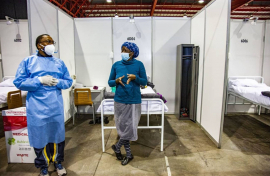
South Africa’s COVID-19 death toll has crossed the 80 000 mark, after 516 more people succumbed to the respiratory disease on Wednesday.
According to the National Institute for Communicable Diseases (NICD), this means COVID-19 has claimed 80 469 lives to date.
Meanwhile, there are 13 251 more people who were confirmed to have contracted the virus in the last 24 hours, pushing the laboratory-confirmed cases to 2 722 202.
According to the public health institute, KwaZulu-Natal recorded most infections after 3 627 people tested positive.
The province is followed by the Western Cape, which accounted for 3 338 new infections, 1 783 in the Eastern Cape, and 1 317 in Gauteng.
The NICD said the latest daily increase represents a 20% positivity rate even though the seven-day moving average daily number of cases has decreased.
Meanwhile, there has been an increase of 606 hospital admissions in the past 24 hours.
The information is based on 16 162 825 tests, of which 66 244 were performed since the last reporting cycle.
In addition, 268 712 COVID-19 doses were administered on Wednesday, pushing the tally to 11 363 810.
The latest data show that Gauteng, Western Cape, and Limpopo distributed the most jabs.
According to the Department of Health, 143 313 people were fully vaccinated in the past 24 hours.
As of 25 August, there have been 213 050 725 confirmed cases of COVID-19, including 4 448 352 deaths, reported to the World Health Organisation (WHO).
Global view
With over 4.5 million new cases reported between 16 and 22 August, the WHO said the number of new cases reported globally seems to be stable after increasing for nearly two months since mid-June.
Meanwhile, the regions of Western Pacific and Americas continue to report increases in new infections, with increases of 20% and 8% respectively as compared to last week.
“The South-East Asia and Eastern Mediterranean regions reported decreases in weekly incidence of 16% and 10% respectively,” the organisation said, adding that the European and African regions reported case incidence rates similar to those reported last week.
In addition, the number of deaths reported globally this week remains similar to last week, with over 68 000 new fatalities reported.
Two regions including Europe and the Americas reported a peak in new deaths of 11% and 10% respectively, while there was a decrease in the African and South-East Asia regions.
“The cumulative number of cases reported globally is now over 211 million and the cumulative number of deaths is just over 4.4 million.”
The highest numbers of new cases were reported from the United States (1 020 072 new cases, 15% increase), Iran (251 610 new cases, 7% decrease), India (231 658 new cases, 10% decrease), the United Kingdom (219 919 new cases, 11% increase), and Brazil (209 099 new cases, 1% decrease).
Globally, cases of the Alpha variant have been reported in 192 countries, 141 countries have cases of the Beta variant, 86 have reported the Gamma variant, while 163 have the Delta variant.
Committee demands action on underage pregnancies
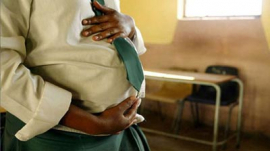
The Portfolio Committee on Women, Youth and Persons with Disabilities has called on the law to take its course on the rape of minor children following reports of high learner pregnancies in Gauteng.
In a statement, the committee condemned the impregnation of learners and called on perpetrators of gender-based violence and femicide to be held to account.
“The committee has noted with sadness the horrifying news of learner pregnancy in Gauteng, affecting girls as young as 10. This must be acknowledged for what it is, the rape of minors, and the law must take its course.
“Furthermore, the committee has also noted with shock the gruesome killing of the Fort Hare student Nosicelo Mtebeni by her boyfriend,” the statement said.
The committee urged the Commission for Gender Equality (CGE) to “strengthen its programmes, particularly on GBV”.
“[This is] to ensure that all stakeholders, especially within the criminal justice system, are an effective force against GBV… Women and children live in terror in the face of violent men… The reported unavailability of rape kits at certain police stations is unacceptable,” the committee said.
It called on government to fast-track the implementation of the National Strategic Plan on GBVF.
Assisting communities address unemployment

In an effort to support, a farmers’ association in Limpopo interested in developing land for farming to address unemployment in the area, government will establish a task team to work with the association.
The Thakadu Tša Naga Farmers Association were given permission to occupy 20 hectares land by King Sekhukhune and have a vision to develop the 10 hectares for fish and chicken farming and 10 hectares for vegetable.
“To support Thakadu Tša Naga Farmers Association with inland fish farming a technical task team which includes, but no limited to Department of Forestry, Fisheries and the Environment, Limpopo Department of Economic Development, Environment and Tourism; and Limpopo Department of Agriculture and Rural Development, will be established,” Deputy Minister of Forestry, Fisheries and the Environment, Makhotso Sotyu, said on Thursday.
The task team will expose the association to aquaculture through basic training activities and site visits to commercial farms. It will also facilitate a feasibility study for the establishment of a fish farm.
The task team will in collaboration with Limpopo Department of Economic Development, Environment and Tourism, facilitate the development of a business plan which includes designs, funding model, operations and marketing.
In addition, it will facilitate aquaculture authorization, investigate sources of funding relevant to the business plan and business model as well as develop farm infrastructure and implement fish farming activities.
Addressing community members in Mohlaletse, Fetakgomo Tubatse Local Municipality in Limpopo, the Deputy Minister said officials from the Department’s Fisheries branch conducted basic technical assessment on inland fish farming on Monday.
“Since the chicken farming and vegetables falls outside of our Department’s mandate we will bring it to the attention of the relevant Department,” Sotyu said.
The Deputy Minister urged community members, the association and traditional leadership to play their part keeping the environment clean.
“In terms of promoting greening in this area, the department is donating 500 trees to be planted in 12 schools including garden tools. At least 15 job opportunities have been created for locals. Tree planting started on 17 August and will continue until all the trees are planted,” she said.
DBE to take over ECDs in April 2022
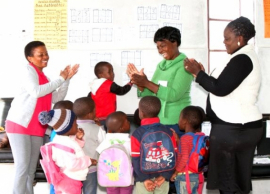
Basic Education and Social Development have told the Joint Portfolio Committee on both departments that the shift function of Early Childhood Development (ECD) will be implemented on 1 April 2022.
President Cyril Ramaphosa had announced in his 2019 State of the Nation Address that the function would migrate from the Department of Social Development to its Education counterpart.
In a statement on Thursday on their briefing to the Portfolio Committee, the departments said President Cyril Ramaphosa has subsequently signed a proclamation transferring powers of the ECD function to the Basic Education Minister.
“To this end, the two departments established various governance structures to ensure a seamless transfer of responsibilities. The departments have further reached consensus on the scope of the function shift.
“Provisions from both Chapter 5 and Chapter 6 of the Children’s Act, 2005 (Act No. 38 of 2005) have been identified for transfer.
“Based on the recommendation from the Office of the Chief State Law Advisors, we have drafted two Proclamations. The first Proclamation is signed by the President, while the second Proclamation is signed by the Premiers for the transfer of power and functions to the MEC responsible for Basic Education in each province,” the statement said.
The two departments further briefed the joint committee on progress made regarding the ECD function shift, particularly in relation to the ECD Census 2021 and the South African Early Years Index and Baseline Assessment.
“Information gathered as part of the [ECD Census 2021] will be used to integrate ECD into the DBE’s Education Management Information System (EMIS) and thus expand the provision of education support programmes, as well as play-based learning.
“The information gained through the [South African Early Years Index and Baseline Assessment] will allow the DBE to report on Sustainable Development Goal 4.2.2 on the proportion of 4-year-olds who are developmentally on track.
“It will also enable the DBE to track the improvements that we make in the quality of ECD provision over the next five to 10 years,” the statement said.