
Households benefit from Toevlug sewer project

A total of 5 574 households in Toevlug Township, North West, are expected to benefit from the construction of a sewer project which connects Toevlug sewer main line to the R30 Tshing Sewer Pump Station.
The Department of Water and Sanitation in the North West, together with JB Marks Local Municipality, recently completed the construction of a Sewer Rising Main Bulk line, which consists of approximately 3.5 kilometres (length) and 160 millimetre width diameter pipes connecting to outside house toilets.
The department highlighted that the bulk of the internal sewer reticulation is in the middle of the stands, with only a few places where the sewer crosses either a stream or a road.
“The gravity lines then feed into the sump of Toevlug Sewer pump station, where the sewage spills into a man made furrow and is eventually discharged into the Schoon Spruit River. Therefore, the department decided to come on board through the Water Services Infrastructure Grant (WSIG) to fund the project,” the department said.
The existing water reticulation network caters for only the formal stands, and the informal settlements do not have a waterborne sewage.
According to the department, a total of 11 community members have personally benefited in the construction of the project, with employment and skills development in hard labour.
Department spokesperson, Sputnik Ratau, has appealed to community members to take ownership of water infrastructure projects and guard against any forms of vandalism.
“Acts of vandalism hamper service delivery to communities and therefore, community members need to take a stand and protect infrastructure in their communities,” Ratau said.
He said that two pump stations in Toevlug, extensions 7 and 8, were vandalised and needed to be upgraded for the new sewer pipeline to be commissioned.
“Due to vandalism of these two pump stations, the department has been forced to find money to the tune of R5 million to refurbish them, to ensure continued services to the community,” Ratau said.
SAA poised for take-off in September

South African Airways (SAA) has announced that it expects to resume operations on the Johannesburg-Cape Town route and other African destinations on September 23.
The carrier has not taken to the skies since early last year partly due to the advent of the COVID-19 pandemic and subsequent hard lockdown as well as the need to finalise its business rescue process.
The national carrier came out of business rescue at the end of April this year.
SAA Board chairman John Lamola said since the national carrier came out of business rescue, the Department of Public Enterprises together with the airline’s board and management team have been planning for the relaunching of a restructured and fit for purpose airline.
“The airline is restarting with a formidable business case,” Lamola said on Wednesday.
Interim SAA Chief Executive Officer Thomas Kgokolo said they are determined to make the airline a leader in the aviation sector.
“After months of diligent work, we are delighted that SAA is resuming service and we look forward to welcoming on board our loyal passengers and flying the South African flag. We continue to be a safe carrier and adhering to COVID-19 protocols. There is a profound feeling of enthusiasm within Team SAA as we prepare for take-off, with one common purpose – to rebuild and sustain a profitable airline that once again takes a leadership role among local, continental, and international airlines,” he said.
Kgokolo noted that the airline is conscious that the sector is facing difficult times.
“The aviation sector is currently going through a testing period, and we are aware of the tough challenges that lie ahead in the coming weeks. We thank South Africa for the support we have received in getting us to where we are today. As we are now poised for take-off, we see this as a major milestone for SAA and the country,” he said.
Tickets go on sale on Thursday, 26 August 2021, with the airline initially operating flights from Johannesburg to Cape Town, Accra, Kinshasa, Harare, Lusaka and Maputo.
The airline says destinations will be added to the route network as operations ramp up in response to market conditions.
Voyager bookings and Travel Credit Voucher redemption will be available from 6 September 2021.
42 arrested for their role in Phoenix murders

Police Minister Bheki Cele says police have so far arrested 42 people for their alleged role in the racially motivated murders in Phoenix, in KwaZulu-Natal.
Cele said this when he participated in a debate in the National Council of Provinces on Wednesday on the recent public violence, looting and destruction of property.
“A Special Investigation Team, comprising detectives from the national and provincial office, was deployed to KwaZulu-Natal to look into the deaths of 36 people killed in Phoenix.
“This team has hit the ground running and has so far arrested 42 people for their alleged role in the racially motivated murders.
“These arrests have been widely welcomed by the communities of Zwelisha, Bhambhayi and uMaoti where most of the victims reside,” he said.
Cele said this after beginning his debate in remembrance of the 359 people who died during the civil unrest that gripped Gauteng and KwaZulu-Natal six weeks ago.
He said the team is also investigating the role of police in the violence and looking closely into the role played by seven private security companies operating in the area.
“A ‘Peace Committee’ was also established to rebuild the broken community relations between residents of these areas and Phoenix. The aim is to bring about peace and stability through working with residents and police.”
Cele said this forum has worked with the SAPS in facilitating the reporting of cases of missing persons.
“They have been at the forefront of assisting the bereaved families to identify the remains of their loved ones at the Phoenix government mortuary.
“This Peace Committee is playing a vital role in ensuring that the communities they represent are kept abreast with information at all times.”
Cele details damage to infrastructure
Meanwhile, the Minister said the violent unrest has left devastation and economic disruption in its wake.
“In this regard, the July unrests resulted in extensive damage to 161 malls, 11 warehouses, eight factories and 161 liquor outlets or distributors.
“Over 200 shopping centres were looted and damaged, while 100 malls suffered fire damage.
“Looting also took place in about 300 shops in KwaZulu-Natal and Gauteng, damaging over 1 400 ATMs.”
Cele said the destruction resulted in 300 banks and post office branches being vandalised.
Also, 113 communication infrastructure was also significantly damaged as well as 1 119 retail stores were impacted and damaged.
“To date, a total of 16 instigators have been identified and arrested and are going through the court processes.”
Rebuilding efforts underway
Cele said the Parliamentary debate came at the time where joint efforts and partnerships of rebuilding are at an advanced stage between government and the affected communities.
“Such efforts must be encouraged and supported, by all of us regardless of our political affiliation.
“This we must do so in the spirit of ubuntu and political maturity, where we limit politics and contribute to nation building and social cohesion.”
Cele said while police continue to nourish and deeply value community partnerships, government remains committed to building these to bring stability and will work with citizens to prevent the reoccurrence of the July mayhem.
“I would like to pause here and take a moment to show appreciation to the communities that have, within the ambit of the law, assisted police in maintaining the rule of law, amid the violence and chaos.
“These brave men and women worked together and in some cases assisted police together with the private security industry to safe guard infrastructure and keep their neighbourhoods safe.
“I have personally visited areas around Gauteng and in KwaZulu-Natal, where malls and other retail shopping centers were barely touched because of this collaborative work.
“It is at these areas and many more, in some sections in other provinces, where police and the SA National Defence Force maintained a strong presence around retail centers and other infrastructure. These initiatives also saw some community members and private security serve as force multipliers.”
Urgent food relief provided for communities affected by unrest
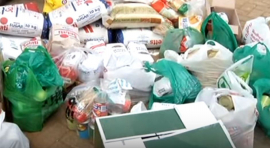
Social Development Minister Lindiwe Zulu says the department has provided food relief to communities that were affected by the outbreak of civil unrest in Gauteng and KwaZulu-Natal.
Zulu said this when the National Assembly considered the oversight report of the Portfolio Committee on Social Development on the impact of the civil unrest in the two provinces on Wednesday.
Addressing the House during the debate, Zulu said departmental interventions included the provision of food through centre-based feeding programmes including early childhood development facilities, community nutrition development centres (CNDCs), drop-in centres, home community-based care and old age homes.
“These are funded by the department to implement food-related interventions, among others. Since the advent of the incidents of unrest, over 12 149 food parcels were issued in Gauteng province, feeding over 62 509 people who were adversely affected.
“Over the same period, an additional 100 430 people received meals from Community Nutrition Development Centres.”
The Minister said in KwaZulu-Natal, food relief was provided through the centre-based feeding programme and social relief of distress by the department and the South African Social Security Agency (SASSA).
“To date, 42 573 were provided with food at the CNDCs in that province, while 36 734 Social Relief of Distress (SRD) vouchers were provided to the people affected.”
R100 million from Solidarity Fund to help laid off workers
Meanwhile, said Zulu, the department has requested additional funding from the Solidarity Fund, to address the food challenges in the other provinces. The Fund has already pledged R100 million.
She said the support will, among others, target workers that have been laid off from industries that have closed down.
This includes households with a total income below the food poverty line of R585 a month, as well as applicants of social relief of distress administered by the department.
“The provinces started to implement the relief measures on the 16th of August 2021,” she said.
Zulu has called on different sectors of the economy to partner with government to help provide social relief to affected communities.
“Through re-invigorated people, public, private, civic, academic, multilateral partnerships, the department’s programmes continue to be responsive while new interventions are emerging.
“Donors, non-profit organisations, business and universities are becoming part of these emerging partnerships, innovations that are unnecessary to undo the adversity that these incidents of civil unrest have brought into the lives of ordinary people.
“Government is making a call for active citizenship that is targeted at the sustainability where food security, the well-being of South Africans and nation building are concerned.
“Within that frame, we encourage the establishment of targeted people, public, private, civic, academic, multi-lateral partnerships among all concerned,” she said.
Payment of R350 grant resumes

The South African Social Security Agency (SASSA) has successfully started paying out the first batch of applicants for the Special COVID-19 Social Relief of Distress (SRD) Grant.
Applications for the grant, which is set at R350, opened on 6 August 2021. The grant is set to benefit unemployed citizens, most of whom lost their jobs when COVID-19 struck in 2020.
President Cyril Ramaphosa last month announced the reinstatement of the SRD grant, which is set to run until the end of March 2022.
In a statement on Wednesday, the South African Social Security Agency (SASSA) spokesperson, Paseka Letsatsi, said by 18 August 2021, SASSA had received 8 931 375 applications from all nine provinces, of which 41% were from males and 59% from female applicants.
Letsatsi said grant payments are channelled through direct deposits into approved beneficiaries’ bank accounts, mobile money transfers through cell phones, and through the South African Post Office (SAPO).
He said the payment process for all those approved will start from 25 August 2021. However, he emphasised that not everyone should expect to be paid on the day, as this will be done over the coming days.
“To avoid overcrowding at post offices during payment of approved recipients, a joint strategy was put in place by SASSA and SAPO, where the last three digits of the identity numbers of each qualifying recipient will be used for payment collection on a specific day of the week. This will help minimise the spread of COVID-19 infections and allow for social distancing on pay days.
“Most importantly, if a person has not received a SMS from SASSA notifying them that the grant is available for collection, it means the grant is not available yet. In other words, every approved applicant must first wait for a SMS confirming that the grant is available,” Letsatsi explained.
He appealed to all successful recipients to cooperate with SASSA and “only go to the post office when you have indeed received a notification SMS to collect your grant”.
“Applicants are advised to avoid disappointment and not go to the post office to ‘just check if by any chance the grant is available’. The grant will not be available if it is not the day of the week when SAPO uses the last three digits of your ID number to pay.
“The function for all applicants to start checking their status on the system will be available later this week. The function has not been available, as SASSA has kept the channels open to cope with the high number of applications received. Any inconvenience this has caused is sincerely regretted,” Letsatsi said.
SAPO will not pay the R350 grant during public holidays, weekends and when normal monthly social grants payments take place.
WC pet owners encouraged to be on lookout for rabies

Pet owners in the Western Cape have been encouraged to be vigilant and take their pets to their private veterinarian or animal welfare organisation, to make sure their rabies vaccinations are up to date.
The call follows confirmed laboratory results received by the provincial Agriculture and Veterinary Services on Monday, which confirmed rabies in two dogs at Khayelitsha, in the City of Cape Town.
Western Cape MEC of Agriculture, Dr Ivan Meyer, said investigations are currently underway to determine the source of the outbreak.
Meyer said officials are vaccinating pets in Khayelitsha and affected areas this week in response to the cases.
“Our Animal Health Technicians began vaccinating dogs and cats in the area yesterday [Monday]. We are working closely with the welfare organisations and medical doctors to check on contacts and any people who may have been bitten and need treatment.
“If you suspect that you have had contact with a rabid animal, getting preventative treatment as soon as possible saves your life. Wash any bite or scratch wound thoroughly with soap and water, and then go immediately to your doctor or clinic to get rabies vaccinations. The sooner you receive treatment, the better you will be protected against rabies,” Meyer said.
Rabies is a viral disease affecting animals and people. It is transmitted by saliva or other body fluids, and a dog or person can be infected by being bitten, scratched or licked by a rabid animal.
Western Cape Veterinary Service Head, Dr Gininda Msiza warned that dogs with rabies often show a behaviour change and become suddenly aggressive or unusually tame for no reason.
However, Msiza said rabies is very easy to prevent by vaccinating dogs and cats.
“Dogs with rabies struggle to swallow and often walk around with their mouths open, drooling or making choking sounds as if they have something stuck in their throat. If you suspect a dog has rabies, do not touch it and contact your nearest private or state veterinarian immediately,” Msiza said.
SA unemployment reaches 34.4% in 2021 Q2

Unemployment in South Africa rose to 34.4% in the second three months of 2021, according to results of the Quarterly Labour Force Survey (QLFS).
The outcome of the QLFS was released by Statistician-General, Risenga Maluleke, on Tuesday.
Addressing reporters, Maluleke said for the second quarter of 2021, the number of employed persons decreased by 54 000, reaching 14.9 million.
Statistics South Africa said the number of unemployed persons increased by 584 000 to 7.8 million compared to the first quarter of 2021.
During this period, the number of discouraged work-seekers increased by 186 000 (5.9%), while the number of people who were not economically active for reasons other than discouragement decreased by 571 000 (4.5%) between the two quarters.
This resulted in a net decrease of 386 000 in the not economically active population.
“These changes resulted in the official unemployment rate increasing by 1.8 percentage points from 32.6% in the first quarter of 2021 to 34.4% in the second quarter of 2021 – the highest since the start of the QLFS in 2008.
“The unemployment rate according to the expanded definition of unemployment increased by 1.2 percentage points to 44.4% in quarter 2, 2021, compared to quarter 1, 2021. The results indicate that the South African labour market is more favourable to men than it is to women,” Maluleke said.
The survey found that men are more likely to be in paid employment than women, regardless of race.
The report found that the proportion of men in employment is higher than that of women; more men than women are participating in the labour market as the labour force participation rate of men is higher than that of women; and the unemployment rate among men is lower than among women.
“The rate of unemployment among women was 36.8% in the second quarter of 2021 compared to 32.4% among men according to the official definition of unemployment.”
During this period, the unemployment rate among Black African women was 41.0%, compared 8.2% among White women, 22.4% among Indian/Asian women and 29.9% among Coloured women.
Formal sector employment in the three months decreased by 375 000 while the other sectors experienced increases in employment in quarter 2, 2021.
The survey found that informal sector employment during this period increased by 184 000 (7.4%); private households by 67 000 (6.0%), and employment in agriculture increased by 69 000 (8.7%).
In the period under review, the survey found that some industries created jobs while others shed employed between the two quarters.
This resulted in a net decline of 54 000 in total employment.
Employment mainly increased in Construction (up by 143 000) and other industries that had job gains include Trade (108 000), Agriculture (69 000), Private households (67 000) and Transport (66 000). Job losses were observed in Finance (278 000), Community and Social Services (166 000) and Manufacturing (83 000).
Senior Northern Cape Health officials appear in court

Two senior officials of the Northern Cape Health Department were granted bail in the Kimberley Magistrate’s Court on Monday where they appeared on charges relating to the alleged irregular awarding of personal protective equipment (PPEs) contracts.
Acting head of department Dion Theys and chief financial officer Daniel Gaborone appeared in the court after their arrest by the Hawks on Monday where they were granted bail of R20 000 each.
According to the Hawks, the two senior officials are alleged to have awarded PPE contracts to two companies “without following prescribed procurement procedures…the total cost involved is estimated to be at R43 million”.
The provincial head of the Hawks in the Northern Cape Major General Kholekile Galawe lauded the investigating team.
“The Hawks will continue to perform their investigative functions without fear or favour regardless of the position or status of the person involved,” Galawe said.
Gauteng Health MEC shocked by senior official murder

Gauteng Health MEC, Dr Nomathemba Mokgethi, has expressed shock at the tragic death of a senior official in the department on Monday.
According to media reports, the official, Babita Deokaran, was shot and wounded outside her home shortly after dropping off her child at school. The 53-year-old later succumbed to her injuries in hospital.
In a statement, the MEC said the department was at a loss of words at the brutal and tragic passing.
“Ms Babita Deokaran was an invaluable member of the Gauteng Health team. She rose up the ranks in the public service in the last three decades after she joined as an accounting clerk,” she said.
Deokaran went on to become Chief Director: Financial Accounting at the GDoH and at times acted as the Chief Financial Officer, said the MEC.
In the statement, Mokgethi called on law enforcement agencies to leave no stone unturned and get to the bottom of the shooting.
The department sent a message of condolence to Deokaran’s family and colleagues for their loss.
Government remains committed to providing housing
As government continues to deliver housing through its programmes, the KwaZulu-Natal provincial government has assured rural citizens that they will not be excluded.
“I wish to inform the people of KwaZulu-Natal that we remain determined to ensure that those who live in rural areas are not left behind as the new wave of human settlements delivery is sweeping throughout the corners of the province,” KwaZulu-Natal MEC for Human Settlements and Public Works Jomo Sibiya said on Monday.
The MEC visited the KwaMaphumulo Local Municipality to hand over a house to a 73-year-old woman who lives with her three grandchildren and one great-grandchild.
The initiative is part of the Maqumbi Rural Housing Project, which has to date spent more than R17.6 million for the construction of 1 500 houses.
“The structures that they were living in were not suitable for human habitation and not structurally safe and sound. As the department, we had to intervene and ensure speed in the construction of a new house for this deserving family,” the MEC said.
Phase 1 of the Maqumbi Rural Housing Project is in Ward 4 and falls under the Mkhonto Traditional Council within the Maphumulo Local Municipality.
“Critically, as Human Settlements and Public Works we are supporting the programme of rural development. We share the belief that rural development will help to ensure that the people live in areas where people could live with their families – work, access decent education and have access to quality healthcare.
“We understand that rural development will also help solve migration to big cities where there is competition of land and accommodation,” the MEC said.
In an effort to ensure rural development, the province has used the Maqumbi Rural Housing Project as a firm base for the acquisition of skills.
“More than 30 young people, including 16 females, from the local community, have been subjected to an intensive bricklaying, plastering, roofing and carpentry training.
“The learners, who have been employed formally in the Maqumbi Rural Housing Project, will get their certificate in an official graduation ceremony scheduled to take place in the local community hall today,” the MEC said.
He said the skills development of young people is fundamental to the growth trajectory the province has set.
“Through our Expanded Public Works Programme we want young people to take charge of the infrastructure revolution. The national government, together with the private sector, identified 276 projects with a total investment value of more than R2.7 trillion. Government went on to gazette 50 of these Strategic Integrated Projects with a value of R340 billion,” the MEC said.
The projects are in the areas of human settlements, water and sanitation, energy, transport, digital infrastructure, harbour development and maritime in general.
Some of the projects are located in KwaZulu-Natal.
“Our programme today should therefore be viewed within the context of preparing young people to take advantage of all infrastructure projects as we move forward,” Sibiya said.