
Government welcomes S&P, Fitch’s latest SA credit rating
Government has noted credit rating agencies Standard & Poor (S&P) and Fitch’s recent assessment of South Africa’s investment grading.
S&P in its rating affirmed South Africa’s long term foreign and local currency debt ratings at ‘BB and ‘BB’, respectively.
The agency maintained a stable outlook.
The National Treasury in a statement said according to the agency, South Africa’s near-term economic performance and current account are experiencing a cyclical uplift as a result of a combination of base effects following a large economic contraction in 2020 and improving terms of trade from higher commodity prices.
“However, structural constraints, a weak pace of economic reforms, and slow vaccination rates will continue to constrain medium-term economic growth and limit the government’s ability to contain the debt-to-GDP ratio,” reads the statement.
Fitch has affirmed South Africa’s long term foreign and local currency debt ratings at ‘BB-’.
The agency maintained a negative outlook.
According to Fitch, South Africa’s rating is constrained by high and rising government debt, low trend growth and exceptionally high inequality that will complicate consolidation efforts.
Treasury said the negative outlook reflects continued substantial risks to debt stabilisation despite the better than expected fiscal outturns in the fiscal year ending March 2021.
In the statement, the Treasury said government acknowledged the pressures the country’s credit ratings face and remains committed to addressing them.
“Additionally, government is aware that it needs to fast track growth-enhancing strategies. Operation Vulindlela is a key initiative in this regard and demonstrates government’s commitment to fast-tracking the implementation of critical reforms that raise economic growth and improve fiscal sustainability,” the department said.
Rating agencies have indicated that South Africa’s rating strengths include a credible central bank, a flexible exchange rate, an actively traded currency, deep capital markets as well as a favourable debt structure (low share of foreign currency debt) with long maturities, which should help counterbalance low economic growth and fiscal pressures.
“As highlighted in the 2021 Budget, government’s fiscal strategy puts South Africa on course to achieve a sufficiently large primary surplus to stabilise debt. Over time, debt stabilisation will reduce borrowing costs and the cost of capital, attracting investment that can support the economy,” Treasury said.
Government has implored all members of society to adhere to all the necessary health and safety protocols in place to minimise a rise in COVID-19 infections.
South Africa plans to accelerate its vaccination roll-out programme with Phase two having commenced on 17 May, with the aim of inoculating five million citizens aged over 60 by the end of June 2021.
Successful vaccination of the population will help prevent the spread of the pandemic as it poses downside risks to the economic outlook.
Gauteng Traffic Police urges caution on the roads
Gauteng Traffic Police have warned motorists against criminals placing spikes or objects on public roads with the intention of robbing them.
This comes after an increase in incidents of spikes placed strategically on the freeways by criminals.
Meanwhile, hard objects were in recent times thrown from overhead bridges resulting in motorists losing control of their vehicles, involved in unnecessary accidents and robbed of their belongings in the process.
“The modus operandi is that these criminals move from one area to the other where the roads are quiet to rob motorists of their hard-earned cash and other belongings. These incidents happen especially on Friday evenings and throughout the weekend between 6pm and 4am in the morning,” the Gauteng Traffic Police said.
Motorists are urged to be vigilant and report any suspicious movements on the freeways to the Radio control room at 011 689 3712 or 011 689 3999 or alternatively they can contact the police at 0800 10111.
“The placing of spikes has resulted in many road users involved in unwarranted accidents and some even losing their lives through these ruthless acts. The Gauteng Traffic Police will continue to conduct law enforcement operations on Gauteng major routes and freeways, to ensure that anyone found placing an object is apprehended to face the full might of law,” Gauteng Traffic Police Spokesperson Sello Maremane said.
The following routes have been identified as hotspots for such acts:
- The N4 Mpumalanga to Pretoria between Solomon Mahlangu and Watermeyer Offramp.
- The N4 Pretoria to Mpumalanga between Bronkhorstspruit and Balmoral off-ramp.
- The N1 Polokwane N4 Mpumalanga interchange in Pretoria.
- The N4 to Rustenburg between R80 Mabopane Freeway and Brits plaza tollgate.
- Golden Highway.
- R21 Freeway from OR Tambo International Airport to Pretoria.
The following safety tips are to be followed as a precaution when a vehicle has been spiked.
- Never stop your vehicle if you had a puncture while spiked, instead drive slowly to the nearest garage while contacting Gauteng Traffic Police.
- If you are stopped by a traffic officer, demand to see their appointment certificate to verify if such an officer is employed by the relevant Traffic authority. In case the officer fails to produce his or her appointment certificate, take down the registration number of the patrol vehicle and report them immediately to the nearest police station.
- If your vehicle has had a complete break down on the road, remain in the vehicle with your car locked while seeking assistance.
- Do not allow any person to tow your vehicle without written permission.
- Should you realise that another motorist has been spiked in your presence kindly stop and give the necessary assistance.
SA logs more than 3 500 new COVID-19 infections

South Africa on Wednesday recorded 3 522 new COVID-19 cases, with a positivity rate of 8.7%, Health Minister, Dr Zweli Mkhize, said.
The Minister also announced that 167 more people succumbed to the respiratory disease.
However, according to Mkhize, provinces are capturing data as far back as December 2020 as part of their COVID-19 mortality audits.
Of the newest recorded deaths, 46 were recorded in the North West, 38 in the Free State, 35 in Gauteng, 19 in Limpopo, 10 in the Western Cape, six in KwaZulu-Natal, while the Eastern Cape and Mpumalanga recorded three deaths each.
This means the country now has a death toll of 55 507 and 1 621 362 COVID-19 cases since the outbreak.
“The cumulative recoveries now stand at 1 528 868, representing a recovery rate of 94.2%,” said Mkhize.
South Africa is now home to 36 987 active cases.
The data is based on the 11 207 305 tests conducted, 40 355 of which were done since the last reporting cycle.
According to Mkhize, 77 505 people received their Pfizer vaccine since the start of phase two of South Africa’s vaccination rollout programme.
To date, 480 665 healthcare workers have been vaccinated under the Sisonke Study.
“These vaccinations were with the one-dose Johnson & Johnson vaccine and are therefore completed vaccinations,” the Minister said.
According to the World Health Organisation, there are now 163 869 893 confirmed global cases of COVID-19, including 3 398 302 deaths.
As of 18 May 2021, the WHO said 1 407 945 776 vaccine doses had been administered.
MEC welcomes Kgetlengriver court ruling
North West Local Government and Human Settlements MEC Mmoloki Cwaile, has welcomed the North West High Court ruling which directs Kgetlengrivier Concerned Citizens to hand over water treatment plants back to Magalies Water.
This follows a protracted court battle, which saw the court ordering the group to handover the water and wastewater treatment plants back to Magalies Water, which was appointed as the implementing agent earlier this year.
The North West High Court has also granted an interdict against the Concerned Citizens, restraining them from blocking the entrance and egress of the water and wastewater treatment plants situated in Koster and Swartuggens.
Cwaile said the group reneged on an arrangement where all parties agreed that they will hand over the water and waste treatment plants to Magalies Water, as an implementing agent.
“We have been vindicated because we said from the onset that we cannot allow a situation where the infrastructure is managed and controlled by private people. We can’t allow the safety of the community of Kgetlengrivier [to be] compromised by having the plants controlled by unauthorised people,” Cwaile said on Wednesday.
According to the department, the group retook the plants in March 2021 after it was handed over to Magalies Water as per the agreement of all parties, lamenting non-payment by the department for the work done while they occupied the plants between January and February 2021.
“They denied the officials of Magalies Water access to the plants raising an issue of non-payment by the department, in spite of their lawyer having been informed about the delay in payment due to the closure of the financial payment systems at the end of the financial year 2020/21.
“The department has since paid over R15 million for the operations and maintenance of the plants, as well as their legal costs, which was one of the conditions contained in the settlement court order,” Cwaile said.
Cwaile will preside over the official handover of water and wastewater treatment plants back to Magalies Water.
Municipality called to accelerate service delivery
Meanwhile, the MEC has called on the Kgetlengrivier Municipality to make sure that they accelerate service delivery to the community, and urged Magalies Water to occupy the plants as a matter urgency to avoid water services disruptions.
“We call on the rate payers to work with government in adding a positive impetus to our people’s desire for a better life and redress on any other concerns. The Provincial Executive Council has resolved to provide an increased support to Kgetlengrivier and other municipalities, through the District Development Model, working with the national government,” Cwaile said.
Stick to COVID-19 protocols, despite vaccine rollout
Higher Education, Science and Innovation Minister, Dr Blade Nzimande, has reiterated that the arrival of vaccines should not suggest the relaxation of COVID-19 health protocols, which include wearing of masks, sanitisation and physical distancing.
Nzimande made the call during his visit to Edendale Hospital in Pietermaritzburg, KwaZulu-Natal, where he received his COVID-19 vaccination on Wednesday.
Nzimande, like all South Africans, registered through the registration portal for COVID-19 vaccination for the over 60 years age group. This is part of South Africa’s Phase 2 of COVID-19 vaccination rollout.
Edendale Hospital is amongst the leading hospitals in KwaZulu-Natal to administer COVID-19 vaccination.
It is also the fourth biggest hospital in the country, and is designated as a regional hospital that offers district tertiary services, with a total of 900 beds.
In his previous visit to the hospital, the Minister said he was satisfied with the level of preparedness by the hospital to roll out COVID-19 vaccinations.
“Amongst many initiatives that impressed me is Edendale Hospital’s proactive and innovative measures introduced by establishing a clinic that is used to screen all patients and visitors to the hospital at the point of entry,” Nzimande said.
COVID-19 warriors to advocate for vaccination
Higher Education, Science and Innovation Deputy Minister Buti Manamela, in support of the Higher Health and European Union programme, is to unveil the COVID-19 ZA Warriors Campaign.
As the third COVID-19 wave looms, Manamela emphasised a need to reinforce messaging and prevention measures to stop the spread of COVID-19, and to advocate for vaccination within campuses and communities.
This is through student volunteers who will now be known as COVID-19 ZA warriors.
Manamela said that Higher Health’s second curriculum peer-to-peer education programme is one of the big strengths within the department.
He said that it is a model that has been replicated for COVID-19 with the development of screening stations, where a specific protocol was developed in 2020, on establishing a student volunteer programme for the management of COVID-19 within the post school education and training sector.
“Through this student volunteer protocol, Higher Health managed to train over 14 000 student volunteers between April 2020 and March 2021,” Manamela said ahead of the launch.
The campaign will be unveiled at the Tshwane South College, Centurion campus, in Pretoria on Friday.
“This campaign will be rolled out through a partnership with the European Union. The launch of the COVID-19 Warrior ZA Campaign will also signify the recent funding partnership between Higher Health and the European Union,” the Deputy Minister said on Thursday.
Umalusi approves release of NATED examination results
Umalusi, the Quality Council in General and Further Education and Training, has approved the release of the April 2021 National Accredited Technical Education Diploma (NATED) Report examination results.
These relate to the 190/191: Engineering Studies N2-N3 examinations that are administered by the Department of Higher Education and Training (DHET). Engineering Studies N2-N3 are offered at TVET and private colleges.
According to the reports received from the DHET, the April 2021 NATED Report 190/191: Engineering Studies N2-N3 Examinations were conducted from 1 April 2021 to 23 April 2021.
The examinations were conducted at 383 examination centres for 124 417 instructional offering entries.
“Umalusi has noted that a total of 51 720 candidates wrote the April 2021 Engineering Studies examinations – 26 986 (52.2%) on N2 and 24 734 (47.8%) on N3 level. A total of 55 subjects (instructional offerings) were presented to the Assessment Standards Committee of Umalusi Council for standardisation on 17 May 2021,” said Umalusi in a statement on Thursday.
On Wednesday, the council’s executive committee (Exco) held a meeting.
“Having studied all the evidence presented, the Exco of Umalusi noted the challenges of non-submission of ICASS [internal continuous assessment] evidence by some centres and alleged isolated irregularities identified during monitoring of writing and marking of examinations,” said Umalusi.
However, the Exco expressed satisfaction that there were no systemic irregularities reported that might have compromised the overall credibility and integrity of the April 2021 NATED Report.
“The Executive Committee of Council approves the release of the April 2021 NATED Report examination results based on available evidence that the examinations were administered in accordance with the examination policies and guidelines,” it said.
Importance of communicating COVID-19 messages in indigenous languages
In an effort to ensure that South Africans receive information from government about the COVID-19 pandemic in languages that they understand, the Media Development and Diversity Agency (MDDA) approved a R20 million emergency relief fund for community media.
Addressing a panel discussion on the importance of using indigenous languages to communicate public health messages relating to the pandemic, MDDA Chief Executive Officer (CEO) Zukiswa Potye said the agency has focused on funding community media that broadcasts or publishes in indigenous languages.
“When the initial hard lockdown was announced, the MDDA board approved a R20 million emergency relief to ensure that the community media is able to discharge its mandate of collecting news and informing the communities about the pandemic. We approved money for content generation, telecommunications, transportation and personal protective equipment (PPE) purchases,” Potye said on Thursday.
In addition, the late Minister in the Presidency Jackson Mthembu had provided information from the National Coronavirus Command Council (NCCC) to communities through community radio stations during the hard lockdown.
Information from the Government Communication and Information System (GCIS) has also ben shared with community media.
Potye made these comments during a panel discussion with the GCIS in partnership with the National Press Club, Pan South African Language Board (PanSALB) and the National Community Radio Forum.
PanSALB Acting CEO Xolisa Tshongolo emphasised the importance of conveying messages to people in languages that they understand.
“When it comes to these previously marginalised languages we are not doing enough to ensure these languages are used properly and to their fullest in order to serve our communities. This is one of the democratic gains that we are not fully exploring as the country,” Tshongolo said.
He said PanSALB has assisted government in translating information about COVID-19.
“Government must use the languages of our people to communicate with them especially during times of disaster like this,” Tshongolo said.
National Community Radio Forum Chairperson Xola Nozewu said simplifying COVID-19 messages in the languages that are used in communities can make a difference.
“Community radio stations is an essential part of the South African broadcasting landscape, it is a very pervasive media, despite the rise of social media. It provides diversity for listeners and caters information needs of people living in particular communities. It does this through languages that are spoken in those communities,” he said.
Nozewu said community radio stations have been able to simply information about COVID-19 in languages that are spoken in communities.
“Community radio stations have provided information on the effects of COVID-19 within our communities by giving stats in local communities. We involved local doctors and department officials to inform people about COVID-19 and the situation in hospitals,” he said.
Nozewu said community radio stations also have a role to play during the vaccine rollout.
Concern over service delivery at Durban mental institution
KwaZulu-Natal Social Development MEC Nonhlanhla Khoza, has expressed shock and concern at the collapse of operations at the Durban and Coastal Mental Health Society (DCMH).
Operations have collapsed due to the mismanagement of funds.
In an unannounced visit to the facility on Wednesday, Khoza and Head of Department Nelisiwe Vilakazi, found that residents were fed poor quality food.
Khoza’s visit follows a public outcry that people residing in the facility were not given food.
Following a meeting with the board of directors and management of the organisation, Khoza expressed concern that the DCMH is not in compliance with the service level agreement. This as the Social Development and Health Departments has a service level agreement with the institution.
“It is shocking to see how the board has run the affairs in that institution. The appointment of service providers who have no contracts is one of the concerns. The institution is currently unable to perform its responsibility very well. It is clear that there has been mismanagement and misappropriation of funds in the institution,” she said.
The MEC noted that the department is funding the institution with a lot of money, and the service it renders should reflect the amount of money allocated.
“This institution is expected to render services to the most vulnerable groups in our society. Our service users can never be treated like this. We were very disappointed by the food given to the end users in the facility.
“The food given to them is not healthy. No person can eat sandwiches for breakfast and lunch. We give funding to this organisation to take care of our people. We want to ensure that their dignity is restored,” she said.
She warned that the Non-Profit Organisations Act (NPO Act) governs the board of directors, and should be compliant with the act and all other laws of the country.
“We need to see this board having a turnaround strategy. There are unforgivable things that are taking place in this institution. We are not going to leave this matter unattended to because the end users are going to suffer,” Khoza said.
She said inefficiencies of a bloated management structure have also brought the institution to its knees.
“The department will be working with the board to fix the problems facing this institution. We will get to the bottom of this and ensure whoever is responsible for such maladministration and corruption embezzled faces the law,” she said.
The MEC who has appointed a team to help deal with problems at the institution, said the department will continue providing funding to the institution.
Gauteng Health MEC tests positive for COVID-19
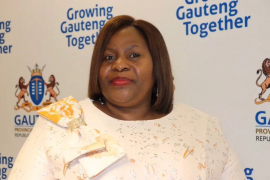
Gauteng Health MEC, Dr Nomathemba Mokgethi, is currently self-isolating at home after contracting COVID-19.
According to the statement released by the Gauteng provincial government on Wednesday, MEC Mokgethi presented with mild symptoms before she went to test on Tuesday, 18 May 2021.
“All persons who were in contact with her have been advised to self-isolate and test if necessary.”
The Health MEC was one of the first people to receive the Johnson & Johnson vaccine under the Sisonke Study in Gauteng.
“The COVID-19 vaccine prevents severe illness, hospitalisation and death,” said the provincial government.
Meanwhile, Mokgethi is not showing signs of any severe symptoms and will remain in isolation for the next 10 days.
“The public is encouraged to continue to adhere to non-pharmaceutical interventions, even after they have been vaccinated.”
In a pinned tweet, the MEC is urging the public to continue wearing masks, practice social distancing and good hand hygiene.
“The pandemic is still with us,” she added.