
SA records 13 246 new COVID-19 cases
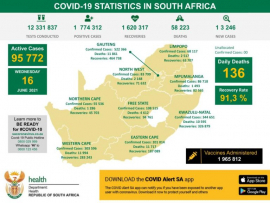
South Africa recorded the highest daily spike since January after 13 246 people tested positive for COVID-19 on Wednesday.
According to the National Institute for Communicable Diseases (NICD), this means the percent testing positive has now increased to 21.7% nationally.
Meanwhile, Gauteng continues to drive the resurgence, with 7 859 cases logged in the last 24 hours.
The NICD said the Northern Cape, Free State, North West and Gauteng are officially in a third wave, with the remaining five provinces seeing the sustained peak.
“These concerning figures represent the highest number of daily cases and positivity rate recorded since January 2021.”
According to the public health institute, the total number of laboratory-confirmed cases now stands at 1 774 312 since the outbreak.
A reported 77 patients succumbed to the respiratory disease.
Meanwhile, 940 more people were admitted to the hospital since the last reporting cycle, which pushes the tally to 8 727.
To date, there have been 286 867 hospital admissions since the outbreak.
The NICD has urged people to remain vigilant by following COVID-19 preventative measures, wearing a mask that covers both the nose and mouth, practising healthy hand hygiene, maintaining physical distancing of at least 1.5 metres and limiting social interactions as much as possible.
The institution has called for those who are 60 years or older to register on Electronic Vaccination Data System (EVDS) to get the vaccine.
In the last 24 hours, 34 663 people have signed up on EVDS to get vaccinated, while 1 965 812 have been vaccinated to date.
“Younger generations are also encouraged to help pensioners register for their vaccine,” the NICD said.
Globally, as of 16 June 2021, there have been 176 303 596 confirmed cases of COVID-19, including 3 820 026 deaths, reported to the World Health Organisation.
Citizens urged to protect the gay and lesbian community
KwaZulu-Natal Social Development MEC, Nonhlanhla Khoza, has urged South Africans to protect the gay and lesbian community from abuse and murder.
This follows the discovery of the body of a young woman, Anele Bhengu, 22. Her remains were found dumped in KwaMakhutha, south of Durban.
Bhengu was allegedly raped before being stabbed. Her throat was slit and her stomach was cut open.
It is believed that Bhengu was murdered after her friend fetched her from home.
Khoza said the brutal murder of Bhengu has sparked more fears with the gay and lesbian community, as they increasingly becoming targets of homophobia.
She said the increasing incidents of the murders of lesbian, gay, bisexual, transgender, queer or questioning, intersex, and asexual or allied (LGBTQIA+) persons in the province are shocking, and “it is clear that more needs to be done to stop hate crimes”.
“The brutal murder of this child is symptomatic of the challenges we have in society. We are left in shock and fear by the killing of our children in this province.
“Our Constitution was the first in the world to protect people from discrimination because of their sexual orientation. We also became the first on the African continent to legalise same-sex marriages, but we still experience these murders and abuse.
“We all have a responsibility to end these violent crimes in the province. We need to get to the bottom of this, as to why people have so much hatred towards the LGBTQIA+ community. We call on all citizens to work with law enforcement agencies, government and different bodies to end such cruelty,” the MEC said.
Khoza sent her heartfelt condolences to the Bhengu family following their loss, and has assembled a team of social workers to meet with the grieving family to offer counselling.
Department allocates 15% of squid catch to small scale fisheries
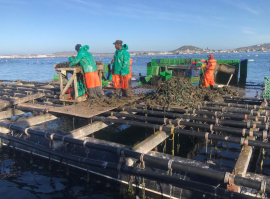
In a historic step forward for transformation of the small-scale fishing sector, the Department of Forestry, Fisheries and the Environment has allocated 15% of the squid catch to the small-scale fisheries sector.
Prior to this decision, squid was not in the basket of species available to the 15 co-operatives and 600 individual small-scale fishermen and women operating in the areas of the Eastern Cape where squid is harvested.
This apportionment will be reviewed at the beginning of every fishing season, with the view of increasing the portion available to the small-scale fisheries sector to 25% of the total allowable catch.
The review will be subject to the annual status of squid resources, fishing patterns and fishing practices of new and existing rights holders, and the needs of coastal communities, which are dependent mainly on fishing.
“Across the world, small scale fishermen and women play an important role in promoting household food security and providing livelihoods in areas where there are little other means of support,” said Forestry, Fisheries, and the Environment Minister, Barbara Creecy.
In March 2020, the department allocated 15-year rights to fishing co-operatives across the Eastern Cape.
“The success of these co-operatives depends on, amongst others, having a commercially viable basket of species,” Creecy said.
The limited basket of species has been raised repeatedly by small scale fishing co-operatives across the country.
Accordingly, in October 2020, Creecy invited interested and affected stakeholders to comment on the proposed resource split between local commercial and small-scale fishing in the traditional line fish, squid and abalone fishing sectors.
The department’s Director General, as the as the delegated authority in terms of the Marine Living Resources Act, 1998, decided in terms of Section 14(2), to apportion 15% of the Squid Total Allowable Effort to the small-scale fisheries sector and 85% of the squid total allowable effort to the commercial squid sector.
“This apportionment will be reviewed annually with the intention of increasing it to 25% over the next few years,” said the department.
Small-scale fishermen in the Eastern Cape have welcomed the announcement and believe that it will enable them to feed their families and look after their communities.
Chief Dion Spandel, chairman of the Eastern Cape Khoisan Small Scale Fishers, applauded the department’s decision.
“I know that it was not an easy decision, but it had to be taken. With the 15% that the department has put in our baskets, we can now go to sea and look at buying our own boats, and sending our guys to some kind of training. It is really appreciated it,” said Spandel.
The apportionment will take effect from the start of the upcoming squid season.
Implementation
In the coming weeks, the department will be engaging with the commercial and small-scale fishing sectors on how the apportionment will be implemented, taking into account compliance with the relevant sector policies and the conditions of fishing in those respective sectors.
The squid sector is lucrative and to ensure optimal management and sustainability, the department will be introducing a Capacity Management Regime in the commercial and small-scale squid sector to better manage fishing effort in the sector in future.
The Record of Decision on the split can be accessed on https://www.environment.gov.za/sites/default/files/legislations/publicnotices/recordofdecision_squidfishingresourcesplit.pdf.
Parliament postpones hearings into Children’s Amendment Bill

Public hearings into the Children’s Amendment Bill have been suspended until further notice, Parliament’s Portfolio Committee on Social Development has announced.
Committee chairperson Mondli Gungubele said the postponement of public hearings is an important step in the context of President Cyril Ramaphosa’s pronouncement to move the country to lockdown Level 3.
“The committee is always mindful of the COVID-19 outbreak. The numbers are reportedly increasing at an alarming rate, and the committee cannot afford to expose our people to the dangers of COVID-19,” Gungubele said on Wednesday.
Gungubele said public hearings by nature, as evidenced in Limpopo and Mpumalanga, mean a huge turnout of people in a confined space.
“As much as the committee complies with all COVID-19 protocols and prevention measures, one cannot guarantee 100% safety,” Gungubele said.
The public hearings were scheduled to take place in the North West, KwaZulu-Natal, and the Eastern Cape in the next four weeks.
The Children’s Amendment Bill intends to improve services for children and ensure that their welfare is adequately taken care of.
The bill seeks to introduce the definition of “sexual offence” as a way of aligning the Children’s Act with the Sexual Offences Act.
It also proposes creating a “deeming” provision in the Children’s Act that makes it easier to find adult offenders unsuitable to work with children.
Nzimande welcomes sentencing of Ramabulana’s murderer

Higher Education, Science and Innovation Minister, Dr Blade Nzimande, has welcomed the sentencing of Aubrey Manaka for the brutal rape and murder of Capricorn TVET College student, Precious Ramabulana.
Ramabulana, aged 19, was found dead in her room off campus in November 2019. Law enforcement reports said she suffered multiple stab wounds.
At the time of her unfortunate death, Ramabulana was studying for a N6 Business Management qualification and preparing for her final examinations.
The 29-year-old Manaka pleaded guilty and was sentenced by the Limpopo High Court to two life sentences for rape and murder, eight years for robbery with intent to rape and 15 years for robbery with grievous bodily harm.
“This was a barbaric and shameful act, which must be denounced. Our young women must feel safe in society. May Precious’s soul rest in eternal peace, and may her loved ones and friends find strength and peace,” said the Minister in a statement on Tuesday.
The Minister has since tasked the Department of Higher Education and Training’s agency, Higher Health, with ensuring that issues of Gender-Based Violence and Femicide (GBVF) are addressed on all campuses in order to create safe spaces for all students.
National Police Commissioner appointed as SARPCCO chairperson
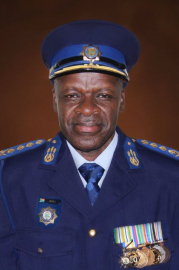
South Africa’s National Police Commissioner General, Khehla John Sitole, will assume the chairship of the Southern African Regional Police Chief’s Cooperation (SARPCCO) from August.
SARPCCO, which was established in 1995 for police forces, combines resources and expertise in fighting transnational crime across borders in the Southern African Development Community (SADC) region.
The appointment was marked by a ceremonial handing over of the Sword of Honour during the 26th General Meeting of SARPCCO, which was held through video conferencing on Wednesday.
Sitole takes over the role from Botswana’s Keabetswe Makgophe, whose 12 months in office comes to an end.
South Africa will be assuming the chairship for the seventh time, having done so in 1997, 2009, 2010, 2012, 2014 and 2015.
In his acceptance speech, Sitole expressed gratitude to Makgophe for his resolve in leading the organisation during a time of uncertainty.
“The advent of the COVID-19 pandemic, which unfortunately has continued to claim the lives of many of our citizens, including gallant men and women of our Police Services/Forces, has led us to change the way we conduct our policing business,” said Sitole.
Given this prevailing situation, Sitole said Commissioner Makgophe was dynamic enough to adapt to the new philosophy of policing, responsive to the current terrain now referred to as the new normal, where almost every regional engagement had to be done virtually.
“This is evident from the Tenure of Office Report that the outgoing Chairperson just shared with us this morning,” he said.
The incoming Chairperson also acknowledged the role played by other member countries for ensuring stability and cooperation on safety and security related matters within the region. The challenges brought on by the COVID-19 pandemic to policing were also brought to the fore and discussed by General Sitole.
Sitole has committed to ensure greater cooperation within the region and also outlined his plans to devise new ways of combating international organised crime syndicates, as well as cross border crimes through the introduction of the Policing Nomics Concept: a study of policing methodologies and practice through the lens of modern economics, innovation and creativity.
Since its inception, the body has been able to establish a comprehensive approach in terms of regional policing through cooperative engagement of member countries such as joint cross-border operations, joint training, harmonisation of legislation, and the sharing of good practices to contribute to the grand economic strategy for each country.
SARPCCO countries include South Africa, Angola, Botswana, Namibia, DRC, Lesotho, Madagascar, Seychelles, Mozambique, Zambia, Tanzania, Mauritius, Swaziland and Zimbabwe.
Concern over treatment of disabled children
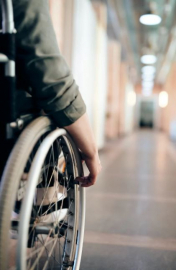
The Portfolio Committee on Social Development has expressed concern over alleged treatment of disabled children and the handling of rape cases involving teachers in Bushbuckridge in Mpumalanga.
During public hearings on the Children’s Amendment Bill in Bushbuckridge, the committee heard that it was common for parents in the area to hide disabled children in backrooms and not let them attend school.
It also heard that perpetrators for rape, who are allegedly teachers, are defended by their labour unions.
Acting committee chairperson, Nkhensani Bilankulu, said teacher unions can never be justified in defending alleged rapists in schools, and if there are such cases, these should be reported to the police.
“We also learnt that some educators are protected by management due to the importance of learning areas they teach. As second homes of our children, schools should be the safest places for our children.
“In cases where rapes have occurred, the educators’ code of conduct need to prevail with proper follow up of such incidents by all stakeholders, the South African Police Service, school management, School Governing Bodies and teacher unions,” Bilankulu said.
The acting chairperson called on community members and all stakeholders not to wait for Parliament to come in order to raise issues or to seek intervention.
“The bill is intended to improve the services for children and ensure that their welfare is taken care of adequately,” Bilankulu said.
She also assured residents that all the issues raised with the committee will be referred to the relevant government departments, in order to be attended to urgently.
Meanwhile, the Department of Home Affairs committed to send a mobile truck to Bushbuckridge to assist learners, particularly Grade 12 learners, to apply for smart card IDs.
TB still SA’s leading cause of death
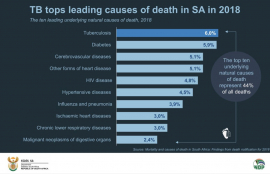
A Statistics South Africa (Stats SA) report has revealed that Tuberculosis remained the main leading cause of death in South Africa between 2016 and 2018.
The report, titled “Mortality and causes of death in South Africa: Findings from death notification, 2018”, provides information on levels, trends and patterns in mortality and cause-of-death statistics by socio-demographic and geographic characteristics.
“The mortality indicators and cause of death indicators presented in this report are critical indicators on the health status of the South African population,” said Stats SA.
“The main focus is on 2018 death occurrences; however, information on deaths that occurred during the period 1997 to 2017 is included in order to show trends in mortality. The cause-of-death statistics in this statistical release provide information on the leading underlying natural causes of death, patterns and trends in non-natural underlying causes of deaths, as well as comparison between immediate, contributing and underlying causes of death,” said Stats SA on Tuesday.
According to the report, mortality levels are declining in the country as indicated by the downward trend in the number of registered deaths since 2007.
The results showed that the total number of deaths registered at the Department of Home Affairs and processed by Stats SA in 2018 were 454 014.
While the occurrence of deaths in the country continued to decline, it differed by age and sex. The age group 65-69 had the highest proportion of deaths in 2018 at 8.4%, followed closely by age group 60-64 at 8.3%. Conversely, the lowest proportions of deaths were observed in age groups 5-9 years and 10-14 years at 0.6 % and 0.8%, respectively.
With regard to sex, between 1997 and 2018, there were more male than female deaths from age 0 to age group 65-69; whereas female deaths consistently exceeded male deaths for ages 70 years and above.
The results further indicate that in 2018, the highest sex ratio (167 male deaths per 100 female deaths) was observed in the age group 20-24 years. The pattern was observed for four consecutive years, between 2015 and 2018.
For the period 2016-2018, Tuberculosis remained the main leading cause of death in South Africa.
Diabetes mellitus, the report found, remained as the second leading underlying cause of death whose proportions have been increasing over the three years.
“According to the global burden of diseases, two of the top five leading underlying causes of death for males were communicable diseases (tuberculosis and HIV) whilst among females, there was only one communicable disease (HIV) with the rest being non-communicable diseases.
Stats SA said the results showed that nine of the ten leading causes of death were the same for both sexes, although with different rankings.
“Tuberculosis was the leading underlying cause of death for males, accounting for 7.2% of male deaths while the diabetes mellitus was the leading underlying cause of death amongst females accounting for 7.7% of female deaths.
“Human immunodeficiency virus [HIV] disease (4.6%) was the second leading cause of death for the males, followed by other forms of heart disease (4.5%). Cerebrovascular diseases (6.1%) was the second leading underlying cause of death for females.
“In 2018, the most significant decline amongst females were deaths due to tuberculosis which declined from 5.2% in 2016 to 4.8% in 2018. Uniform to this, there was a significant decline in tuberculosis deaths from 7.2% in 2015 to 7.6% in 2018 among males.
Non-natural deaths
Stats SA said although the number of deaths due to natural causes were higher than the number of deaths due to non-natural causes, the proportion of deaths due to non-natural cause have been on a slight increase in the recent years.
Between 2010 and 2018, a consistent increase in the proportions of deaths due to non-natural causes was noted from 9.0% in 2010 to 11.9% in 2018. The age groups mostly affected by non-natural causes of death in 2018 were age group 20-24 years and 15-19, accounting for 49.2% and 42.5%, respectively.
Males had higher proportions of deaths due to non-natural causes compared to females, with a wider difference observed at age group 15-29 where as much as 58,1% of male deaths resulted from non-natural causes compared to 19,8% of female deaths in the same age group.
Deaths due to non-natural causes were mainly dominated by those due to other external causes of accidental injury (68.3%) followed by assault (14.0%) whilst there were 11.4% non-natural deaths due to transport accidents.
In total, KwaZulu-Natal had the highest proportion of deaths due to non-natural causes (13.5%), followed closely by Cape Town (13.0%). In terms of proportions, deaths due to transport accidents were the highest in Limpopo (30.1%), whilst assault was highest in Eastern Cape (22.7%).
5 552 new COVID-19 cases reported in SA
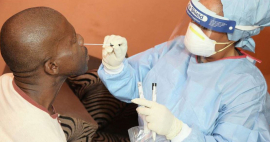
South Africa recorded 5 552 new COVID-19 cases on Monday, representing an 18.5% positivity rate.
According to the National Institute for Communicable Diseases (NICD), Gauteng continues to drive the third wave with 3 720 new infections reported, accounting for 67%.
The province is followed by the Western Cape after 446 people were confirmed to have contracted the virus in the last 24 hours, 278 in the North West and 247 in KwaZulu-Natal.
This means the country now has a total number of laboratory-confirmed cases of 1 752 630 since the outbreak.
According to the latest data, there were 153 in-hospital deaths, which pushes the tally to 57 884.
So far, 7 778 patients are currently receiving treatment in hospitals across South Africa after an increase of 936 new admissions.
The information is based on the 12 223 448 tests of which 30 034 were performed since the last reporting cycle.
In addition, 1 777 288 people have been vaccinated.
The NICD has urged people to continue to adhere to preventative measures to limit the risk of contracting and spreading the virus.
According to the World Health Organisation, as of 14 June 2021, there have been 175 686 814 confirmed global cases of COVID-19, 3 803 592 deaths and 2 187 874 534 administered vaccine doses.
Aspen to dispatch 300 000 J&J vaccines for teachers

Aspen says it will release 300 000 Johnson & Johnson (J&J) doses earmarked for teachers soon.
In a statement released on Monday, Aspen said it was “extremely disappointed” to learn that specific batches of the J&J manufactured at its Gqeberha production site have to be destroyed.
This is due to the good manufacturing practice risk of isolated material in the drug substance supplied to Aspen by J&J from their contract-manufacturing partner in the United States.
“The batches manufactured had been retained in storage awaiting the outcome of the US FDA assessment,” Aspen said.
On Sunday, the South African Health Products Regulatory Authority (SAHPRA) said it decided not to release the long-awaited Johnson & Johnson (J&J) vaccines for use in the country.
However, SAHPRA said about 300 000 doses from batches that have been cleared by the US Food & Drug Administration (FDA) meet the requirements and will subsequently be released and shipped to South Africa.
According to the pharmaceutical company, this is not only a setback to both the Aspen and J&J teams, who worked tirelessly to produced these shots, but it has the potential to negatively affect vaccine rollout across South Africa and Africa.
However, the company has since come out with ways to mitigate the potential risk to vaccine access.
“Within days, Johnson & Johnson will provide 300 000 doses of the vaccine for South African teachers,” the company announced.
In the next week, Aspen said it expects to release J&J vaccines manufactured from the drug substance that has not been impacted by the contamination.
“Over the next few weeks, Johnson & Johnson will be delivering substantial quantities of compliant, finished vaccines to South Africa to replace the lost stock, thereby ensuring the momentum in the South African vaccine initiative is maintained.”
The multinational said further doses of the lifesaving vaccines will become available in July.
“These Johnson & Johnson vaccines released by Aspen will support the vaccination programmes in South Africa and elsewhere in Africa.”
Aspen has thanked its team and J&J for its exemplary response in managing this setback.
“Through their actions, they have not only assisted in capacitating the African continent but at this challenging time, they have stepped up again to ensure that we are able to maintain the momentum needed to give our continent access to lifesaving vaccines.”