
Government remains capable of managing COVID-19 pandemic

Government remains committed and capable of managing the COVID-19 pandemic, executing a ramped up vaccination programme and running the national programmes under the acting Health Minister, Mmamoloko Kubayi-Ngubane.
This assurance was given by Health Department Director-General, Dr Sandile Buthelezi, after President Cyril Ramaphosa placed Dr Zweli Mkhize on special leave on Tuesday.
The matter relates to the controversial R150 million COVID-19 and National Health Insurance communications service contract scored by Digital Vibes.
Mkhize’s former personal assistant, Naadhira Mitha and Tahera Mather, who worked with him when he was Treasurer-General at the ANC’s Luthuli House, pocketed money from questionable payments.
“We have noted the President’s decision to place the incumbent Minister of Health on special leave pending the outcome of the Special Investigation Unit’s investigation into the Digital Vibes matter. It goes without saying that these are difficult times we find ourselves in,” Buthelezi said.
However, Buthelezi has reassured South Africans that the department will keep the ball rolling.
Meanwhile, he announced that there are some developments on the vaccination front, which will be communicated in a public webinar this week.
“Our spirits were lifted today when we learnt that we have officially vaccinated over one million senior citizens aged 60 years and above under phase two,” he said on Tuesday.
He has since conveyed his appreciation to the elderly people who have, and continue, to come forward in their numbers to be vaccinated.
“We also thank all those who are responsible for the administration of the rollout for their grit and determination as we continue to ramp up the campaign.”
In addition, he announced that the daily PDF reports have ended and that the department will now publish the statistics on the sacoronavirus website: https://sacoronavirus.co.za.
“There may be iterations of the product as it develops and we will welcome any feedback to ensure the dashboard is user friendly and provides the information the public needs.”
Buthelezi said the latest list of vaccination sites can be found on https://sacoronavirus.co.za/active-vaccination-sites/.
“We will take opportunities to do live demonstrations to assist users to navigate the dashboards. We continue to be of service to you, for the health of our people,” he added.
Former Transnet board member denied bail in Free State corruption case

The National Prosecuting Authority’s (NPA) Investigating Directorate has welcomed the bail denial of former Transnet Board member and Gupta family associate, Iqbal Sharma.
The Bloemfontein Magistrates Court on Tuesday ordered that Sharma remain behind bars until he appears again in court on 5 July.
This after the state proved that he was a flight risk as he had failed to disclose that he had transferred R264.4 million to Issar Global in 2016. The company is based in the United Arab Emirates (UAE).
The Investigating Directorate further told the court that the businessman’s South African assets account for 10% of his total assets.
“He has made more than 100 flights to and from the airports in the UAE since 2010. Sharma is a citizen of the world and has connections to several foreign countries. He additionally speaks three different international languages: French, Urdu, and Hindi,” Investigating Directorate spokesperson Sindisiwe Seboka said in a statement.
Sharma and three others were arrested on 3 June in Gauteng, Mpumalanga, and the Free State. The three – former Free State, Agriculture, and Rural Development (FSDoARD) head, Peter Thabethe; former head of the Free State Department of Agriculture (FSDoA), Limakatso Moorosi; and former FSDoA Chief Financial Officer, Seipati Dhlamini – have all been granted R10 000 bail.
Sharma is amongst 16 other accused who face charges relating to defrauding the Free State Department of Agriculture (FSDoA).
The fraud is in connection with a R25 million feasibility study in 2011 that was irregularly granted to Nulane Investment 204 (PTY) LTD, a company owned and controlled by Sharma.
The company had to provide a report to the department within seven months. Nulane, however, subcontracted the work to Deloitte Consulting Pty Ltd for R1.5 million.
Furthermore, said Seboka, it subcontracted the work already completed by Deloitte to Gateway Limited and paid them over R19 million.
“From there, the funds were diverted to Islandsite Investments 180 (Pty) Ltd (Islandsite), a company owned and controlled by the Gupta family. The accused face charges of fraud and money laundering. The former government officials are also charged with contravention of the Public Finance Management Act.”
The fifth suspect in the matter, Iqbal Sharma’s brother-in-law and a representative of Nulane Investments, Dinesh Patel, will formally appear on 15 June 2021, owing to health reasons. They are charged together with three companies, Nulane Investment 204 (Pty) Ltd (owned and controlled by Sharma), Wone Management (PTY) LTD, Pragat Investment (Pty) LTD and Islandsite Investments Pty Ltd.
The Investigating Directorate said the balance of the accused listed in the charge sheet are not currently in South Africa.
All the accused are expected back in the Bloemfontein Magistrates’ Court on 5 July 2021. The directorate has concluded Investigations, is ready to hand over the docket to the defence and start with the trial as soon as possible.
SA GDP up by 1.1% in first quarter
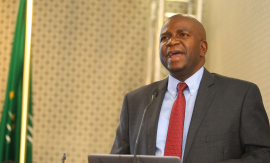
The South African Gross Domestic Product (GDP) grew by 1.1% in the first three months of 2021, Statistician General Risenga Maluleke has revealed.
This growth, he said, translated into an annualised growth rate of 4.6%.
“This follows a revised 1.4% (annualised: 5.8%) rise in real gross domestic product (GDP) in the fourth quarter of 2020,” said Statistics South Africa (StatsSA).
The finance, mining and trade industries were the main drivers of output on the production (supply) side of the economy, while household spending and changes in inventories helped spur growth on the expenditure (demand) side.
Maluleke said despite this being the third consecutive quarter of positive growth, the South African economy is 2.7% smaller than it was in the first quarter of 2020.
Eight of the 10 industries recorded positive gains in the first quarter of 2021, with finance, mining and trade making the most significant contributions.
Statistics reveal that finance, real estate and business services increased at a rate of 7.4% in the first quarter, and made the largest contribution to GDP growth, namely 1.5 percentage points.
StatsSA said increased economic activity was reported for financial intermediation, auxiliary activities, real estate activities and other business services.
“The mining and quarrying industry increased at a rate of 18.1% and contributed 1.2 percentage points to GDP growth.
“Increased production was reported for platinum group metals (PGMs), iron ore and gold. The trade, catering and accommodation industry increased at a rate of 6.2%, contributing 0.8 of a percentage point to GDP growth,” reads the report.
The stats agency said increased economic activity was reported in wholesale trade and retail trade during this period.
“The transport, storage and communication industry increased at a rate of 4.8%, contributing 0.4 of a percentage point. Increased economic activity was reported for land transport and communication services.
“The manufacturing industry increased at a rate of 1.6% in the first quarter, contributing 0.2 of a percentage point to GDP growth. Five of the ten manufacturing divisions reported positive growth rates in the first quarter,” said Maluleke.
The divisions that made the largest contributions to the increase were motor vehicles, parts and accessories and other transport equipment; and wood and wood products, paper, publishing and printing. The personal services industry increased at a rate of 1.7% in the first quarter. Increases were reported for community services and other producers.
Data revealed by the agency on Tuesday showed expenditure on real gross domestic product increased at an annualised rate of 4.5% in the first quarter of 2021.
“Household final consumption expenditure increased at a rate of 4.7% in the first quarter, contributing 3.0 percentage points to total growth.
“The highest growth rates were seen in durable and semi-durable goods and the largest contributors to growth were expenditures on durables goods and services.
In the three months, consumption expenditure by general government increased at a rate of 1.0% in the first quarter.
Increases in compensation of employees and spending on goods and services were reported in the first quarter.
StatsSA added that gross fixed capital formation decreased at a rate of 2.6%, with machinery and equipment being the main contributor.
“There was a R53.2 billion (annualised) drawdown of inventories in the first quarter of 2021.
“Large decreases in mining and trade contributed to the inventory drawdowns experienced in the first quarter of 2021,” said the agency.
Net exports contributed negatively to growth in expenditure on GDP in the first quarter, with exports of goods and services decreased at a rate of 0.9%. This was largely influenced by decreased trade in mineral products and vehicles and other transport equipment. Imports of goods and services increased at a rate of 26.5%, driven largely by increases in mineral products, machinery and equipment, and vehicles and transport equipment.
Operation O Kae Moloa nabs suspects

Over 1000 people have been arrested across the Gauteng province during an O Kae Molao Operation at the weekend.
The operation incorporating the Sedibeng, Sebokeng, Sharpeville and Evaton areas included roadblocks where 22 people were arrested for driving while under the influence of alcohol.
The South African Police (SAPS) also closed a liquor shop in Sharpeville as it was found to be overcrowded and patrons were not observing social distancing measures.
Four more liquor outlets were closed down, liquor confiscated and owners arrested after they were found operating without licences and being open during curfew time.
A further 20 people were arrested for contravening curfew hours.
“More than 132 other suspects were arrested in Sedibeng District, 179 in Ekurhuleni, 162 in West Rand and 433 in Tshwane during O Kae Molao Operations conducted over the weekend. The suspects were found to have committed offences that include assault with intent to cause grievous bodily harm, possession of drugs, dealing in dagga, murder, fraud, housebreaking and theft, reckless and negligent driving, possession of suspected stolen property and possession of ammunition,” said Gauteng police on Monday.
Gauteng Provincial Commissioner, Lieutenant General Elias Mawela applauded the integrated multidisciplinary forces of O Kae Molao.
Six-month treatment effective for multi-drug-resistant TB, study finds

A study funded by the South African Medical Research Council (SAMRC) has revealed that a novel six-month treatment regimen is effective for multi-drug-resistant tuberculosis (MDR-TB).
This is according to the NExT Study, a randomised TB trial meant to determine whether treatment for multi-drug-resistant TB rifampicin-resistant TB (MDR/RR-TB) could be shortened to six months using oral medication – the same length currently used for drug-sensitive TB.
The research was performed across five different settings in South Africa, where participants were randomly assigned to receive the novel six-month oral regimen.
This was compared to the World Health Organisation’s (WHO) approved nine-month injectable-based treatment.
“The key finding was that the new regimen was more than twice more likely to lead to favourable outcomes than the traditional approach despite the regimen only being taken for six months,” the SAMRC said.
Meanwhile, the rate at which TB is no longer detectable in sputum samples occurred 2.6 times faster in the intervention arm compared to the participants who only received the WHO’s recommended injectable-based regimen.
“Treatment success was achieved in 75% of patients in the intervention arm,” the statement read, adding that successful treatment outcomes of MDR-TB in endemic countries in 2019 were between 50% and 60%.
The NExT oral regimen, according to the SAMRC, was made up of five drugs taken for six months.
However, according to the research organisation, most MDR-TB patients cannot access newer drugs and the short injectable regimen remains the standard of care in many TB endemic countries.
“Access to newer drugs is limited by affordability and other access barriers and only 40% of MDR-TB patients globally can access any kind of treatment.”
The researchers believe that these findings suggest that a six-month oral regimen for MDR-TB is feasible.
“Using a shorter oral six-month regimen will mean that painful and toxic injectable drugs will be avoided and the shorter regimen is likely to improve compliance, completion rates, and reduce the overall cost to TB programmes.”
NExT Study’s Principal Investigator, Professor Keertan Dheda said, this sets a new benchmark for the treatment of MDR-TB, which threatens to derail TB control in many parts of the world, including Eastern Europe and Russia.
“The next step will be to test more effective six-month regimens that can improve treatment success closer to 90% or even higher.”
According to Dheda, who is also a Director of the SAMRC/UCT Centre for the Study of Antimicrobial Resistance Research Unit, 60% of the world’s MDR-TB patients have no access to treatment, while the rest in many TB endemic countries have zero access to the newer drugs.
The SAMRC President and CEO, Professor Glenda Gray, has welcomed the findings and described them as a huge advance in TB control in South Africa and beyond.
“Not only do the findings have the potential to change TB clinical practice but could also transform the way we treat patients with drug-resistant forms of TB here at home and in other parts of the world,” said Gray.
Gray also believes that shorter drug regimens could improve adherence.
Director for Drug-Resistant TB, TB & HIV at the National Department of Health, Dr Norbert Ndjeka, said patients who do not return for continued care or evaluation and high death rates are major challenges in managing MDR-TB in South Africa.
“We are very excited about the NeXT study results, as a shorter treatment regimen could go a long way in reducing loss to follow-up, and the new and repurposed drugs have helped to reduce the death rate amongst MDR-TB patients,” Ndjeka added.
Zikalala demands action in staff member’s murder case
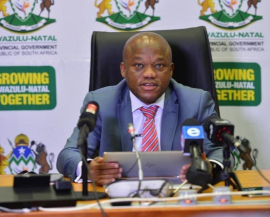
KwaZulu-Natal Premier Sihle Zikalala has called on police leadership to trace and apprehend the suspects involved in the murder of a staff member working in the communication section of the Office of the Premier.
According to reports, Hlengiwe Madlala’s lifeless body was discovered outside her home in the early hours of Sunday morning with multiple stab wounds, with her clothes placed next to her.
Madlala, from Songozima village in Vulindlela, outside Pietermaritzburg, was an Administrator in the Communication Unit at the Office of the Premier.
“By all accounts, this is one of the most gruesome acts of gender-based violence (GBV) committed on a woman in the province recently. Whoever did this was on a mission of murderous violence and set about to carry out this act in a cold and calculating manner,” Zikalala said in a statement.
Zikalala said GBV remains one of the worst scars on society, touching every community, regardless of race, faith or economic status.
“GBV has now become the second pandemic after COVID-19 and remains a real threat to the building of a united, prosperous, non-sexist, non-racial and equal society.
“There is clearly more work to be done on protecting women in KwaZulu-Natal from violence through prevention, awareness, care and support to the victims,” the Premier said.
“We must also strengthen the judiciary and support programmes which target women empowerment and provide closure for the survivors.
“Hlengiwe died a brutal and gruesome death at the hands of a callous perpetrator. She would have celebrated her 40th birthday in August this year. Unfortunately, her life has been cut short by this brutality,” Zikalala said.
The Premier has, on behalf of the staff and the entire provincial government, conveyed his sincerest condolences to Madlala’s family, especially her children “whom she loved so dearly”.
“May the whole family be comforted in this hour of great pain, and may they find strength in the great memories shared with Hlengiwe and use these to remember the good times spent with her. May her soul rest in peace,” the Premier said.
PIC investigates allegations against company secretary

The Public Investment Corporation (PIC) will institute an investigation into allegations of conflict of interest levelled against company secretary, Bongani Mathebula.
At the weekend, the Sunday Times alleged that Mathebula had links to a law firm that was investigating possible wrongdoing at the PIC’s Daybreak poultry farm.
The PIC in a statement on Monday said while it was aware that Mathebula had been given an opportunity to respond to the allegations, the corporation would further probe the claims to satisfy itself that there was no wrongdoing.
“For its part, the PIC requested Ms Mathebula to respond particularly to the allegation that she is a relative to a director of and is a partner in a law firm which provides services to Daybreak, a company in which the PIC has 100% control on behalf of its clients,” the PIC said.
Mathebula, according to the statement, has assured the PIC that she is not a relative and has no relationship, personal or business, with Ntiyiso Mathebula of MNA Attorneys – apparently the predecessor to PJM Attorneys.
“Ms Mathebula states that during her precautionary suspension she was approached by Mr Pule Malahlela with an opportunity to join his new law firm, PJM Attorneys (PJM).
“She accepted the approach and got registered as an Associate of PJM Attorneys with the intention to enter into a partnership as one of the Directors of PJM. However, when she was reinstated as Company Secretary of the PIC, she informed Mr Malahlela that she could no longer pursue the envisaged partnership,” said the Corporation.
The PIC said, according to Mathebula, she only became aware that she was still registered as an associate with PJM Attorneys and that the company had since changed its name to MNA, when the Sunday Times brought it to her attention.
In relation to the appointment of board members to investee companies, the PIC said it needed to be stated that the appointment followed a due process, which culminates in the Directors Affairs Committee (DAC) of the PIC approving the candidates.
The DAC is chaired by the chairperson of the PIC board.
SA’s COVID-19 death toll surpasses 57 000 mark

South Africa’s COVID-19 death toll has now surpassed the 57 000 mark after 89 people lost their lives to the disease on Monday.
South Africa has recorded 57 063 fatalities since the outbreak.
According to Health Minister, Dr Zweli Mkhize, of the latest deaths, 25 were recorded in Gauteng, 23 in the Free State, 18 in the Western Cape, 17 in Limpopo, four in the Northern Cape, while the Eastern Cape and KwaZulu-Natal provinces recorded one death each.
“We convey our condolences to the loved ones of the departed and thank the healthcare workers who treated the deceased patients,” said Mkhize.
The county’s cumulative cases now stand at 1 699 849 after 3 285 new infections were detected.
The additional cases are from the 23 199 COVID-19 tests conducted in the last 24 hours, which represents a 14.2% positivity rate.
“Our recoveries now stand at 1 581 540, representing a recovery rate of 93%,” said the Minister.
According to the latest data, the country is home to 61 246 active cases.
Gauteng is among the hardest hit provinces with 21 700 patients who are currently infected, followed by the Free State with 9 276 active cases, while the Northern Cape has 9 172.
In addition, 6 985 active cases are in the North West, 5 344 in KwaZulu-Natal, 4 801 in the Western Cape, 1 805 in Mpumalanga, 1 092 in Limpopo and 1 071 in the Eastern Cape.
According to the Minister, so far, 1 350 245 people have been vaccinated in South Africa, as the country awaits more vaccine doses to arrive.
Globally, as of 7 June 2021, there have been 173 005 553 confirmed cases of COVID-19, including 3 727 605 deaths, reported to the World Health Organisation.
“As of 5 June 2021, a total of 1 900 955 505 vaccine doses have been administered,” the organisation said.
FSCA to recommend candidates for Deputy Commissioner positions

The Financial Sector Conduct Authority (FSCA) shortlisting panel has expressed its intention to recommend the names of Farzana Badat and Katherine Gibson to fill the authority’s vacant positions of Deputy Commissioners.
The public now has until 14 June to submit comments, if any, on the two candidates’ names, before they are submitted to Finance Minister Tito Mboweni for consideration.
The FSCA was established in 2018 in terms of section 56 (1) of the Financial Sector Regulation (FSR) Act, as a new regulator for market conduct and the fair treatment of customers in the financial sector.
In a statement, the authority on Monday said it was aiming to enhance and support the efficiency and integrity of financial markets, and assist in maintaining financial stability.
“In pursuit of its mandate, the FSCA is legally required to act without any fear, favour or prejudice.
The shortlisting panel, which commenced its work on 16 September 2020, received 38 applications for the positions.
The FSCA said after assessing each candidate’s CV in detail, and based on the requirements in the advert and the selection criteria, the panel agreed to shortlist the five most suitably qualified candidates for interviewing on 14 and 22 January.
“As the interviews for the Deputy Commissioner positions were identical to the interviews for the Commissioner position, candidates who were interviewed on 21 November 2020 for the Commissioner position were also considered for the Deputy Commissioner positions,” it said.
Following the closure of the period for public comments, the panel will consider all comments received, and take them into account before it finalises its recommendations to the Minister.
The FSCA said the Finance Minister has the prerogative to appoint or not appoint any of the recommended candidates.
“Should the Minister decide to appoint other candidates that are not recommended by the Shortlisting Panel, he will be required, in terms of the Regulations, to publish the reasons for doing so.”
The shortlisting panel envisages that the Minister will publish a comprehensive report on the recruitment and selection process.
“Where any public comment is submitted, the commentator must identify his/her name, email address and contact number, and expect that such comment and the name of the commentator may be made public,” said the FSCA.
The authority said any objections included in the comments must be supported by cogent reasons for them to be considered, with appropriate supporting documentation.
The FSCA said the panel embraces the principle of transparency, and appropriate public participation in its processes of selecting and recommending suitably qualified and experienced candidates for the positions. This would be based on merit and transparent criteria.
This, among others, requires that the candidates have at least 10 years’ experience in a senior or executive position with a regulator (preferably a financial sector regulator); a financial institution; a financial sector industry body or a government department that is responsible for overseeing the regulation of the financial sector.
The panel said the results of the interviews and the competency assessments saw Badat and Gibson emerge as the best fit for the positions. The two have already been subjected to enhanced reference checks, which indicated that they were both suitable for appointment.
Comments must be submitted to the Shortlisting Panel no later than 5pm on 14 June 2021, preferably by email to Shortlisting.Panel@treasury.gov.za, or to: Att: Mr Ngoni Mangoyi Secretariat of the Shortlisting Panel c/o National Treasury P. Bag X115 Pretoria 0001.
More underperforming councils likely to be dissolved

The events that led to the recent dissolving of the Lekwa Municipality in Mpumalanga is likely to blaze a trail for other councils that have experienced severe poor service delivery and general municipal ineptness, says Finance Deputy Minister David Masondo.
The dissolution of the municipality came after a High Court ruling that ordered government to intervene in the affairs of town, which was at the time plagued by ongoing financial and service delivery crisis. The order of the court was the first of its kind in the country.
Addressing the ex-council on Monday, the Deputy Minister said Lekwa was not the only municipality to have failed in terms of the constitutional and developmental mandate assigned to local government.
“Regrettably, 25 years into a new local government dispensation, after the introduction of progressive and enabling municipal legislation, extensive capacity-building efforts and increased grant allocations, there are 39 other municipalities in a situation as critical as Lekwa,” he said.
He said there were 163 municipalities in financial distress and 108 councils that have passed an unfunded budget in the 2020/21 financial year.
He said it was vital that national government acts on leadership that undermines the proper functioning of municipalities.
“Too many people suffer when municipalities cannot function as envisaged and provide the basic services that impact on day to day lives and livelihoods.
“The crisis at Lekwa is unfortunate. Even more unfortunate, is that being ordered by the High Court to intervene goes against the very essence of our cooperative intergovernmental system,” said the Deputy Minister.
However, he emphasised that in any crisis, there were also opportunities.
“Opportunities to redefine what is acceptable and what is not, opportunities to remind ourselves of our duty to serve, opportunities that force us to rethink our approach.
“Several valuable lessons for all three spheres of government will no doubt emerge from this experience,” said Masondo.
“Perhaps the most explicit lesson to emerge right from the outset, is that where municipalities fail to heed the call of their communities, and provinces fail to act in addressing municipal dysfunctionality timeously and appropriately, the courts will provide recourse if approached.”
He said a further lesson to emerge from this experience was that political and administrative leadership is fundamental to creating a viable municipal sector.
“In our experience, we can confidently say, that a financial and service delivery crisis starts with a crisis in management and leadership.
“It is also perpetuated by a failure to deal decisively with disruptive management and leadership issues. If we are serious about fixing a financial and service delivery crisis, we need to first fix the political and administrative leadership crisis.”
Last month, Cabinet took a decision to dissolve the municipal council in Lekwa. Furthermore, Cooperative Governance and Traditional Affairs Minister Nkosazana Dlamini-Zuma has ordered a stand-over of the bi-elections pending the local government elections later this year.
Masondo said while the rights, responsibilities and power of councillors were officially revoked on 12 May by virtue of the Cabinet decision, salaries for councillors were until the end of May 2021.
However, as of 1 June, Johann Mettler, would be responsible for operations – legislative and executive functions – after he was appointed administrator. Mettler, a lawyer by profession, has extensive local government policy and regulatory experience.
He is the former Municipal Manager of the Nelson Mandela Bay Metro and played an instrumental role as the administrator in the intervention at Msunduzi Municipality in 2009. Masondo said it was hoped Mettler would ensure a smooth and swift recovery in Lekwa.
“We hope that full cooperation will be given to Mr Mettler in this assignment,” he said.