
Expropriation Bill public hearings move to W Cape

The Portfolio Committee on Public Works and Infrastructure will on Thursday resume a four-day public consultation programme in the Western Cape to gather public input on the Expropriation Bill.
The first leg of the hearings will be hosted by Cederberg Municipality at Cathy Johnson Community Hall.
The purpose of the Expropriation Bill is to repeal the existing Expropriation Act of 1975, to provide a common framework in line with the Constitution to guide the processes and procedures for the expropriation of property by organs of state.
The bill also seeks to provide for certain instances where expropriation with nil compensation may be appropriate in the public interest.
Committee chairperson Nolitha Ntobongwana said Parliament has a constitutional obligation to facilitate and enhance public access to the legislation-making process and to improve public participation, hence the committee resolved to visit all the provinces to garner public views on the proposed legislation.
“The intention of the public hearings is to enrich the Bill and to ensure that it is responsive to the views and needs of individuals and groups,” Ntobongwana said.
NC, FS hearings put on ice amid increases in COVD-19 cases
Meanwhile, Ntobongwana said the committee has taken a resolution to postpone hearings in the Northern Cape and Free State, as the provinces are experiencing increases in COVID-19 infections.
“After the completion of the Western Cape leg of the hearings, the committee will pause its programme until the rate of infections is under control in both Northern Cape and Free State,” the chairperson said.
She said the committee decided to hold hearings during the week and at weekends to afford many citizens and stakeholders an opportunity to participate in the hearings.
“The committee is mindful that the scheduled public hearings will take place during the Adjusted Alert Level 2 lockdown regulations and has taken due regard to ensure adherence to COVID-19 guidelines and regulations. In line with the announcement made by the President, the committee will adhere to the regulated 100 participants in a venue at any given time,” Ntobongwana said.
The programme for the hearings can be downloaded using this link: https://tinyurl.com/4drdu9ac
Stage 4 load shedding from 2pm

Eskom has announced that load shedding will now increase to Stage 4 from Stage 2 on Wednesday afternoon.
According to the State-owned entity, the power cut will then revert to Stage 2 later this evening, as it earlier stated in the morning.
“Due to additional breakdowns of a unit at Medupi and two units at Duvha power station, together with the high winter demand, Eskom regrets to inform the public that Stage 4 load shedding,” said Eskom in a statement.
According to the entity, the power cuts will occur from 2pm until 10pm to “ration” the remaining emergency generation reserves, which are depleted.
“These emergency reserves are required to respond to further emergencies in order to maintain the stability of the national grid. Thereafter, Stage 2 load shedding will be implemented as previously communicated.”
Eskom said breakdowns currently total 15 087MW of capacity, while planned maintenance is 1 273MW.
“These capacity constraints will continue for the foreseeable future and all South Africans are urged to reduce their use of electricity.”
The entity has since apologised for the inconvenience and uncertainty caused by interruptions in the electricity supply.
Gauteng adds 25 more vaccination sites
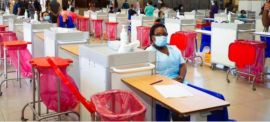
The Gauteng Health Department says its inoculation programme has received a shot in the arm, with the launch of more vaccination sites.
According to the department, this will enable government to immunise more people who are aged 60 and above, and healthcare workers.
The province said it will add 25 more sites to its current list, taking the total number to 129, of which 89 are in the public sector and 40 in the private sector.
The department said sites are spread across the province, with 10 in Johannesburg, five in Tshwane, four in Ekurhuleni, and three each in the West Rand and Sedibeng.
Meanwhile, the province said it has vaccinated 246 791 people in Gauteng. Of these, 184 191 are senior citizens, while 62 600 are health professionals.
To date, 499 533 people have signed up on the Electronic Vaccination Data System (EVDS) to receive their COVID-19 vaccine.
“Since the start of the vaccination programme, we have seen a steady increase in the uptake of the vaccine. More and more vaccination sites are live, meaning that more people can get vaccinated closer to where they stay or work,” the department said.
The province is once again calling on people to register on the EVDS.
“The Gauteng government has taken steps to ensure that all vaccination sites make adequate plans for walk-ins. No person will be turned away from the vaccination sites,” the department said.
Healthcare workers are also assisting the elderly in the comfort of their homes and other places to register on the EVDS.
“Getting vaccinated against COVID-19 remains one of the best ways to protect ourselves and our loved ones. By vaccinating and adhering to the non-pharmaceutical interventions, we can reduce the spread of COVID-19 and keep the economy open,” said the department.
Those who require assistance for registration can contact the Gauteng Hotline on 0800 (GAUTENG) 4288364 or 0800 22 88 27.
Correctional Services area commissioner loses family in fire

The Department of Correctional Services has expressed sadness at a fire incident that claimed the lives of the wife of the Umthatha area commissioner and two of his children.
The three lost their lives when the fire gutted their home on Tuesday evening in the Eastern Cape.
In a statement, the department said the area commissioner, John Msimango, and his youngest daughter survived the inferno but sustained injuries.
“Most devastatingly, the wife of the area commissioner and two children did not survive the inferno. Only the area commissioner and the youngest daughter managed to escape through the window.
Correctional Services said while fire department managed to extinguish the flames, the three lives could not be spared as they had already succumbed to their injuries.
“The cause of the fire is not yet known at this stage and investigation will ensue as the SAPS and the fire specialist are already on site,” said the department.
Msimango and his daughter are currently in hospital
“Trauma counselling will be availed to staff members,” the department added.
N West government intervenes in Clover factory closure
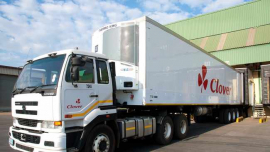
North West Premier, Prof Tebogo Job Mokgoro, has dispatched a team to meet the management of Clover in an effort to halt the looming relocation of the company to Durban and save jobs.
The team, led by the MEC for Agriculture and Rural Development, Desbo Mohono, visited the factory on Tuesday.
Clover recently announced that it intends to close down its plant in Lichtenburg under Ditsobotla Local Municipality, citing disruptions in their operations caused by poor water and electricity supply.
The company also indicated that the poor road infrastructure has increased their operational costs tremendously and this has affected their suppliers.
Clover employs about 380 permanent employees and about 40 temporary employees. It further employs about 20 general workers, 20 truck drivers and truck cleaners, and other employment opportunities emanate from the enterprise development programme such as sub-contracting.
The Premier said the municipality cannot afford to allow Clover to close and relocate its operations, as this will have devastating effects to over 300 families.
“Government depends on private companies that invest in our towns to create jobs. The closure of Clover will have a negative economic impact on the Ditsobotla Local Municipality. We are going to do everything in our power to save the over 300 jobs,” Mokgoro said.
When Mohono met the operational team, she was advised to engage the management at head office in Roodepoort.
The MEC and the intervention team that comprises two other MECs, Head of Department and Municipal Managers, will engage the Clover management as soon as possible to understand issues at hand and find an amicable solution to the current situation.
“Our responsibility as government at any sphere remains to create a conducive environment for businesses to flourish. I must say in this instance, we have neglected this key responsibility, hence Clover intends to close shop in the municipality. We need to find ourselves and meet the needs of businesses if we are to grow our local economies and create more jobs,” Mokgoro said.
Clover processes about 350 000 litres of milk daily.
“About 250 000 litres of milk is sourced from KwaZulu-Natal and about 100 000 litres of milk is sourced from the North West. The closure of the plant will ultimately have an impact on local farmers,” the provincial government said.
Parents urged to protect children

KwaZulu-Natal Social Development MEC Nonhlanhla Khoza, has urged parents to protect children from all forms of abuse, violence and inhumane treatment.
“Protection of children is our responsibility. We have to protect these children from exploitation, violence and abuse. We cannot keep quiet when we see children in our neighbourhood being abused,” Khoza said.
The MEC emphasised that parents should know the whereabouts of their children at all times, and pay attention to what they tell them.
“We want to see more cases of child abuse behind closed doors being reported to the law enforcement agencies. It is unacceptable when parents protect those who violate children’s rights,” she said.
The MEC made the call during a handover ceremony of a mobile Early Childhood Development (ECD) centre at olwasini area in Umdoni Local Municipality, on Tuesday.
The department has funded a non-profit organisation, Tree, to the tune of R1.1 million to operate the ECD centre, pay salaries, provide maintenance of the truck, and the provision of nutritious food to children.
The centre will benefit children in Ward 2 and 18 from Umziwabantu and Umdoni Municipalities.
The handing over of the ECD was in line with Child Protection Week, which ended on Tuesday. During Child Protection Week, society is encouraged to promote the children’s rights and ensure their protection.
Khoza said mobile ECD centres play a significant role in ensuring that no one is able to conceal cases of child abuse, and also ensure child care and protection.
“It is the most important tool to ensure cognitive stimulation of children in their first 1 000 days. It is very easy to identify abused children when they attend ECD centres as our practitioners are trained to do so.
“We also do not expect children to be abused in ECD centres. People employed to take care of children have to go through a vigorous process of screening to ensure they have no criminal cases or were once involved in abuse of children,” Khoza said.
Government calls for more information on birth of 10 babies

Government has noted media reports and social media posts alleging that a South African woman has given birth to 10 babies and reportedly broken the world record.
The posts attribute the birth of the babies to Gosiame Thamara Sithole from Gauteng.
Government Communciation and Information (GCIS) Director-General Phumla Williams in a statement said government has been unable to verify the authenticity of this birth at its facilities.
“We need to verify this story and provide assistance where needed,” said Williams.
Stage 2 load shedding to continue until Sunday

Eskom will implement Stage 2 load shedding from 10am this morning until 10pm on Sunday.
According to power utility, this is due to the continued delays in returning generation units to service at Kusile, Tutuka, Duvha, Kendal and Koeberg power stations.
“These constraints have been exacerbated by the high winter demand throughout the day over the past few days, as brought about by the colder temperatures,” Eskom said in a statement on Wednesday.
Emergency generation reserves have been used extensively in the past few days to avoid power cuts during the day, which has resulted in these being depleted, reducing available capacity.
“It is, therefore, necessary to implement load shedding continuously in order to replenish the emergency reserves,” Eskom said.
In the meantime, Eskom said it will communicate promptly should there be any changes.
Breakdowns currently total 13 752MW of capacity, while planned maintenance is 1 273MW of capacity.
Eskom said these capacity constraints will continue into the near future and urged South Africans to reduce their use of electricity, particularly between 5pm and 10pm, when the winter demand is the highest.
“Eskom apologises for the inconvenience and uncertainty caused by these interruptions in electricity supply,” it said.
SA records 120 more COVID-19 deaths
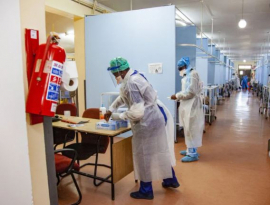
South Africa has recorded 120 new COVID-19 deaths on Tuesday, which pushes the death toll to 57 183.
Meanwhile, the cumulative cases now stand at 1 699 849 after 4 209 new infections were detected.
This is an increase from the 3 285 cases that were reported on Monday.
According to the Health Department, 1 581 540 patients beat COVID-19, which works out to a recovery rate of 93%.
In addition, the country is home to 61 246 active cases, while the total number of people that have been vaccinated in South Africa is 1 524 589.
Health Department Director-General, Dr Sandile Mkhize, said South Africa has officially vaccinated over one million senior citizens aged 60 years and above under phase two.
Global view
According to the World Health Organisation (WHO), the global case and death incidences continued to decrease with over three million new weekly cases and over 73 000 new deaths.
According to the WHO, this translates to a 15% and an 8% decrease respectively, compared to the previous week.
Meanwhile, the European and South-East Asia regions recorded marked declines in the number of new cases in the past week, whereas Africa reported an upsurge.
“The region of the Americas, as well as the Eastern Mediterranean and the Western Pacific, reported similar numbers compared to the previous week.”
The organisation said the number of additional deaths reported in the past week decreased in the European and South-East Asia regions and increased in the Western Pacific region.
“Death incidences remained stable in the region of the Americas as well as the Eastern Mediterranean and African regions.”
According to the WHO, despite the downward trend in global case and death incidences for a sixth and fifth consecutive week respectively, many countries across all six regions have reported “rises” in the number of cases and deaths.
The highest numbers of new cases were reported from India (914 539 new cases, 33% decrease), Brazil (449 478 new cases, 7% increase), Argentina (212 975 new cases, 3% decrease), Colombia (175 479 new cases, 17% increase), and the United States (99 103 new cases, 35% decrease).
SA upholds human rights of people with HIV
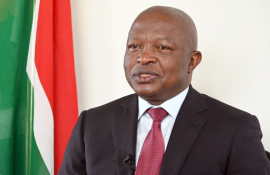
Deputy President David Mabuza has reaffirmed that South Africa remains committed to protecting the human rights of people with HIV and other key and vulnerable populations.
Mabuza said this is key to enabling access to services and fighting stigma and discrimination.
“In order for the world to succeed in ending AIDS by 2030, we need to recognise and protect the rights of all key and vulnerable populations by involving people living with HIV and placing communities at the centre of our response,” Mabuza said.
Mabuza was speaking at the United Nations High Level Meeting on HIV and AIDS on Tuesday.
The Deputy President, who is the chairperson of the South African National AIDS Council (SANAC) is leading the South African delegation at the high level meeting held virtually from 8 to 11 June 2021.
In his address, Mabuza said women and girls continue to be disproportionately affected by the burden of HIV and AIDS, especially adolescent girls and young women aged between 15 and 24.
“This calls on us to address inequalities that hinder progress towards ending AIDS, which in South Africa accounts for 20% of the total global infections,” Mabuza said.
He said South Africa continues to advance a multi-sectoral response to AIDS that is grounded in human rights principles and equal access.
“This includes the scaling up of economic empowerment of young women and girls, ensuring that they have access to sexual and reproductive health services, as well as comprehensive sexuality education that is free of stigma and discrimination,” the Deputy President said.
Despite the prevailing challenges, Mabuza said the country has made significant strides in responding to the epidemic, with five million people on antiretroviral therapy, which is the largest treatment programme in the world.
He, however, noted that the progress towards reducing new HIV infections has been insufficient, as “we have not met the 2020 targets”.
“This has also been compounded by the outbreak of the COVID-19 pandemic,” Mabuza said.
HIV/TB catch-up plans
Government has since, through the South African National AIDS Council, prioritised fast-tracking the development and implementation of the HIV/TB catch-up plans in each of the country’s provinces.
“These efforts are aimed at preventing new HIV infections, with a focus on populations most affected. In this regard, a combination of prevention methods is significant to our national response towards ending AIDS.
“We also continue to ensure that the COVID-19 pandemic does not reverse the achievements we have made thus far in responding to the HIV/AIDS and TB epidemics,” the Deputy President said.
Sustainable funding for health systems
Mabuza called on the global community to fully fund the AIDS response, in line with the principle of Shared Responsibility and Global Solidarity.
He emphasised that developing countries require sustainable funding for strengthening health systems, pandemic preparedness and response, as well as Recovery Plans necessitated by COVID-19 setbacks.
“Resource allocation should prioritise critical areas such as the combination of prevention methods, community-led implementation, multi-sectoral coordination and promotion of human rights.
“We continue to call for TRIPS (Trade-Related Aspects of Intellectual Property Rights) flexibilities to enable local production of medical commodities, and encourage technology-sharing mechanisms to meet public health objectives.
“We reaffirm our commitment to greater unity of the African continent, and we support the Common African Position developed under the leadership of the African Union.
“We, therefore, support the 2021 Political Declaration towards ending AIDS, and we embrace the new targets and other commitments in the declaration,” Mabuza said.