
Government developing comprehensive GBVF prevention strategy

President Cyril Ramaphosa says as government moves into the second year of the National Strategic Plan aimed at tackling gender-based violence and femicide, a comprehensive strategy is being developed to tackle the problem.
The President said this when he responded to oral questions in the National Council of Provinces on Thursday.
“As we move into the second year of the National Strategic Plan, we are focused on strengthening accountability at all levels of government and society.
“We are developing a comprehensive national GBVF prevention strategy, including evidence-based social and behaviour change programmes.
“If we are committed to working together as a country – as government, communities, civil society, organised labour, business, academia, traditional leaders and the faith community – we will succeed in ending violence against women in South Africa,” he said.
This comes after the President, in his State of the Nation Address in June 2019, committed himself to strategies aimed at effectively tackling gender-based violence and femicide.
Following this, the Emergency Response Action Plan was implemented to further strengthen the fight against gender-based violence and femicide, and provide justice for the victims and survivors.
This was a short-term plan implemented over six months through partnerships between civil society networks, government, development partners and academic institutions.
The National Strategic Plan on GBVF was approved by Cabinet in March 2020.
The plan, the President said, builds onto the Emergency Response Action Plan, and focuses on improved accountability, responsiveness to the needs of survivors, addressing impunity and driving a comprehensive prevention agenda.
“We are beginning to see positive results through various joint interventions.
“In February 2021, we launched the private sector GBVF Response Fund, where an initial amount of R128 million was pledged.
“Legislative reform has been a critical component of the National Strategic Plan,” the President said.
Last week, the National Assembly passed three bills, namely, the Criminal Law (Sexual Offences and Related Matters) Amendment Bill; Domestic Violence Amendment Bill and Criminal and Related Matters Amendment Bill.
These three Bills are now on their way to the NCOP.
“I would encourage the NCOP to carefully consider these three important Bills with a sense of urgency, within the legislative mandate of the NCOP.
“We have introduced several innovative initiatives to facilitate access to support and justice.
“This includes a SMS notification system for applications for domestic violence protection orders, which was launched at all district courts in January 2021,” President Ramaphosa said.
The President said the Domestic Violence Amendment Bill, once passed, will make it possible for complainants to apply for protection orders online.
“Thirty-two regional courts are ready for designation as Sexual Offences Courts.
“There are plans for the establishment of six additional Thuthuzela Care Centres.
“As at March 2021, all police stations had the necessary sexual assault DNA kits to assist victims and survivors,” said the President.
GBV command centre
South Africa has a Gender-Based Violence Command Centre (GBVCC), which operates under the Department of Social Development.
The centre operates a national, 24hr/7days-a-week call centre facility. The facility employs social workers, who are responsible for call-taking and call referrals.
The centre operates an emergency line number – 0800 428 428.
This is supported by a USSD, “please call me” facility: *120*7867#.
A Skype Line ‘Helpme GBV’ for members of the deaf community also exists. (Add ‘Helpme GBV’ to your Skype contacts).
A SMS based Line 31531 for persons with disabilities (SMS ‘help’ to 31531) also exists.
The centre is able to refer calls directly to SAPS (10111) and field social workers, who respond to victims of GBV.
COVID-19 vaccine “magnetic fields” claims dismissed

The KwaZulu-Natal Department of Health has welcomed input from top global health experts, who have dismissed purported links between the COVID-19 vaccine and magnetic fields.
This follows a series of viral video footage on social media, where some individuals are seen placing metal coins on the arms of people who have recently been vaccinated against the virus.
“This is in an apparent attempt to prove the purported presence of a “magnet” in the newly-injected arm.
“Several international medical scientists have rejected these claims as scientifically improbable and false.
“According to a report shared by World Health Organisation (WHO) affiliated group, Africa Infodemic Response Alliance (AIRA), COVID-19 vaccines do not contain magnetic microchips.
“The report further declares that these social media posts are an absolute hoax, which should be viewed with the contempt it deserves,” KZN Health MEC, Nomagugu Simelane, said.
In an article by Natalie Wade quoted in the same report, medical experts weigh in, saying these videos are nothing more than a conspiracy theory typical of disinformation about the novel Coronavirus, Simelane said.
The MEC welcomed the feedback from experts, saying it is very unfortunate that at a time when the world is in a war against the deadly epidemic, there are people invested in a misinformation campaign, which “results in vaccine hesitancy”.
“This is certainly not what we need, and we call upon South Africans to consume and take seriously only news and reports that are from trusted sources such as WHO, as well as reputable and credible news sources,” Simelane said.
Government committed to implementing IRP 2030 amid load shedding

Cabinet has acknowledged the frustration of South Africans as the country continues to experience power outages.
Addressing media on Thursday following Cabinet’s meeting this week, acting Minister in the Presidency, Khumbudzo Ntshavheni, said the outages were due to failures in Eskom’s infrastructure electricity networks.
South Africans have, since last Monday, been contending with load shedding.
She said Cabinet remained committed to the implementation of the Integrated Resource Plan 2030, which is based on a diversified energy mix that will reduce reliance on a single or a few primary energy sources.
“The DMRE [Department of Mineral Resources and Energy] has also opened bid window five of the Renewable Energy Independent Power Producer Procurement Programme to procure 2 600 megawatts of wind and solar power to support the National Grid.”
The Minister said electricity regulation reforms have also enabled municipalities with the capacity to purchase their own power from other alternative power producers.
“This will alleviate pressure from the Eskom power grid.”
Cabinet welcomes validation of Sinovac COVID-19 vaccine for emergency use
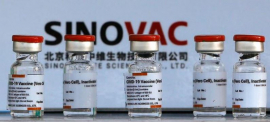
Cabinet has welcomed the validation of the Sinovac COVID-19 vaccine for emergency use by the World Health Organisation (WHO).
This, Cabinet said, will enable the South African Health Products Regulatory Authority (SAHPRA) to expeditiously consider the application of Sinovac for emergency use in South Africa.
Last week, WHO validated the Sinovac-CoronaVac COVID-19 vaccine for emergency use, giving countries, funders, procuring agencies and communities the assurance that it meets international standards for safety, efficacy and manufacturing.
The vaccine is produced by the Beijing-based pharmaceutical company, Sinovac.
Briefing media on Thursday following Cabinet’s meeting this week, Acting Minister in the Presidency Khumbudzo Ntshavheni said Cabinet welcomed progress made in the COVID-19 vaccination roll out.
The National Institute for Communicable Diseases on Wednesday said 1 524 589 people have been vaccinated in South Africa, with 1 043 278 having received their first dose of the Pfizer vaccine.
“In addition, over three million South Africans have registered on the Electronic Vaccination Data System (EVDS), which is a cause for celebration in our concerted fight against the spread of the virus,” Ntshavheni said.
She appealed to more South Africans to register, and to help the elderly to register for vaccination.
With winter setting in and the third wave having gripped four of SA’s provinces, Ntshavheni stressed the need to vaccinate .
“The partnership with the private sector in vaccination, and the overall COVID-19 programme, strengthens our nation’s efforts to ensure that lifesaving vaccines and the message of safety measures against COVID-19 reaches more people,” Ntshavheni said.
Cabinet has also reminded people to remain vigilant and adhere to restrictions under Level 2 of the national lockdown.
Cabinet hard at work to grow economy, create jobs
Thursday, June 10, 2021
Acting Minister in the Presidency Khumbudzo Ntshavheni says government continues to work hard to ensure that the economy retains jobs and creates new ones.
Addressing a post Cabinet briefing on Thursday, Ntshavheni said the executive had noted with concern the results of the Quarterly Labour Force Survey, which revealed that the country’s unemployment rate had reached 32.6% in the first three months of 2021.
During the period, the number of those employed remained almost unchanged at 15 million, with a slight decrease of 28 000.
In the first quarter of 2021, the number of unemployed persons also remained almost unchanged at 7.2 million, compared to the fourth quarter of 2020, increasing by 8 000.
The survey revealed that the number of discouraged work seekers increased by 201 000, which was a 6.9% difference between the two quarters. This was a net increase of 164 000 in the not economically active population.
“These minor changes resulted in the official unemployment rate increasing by 0.1% from 32.5% in the fourth quarter of 2020, to 32.6% in the first quarter of 2021, the highest since the start of the QLFS in 2008,” said Ntshavheni.
She said Cabinet was concerned by the youth unemployment rate of 46.3% in the quarter.
“The rate was 9.3% among university graduates, which is a worrying factor,” she said.
During this period, formal employment increased by 79 000.
While the other sectors experienced declines in employment in quarter one of 2021, the informal sector employment decreased by 19 000 or 0.8%.
Private households decreased by 70 000 (or 5.8%) and employment in agriculture decreased by 18 000 (or 2.2%).
Some industries have created jobs, while others lost jobs between quarter four of 2020 and quarter one of 2021, resulting in a net decline of 28 000
Cabinet, she said, in its meeting also noted that the economy grew by one point 1% in the first quarter of 2021, translating into an annualized growth rate of 4.6%.
This follows a revised 1.4% or annualized at 5.8% rise in the real GDP in the fourth quarter of 2021. The growth in the GDP was also on the back of the decline in employment.
Ntshavheni said Cabinet and government were committed to make sure that the growth of the country’s economy is matched by the growth or sustenance of employment in the country.
She said despite this being the third consecutive quarter of positive growth, the South African ecGDP economy is 2.7% smaller than it was in the first quarter of 2020 when the COVID-19 descended on the country.
SA records nearly 9 000 new COVID-19 cases

South Africa detected 8 881 new COVID-19 cases on Wednesday, the highest daily spike since 23 January, when the country recorded 12 271 infections.
According to the National Institute for Communicable Diseases (NICD), the majority of new infections are from Gauteng, which accounts for 58%, followed by the Western Cape with 9%.
The latest data show that the positivity rate now stands at 16.5%.
“This brings the total number of laboratory-confirmed cases to 1 712 7550 (since the outbreak),” the institution said.
To date, 11 985 750 tests have been conducted, 53 732 of which were performed in the last 24 hours.
“The increasing number of tests and cases, and the increased positivity rate are all evidence of the predicted third surge in COVID-19 cases, and not artefacts of data loading or increased laboratory turnaround times,” the NICD explained.
Hospital admissions have also risen to 1 150, the highest increase being in Gauteng, with 587 newly admitted patients, pushing the nationwide total to 7 194.
The public health institute also reported that there are 135 additional in-hospital deaths, which brings the tally to 57 347.
In addition, 1 524 589 people have been vaccinated in South Africa, with 1 043 278 having received their first dose of the Pfizer jab.
Globally, as of 9 June 2021, there have been 173 674 509 confirmed COVID-19 cases, including 3 744 408 deaths, reported to the World Health Organisation (WHO).
Meanwhile, 2 092 863 229 vaccines have been administered as of 8 June 2021.
Eskom implements stage 3 load shedding

Eskom is currently implementing stage 3 load shedding, as there have been further breakdowns at Kusile, Matla and Tutuka power stations.
“Load shedding will be increased to stage 3 from 8am until 10pm on Thursday, after which it will revert to stage 2, as previously communicated,” Eskom said.
The power utility noted a slight improvement in generation performance on Wednesday but said load shedding was being implemented because of further breakdowns at its power stations.
“This is in order to continue replenishing the emergency generation reserves, which have been depleted. These emergency reserves are required to respond to emergencies in order to maintain stability of the national grid. Thereafter, stage 2 loadshedding will be implemented,” Eskom said.
Breakdowns currently total 13 995MW of capacity, while planned maintenance is 1 273MW of capacity.
“These capacity constraints will continue for the foreseeable future and all South Africans are urged to reduce their use of electricity. Eskom apologises for the inconvenience and uncertainty caused by these interruptions in electricity supply,” Eskom said.
Public invited to comment on forthcoming local elections

The Inquiry into Ensuring Free and Fair Local Government Elections during COVID-19, has invited the public to submit their views on the forthcoming Local Government Elections, to be held on 27 October 2021.
In a statement on Thursday, the inquiry invited the public to provide their views on whether the Electoral Commission will be able to ensure that the forthcoming general local government elections are free and fair, in view of the challenges posed by the COVID-19 pandemic, and the measures promulgated by the government to curb the continued spread of the pandemic.
“[On Wednesday], the inquiry launched its new website, which can be visited at https://www.elections.org.za/freeandfair/. Members of the public will be able to make submissions about the forthcoming local government elections on the website.
“Members of the public may also email their submissions to the Inquiry at freeandfair@elections.org.za or send voice notes to the Inquiry’s whatsapp number 063 863 4623. The final day for submissions from the public is Friday, 18 June 2021,” the inquiry said.
The inquiry said it will publish all submissions received from key stakeholders on its website in order to ensure that the inquiry is transparent, and that the public has the necessary information to engage meaningfully with the inquiry.
The inquiry last week received submissions from the Electoral Commission. The Electoral Commission’s submissions are available on the inquiry’s website.
The inquiry has also invited other key stakeholders to make submissions to it, which may have a bearing on the freeness and fairness of local government elections earmarked to be held in October 2021.
“Invitations to make submissions have been issued to independent health institutions, medical experts and electoral monitoring bodies, whose submissions are due on Tuesday, 15 June 2021.
“Invitations have also been issued to the relevant Ministers and government departments, political parties and civil society organisations, all of whose submissions are due on Friday, 18 June 2021,” the inquiry said.
Minister Zulu to receive COVID-19 vaccine

Following her successful registration on the Electronic Vaccination Data System (EVDS), Social Development Minister Lindiwe Zulu will this afternoon receive her COVID-19 vaccine at the Randgate Clinic in Randfontein, Gauteng.
The Minister will be joined by the CEO of SASSA, Totsie Memela-Khambula and several other people who are at the age of 60 and above as part of Phase 2 of the Mass Vaccination rollout programme, currently underway countrywide.
Recent data from the Department of Health shows that five of the nine provinces, namely Free State, Gauteng, Mpumalanga, Northern Cape and North West have a positive-test rate of above 10%.
Minister Zulu is a member of the Inter-Ministerial Committee (IMC) on Vaccines which was established to promote mass vaccination and reassure members of the public about the safety of vaccines.
With the threat of the third wave on the horizon, Minister Zulu’s vaccination drive seeks to promote the public-health benefits of COVID-19 vaccines and to alleviate vaccine hesitancy.
Minister Zulu reiterated her call for all South Africans to continue to practice compliance with the prescribed non-pharmaceutical interventions: social distancing, wearing of mask at all times and washing of hands as prescribed.
“Getting vaccinated is an important part of the solution against the pandemic. We appeal to all South Africans across the country to strictly comply with all regulations and protocols,” said Minister Zulu.
UIF intervenes in Qebherha taxi industry protests over TERS benefits
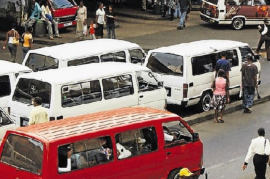
The Department of Employment and Labour has begun an intervention process into the stalemate between the taxi industry and other groupings in Qebherha over COVID-19 Temporary Employer/Employee Relief Scheme (TERS).
In a statement, the department said it had on Monday deployed a team of senior managers to meet the leadership of various taxi associations and taxi drivers, Eastern Cape South African National Taxi Council and the Provincial Department of Transport. The meeting was chaired by Nelson Mandela Bay executive mayor Nqaba Bongo.
This intervention came two weeks after taxi drivers in the city embarked on a strike complaining about the irregular disbursement TERS benefits.
“In the meeting, the Unemployment Insurance Fund (UIF) outlined the COVID-19 TERS application and payment process, and indicated that a payment of R19.7 million was paid to Eastern Cape Transport Tertiary Co-operative, which submitted the TERS application on behalf of various companies including bus companies and taxi associations,” the department said in the statement.
In preparation for the meeting, taxi associations were requested to provide ID copies of all taxi drivers to enable UIF to check status of claims submitted on their behalf.
The Fund confirmed that about 5 963 copies were received and 5 757 claims were paid to the tune of R25 million.
The department said some identity numbers from individual taxi drivers were tested against the COVID-19 TERS online system during the meeting, and it was clear that for some taxi drivers COVID-19 TERS claims were never made because they could not be found in the system.
The executive mayor stressed the importance of individual drivers to check their status on the TERS online portal themselves.
“We appreciate that the Department of Employment and Labour has provided objective tools that will enable taxi drivers to check for themselves if an application was made for them, and secondly they can also be able to see how much they have been paid,” he said.
He requested that taxi associations assist drivers by making the TERS payments information available and encouraged those with grievances to first consult with the taxi associations, and if dissatisfied, take the matters to the department.
“The UIF indicated that a team of auditing firms was appointed to follow all payments done on all applications received since the inception of TERS, and where fraud is suspected payments are immediately blocked and initial investigation is carried out by the Risk and Fraud Prevention Unit of the UIF.
“In cases where fraud is confirmed, the case is referred to law enforcement agencies for further investigation and possible prosecution,” said the department.
A follow up meeting will be scheduled where all stakeholders will be invited to apprise the leadership of taxi drivers and associations about further details on TERS payments.