
SA logs 5 074 new COVID-19 cases
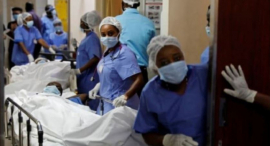
South Africa has recorded over 5 000 new COVID-19 cases for five days in a row, bringing the total number of infections to 1 696 564.
This is after South Africa detected 5 074 new infections on Sunday.
Meanwhile, according to Health Minister, Dr Zweli Mkhize, the death toll has now increased to 56 974 after 45 people succumbed to COVID-19.
Of the latest fatalities, 16 are from Free State, 15 from the Northern Cape, six from the Western Cape, one from KwaZulu-Natal, while the rest of the province recorded zero deaths.
“We convey our condolences to the loved ones of the departed and thank the healthcare workers who treated the deceased patients,” said the Minister.
In addition, 1 578 033 patients have recovered, while the country currently has 61 557 active cases.
“The cumulative total of tests conducted to date is 11 876 594 with 35 821 new tests recorded since the last report.”
According to Mkhize, 1 343 433 people have been vaccinated in South Africa.
Globally, as of 6 June 2021, there have been 172 630 637 confirmed cases of COVID-19, including 3 718 683 deaths, reported to the World Health Organisation.
National Assembly approves Appropriation Bill
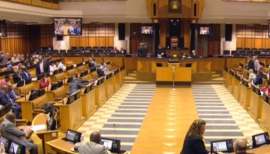
The National Assembly adopted the Special Appropriation Bill and Appropriation Bill during its hybrid plenary sitting on Friday.
The Appropriation Bill officially allocates money from the National Revenue Fund (NRF) to provide for requirements of the state for the 2021/22 financial year, as required by Section 213 of the Constitution and section 26 of the Public Finance Management Act (PFMA).
The national budget of R1.3 trillion for the 2021/22 financial year was tabled on 24 February 2021 by the Finance Minister Tito Mboweni together with the Bill and referred to the Standing Committee on Appropriation for consideration.
Parliamentary spokesperson, Moloto Mothapo, said the committee considered the bill and noted that the 2021/22 budget is centred on government’s medium-term policy priorities of promoting economic recovery and returning public finances to a sustainable path.
It focuses on narrowing the budget deficit while stabilising the debt-to-Gross Domestic Product (GDP) ratio by moderating spending and reducing the public sector wage bill.
“The committee further noted that while the budget shows continued exercise of restraint on spending growth over the medium term, nearly R3 trillion or 56.6% of public funds are allocated to learning and culture, health and social development. The budget also funds a free COVID-19 vaccination programme,” Mothapo explained.
The 2021/22 budget proposes an adjustment to government spending plans as follows:
- Non‐interest spending is reduced by R27.675 billion in 2021/22, R87.259 billion in 2022/23 and R149.978 billion in 2023/24 financial years. The largest share of these reductions falls on the compensation of employees;
- A proposed additional R11 billion to the spending framework in 2021/22 for the public employment initiatives. This is part of government efforts to promote economic recovery;
- An extension of the unemployment insurance benefit through the Unemployment Insurance Fund, increasing the employer/employee benefit to R73.6 billion;
- Recapitalisation of the Land Bank of R5 billion in 2021/22, R2 billion in 2022/23 and 2023/24 to be funded through reprioritisation;
- A total of R18.3 billion is added over the MTEF to manage further waves of COVID-19; and
- A total of R11 billion over the MTEF is added for payments to the New Development Bank and public entities.
Special Appropriation Bill adopted
The National Assembly also, at the same sitting, adopted the Special Appropriation Bill [B5-2021).
Section 16 (1) of the Public Finance Management Act (PFMA) authorises the Finance Minister to request Parliament to appropriate funds from the National Revenue to cover the expenditure of an exceptional nature which is currently not provided for and which cannot, without serious prejudice to the public interest, be postponed to a future parliamentary appropriation of funds.
Mothapo said the COVID-19 pandemic and the worsening economic conditions confronting the country made this Special Appropriation Bill necessary.
“The Bill proposes an additional R1.250 billion to the Department of Health for the procurement of COVID-19 vaccines, and implement a related COVID-19 vaccine research project; and R2.826 billion to the Department of Social Development to fund the extension of the Special COVID-19 Social Relief of Distress Grant.
“In addition, during the 2020 Medium Term Budget Policy Statement (MTBPS), Parliament approved a total of R10.5 billion through the Second Adjustments Appropriation Bill (B25 – 2020) to allow South African Airways (SAA) to implement its business rescue plan.
“The Finance Minister may, on request, approve any portion of the funds allocated to SAA or its subsidiary to use in another subsidiary of SAA. The Bill proposes the reallocation of R2.7 billion in 2021/22 appropriated funds from SAA to fund the financial assets of its subsidiaries,” Mothapo explained.
Following last week’s debate on the Bill, Mothapo said the National Assembly agreed to the Standing Committee on Appropriations (SCoA) reports, which recommended that the House adopts the Bills with amendments.
“The Appropriation Bill will now be sent to the NCOP (National Council of Provinces) for consideration and concurrence scheduled for 18 June 2021,” Mothapo said.
North West raises concern over rising COVID-19 cases
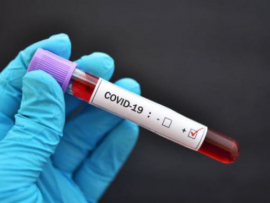
North West Health MEC, Madoda Sambatha, has raised concern over the rising daily COVID-19 positive cases across the province.
According to the provincial department, the province has been experiencing a peak in new infections in the past seven days with an average of 300 cases reported daily.
“The North West province is currently experiencing a serious spike in Coronavirus cases since last week, an average of 300 cases per day is a huge sign of concern for our province,” said MEC Sambatha.
“In the last 24 hours we recorded a total of 426 new positive cases and this gives us 6 810 active cases,” he added.
Since the beginning of June, the province has been logging over 400 daily cases, while Bojanala and Dr Kenneth Kaunda are the hardest-hit districts by the recent resurgence.
“These recent developments do not augur well for the provincial health system,” the department said.
Meanwhile, Sambatha said the Klerksdorp/Tshepong Hospital sounded an alarm on Sunday with an increasing number of hospitalisations for Coronavirus cases.
“This raises a grave concern for the provincial health system as it points out to a potential crisis if our communities do not take preventative measures to curb the spread of infections, we, therefore, urge our communities to assist us to protect our fragile system by adhering to preventative measures,” he said.
The province has since warned its citizens of the looming third wave, which accounts for the rise in new daily cases.
“It would seem our people have let their guard down. People are beginning to live as if we are back to normality. We see this in how shopping complexes, taxi ranks, and domestic activities like funerals get overcrowded. This is likely to add to more increase in the number of new cases,” cautioned Sambatha.
Over and above avoiding congregate setting, the MEC is calling on the public to avoid unnecessary travel, always wear masks in public, social distance and regularly wash hands or sanitise.
The North West has recorded 78 836 positive cases so far, while 70 077 people have since recuperated, which translates to a recovery rate of 88.9%.
“Unfortunately the province has recorded 1 949 COVID-19 related deaths to date.”
Meanwhile, the province believes it is making significant strides in the fight against the Coronavirus with 70 209 vaccines administered to date.
“However, the communities are urged to adhere to preventative measures of social distancing, sanitise, wearing of masks, avoid crowded places and unnecessary travel.”
Former Constable nabbed for allegedly murdering his girlfriend
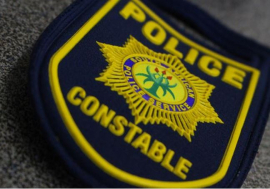
A former police Constable is expected to appear before the Standerton Magistrate’s Court today on allegations that he killed his girlfriend.
The 27-year-old suspect is alleged to have stabbed his girlfriend several times at his place of residence at Sakhile near Standerton. He then took the victim’s vehicle and handed himself over to police.
He led police, together with the medical team, to his house and upon their arrival the lifeless body of the woman was found in a pool of blood with visible stab wounds.
Police opened a murder case and immediately arrested the suspect.
A sharp object was confiscated at the scene which will form part of the investigation.
The Acting Provincial Commissioner of the SAPS in Mpumalanga, Major General Thulani Phahla, has strongly condemned the incident and called on men to stop gender-based-violence.
“Women should be protected by men and not suffer senseless violence. We believe that justice will be served for this victim and her family,” General Phahla said.
Government invests R18 billion in black industrialists
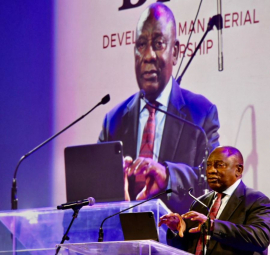
Over the past five years, nearly 800 black industrialists have been funded to the value of R18 billion, said President Cyril Ramaphosa.
“Black industrialists across the value chain, from hospitals to medical devices, have enjoyed support from development finance institutions such as the Industrial Development Corporation. Last week, we received firm commitments from both Germany and France to provide support for this venture, including financing technical expertise, skills training and know-how,” President Ramaphosa said.
Addressing the 45th Black Management Forum (BMF) corporate update dinner on Friday, the President added that nearly 120,000 jobs have been created or saved.
He said that one of the most important initiatives to support the growth and sustainability of black business is the Black Industrialists Programme.
Businesses that received support include those in food production, agro-processing, manufacturing IT and technology, among others.
The total approved funding since the inception of the programme is around R32 billion, the President said.
“Another key programme of government is the Equity Equivalent Programme. It was created for multinational companies that cannot sell equity to black South Africans and have never sold equity outside their country of origin.
“In return for BEE (Black Economic Empowerment) ownership points, these multinationals need to invest in skills development programmes, support for enterprise and supplier development, or research and development.”
Over the last year, 87 black industrialists have been support through the Equity Equivalent Programme, including 39 owned by women.
“Last year, we announced that we are working towards ensuring that 40% of government procurement will be set aside for women-owned businesses. Training programmes are currently being conducted around the country to prepare women-owned businesses for participation in this venture,” President Ramaphosa said.
Integrating SMMEs
The President added that government’s vision is to realise a transformed and restructured economy that is a “catalyst for economic growth, employment creation and shared prosperity.”
The President said integrating small and medium enterprises (SMMEs) into value chains is key to achieving this vision. This as it will provide for a strategic shift of the South African economy from the one concentrated in few big industry players into broader participation.
“We know that smaller producers and SMMEs often struggle to gain market access because they are not able to compete as a result of lack of knowledge, information, skills or technology to meet market requirements.
“That is why support for SMMEs is a cornerstone of our economic transformation policies. Confronting the spatial inequities that limit opportunity for black people is an important part of our work. We have sought to revive the township and rural economy through supporting local ecosystems for entrepreneurship,” President Ramaphosa said.
Economic recovery presents new opportunities for black business
The President said that government is determined that the Economic Reconstruction and Recovery Plan, launched in October 2020 in response to the COVID-19 pandemic, should present new opportunities for black business.
“We want to position black industrialists to drive [the] economic recovery and build industries of the future. Our massive infrastructure programme creates opportunities for black enterprises through localisation and community procurement.
“There are opportunities in the green economy, including in the hydrogen sector. We have seen for example during COVID-19, pilot programmes for fuel cell electricity generation at field hospitals with black-led companies.
“Last year we gazetted regulations to incorporate the AfCFTA (African Continental Free Trade Area) into local laws, paving the way for South African businesses to benefit from the agreement. We have also gazetted a list of the products that can be exported and imported with no customs duties within the next five years,” President Ramaphosa said.
Corrupt traffic police officers lose bid to keep their jobs
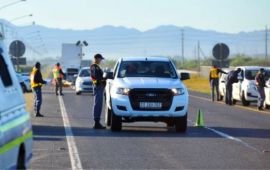
Three police officers who had been arrested and criminally charged for corruption have lost an arbitration between themselves and the South African Police Services (SAPS) to keep their jobs.
“They were arrested by the Road Traffic Management Corporations’ (RTMC) National Traffic Anti-corruption Unit in 2018 and 2019 during undercover operations on the N4 in Mpumalanga targeted at corrupt police and traffic officers who solicit bribes from motorists,” the RTMC said on Monday.
The undercover agents used marked notes, which were handed to the officers on duty.
“The officers were recorded on video and audio during all three incidents. They were subsequently arrested and charged with misconduct. They were found to be in contravention of Regulation 5(4)(f)(Corruption) of the SAPS Disciplinary Code and dismissed on 27 August 2019,” RTMC said.
The officers applied to the Safety and Security Sectoral Bargaining Council for arbitration claiming they were unfairly dismissed. However, they lost as the recorded evidence clearly indicated they had acted unlawfully despite their denial of allegations against them.
They were also criminally charged according to the Prevention and Combating of Corrupt Activities Act no 12 of 2004.
One of the officers has been found guilty and sentenced to four years imprisonment suspended for five years. The other two are awaiting trial.
“The outcomes of these trials provides further evidence that the work of our anti-corruption team is bearing fruit. We call on members of the public to assist by reporting suspicions of traffic related corruption to ntacu@rtmc.co.za or on WhatsApp line 0832937989,” the RTMC said.
BBBEE Strategy review on the cards
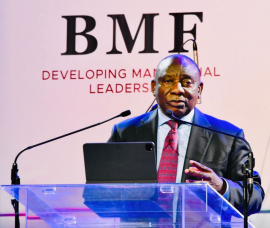
President Cyril Ramaphosa says government will over the next few years review the country’s Broad-based Black Economic Empowerment (BBBEE) Strategy and the Act to put economic transformation on a new trajectory.
Addressing the 45th Black Management Forum (BMF) corporate update dinner on Friday, President Ramaphosa said while there has been progress, the country still faces a number of challenges in the implementation of BBBEE.
“We need to address the problem of fronting, which is a gross betrayal of our collective responsibility to transform our economy.”
The President said government will continue to defend empowerment programmes that are both “consistent with and mandated by the Constitution – against those who would rather retain the status quo”.
He said there must be demonstrable linkages between the policies and tangible economic transformation.
“This will only be possible if we pull together as society, if we drive ownership deals that promote inclusive participation, and if we continue to invest in skills among black people, and to contribute meaningfully to an organisation’s operations.”
Transformative policies undermined by corrupt individuals
The President said currently, advanced policies that were put in place “for the sake of transformation” are being called into question.
“There are people who claim – falsely and without evidence – that preferential procurement policies, employment equity and BEE are responsible for acts of corruption, thieving, bribery and looting that we have seen.
“We cannot allow our transformative policies to be undermined by the actions of corrupt individuals. They cannot pretend that their actions are justified by transformation.
“Those responsible for corruption must face the full might of the law, whether local black business people or large multinationals, whether government officials or their co-conspirators in the private sector. That is why we must welcome the work of the Special Investigating Unit (SIU), the Asset Forfeiture Unit, the Hawks, the NPA’s Investigative Directorate and other agencies.”
President Ramaphosa noted that progress is being made with investigations finalised, cases referred for prosecution, assets seized, bank accounts frozen and referrals for disciplinary action.
Restoring public faith
The President vowed that government will not relent until those found guilty are behind bars, and all stolen money is recovered.
He said the fight against corruption is also about restoring public faith in the transformative policies of successive administrations.
The President said the BMF must continue to play its role in public, economic and political life, and continue to have a positive impact on society.
“Undoubtedly, there are difficult days ahead. We are in the midst of a global pandemic and are trying to revive our country’s economic fortunes amidst the greatest of difficulties. But we can, and must prevail.”
The President called on all society to mobilise behind the vision of a better life for all, and in the process “unlock the doors of economic prosperity for all.”
“I wish the BMF well on this anniversary. You have done yourselves and your country proud,” President Ramaphosa said.
To mark the BMF’s 45th anniversary, the corporate update dinner was held under the theme “Celebrating 45 years of driving ethical leadership in South Africa”.
Rallying for TRIPS waiver for COVID-19 vaccines
The G7 Leaders Summit will provide an opportunity for South Africa to seek broader support for the temporary waiver of the Trade-Related Aspects of Intellectual Property (TRIPS) agreement at the World Trade Organization (WTO) to ensure equitable access to COVID-19 vaccines.
This is according to President Cyril Ramaphosa who will be travelling to the United Kingdom to attend the G7 Leaders Summit later this week. South Africa has been invited as a guest country, together with South Korea, Australia and India.
“The G7 Leaders Summit is an opportunity to seek broader support for the struggle we are waging alongside India and more than 100 other countries to achieve a temporary waiver of the Trade-Related Aspects of Intellectual Property agreement at the WTO to ensure equitable access to COVID-19 vaccines. This will enable countries to manufacture their own vaccines and pave the way for the development of a local pharmaceutical manufacturing industry in our own country and on the continent,” the President said on Monday in his newsletter.
The President said he will share a message of hope about the prospects of the country’s recovery to the delegates at summit.
“I will be presenting the clear signals that our country is emerging from the devastation wrought by the pandemic. These signals include a strengthening currency, a record trade surplus, and growth in mining, financial services and manufacturing,” President Ramaphosa said.
Delegates will be informed about the life changing opportunities being provided through the Presidential Employment Stimulus, which has directly benefited nearly 700 000 people since it was launched eight months ago.
“We can reflect that there is progress towards greater policy and regulatory certainty in important economic sectors such as energy and telecommunications. Our delegation to the G7 Summit will be able to talk about the progress we are making in overcoming the pandemic and the measures we have taken towards our national recovery that are slowly but steadily yielding results,” the President said.
The summit is expected to discuss how to promote future prosperity through free and fair trade, championing shared values and tackling climate change, but the global recovery from COVID-19 is likely to dominate the agenda.
The President acknowledged that citizens may be frustrated by the slow pace of change, and feel that the country’s problems appear to be intractable.
“Our high rate of unemployment, for example, has not improved since the global financial crisis more than a decade ago and was made much worse by the pandemic. But sometimes we are so absorbed by our shortcomings that we often fail to acknowledge what we are doing right and where things are improving,” the President said.
He noted the progress that the country is making in resolving challenges, from corruption to energy shortages to the obstacles that discourage investment.
“The pace of reform is picking up. We do not take the patience and resilience of the South African people for granted. We acknowledge our shortcomings as a government and are working to remedy them. Optimism is the foundation of progress and hope is the companion of development. Cynical though some among us may be, let the progress we are making in overcoming the immediate crisis motivate us to do even better,” the President said.
President Ramaphosa said the country’s democracy was founded in hope where there seemingly was none.
“We emerged from a desperate situation that threatened to engulf us and built a new nation. Over the last year and a half, we rallied together to fight the pandemic, united in the belief that better days would come.
“Throughout the course of our history we have had setbacks and false starts. But our resilient nature allowed us to weather many storms. It is this drive and determination that must continue to propel us forward as our country recovers socially, politically and economically.
“Let us look ahead and move forward. Let us nurture the green shoots of progress. Let us not only hope for better days, but let us work even harder to achieve them,” the President said.
56 complaints lodged against soldiers last year

The Office of the Military Ombud says it has finalised 70 percent of the cases received from members of the public against soldiers on duty during the 2020/21 financial year.
The South African Military Ombud Office briefed the Portfolio Committee on Defence and Military Veterans on cases lodged by the members of the public regarding the official conduct of the members of the South African National Defence Force (SANDF).
The office has finalised 70 percent of the 56 complaints lodged by members of the public regarding the conduct of the SANDF members deployed to enforce lockdown regulations due to COVID-19.
This is the highest number of cases brought by the public against soldiers in a single year since the establishment of the Military Ombud Office in 2012.
The complaints range from allegations of assault, damage to property, use of excessive force and general heavy-handedness by soldiers when enforcing the lockdown regulations.
The South African Military Ombud, Lieutenant General (Ret) Vusumuzi Masondo informed the Portfolio Committee that some of the challenges encountered by his office during the investigations of the complaints were the travel restrictions and social distancing protocols.
“We were only able to commence with investigations in the third quarter of the financial year. The turnaround times for investigations was therefore negatively impacted,” Masondo said.
Masondo said they have dismissed few complaints due to lack of evidence.
“Members of the public must provide all the necessary details to assist with the investigations,” Masondo said.
Those who lodge complaints should try to get the name of the soldier concerned from their name badge, car registration and provide a recording of the incident if available to assist with the investigations.
Amongst the cases dealt with by the Office was a matter reported by a tavern owner who alleged that on one particular afternoon, members of the South African Police Service (SAPS) and SANDF visited his premises, stole and drank his alcohol, threw empty cans at him and thereafter assaulted him.
They allegedly stole cash amounting to R25 000 from a cash register and alcohol worth thousands of rands which they loaded in their police vans.
He was unable to get the names of the soldiers, however, the incident was captured on video and the identity of the soldiers were confirmed by the video footage.
The investigation is finalised with the preliminary report issued to the interested parties. The complainant’s name or identity is upheld by the Office.
To download a complaint form, members of the public are advised to visit www.milombud.org. Once completed, forward it via email to intake@milombud.org or fax 086 523 2296 respectively.
Police swoop in on wanted PMB suspects

Police Minister Bheki Cele, has commended the South African Police Service (SAPS) for a recent operation that led to the arrest of wanted dangerous suspects in Pietermaritzburg on Sunday.
In a statement, the Ministry of Police said the suspects were arrests by police in KwaZulu-Natal. This as the police tighten the noose on criminals terrorising communities in Pietermaritzburg.
“Acting on information of the whereabouts of the gang, the SAPS team traced the suspects to a lodge situated on Woodhouse Road not far from where seven suspects were fatally wounded last week,” said the Ministry in a statement.
Four suspects aged between 18 and 30 were arrested, each found in possession of illegal pistols with rounds of ammunition.
The Ministry said the suspects are linked to a string of murder cases that were committed in the Pietermaritzburg, Imbali, Richmond, and Bergville areas as well as cases of robbery, rape and assault with the purpose to inflict grievous bodily harm.
The arrests come five days after seven suspects were shot and killed during a shootout with police while hiding in a suburban house in the city.
Cele in the statement said such breakthroughs are encouraging and restore hope to communities that have felt the wrath of the ruthless criminals.
“It is clear that if these intelligence driven operations are consistently executed and intensified, they will bring about stability to this area that has been terrorised by gangs and ultimately bring about peace to people living in the province. We are encouraged as the Police Ministry that these individuals involved in criminal acts are being hunted down and brought to book,” Cele concluded.