
Task team making progress with military veterans
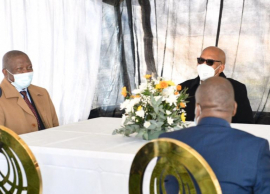
The Presidential Task Team on Military Veterans, chaired by Deputy President David Mabuza, has noted progress with regards to the overall support to military veterans.
The Deputy President in his capacity as the Chairperson of Task Team, over the weekend, visited the Limpopo province to interact with members of the Military Veterans Association.
This was with the aim of assessing progress achieved by government in addressing the challenges faced by military veterans.
The meeting took place at the Polokwane Rugby Stadium, Capricorn District in the Limpopo province.
Deputy President Mabuza was supported by the Acting Minister in the Presidency, Khumbudzo Ntshavheni, the Premier of the Limpopo Province, Stanley Mathabatha, Members of the Executive Council together with senior government officials.
The meeting received progress on the work which is being done by the Task Team’s Technical Committee Work Streams and the Limpopo Provincial Government in addressing various challenges faced by military veterans.
The work streams focused on issues including:
• Legislative review
• Organizational redesign
• Socio economic support
• Database verification, cleansing and enhancement
• Heritage and memorialisation
• Pension and benefits
• Communication
In this regard, the Task Team noted progress with regards to the establishment of the Limpopo Provincial Government Inter-Ministerial Task Team tasked with the role to oversee the overall support to military veterans.
The Provincial IMC is constituted by the MECs for Treasury, Education, CoGTA, Health and Limpopo Economic Development, Environment and Tourism.
“The establishment of Limpopo Provincial IMC on Military Veterans is a step in the right direction towards ensuring that the challenges facing military veterans are addressed in a well-coordinated and integrated manner,” said Deputy President Mabuza.
With regards to services rendered to military veterans, the Task Team noted encouraging progress made by the provincial government in availing socio-economic opportunities to military veterans, including the completion of 122 units towards addressing their human settlement needs.
The Task Team further noted the extension of educational and skills development support to Military Veterans and their beneficiaries.
Deputy President Mabuza emphasised the active participation and the importance of unity amongst the Military Veterans Associations.
“Military Veterans must organise themselves and be united. It is only when they are united that they will be able to address pressing issues of interest. Military veterans should further participate in the processes towards amendment of the Military Veterans Act,” Deputy President Mabuza told the meeting.
The meeting agreed in principle that a Memorandum of Understanding between the Department of Military Veterans, Limpopo Provincial Administration, Municipalities and other state entities, should be fast-tracked to ensure there is adequate institutionalisation of support to military veterans.
The Presidential Task Team on Military Veterans will continue to receive reports on progress made by the different work streams.
Furthermore, the Deputy President highlighted the importance of accelerating the process of verification, database cleansing and enhancement with the aim of ensuring that clear and comprehensive rules and policies, are applied to ensure that bona fide military veterans are registered on the database of the Department of Military Veterans.
Limpopo Premier Stanley Mathabatha further committed to extending support to Military Veterans.
“We wish to appreciate the work done by the Presidential Task Team in ensuring proper coordination of all efforts geared towards addressing the challenges of military veterans. Furthermore, we welcome the opportunity for open interaction between the Task Team and Military Veterans,” said Premier Mathabatha.
Protecting ecosystems benefits humanity
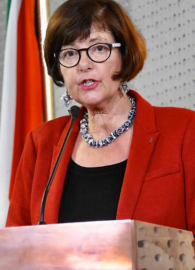
This decade will see concerted efforts to protect and revive ecosystems around the world for the benefit of humankind and nature, says Minister of Forestry, Fisheries and the Environment, Barbara Creecy.
Addressing the 2021 World Environment Day at the Pretoria National Botanical Gardens on Saturday, the Minister said the restoration of ecosystems means making efforts to recover degraded or destroyed ecosystems, including conserving the remaining ecosystems for the continued delivery of valuable services to the people.
World Environment Day was celebrated under the theme of ‘Ecosystems Restoration’.
South Africa marked World Environment Day in partnership with the United Nations Environment Programme (UNEP), as well as the 25-year cooperation of the Department of Forestry, Fisheries and the Environment and the United Nations Development Programme (UNDP).
Government has invested more than R26 billion since the inception of the Working for Water programme in 1995 to restore and maintain natural landscapes.
“In the process, more than 3.6 million hectares of land were cleared of invasive alien plants and given an average of around three follow-up treatments.
“For the 2021/22 financial year, 66 432 work opportunities will be created, which will benefit 60% women, 55% youth and 2% people with disabilities,” the Department of Forestry, Fisheries and the Environment said.
Over the past 25 years, the department and the United UNDP have worked on several projects collaboratively in areas of biodiversity, climate change and international waters, land degradation, particularly in collaboration with the Global Environmental Facility (the GEF).
“The Global Environment Facility 6th funding cycle has further awarded the country an additional USD6.2 million to implement bioprospecting/biotrade projects, which span across the Eastern Cape, Western Cape, Northern Cape and Mpumalanga provinces.
“The project is currently in its implementation phase, and will enhance local and sustainable beneficiation of the African ginger, Aloe ferox, Rooibos, Honeybush, and Pelagonium sidoides value chains in the above mentioned provinces,” the department said.
This particular programme is co-financed by the infrastructure development leg of the department, which would extend this programme’s impact to Limpopo and KwaZulu-Natal provinces.
“The department has led South Africa to having the most comprehensive GEF portfolio in Africa, and among the top globally.
“It is through such collaboration and solidarity that developing countries can adequately equip themselves to combat climate change,” the department said.
Call for action in murder of elderly KZN woman
KwaZulu-Natal Social Development MEC, Nonhlanhla Khoza, has called on law enforcement agencies to work around the clock to ensure that criminals involved in the murder of a senior citizen are brought to book.
Henrietta Nzimande, 78, was found murdered at her home in KwaDambuza, Pietermaritzburg last week.
Nzimande’s mutilated body was discovered by her daughter. It is believed that Nzimande, who lived alone, died from strangulation and some of her body parts were missing.
Condemning Nzimande’s murder, Khoza said the department is highly disappointed that senior citizens continue to be murdered like this.
“We want to ensure that perpetrators are found and are made to pay for their sins,” Khoza said.
It is also believed that Nzimande was murdered after being accused of witchcraft.
“These types of crimes in our province show that we have a lot of people who have lost their moral compass. There are vicious criminals that continue to murder our senior citizens and rob them of their belongings, including old age grants.
“Our people need to learn that if an old person resides alone it doesn’t mean that he or she is involved in witchcraft. We have many of our senior citizens who prefer to be alone in their homes or live by themselves because their relatives are working far away,” the MEC said.
Do not to turn a blind eye
The MEC appealed to the relatives and communities in general not to turn a blind eye if they see an old person staying alone, but to contact social workers in order to take care of the elderly.
“Leaving an old person alone at home makes them very vulnerable; hence we always encourage our communities to ensure that they inform us of such cases, in order to take them to safe places where they will receive 24-hour care.
“We have a lot of old age homes and they are made to protect our elderly people. We urge our communities to make use of these facilities in order to save the lives of our parents,” Khoza said.
She added that the department has full confidence in the police, and “we believe that the net will soon close in on the killers”.
The MEC sent her heartfelt condolences to Nzimande’s family and her neighbours.
A team of social workers has been dispatched to meet with the family to provide psychosocial support.
Concern at high unemployment figures
Employment and Labour Minister Thulas Nxesi has expressed concern at the country’s unemployment figures.
Statistics South Africa, in its Quarterly Labour Force Survey this week, revealed that unemployment in South Africa reached 32.6% in the first three months of the year.
“The progress is still very slow with [the] unemployment rate increasing by 0.1 percentage point, followed by a decrease in employment levels by 28 000 individuals between quarter four of 2020 and quarter one of 2021,” he said in a statement on Thursday.
In other words, only 8 000 additional individuals reported to be unemployed between quarter four of 2020 and quarter one 2021.
Comparison on year-on-year change reflects an additional 172 000 individuals that were added in the basket of unemployed people in the country since March 2020. These main results are still indicating that the search for a better life is ongoing in particular the cycle of high inequality, high unemployment and poverty is visible.
This was despite some industries having made some inroads. Nxesi said the overall picture is still a cause for concern.
Major losses were recorded in industries classified as non-essentials. These included construction and trade industries with 87 000 and 84 000 jobs losses, respectively.
The Department of Employment and Labour is however confident that the employment trajectory will relatively surpass the current COVID-19 challenge. This is based on a number of factors, among others, the COVID-19 vaccine programme and the Presidential Employment Stimulus which aims to create new job opportunities,” said the department.
Nxesi said the department was encouraged by a Commission for Conciliation, Mediation and Arbitration (CCMA) intervention that saved more 55% of jobs by April 2021.
“Using the results of S189 form, 2 213 out of 4 037 of employees who were potentially going to be retrenched were retained into their jobs.
“Furthermore, the payments made through [the] Unemployment Insurance Fund [UIF] related to COVID-19 TERS was one of the key strategic labour market intervention in line of poverty relief, for the most vulnerable sectors in the country and had it not been for this intervention, the picture would be worse,” said the Minister.
He added that the strength of the recovery remains on the implementation of the Economic Recovery Plan (ERP), which calls on all social partners to work together and preserve the country economic development prospects.
Youth unemployment
“One of the most concerning areas was in the youth category which remains the most vulnerable in the South African labour market.
“For instance, 32.4% of the 10.2 million youth (15-24 years) reported not to be in employment, education or training (NEET) in quarter one of 2021. It constituted 29.6% of NEET in December 2020. Nevertheless, the NEET rate for females was higher than that of their male counterparts in both quarters.”
The department said a yearly comparison showed that the percentage of young persons aged 15–34 years who were not in employment, education or training (NEET) increased by 1.9 % points from 41.7% in quarter one of 2020 to 43.6% (out of 20.4 million) in quarter one of 2021.
“This being Youth Month calls upon us to put in place extensive plans to help the youth out of this quagmire.
“Through our labour activations program funded by the UIF, we are seeing a lot of young people take up entrepreneurial work and thriving. This is where employment happens and as the department, we are supporting these enterprises,” he said.
Jobs centres
“We are also in line to launch a number of Jobs Centres which are targeted mostly to the youth in our country. And through the Public Employment Services, we have been involved in partnerships with a number of industries whereby we source job opportunities.”
He said this was already working well in the Cape Winelands District.
“We have seen off takes in Limpopo and Mpumalanga. We are also encouraged by the interest that more young people are showing in the Employment Services of South Africa. We encourage them to register – in fact we encourage any work seeker to register on the system which has been showing notable success in placing work seekers,” said Nxesi.
AwezaMed app bridges the language divide
Higher Education, Science and Innovation Minister, Dr Blade Nzimande, has welcomed the development of an innovative language app that has the potential to save lives.
The local mobile application, AwezaMed, is aimed at breaking down language barriers to improve safety protocols communication and other COVID-19 related information.
According to the department, language remains a serious challenge in conveying this life-saving information during the deadly pandemic, especially in a country like South Africa with 11 official languages.
It is for this reason that the department believes that multilingualism is vital to ensure healthcare professionals and patients understand each other and that the voice-enabled AwezaMed app will help to make this possible.
“In the context of healthcare, where it is common that the healthcare provider and patient often do not share a common language, this result in serious challenges such as a poorer patient experience, incorrect diagnoses, increased stress levels for the patient and misunderstandings about post-consultation self-care instructions,” said Nzimande.
AwezaMed was developed by the department’s entity, the Council for Scientific and Industrial Research. The app features localised technology, such as speech recognition, text-to-speech and machine translation.
“The app enables healthcare providers to access a phrase in English, translate it into any South African official language, and play the phrase in the selected language,” said Nzimande, adding that the content of the application was developed in collaboration with health experts.
The app, which currently works on any Android smartphone, also has a database of over 1 800 questions, reassurances, explanations, patient responses and has key vocabulary curated by a team of medical professionals.
In addition, automatic speech recognition allows for the recognition and transcription of speech in any of the 11 official languages, while machine translation takes input text in the source language and translates it into the target language.
“The text-to-speech feature takes the translated text and synthesises it in the target language.”
According to the department, the language technology driving the app was developed using language resources hosted and distributed by the South African Centre for Digital Language Resources (SADiLaR).
The department said it launched SADiLaR as part of the South African Research Infrastructure Roadmap, to support the creation, management and distribution of digital language resources and relevant software.
The first of its kind in Africa, the research infrastructure platform responds to the constitutional imperative to recognise all South African languages as key resources.
The Minister believes that the application holds potential benefits for the public health sector beyond COVID-19, as it will go a long way towards improving trust between healthcare providers and patients, allowing for more diagnoses that are accurate and save lives.
AwezaMed works on any Android smartphone and can be accessed free on the Google Play Store at http://play.google.com/store/apps/details?id=za.co.aweza.covid19.
NSFAS funding not affected by course changes
Higher Education, Science and Innovation Minister, Dr Blade Nzimande, has reiterated that beneficiaries of the National Student Financial Aid Scheme (NSFAS) will not be affected when they change courses nor their institution of learning.
In a statement on Wednesday, Nzimande said in terms of the criteria, continued funding for NSFAS beneficiaries is based on academic eligibility testing which includes the N+ rule.
N is the minimum qualification completion time, also known as regulation time, specified by the institution for a programme of study funded by NSFAS.
N+1 applies to first-time entering students first registered after December 2017, whilst N+2 applies to students who first registered before January 2018.
“If a student is transferred from any other public university, regardless of whether they were funded at that university, the number of years already registered for the qualification will be counted as part of the minimum qualification completion time,” Nzimande said.
He emphasised that NSFAS does not stop funding because students change institutions.
“Students contravene the rules when they no longer meet academic eligibility requirements, exceed their N+ time, and move between institutions without declaring their movement,” Nzimande said.
SA records 5 782 new COVID-19 infections, as cases surge in Gauteng
South Africa’s COVID-19 infections continue to increase, with Gauteng experiencing a greater surge than the rest of the country.
Health Minister, Dr Zweli Mkhize, has since urged Gauteng citizens to adhere to the non-pharmaceutical interventions, as the country recorded 5 782 new infections.
The department said on Wednesday that the country’s positivity rate now stands at 12.7%.
“We will be monitoring this increase in positivity rate to see if it sustains and meanwhile urge all citizens to remain vigilant and adhere to non-pharmaceutical interventions, even if vaccinated,” the Minister pleaded.
The additional cases have taken the number of detected infections to 1 675 013.
Meanwhile, the country recorded 110 more COVID-19 deaths, which pushes the tally to 56 711.
However, the slightly high daily death toll is due to the mortality audits, which dates back to November 2020.
Of these fatalities, 54 are from Gauteng, 16 from the North West, 11 from Limpopo and Free State, seven from the Northern Cape, four from KwaZulu-Natal and Mpumalanga and three from the Western Cape.
“We convey our condolences to the loved ones of the departed and thank the health care workers who treated the deceased patients.”
In addition, the recovery rate sits at 93.5% after 1 565 684 patients recuperated.
“The cumulative total of tests conducted to date is 11 713 400 with 45 484 new tests recorded since the last report.”
The Minister said there had been 1 117 569 people vaccinated in South Africa.
According to the World Health Organisation, there are now 170 812 850 confirmed cases of COVID-19, 3 557 586 deaths and 1 581 509 628 administered vaccine doses.
Eskom reaches a deal with City of Ekurhuleni
Eskom and the City of Ekurhuleni have reached an agreement on the implementation of load shedding.
According to Eskom, it has requested the City of Ekurhuleni in Gauteng to rectify the violation of its load shedding requirements on numerous occasions, in accordance with the parties’ electricity supply agreement.
“These pleas have yielded very little success with the municipality continuous failing to implement the required load shedding in its areas of supply,” Eskom said on Thursday.
However, in compliance with National Energy Regulator of South Africa (NERSA) requirements, since 31 May 2021, the power utility has reduced the required load from the City of Ekurhuleni’s respective points of supply.
“Yesterday, the City acknowledged that they were unable to implement load shedding as required.”
The City said it was unable to implement load shedding as required and has requested Eskom to continue implementing power cuts in the City’s licensed area of supply as an interim measure.
“The City further agreed to communicate this agreement with Eskom to the municipality’s customers, and to publish the revised load shedding schedules.”
Eskom has urged customers from the City of Ekurhuleni to contact the municipality directly regarding this matter.
Report clears Eskom CEO of wrongdoing
Eskom Group Chief Executive (GCE) André de Ruyter has been cleared of allegations of racism by an independent inquiry.
The inquiry, led by Advocate Ishmael Semenya, was established by the Eskom Board to probe a series of allegations made by Eskom’s former Chief Procurement Officer (CPO), Solly Tshitangano, against De Ruyter.
The allegations included the abuse of power, racial discrimination, poor governance, irregular recruitment, irregular staff appointments, and unlawful procurement.
According to a statement released on Wednesday, Tshitangano even wrote to President Cyril Ramaphosa about the Eskom GCE.
“Advocate Semenya reported that he interviewed witnesses and considered 1 107 pages of documents,” Eskom explained.
Tshitangano alleged that De Ruyter was guilty of racism and preferred a white company above another that is black-owned on racial grounds.
“Advocate Semenya reports that Mr Tshitangano denied making these allegations. Despite knowing that these allegations of racism were ‘wrong, egregious, false, baseless, and lacking any substantiation’ the CPO did not publicly deny them,” the statement read.
Semenya also found that there was no “substantiation” for alleging that the GCE has conducted himself in any manner that would amount to racist practice.
He also said there was no proof of poor governance on the part of the GCE or Eskom.
“Advocate Semenya found in regard to this allegation that, ‘nothing can be more bizarre’.”
On the allegations regarding recruitment, the report stated that the claims were “wild” and “highly irresponsible, particularly because it lacks any substantiation”.
This is after Tshitangano purported that the GCE was responsible for non-compliance with the Eskom internal recruitment processes and that the State-owned entity “tolerates a culture of corruption, nepotism, and patronage”.
De Ruyter was also cleared on claims that procurement processes were unlawful after he found the accusations to be without merit.
“I, accordingly, cannot find in Eskom, anyone guilty of any wrongdoing and would be making no recommendation to that effect,” Semenya added.
The Eskom Board has since considered Semenya’s report and said it had no hesitation in accepting it in its entirety.
“The board also noted that in a separate disciplinary hearing concerning poor performance chaired by Advocate Cassim SC, that Tshitangano had been found guilty and dismissed.”
R400m worth of cocaine seized on Gauteng highway
A 39-year-old suspect is expected to appear in court soon after he was arrested on Wednesday for ferrying R400 million worth of cocaine on the N1 north.
The suspect, who was nabbed near the R21 Flying saucer interchange, was arrested by a multi-disciplinary team comprising of the South African Narcotic Enforcement Bureau (SANEB Head Office), Pretoria Serious Organised Crime, Tactical Operations Management Section (TOMS) of the Hawks with the assistance of Crime Intelligence Head Office.
In a statement, the Directorate for Priority Crime Investigation (DPCI/Hawks) said: “It is alleged that a bakkie that was towing a 12-foot ski boat was stopped after information was received. Upon searching the boat the team found 800kg of compressed pure cocaine with an estimated street value of R400 million. Investigations are continuing and more arrests are imminent”.
National Hawks head Lieutenant-Colonel Godfrey Lebeya lauded the team, saying yesterday’s drug seizure had dealt a blow to these illegal activities.
“Let us not leave any stone unturned in addressing the proliferation of illegal drugs within the country,” he said.