
Stick to COVID-19 protocols, despite vaccine rollout
Higher Education, Science and Innovation Minister, Dr Blade Nzimande, has reiterated that the arrival of vaccines should not suggest the relaxation of COVID-19 health protocols, which include wearing of masks, sanitisation and physical distancing.
Nzimande made the call during his visit to Edendale Hospital in Pietermaritzburg, KwaZulu-Natal, where he received his COVID-19 vaccination on Wednesday.
Nzimande, like all South Africans, registered through the registration portal for COVID-19 vaccination for the over 60 years age group. This is part of South Africa’s Phase 2 of COVID-19 vaccination rollout.
Edendale Hospital is amongst the leading hospitals in KwaZulu-Natal to administer COVID-19 vaccination.
It is also the fourth biggest hospital in the country, and is designated as a regional hospital that offers district tertiary services, with a total of 900 beds.
In his previous visit to the hospital, the Minister said he was satisfied with the level of preparedness by the hospital to roll out COVID-19 vaccinations.
“Amongst many initiatives that impressed me is Edendale Hospital’s proactive and innovative measures introduced by establishing a clinic that is used to screen all patients and visitors to the hospital at the point of entry,” Nzimande said.
COVID-19 warriors to advocate for vaccination
Higher Education, Science and Innovation Deputy Minister Buti Manamela, in support of the Higher Health and European Union programme, is to unveil the COVID-19 ZA Warriors Campaign.
As the third COVID-19 wave looms, Manamela emphasised a need to reinforce messaging and prevention measures to stop the spread of COVID-19, and to advocate for vaccination within campuses and communities.
This is through student volunteers who will now be known as COVID-19 ZA warriors.
Manamela said that Higher Health’s second curriculum peer-to-peer education programme is one of the big strengths within the department.
He said that it is a model that has been replicated for COVID-19 with the development of screening stations, where a specific protocol was developed in 2020, on establishing a student volunteer programme for the management of COVID-19 within the post school education and training sector.
“Through this student volunteer protocol, Higher Health managed to train over 14 000 student volunteers between April 2020 and March 2021,” Manamela said ahead of the launch.
The campaign will be unveiled at the Tshwane South College, Centurion campus, in Pretoria on Friday.
“This campaign will be rolled out through a partnership with the European Union. The launch of the COVID-19 Warrior ZA Campaign will also signify the recent funding partnership between Higher Health and the European Union,” the Deputy Minister said on Thursday.
Importance of communicating COVID-19 messages in indigenous languages
In an effort to ensure that South Africans receive information from government about the COVID-19 pandemic in languages that they understand, the Media Development and Diversity Agency (MDDA) approved a R20 million emergency relief fund for community media.
Addressing a panel discussion on the importance of using indigenous languages to communicate public health messages relating to the pandemic, MDDA Chief Executive Officer (CEO) Zukiswa Potye said the agency has focused on funding community media that broadcasts or publishes in indigenous languages.
“When the initial hard lockdown was announced, the MDDA board approved a R20 million emergency relief to ensure that the community media is able to discharge its mandate of collecting news and informing the communities about the pandemic. We approved money for content generation, telecommunications, transportation and personal protective equipment (PPE) purchases,” Potye said on Thursday.
In addition, the late Minister in the Presidency Jackson Mthembu had provided information from the National Coronavirus Command Council (NCCC) to communities through community radio stations during the hard lockdown.
Information from the Government Communication and Information System (GCIS) has also ben shared with community media.
Potye made these comments during a panel discussion with the GCIS in partnership with the National Press Club, Pan South African Language Board (PanSALB) and the National Community Radio Forum.
PanSALB Acting CEO Xolisa Tshongolo emphasised the importance of conveying messages to people in languages that they understand.
“When it comes to these previously marginalised languages we are not doing enough to ensure these languages are used properly and to their fullest in order to serve our communities. This is one of the democratic gains that we are not fully exploring as the country,” Tshongolo said.
He said PanSALB has assisted government in translating information about COVID-19.
“Government must use the languages of our people to communicate with them especially during times of disaster like this,” Tshongolo said.
National Community Radio Forum Chairperson Xola Nozewu said simplifying COVID-19 messages in the languages that are used in communities can make a difference.
“Community radio stations is an essential part of the South African broadcasting landscape, it is a very pervasive media, despite the rise of social media. It provides diversity for listeners and caters information needs of people living in particular communities. It does this through languages that are spoken in those communities,” he said.
Nozewu said community radio stations have been able to simply information about COVID-19 in languages that are spoken in communities.
“Community radio stations have provided information on the effects of COVID-19 within our communities by giving stats in local communities. We involved local doctors and department officials to inform people about COVID-19 and the situation in hospitals,” he said.
Nozewu said community radio stations also have a role to play during the vaccine rollout.
Gauteng Health MEC tests positive for COVID-19
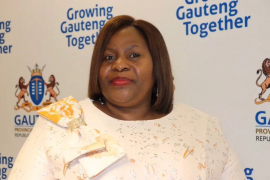
Gauteng Health MEC, Dr Nomathemba Mokgethi, is currently self-isolating at home after contracting COVID-19.
According to the statement released by the Gauteng provincial government on Wednesday, MEC Mokgethi presented with mild symptoms before she went to test on Tuesday, 18 May 2021.
“All persons who were in contact with her have been advised to self-isolate and test if necessary.”
The Health MEC was one of the first people to receive the Johnson & Johnson vaccine under the Sisonke Study in Gauteng.
“The COVID-19 vaccine prevents severe illness, hospitalisation and death,” said the provincial government.
Meanwhile, Mokgethi is not showing signs of any severe symptoms and will remain in isolation for the next 10 days.
“The public is encouraged to continue to adhere to non-pharmaceutical interventions, even after they have been vaccinated.”
In a pinned tweet, the MEC is urging the public to continue wearing masks, practice social distancing and good hand hygiene.
“The pandemic is still with us,” she added.
Anti-apartheid stalwarts receive their Pfizer vaccine
Struggle stalwart Sophie Williams-de Bruyn on Wednesday received her first dose of the Pfizer vaccine at Johannesburg’s Alexandra Community Health Care Centre.
The last surviving organiser of the 1956 Women’s March has since pleaded with communities not to drop their guard now that the COVID-19 vaccination rollout programme is underway.
The 83-year-old is among several leaders who have agreed to take the vaccine publicly as part of mobilising the rest of society to participate in the mass vaccination programme.
According to the Gauteng Health Department, leaders from various sectors of society have been publicly receiving their vaccinations as part of efforts to address vaccine hesitancy and concerns around its safety.
“People shouldn’t oppose but come and have their vaccine because it is to protect ourselves. It does not mean that you won’t catch COVID-19. All that it means is that it’s just another protection against COVID-19,” said Williams-de Bruyn.
She has also called on citizens to continue to observe the non-pharmaceutical protocols by keeping to the protocols of social distancing, the washing of hands and wearing the masks.
“People should wear their masks properly because sometimes when we wear the mask, we don’t wear it properly.”
She has urged citizens to be disciplined when it comes to hygiene.
“I would encourage everybody to have their vaccination. We see what is happening in the world. It’s not only our country. In fact, in some of the countries, it’s even worse.”
Meanwhile, human rights activist, Archbishop Emeritus Desmond Tutu and his wife, Leah, were also among the first to receive their shots in Cape Town on the launch day of phase two of the COVID-19 vaccine rollout on Monday.
“All my life I have tried to do the right thing and, today, getting vaccinated against COVID-19 is definitely the right thing to do. That is why Leah and I took this step, to do our part to start the national healing process so we can end this pandemic. We have to do this together,” the Archbishop said.
“Believe me, when you get to our age, little needles worry you far less than bending over does.”
He said it was wonderful to get out of the house and meet the dedicated healthcare workers who immunised them.
“Leah and I signed up to be vaccinated a while ago because we know this will help save our loved ones from worry and heartbreak, and ourselves from this terrible disease.”
He also paid tribute to healthcare workers.
“I salute you. God bless all of you for your selfless service to our citizens and our country.”
On Tuesday, Health Minister, Dr Mkhize Mkhize, announced that the total number of those vaccinated in phase two to date stands at 39 371.
SA records 80 COVID-19 deaths
At least 2 357 new COVID-19 cases have been reported in South Africa in the last 24 hours, while 80 more additional deaths were recorded.
This means as of 18 May 2021, cumulative confirmed cases were reported as 1 617 840 and 55 340 deaths.
According to Health Minister, Dr Zweli Mkhize, of the newly recorded fatalities, 32 are from Gauteng and 22 from Free State.
“Free State and Gauteng provinces have been back-capturing deaths over April and May as part of their auditing processes,” Mkhize explained.
In addition, both the Eastern Cape and Limpopo each recorded six deaths, while five are from KwaZulu-Natal.
“We convey our condolences to the loved ones of the departed and thank the healthcare workers who treated the deceased patients,” the Minister added.
Mkhize announced that 479 768 healthcare workers have been immunised under the Sisonke Study, while the total number of those vaccinated in phase two to date is 39 371.
“These vaccinations were with the first dose of [the] Pfizer vaccine,” Mkhize said.
According to the latest data, the recovery rate is sitting at 94.4% after 1 527 968 patients recuperated.
The Minister announced there are now 34 532 active cases, of which 8 155 are found in Gauteng, 6 209 in the Northern Cape, and 5 964 in the Free State.
In addition, 5 096 active cases are in North West, 4 703 in KwaZulu-Natal, 2 630 in the Western Cape, 1 047 in Mpumalanga, 372 in the Eastern Cape and 356 in Limpopo.
Global view
According to the World Health Organisation (WHO), there have been 163 312 429 confirmed COVID-19 global cases, with 3 386 825 deaths, since the outbreak.
Globally, the number of new cases and deaths continued to decrease in the past week.
According to the WHO, there are over 4.8 million new infections and under 86 000 additional deaths reported, which is a 12% and 5% decrease respectively compared to the previous week.
“Despite a declining trend over the past three weeks, the incidence of cases remains at some of the highest levels since the start of the pandemic.”
The agency said all regions reported a decline in new cases this week apart from the Western Pacific region, where the incidence of new cases was similar to the previous week.
“The European region reported the largest decline in new cases this week, followed by the Eastern Mediterranean. These regions also reported the largest decline in new deaths over the past week.”
Meanwhile, South-East Asia and Western Pacific regions reported a similar number of new deaths as the previous week.
The highest numbers of new cases were reported from India (2 387 663 new cases, 13% decrease), Brazil (437 076 new cases, 3% increase), the United States (235 638 new cases, 21% decrease), Argentina (151 332 new cases, 8% increase), and Colombia (115 834 new cases, 6% increase).
SA’s first day of mass vaccination a success, despite glitches
Health Minister, Dr Zweli Mkhize, says it is all systems go as the country embarks on its second day of the COVID-19 mass vaccination rollout plan.
Despite a successful first day on Monday, Mkhize acknowledged that some provinces experienced a few challenges.
Speaking at the Royal Showgrounds mass vaccination centre in Pietermaritzburg where religious leaders joined him, Mkhize said provinces had to contend with load shedding.
According to the Minister, while power cuts did not affect the vaccine’s cold chain, as there were contingency plans in place, it created challenges with the Electronic Vaccination Data System (EVDS).
“Load shedding disabled the system and made the reception a bit slow and had to use a lot of manual records for that. Nevertheless, it doesn’t derail our Electronic Vaccination Data System,” he said on Tuesday.
According to Mkhize, the EVDS recorded 11 000 people who received the first dose of the Pfizer vaccine. However, the Minister said the figure is yet to be reconciled with vaccinees that were recorded manually.
In addition, some areas like Bloemfontein in the Free State, had to shut down a centre after disruptions sparked by protests.
“The other issues that we’ve noticed was that there was a slow start because people are still getting used to this and some were indicating that the mixing got them in a difficulty. Therefore, they lost the last dose. Every vile has six people that must be vaccinated,” he explained.
However, he believes that the wastage will be less as the vaccinators gets the hang of things.
Mkhize said more vaccination centres were operational on Tuesday and that government is targeting to open over 3 300 sites by end of September.
More vaccines
While the number of vaccines that are coming will be less for the first two months, Mkhize said these will start to scale up from July.
Between now and June, the Minister believes that South Africa would have received about six million lifesaving jabs.
“We’re trying to get more than that but because of some of the delays; we’re actually getting our deliveries rescheduled for later on in the year.”
The Minister said government is targeting to vaccinate 250 000 people per day to reach 16 million people during the second phase, which is currently focusing on those aged 60 and above.
“We’d like our people to be very patient because we might want to delay the second dose by up to three months. If that happens, don’t feel aggrieved. We want to make sure that we reach as many people as possible and build up immunity.”
Mkhize said government is looking into extending the interval between initial and booster doses of the shot to three months.
“The evidence coming from the UK has shown there’s better immunity developing if someone gets a second booster dose after three months than if you do that after three weeks. So, there’s no challenge as such if we were to delay.”
In addition, he said they are pushing to vaccinate all the healthcare workers by the end of the week.
Limpopo senior citizens encouraged to register for COVID-19 vaccine
Limpopo Premier Stanley Mathabatha has encouraged all eligible vaccine recipients to register for vaccines through the Electronic Vaccination Data System (EVDS).
This as South Africa started the second phase of its vaccination rollout plan on Monday for the elderly.
“Vaccine recipients will be able to access the service at their nearest accredited vaccination centre with no payment,” Mathabatha said.
The province has selected the following six sites as the main vaccination hubs for the Pfizer vaccination: Pietersburg Hospital; Mankweng Hospital; St Rita’s Hospital; Donald Fraser Hospital; Dr CN Phatudi Hospital and Mokopane Hospital.
“The registration process will require all of us to work together to ensure the success of the COVID-19 vaccination. Only those who have registered will be vaccinated and to avoid overcrowding, long queues and risks of spreading COVID-19, we must wait to be invited by the department of health through SMS to go and receive our vaccine,” Mathabatha said.
On Monday, the Premier launched the second phase of the COVID-19 vaccination for citizens aged 60 years and above.
“To protect myself and others I choose to vaccinate. I will be coming back to get my second vaccine soon,” said Job Ramashala, 69, who was amongst the senior citizens that were inoculated.
The Premier also received the Pfizer vaccine at Mokopane Hospital, Mogalakwena Local Municipality, Waterberg District.
“I feel happy for choosing to vaccinate and I will be completing the second vaccine on the 8 June 2021. I am also quite pleased that our people have heard us when we said they must register to get the vaccination,” Mathabatha said after getting his jab.
SA logs 1 757 new COVID-19 cases
South Africa recorded 1 757 new COVID-19 cases on Monday, which pushes the cumulative number of cases to 1 615 485 since the outbreak.
According to the latest official statistics, the nationwide death toll now stands at 55 260 after 50 more people succumbed to the disease.
Of the latest deaths, 30 are from the Free State, eight from the Northern Cape, six from Gauteng, four from the Eastern Cape and two from the Western Cape.
“We convey our condolences to the loved ones of the departed and thank the healthcare workers who treated the deceased patients,” said Health Minister, Dr Zweli Mkhize.
In addition, the country has a recovery rate of 94.5% after 1 526 638 patients beat Coronavirus.
The active cases have dropped to 33 587 from the 34 166 recorded on Sunday.
The data is based on the 11 134 553 tests, 19 505 of which were conducted since the last reporting cycle.
According to the World Health Organisation, there are 162 773 940 confirmed global cases of COVID-19, including 3 375 573 deaths, to date.
In addition, 1 264 164 553 vaccine doses have been administered as of 12 May 2021.
87 sites open as SA’s COVID-19 vaccine rollout gets underway
Health Minister, Dr Zweli Mkhize, has confirmed that 87 sites are ready to open their doors to vaccinate the elderly as the country ramps up its biggest inoculation effort on Monday.
Addressing the media on Sunday evening, Mkhize announced that South Africa was expecting an additional 325 260 doses of Pfizer vaccines, which arrived at midnight.
This means the country now has 975 780 of the double dose jab as of 17 March 2021.
According to Mkhize, government will run 83 of the vaccination sites, while four will be in the private sector.
“We need the private sector and they are part of the system.”
He said his department was hoping to scale up these centres to about 200 by the end of the week.
The Minister reiterated government’s strategy to immunise citizens who are aged 60 and above in the second phase of the COVID-19 vaccination plan as they are deemed the most vulnerable for becoming ill or dying of COVID-19.
“We will continue to vaccinate healthcare workers and complete the targeted 1.2 million by the end of the week,” the Minister added.
Meanwhile, he told journalists that government was targeting to inoculate five million senior citizens by the end of June, provided there is enough supply of vaccines.
“As we speak, SMS messages are being dispatched with invitations to vaccinate tomorrow [on Monday] and over 7 000 are being dispatched to healthcare workers and 4 288 to citizens 60 years and above.”
He reminded citizens that vaccinees should take their acceptable documents for identity verification such as ID card or book, drivers licence or passport.
Meanwhile, people who belong to a medical aid scheme should carry their medical aid card or other details.
More vaccines expected
According to Mkhize, the country is expecting to receive 4.5 million doses of Pfizer and another two million from Johnson & Johnson (J&J).
“The J&J vaccine is still awaiting release from the Food and Drug Administration of America and we are constantly being updated by the J&J global head office on progress in this regard. We hope to get finality this week,” he explained.
Sisonke Study
Mkhize said 478 733 South Africans have been vaccinated under the Sisonke Study that ended this weekend.
Sisonke is a collaboration between various stakeholders, including the National Department of Health, which allowed government to make the COVID-19 J&J vaccine immediately available to healthcare workers using a research programme.
The programme received 500 000 doses.
However, he said the leftover doses will not be used in the second and third phases, but the South African Medical Research Council will conduct studies that will help delve into how vaccines work for people living with HIV and other comorbidities, elite athletes, pregnant and lactating women and other special groups.
“We know that everyone has been very anxious to know what will happen tomorrow [on Monday] and how we will start to vaccinate our most vulnerable citizens and then move onto vaccinating the general population,” he said.