
Deadline looms for collection of R350 grant from previous cycle
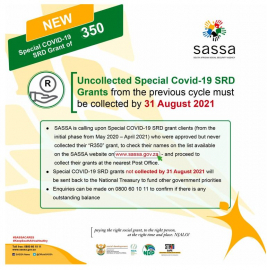
The South African Social Security Agency (SASSA) has called on applicants of the Special COVID-19 Social Relief of Distress (SRD) grant, who did not collect their R350 grant from the previous cycle, to do so before 31 August 2021.
SASSA CEO Busisiwe Memela-Khambula said the agency still has unclaimed SRD grants approved from the initial phase in May 2020 – April 2021.
Memela-Khambula urged all applicants approved for payment to collect their funds at the Post Office before 31 August 2021.
“If you used somebody else’s cellphone to apply, please check if they received your SMS in July 2021. If the funds are still unclaimed by 31 August, these will be returned to National Treasury to assist with other government priorities,” Memela-Khambula said.
Applicants can check their names on the list available on the SASSA website www.sassa.gov.za and proceed to collect their grants at the nearest Post Office.
Enquiries can be made on 0800 60 10 11 to confirm if there is any outstanding balance.
SASSA successful commenced with paying out the first batch of applicants for the second registration of COVID-19 grant on 25 August 2021. Registration started on 6 August 2021.
Two million Pfizer vaccines expected on Saturday
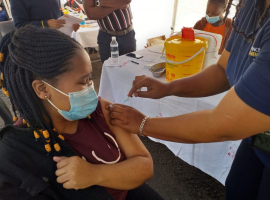
South Africa is expecting to receive at least 2.2 million more Pfizer COVID-19 vaccine doses at the weekend.
This was announced by Health Minister Dr Joe Phaahla on Friday.
The doses were donated by the United States of America via the COVAX facility – an international group lobbying for the equal access to and procurement of vaccines.
Phaahla said the arrival of the vaccine doses would ensure that the country has a stable supply of the vaccine.
“We are grateful to the government of the USA for donating through the COVAX facility another 2.2 million doses of the Pfizer vaccines, which are arriving on Saturday, 28 August 2021, adding to the 5.6 million we received in July. This donation will reinforce our stock levels,” he said.
Meanwhile, Phaahla acknowledged that there have been calls by some for the COVID-19 vaccination to be made mandatory.
“A suggestion has been made by various influential people in society that we should consider a mandatory vaccination policy. This is a matter which we are very reluctant to venture into but it is a matter which we are discussing in various forums,” he said.
The Minister clarified that this is not a proposal government is expected to implement.
“We are discussing under what conditions this might be possible, but in my view… we don’t foresee a kind of regulation or some kind of national government regulation that says everybody must vaccinate.
“We really wouldn’t really want to go that route. But what is possible and what we consider is that where various service providers or areas of entertainment or where people obtain services or even workplaces… there is a possibility that a locally determined requirement can be [made].
“We believe that [is where] it could be done but we don’t foresee where it can be a regulation as part of the Disaster Management [Act] to say it’s compulsory for every adult,” Phaahla said.
The Minister said the possible need for extra shots of the Johnson & Johnson vaccine – which are said to dramatically increase antibodies against COVID-19 – is also under discussion but the current focus remains on rolling out the current vaccines to as much of the population as possible.
“We have referred this to our vaccine Ministerial Advisory Committee to advise us but I must emphasise that our priority at this moment is to make sure that all South African adults, who are willing to get the vaccine, should get a dose as prescribed.
“At this stage, our priority is to make sure that we reach immunity population coverage,” he said.
WC, N Cape COVID-19 positivity rates a concern
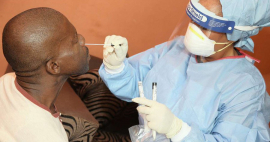
The Western Cape and Northern Cape have recorded COVID-19 positivity rates above the national average.
This is according to Health Minister, Dr Joe Phaahla, who briefed the nation regarding the virus and government’s vaccination rollout plans.
Phaahla said the country’s overall COVID-19 positivity rate stands at about 19%, with these two provinces showing an average positivity rate that is concerning.
“The Western Cape has an average of 27% positivity rate daily. As of [Thursday], the Northern Cape had 30%. What is worrying is that the Northern Cape’s numbers have remained high relative to its population and that’s why its positivity has remained high over a prolonged period.
“Our epidemiologists and analysts often say the Northern Cape never came out of the second wave, it came straight into the third wave,” the Minister said.
He said an increase in positive cases among the youth in those provinces also raised concern.
“What is worrying is that in both provinces, there have been more younger people between the ages of 10 and 19, who have been testing positive. While some cluster [outbreaks] can be attributed to the opening of schools, there have also been indications that social activities have also had a role to play, such as young people engaging in parties without any precautions,” Phaahla said.
Meanwhile, the Minister reported reductions in new COVID-19 cases and hospital admissions throughout the country.
“Over the last seven days, there has been a 2.2% decrease in new cases, which is a very slow reduction. Admission to hospitals reduced by 0.7% to 13 600 yesterday – small but welcome.
“Over the last seven days, hospitalisation reduced by 3.3%. New cases reduced by 2.2% – again, small but welcome, even though there were increases in the Eastern Cape, KwaZulu-Natal, Northern Cape and Free State over the last seven days,” he said.
Youth vaccine uptake
Despite this, the Minister said the uptake of the vaccine by South Africans between the ages of 18 and 34 is showing great promise, with at least 460 173 people in that cohort being vaccinated.
“Seven days ago, we opened up for registration and vaccination of everybody over 18 years, meaning the 18 – 34 [could get vaccinated]. The response of our young people, who are the future of our country, has been overwhelming.
“We urge our young people to continue to come forward, and to also encourage their parents, older friends and relatives to also come forward because we still have a major gap to cover, especially the over 50 and the 35 plus [population group],” Phaahla said.
KZN extends contracts for staff at COVID-19 sites
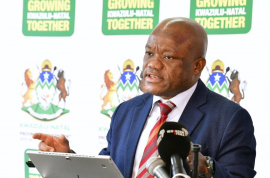
The KwaZulu-Natal Provincial Executive Council has approved the extension of contracts for staff appointed at COVID-19 sites for a further six months to help fight the third wave and potential fourth wave.
The Executive Council took the decision to retain more than 15 000 staff members, including nurses, administrative clerks, data capturers and general orderlies, to lead the provincial efforts against COVID-19 and achieve population immunity.
The Executive Council said the advent of COVID-19 has placed additional pressure on service delivery, and has resolved to intensify the implementation of the vaccination rollout programme to achieve population immunity.
“To this end, the Executive Council will add impetus in the acceleration of the vaccination drive across the province,” KwaZulu-Natal Premier Sihle Zikalala said.
SANRAL collaboration
The Executive Council also approved the finalisation of the Memorandum of Understanding between the KwaZulu-Natal government, represented by the Department of Economic Development, Tourism and Environmental Affairs (EDTEA), and the South African National Roads Agency Limited (SANRAL).
The MoU is intended to ensure that the two parties cooperate and collaborate at strategic and operational levels to:
- Create transparent opportunities for the participation of SMMEs and cooperatives in SANRAL infrastructure projects;
- Ensure the involvement of local communities;
- Ensure the seamless execution of road projects, and
- Ensure the transfer of skills through incubation and road maintenance projects.
The Executive Council noted that there are projects worth over R70 billion that are to be implemented by SANRAL over the Medium Term Expenditure Framework of three years.
“The scale and magnitude of these projects present opportunities for development and job opportunities,” Zikalala said.
Rebuilding moral core
The Council called on the provincial population to use Heritage Month to contribute to the rebuilding of the province’s moral core, and to help grow a society that is united in its diversity.
Zikalala said the Executive Council has resolved to host a #WeAreOneFestival, which will be used to unite and promote cohesion across the different cultures.
“Government hereby invites the people of KwaZulu-Natal to also use Heritage Month to engage in dialogues and programmes to focus on youth and women empowerment, teenage pregnancy and HIV, drug and substance abuse, and gender-based violence,” Zikalala said.
Government garage building renamed after Charlotte Maxeke
In line with this year’s Women’s Month, which is centred on the values and lessons of 150 years of Charlotte Mannya Maxeke, the Executive Council has approved the renaming the government garage building after Maxeke.
“This building, which is under the care of the Department of Social Development based in Durban, has been renovated and its renaming occasion will take place on 21 September 2021,” Zikalala announced.
SA’s COVID-19 death toll surpasses 80 000
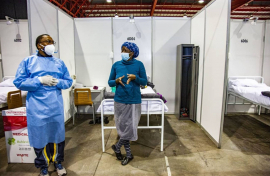
South Africa’s COVID-19 death toll has crossed the 80 000 mark, after 516 more people succumbed to the respiratory disease on Wednesday.
According to the National Institute for Communicable Diseases (NICD), this means COVID-19 has claimed 80 469 lives to date.
Meanwhile, there are 13 251 more people who were confirmed to have contracted the virus in the last 24 hours, pushing the laboratory-confirmed cases to 2 722 202.
According to the public health institute, KwaZulu-Natal recorded most infections after 3 627 people tested positive.
The province is followed by the Western Cape, which accounted for 3 338 new infections, 1 783 in the Eastern Cape, and 1 317 in Gauteng.
The NICD said the latest daily increase represents a 20% positivity rate even though the seven-day moving average daily number of cases has decreased.
Meanwhile, there has been an increase of 606 hospital admissions in the past 24 hours.
The information is based on 16 162 825 tests, of which 66 244 were performed since the last reporting cycle.
In addition, 268 712 COVID-19 doses were administered on Wednesday, pushing the tally to 11 363 810.
The latest data show that Gauteng, Western Cape, and Limpopo distributed the most jabs.
According to the Department of Health, 143 313 people were fully vaccinated in the past 24 hours.
As of 25 August, there have been 213 050 725 confirmed cases of COVID-19, including 4 448 352 deaths, reported to the World Health Organisation (WHO).
Global view
With over 4.5 million new cases reported between 16 and 22 August, the WHO said the number of new cases reported globally seems to be stable after increasing for nearly two months since mid-June.
Meanwhile, the regions of Western Pacific and Americas continue to report increases in new infections, with increases of 20% and 8% respectively as compared to last week.
“The South-East Asia and Eastern Mediterranean regions reported decreases in weekly incidence of 16% and 10% respectively,” the organisation said, adding that the European and African regions reported case incidence rates similar to those reported last week.
In addition, the number of deaths reported globally this week remains similar to last week, with over 68 000 new fatalities reported.
Two regions including Europe and the Americas reported a peak in new deaths of 11% and 10% respectively, while there was a decrease in the African and South-East Asia regions.
“The cumulative number of cases reported globally is now over 211 million and the cumulative number of deaths is just over 4.4 million.”
The highest numbers of new cases were reported from the United States (1 020 072 new cases, 15% increase), Iran (251 610 new cases, 7% decrease), India (231 658 new cases, 10% decrease), the United Kingdom (219 919 new cases, 11% increase), and Brazil (209 099 new cases, 1% decrease).
Globally, cases of the Alpha variant have been reported in 192 countries, 141 countries have cases of the Beta variant, 86 have reported the Gamma variant, while 163 have the Delta variant.
COVID-19 vaccine not linked to 28 deaths: SAHPRA
The South African Health Products Regulatory Authority (SAHPRA) said it has finalised the investigation of the 32 people who allegedly died after receiving the COVID-19 vaccine.
“To date, investigations for 32 death cases have been completed and causality assessment concluded, of which 28 were coincidental to vaccination,” SAHPRA explained.
According to the drug watchdog, this means these deaths were not related or linked to the vaccination.
“Four cases are unfortunately unclassifiable because there was either no information available about the case or the information was completely inadequate. Hence, causality assessment could not be conducted or concluded,” explained SAHPRA.
SAHPRA defines a coincidental adverse event as one that occurred after or at the same time as exposure to medicine or vaccine, but which is not caused by that exposure.
In the case of a death that occurred after a person receives their jab, certain information should be submitted to conduct a comprehensive causality assessment.
This includes an autopsy or post-mortem examination, full clinical history, including any comorbidities and allergies, and all medicines that are taken before and at the time of the adverse event.
“It may not be possible to accurately determine causality when the information provided is incomplete,” the statement read, adding that timeous reporting is equally important to ensure a thorough investigation.
Adverse events following immunisation
Meanwhile, as of 31 July 2021, SAHPRA said it received 1 473 reports of adverse events following immunisation (AEFI) since the start of the national vaccination rollout programme.
According to the drug watchdog, most of these were mild and already listed in the internationally approved product information.
“These reports account for a 0.02% reporting rate of the almost 7.1 million doses of COVID-19 vaccines administered in South Africa by then.”
SAHPRA said mild and non-serious AEFI usually resolves within a few days after vaccination and without any prolonged negative outcomes.
These may include mild headache, pain and redness at the injection site, and mild fever.
Adverse events of special interest
Meanwhile, the World Health Organisation (WHO) has designated certain unexpected medical problems as adverse events of special interest (AESI), SAHPRA said.
The US Food and Drug Administration (FDA) defines AESI, serious or not, as an event of scientific and medical concern specific to the sponsor’s product or programme, for which ongoing monitoring and rapid communication by the investigator to the sponsor can be appropriate.
According to SAHPRA, reported serious AEFI, including AESI, is extremely rare for the COVID-19 vaccines.
Serious AEFI is those side effects that require hospitalisation, may be life-threatening, result in a congenital anomaly, birth defect, or even death.
“Serious AEFI should be reported immediately by the healthcare professional responsible for the patient’s care,” SAHPRA said.
In addition, once all the information about the case is available, the National Immunisation Safety Expert Committee (NISEC), which is an independent Ministerial Advisory Committee, conducts a causality assessment.
Staff members from SAHPRA and the Health Department’s Expanded Programme on Immunisation (EPI), responsible for the COVID-19 vaccination programme, will then provide secretarial support to the weekly National Immunisation Safety Expert Committee (NISEC) meetings.
“Once completed, the NISEC assessment is shared with SAHPRA and the department for further action, if necessary.”
The public and health professionals are encouraged to report AEFIs to the health facility delivering the vaccine on the Med Safety App, which can be downloaded or by calling 0800 029 999.
N Cape hit by rising COVID-19 infections in schools
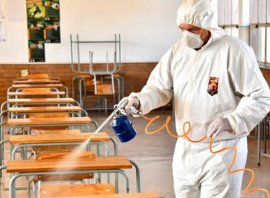
The Northern Cape Department of Education is experiencing a resurgence of COVID-19 infections in schools, as the province continues to be hit by rising cases.
According to a statement released on Sunday, the department recorded 526 new COVID-19 infections, which includes 54 educators, 439 learners and 33 support staff.
“There was a sharp increase in COVID-19 infections in schools compared to the previous three weeks,” the provincial department said.
In addition, there are currently eight schools that are closed to allow for contact tracing and disinfection of the school premises.
The department said five of these schools are scheduled to reopen on Monday.
“The pandemic is causing major disruptions in the education sector and the department is deeply concerned about the loss of learning and teaching time.”
The department said the district offices have since developed curriculum recovery plans for those schools directly affected by the pandemic.
The department is also running weekend lock-in and Saturday classes to support the Matric Class of 2021.
“This places an increased strain on our educators, learners, and support staff at schools to ensure that the trimmed curriculum is fully covered and learners are well prepared for the end of year examinations.”
The department said it was doing its utmost best to support all educators and learners during these difficult times.
“We are all in this together, working under tremendous pressure and we will succeed if we continue to work together. Our school communities play a pivotal role to support the schools in their respective communities and we urge all to adhere to the COVID-19 regulations at all times. Let us support the Class of 2021,” the department added.
The province recorded 488 new COVID-19 cases on Sunday, which pushes the cumulative infections to 76 726.
Government to transport people to mass vaccination sites
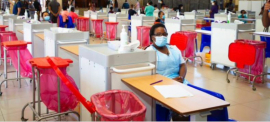
The National Department of Health will launch a pilot project to transport people to vaccination centres, as government works around the clock to drive up inoculation rates.
“There must be more focus on taking the vaccine to the people, rather than getting people to come to the vaccine,” Health Minister, Dr Joe Phaahla, said at a health briefing on Friday.
According to the Minister, the transportation model will first be tested in Gauteng, the Eastern Cape and KwaZulu-Natal.
Phaahla told the media that the goal is to provide transport from high-density population areas to mass vaccination sites in urban areas.
“Details of this will be provided by the three provinces where the trial will be running. In Gauteng, this pilot test will transport people from places like Alexandra and Tembisa to places like the Gallagher Estate in the Midrand, where there is huge capacity and a lot more people [can be vaccinated],” he explained.
Phaahla said government will also prioritise mobile and outreach teams.
He has since called on young people, whom he described as the future of South Africa, to come in numbers to get vaccinated.
This comes after the country has opened up COVID-19 vaccinations to those aged between 18 and 34 years old from today.
“Don’t be confused by fake news, especially doing the rounds on social media. The possibility of liberating ourselves from the clutches of COVID-19 is now in our hands,” the Minister said.
He believes that immunisation is the answer to the re-opening of more economic activities, religious, cultural, and sporting activities.
“Sporting activities with friends in stadiums is a possibility. We have seen that happening in Europe.
“We can have a better last quarter of 2021, better than 2020. We can have a better Christmas and an even better 2022, and all we need now is to take the first step.”
Phaahla also thanked the health workers who are saving lives, and those stationed at vaccination, mobiles and outreach sites.
“These are our heroes and heroines. We also want to thank media houses that have come forward, offering opportunities to communicate the benefits of saving lives and livelihoods through vaccination. Together, we can defeat COVID-19,” he said.
SA administers over 10 million COVID-19 doses
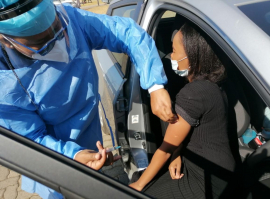
South Africa has surpassed the 10 million mark of administering COVID-19 jabs.
According to the Department of Health, the country distributed 191 806 COVID-19 shots on Thursday, taking the number of administered jabs to 10 167 749 since the start of the vaccination rollout programme.
In addition, 137 215 people were fully inoculated in the last 24 hours, pushing the tally to 4 629 371, translating to 7 808 626 people who have received the shot.
Meanwhile, the National Institute for Communicable Diseases (NICD) said 13 672 new COVID-19 cases were detected yesterday, which brings the total number of laboratory-confirmed infections to 2 652 652.
The majority of the new cases were recorded in KwaZulu-Natal (3 911) followed by the Western Cape (3 707), Gauteng (1 579), and the Eastern Cape (1 436).
“This increase represents a 19.9% positivity rate,” the NICD explained, adding that the seven-day moving average daily number of cases has peaked.
Meanwhile, 317 more people lost their lives to COVID-19, bringing the death toll to 78 694.
In addition, the public health institute said 536 more people were admitted to hospitals in the past 24 hours, meaning there are currently 13 940 patients in hospitals out of the 162 205 active cases.
The information is based on the 15 821 074 tests of which 68 540 were conducted since the last reporting cycle.
Globally, as of 19 August 2021, there have been 209 201 939 confirmed cases of COVID-19, including 4 390 467 deaths, reported to the World Health Organisation.
18 to 35 age group to get their jabs from 20 August
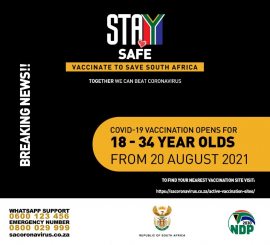
South Africa’s COVID-19 vaccination programme is expected to increase drastically following Cabinet’s approval for the vaccination of people aged between 18 and 35 years from 20 August 2021.
Cabinet said it had received a report from the National Coronavirus Command Council (NCCC) indicating that over nine million vaccines have been administered in South Africa to date, with over seven million people partially vaccinated and over four million fully vaccinated.
“Cabinet welcomed the vaccination roll out plan to increase the uptake of vaccines, particularly in provinces that had shown a reduction in the uptake of vaccines. As part of increasing the vaccination roll-out programme, Cabinet approved the vaccination of persons aged between 18 and 35 years from 20 August 2021,” Cabinet said in a statement on Thursday.
Cabinet urged people to dispel unfounded and misleading conspiracy theories about the vaccines and choose life by vaccinating.
“Scientific evidence confirms that vaccinated people stand a better chance of surviving from COVID-19 than unvaccinated people. Cabinet encourages all unvaccinated people in South Africa to get vaccinated because vaccines protect us from getting seriously ill from COVID-19 and they save lives.”
Cabinet said the process to get vaccinated is easy.
“Simply visit your nearest vaccination site with your identity document to be registered and vaccinated. You can find your closest site from the more than 3 000 vaccination sites across the country at www.sacoronavirus.co.za/active-vaccination-sites.”
Cabinet has further approved the keeping of the country under the Risk-Adjusted Alert Level 3 of the national lockdown, as advised by the Ministerial Advisory Committee.