
President Ramaphosa to visit Gauteng vaccination sites
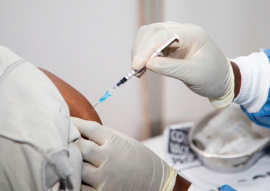
President Cyril Ramaphosa is today visiting two Gauteng vaccination sites to assess progress in South Africa’s COVID-19 vaccination rollout programme.
In a statement, the Presidency said the President’s visit will serve to motivate greater numbers of South Africans to embrace vaccination as the most effective weapon in the fight against COVID-19.
COVID-19 vaccines are a safe and effective defence against serious illness, hospitalisation and death.
“The President will visit a public health facility in Tembisa and a private-public partnership centre in Midrand in recognition of the close collaboration between government, the private sector and active support of social partners. This partnership has enabled South Africa’s vaccination programme to gather pace,” said the Presidency on Thursday.
Under this programme, the number of vaccinated people now exceeds seven million with around a million people being vaccinated every week.
“More than 1 500 volunteers comprising doctors, nurses and health workers have been brought on board to help with vaccination on weekends on various sites across all nine provinces. Doing away with sectoral prioritisation and moving to the age-based approach has proven more effective in reaching a wider spectrum of South Africans,” the Presidency said.
SA administers over 255 000 jabs, records 7 773 new COVID-19 cases overnight
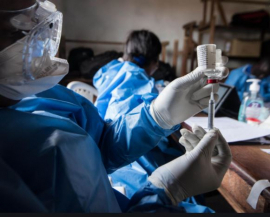
South Africa has so far administered 6 854 667 vaccine doses of which 225 808 were distributed on Tuesday.
The latest data show that 60 001 people received the Johnson & Johnson (J&J) jab in the last 24 hours, while 165 807 received the Pfizer vaccine.
According to the Department of Health, the total cumulative number of the administered J&J shots now stands at 1 306 261 and 5 548 406 for Pfizer.
Meanwhile, South Africa recorded 36 721 COVID-19 tests of which 7 773 were positive.
According to the National Institute for Communicable Diseases (NICD), this brings the total number of laboratory-confirmed cases to 2 391 223.
Gauteng remains the hardest-hit province with 2 324 new infections detected in the last 24 hours, followed by 1 580 in the Western Cape and 1 246 in KwaZulu-Natal.
Meanwhile, the country lost 370 people to COVID-19, meaning the country’s death toll has risen to 70 388 deaths to date.
In addition, hospital admissions increased by 650 in the past 24 hours, while 140 341 people are currently infected in South Africa.
The information is based on the 14 623 917 tests that have been conducted in both the public and private sectors.
Global view
Globally, as of 27 July, there have been 194 608 040 confirmed cases of COVID-19, including 4 170 155 deaths, reported to the World Health Organisation (WHO).
According to the WHO’s weekly epidemiological update, the global number of new cases reported last week was over 3.8 million, an 8% increase compared to the previous week.
“This trend is largely attributed to substantial increases in the Americas and Western Pacific regions,” the organisation explained.
Meanwhile, the number of deaths reported this week increased sharply with over 69 000 deaths, a 21% peak compared to the previous week.
The greatest number of new fatalities were reported from the Americas and South-East Asia regions, the WHO added.
According to the latest data, the cumulative number of cases reported globally is now nearly 194 million, while the deaths exceed four million.
“If these trends continue, the cumulative number of cases reported globally could exceed 200 million in the next two weeks.”
Over the past week, the WHO said the highest numbers of new cases were reported from the United States (500 332 new cases, 131% increase), Brazil (324 334 new cases, 13% increase), Indonesia (289 029 new cases, 17% decrease), the United Kingdom (282 920 new cases, 5% decrease), and India (265 836 new cases, similar to the previous week).
Meanwhile, globally, cases of the Alpha variant have been reported in 182 countries, while 131 countries have cases of the Beta variant, 81 have the Gamma variant and 132 have detected the Delta variant.
SA administers 215 349 COVID-19 vaccine doses
There were 215 349 people who received their COVID-19 vaccine on Monday, which brings the total number of administered jabs to 6 613 704.
According to the Department of Health, of the latest distributed shots, 44 470 people received the Johnson & Johnson, while 170 879 received the Pfizer vaccine.
Meanwhile, the COVID-19 death toll has now surpassed the 70 000 mark after 243 more people lost their lives to the respiratory disease.
This means that South Africa has now recorded 70 018 fatalities to date.
In addition, the country detected 5 683 new COVID-19 cases, said the National Institute for Communicable Diseases (NICD).
This brings the total number of laboratory-confirmed cases to 2 383 490, translating to a 24.3% positivity rate.
Gauteng accounted for 1 559 new infections, followed by 1 192 in the Western Cape and 832 in KwaZulu-Natal.
The NICD has also noted an increase of 479 hospital admissions in the past 24 hours.
The information is based on the 14 587 196 tests of which 23 349 were performed since the last reporting cycle.
According to the World Health Organisation, as of 26 July, there have been 194 080 019 confirmed global cases of COVID-19, 4 162 304 deaths, and 3 696 135 440 administered vaccine doses.
SA passes third wave peak, threat of a new surge looms

South Africa has passed the peak of the Coronavirus third wave, which has infected over two million people, Acting Health Minister, Mmamoloko Kubayi said on Friday.
Addressing the media on the progress of government’s efforts in the fight against COVID-19, the Minister said the number of new infections has started to decline.
However, she cautioned that the country was not out of the woods just yet.
“We’re cautioning and extremely worried because the many gatherings that we saw during the unrest in Gauteng and KwaZulu-Natal may lead to another surge in numbers,” said Kubayi.
The Department of Health will continue to monitor the situation closely by ensuring that it screens communities that were at the heart of the looting and violent protests.
She also appealed to those who took part in those gatherings to ensure that they visit the nearest healthcare facility if they present any symptoms of COVID-19.
“We’re worried that some may stay away because in the contact tracing, people are expected to give indications where they have been and because of fear of arrest they are likely to stay away.”
Meanwhile “quite a number” of people who were arrested during the looting tested positive for the Coronavirus.
“This is an indication that we should be concerned about those who have been in the protests.”
The cost of the unrest
The riots she said, not only disrupted lives and the economy, but the healthcare delivery system, especially in KwaZulu-Natal. This led to the dwindling number of vaccinations due to the closure of sites.
In addition, she said about 120 private pharmacies were destroyed which led to the loss of about 47 500 vaccine doses.
Gauteng cases decrease
According to the Minister, each day the pandemic continues to spread and infects more people, it robs the country of its greatest resources, its productive people.
In the last 24 hours, there were 14 858 new COVID-19 cases, a decrease from the 16 240 that was detected on Wednesday.
“The number of new cases have been on the downward trend.”
In addition, there has also been a significant decrease in infections in Gauteng, which has been the epicentre of the third wave.
“Although the 14 858 new cases are still quite high, it is a significant drop from the provincial peak which went as high as over 16 000 cases per day.”
However, she stressed that the decline in infections should not mean people should lower their guard in the fight against the pandemic.
“Just because the numbers are going down, it doesn’t mean the virus has stopped spreading and that the Delta variant, which is just as lethal has stopped spreading.”
The Minister has since called on citizens to intensify their efforts and continue to observe the non-pharmaceutical interventions by wearing masks, social distance, sanitise and washing hands with soap.
SA records 14 858 new COVID-19 cases
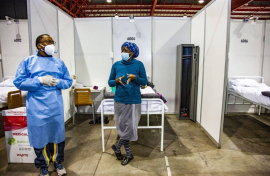
South Africa has recorded 14 858 new COVID-19 cases, bringing the total number of laboratory-confirmed cases to 2 342 330.
In a statement on Thursday, the National Institute for Communicable Diseases (NICD) said the increase represents a 26.5% positivity rate.
“As per the National Department of Health, a further 433 COVID-19 related deaths have been reported, bringing total fatalities to 68 625 to date,” the NICD said.
The majority of new cases are from Gauteng (34%), followed by the Western Cape (22%). KwaZulu-Natal accounted for 11%; Limpopo and North West each accounted for 8%; Mpumalanga accounted for 6%; Eastern Cape accounted for 5%; Free State accounted for 4%; and the Northern Cape accounted for 3% of the new cases.
“The total number of cases today is lower than yesterday but higher than the average number of new cases per day over the 7 preceding days. The 7-day moving average daily number of cases has decreased,” the NICD said.
A total of 14 425 215 tests have been conducted in both public and private sectors.
There has been an increase of 720 hospital admissions in the past 24 hours.
Meanwhile, on Thursday 238 020 vaccines were administered.
2 028 397 adults now fully vaccinated in SA
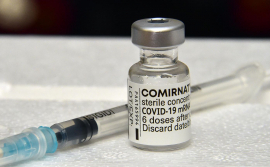
There were 257 492 COVID-19 vaccine doses that were administered on Wednesday, the highest number of shots administered since the start of the inoculation rollout programme.
This means there is now a total of 5 831 389 administered jabs in South Africa, while 2 028 397 adults have been fully vaccinated.
According to the Department of Health, 73 225 people have signed up on the Electronic Vaccination Data System (EVDS) in the past 24 hours, pushing the cumulative number to 6 440 450.
Meanwhile, 16 240 new COVID-19 infections have been detected in South Africa, bringing the number of laboratory-confirmed cases to 2 327 472.
According to the National Institute for Communicable Diseases (NICD), the latest peak increase represents a 27.5% positivity rate.
The majority of new cases are from Gauteng (32%), followed by the Western Cape (21%) and KwaZulu-Natal (11%).
“The total number of cases today is higher than yesterday and higher than the average number of new cases per day over the seven preceding days,” the NICD said on Wednesday, adding that the seven-day moving average daily number of cases is still dropping.
In addition, 516 more people lost their lives due to COVID-19 complications, pushing the death toll to 68 192.
“There has been an increase of 831 hospital admissions in the past 24 hours,” the public health institute said.
This means there are 17 286 patients who are currently receiving treatment in hospitals across the country out of the 160 462 active cases.
According to the World Health Organisation (WHO), as of 21 July, there have been 191 148 056 confirmed cases of COVID-19, including 4 109 303 deaths.
223 969 jabs administered on Monday

South Africa has administered a total of 5 328 110 vaccine doses, of which 223 969 were administered yesterday.
This comes as South Africa logged 7 209 new COVID-19 cases on Monday, as the moving seven-day average daily infections continue to drop.
According to the National Institute for Communicable Diseases (NICD), the majority of new cases are from Gauteng (36%), followed by the Western Cape (17%).
In addition, Mpumalanga accounted for 10%, 9% in KwaZulu-Natal, 7% in the Eastern Cape, Limpopo and North West, 4% in the Free State, and 2% in the Northern Cape.
This means the country now has 2 302 304 laboratory-confirmed cases since the outbreak, representing a 27.3% positivity rate.
As per the National Department of Health, a further 221 COVID-19 related fatalities were reported, bringing the death toll to 67 080.
Meanwhile, there were 533 hospital admissions in the past 24 hours, pushing the total to 16 742.
South Africa’s recovery rate now stands at 89.9%, while the country has 178 072 active cases.
The information is based on the 14 269 993 tests of which 26 407 were performed since the last reporting cycle.
Globally, as of 19 July, there have been 190 597 409 confirmed cases of COVID-19, including 4 093 145 deaths, reported to the World Health Organisation (WHO).
Meanwhile, a total of 3 436 534 998 vaccine doses have been administered.
COVID-19 TERS applications re-open

Workers affected by the COVID-19 lockdown regulations since March 2021 will once again be able to claim from the COVID-19 Temporary Employee/Employer Relief Scheme (TERS).
This comes after Employment and Labour Minister Thulas Nxesi on Friday signed the direction which makes it possible for the Unemployment Insurance Fund (UIF) to implement the third extension of the TERS benefit.
“This means that the UIF will open the system for applications from 19 July 2021 and commence payments from 26 July 2021.
“However, there is one major condition that payments will in the main be made directly to the bank accounts of workers and not, as has happened before, through their employers but employers would still be expected to claim on their behalf,” the Employment and Labour Ministry said in a statement.
This third phase will bring relief for the following categories of workers:
- Workers who have not been able to work from 16 March 2021, due to Level 1, 2 and 3 restrictions preventing gatherings of a certain number of people – such as in the entertainment industry;
- Workers who were and or are still impacted upon by the Level 4 restrictions which commenced on 28 June 2021; and
- Workers who have not been able to work due to the fact that they are over 60 or have co-morbidities and have not been able to work in the period as well as those who have had to isolate or go into quarantine.
The period the direction covers ends on 25 July 2021.
The direction follows the announcement by Minister Nxesi three weeks ago that the department intended on extending benefits to sectors affected by Adjusted Alert Level 4 restrictions.
President Cyril Ramaphosa had also announced on 11 July 2021 that the UIF had embarked on negotiations with NEDLAC social partners to address the difficulties faced by employees who lost income under level 4 restrictions.
The Ministry said after intense deliberations with social partners at Nedlac, the UIF had agreed to open the window for phase 3 of COVID-19 TERS to cover the period between 16 March 2021 and 25 July 2021.
The application process and the information or documents required are the same as with the previous extensions, except in respect of the processing of payments directly into the employees’ accounts.
“It is therefore crucial for employers to provide valid and accurate details of their employees including identity document numbers and valid bank accounts,” said Advocate Mzie Yawa, acting UIF Commissioner.
While paying directly into employees bank account remains the most preferred payment mode, the UIF said it was mindful of instances where this may be difficult.
“In such instances and upon provision of sufficient proof by the employer, funds may be paid into the employer’s account at the UIF’s discretion.
“We have learnt the lesson from the previous phases that some unscrupulous employers did not advance the funds to their employees and it is for that reason that we have opted for this mode of payment.
“As a result of the non-payment of workers, the UIF and the entire department were inundated with a lot of complaints as workers could see in the system that funds had been released but had not been paid by their employers who kept the COVID TERS funds for themselves,” said Yawa.
Qualifying sectors for Phase 3 of the COVID TERS are identified in Annexure A of the direction which includes venues hosting auctions, professional sports, where social events are held and venues hosting concerts and live performance.
Annexure B contains all sectors affected by Level 4 lockdown restrictions including restaurants, the liquor industry, hospitality and tourism as well as any industries and business establishments that form part of these value chains.
Other operational details will be contained in a letter to be sent directly to employers and the letter together with directives will be available on both the TERS portal (www.uifecc.labour.gov.za) and the Employment and Labour website (www.labour.gov.za ).
SA detects 11 215 new COVID-19 cases
South Africa recorded 11 215 new COVID-19 cases as well as 183 deaths on Sunday.
According to the National Institute for Communicable Diseases (NICD), the latest infections translate to a 29.3% positivity rate.
This means the country now has 2 295 095 laboratory-confirmed cases since the outbreak, while the death toll stands at 66 859.
Gauteng remains the epicentre after recording 39% of the new cases, followed by Western Cape 19%.
In addition, Limpopo and Mpumalanga each accounted for 9%, 7% in KwaZulu-Natal and North West, 5% in the Eastern Cape, 3% in Free State, and 2% in the Northern Cape.
The public health institution noted that the number of cases is less than the 14 701 recorded on Saturday and lower than the average number of new cases per day over the seven days.
“The seven-day moving average daily number of cases has decreased.”
While the number of infections is dropping, hospital admissions have increased by 400 in the past 24 hours, which pushes the number of patients who are currently admitted to 16 819.
According to the Health Department, there are now 5 095 013 vaccines administered of which 16 351 were distributed in the last 24 hours.
Globally, as of 16 July, there have been 188 655 968 confirmed cases of COVID-19, including 4 067 517 deaths, reported to the World Health Organisation (WHO).
SA registers 11 182 new COVID-19 cases, with 220 deaths
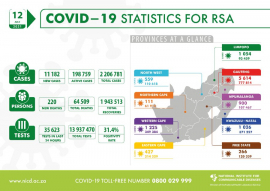
South Africa detected 11 182 new COVID-19 cases on Monday, while 220 more people succumbed to the illness.
The country now has 2 206 781 laboratory-confirmed infections and 64 509 deaths, the National Institute for Communicable Diseases (NICD) said.
Of the latest cases, 50% of were recorded in Gauteng (5 614), 11% in the Western Cape (1 225), 9% in KwaZulu-Natal (1 026), 9% in Limpopo (1 054), 8% in Mpumalanga (900), 5% in North West (559), 4% in the Eastern Cape (427), 2% in the Free State (266) and 1% in the Northern Cape (111).
While the cases continue to rise, the NICD observed that the seven-day moving average daily number of cases has decreased.
“The total number of cases today [Monday] is lower than yesterday [Sunday], and lower than the average number of new cases per day over the seven preceding days,” the public health institute said.
In addition, 571 more people were admitted to hospital in the past 24 hours, pushing the number of patients who are currently receiving treatment to 16 505.
The NICD said there are 13 937 470 tests, 35 623 of which were conducted since the last reporting cycle.
According to the World Health Organisation, since the start of the pandemic, there have 186 638 285 confirmed global cases, 4 035 037 deaths, and 3 114 766 865 administered vaccine doses.