
SA records 17 493 new COVID-19 cases

South Africa recorded the highest ever single-day spike on Wednesday, with 17 493 COVID-19 cases since the start of the third wave.
According to the National Institute for Communicable Diseases (NICD), of the latest infections, 10 806 were detected in Gauteng (62%), followed by 1 778 in the Western Cape (10%).
The NICD said the increase in the 24 hours brings the total number of laboratory-confirmed cases to 1 861 065, representing a 24.9% positivity rate.
Meanwhile,166 patients succumbed to the respiratory disease, pushing the death toll to 59 258.
There were also 622 hospital admissions in the past 24 hours.
This means there are now 10 497 patients who are receiving treatment at various healthcare institutions out of the 130 416 active cases.
The NICD’s Head of the Division of Public Health Surveillance and Response, Dr Michelle Groome, said the sharp rise in the reported daily COVID-19 cases is cause for concern, especially in Gauteng where daily infections are exceeding those seen during the previous two waves.
“Ultimately, it is up to each one of us to play our role to reduce the spread of the virus by limiting our interaction with others, as much as possible, during this time,” she added.
NICD Acting Executive Director, Professor Adrian Puren, has stressed that the anecdotes from family and friends are real.
“It is critical to managing our risks and the risk to others, especially the elderly by limiting contact with others and avoiding gatherings with those who are not part of our safe bubble,” he pleaded.
Globally, as of 23 June 2021, there have been 178 837 204 confirmed cases of COVID-19, including 3 880 450 deaths, reported to the World Health Organisation.
Over 48 000 educators, staff vaccinated
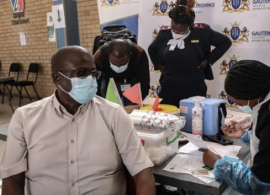
The Department of Basic Education says it is satisfied with the first day of the vaccination programme in the basic education sector, which saw more than 48 000 educators and staff vaccinated.
According to the preliminary report from the Department of Health, more than 48 000 educators and staff were vaccinated on the first day of vaccination on Wednesday.
“This figure excludes the Western Cape and Limpopo, which will start administering the vaccines in earnest on Thursday and Friday, respectively.
“The Western Cape only recorded about 30 people as vaccinated for the purposes of the launch.
“Limpopo didn’t vaccinate [on Wednesday] in line with their plan. The province will vaccinate over two weekends, starting this Friday and Saturday, and will then conclude next week Friday and Saturday,” the department said in a statement.
According to the department, all other provinces started rolling out on Wednesday, with KwaZulu-Natal vaccinating the largest number, with the lowest number vaccinated in the Northern Cape, which decided to send mobile teams to some of their smallest towns to kick-start their campaign.
The department reiterated its call to educators and support staff to adhere to the schedules given by the district offices.
“Strict adherences to health and safety protocols is paramount at all vaccination sites. The vaccination has no age limit for all members of staff and educators in the sector,” the department said.
It also noted that fake news played a major role in some of the challenges experienced on day one of the vaccination.
This includes a WhatsApp message circulated in some provinces, claiming that the Department of Health was going to run out of vaccines, and this led to a rush in some vaccine sites, particularly in the Eastern Cape, North West and Free State.
“The Department of Health has enough doses to cover the target population. Additional doses are on the way to South Africa, and government will be able to conclude the basic education programme within the 14-day period,” the department said.
Basic Education Minister Angie Motshekga and the leaders of all five teacher unions will be in Atteridgeville on Thursday to monitor the vaccination programme.
The union leaders and chief executives of the entities in the sector are also expected to be present at the Atteridgeville Community Centre.
SA reports 11 093 new COVID-19 cases

A total of 46 893 COVID-19 tests were conducted on Tuesday, with 11 093 new cases detected.
According to the National Institute for Communicable Diseases (NICD), this represents a 23.7% positivity rate, pushing the number of laboratory-confirmed cases to 1 843 572.
Of the latest infections, the majority are from Gauteng (67%), followed by the Western Cape (8%).
Meanwhile, a further 297 COVID-19 related deaths have been reported, bringing the death toll to 59 092.
The NICD reported an increase of 575 hospital admissions in the past 24 hours.
This means there are currently 10 114 people who are receiving COVID-19 treatment in hospitals.
Global view
According to the World Health Organisation (WHO), there are now 178 503 429 confirmed global cases, 3 872 457 deaths and 2 414 347 324 administered vaccine doses.
The WHO said the global numbers of cases and deaths continued to decrease over the past week, with over 2.5 million new weekly infections and over 64 000 deaths.
This represents a 6% and a 12% decrease respectively, compared to the previous week.
“While the number of cases reported globally now exceeds 177 million, last week saw the lowest weekly case incidence since February 2021.”
The organisation said this week, the Americas and Western Pacific regions logged numbers of new weekly cases similar to the previous week.
Meanwhile, South-East Asia and the European regions reported a decline in the number of new infections.
In addition, Africa recorded a marked peak in the number of weekly cases as compared to the previous week.
“Globally, mortality remains high with more than 9 000 deaths reported each day over the past week,” said the WHO.
However, the number of new deaths reported in the past week decreased across all regions except for the Eastern Mediterranean and the African regions.
The highest numbers of new cases were reported from Brazil (505 344 new cases, 11% increase), India (441 976 new cases, 30% decrease), Colombia (193 907 new cases, 10% increase), Argentina (149 673 new cases, 16% decrease), and Russia (108 139 new cases, 31% increase).
Meanwhile, variant Alpha has been reported in 170 countries, territories or areas, Beta in 119 countries, Gamma in 71 countries and Delta in 85 countries.
SA logs over 9 000 new COVID-19 cases
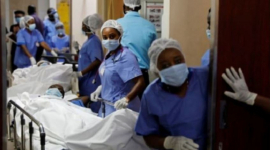
South Africa has reported 9 160 new COVID-19 cases, said the National Institute for Communicable Diseases (NICD).
This as there were 36 858 COVID-19 tests conducted on Monday. This translated to a 24.9% positivity rate, bringing the total number of confirmed cases to 1 832 479.
Of the latest infections, the majority were found in Gauteng (6 292), followed by the Western Cape (647).
New data shows that 93 more people succumbed to the respiratory disease, pushing the death toll to 58 795.
Meanwhile, the public health institute said 341 more patients were admitted to hospitals in the last 24 hours, bringing the total to 9 503.
According to the NICD’s data, 6 267 ill patients are receiving treatment in private hospitals, while 3 236 are in public health institutions.
The institution has advised people to adhere to preventative measures to limit the risk of contracting and spread of COVID-19.
So far, 2 144 204 people have been vaccinated in South Africa, while 3 656 516 citizens have registered on the Electronic Vaccination Data System (EVDS) to receive their jab.
According to the World Health Organisation, since the outbreak, 178 202 610 cases and 3 865 738 deaths have been confirmed.
In addition, the global community has administered 2 412 226 768 vaccine doses as of 20 June 2021.
Vaccination of senior citizens gaining momentum in KZN
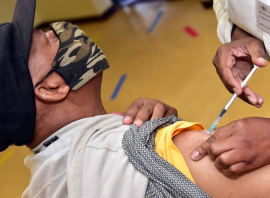
KwaZulu-Natal Premier, Sihle Zikalala, says the province continues to make significant progress with the vaccination of both senior citizens and healthcare workers who could not receive the jab during the first phase of the country’s COVID-19 vaccination rollout.
During a recent media briefing on the latest developments on COVID–19, Zikalala said the province is currently vaccinating 13 000 people per day, while intensifying the vaccination of the elderly and increasing more capacity in rural areas.
“As of 18 June 2021, we had vaccinated 362 226 senior citizens, as well as 127 health workers. The total number of senior citizens who are currently registered on the Electronic Vaccination Data System (EVDS) currently stands at 501 210,” Zikalala said.
The number of vaccination sites prepared for the Pfizer vaccine is currently 359, with 91 vaccination sites being prepared for teachers, who will be receiving the Johnson & Johnson vaccine from 23 June to 08 July 2021.
Sustained increase in infection rate
The Premier warned that while the COVID-19 cases in the province are still fluctuating and not yet at a peak, there are worrying signs of what appears to be a sustained increase in the infection rate.
About a month ago, KwaZulu-Natal was registering an average of 130 to 150 new infections and sometimes the figure would go as low as 70 to 80 cases.
However, over the past two weeks or so, the province has been recording more than 500 new cases each day, with only few exceptions, where the number would be around 400.
He said the province crossed the resurgence line on 9 June 2021, but then dropped below the alert threshold on 10 June 2021. On 15 June 2021, it again crossed the alert line, but currently it has remained below the threshold since 16 June 2021.
“In terms of our emergency early warning systems, a 10% increase in cases over a seven day moving average will trigger an alert, while a 20% increase in cases over a seven day moving average will trigger resurgence, which may indicate that we are entering a third wave of COVID–19 infections.
“Be that as it may, there are many signs that COVID–19 is still around, and deadly as ever.”
He said KwaZulu-Natal has been extremely fortunate that the infectio numbers are still where they are. But we want to make one thing clear, the fact that our numbers are relatively low should, under no circumstances, mean that we must be complacent,” the Premier warned.
SA to become Africa’s first vaccine manufacturing hub

The World Health Organisation (WHO) is working with South Africa to establish the continent’s first COVID mRNA vaccine technology transfer hub.
President Cyril Ramaphosa on Monday hailed the move as a landmark initiative.
The President believes that this will see huge advancement in the international effort to build vaccine development and manufacturing capacity that will put Africa on a path to self-determination.
“South Africa welcomes the opportunity to host a vaccine technology transfer hub and to build on the capacity and expertise that already exists on the continent to contribute to this effort.”
The technology transfer hub will pave a way for African companies to begin manufacturing mRNA vaccines.
Messenger RNA, or mRNA technology, instructs cells to make a protein that generates an immune response in the body, producing antibodies that protect against disease.
The mRNA is a key ingredient in the Pfizer/BioNTech and Moderna COVID-19 vaccines used by governments worldwide.
The WHO and partners will rope in the production expertise, quality control, and necessary license to a single entity to facilitate a broad and rapid technology transfer to multiple recipients.
WHO Director-General, Dr Tedros Adhanom Ghebreyesus, believes this was great news for Africa, which has the least access to vaccines.
“COVID-19 has highlighted the importance of local production to address health emergencies, strengthen regional health security and expand sustainable access to health products.”
WHO will work with a South African consortium involving Biovac, which will act as developer, while Afrigen will act as the manufacturer of mRNA vaccines.
Meanwhile, a network of universities will offer academic support and Africa Centres for Disease Control and Prevention (CDC) will provide technical and regional support.
President Ramaphosa believes that the ability to manufacture vaccines, medicine, and other health-related commodities will change the face of Africa.
“This initiative and others will change the narrative of an Africa that is a centre of disease and poor development. We will create a narrative that celebrates our successes in reducing the burden of disease in advancing self-reliance and also advancing sustainable development.”
According to the First Citizen, South Africa intends to work with the rest of the African countries to enhance regional trade and invest in science and innovation.
Vaccine nationalism
The President took the chance to shine the spotlight on the unequal access to lifesaving vaccines.
“Countries of the north, with more developed economies now have vaccinated about 50% of their citizens and having lesser hospitalisation, while countries in the developing world are still struggling to access vaccines.”
He also called on an end to vaccine nationalism, as access to vaccines is inequitable.
“It’s not fair that some people because they come from rich countries, their lives are worth much more than lives in poor countries.”
Meanwhile, he said government was still determined to work towards the proposal put together by India and South Africa for the waiver of Trade-Related Aspects of Intellectual Property Rights (TRIPS), as Africa sees a rise in COVID-19 infections.
At home, President Ramaphosa told the delegates that the country is in the midst of the third wave of infections, more severe than the previous one.
“The only defence that we have is to have vaccines.”
He said he believes that this hub was a firm foundation for the achievement of security for the world’s most vulnerable.
“We just cannot continue to rely on vaccines that are made outside of Africa because they never come or arrive on time and people continue to die.”
Pilot plant
WHO’s Chief Scientist, Dr Soumya Swaminathan, described this as a new model that brings together the public and private sectors, investment banks, academics, and regulatory agencies.
She said the WHO would facilitate and coordinate this initiative and that the organisation hopes to look at different technologies as a next step.
Swaminathan said there was already a pilot plant in South Africa. However, the organisation still needs to train the workforce and source raw material.
“In that situation, we could even expect to see between nine to 12 months vaccines being produced in South Africa.”
However, trials and efficacy of safety may take longer, she added.
Evaluation of China’s vaccine for use in SA at advance stages: SAHPRA
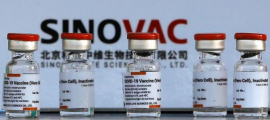
The evaluation of the CoronaVac COVID-19 vaccine, produced by Chinese pharmaceutical company Sinovac Biotech, is at “very advanced stages”.
This is according to the South African Health Products Regulatory Authority (SAHPRA), as the country races against the clock to get more lifesaving COVID-19 jabs.
“Furthermore, reports recently made available by the World Health Organisation (WHO) that articulate the basis for the Emergency Use Listing is being considered,” said SAHRPA on Monday.
Last month, the WHO approved China’s Sinovac COVID-19 vaccine for emergency use and recommended the use on people with comorbidities such as obesity, cardiovascular disease, and respiratory disease.
According to the WHO, a trial in Brazil showed that two doses, administered at an interval of 14 days, had an efficacy of 51% against symptomatic SARS-CoV-2 infection, 100% against severe COVID-19, and 100% against hospitalisation starting 14 days after receiving the second dose.
Sputnik V
Meanwhile, Russia’s Sputnik V application is a rolling review, “thus as data becomes available to the applicant it is submitted to SAHPRA”.
SAHPRA is an independent health products regulatory authority focusing on quality, safety, and efficacy.
“These core elements of its mandate also apply to COVID-19 vaccines as well.”
The drug watchdog said clinical trial data for safety and efficacy from phase one to three should be provided together with manufacturing information of the product quality.
“The assessment is then conducted considering all information provided.”
However, to respond to the pandemic, SAHPRA introduced another mechanism to facilitate the review of COVID-19 applications, which is the rolling review process.
“The rolling review is a mechanism that facilitates the submission of data as it becomes available. Whilst reviews can commence earlier with a rolling submission, it is important to note that some very important efficacy, quality, and safety information is sometimes outstanding and would require review for consideration of such products for public use.”
Therefore, SAHPRA said pharmaceutical companies could submit applications indicating a plan of when they will be submitting their data, that is, outline when the next rolling submission sequence is available for review.
“When an applicant submits their respective dossiers, SAHPRA works closely with the applicant in evaluating the data.”
The team of technical, subject matter experts within SAHPRA and external members, appointed by the Chief Executive Officer (CEO), evaluate these applications.
“SAHPRA also works closely with other regulators across the world as well as with the WHO in assessing the quality, safety and efficacy of health products, and in this case, COVID-19 vaccines.”
Meanwhile, the watchdog said it cannot approve any product if an application has not been submitted to the authority.
Sinopharm and Moderna vaccines
“Thus, there is no SAHPRA decision on Sinopharm and Moderna vaccines, which have a WHO Emergency Use Listing, as there have not been any applications for these vaccines in South Africa.”
So far, SAHPRA has approved the Pfizer and the Johnson & Johnson vaccines.
Meanwhile, the regulator said it has to take into account the prevalence of variants of concern such as the Beta variant in South Africa.
“This requires that SAHPRA ensures efficacy against such variants and hence information on studies supporting efficacy would be expected to be provided by the applicant.”
SAHPRA’s CEO, Dr Boitumelo Semete-Makokotlela, reiterated the commitment to prioritise all COVID-19- related health products, including vaccines, as the world and South Africa grapple with ending the scourge of a pandemic of “mammoth” proportions.
“SAHPRA will not be pressured to allow the public access to any product that has not met the necessary regulatory requirements,” she added.
Gauteng dealing with COVID-19 third wave pressure
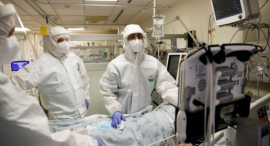
Gauteng Health MEC, Dr Nomathemba Mokgethi, has assured the public that healthcare workers and the department remain committed to tackling the third wave of COVID-19 infections.
In addition, the MEC said they will be appointing additional staff to the 5 521 COVID-19 posts filled as of 1 June 2021.
“Despite the health system in Gauteng operating under increased load due to the rise in COVID-19 cases, the province is still able to cope with the pressure at this stage,” said Mokgethi on Sunday.
The MEC acknowledged that the province’s health system is under pressure but believes the institutions have enough capacity to cope with the demand, as Gauteng remains the epicentre.
On Sunday, South Africa recorded 13 155 new infections, of which 8 640 were logged in Gauteng alone.
“We are adding more healthcare personnel to make sure more available beds are fully functional,” she explained, adding that the South African National Defence Force (SANDF) is also deploying its medical personnel to ease the burden of the healthcare workers.
The Health MEC pointed out that because the province adopted a risk-adjusted and demand informed strategy, it can optimise its response to the resurgence and the pandemic.
“We have dedicated COVID-19 functional beds across the province supported by a live electronic COVID-19 bed management dashboard, which we use to monitor the utilisation of beds across the province.
In addition, the MEC said, the department will be relying on the newly built infrastructure in Chris Hani Baragwanath Academic Hospital, Jubilee Hospital and Bronkhorstspruit Hospital and the repurposed Tshwane District Hospital.
“Wards and beds in other facilities are always repurposed based on the demands of the pandemic at any given time.”
In the meantime, the department has activated resurgence plans across its five districts to minimise the impact of the COVID-19 third wave.
This includes intensified COVID-19 screening and testing activities in communities with contacts followed up appropriately.
“There is also collaborative work led by other government agencies to improve law enforcement in various settings to ensure compliance to COVID-19 protocols in line with the national lockdown alert level 3.”
13 155 more people test positive for COVID-19
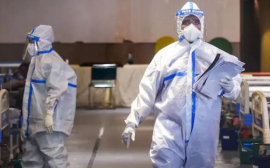
South Africa conducted 55 593 COVID-19 tests on Sunday, of which 13 155 results came back positive.
According to the National Institute for Communicable Diseases (NICD), the latest infections represent a 23.7% positivity rate, pushing the total number of laboratory-confirmed cases to 1 823 319.
The NICD said the majority of new cases were recorded in Gauteng after 8 640 people were confirmed to have contracted the virus in the last 24 hours.
The province is followed by the Western Cape with 1 166 additional infections, 759 in the North West, 574 in KwaZulu-Natal and 559 in Mpumalanga.
Meanwhile, the pandemic has killed 112 more people, bringing the tally to 58 702 since the outbreak.
“A further 611 hospital admissions have been reported,” said the public health institute.
According to the NICD, 110 725 patients are currently ill with COVID-19, while 9 344 are receiving treatment in hospitals.
So far, 2 141 624 people have received their Coronavirus vaccine.
Globally, as of 18 June 2021, there have been 177 108 695 confirmed cases of COVID-19, including 3 840 223 deaths, reported to the World Health Organisation.
Meanwhile, 2 378 482 776 vaccine doses have been administered.
Gauteng welcomes walk-ins at vaccination centres

Gauteng Health MEC, Dr Nomathemba Mokgethi, has confirmed that the province will allow walk-ins at vaccination sites for those aged 60 and above.
According to the MEC, the elderly will be assisted whether they have registered on the Electronic Vaccination Data System (EVDS) or not.
“All persons will be assisted with registration and will be vaccinated, even those who are registered and waiting for SMSes.”
Meanwhile, Gauteng has opened more vaccination sites. There are currently 137 active centres, of which eight are new.
“The plan is to increase capacity and to ensure that more sites operate over the weekend, with the Chris Hani Baragwanath Academic Hospital vaccination site being the first in the province to open seven days a week.”
According to the latest data, over half a million people have received their COVID-19 vaccine over the 860 793 who have registered in Gauteng.
Meanwhile, Mokgethi reiterated the call for compliance to non-pharmaceutical interventions including wearing a mask, keeping a safe physical distance and washing hands regularly or using a hand sanitiser and avoiding gatherings.
“There is no doubt that we are seeing the widespread transmission of Coronavirus infections in all our communities.”
For the first time, on 16 June Gauteng recorded 7 859 new infections which surpassed the first and second wave daily infections.
“The war against COVID-19 will only be won when everyone acknowledges the power to stop the spread of the Coronavirus lies with every individual.”