
SA records 16 585 new COVID-19 cases
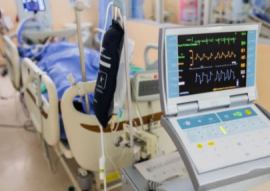
South Africa has recorded 16 585 new COVID-19 cases, bringing the total number of laboratory-confirmed cases to 2 062 896.
“This increase represents a 30.2% positivity rate. As per the National Department of Health, a further 333 COVID-19 related deaths have been reported, bringing total fatalities to 61 840 to date,” the National Institute for Communicable Diseases (NICD) said on Sunday.
A total of 13 450 014 COVID-19 tests have been conducted in both public and private sectors.
The Gauteng province accounts for the majority of new cases (57%), followed by the Western Cape (11%), and the KwaZulu-Natal and Limpopo (7% each) provinces.
“An increase of 384 hospital admissions have been reported in the past 24 hours,” the institute said.
Meanwhile, South Africa recorded new record high infections for COVID-19 on Friday and Saturday.
Saturday’s report identified 26 485 new cases with the total number of laboratory-confirmed cases at 2 046 311.
This increase represented a 27.3% positivity rate. A further 175 COVID-19 related deaths were reported, bringing total fatalities to 61 507.
On Friday, the NICD reported 24 270 new COVID-19 cases, with the total number of laboratory-confirmed cases at 2 019 826.
This increase represented a 27.4% positivity rate. A further 303 COVID-19 related deaths were reported, bringing total fatalities to 61 332 to date.
COVID-19 mobile vaccination drive launched in Gauteng
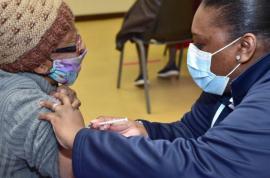
In an effort to ramp up the province’s vaccination programme, the Gauteng Provincial Government and civil society partners will this week launch COVID-19 mobile vaccination drives in Ekurhuleni, Tshwane and Johannesburg.
In a statement, Gauteng Provincial Government spokesperson Thabo Masebe said the drive is aimed at assisting all eligible persons for vaccination to get jabs near their places of residence or work.
Masebe said mobile clinics and additional vaccination sites will be used.
Transport will also be provided for those in need. “Pick-up points in different areas have been published. All eligible persons are urged to make use of the opportunities created to get vaccinated,” Masebe said.
The provincial government urged people who are 50 years and older to register for their vaccination.
He also assured that all public vaccination sites in Gauteng accept walk-ins of all eligible groups.
“COVID-19 vaccines remain highly effective in preventing severe diseases, hospitalisation and death even in the event of a delta variant infection. The Gauteng government would like to remind residents that each vaccination brings us one step closer to a better future and to the things we miss.
“Let us minimise the spread of the disease and flatten the curve through compliance with non-pharmaceutical interventions. We call on all Gauteng residents to get vaccinated when their turn comes,” Masebe said.
NatJOINTS deploys reinforcements to KZN areas flouting COVID-19 regulations

The National Joint Operational and Intelligence Structure (NatJOINTS) on Sunday enhanced operational capacity in KwaZulu-Natal amid “flagrant disregard” for COVID-19 Adjusted Alert Level 4 regulations.
“This is in response to incidents in which people are seen to be undermining the authority of the State, including the flouting of the Disaster Management Act Regulations,” NatJOINTS spokesperson Vishnu Naidoo said in a statement.
During the deployment, SAPS commanders and members on the ground are provided clear and concise directives that responds to any and all situations and must be informed by proper analysis.
“To this end, every situation will be assessed and dealt with on its own merit,” reads the statement.
In situations where any operational response by the security forces may potentially result in injury and/or loss of life, a criminal case or cases will be opened against those that have created such situations and criminal action will be instituted against such persons.
The NatJOINTS reminded the public that the country is still under adjusted Alert Level 4 lockdown.
“If we are to see a slowdown in the spread of the virus, all citizens of the country are urged to strictly adhere to the Disaster Management Act Regulations and failure to do so, including any person organising or being part of gatherings, will also result in people being fined or jailed or both.”
Most provinces reaching red alert as third wave takes grip

While Gauteng remains the epicentre of the COVID-19 pandemic, acting Health Minister Mmamoloko Kubayi-Ngubane has warned that many provinces in the country are almost at red alert as infections continue to increase.
“The trends are clearly showing that other provinces which are currently lagging are going to experience the trend we are seeing in Gauteng, most notably in the Western and the Eastern Cape. What worries us as well, is the positivity rate. If you look at Limpopo, it has almost 42% of positivity rate, which is leading in terms of positivity rates,” Kubayi-Ngubane said.
Briefing the media on government’s efforts in the fight against COVID-19 and the rollout of vaccines on Friday, Kubayi-Ngubane said the COVID-19 situation in the country remains of great concern, as the numbers continue to increase at a very rapid rate.
“In the last 24 hours, there are 21 584 new cases, which is higher than the average number of new cases per day over the seven preceding days measured at 16 916 cases. The positivity testing rate has also increased from 27.6% the previous day to 28.4%.”
Gauteng continues to be the epicentre of new infections with the number of new cases having risen to 12 806 which represents 60% of the total new infections.
“We remain very worried about the rise in hospitalisations, which is putting a lot of strain on the health facilities in Gauteng. The private health hospitals are currently operating at more than 100% capacity and public health hospitals are edging closer to full capacity,” Kubayi-Ngubane said.
She said nationally the third wave numbers have surpassed the first wave peak and are likely to surpass the second wave peak.
The new variant, called the Delta variant, is quickly becoming the dominant variant in the country, replacing both the Alpha variant experienced in the first wave and Beta variant experienced in the second wave.
However, the Minister reminded the public that the Beta variant is still prevalent and spreading.
“An important characteristic of the Delta variant is … those who were previously infected by Beta were immune from reinfection by both the Alpha and Beta variant – it is not the case with the Delta variant.
“This means that those who have had COVID-19 are at a risk of reinfection by the Delta variant,” Kubayi-Ngubane said.
Over 120 000 people vaccinated in last 24 hours
Over 120 000 people were vaccinated in the last 24 hours, with KwaZulu-Natal leading the pack, followed by Gauteng, then the Eastern Cape and Western Cape.
“The vaccination of educators is progressing well and we have so far vaccinated just over 300 000 educators. We had more educators registering in KwaZulu-Natal and followed by Gauteng,” Kubayi-Ngubane said.
A total of 354 504 people aged between 50 and 59 registered for their vaccination when the system opened on Thursday. The group will start receiving their jabs on 15 July 2021.
“In parallel to this process, we are also finalising the details for the commencement of vaccinations of other frontline sectors such as the police, defence, the security cluster and we will provide more details soon,” she said.
Two million Pfizer doses expected in July
The Minister said almost 2.1 million doses of the Pfizer vaccine are expected to arrive in July.
She said Pfizer has delivered nearly 4.5 million doses in quarter two and they have committed just over 15.5 million doses in quarter three, of which “we are expecting nearly 2.1 million doses in July”.
“Johnson and Johnson have so far delivered 500 000 early access doses used for Sisonke, 300 000 market doses two weeks ago and 1.2 million doses landed last week. These doses all need to be used by 11 August.
“We are awaiting confirmation for delivery of 500 000 doses (these expire later than the previous doses mentioned), and this makes up the two million to replace those that were lost to the contamination incident.
“We make a clarion call to all those who qualify, to register and vaccinate,” Kubayi-Ngubane said.
The Minister used the opportunity to thank scientists who continue to make world class scientific findings that are helping to fight the pandemic.
She also thanked the healthcare workers, including doctors, nurses and all supporting stuff in health care centres for continuing to be in the forefront of the fight against the COVID-19 pandemic.
COVID-19 cases soar by 21 584
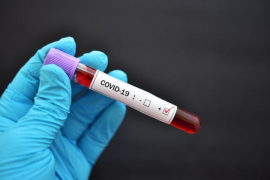
South Africa recorded 21 584 COVID-19 cases on Thursday, according to the National Institute for Communicable Diseases (NICD).
The Gauteng province accounts for the majority of new cases (59%), followed by the Western Cape (11%) and North West (7%) provinces.
Gauteng reported 12 806 cases while the Western Cape reported 2 447.
This as South Africa battles a third wave of COVID-19 infections.
“Today the institute reports 21 584 new COVID-19 cases that have been identified in South Africa, which brings the total number of laboratory-confirmed cases to 1 995 556. This increase represents a 28.4% positivity rate,” said the NICD.
A further 382 COVID-19 related deaths have been reported, bringing total fatalities to 61 029 to date.
Also, 13 209 499 tests have been conducted in both public and private sectors.
The institute said it has seen an increase of 769 hospital admissions that have been reported in the past 24 hours.
Acting Minister of Health, Mmamoloko Kubayi, and a panel of experts are this morning briefing media on the progress of government’s efforts in the fight against COVID-19, including an update on the national vaccination rollout programme.
The NICD, a division of the National Health Laboratory Service, said it will continue monitoring COVID-19 in order to inform the public health response.
SASSA remains open under Adjusted Alert Level 4
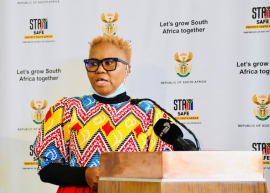
Under Adjusted Alert level 4, the South African Social Security Agency (SASSA) will remain open and operate with a reduced staff complement as per the Department of Public Service and Administration circular.
“Applications for social grants at all local offices will be staggered according to grant type, for instance Mondays will be for older persons, Tuesdays for disability grants, Wednesdays and Thursdays for child grant applications, and Fridays for appointments and spill over from the week,” Minister of Social Development, Lindiwe Zulu, said on Friday.
She was addressing members of the media in Pretoria on her department’s response to COVID-19 and on the Level 4 Risk Adjusted Strategy as announced by the President.
Some of the changes that were made by the Department of Social Development during its response to COVID-19 has enabled the department to fast-track digitisation of its services.
These include the online booking system for disability grants, which has significantly cut down on the amount of time and costs for both SASSA and grants applicants.
“We take great pride with the significant progress we have registered since the launch of the online booking system in April this year. We therefore would like to encourage disability grant applicants to make use of the SASSA online booking system, which can be accessed through the agency’s website on www.sassa.gov.za.
“This will allow applicants to book assessment dates for the disability assessments. Our staff at SASSA offices can also assist clients with this system to ensure that they avoid repeated visits to local offices,” the Minister said.
SASSA will continue with the staggered payments of grants, with the first payment date reserved for older persons, followed by disability grants and the payment of all child grants.
“This month, payments of social grants will start on Tuesday 6 July. Once again, we appeal to all grant recipients that they do not need to collect their grants on the day it becomes available, but can collect their grants on any day as their monies will remain in their accounts and will not be taken away from them,” Zulu said.
Community Nutrition and Development Centres
The department’s 250 Community Nutrition and Development Centres (CNDCs) across the country will remain open to provide the much-needed relief, but this will be under strict COVID-19 regulations compliance and will be limited to take-away meals only.
“We have also adapted our operations to new and innovative ways that include knock-and-drop approach of cooked meals to minimise the health risks of those aged 60+.
“Our CNDCs assist with food storage and distribution to poor households, and are also part of community driven Food and Nutrition Security Programmes, which increase access to food security to vulnerable and disadvantaged communities, especially at this time of need,” the Minister said.
All CNDCs have amended their operations to ensure precautions that prioritise the health and safety of recipients and staff who are at the frontline.
“It is important to stress that these measures are no substitute to other COVID-19 protocols as beneficiaries have equal responsibility by continuing to follow the guidelines which, include; the – regular sanitising and washing of hands, wearing of a mask that covers both mouth and face, and maintaining a distance from others at all times. On a related matter, we will continue utilising a hybrid model of providing food parcels, such as cash, food parcels and vouchers throughout the nine provinces and through SASSA’s Social Relief of Distress (SRD) programme for eligible households in distress,” Zulu said.
Registration of NPOs
All in-person Non-profit Organisations (NPOs) services have been suspended.
For NPO registrations and submission of annual reports, citizens are encouraged to use the department’s online platform: www.npo.gov.za
“We reiterate our call for NPOs to ensure that they remain compliant with the NPO Act to avoid being de-registered. We further would like to assure all NPO applicants that their temporary certificates will be issued to them via email whilst the original certificates will be provided at a later stage,” Zulu said.
Provincial departments are making progress with the transfer of funds to NPOs whose efforts are more important than ever during this pandemic.
“However, we are mindful that some provinces are experiencing delays attributed to system changes, delays in finalisation of Service Level Agreements and human resource shortages, amongst others.
“I have directed all provincial departments to ensure that they move with greater speed in processing these subsidies. We take this opportunity to call upon the NPO sector to comply with all accountability requirements, including timely submission of progress reports as required by law,” the Minister said.
Early Childhood Development Centres (ECDs)
All ECDs remain open and in full operation in compliance with all COVID-19 protocols and guidelines as previously provided to the sector.
“Our Provincial Departments will also continue to pay full subsidy to ECD programmes. We are aware that we did not complete payment through the stimulus package to all qualifying applicants at the end of March 2021.
“To this end, all Provincial Departments have applied for the rollover of funds as per the budget process. Let me take this opportunity to assure all qualifying ECD services that they will definitely receive their payments,” the Minister said.
SA logs over 19 500 new COVID-19 cases
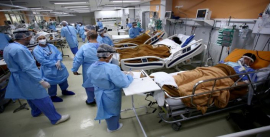
South Africa has recorded 19 506 new COVID-19 cases, bringing the total number of cases to 1 973 972.
According to the National Institute for Communicable Diseases (NICD), the increase represents a 27.6% positivity rate.
Gauteng remains the epicentre, accounting for the majority of new cases (57%), followed by the Western Cape (11%) and North West (7%) provinces.
Meanwhile, a further 383 COVID-19 related fatalities have been reported, pushing the death toll to 60 647.
“An increase of 698 hospital admissions have been reported in the past 24 hours,” the institution said, adding that there are now 12 893 people who are currently in hospital.
The information is based on the 13 133 428 tests conducted in both public and private sectors, of which 70 593 were performed on Wednesday.
In addition, South Africa managed to vaccinate 120 172 people the previous day.
This means there are now 3 026 636 people who have received either the Pfizer or Johnson & Johnson vaccine in the country.
According to the World Health Organisation (WHO), there are 181 521 067 confirmed global cases of COVID-19, 3 937 437 deaths, and 2 915 585 482 administered vaccine doses.
Vaccine manufacturing hub will enhance SA’s local manufacturing capabilities

Higher Education, Science and Innovation Minister Blade Nzimande says the establishment of Africa’s first messenger RNA (mRNA) technology transfer hub for COVID-19 vaccines will ensure that South Africa’s local manufacturing capabilities of vaccines will be enhanced.
“This means that South Africa will move beyond just fill/finishing of vaccines, into the manufacturing of the active component or drug substance of vaccine. South Africa’s local manufacturing will be ready to move into commercial scale manufacturing of the drug substance, with relevant equipment, facility preparation, staff training, and doing validation runs,” Nzimande said.
He made the remarks during a media briefing on Wednesday, where he was giving an update on ongoing work within the science and innovation sector, as coordinated through the Department of Science and Innovation.
Nzimande reiterated his gratitude to the announcement by World Health Organisation (WHO) Director-General Tedros Adhanom Ghebreyesus, that South Africa will become the first COVID-19 mRNA vaccine technology transfer hub.
WHO is seeking to expand the capacity of low and middle-income countries (LMICs) to produce COVID-19 vaccines and scale up manufacturing to increase global access to the critical tools to bring the pandemic under control.
During his visit to South Africa last month, French President Emmanuel Macron announced that France will support South Africa and Africa with regards to the local manufacturing of COVID-19 vaccines, through the establishment of the mRNA Technology Transfer Hub.
Network for Genomic Surveillance
In response to the increasing spread of COVID-19 around the world, the Network for Genomic Surveillance in South Africa (NGS-SA) has been monitoring and sequencing confirmed COVID-19 cases in the country.
The COVID-19 genome surveillance work is funded by the Department of Science and Innovation and is based at the University of KwaZulu-Natal. It is an entity known as KwaZulu-Natal Research and Innovation Sequencing Platform (KRISP).
Nzimande said on 25 June 2021, NGS-SA confirmed from the latest representative community sampling up to 17 June 2021 that the Delta variant increased significantly in the province of KwaZulu-Natal, and is now the most common variant detected in the province.
“These Delta genomes were sampled from multiple locations across six districts of KwaZulu-Natal, Harry Gwala (n=16), Zululand (n=15), iLembe (n=14), eThekwini (n=12), King Cetshwayo (n=1) and Ugu (n=1).
“This demonstrates a striking increase across the province and suggests that the Delta variant is rapidly displacing the Beta variant (501Y.V2/B.1.351), that had been dominant since the onset of the second wave,” Nzimande warned.
The first detection of the Delta variant in South Africa was from a sample collected on 24 April 2021, and had, as per reporting at the time, been detected in Gauteng, Free State, KwaZulu-Natal and the Western Cape.
Although initial sequences were from cases with recent travel history, there is now clear evidence of community transmission of the Delta variant in South Africa.
“In Gauteng, the Delta variant was detected in 1/129 (1%) of samples in April and 13/184 (7%) in May 2021. The data for sequences up to 21 June 2021 indicated that almost 75% of the cases in Gauteng were exposed to the Delta variant, with an increase of the Delta variant in the Western Cape and with signs of dominance starting to show in Limpopo and starting to replace the dominance of the Beta variant in all the provinces,” the Minister said.
He acknowledged (KRISP), the National Health Laboratory Service (NHLS), and the University of Cape Town (UCT) who sequenced the recently confirmed cases of the Delta variant in South Africa.
He also expressed his gratitude to the NGS-SA – a consortium of scientists funded by the Department of Science and Innovation and the South Africa Medical Research Council (SAMRC).
The Minister further reiterated his call for the observance of all the health and safety protocols.
SA’s COVID-19 death toll topped 60 000 on Monday
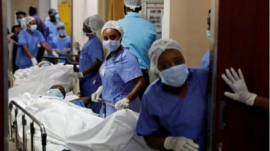
South Africa’s COVID-19 death toll has now crossed the 60 000 mark, according to the latest update by the National Institute for Communicable Diseases (NICD).
According to the NICD, the death toll now stands at 60 038 after 138 more people succumbed to COVID-19 on Monday.
Meanwhile, cases continue to soar, with 12 222 new detected infections.
This brings the total number of laboratory-confirmed cases to 1 941 119, representing a 28.3% positivity rate.
Gauteng remains the hardest-hit province, accounting for 8 408 new cases (69%), followed by 902 infections recorded in the Western Cape (7%).
“An increase of 512 hospital admissions have been reported in the past 24 hours,” the institute said.
The public health institute said there are 157 199 people who are currently infected of which 11 801 are receiving treatment in various hospitals in the country.
On Monday, the country vaccinated 97 202 people, pushing the tally to 2 787 996.
According to the World Health Organisation, as of 28 June, there are 180 817 269 confirmed cases of COVID-19, 3 923 238 deaths and 2 660 756 547 administered vaccine doses.
SANParks announces Adjusted Alert Level 4 changes
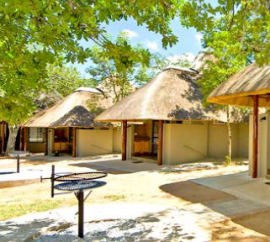
Following the announcement by President Cyril Ramaphosa on Sunday of placing the country on Adjusted Alert Level 4 with effect from Monday, the South African National Parks (SANParks) has announced changes to its hospitality and tourism services in all its various national parks.
SANParks Acting Chief Executive Officer, Dr Luthando Dziba, said a Risk Adjusted Strategy has been at the core of every sector or industry planning in an effort to save lives.
“SANParks in complying with government regulations has made the requisite amendments particularly for travellers to our national parks originating from the Gauteng province,” Dr Dziba said.
The rules for clients from Gauteng with exiting reservations are as follows:
- There will not be a blanket cancellation of bookings for guests residing in Gauteng. Instead, those holding current reservations valid for the period 28 June to 11 July 2021 will be contacted directly via telephone and email to establish whether their bookings should be postponed or cancelled.
- Guests are also encouraged to contact reservations on 012 428 9111 or 082 233 9111 or email reservations@sanparks.org if they are unsure about their current reservation.
- Where cancellation is the only option, cancellation fees will not be charged and clients will be provided with the option to claim a full refund or for their deposit to be kept on credit-on-hold for use on future reservations.
- Gauteng residents currently in occupation of SANParks accommodation facilities will be permitted to remain in the parks for the duration of their reserved stay as the regulations permit for persons who were outside the province when the regulations came into force, a once-off trip to return to their places of residence.
All gatherings at beaches and picnic sites within the national parks are prohibited. The dining facilities and restaurants within the national parks will operate on the basis of off-site consumption and therefore no sit-down dining will be allowed.
More information will be shared on the compliance with the regulations regarding occupancy levels once SANParks has finalised the necessary logistics.
Dziba said that while SANParks understands the inconvenience and the frustration this may create, reservations and park teams on the ground to assist with adherence to the law.
Dziba said the spread of COVID-19 has affected all South Africans and in order to minimise the spread everyone has to make sacrifices.
He urged guests to the national parks to appreciate that the regulations and SANParks own protocols, as inconvenient as they may seem, are towards a greater and common good.