
Teachers, staff urged to be at school for ahead of jabs

The Department of Basic Education is calling on all teachers and staff to be at school in order to prepare for the COVID-19 vaccination programme set to start on Wednesday.
In a statement on Monday, the department said the vaccination programme is an opportunity to normalise schooling and intensify the process of mitigating the impact of COVID-19.
At the weekend Basic Education Minister Angie Motshekga announced that the vaccination of personnel in the sector would start officially on Wednesday following the arrival of an initial 300 000 doses of the Johnson & Johnson vaccines.
“In her address the Minister said all five official and recognised teacher unions in the sector were in full support of the vaccination program as part of the fight against COVID-19,” said the department.
The leadership of the teaching unions are themselves expected to get vaccinated this week.
School governing body associations have supported the vaccination programme and have committed to working closely with the department to ensure all targeted people receive the jab.
“For the next two weeks, we make the clarion call to our school communities to ‘drop all, and vaccinate!’ in order for us to successfully complete this program, we will need to keep schools open.”
Any disruptions, she said, “would be undesirable”.
“We need to work extremely hard and around the clock to vaccinate as many people as possible in our sector. Vaccinating does not mean that we need to stop adhering to the non-pharmaceutical health and safety protocols”.
The department has issued a circular to provinces to outline all the steps that must be taken before and during the vaccination process.
“Provincial education departments will also provide more details to district, circuit offices and schools on scheduling of the vaccination in all the sites,” said the department.
Vaccination of teachers, support staff to start on Wednesday
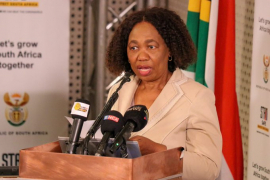
The COVID-19 vaccination of teachers and support staff will start this Wednesday until a day before the schools close to mark the end of the second term on 8 July 2021.
Basic Education (DBE) Minister Angie Motshekga made the announcement during a recent media briefing on the basic education sector’s response to the impact of COVID-19 on schooling.
“Those to be vaccinated are all PERSAL staff (as at April 2021) in DBE (educators, administrative and support staff) at all public schools; irrespective of their age; School Governing Body (SGB) appointed teachers, and those teachers employed by independent schools registered in terms of the South African Schools Act,” Motshekga said.
Motshekga said 582 000 people are to be vaccinated over 10 to 14 days, including weekdays and weekends; or 7 to 10 days, if it is weekdays only.
“A strict registration process will be followed, if you are PERSAL staff member, your details have already been captured onto the Electronic Vaccination Data System (EVDS); lists for SGB appointees and independent school educators will be uploaded onto the EVDS.
“On-site data capturing will be required for individual’s cell numbers; and medical aid details. There will be no on-site registrations, meaning that people not bulk uploaded in the EVDS, cannot be registered on-site; and therefore, cannot be vaccinated. Should this happen to you, the on-site officials will help you on the steps to be followed for assistance,” Motshekga explained.
She added that the Departments of Health and Basic Education at provincial and district levels, will also work together to link schools to identified vaccination sites; and the verification of basic education staff – where the EVDS is offline due to power outages, will require a list or letters signed-off by the staff respective principals.
Exclusion criteria
The Minister however, noted that there are some people, who may not qualify to be vaccinated, and these may include, but not limited to any person who had contracted COVID-19 in the past 30 days; any person who was vaccinated using another vaccine (Pfizer or Johnson & Johnson, under Sisonke); or any person who had received a flu vaccine in the past 14 days.
She said during the deliberations with the Department of Health, it was further agreed that the vaccination programme must cover staff who transport children to and from schools; staff who support the school feeding scheme; staff who do remote learning programmes (TV and Radio); and staff of teacher unions, and other contracted staff who provide security, do cleaning and other functions at school.
“Vaccination is voluntary but highly recommended so that everybody can be protected. Let us work together on this fight against COVID-19 in our spaces. Everybody is expected to make their own transport arrangements. Where there are challenges, schools will need to assist.”
The Minister made a clarion call to school communities to “Drop all, and vaccinate!”
Management of COVID-19 cases in schools
Motshekga also urged all schools to apply the Standard Operation Procedures (SOPs) when managing COVID-19 related cases, and that every school must have a COVID-19 committee, a COVID-19 file, and compliance officers.
She reiterated that doing business under COVID-19, means that one needs to also strike a balance between saving lives and livelihoods.
In the case of the Basic Education Sector, she said the department needs to do all it can to prevent a potential academic disaster.
“At all times, we follow the advice of public health experts, who are supporting us in the management of the impact of COVID-19. We believe that schools must remain open and in saying so we are not insensitive to the concerns raised about the rising infections.
“The position is that we continue to handle COVID-19 cases according to the differentiated strategy, on a province by province, school-by-school basis. While there are disruptions in the sector, the majority of our schools remain fairly stable. Our social partners and key stakeholders expressed the same view in our engagement earlier today,” the Minister said.
She said the department will however, take guidance from structures, including Ministerial Advisory Committee, and Cabinet on this matter, as part of a wider approach in the fight against COVID-19.
There has to be scientific reasons for all decisions that are taken, she said.
President Ramaphosa calls for COVID regulations compliance

President Cyril Ramaphosa has called on South Africans to do their bit to limit the impact of the unravelling third wave of the COVID-19 pandemic.
“We may be tired of this persistent enemy, but it is not yet tired of us. The threat to health and lives is evident as people become ill and some die. So we must do what we can, as individuals, as families and communities, as unions and employers, and as government, to limit the toll,” the President wrote in this week’s edition of his newsletter.
“When the virus surges to this extent, the economy also faces challenges. Workers have to isolate or quarantine, people stop going out for recreation or shopping, tourism comes to a standstill, and workplaces have to spend more money to prevent infections,” he said.
In Monday’s newsletter, the President said it was incorrect to speak about a trade-off between lives and livelihoods.
“Rather, we need to invest our time, effort and resources to control the pandemic to see a payoff, in terms of both falling case numbers, reduced deaths and economic recovery.”
He noted that the climb in new cases has been extraordinarily rapid and steep over the past few weeks. The number of daily new cases jumped from below 800 in early April, to over 13,000 in the past week.
“In other words, it increased more than fifteen-fold from the last low point.”
He said by now “we all know what we have to do to bring the rate of infection down, and we must act with great discipline to protect our people and our livelihoods.”
He urged the public to continue to avoid social gatherings of all kinds, whether for family, friends, business or recreation.
The President said those who can work from home to do so while also urging the public to wear masks while also keeping one and half metres apart from others.
“Although we find ourselves in the middle of winter, we need to ensure good ventilation when indoors or in public transport, for instance by opening windows.”
He said South Africa has experienced pandemics before, most notably HIV/AIDS.
“We have managed to reduce new HIV infections by more than half since 2010. Our people know that we can control contagions, but it requires all of us to act together over time. It is not a task only for the vulnerable or the healthcare system. It requires every South African to do their part, to accept that we cannot go back to pre-pandemic days but must rather build a new normal that is safe for us all.”
The battle, he said, can be won “but it will take persistence and discipline.”
Rising cases in Gauteng
The President expressed concern at rising COVID-19 cases in Gauteng.
“As always with COVID-19, there are huge differences between different parts of the country. Right now, Gauteng is by far the hardest hit. This week, the number of new cases exceeded the peak in both previous waves, and it has not started to decline yet. As a result, hospitals are reaching capacity, and healthcare workers are exhausted.
“Gauteng looks small on the map. But it is home to one in five South Africans and two-fifths of our economy. As an economic hub, many people travel to and from this province. We need to turn this around urgently, or lives and livelihoods will be seriously under threat.”
Vaccination programme
Government, he said, plans to provide vaccinations for the vast majority of adults in South Africa by the end of the year, saying this was crucial for people to get the jab once they became eligible.
“Our priority in this phase is to vaccinate all five million people over the age of 60. This week, we also plan to start vaccinating half a million educators and others in the sector since their work requires social contact and is vital for our children, our economy and our future,” he said.
“All of us need to work to ensure a fast and smooth rollout of the vaccine campaign. If our family members, friends, neighbours or employees need help, we should support them in registering and getting to vaccine sites. We will only be able to effectively contain this disease when we succeed in rolling out vaccinations on a large scale,” said the President.
“Our country has experienced many hardships in the past. However, we overcame them by understanding the challenges we faced, developing appropriate strategies, and implementing them together. As we have done before, we need to work as one to prevent infections and reduce the effects of this virus on us.”
Studies show good immune response to J&J vaccine
Studies are showing a good immune response to the Johnson & Johnson (J&J) single-dose COVID-19 vaccine.
The South African Medical Research Council (SAMRC) collaborated with J&J on the investigator-led collaborative Sisonke Study, which saw close to 500 000 healthcare workers receiving the single-dose vaccine under the Sisonke Study.
The lead investigator in the Sisonke Study and SAMRC Chief Executive Officer, Professor Glenda Gray, said the side-effects observed are similar to those in other parts of the world, and other vaccines.
“So, there’s no real difference that we’re seeing,” she said at a media briefing on Friday.
Meanwhile, these vaccines – whether it is a J&J or Pfizer – will reduce the risk of severe disease.
“They may not protect you from infection but they do protect you or reduce your risk from severe disease,” said Gray.
According to the Professor, they are following up on all the healthcare workers that had breakthrough infections – cases where fully vaccinated individuals test positive for Coronavirus – and they are currently adjudicating them to see if their illness was mild or severe.
“However, most of the breakthrough infections have been mild and only a handful have been severe,” Gray said.
Most breakthrough infections have been due to the variant that is currently driving the third wave in the country, Gray said.
Researchers are also looking at boosters for the J&J vaccine, about six months after the first vaccination.
In the meantime, Gray said “sub-studies” are being conducted with the single-dose vaccine, looking at HIV infected healthcare workers; pregnant and lactating women, and healthcare workers with comorbidities to understand their immune response compared to other parts of the world.
According to Gray, healthcare workers who have been vaccinated will have a reduced risk of getting severe disease.
“We still believe that healthcare workers must use the personal protective equipment. They must use masks, wash their hands and observe social distancing,” said Gray.
Police officers to get vaccinated after teachers

Police officers are next in line to get vaccinated after the inoculation of teachers.
This is according to the Health Department’s Dr Nicholas Crisp, who said this second major vaccination programme is now at an advanced stage of planning.
“It will be rolled out immediately upon the completion of the teacher [vaccination],” he said on Friday.
Crisp, who is a Deputy Director-General (DDG) in the department, managing the distribution of COVID-19 vaccines, said they have identified 145 000 officials and 36 000 civilians working in the police service.
Vaccination sites will be set up at police stations, in collaboration with licenced pharmacies.
Crisp announced that another vaccination programme will aimed at the South African National Defence Force (SANDF) and Correctional Services.
“SANDF has its own military health services and will be vaccinating their own members,” said Crisp.
Inmates, said Crisp, will be vaccinated through Correctional Services, while the staff will receive their vaccines through the same programme run by the Department of Public Service and Administration with the Government Employees Medical Scheme (GEMS).
“There are a lot of parallel processes in terms of volume of vaccines.”
Besides the Pfizer vaccines that are already in the country, Crisp said the country will receive an additional two million that will be delivered soon.
In addition, he said Johnson & Johnson (J&J) is expected to start delivering more vaccines after the United States Food and Drug Administration (FDA) halted the distribution of the contaminated jabs.
So far, the country has already inoculated over two million citizens and government is determined to prioritise frontline workers.
“What has constrained us has been the lack of the availability of vaccines and we know if we want to get to more people, we need more sites and more vaccines,” said Crisp.
Teachers
Crisp confirmed that the country received the 300 000 J&J vaccines earmarked for teachers on Thursday.
The department is targeting 582 000 public, private and school governing body-appointed teachers.
“Most of them have already been vaccinated because some of them are over 60, while others work as psychologists or registered as healthcare workers.
While the 300 000 vaccines will not be enough to cover all the teachers, Crisp said the next consignment is due to arrive next week from a similar source in the US.
The Basic Education Department is arranging for schools to get designated vaccination sites, and will arrange for transport to get them to these centres.
Crisp reminded teachers to carry their IDs and medical aid cards (for those who have them).
SA logs 11 767 new COVID-19 cases, with 100 deaths

Gauteng has recorded 7 502 new COVID-19 cases out of the 11 767 that were detected in the last 24 hours.
According to the National Institute for Communicable Diseases (NICD), this represents a 22.6% positivity rate.
“The total number of cases today is lower than yesterday but higher than the average number of new cases per day over the seven preceding days. The positivity has increased from yesterday,” the NICD said on Thursday.
The majority of new infections are from Gauteng (64%), followed by the Western Cape (11%) and North West (6%).
Meanwhile, a further 100 COVID-19 related deaths have been reported, bringing the tally to 58 323.
In addition, the total number of laboratory-confirmed cases now stands at 1 786 079.
The information is based on the 12 383 955 tests of which 52 118 were conducted since the last reporting cycle.
The NICD said 1 974 more people were admitted to hospitals on Thursday, pushing the number of patients who are currently receiving treatment to 8 832.
According to the latest data, 1 974 099 people have been vaccinated.
Globally, as of 17 June 2021, there have been 176 693 988 confirmed cases of COVID-19, including 3 830 304 deaths, reported to the World Health Organisation.
SA records 13 246 new COVID-19 cases
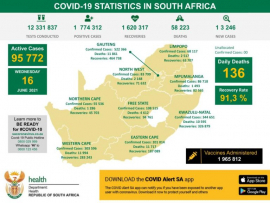
South Africa recorded the highest daily spike since January after 13 246 people tested positive for COVID-19 on Wednesday.
According to the National Institute for Communicable Diseases (NICD), this means the percent testing positive has now increased to 21.7% nationally.
Meanwhile, Gauteng continues to drive the resurgence, with 7 859 cases logged in the last 24 hours.
The NICD said the Northern Cape, Free State, North West and Gauteng are officially in a third wave, with the remaining five provinces seeing the sustained peak.
“These concerning figures represent the highest number of daily cases and positivity rate recorded since January 2021.”
According to the public health institute, the total number of laboratory-confirmed cases now stands at 1 774 312 since the outbreak.
A reported 77 patients succumbed to the respiratory disease.
Meanwhile, 940 more people were admitted to the hospital since the last reporting cycle, which pushes the tally to 8 727.
To date, there have been 286 867 hospital admissions since the outbreak.
The NICD has urged people to remain vigilant by following COVID-19 preventative measures, wearing a mask that covers both the nose and mouth, practising healthy hand hygiene, maintaining physical distancing of at least 1.5 metres and limiting social interactions as much as possible.
The institution has called for those who are 60 years or older to register on Electronic Vaccination Data System (EVDS) to get the vaccine.
In the last 24 hours, 34 663 people have signed up on EVDS to get vaccinated, while 1 965 812 have been vaccinated to date.
“Younger generations are also encouraged to help pensioners register for their vaccine,” the NICD said.
Globally, as of 16 June 2021, there have been 176 303 596 confirmed cases of COVID-19, including 3 820 026 deaths, reported to the World Health Organisation.
5 552 new COVID-19 cases reported in SA
South Africa recorded 5 552 new COVID-19 cases on Monday, representing an 18.5% positivity rate.
According to the National Institute for Communicable Diseases (NICD), Gauteng continues to drive the third wave with 3 720 new infections reported, accounting for 67%.
The province is followed by the Western Cape after 446 people were confirmed to have contracted the virus in the last 24 hours, 278 in the North West and 247 in KwaZulu-Natal.
This means the country now has a total number of laboratory-confirmed cases of 1 752 630 since the outbreak.
According to the latest data, there were 153 in-hospital deaths, which pushes the tally to 57 884.
So far, 7 778 patients are currently receiving treatment in hospitals across South Africa after an increase of 936 new admissions.
The information is based on the 12 223 448 tests of which 30 034 were performed since the last reporting cycle.
In addition, 1 777 288 people have been vaccinated.
The NICD has urged people to continue to adhere to preventative measures to limit the risk of contracting and spreading the virus.
According to the World Health Organisation, as of 14 June 2021, there have been 175 686 814 confirmed global cases of COVID-19, 3 803 592 deaths and 2 187 874 534 administered vaccine doses.
Aspen to dispatch 300 000 J&J vaccines for teachers

Aspen says it will release 300 000 Johnson & Johnson (J&J) doses earmarked for teachers soon.
In a statement released on Monday, Aspen said it was “extremely disappointed” to learn that specific batches of the J&J manufactured at its Gqeberha production site have to be destroyed.
This is due to the good manufacturing practice risk of isolated material in the drug substance supplied to Aspen by J&J from their contract-manufacturing partner in the United States.
“The batches manufactured had been retained in storage awaiting the outcome of the US FDA assessment,” Aspen said.
On Sunday, the South African Health Products Regulatory Authority (SAHPRA) said it decided not to release the long-awaited Johnson & Johnson (J&J) vaccines for use in the country.
However, SAHPRA said about 300 000 doses from batches that have been cleared by the US Food & Drug Administration (FDA) meet the requirements and will subsequently be released and shipped to South Africa.
According to the pharmaceutical company, this is not only a setback to both the Aspen and J&J teams, who worked tirelessly to produced these shots, but it has the potential to negatively affect vaccine rollout across South Africa and Africa.
However, the company has since come out with ways to mitigate the potential risk to vaccine access.
“Within days, Johnson & Johnson will provide 300 000 doses of the vaccine for South African teachers,” the company announced.
In the next week, Aspen said it expects to release J&J vaccines manufactured from the drug substance that has not been impacted by the contamination.
“Over the next few weeks, Johnson & Johnson will be delivering substantial quantities of compliant, finished vaccines to South Africa to replace the lost stock, thereby ensuring the momentum in the South African vaccine initiative is maintained.”
The multinational said further doses of the lifesaving vaccines will become available in July.
“These Johnson & Johnson vaccines released by Aspen will support the vaccination programmes in South Africa and elsewhere in Africa.”
Aspen has thanked its team and J&J for its exemplary response in managing this setback.
“Through their actions, they have not only assisted in capacitating the African continent but at this challenging time, they have stepped up again to ensure that we are able to maintain the momentum needed to give our continent access to lifesaving vaccines.”
‘Unsuitable’ J&J vaccines won’t be released for use in SA

The South African Health Products Regulatory Authority (SAHPRA) has decided not to release the long-awaited Johnson & Johnson (J&J) vaccines for use in the country.
However, SAHPRA said about 300 000 doses from batches that have been cleared by the US Food & Drug Administration (FDA) meet the requirements and will subsequently be released and shipped to South Africa.
This comes after the FDA authorised two batches of the drug substance produced by Emergent BioSolutions in Baltimore, United States, and determined that several others are not suitable for use.
“SAHPRA reviewed the data provided by the FDA and has made a decision not to release the vaccine produced using the drug substance batches that were not suitable,” the drug watchdog said.
The FDA has been investigating potential contamination problems at a COVID-19 vaccine plant in Baltimore, which has had a knock-on effect locally.
Concerns were identified by the FDA, relating to non-compliance to good manufacturing practices during the manufacturing of some active pharmaceutical ingredient used in the vaccine.
“SAHPRA focuses on the quality, safety and efficacy of all health products, including COVID-19 vaccines and will ensure that the safety and well-being of South Africans will not be compromised in any way,” said SAHPRA CEO, Dr Boitumelo Semete-Makokotlela.
Meanwhile, according to the National Health Department, the FDA announced that they approved an extension of the expiry date after careful evaluation of these doses, after determining that the vaccine can be stored in a normal bar fridge for 4.5 months instead of three.
“Work is being undertaken to identify more safe doses for the rest of the mass vaccination programme,” the department said.
In the meantime, the department said it is hoping that more doses of J&J will be made available to the international community, including South Africa, as the US regulator continues to assess some batches.
“Further announcements will follow in due course. We remain committed to the success of the South African mass vaccination campaign and are doing everything in our power to source safe and effective vaccines for all people residing in South Africa,” the department said.