
Gauteng, KZN continue to account for majority of new COVID-19 infections
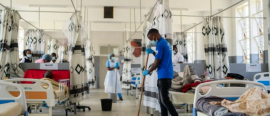
The National Institute of Communicable Diseases (NICD) has reported at least 23 884 new laboratory confirmed COVID-19 infections for Tuesday, with a positivity rate over about 34.9%.
This brings the total number of reported cases to 3 204 642, with fatalities reaching 90 172.
The NICD said at least 24 people lost their lives due to complications related to the virus, with a further 599 new hospitalisations.
“The majority of new cases today are from Gauteng with 8 685, followed by KwaZulu-Natal with 5 205. The Western Cape accounted for 3 180 cases, Eastern Cape 1 744, Free State 1 409, North West 1 453, Mpumalanga 1 108, Limpopo 767 and the Northern Cape 333,” the institute said on Tuesday.
The number of vaccines administered on Tuesday reached 102 398, bringing the total to at least 27.3 million jabs.
SA records 13 992 new COVID-19 cases
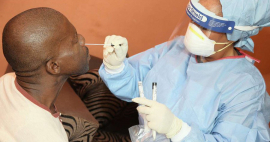
South Africa has recorded 13 992 new COVID-19 cases which brings the total number of laboratory-confirmed cases to 3 180 785.
According to the Department of Health, this represents a 31.0% positivity rate.
A further 11 COVID-19 related deaths were reported bringing total fatalities to 90 148 to date.
The National Institute for Communicable Diseases (NICD), a division of the National Health Laboratory Service says it continues to provide laboratory-based surveillance to inform the public health response towards COVID-19 in South Africa.
With regard to tests conducted, 20 283 906 tests were conducted in both public and private sectors.
In the private sector, 10 931 420 tests were conducted while 9 352 486 tests were conducted in the public sector.
The Department of Health says the majority of new cases are from Gauteng with 48%, followed by KwaZulu-Natal with 19%.
The Western Cape accounted for 10%, Free State and North West each accounted for 5% respectively, Eastern Cape and Mpumalanga each accounted for 4% respectively, Limpopo accounted for 2% and the Northern Cape accounted for 1% of new cases.
The cumulative number of cases by province are as follows: Eastern Cape 606, Mpumalanga 617, Limpopo 328, North West 713, Northern Cape 191, KwaZulu-Natal 2715, Western Cape 1 464, Gauteng 6 711 and Free State 647.
COVID-19 death toll surpasses 90 000, with over 13 000 new cases reported
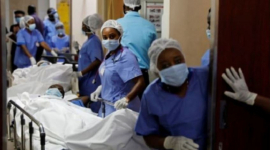
South Africa’s COVID-19 death toll has now crossed the 90 000 mark after 27 more people lost their lives to the virus on Tuesday.
The reported 27 deaths bring the total number of deaths to 90 002.
Meanwhile, 52 890 tests were conducted in the last 24 hours, with 13 147 new cases, the National Institute for Communicable Diseases (NICD) said.
According to the NICD, Gauteng remains the epicentre with 8 445 new infections reported. It is followed by 1 396 cases in KwaZulu-Natal, 805 in the Western Cape and 720 in the North West, representing a 24.9% positivity rate.
This means there is now a caseload of 3 051 222 since the outbreak.
In addition, the Department of Health announced that 140 281 vaccine doses were given since the last reporting cycle, of which 29 965 were administered to children.
The latest distributed vaccines take the total to 26 639 293, while the country is now home to 14 908 420 or 37.2% fully jabbed adults.
Meanwhile, the number of adolescents who have taken the first jab of the Pfizer vaccine has now increased to 652 197.
Globally, as of 7 December 2021, there have been 265 713 467 confirmed cases of COVID-19, including 5 260 888 deaths, reported to the World Health Organisation (WHO).
Global view
According to the WHO’s weekly epidemiological update, the case incidence plateaued between 29 November and 5 December, with over four million confirmed new cases reported, similar to the number reported in the previous week’s figures.
However, new weekly deaths increased by 10% as compared to the previous week, with over 52 500 additional fatalities reported.
Africa and the region of the Americas recorded increases in new weekly cases of 79% and 21%, respectively.
Meanwhile, the Western Pacific and South-East Asia regions both logged decreases of 10%.
In addition, new weekly cases reported by the European and Eastern Mediterranean regions were similar to the numbers reported in the previous week.
New weekly deaths peaked by 49% in the South-East Asia region and 38% in the Americas, while the weekly deaths dipped in the African and Eastern Mediterranean regions by 13% and 8%, respectively.
“The number of new deaths was similar to those reported in the previous week in both the European and the Western Pacific regions,” the WHO added.
The highest numbers of new cases were reported from the United States (752 394 new cases a 30% increase), Germany (396 429 new cases, similar to the previous week’s figures), the United Kingdom (310 696 new cases, similar to the previous week’s figures), France (283 500 new cases, a 49% increase) and Russia (231 240 new cases, similar to the previous week’s figures).
At present, the WHO said the Omicron variant cases have been reported in 57 countries across all the agency’s regions.
“While most of the cases identified in these countries are currently travel‐related, this may change as more information becomes available,” it said.
Of 899 935 sequences uploaded to GISAID with specimens collected in the last 60 days, 897 886 (99.8%) were Delta, 713 (0.1%) were Omicron, 286 (less than 0.1%) Gamma, 154 (less than 0.1%) Alpha, 64 (less than 0.1%) Beta and less than 0.1% comprised other circulating variants including Mu and Lambda.
Western Cape High Court dismisses COVID-19 regulations liquor ban challenge

Cooperative Governance and Traditional Affairs (COGTA) Minister, Dr Nkosazana Dlamini Zuma has welcomed the Western Cape High Court judgment dismissing wine producers’ body, Vinpro’s challenge of the constitutionality and lawfulness of liquor bans imposed during the COVID-19 pandemic.
In a statement, the Ministry said Vinpro launched the application to ostensibly vindicate the constitutional values of respect for the rule of law, inter-governmental co-operation and public accountability.
It also sought to vindicate various constitutional rights, arguing, amongst others, that the power to impose restrictions on retail sales of liquor is exclusively vested in the provincial sphere of government.
“The Minister, representing the national government, successfully argued that the regulations were not aimed at addressing the impact of alcohol on society generally but were rather aimed at capacitating the health system during trying times.
“This, because South Africa has a much higher burden of alcohol-related trauma cases than experienced in many other countries,” said the Ministry in a statement on Wednesday.
Dlamini Zuma further successfully argued that the provisions of Section 26(2)(b) of the Disaster Management Act stipulate that the national executive must deal with a national disaster in terms of existing legislation and contingency arrangements as augmented by regulations or directions made or issued in terms of section 27(2), if a national state of disaster has been declared.
The Ministry said government remains committed to saving lives and protecting livelihoods as the country continues to grapple with COVID-19.
It said it was also important to note that although the regulations had the effect of suspending or limiting the sale and distribution of liquor, it would have done so in furtherance of the objective of reducing the socio-economic and other costs of alcohol use.
This also included promoting the development of a responsible and sustainable liquor industry as the envisaged result thereof was to ease the pressure on the health care system at a time when it was placed under severe strain by the demands of the COVID-19 pandemic.
End vaccine apartheid, urges President Ramaphosa

President Cyril Ramaphosa has expressed grave disappointment at rich countries who have hoarded the much-needed COVID-19 vaccines.
“The greed that they demonstrated is something that is quite disappointing indeed, particularly when they say they are our partners. The lives of people in Africa are just as important as the lives in Europe, in North America, and all over the world,” he said.
The President was speaking during the seventh session of the Dakar International Forum on Peace and Security in the Senegalese capital on Monday.
He said the most critical aspect at this time, is the ongoing negotiations with the World Trade Organization (WTO) for a temporary waiver of the Trade Related Aspects of Intellectual Property Rights Agreement (TRIPS) for the manufacture of COVID-19 vaccines.
“Whilst this is being negotiated, this is where you really see the interests of the more developed economies, the rich countries, through their refusal to accede to this proposal to waive the TRIPS requirement. This is the type of vaccine apartheid we say must come to an end, because the health of people around the world is at stake,” he said.
The President emphasised that for Africa to meet the challenge presented by new variants, “we cannot wait around for vaccines to be allocated to us as we were forced to in the past.”
He has called on sister African countries to support the proposal.
This as African nations are faced with the task to drive a recovery that is sustainable, inclusive and that leaves no one and no country behind.
“Manufacturing our own vaccines isn’t just a safe and fast way to get access to the lifesaving medication to protect our people. It is also a critical component of economic recovery.”
The manufacturing of vaccines on the continent will further support the growth of African pharmaceutical manufacturing, create jobs, result in critical skills and knowledge transfer, and develop new African industries and businesses.
However, the President said that they are optimistic that the partnership for African Vaccine Manufacturing launched earlier this year, will help in achieving the goal of increasing vaccine manufacturing to more than 60% by 2040.
“It is in this regard that we have already identified a number of countries that have the capability and all it takes from a manufacturing point of view to be able to be manufacturers of vaccines, and South Africa and Senegal are among the countries with that capability and must be allowed to do so,” he said.
Travel bans
Addressing travel bans imposed on South Africa has been the President’s priority during his four-nation visit to West Africa. He has spoken out against Western countries that have imposed travel bans on South Africa.
He said that when South African scientists discovered Omicron, they immediately took on the responsibility of informing the entire world. However Western countries responded by imposing the ban.
“They basically say we will not allow you to travel. However, this new variant continues to spread across the globe, beyond Southern Africa, including in their own countries,” he said.
The President questioned the science behind the bans against South Africa and other southern African countries.
“We say those bans must be removed with immediate effect, so that our people can travel all around the world,” he said.
The President’s Senegalese counterpart, President Macky Sall, echoed the same sentiment saying that the Omicron variant is all over the world.
“Isolating a country which has isolated the virus is counter-productive because it is a way to call others not to publish, so we need to work in solidarity with responding,” said President Sall.
Fourth wave sees ‘stark’ increase in COVID-19 infections in children under five
The fourth wave has sparked an increase in hospital admissions in children under the age of five, the National Institute for Communicable Diseases (NICD) said.
In a briefing led by Health Minister, Dr Joe Phaahla, the NICD’s Dr Waasila Jassat said there has been a rise in children who are in hospital for COVID-19 in both the public and private sectors.
While most hospital admissions were initially recorded in Tshwane, Jassat said there are now starting to see an increase in other Gauteng districts as well.
“The week on week in cases and admissions is higher than we’ve seen it before,” she told the media.
While children may have not been “heavily” affected by the COVID-19 pandemic in the past with fewer admissions, recent data shows a different story during the current resurgence that is driven by the new Omicron variant.
According to Jassat, who leads the NICD’s hospital surveillance for COVID-19, during the third wave, there have been more admissions in young children under five and teenagers from 15 to 19.
“And now at the start of the fourth wave, we’ve seen quite a sharp increase across all age groups, but particularly in the under-five. The trend that we see now is different to what we saw before.”
While the numbers may still be slightly lower in children, she said the hospital admissions for those under five are now second-highest and second only to the incidence in those over 60.
“Just anecdotally, a paediatrician in a Tshwane hospital shared with us that all the children that were admitted from 12 to 18 years old were not vaccinated even though they were eligible. And that the younger children less than 12 who are not eligible for vaccination, none of the parents except for three were vaccinated.”
In the Capital, most patients who landed in hospital during the first two weeks in the third wave were mostly elderly people between the ages of 50 and 60.
“However, in the fourth wave, you can see most admissions on younger people less than 40 years and particularly stark differences in the zero to four age group where there were fewer admissions in the third wave in the early part of the fourth wave.”
In Tshwane as well, Jassat said there are already over 100 admissions in children under the age of four in the first two weeks of the current wave.
According to the NICD Head of the Division of Public Health Surveillance and Response, Dr Michelle Groome, there is also now an increase in infections and hospital admissions in Limpopo, North West, Mpumalanga, Eastern Cape and other provinces as well.
Meanwhile, she said it was important to highlight the importance of surge preparedness to also include paediatric beds and staff.
In addition, she told the media that scientists are still waiting for additional data on the severity of the disease, while early evidence shows that this variant is more transmissible and that there is some degree of immune escape.
“There is a possibility of people who have already been infected being reinfected,” she added.
However, she believes that vaccination will prevent severe disease in people who may be infected even after receiving the jab.
Department of Health’s Chief Director, Ramphelane Morewane, said the department is paying special attention to the paediatric wards to ensure this area is adequately covered and making sure that there is enough oxygen.
Health Minister urges citizens to get COVID-19 jab, as cases rise
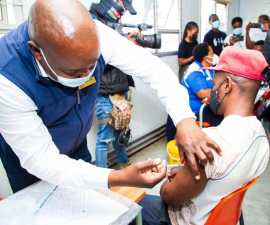
Health Minister, Dr Joe Phaahla, has urged citizens to not let their guard down and vaccinate as the number of new COVID-19 infections is on the rise.
South Africa recorded 11 535 new Coronavirus cases in the past 24 hours compared to the 2 465 that was recorded on Thursday last week.
“The numbers over the last seven days and the curve depicting them, there is a much steeper upward curve than has ever been seen in the last three waves,” the Minister said on Friday.
In addition, over the last seven days, the spike that started in Gauteng has now spread in all nine provinces with numbers increasing in the Western Cape, KwaZulu-Natal, Limpopo, North West and Mpumalanga.
Free State and the Northern Cape are still the only two provinces that are seeing low numbers, he said.
New cases peaked by more than 300% in the last seven days, with a positivity rate of 22% on Thursday from 1% to 2% two weeks ago.
Meanwhile, Phaahla said preliminary data shows that the new Omicron variant was highly transmissible, including infecting people who are vaccinated. However, causing mostly mild illness, especially among the jabbed.
“At this stage, the trend is a rapid rise in cases but we hope mild cases will continue to dominate.”
He told the media that those who are not jabbed and young people below 40 years, most of whom have not received the vaccine, dominate hospital admissions.
According to the Minister, Gauteng, which is currently the epicentre, is working with the national team to ensure the provision of services for those who will become seriously ill.
He also raised concerns about healthcare workers who may catch the virus and isolate, which will lead to staff shortage.
Phaahla pleaded with citizens to be more vigilant and apply all the health and safety measures.
“While we’re saying, ‘what is government going to do?’ I think all of us individually and collectively, we could even reduce the level to which even regulatory intervention could be required by simply especially, just the wearing of masks.”
The key factor, according to the Minister, was to avoid big gatherings such as end of year functions and birthday parties, especially if they are indoors.
Meanwhile, Phaahla urged people who have tested positive or are still waiting for their results to stay at home.
“Going to queue whether it’s for medicines or groceries is very irresponsible. We should, all of us, condemn that and advise people to keep away from mixing with other people.”
The Minister has described vaccination as not just an option but also a matter of saving lives, livelihoods and the lives of health workers and the nation as a whole.
He once again used his platform to call on everyone above the age of 12 to get the jab.
“This fourth wave which we have started can be managed without too many casualties and loss of lives, if we observe safety measures, the biggest risk being gatherings especially indoors,” he added.
Above all, he said lives could be saved if eligible people are inoculated.
“While there are still many questions around Omicron, the evidence thus far is clear that like all previous variants, our best protection against serious illness and death is vaccination.”
SA detects close to 4 400 new COVID-19 cases

South Africa recorded 4 373 new COVID-19 cases on Tuesday, of which 3 143 were reported in Gauteng alone.
According to the National Institute for Communicable Diseases (NICD), this means there is now a total number of 2 968 052 laboratory-confirmed cases.
Meanwhile, data shows that the latest infections represent an increased 10.2% positivity rate.
According to the Council for Scientific and Industrial Research’s Ridhwaan Suliman, the seven-day average is up 311% week-on-week.
“Expect a large increase tomorrow [on Wednesday] post-weekend effect,” he warned.
There are currently 2 414 patients who are currently receiving COVID-19 treatment in hospitals across the country, with 119 admitted overnight.
In addition, 21 more people lost their battle to the disease.
The information is based on the 19 477 054 tests, of which 42 664 were conducted in the past 24 hours.
The NICD said it continues to monitor developments around the newly emerged Omicron variant.
“The number of new COVID-19 cases and the percent positivity continue to increase, likely due to the spread of the Omicron variant,” said the NICD Acting Executive Director, Professor Adrian Puren.
He said scientists are still trying to establish if this new variant has increased the ability to spread and/or developed ways to escape some of our immune responses.
He added, however, that the severity of Omicron is yet to be determined and urges citizens to be cautious and reconsider attending events that may become super spreader events, such as indoor gatherings in poorly ventilated spaces or large gatherings.
NICD’s Head of the Division of Public Health Surveillance and Response, Dr Michelle Groome, agreed that responsible actions and adherence to non-pharmaceutical interventions are key to limiting the impact of a fourth wave.
“COVID-19 vaccination remains key, and anyone over the age of 12-years who chooses to vaccinate is encouraged to follow through and join those who have already rolled up their sleeves.”
In addition, she has urged anyone who experiences COVID-like symptoms to self-quarantine and monitors their signs for at least 10-days.
“During the 10 days, you should avoid contact with others, continue to wear your mask and wash your hands often. Should any worrisome symptoms present, we recommend contacting your healthcare provider for assistance.”
Meanwhile, the Department of Health, said it administered 175 395 vaccine shots on Tuesday, pushing the total to 25 619 891.
In addition, the country is now home to 14 475 754 or 36.1% of fully vaccinated adults, while 477 131 children have received the first dose of the Pfizer vaccine.
SA records over 2 270 new COVID-19 cases overnight

South Africa’s COVID-19 caseload is edging closer to three million after 2 273 new infections were recorded in the past 24 hours.
According to the National Institute for Communicable Diseases (NICD), this pushes the total number of laboratory-confirmed cases to 2 963 679.
Data shows that the increase represents a 10.7% positivity rate, while Gauteng remains the worst-hit province after detecting 1 909 new cases on Monday.
According to the Council for Scientific and Industrial Research’s Ridhwaan Suliman, all provinces are now reporting a peak in additional infections, with Gauteng still the most concerning followed by the Western Cape.
“Case incidence up to 12 new cases per 100 000 in Gauteng and still below two [in the rest of the provinces],” Suliman tweeted, adding that new hospital admissions in Gauteng have been doubling every week.
Citing the Department of Health’s latest statistics, the NICD said 25 more people lost their lives to the respiratory disease, bringing the death toll to 89 822 since the outbreak.
In addition, the number of people receiving hospital treatment has since risen by 79 to 2 328 since the last reporting cycle.
Meanwhile, the department reported that South Africa has administered 166 074 vaccine doses on Monday, of which 26 866 were given to children aged between 12 and 17.
This means the country has now distributed 25 448 767 vaccine shots.
In addition, 14 384 276 adults have been fully jabbed, while 16 551 605 over 18s have received at least one dose of the vaccine that are currently being administered in the country.
In addition, the number of teenagers who have since taken the first dose of the Pfizer vaccine now stands at 445 401.
Globally, as of 29 November 2021, there have been 260 867 011 confirmed cases of COVID-19, including 5 200 267 deaths, reported to the World Health Organisation.
Most people in hospitals are unvaccinated, as Gauteng enters the 4th wave
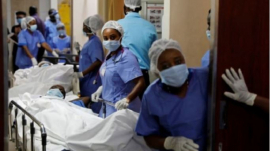
Gauteng continues to see continued high levels of COVID-19 cases and hospital admissions, as the fight against the Omicron variant begins.
According to Dr Waasila Jassat of the National Institute for Communicable Diseases, hospital admissions have mostly been recorded in Tshwane, in both the private and public sectors.
However, the other districts are also starting to show signs of the peak in those who land in hospital because of COVID-19 since the past week, with the unvaccinated more likely to seek hospital treatment or die.
“There’s a sharp week on week increase. And it’s important to note because as we know that when the hospitals become overwhelmed, there’s less capacity and more mortality.”
According to Jassat, who was speaking during a media briefing with Health Minister, Dr Joe Phaahla, the highest risk of admissions is still in the over 65 age group and has been peaking in all age groups over the last six weeks.
However, the percentage in the middle age group was low, while data shows that it was “very” high in young children.
“Of course, higher proportions of older people are being admitted, because they’re at risk for more severe disease,” she explained.
According to the data, the percentage of admissions with severe disease was higher in the older groups, while it hovers around 25% to 30% for those under 16s.
While there have been fewer deaths reported, she said the most fatalities have been in the older groups – 60 to 69 and over 80.
However, currently, in Tshwane, the proportion of patients presenting severe symptoms was low in the past weeks.
Meanwhile, the majority of patients admitted in Gauteng were unvaccinated, with a smaller proportion of patients admitted being fully or partially jabbed.
Jassat believes that other Gauteng districts and provinces need to start looking into surge preparedness.
“Interestingly also is that most admissions are unvaccinated individuals.”
According to the NICD’s data, 13% of these are vaccinated or partially vaccinated and 87% were unvaccinated who land in hospitals.
“And what we can see across the country is that there’s a much higher risk of death amongst those that are unvaccinated,” she explained.
However, she said it was unclear at this stage what proportion of admissions are related to the new variant and whether there was a more severe disease related to Omicron.
Jassat also raised concerns about the surge in paediatric admissions under two years since the start of the resurgence.
“We want to emphasise that we don’t vaccinate to protect ourselves from severe disease but we also vaccinate to protect those around us, particularly those who can’t vaccinate and given their children under 12 are not eligible to vaccinate.”
At this stage, she said the NICD was unsure if it was related to the current variant circulating at higher transmissibility, immunity gap with older people already vaccinated or younger people being more susceptible to contracting the virus.
“But what we do know is that vaccination of the adults around the children will not prevent the children from spreading as well.”
She also highlighted that most of the patients who died in hospital during the second and third waves are those who were presenting very late.
“They were quite sick and they were dying within the first day or second day of being admitted.”
She believes that the current resurgence requires more than hospital preparedness but community preparedness and early treatment.
Meanwhile, the NICD’s Dr Michelle Groome believes that Gauteng has entered the fourth wave.
“We’ve seen an increase in the number of cases in Gauteng and for all intents and purposes, Gauteng has entered the fourth wave.”
She called on the public to be vigilant in terms of non-pharmaceutical interventions, mask-wearing, social distancing, and avoiding large gatherings.