
SA administers 52 556 new COVID-19 vaccines
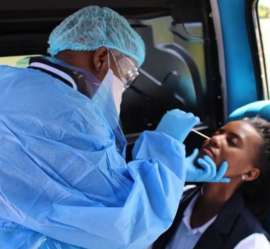
South Africa administered 52 556 COVID-19 vaccines in the past 24 hours, 43 137 more shots compared to last Sunday.
According to the Department of Health, this means the country has now distributed 17 875 187 vaccines since the start of the inoculation programme.
South Africa now has 9 075 189 fully vaccinated adults, of which 37 982 people either received the Johnson & Johnson one-shot vaccine or the second dose of the Pfizer jab.
Meanwhile, as of Sunday, the cumulative number of COVID-19 identified cases identified stands at 2 906 422 after 809 new cases were detected in the last 24 hours.
Of the new cases, the majority of new infections were recorded in KwaZulu-Natal (177), followed by the Western Cape (156), Eastern Cape (127), Gauteng (97), Northern Cape (87).
The National Institute for Communicable Diseases (NICD) said the new infections came at a 3.4% positivity rate.
In addition, 27 more people succumbed to the disease, pushing the tally to 87 780 deaths.
The number of patients who recuperated stands at 2 906 422, translating to a recovery rate of 95.6%.
According to the NICD, there were new 30 hospital admissions in the past day, which means 6 268 patients are currently receiving treatment for COVID-19 in both the public and private health institutions across the country.
SA administers close to 17 million COVID-19 vaccines to date
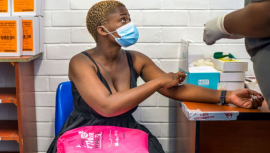
South Africa has administered 16 999 722 doses of COVID-19 jabs as of Monday evening, the Department of Health said.
The tally includes the two-dose Pfizer vaccine as well as the single shot of the Johnson & Johnson jab.
According to the latest data, 159 732 vaccines were distributed in the last 24 hours.
Meanwhile, the number of fully vaccinated adults has now gone up to 8 501 712, while 12 268 451 people had received at least one dose of the COVID-19 shot.
In addition, the National Institute for Communicable Diseases (NICD) logged 578 new COVID-19 infections.
The dashboard shows that the majority of new cases are from KwaZulu-Natal after 126 people were confirmed to have contracted the virus.
Gauteng is trailing behind KwaZulu-Natal with 108 infections, 92 in the Western Cape, 86 in Free State and 50 in the Eastern Cape.
“This increase represents a 3.8% positivity rate,” the NICD added.
This means the country has 2 897 521 laboratory-confirmed cases to date, while the death toll stands at 87 216 after 164 more patients succumbed to the disease.
The NICD confirmed on Saturday that South Africa’s third wave was officially over, as the national seven-day moving average of daily case numbers, positivity rate and testing rate continue to drop, with sustained decreases in all provinces
Meanwhile, the public health institute said 17 588 025 tests have been conducted in both public and private sectors, while 6 931 people are currently hospitalised.
“There has been an increase of 85 hospital admissions in the past 24 hours.”
According to the World Health Organisation, as of 27 September 2021, there have been 231 703 120 reported cases of COVID-19, 4 746 620 deaths and 5 924 819 985 administered vaccine doses.
21% of adults now fully vaccinated, as SA exits third wave
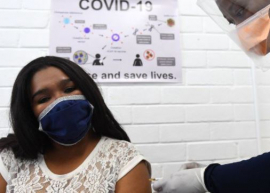
Twenty-one percent of the country’s adult population is now fully vaccinated after 6 187 people either received a Johnson & Johnson shot or the second jab of the Pfizer vaccine on Sunday.
According to Health Department, South Africa administered 9 419 jabs in the past 24 hours, pushing the total to 16 827 790, while the country is now home to 8 391 620 vaccinated individuals.
Meanwhile, according to the National Institute for Communicable Diseases (NICD), the country has exited the third wave according to the current definition.
“The national seven-day moving average of daily case numbers, positivity rate and testing rate continue to decrease, with sustained decreases seen in all provinces,” the NICD explained.
Meanwhile, the latest data shows that the institute reported 967 new COVID-19 cases, which brings the total number of laboratory-confirmed cases to 2 896 943.
“This increase represents a 5% positivity rate,” the NICD said, adding that there has been an increase of 56 hospital admissions in the past 24 hours.
The World Health Organisation (WHO) recommends that test positivity remains at 5% or lower for 14 days before countries or regions can reopen.
In addition, 34 more people succumbed to the disease, bringing the death toll to 87 001.
The information is based on the 17 553 515 tests, of which 19 160 were conducted on Sunday.
Globally, as of 24 September 2021, there have been 230 418 451 confirmed cases of COVID-19, including 4 724 876 deaths, reported to the WHO.
SA has over 8 million fully vaccinated adults
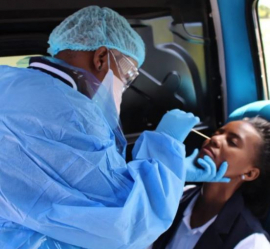
South Africa on Tuesday crossed the eight million mark for adults who are fully vaccinated.
According to the Department of Health, the country administered 178 685 COVID-19 jabs in the past 24 hours, of which 100 853 people were fully jabbed.
This brings the total number of administered doses to 16 358 076, while those who have received the single-dose Johnson & Johnson or the second shot of the Pfizer vaccine stands at 8 108 520.
The latest data shows that there are now 11 848 356 citizens who have been vaccinated out of the 39 798 201 individuals that government is targeting before the end of December.
Meanwhile, the COVID-19 cases continue to drop, with 2 197 new infections identified in South Africa, which brings the total number of laboratory-confirmed cases to 2 886 331.
According to the National Institute for Communicable Diseases (NICD), the bulk of the new cases were reported in KwaZulu-Natal after 594 people were confirmed to have contracted the virus.
The province is followed by 366 cases in the Western Cape, 329 in Eastern Cape, 297 in the Free State and 256 in Gauteng.
The NICD said the increase represents a 6.1% positivity rate.
In addition, 160 patients succumbed to the disease, pushing the death toll to 86 376 to date.
“There has been an increase of 175 hospital admissions in the past 24 hours,” the NICD said, adding that the seven-day moving average daily number of new cases has dwindled.
The information is based on the 17 410 204 tests conducted in both public and private sectors.
Globally, as of 21 September 2021, there have been 228 807 631 confirmed cases of COVID-19, including 4 697 099 deaths, reported to the World Health Organisation (WHO).
Global view
According to the WHO, the numbers of weekly COVID-19 cases and deaths continued to decline this week, with over 3.6 million infections and under 60 000 deaths reported between 13 and 19 September.
The African and the European regions reported numbers of cases similar to those of the previous week, while other regions recorded decreases, with a substantial drop in the Eastern Mediterranean (22%) and South-East Asia regions (16%).
In terms of COVID-19 mortality, the WHO said nearly 60 000 deaths were logged in the past week, a 7% decrease as compared to the previous week.
The African, Eastern Mediterranean and South-East Asian regions reported decreases in weekly mortality over the past week.
Meanwhile, the South-East Asia region logged the largest percentage decrease (27%) compared to the Western Pacific region, which registered a 7% increase.
The highest numbers of new cases were reported from the United States (1 017 644 new cases, similar to last week), India (211 242 new cases, 15% decrease), the United Kingdom (203 077 new cases, 21% decrease), Turkey (183 962 new cases, 16% increase), and the Philippines (141 522 new cases, similar to last week).
National State of Disaster regulations remain a necessity in fight against COVID-19

President Cyril Ramaphosa says the National State of Disaster will be lifted only once regulatory measures for the prevention and spread of COVID-19 are in place or once there is no longer a need for the state of disaster.
He was responding to a question posed to him in the National Assembly by the leader of the official opposition in Parliament, John Steenhuisen, regarding which specific conditions need to be met in order for the National State of Disaster to be lifted.
As of Thursday, the country has been in lockdown for at least 539 days following the declaration of the National State of Disaster by the President in March 2020.
The country is currently on adjusted Alert Level 2 of the lockdown which has eased the restrictions on movements of people and gatherings.
In his written reply, President Ramaphosa said the current regulations in the National State of Disaster are necessary for the fight against COVID-19.
“The current measures contained in the regulations for dealing with the disaster in the context of the risk adjusted strategy, remain necessary to limit the negative impact of the COVID-19 pandemic. Once sustainable sectoral regulatory measures for COVID-19 response are in place or the need to invoke current extraordinary measures provided for under the state of disaster ceases, all the Regulations and Directions issued under the national state of disaster will cease to exist.
“Accordingly, ongoing assessments by the National Coronavirus Command Council and Cabinet will determine the satisfaction of conditions for terminating or allowing the state of disaster to lapse,” the President said.
President Ramaphosa highlighted that government must also work on how some regulations can be weaved into government policy in order to make preventative measures against COVID-19 the norm.
“All organs of state must develop sustainable regulatory measures for the control of COVID-19 beyond the state of disaster. Measures must be infused into policies and regulations to normalise COVID-19 preventative measures in the society,” the president said.
Calls for vaccine equity

The World Health Organisation (WHO) and a group of global health leaders on Tuesday issued an urgent call for vaccine equity globally, particularly in Africa.
“The leaders stressed that the worst pandemic in the last hundred years will not end unless and until, there is genuine global cooperation on vaccine supply and access,” the statement read.
They also reiterated the WHO’s global vaccination target for 70% of the population of all countries to be vaccinated by mid-2022.
WHO’s Director-General, Dr Tedros Adhanom Ghebreyesus, said more than 5.7 billion doses have been given globally, but only 2% of those have been administered in Africa.
“This doesn’t only hurt the people of Africa, it hurts all of us,” he lamented.
“The longer vaccine inequity persists, the more the virus will keep circulating and changing, the longer the social and economic disruption will continue, and the higher the chances that more variants will emerge that render vaccines less effective.”
Ghebreyesus believes that vaccine sharing is good but the world should not have to be relying on vaccine sharing when structures can be put in place for other countries to buy the much-needed jabs.
“American taxpayers, European taxpayers, they financed some of this intellectual property and it should be for the common good. So, it is not wrong that we say there should be waivers, it was for the common good. So, we ask for this intellectual property to be made available.
“It was a great miracle to have these vaccines, now let this miracle be available to all mankind.”
In addition, the United Nations Under-Secretary-General and Executive Secretary of the Economic Commission for Africa, Dr Vera Songwe, told the delegates it costs the continent $29 billion of production for every month of lockdowns.
“For [the African continent], when we say that COVID-19 is an economic issue and we need to respond to it, to be able to recover and reset our economies, it is real.”
WHO Regional Director, Dr Matshidiso Moeti, said the continuous challenge is that global supplies are not being shared in ways that will get the world out of this pandemic.
“Hundreds of WHO staff are on the ground, ready to support countries to expand vaccination sites and to manage the complexities of small deliveries of a variety of vaccines,” she said, adding that African nations have successfully done it before by implementing massive vaccination campaigns against polio, yellow fever and cholera.
The agency stated that almost 90% of high-income countries have now reached the 10% target, and more than 70% have reached the 40% target.
Meanwhile, not a single low-income country has reached either target.
Globally, 5.5 billion vaccine doses have been administered, of which 80% have been distributed in high- and upper-middle-income countries.
“High-income countries have now administered almost 100 doses for every 100 people. Meanwhile, low-income countries have only been able to administer 1.5 doses for every 100 people, due to lack of supply.”
Safe and effective vaccines alone cannot solve the pandemic, the WHO explained.
“Robust surveillance supported by rapid diagnostics, early clinical care and lifesaving therapeutics, provided by well-trained health workers who can work in safe conditions. Public health and social measures are also vital to end the pandemic and accelerate global recovery.” –
New Development Bank helps SA fight against COVID-19

South Africa has received at least $2 billion in financial assistance from the New Development Bank since the outbreak of the COVID-19 pandemic.
The New Development Bank is an initiative of the BRICS (Brazil, Russia, India, China and South Africa) countries, which seeks to mobilise resources for infrastructure and development in the emerging economies of developing countries.
The financial assistance was revealed by President Cyril Ramaphosa who was reflecting on the importance of the BRICS countries’ collaboration in his weekly newsletter to the country.
President Ramaphosa said the financial injection is being used to fight the pandemic and to support the country’s economic recovery and that during last week’s BRICS summit, countries resolved to do even more to fight the pandemic collaboratively.
“BRICS countries agreed to deepen cooperation to fight COVID-19 and mobilise the political support and financial resources needed to respond to future pandemic preparedness. There has also been substantial cooperation with our BRICS partners in securing personal protective equipment and cooperation around vaccine access and distribution,” he said.
According to President Ramaphosa, the countries also agreed to establish a virtual BRICS Vaccine Research and Development Centre and a BRICS Integrated Early Warning System to “forecast future outbreaks of infectious diseases”.
The President added that during the summit, countries agreed to further deepen ties in several sectors as countries move towards economic recovery.
“BRICS partners agreed to strengthen collaboration in catalytic sectors such as energy, IT, science, technology and innovation, agriculture and the green economy.
“These are all important sectors identified in our Economic Reconstruction and Recovery Plan announced last year. Cooperation with other BRICS countries, particularly in the field of innovation research, will help to accelerate our country’s industrialisation and help us meet our Fourth Industrial Revolution aspirations,” he said.
The President reiterated that for the past 11 years, the BRICS bloc has been and remains “of immense strategic importance” for South Africa.
“Being a member of BRICS has enhanced our position as an important emerging economy. It has given us access to policy and technical expertise of larger and established economies, as well as access to the support of the National Development Bank.
“It has strengthened our activism on the global stage, particularly around reform of multilateral institutions. We have benefitted from being part of a collective voice striving to advance a world order based on mutual respect and the equal sovereignty of nations,” President Ramaphosa said.
SAHPRA approves Pfizer vaccine for children aged 12 and older
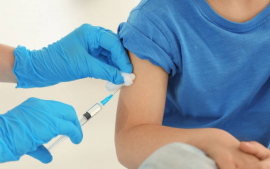
The South African Health Products Authority (SAHPRA) has given the green light for children aged 12 and older to receive the Pfizer COVID-19 vaccine.
According to the local drug watchdog, the approval is in terms of Section 21 of the Medicines and Related Substance Act 101 of 1965, also known as the Medicine Act.
“This was as a consequence of the review of updated safety and efficacy information submitted as conditions of Section 21 initially authorised on 16 March 2021,” SAHPRA said.
In addition, the watchdog said, Section 21 of the Medicines Act is a mechanism that enables emergency use access and allows it to authorise the use of medicine, subject to certain conditions.
“The regulatory decisions of SAHPRA do not translate into a procurement decision, as SAHPRA’s mandate is limited to safety, quality and efficacy of health products.”
In March, SAHPRA has approved the Section 21 application for the Pfizer vaccine for adults.
University of KwaZulu-Natal Acting Deputy Vice-Chancellor for Research and Innovation, Professor Mosa Moshabela, told the SABC that there is now a strong case for vaccinating children.
“Initially, we thought COVID-19 doesn’t affect children very much from the first wave but that has changed over time. We now know that the Delta variant, the burden on children was quite high, where they can suffer from long COVID,” he said.
Meanwhile, he said the burden has shifted to children now that more adults are getting vaccinated and are protected.
“We’ve seen outbreaks in South Africa in schools and this has limited the possibility of children catching up in terms of learning. I think, therefore, there’s a strong case to be made for children to be vaccinated, especially because schools are daily gatherings and social gatherings, and can contribute to reinfections in the households, as well as most from schools to households through these children.”
Moshable has also welcomed the launch of the main phase of a global COVID-19 vaccine study on children and teenagers, led by Chinese Coronavirus-vaccine maker, Sinovac Biotech.
The trials will be conducted on 2 000 children aged six months to 17 years, based on international data.
According to reports, the trials will enrol 14 000 children from South Africa, Chile, the Philippines, Malaysia and Kenya.
“I think SAHPRA should engage the public on the data that they have used to make this decision because it’s not something that originated in South Africa, and there’s a lot more effort on the side of SAHRPA to actually convince the South African public why they made that decision and how safe it is for the kids.”
Moshabela believes that the country needs to show that the data is there and it is compelling.
SA crosses 14 million mark for COVID-19 jabs
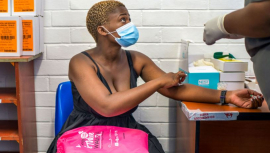
South Africa has now administered over 14 million COVID-19 jabs, with more than six million people fully vaccinated as of 8 September 2021.
According to the latest data by the Department of Health, the country administered 217 613 vaccines on Wednesday.
This means there are now 14 126 008 administered vaccines, translating to 10 359 616 people who have either received a shot of the Johnson & Johnson or Pfizer, of which 42% are men and 57.75% are women.
In addition, the number of adults that have been fully vaccinated stands at 6 888 163. Of these, 127 651 people were fully jabbed in the past 24 hours.
Meanwhile, National Institute for Communicable Diseases (NICD) said there are 7 338 people who tested positive in the last 24 hours, bringing the total number of laboratory-confirmed cases to 2 836 773.
According to the NICD, this increase represents a 13.3% positivity rate.
However, the public health institute, noted that the current surge in COVID-19 infections seems to be showing signs of a “sustained” downward trend.
“Although the total number of cases today is higher than yesterday and higher than the average number of new cases per day over the previous seven days, the number of new cases and positivity rate have decreased nationally compared to last week,” the NICD Acting Executive Director, Professor Adrian Puren, said on Wednesday.
While there have been provincial disparities in the timing and extent of the third resurgence, Puren said all nine provinces are currently displaying a drop in daily new cases.
“The provinces of Gauteng and Limpopo have already met the end-of-wave threshold criteria.”
While the latest trends certainly provide some good news, Public Health Surveillance and Response Head, Dr Michelle Groome, cautions that “now is not the time for complacency”.
She added that wearing masks, hand hygiene and social distancing remain important measures to prevent the spread of the virus.
Meanwhile, the number of hospitalisations and deaths have also decreased compared to last week, while 253 more people lost their lives, pushing the death toll to 84 152.
According to Groome, high vaccine coverage is essential to limit the impact of the virus on the lives and livelihoods in the coming months.
“We all have a part to play by getting vaccinated and encouraging our family, friends and colleagues to do the same,” appealed Groome.
The information is based on the 16 878 061 tests, of which were 55 355 performed since the last reporting cycle.
Globally, as of 8 September 2021, there have been 221 648 869 confirmed cases of COVID-19, including 4 582 338 deaths, reported to the World Health Organisation.
SA records 5 372 new COVID-19 cases

South Africa has recorded at least 5 372 new COVID-19 cases in the last 24-hour reporting cycle, with a further 282 COVID-19 related deaths recorded.
According to the National Institute of Communicable Diseases (NICD), this brings the total number of laboratory confirmed COVID-19 cases to 2 829 435, with 83 899 fatalities reported to date.
The NICD said 43 632 tests were conducted over the past 24 hours, which indicates a positivity rate of about 12.3%.
The provincial breakdown of new cases is as follows: KwaZulu-Natal has the majority of new cases at 1 348; Eastern Cape 1 287; Western Cape 948; Free State 581; Gauteng 457; Mpumalanga 250; North West 268; Northern Cape 154 and Limpopo 79.
The institute said 302 more people were hospitalised – bringing the total number of current hospitalisations to 11 429.
Meanwhile, the Health Department has reported that 202 637 COVID-19 vaccines were administered in the last 24-hour reporting cycle.
This brings the cumulative number of vaccines administered to 13 892 301.