
Over 200 000 vaccines administered in the last 24 hours
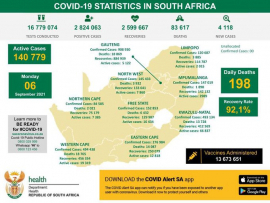
A total of 203 825 COVID-19 vaccines have been administered in South Africa, with Gauteng leading with 62 040, followed by the Western Cape with 36 650 vaccines administered as of Monday.
According to the latest vaccine statistics released by the Department of Health, a total of 13 673 651 vaccines have been administered as at 6 September 2021.
The statistics also showed that a total of 122 385 individuals have been fully vaccinated in the last 24 hours. These include 90 207 people vaccinated with Pfizer and 32 178 people vaccinated with Johnson and Johnson.
The department reported that the cumulative number of recoveries now stand at 2 599 667, with a recovery rate of 92,1%.
“As of today [Monday], the cumulative number of COVID-19 cases identified in South Africa is 2 824 063, with 4 118 new cases reported. One hundred and ninety-eight deaths have been reported, bringing the total to 83 617 deaths,” the department said.
COVID-19 infections in N Cape schools a concern

The Northern Cape Department of Education has raised concern about the amount of learning losses as new COVID-19 cases continue to increase in the province’s schools.
At least 1 272 cases of the virus have been reported since 23 August to date with several schools closed and learning delayed.
In a statement, the department said the rising infections are compromising the learners’ ability to perform at a high level.
“This continues to take a devastating toll on the academic performance of learners and their preparedness for the examinations. It’s clear that the academic recovery will take much longer than expected, whilst the current reality is placing a massive strain on the entire education sector.
“The department is doing all that we can to support educators and learners across all grades during these difficult times,” the statement said.
The department said 410 new cases have been reported today.
“The new COVID-19 infections include 28 educators, 367 learners and 15 support staff at various schools. We currently have seven schools which are closed in the province to allow for contact tracing and the disinfection of school premises,” the statement said.
SA identifies 5 931 new COVID-19 cases
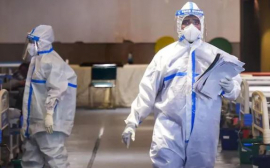
South Africa has recorded 5 931 new COVID-19 cases bringing the total number of laboratory-confirmed cases to 2 819 945.
In a statement on Sunday, the National Institute for Communicable Diseases (NICD) said this increase represents a 14.5% positivity rate.
“As per the National Department of Health, a further 76 COVID-19 related deaths have been reported, bringing total fatalities to 83,419 to date,” the NICD said.
The majority of new cases are from KwaZulu-Natal (29%), followed by Western Cape (23%).
Eastern Cape accounted for 15%; Free State and Gauteng Province each accounted for 9% respectively; Northern Cape each accounted for 6%; Mpumalanga and North West each accounted for 4% respectively; and Limpopo Province accounted for 1% of the new cases.
“The total number of cases today (5 931) is lower than yesterday (8 411) and lower than the average number of new cases per day over the 7 preceding days (7 860). The 7-day moving average daily number of cases has decreased,” the NICD said.
There has been an increase of 111 hospital admissions in the past 24 hours.
A total of 16 749 709 tests have been conducted in both public and private sectors
Meanwhile, the country has to date administered 13 454 823 vaccines with 18 483 of those being in the last 24 hours.
In the last 24 hours, 14 393 Pfizer and 4 090 vaccines were administered.
More COVID-19 vaccines needed in Africa
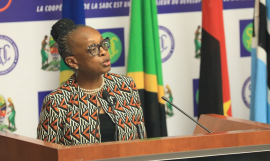
At least 80% of African countries are expected to miss the global target of vaccinating at least 10% of their populations against COVID-19 by the end of September.
This was revealed by World Health Organisation (WHO) regional director for Africa, Dr Matshidiso Moeti.
She was speaking during a press briefing on the COVID-19 pandemic and vaccine rollout on the continent on Thursday.
“Although Africa’s third wave peaked in July, the decline in new cases is at a glacial pace — far slower than in previous waves. The pandemic is still raging in Africa and we must not let our guard down. Every hour, 26 Africans die of COVID-19. As long as vaccination rates are low, severe illness and death risk are staying high,” she said.
According to Moeti, only nine of Africa’s 54 countries have already met the 10% target, including South Africa, Morocco and Tunisia.
“[T]hese countries are in the upper middle or high income brackets and have procured vaccines directly from manufacturers as well as receiving various vaccine supplies. For lower income countries that are receiving mainly vaccine donations, the situation is more dire (sic),” she said.
Dr Moeti told the briefing that less than 3% of Africa’s entire population have been fully vaccinated as opposed to Europe and the United States’ 50%.
She said this is due to vaccine inequality.
“Vaccine hoarding has held Africa back and we urgently need more vaccines, but as more doses arrive, African countries must zero in and drive forward precise plans to rapidly vaccinate the millions of people that still face a grave threat from COVID-19.
“Equally concerning is a continuing inequity in the distribution of doses. Africa counts for just 2% over the over five billion doses given globally. This percentage…hasn’t shifted in months. It is encouraging though that in the past month over 21 million doses have arrived on the continent through COVAX, that’s equal to the entire four previous months,” Dr Moeti said.
Athlone drive-through vaccination site now open to the public
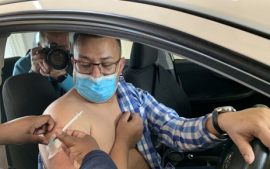
Two weeks after launching the Athlone Vaccination Centre of Hope, the site has now officially opened as the Western Cape’s first drive-through centre that will start welcoming the public from today.
The site is said to be ideally situated to enable public transport access.
“In showcasing the ease of access to the site, I cycled along with 20 cyclists to it. On arrival, we were met by 11 motorists in vehicles waiting to be vaccinated,” said Premier Alan Winde.
The Premier hopes that the centre will see the provincial government, the City of Cape and local public transport operators work together to ensure it attracts as many people as possible to come to receive their vaccination.
“We need to ensure we have maximum protection against a possible fourth wave, which is predicted to hit at the end of the year,” Winde said.
Residents will now be able to get vaccinated without leaving their cars, while continuing to remain safe.
The drive-through offers five lanes to motorists.
The province said since opening its doors on 16 August, the site has already administered 9 722 vaccines and aims to immunise 4 000 people per day.
As of 2 September 2021, the province administered 43 150 vaccinations, bringing the total to 2 139 886, while over 858 812 people have been fully vaccinated and 617 923 are getting ready for their second dose.
According to data, the province is currently leading in terms of the number of vaccines that have been distributed in the country.
“The measure of success for our vaccine programme will be in its ability to reach those who are most vulnerable, living in remote areas, and who may otherwise have accessibility issues.
“Ensuring that each resident has the opportunity to be vaccinated in a safe and conveniently located setting is the cornerstone of our vaccination programme, which we committed to when launching. We must ensure that no person is left behind,” said Winde.
He has since thanked everyone who made the drive-through a reality including the Provincial Department of Health and the City of Cape Town.
“We have lost more than 18 300 of our family members and friends – let us not lose anymore.
“These vaccines will enable us to have a Christmas, New Year and celebrate each other’s achievements. It will also allow us to save our summer, and the many jobs created during this time. However, we can only do this if we have maximum protection within communities and the vaccine offers it,” the Premier said.
SA exceeds 6 million mark for fully vaccinated adults
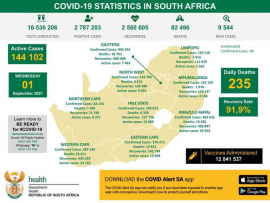
South Africa has surpassed over six million adults who are fully vaccinated, 149 362 of which were vaccinated in the last 24 hours.
As of 1 September 2021, a total of 6 145 216 South Africans had been fully vaccinated, according to the Department of Health. Of these, 2 884 840 received the Johnson & Johnson shot, while 3 260 376 were given the Pfizer vaccine.
Meanwhile, the country administered 253 160 vaccines on Wednesday, pushing the total to 12 841 537.
In addition, the National Institute for Communicable Diseases (NICD) said the country logged 9 544 new COVID-19 infections, bringing the number of laboratory-confirmed cases to 2 787 203.
The majority of new cases were recorded in KwaZulu-Natal (2 681), followed by the Western Cape (2 049), Eastern Cape (1 392) and Free State (964).
“This increase represents a 15.6% positivity rate,” said the institute, adding that the latest figure is higher than the average number of new cases per day over the seven preceding days.
Meanwhile, a further 235 COVID-19 related fatalities have been reported, bringing the death toll to 82 496.
According to the NICD, there has been an increase of 430 hospital admissions in the past 24 hours.
The information is based on the 16 536 206 tests, 61 027 of which were conducted since the last reporting cycle.
As of 1 September 2021, there have been 217 558 771 confirmed global cases of COVID-19, 4 517 240 deaths and 5 272 630 490 administered vaccine doses reported to the World Health Organisation.
SA administers close to 250 000 vaccines on Monday

South Africa has administered 249 916 COVID-19 vaccines as the virus continues to spread, with over 5 000 new cases recorded on Monday.
According to the Department of Health, this means the country has now distributed 12 289 478 vaccines, translating to 9 252 975 people who have received their vaccination, of which 5 818 291 are now fully vaccinated.
Meanwhile, the National Institute for Communicable Diseases (NICD) said 32 040 tests were conducted in the last 24 hours, with 5 644 new cases reported.
The majority of new cases occurred in KwaZulu-Natal (1 982), followed by the Eastern Cape (931) and Western Cape (903).
According to the NICD, the additional infections represent a 17.6% positivity rate, while the seven-day moving average daily number of cases has decreased.
In addition, 235 more people lost their lives to the disease, pushing the death toll to 81 830 to date.
“There has been an increase of 127 hospital admissions in the past 24 hours,” the institute said, adding that this brings the total to 13 090 patients who are currently in hospital.
Globally, as of 30 August 2021, there have been 216 303 376 confirmed cases of COVID-19, including 4 498 451 deaths, reported to the World Health Organisation.
In addition, 5 019 907 027 vaccine doses have been administered worldwide.
South Africa detects C.1.2 variant of interest
Recently published research has revealed that the new COVID-19 variant C.1.2 has been identified in South Africa.
According to the researchers, there are concerns that this SARS-CoV-2 variant of interest (VOI) has been associated with increased transmissibility, neutralisation resistance, and disease severity.
“Here we report the identification of a potential variant of interest assigned to the Pango Lineage C.1.2,” the preprint analysis published last week read.
The Pango, which stands for Phylogenetic Assignment of Named Global Outbreak Linages, refers to the software tool for sequence assignment used by researchers to track the transmission and spread of COVID-19.
“This lineage was first identified in May 2021 and evolved from C.1, one of the lineages that dominated the first wave of SARS-CoV-2 infections in South Africa and were last detected in January 2021.”
According to KwaZulu-Natal Research Innovation and Sequencing Platform (KRISP) Director at the University of KwaZulu-Natal, Professor Tulio de Oliveira, this was the work of dozens of scientists as part of the Network of Genomic Surveillance in South Africa (NGS-SA).
“The preprint analysis was led by National Institute for Communicable Diseases and KRISP,” he said, adding that it also involves young women scientists, including Catherine Scheepers, who is the first author.
“The reason why we decided to publish the preprint is that we see the C.1.2 persistence in South Africa and is now in another 10 countries. It is early days as only 95 genomes have been published at GISAID. However, we found that in this pandemic, [it is crucial to] share info quicker than later,” the Professor explained.
According to the analysis, C.1.2 has since been detected across the majority of the provinces in South Africa and several other countries in Africa, Europe, Asia, and Oceania.
“The emergence of C.1.2 was associated with an increased substitution rate, as was previously observed with the emergence of the Alpha, Beta and Gamma variants of concern (VOCs).”
Variant of interest (VOI)
The Centre for Disease Control and Prevention (CDC) defines a VOI as a variant where there is evidence of an increase in transmissibility, more severe disease, which may lead to hospitalisation or death.
The national public health agency of the United States said the significant reduction in neutralisation by antibodies generated during previous infection or vaccination, reduced effectiveness of treatments or vaccines, or diagnostic detection failures.
Meanwhile, VOCs are associated with specific genetic markers that have been associated with changes to receptor binding, reduced neutralisation by antibodies generated against previous infection or vaccination, reduced efficacy of treatments, potential diagnostic impact, or predicted increase in transmissibility or disease severity.
According to the US epidemiologist and health economist, Dr Eric Feigl-Ding, this means that this new variant has somehow mutated so fast and far that it is now the furthest mutated variant found to date.
“This C.1.2 is obviously a very fast-moving variant. We don’t know the exact transmission yet or the severity or vaccine efficacy yet. But the best advice that will serve us well is to take the precautionary principles as the approach — move fast,” he tweeted.
The Department of Health’s Deputy Director-General, Anban Pillay, told News Frame that the prevalence of the new variant in the samples that have been tested “is very low at this stage”.
“New variants are bound to develop as a natural evolution of the virus. The evidence to date indicates that the non-pharmaceutical interventions remain the key responses to these variants,” he added.
There are currently four VOCs, namely Alpha, Beta, Gamma, and Delta, and four VOIs, Eta, Iota, Kappa, and Lambda in circulation globally.
More N Cape schools close due to rising COVID-19 cases
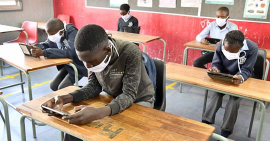
The Northern Cape Department of Education has again raised concern about the high COVID-19 infection rate among learners and school staff in the province.
The department has reported at least 339 new COVID-19 cases among teachers, school support staff and learners and six schools closed during the past week due to the virus.
Last week, 526 new COVID-19 cases in schools were reported with the national Health Department also raising concern about rising infections in young people between the ages of 10 and 19 in the province.
In a statement, the provincial Education Department implored parents to limit the movement of children while they are at home.
“The high infection rate, especially amongst our learners, is very concerning and we appeal to parents and school communities to limit movement or social interaction of our learners whilst at home.
“Schools are a microcosm of our society and at this stage mirror the level of infections in our communities. School communities must remain vigilant whilst we still find ourselves in the midst of the COVID-19 pandemic,” the statement said.
According to the department, plans are in place to ensure that learning at schools is not compromised during this period.
“The department is working tirelessly to normalise learning and teaching at our schools. Whilst the number of COVID-19 infections in our schools remain fairly high, we are satisfied with the manner in which our schools are managing and responding to these incidents at the level of our schools,” the department said.
The department reiterated the call for those over the age of 18 to get vaccinated against COVID-19.
“We urge parents, if your child is 18 years and above, to register them on the Electronic Vaccination Data System (EVDS) for the public vaccination programme for this specific age group.
“The vaccination has proven to be safe and it provides a mechanism through which we can protect ourselves against the COVID-19 pandemic. Let us continue to adhere to the non-pharmaceutical interventions by wearing our masks, sanitising and washing our hands regularly and maintaining social distance,” the department said.
Preparatory exams
Meanwhile, the department said Grade 12 preparatory examinations which start on Monday will not be affected by the rise in COVID-19 infections.
“The preparatory examinations will be conducted under strict COVID-19 regulations to limit any disruptions it may have on the Examinations. The Department has put systems in place to ensure that no learner’s academic performance are negatively affected, in cases where they cannot write due to the COVID-19 pandemic,” the department said.
Contingency plans are in place for learners who are affected or infected by COVID-19.
“In a case where a learner cannot write the common papers, due to a valid reason or COVID-19, he/she will receive an adjusted mark for the subject.
“In a case where a large group of learners are unable to write due to COVID-19, the school will reschedule a date for these learners to write a back-up paper. This is in line with the existing Examinations policies currently in place,” the department said.
Vaccinate, urges Minister as fourth wave looms
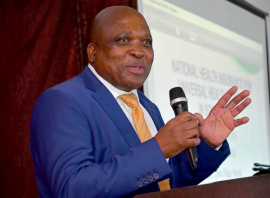
Health Minister Dr Joe Phaahla has once again encouraged all South Africans over the age of 18 to get vaccinated against COVID-19.
This as he announced that the country is expected to enter a fourth wave of the virus in November.
The Minister updated the nation on efforts to fight COVID-19 and government’s vaccination rollout plans on Friday during a virtual briefing.
“We have opened [vaccinations] for everybody above 18 years old. We urge everybody to please come forward so that we can all be protected. We know that it is almost accepted that somewhere towards the end of the year, we will have the fourth wave and we want to make sure that all South Africans are protected against that by taking the vaccination,” he said.
As of yesterday, 12 711 more COVID-19 cases were reported, with an increase of at least 357 more COVID-19 related deaths.
In the last 24 hour period, at least 265 484 more COVID-19 vaccines were administered.
The Minister said the number of vaccines administered on Thursday was an indication that the health sector is able to reach its target of administering 300 000 vaccinations per day.
He said despite early indications of vaccine hesitancy, the male population had now begun to take up inoculation.
“As of yesterday, the female vaccinated population was 58.5% and the male was at 41.5%. So there’s and improvement on the male uptake, which we really encourage.
“The last seven days have shown that as a country, we do have the capacity to administer vaccines and we do have the necessary supplies. It shows that we can indeed reach the… target which has been set for us by President Cyril Ramaphosa,” he said.
At least 1.5 million doses of either the Johnson & Johnson and Pfizer vaccines were administered over the past week.
A total of 8.8 million South Africans have received at least one vaccination, with 5 450 000 fully vaccinated.
Phaahla raised concern that the third wave of the virus is taking longer to subside than the first two, which could be harmful to health services with the fourth wave looming.
“The third wave is dragging for longer. Sometimes it looks like there will be a steep downwards [trend] and then it rises again. In the absence of new variants, what this means is that many of us are not observing the prescribed precautions.
“The risk of this is that by the time the fourth wave comes – which is predicted to come around some time in November, possibly driven by a new variant – it may find us still at the tail end of the third wave, which will mean that our health facilities and our health workers would not have had much rest. This is something that is worrying and we urge all South Africans to observe the known protocols,” Phaahla said.
The Minister said the virus may still be a factor in the near future and the best solution is to achieve herd immunity through vaccination.
“It’s going to take some time and there’s going to be a number of waves but what we are told and what seems to be the route to go is that the more we cover in vaccinations, the less mutations and if there are less mutations and less viral loads of this COVID-19, then there will be less waves coming,” he said.