
Government working together to relieve disaster-affected KZN

President Cyril Ramaphosa has described the loss of life and damage to infrastructure that occurred during flooding in KwaZulu-Natal as a disaster of “enormous proportions”.
The President visited the area on Wednesday following torrential rains which battered the eThekweni Municipality – leaving at least ten districts needing humanitarian and other relief.
At least 306 people have lost their lives during the flooding.
President Ramaphosa assured residents of affected areas that all spheres of government are working hand in hand to bring relief and aid to them.
“We are dealing with a calamity of enormous proportions here but our government is getting into gear [and] the [South African] Defence Force is also going to be here. We are going to roll out as much assistance to our people as we possibly can.
“This calls for working together as government and…our other provinces have already pledged support and assistance…. personnel, experts, food stuffs and all that. There is solidarity and we are working as a team.
“Right now we are dealing with the immediate situation of ensuring that those who have lost loved ones are comforted, accommodated and they are well cared for and that we should also ensure that we help them bury their loved ones and also to find their loved ones because some of their loved ones were washed away by the water through the river system so the search is still going on,” the President said.
On Wednesday evening, the national Department of Cooperative Governance and Traditional Affairs (COGTA) declared a provincial state of disaster in KZN.
This, the President said, would allow for more financial resources to be ploughed into the provision of relief and to count the cost of the floods.
“We are going to lay out professionals and engineers to look at exactly what the extent of the damage is and we will also look at the cost that it is going to take. But I have said we are going to spare nothing. We are going to do everything that is to do with this disaster and the economic part of the issue that we have to address,” he said.
The President said the disaster is an indication of the devastating effects that climate change can have.
“This disaster is obviously part of climate change. It is telling us that climate change is serious; it is here. We no longer can postpone what we need to do [and] the measures we need to take to deal with climate change. It is here and our disaster management capability needs to be at a higher level,” he said.
KZN floods declared a provincial disaster

National Disaster Management Centre head, Dr Mmaphaka Tau, has classified this week’s KwaZulu-Natal floods as a provincial disaster.
The classification, done in terms of Section 23 of the Disaster Management Act: Impact of Severe Weather Events, was gazetted on Wednesday.
Tau said the move came after having deliberations with sector Departments and the KwaZulu-Natal Provincial Disaster Management Centre.
He said the disaster management centre also assessed the magnitude and severity of the impact of the severe weather events occurring in various municipal areas of the province. These have resulted in the loss of life and damage to property, infrastructure and the environment caused by heavy rain, flooding, strong winds and landslides.
The devastating floods had claimed over 300 lives by Thursday.
“The Disaster Management Act, Section 40 read with section 23(8), designates the primary responsibility to coordinate and manage this disaster, in terms of existing legislation and contingency arrangements to the provincial executive,” said the Department of Cooperative Governance and Traditional Affairs in a statement.
Accordingly, the Department urged all state organs to further strengthen support to existing structures to implement contingency arrangements and ensure that measures are put in place to enable the province to effectively deal with the effects of this disaster.
Expired driver’s licence grace period deadline extended
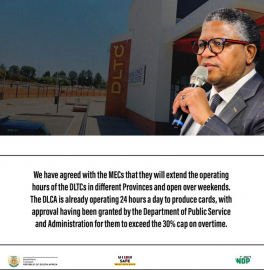
The Department of Transport has again extended the grace period for renewing expired driving licences to 15 April 2021.
This comes as the deadline for the renewal of expired driving licences ended on 31 March 2022.
In August 2021, Transport Minister, Fikile Mbalula, announced the extension of learner’s licences, driving licence cards, temporary driving licences, and professional driving permits for a grace period ending on 31 March 2022.
This was part of government measures in response to the lockdown in the management of COVID-19.
Updating the media on the deadline for the extension of licence validity in Midrand on Friday, Mbalula said after consultation with MECs and the South African Local Government Association (SALGA), the department has decided to extend the grace period of the validity of driving licences, which expired between 26 March 2020 and 31 August 2021, to 15 April 2022.
He said the number of driving licence cards, for which renewal applications are still to be made, stands at 1 424 756, a reduction from 2 813 016.
“This means that only 49% of the affected motorists have applied for renewal of their expired driving licences… Motorists are not coming forward to renew their licences for a variety of reasons.
“As of 28 March 2022, we had produced 628 150 driving licence cards, reducing the backlog of cards to be printed to 522 839. This is in respect of those who have already applied to renew their licences,” Mbalula said.
Over 74 000 bookings made in Gauteng and Eastern Cape
Mbalula said during the month of March, over 74 000 bookings were made in Gauteng and the Eastern Cape… while a further 24 000 booking slots were not taken up.
In the Western Cape, out of 403 507 expired licences, 218 286 driving licences have been renewed, representing 54.1% renewal.
In the Northern Cape, 26 382 driving licences have been renewed, 52 284 expired licences, representing 50.5% renewal.
However, Mbalula said five provinces remain below 50% of renewal. These include the Free State, with only 65 551 driving licences renewed, out of 134 917 expired licences, representing 48.6% renewal.
Operating hours extended to weekends
The Minister also announced that the department has agreed with the MECs that they will extend the operating hours of the driving licence testing centre (DLTCs) in different provinces and open over weekends.
“The DLCA [Driving Licence Card Account] is already operating 24 hours a day to produce cards, with approval having been granted by the DPSA [Department of Public Service and Administration] for tjem to exceed the 30% cap on overtime,” he said.
Research on possible changes to renewal period underway
Meanwhile, Mbalula announced that the Road Traffic Management Corporation (RTMC) has been commissioned to undertake research on possible changes to the renewal periods.
“The research will look at the co-relation between the renewal period and safety on our roads and what factors should be taken into account if we are to revise the current five-year validity period. This work is already underway, and will be concluded by 30 April 2022.
“Various countries on the continent have renewal periods that range from two to five years, and a number of other countries require renewal at anything from six to 15 years, while others have integrated the driving licence into their identity cards,” the Minister explained.
He reiterated his call to motorists to come forward and renewed their driving licences to avoid penalties on the road.
SA has no current plans to discontinue use of coal

There are currently no plans to discontinue the use of coal as part of the country’s energy mix, says Deputy President David Mabuza.
The Deputy President said this when he responded to oral questions in the National Assembly on Thursday.
He said the country’s energy generation is guided by the Integrated Resource Plan (IRP) 2019, which provides for the use of all energy resources available, including, among others, coal, gas and renewable energy sources.
“Currently, there are no plans for the discontinuation of the use of coal as 99% of South Africa’s electricity supply is derived from coal and 30% of liquid fuels are derived from the same commodity.
“Coal remains one of our largest natural endowments that will continue to form part of our energy mix in terms of the IRP 2019,” he said.
He said, however, that despite this, the country is committed to forging a low-carbon growth path that prioritises environmental sustainability.
“We need to ensure that we deploy new infrastructure, technologies and solutions that enable us to adhere to ambient air quality standards, and protect the lives of communities from negative environmental externalities.
“Going forward, the IRP 2019 proposes the use of high efficiency, low emissions coal technologies. Government is currently working on other measures such as the Gas Utilisation Master Plan and the Renewable Energy Master Plan.”
The Deputy President said government is exploring the development of the Nuclear Procurement Framework as proposed in the IRP 2019.
He said these are part of the medium to long-term plans in ensuring security of energy supply.
“Having said that, it is important to point out that, out of the entire fleet, there are planned optimised plant shutdowns that is aligned with the Integrated Resource Plan, to balance capacity, environmental, social and economic considerations.
“This is inevitable because, in the main, these plants are approaching the end of their lifespan, and have become uneconomical, unpredictable and costly to run.
“Nine coal-fired power stations will be shut down by 2035, thereby impacting significantly on the reduction of generation capacity,” he said.
Reduced fuel levy to cushion consumers

Finance Minister Enoch Godongwana has tabled a proposal that will see the fuel levy being reduced by R1.50 cents per litre.
Making a statement to a sitting of the National Assembly on Thursday, Godongwana said the temporary fuel levy cut will come into effect on Wednesday next week, and will remain in effect until the end of May.
This will help cushion the blow that rising fuel prices are having on consumers after Mineral Resources and Energy Minister Gwede Mantashe warned that fuel prices are likely to increase even further this month.
“The intention of the temporary reduction of the general fuel levy is to support a phasing in the fuel price increases that we are expecting in the short term.
“This will go some way in assisting South Africans to adjust to the new reality,” he said.
With the Russia-Ukraine conflict continuing to impact the price of crude oil globally, this has had a direct impact on fuel prices in South Africa.
In March this year, the petrol price rose to R21.60 cents per litre of 95 ( (ULP and LRP) petrol in the inland region, while the price of diesel prices also rose.
Godongwana’s proposal will reduce the levy for petrol from R3.85 cents per litre to R2.35 cents per litre, while the levy on diesel will be reduce from R3.70 cents per litre to R2.20 cents per litre.
“These amounts exclude other levies such as the Road Accident Fund levy and the carbon fuel levy,” he said.
Reduction to be funded by sale of crude oil reserves
The Minister said the proposed reduction of the general fuel levy, for a period of two months, will not require adjustments to the annual national budget, as the proposal is not expected to have an impact on the fiscal framework.
“The proposed reduction of the general fuel levy will be funded by a liquidation of a portion of the strategic crude oil reserves.
“In this instance, the revenue foregone by the reduction in the levies will be recouped through a sale of strategic crude oil reserves, which are held by the Strategic Fuel Fund, which is a subsidiary of the Central Energy Fund. The sale would be required to raise around R6 billion,” he said.
Godongwana said with the fuel levy reduction being a temporary measure, a broader package of relief measures will be explored, and they will come into effect after the expiry of the two-month fuel levy reduction.
Pakistani national arrested for fraud
A Pakistani national, who fraudulently obtained SA enabling documents and tried to leave the country, was on Thursday arrested by the Home Affairs Counter Corruption Unit and the police in the Western Cape.
The suspect fraudulently acquired a South African ID in Gauteng and a passport in KwaZulu-Natal. He is scheduled to appear at the Bellville Magistrate Court.
The arrest comes within a week after another Pakistani national was arrested in Pretoria for fraud and corruption.
The suspect had been on the radar of the Counter Corruption Branch for his involvement in suspected fraudulent activities in Gauteng, KwaZulu-Natal and the Western Cape.
The Counter Corruption Unit received a tip-off that he was planning to leave the country.
On Wednesday, he booked a flight to leave from Cape Town. He then cancelled this ticket before the flight took off. On Thursday, he booked another ticket to leave on the same day.
When he tried to check in, immigration officers blocked his attempt and immediately called the Counter Corruption Unit and the police, who moved swiftly to make the arrest.
Immigration officers had details of his fraudulent South African passport and his Pakistani passport.
“The net is closing in on all the corrupt Home Affairs officials and their associates who are undermining the country’s laws.
“This failed bid to evade justice in South Africa is linked to the take down of a syndicate that was operating out of the Krugersdorp Home Affairs office last week,” Home Affairs Minister, Dr Aaron Motsoaledi, said.
The Minister has instructed the department to speedily finalise the investigation of the Home Affairs officials who were working with the suspect so that appropriate action can be taken.
“We don’t tolerate fraud and corruption, and it is clear that there are members of society who share our resolve and provide reliable tip-offs. We thank them for coming forward,” Motsoaledi said.
The Minister said a multi-disciplinary law enforcement team is keeping a close eye on a number of corrupt Home Affairs officials and syndicates, and more arrests are imminent.
SA strikes deal to buy gas from Mozambique
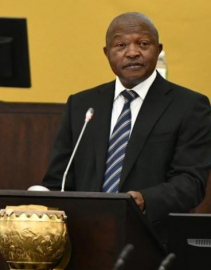
Deputy President David Mabuza says government has reached an agreement with Maputo that will see South Africa getting a supply of gas from Mozambique.
The Deputy President said this when he responded to oral questions at a sitting of the National Assembly on Thursday.
“Discussions between our Minister here of Mineral Resources [and Energy] and Mozambique are quite advanced in terms of gas that we should transport from Mozambique to the country.
“I can safely say that we have reached an agreement,” he said on Thursday.
Responding to questions from Members of Parliament (MPs), the Deputy President said alternative energy generation measures are being explored and implemented to augment electricity supply and improve the stability of the grid.
Deputy President Mabuza also said the Department of Mineral Resources and Energy has amended the Electricity Regulations of New Generation Capacity. The department has also put together processes to be followed to ensure requests by municipalities for own generation are speedily attended to.
He told MPs that currently, 292 small-scale generators have registered with the National Energy Regulator of South Africa (NERSA) and have generation capacity of 187MW.
“The Independent Power Producers Office is processing offers by independent power producers for approval by Eskom and National Treasury.”
He said the Minister of Mineral Resources and Energy has issued determinations on the required new generation capacity, in concurrence with the NERSA.
“The Determinations made, resulted in the procurement of more than 7 309 MW from renewable and non-renewable energy.
“Most of these power plants are already in operation, with less than 400MW still under construction,” he said.
Cele welcomes new Police Commissioner
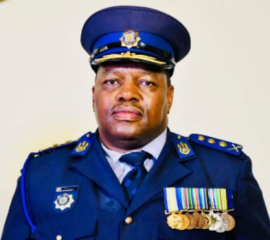
Police Minister Bheki Cele has welcomed the appointment of Lieutenant General Sehlahle Fannie Masemola as the country’s new National Commissioner.
Shortly after the announcement by President Cyril Ramaphosa on Thursday, the Police Ministry in a statement said it was hopeful that the appointment would “further strengthen the existing efforts within the police service to safeguard South Africans and all those who live within our boarders, along with their property”.
The ministry said Cele and his Deputy, Cassel Mathale, had congratulated the incoming National Commissioner.
Masemola’s appointment is effective from 1 April 2022.
Cele said: “We must commend President Ramaphosa for acting with agility in making the appointment and not allowing a vacuum to exist in this office, which is critical in the leadership and the mobilisation of all personnel and resources responsible for the safety and security of our country.”
Masemola is no stranger to the functioning of the SAPS, both at an administrative and operational level.
The ministry said it is confident Masemola, who served as the Deputy National Commissioner responsible for Policing since April 2016, will hit the ground running in pursuing the overall vision of the organisation and take it to new heights.
“The ministry will continue to lend support to the office of the National Commissioner, as it charts the course of action which we are sure will build on the restoration of the morale and unity within the organisation.
“We are optimistic that this shift in the SAPS top management will not derail the efforts in place to build on an efficient and trustworthy police service that is accessible to all our people and is unapologetic about preventing, combating and investigating crime; maintaining public order and upholding and enforcing the law,” said the Minister.
Law Reform Commission hands reports to Justice Department

South African Law Reform Commission chairperson Justice Jody Kollapen says the process of reforming the law to best suit both the country and its constitutional democracy, is not easy nor will it be quick.
Kollapen was speaking at the handover of four reports on various aspects of the law and legal practise to Justice and Constitutional Development Minister Ronald Lamola on Tuesday.
The reports are:
- Project 107: Report on Sexual Offences (Pornography and Children)
- Project 142: Investigation Into Legal Fees, Including Access To Justice And Other Interventions
- Project 138: The Practice of Ukuthwala
- Project 125: Harmonisation of Existing Laws Providing For Different Periods Of Prescription
Justice Kollapen explained that the commission’s work was conducted with extensive consultation.
“In much of the work that we’ve done, sometimes there isn’t a definitive answer and sometimes there is but sometimes in the public consultation process, two very viable options may emerge as possible routes to law reform.
Minister Lamola said although a definitive timeline cannot be placed on when the reports will be implemented, government will be working “within reasonable time” as the reports are “top of the mind”.
“These four reports go a long way in analysing systemic problems in our justice system and in society and recommending an appropriate legislative remedy to address these. The reports cover issues which are at the heart of access to justice, the distortion of cultural practices and the ability for claims to be justly adjudicated.
“We welcome the research, investigations and recommendations as set out in the reports as we consider the necessary legislative changes, amendment bills and regulations,” Lamola said.
Report on Sexual Offences (Pornography and Children)
Justice Kollapen said the report on child pornography covered a “variety of areas” in how the law can protect children from being exposed – as either inadvertent or forced participants or viewers – to pornography.
“The report covers a variety of areas in how the law could best regulate that with the view to protecting children but also recognising that children themselves may be involved in the production of this material.
“Children are naturally curious and [the report deals with] how best to deal with that other than the strict strictures of the criminal justice system but in recognising that we need to deal with children in a way that recognises their youth, their vulnerability and the need not to stigmatise them permanently,” he said.
Report into Legal Fees, Including Access To Justice And Other Interventions
Justice Kollapen highlighted that in South Africa, the ability to access justice largely depends on the ability to gain access to legal representation. As a result of this, high legal fees are becoming a hindrance and undermine the country’s constitutional democracy.
“Increasingly, the cost of justice has simply put that right beyond the reach of many. So it rings hollow when someone who’s lost their home and has been unable to have his/her day in court, not because the doors of the court are closed physically but simply because access to justice is prohibitive from a cost point of view.
“It undermines the right to court and in turn, it undermines the very idea of a constitutional democracy that can be held up to say we are all equal before the law. [For] many that would fall within the middle and lower income groups, access to justice is a formidable challenge,” he said.
The commission chair explained that the legal fees report suggests carving out a dispensation that ensures that those who can pay high legal fees can do so but also allows for access for others.
“The report seeks to find means to reduce legal fees and to place certain caps on the scope and extent of what law firms and legal practitioners may charge to people…but in particular when those services are used in the magistrate’s courts, there could be a strong case made for a reduction or at least a set of guidelines that would regulate fees,” he said.
Kollapen added that although these reforms are important, the recommendations are made with the knowledge that legal professionals also need to earn a living and that the profession is sustainable.
“But…at the end of the day it’s not only about one sector; it’s not only about lawyers. It’s about all of us as a society…and what is it that ethically, we should be doing to ensure that the reach of the law is not taken beyond the people who seek justice,” he said.
The Practise of Ukuthwala
The now controversial practise of ukuthwala is defined in the report as “the act of taking a marriage partner in unconventional ways, seemingly forceful, with the aim of forcing the girl’s family to enter into negotiations for the conclusion of a customary marriage”.
Presenting the report, Kollapen said a balance had to be struck between respecting traditional practises and ensuring that these are carried out within the confines of the law.
“The report recognises that some features of the practise may have had a benign origin…but over time some features of that practise deteriorated to the extent that the notion of consent in some instances simply lacked. People were taken without their consent [and] in some instances; young children were the subject of the distorted form of ukuthwala.
“Following its research…the commission produced a report which seeks to recognise on the one hand the benign and some positive features of the practise but on the other hand to ensure that the practise was not used to force people into marriage or indeed was used to prejudicially impact on the rights and the interests of children,” he said.
Harmonisation of Existing Laws Providing For Different Periods Of Prescription
The commission chairperson said harmonising prescription time in law requires a balance to be struck between the right to have legal disputes heard and the real concept that if left for many years, those involved in cases can be expected to have distorted memories or lost documents.
Prescription is a stipulated time period that an aggrieved person is allowed to bring a case to be heard in court.
“The problem with prescription laws is that different laws provide for different periods of prescription. So the idea of regularising prescription periods to ensure equitable access to justice is certainly an important one but…the need to ensure efficiency in litigation is also an important one. So as in many areas of the law, it requires a fine balance,” he said.
Changes in housing subsidies welcomed

Western Cape Human Settlements MEC, Tertuis Simmers, says the social housing household income qualification criteria adjustment will ultimately enable more citizens to access affordable rental opportunities and enable the department to initiate more social housing projects.
Simmers welcomed National Minister of Human Settlements, Mmamoloko Kubayi’s changes on human settlements subsidies and other portfolio issues, which include social housing adjustment of the qualification criteria of household income from R1 500 – R15 000 to R1 850 – R22 000 gross monthly income.
“The social housing household income qualification criteria adjustment will enable those who could not access housing opportunities, due to earning higher than the previously prescribed household income band, to access these opportunities. This will also assist youth with a household income of up R22 000 and who are not ready for a mortgaged home,” Simmers said.
Extension of FLISP gives hope to more people
The MEC also commended the extension of Finance Linked Individual Subsidy Programme (FLISP) to non-mortgage housing finance facilities from 2022/23 financial year, saying it will particularly be of benefit to citizens in the province.
“The FLISP extension to non-mortgage housing finance facilities gives hope that more people who were unable to access this programme due to not qualifying for a mortgage loan for various reasons, will now be able to access this programme through various non-mortgage housing finance facilities,” Simmers said.
During a media briefing last week Friday, Kubayi announced that FLISP may be used in combination with one of the following products and situations:
- Housing loans granted or guaranteed by a pension and provident fund.
- Unsecured housing loans from any registered lender.
- Housing loans granted or guaranteed by cooperative- or community-based savings scheme.
- FLISP can be used in combination with individual own resources or savings.
- Housing loans supported by employer-based schemes such as Government Employees Housing Scheme or private sector Employer Assisted Housing Schemes (EAHS).
- Housing loans supported by Permission-to-Occupy (PTOs) issued by government or recognised Traditional Authority.
Kubayi also announced that with effect from 1 April 2022, the FLISP quantum range increases by between 7.2% and 10%.
“Not only are these amendments opening up an opportunity for those who were previously excluded from affordable housing opportunities, but it also presents construction and property entities the chance to form part of the provision of social housing to Western Cape residents by applying as accredited Social Housing Institutions (SHIs).
“This will enable them to partner with government in the provision of social housing opportunities to qualifying residents. The adjustments to the affordable housing programmes will certainly result in increased demand. This demand will need us to work closely and together with private sector,” Simmers said.
He further welcomed the increase of Human Settlements Development Grant (HSDG) allocation for bulk infrastructure from 3% to 5% and the new directives applicable to deal with natural disasters, including floods, thunderstorms and fires.
“As the province is often affected by fires, the allowance to now utilize available funds from HSDG, USDG (Urban Settlement Development Grant) and ISUPG (Informal Settlements Upgrading Partnership Grant) to intervene in dealing with the disasters will enable us to respond timeously in such situations.
“These changes will assist the Department in getting closer to achieving its mission of providing settlements that offer good basic and socio-economic services, a range of rental and ownership options that respond to the varied needs and incomes of households,” the MEC said.