
Family hatches business with grant money
Written by Silusapho Nyanda
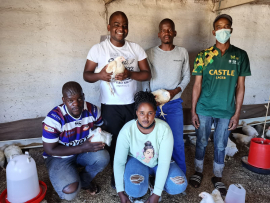
Five young people from an Eastern Cape rural town are breeding success after putting their Social Relief of Distress (SRD) grant to good use.
The cousins from Nobumba Village in Peddie used their monthly R350 SRD grant to start the Bayeni Poultry Cooperative, which sells broiler chickens to surrounding villages and the town of Makhanda.
Bayeni chairperson Phumlisa Ngabase (26) explained that when the cousins lost their jobs because of COVID-19, they had to find a way to put food on the table in the long-term.
“Our vision was to get up and do something for ourselves,” Ngabase said.
They also received assistance from the Eastern Cape Department of Rural Development and Agrarian Reform (DRDAR), which donated 10 bags of feed and 150 day-old chicks, a plucker machine and water tanks.
Apart from the donations, DRDAR also trained the youngsters.
“DRDAR officials gave us information packs about the different stages of growing chickens and the types of feed to use at each stage,” Ngabase said.
Members of the cooperative also received information about registering a cooperative and applying for assistance from the department.
“We are constantly in touch with our extension officer for advice,” said Ngabase.
“The assistance we have received from the department has minimised our challenges, and we are starting to see profits.”
Ngabase said they chose the agriculture sector because it offers endless opportunities for young people.
Eastern Cape MEC of Rural Development and Agrarian Reform Nonkqubela Pieters said the Bayeni Poultry Cooperative has done commendable work.
“They have changed R350 monthly grants into an investment.”
MEC Pieter added that the DRDAR recently donated 400 chicks and 15 bags of feed, 2 400 vegetable seedlings, 10 wheelbarrows, 20 bags of pig feed, garden tools and a plucker machine to 17 other youth projects in Peddie.
Emerging farmers wanting to receive similar assistance, should contact DRDAR’s extension services at 043 602 5006/7 or visit www.drdar.gov.za.
National State of Disaster on COVID-19 extended
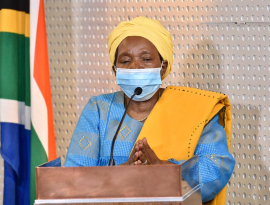
Cooperative Governance and Traditional Affairs (CoGTA) Minister, Dr Nkosazana Dlamini Zuma, has gazetted a further extension of the National State of Disaster on COVID-19, until 15 April 2022.
In a Government Gazette issued on Monday, the Minister said the extension took into consideration the “need to continue augmenting the existing legislation and contingency arrangements undertaken by organs of state to address the impact of the disaster”.
The country has been under regulations of the National State of Disaster on COVID-19 since March 2020 when South Africa recorded its first cases of the virus.
President Cyril Ramaphosa, during his State of the Nation Address in February, said government planned to scrap the National State of Disaster as the country entered a new phase in the management of the COVID-19 pandemic.
Later, Health Minister, Dr Joe Phaahla, said various departments were “working on alternative measures” to replace regulations related to the National State of Disaster which could be presented to the National Coronavirus Comand Council (NCCC).
CDC prioritizes jobs, SMME development
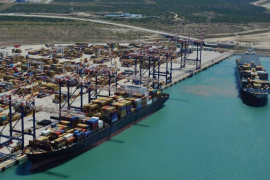
The Coega Development Corporation (CDC) continues to prioritise access to economic opportunities for the development of small, medium and micro enterprises (SMMEs) while providing job creation and related opportunities.
“The CDC recognises that a thriving SMME sector is vital to delivering on the country’s economic development objectives,” CDC SMME Programme Manager Unathi Maholwana said on Monday.
The CDC’s vision to champion socio-economic development remains central to its standing, as a preferred investment destination and trusted infrastructure implementing agent of choice in South Africa.
“Our entire business model is based on the ability to deliver sustainable long-term business development while being cognisant of the need to improve the lives of people through job creation and related opportunities. Therefore, the focus on sustainability strengthens the value proposition for investors and clients of the future,” Maholwana said.
She said the CDC recognises that a thriving SMME sector is vital to delivering on the country’s economic development objectives.
Through the development of the Tshwane Automotive Special Economic Zone (TASEZ) R324.3 million was achieved on SMME procurement spend out of the R2 billion expenditure on the project, from April 2021 to December 2021.
SMME development is often undertaken during the construction of infrastructure and related projects.
The overall SMME expenditure for the CDC, inclusive of TASEZ, industrial development zone, and external programmes is currently at R811 million.
“This translates to black woman-owned businesses having benefited to the tune of R100 796 046.70 with black youth-owned businesses coming in at R72 527 600.30 and black people with disability businesses at R1 140 023.19.
“Access to economic opportunities remains one of the key aspects driving SMME development, and the CDC’s objective is to facilitate, promote and drive the inclusion of SMMEs in procurement opportunities,” Maholwana said.
The programme targets SMMEs that are at least 51% black owned, with a Construction Industry Development Board (CIDB) grading of 1 to 6.
The CDC SMME Development Programme, led by the SMME Unit, also comprises the training and mentorship of SMMEs on tendering for construction contracts, basic business concepts, applying health and safety standards, and business finance.
From April 2021 to December 2021, a total of 213 SMMEs benefitted from this training at a cost of R710 300 and as at 31 December 2021, the CDC’s total value of contracts awarded to SMMEs through the SMME Unit’s Development Programme equates to R537 852 730.
SMMEs are welcome to register on the CDC database as follows:
- Application forms (coega.co.za > Coega Services > SMME) must be completed in full and returned to the SMME Development Unit with all required supporting documents as stipulated on the application form.
- All supporting documents must be valid and active at the time of submission.
- Once verified, the business will be registered on the database and the applicant will receive a SMS with the reference number of the business registered.
For information and guidance, SMMEs can contact the CDC SMME Development Unit via smmedevelopment@coega.co.za or 041 403 0612.
Pay your power bill: Eskom
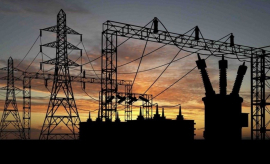
State owned power utility Eskom is calling on all customers – whether business, government or the general public – to pay their electricity bills.
This after the power utility won a legal battle against the Letsemeng Local Municipality in which the local government institution was instructed to pay its R41 million electricity bill.
“The SCA [Supreme Court of Appeal] made it clear that the fact that a municipality raises a dispute…as a defence or claims that it is unable to pay does not absolve it of its legal obligations to pay Eskom for the bulk electricity it receives. The SCA has authoritatively made it clear that there is no legal basis for delinquent municipalities’ failure to pay Eskom.
“Eskom welcomes the decision and assures the public that it will continue with its efforts to recover the debt owed by delinquent municipalities,” the energy supplier said.
Eskom said the decision by the SCA is “ground breaking” in light of the R44 billion in total owed to the cash strapped power utility.
“Eskom’s attempts to recover the debt have often been frustrated by conflicting high court judgments – some of which have been used by delinquent municipalities as justification for their failure to meet their obligations to Eskom.
“In this ground breaking judgement on the issue of municipal debt, the SCA laid down clear legal principles which uphold Eskom’s right to receive payment for the bulk electricity it suppliers to municipalities. The appeal was instituted by Eskom against the decision of the Free State High Court which had earlier dismissed Eskom’s application which sought to compel the municipality to pay for the bulk electricity received from Eskom,” the power utility said.
Meanwhile, Eskom has called for patience after customers in at least three districts in the Eastern Cape continue to live with electricity blackouts.
Parts of the Amathole, OR Tambo and Chris Hani districts in the province have been battling power outages as a result of inclement weather in that part of the country.
“Eskom has experienced network setbacks as more storms made landfall in some parts of the Eastern Cape last weekend leaving numerous customers without electricity supply. Eskom technicians are working hard to ensure complete restoration of power supply,” the power utility said.
The area has been beset with power failures for the past three months with heavy rainfall, strong winds and thunderstorms battering the province.
The energy supplier explained the persistent rains are a risk to technicians working on the ground and Eskom infrastructure.
“Inclement weather puts the Eskom network at risk and can affect the electricity supply for customers, potentially leaving customers with prolonged periods without electricity. Eskom urges customers to be patient and follow the channels made available to log faults…and to treat all electrical appliances as live at this time,” Eskom said.
SA records 671 new COVID cases

South Africa has recorded 671 new cases of COVID-19, said the Department of Health.
On Monday, the country had 18 112 active cases with no new deaths recorded in the past 24 hours.
”As of today the cumulative number of COVID cases identified in SA is 3 695 175 with 671 new cases reported. “Today zero deaths have been reported bringing the total to 99 725 deaths. The cumulative number of recoveries now stand at 3 577 338 with a recovery rate of 96.8%,” it said.
The National Institute of Communicable Diseases said the new cases represented a 4.6% positivity rate.
It said due to the ongoing audit exercise by the Department of Health, there may be a backlog of COVID-19 mortality cases reported.
A total 23 424 639 tests had been conducted in both public and private sectors.
The majority of new cases were from Gauteng (45%), followed by the Western Cape (20%). Kwa-Zulu Natal accounted for 18%; while Mpumalanga and North West each accounted for 5%. The Free State and Limpopo each accounted for 3%; the Eastern Cape accounted for 2% and the Northern Cape accounted for 1% of Monday’s new cases.
New affordable product set to make saving easier

National Treasury, through its RSA Retail Bonds unit, has created a new and exciting bond savings product in a bid to encourage South Africans to save.
The RSA Retail Savings Top Up Bond product, said Treasury, is in response to “a high demand by the public for a more affordable RSA Retail Savings Bonds product”.
The department said the Top Up Bond will be launched to the public on 1 April 2022.
“The product is targeted at younger investors, who are less likely to invest large sums of money, which allows them to start saving from as little as R500, with the option to top up their investment as often as they like, with a minimum of R100 at any time over the investment term.
“Any individual with a valid RSA ID number and a bank account within the Republic can start investing. Informal groups, such as social clubs and stokvels, who operate on monthly pooled savings, will be able to be eligible to invest in the RSA Retail Savings Top-Up Bond by providing their constitution and proof of banking details in the name of the informal group,” Treasury said.
More information regarding the RSA Retail Savings Top Up Bond can be obtained from queries@rsaretailbonds.gov.za or on the helpline 012 315 5888.
Russia, Ukraine conflict may impede global economic recovery

The rising oil price, the potential weakening of the rand against the United States dollar, and supply constraints around wheat, pose upside risks to food and headline inflation.
This is according Minister of Finance Enoch Godongwana who noted that the conflict between Russia and Ukraine carries with it significant risks for a world economy that is yet to fully recover from the shock of the COVID-19 pandemic.
“The longer the conflict lasts as well as the imposition of further sanctions could lead to widespread global inflation and impede global economic recovery,” Godongwana said on Wednesday.
He made these remarks in Parliament during the debate on the 2022 Fiscal Framework and Revenue Proposals.
“On the positive side, we expect that the rally in export commodity prices, stemming from supply concerns brought about by the conflict, will provide added support to the local mining sector and a possible windfall to revenue collections,” the Minister said.
The recently released Gross Domestic Product (GDP) for the fourth quarter of 2021 by Statistics South Africa shows that the economy grew by 1.2 percent, after shrinking by 1.7 percent in the third quarter of 2021.
“This is 0.2 percent lower than the Treasury estimations. Overall, South Africa’s economy grew by 4.9 percent last year, compared to the COVID-19 driven contraction of 6.4 percent in 2020. This represents a slightly better growth than estimated by National Treasury.
“There were improvements in a number of sectors namely: agriculture, manufacturing, services and transport. Of concern are declines in mining production, construction, electricity, government and financial services,” the Minister said.
He called for the acceleration of the pace of inclusive economic growth and job creation.
“This must shape all our macro and micro economic policies and interventions. It is only through a sustained economic growth that South Africa will be able to significantly reduce unemployment, poverty and inequality.
“As outlined in the Economic Reconstruction and Recovery Plan, and emphasised in the State of the Nation Address as well as the Budget Speech, we must act urgently to deepen social compacting and broaden consensus around what needs to be done to pull our economy out of its poor state,” the Minister said.
In this regard, work has begun to finalise a series of social compacts with various social partners.
“Efforts to grow our economy will not only depend on macro-economic interventions. We must continue with our reform agenda – in energy, telecommunications, rail, ports water and sanitation, as well as in boosting tourism and attracting rare skills into our economy.
“We are encouraged that the spectrum auction began yesterday, and will be complete by the end of this month. This will support lowering the cost of data; improving broadband coverage including in rural areas; increasing broadband speeds; and the rollout of 5G,” he said.
Cabinet notes progress done by the Special Investigating Unit

Cabinet has noted the remarkable progress achieved by the Special Investigating Unit (SIU) in their intensive investigation of maladministration and corruption within the National Lotteries Commission.
Cabinet has urged other law-enforcement agencies dealing with this matter to complete their work as soon as possible.
“This will ensure the necessary steps can be taken to hold accountable persons or organisations implicated in the unlawful misappropriation of funds earmarked to benefit the poor,” said Minister in the Presidency Mondli Gungubele who briefed media in Pretoria on Thursday, following a Cabinet meeting, on Wednesday.
The Special Investigating Unit (SIU) has obtained a search and seizure warrant from the Kimberly Magistrate Court in the Northern Cape province to raid the National Lotteries Commission (NLC) offices.
The warrant, which was obtained on Tuesday, authorises the SIU to search and seize evidence from the NLC-Kimberly office relating to the funding of Non-Profit Organisations (NPO) to uplift communities in the province.
Accompanied by members of the Directorate for Priority Crime Prevention (HAWKS), SIU investigators are currently raiding NLC offices to seize evidence that might assist with an ongoing investigation.
The SIU was reliably informed by whistleblowers that NLC officials had allegedly enlisted services of runners, who were tasked with the responsibility of scouting NPOs in the province and encourage them to apply for NLC funding.
Immediately after the funding was approved and released to NPOs, it is alleged that the runners together with NLC officials would share approximately 30 percent of the funding.
Fearing that normal procedure of requesting documents, in accordance with SIU Act 74 of 1996, might result in crucial evidence being compromised, the SIU approached the Magistrate Court for a search and seizure warrant to raid NLC office.
The SIU is looking to seize documents, laptops and computer hard drives.
The SIU was, in terms of Proclamation R32 of 2020, authorised by President Cyril Ramaphosa to investigate allegations of corruption and maladministration in the affairs of NLC and the conduct of NLC officials.
The proclamation covers offences which took place between 1 January 2014 and 6 November 2020, the date of publication of this Proclamation, or which took place prior to 1 January 2014.
It also covers any offences after the proclamation date that are relevant to, connected with, incidental to the matters or involve the same persons, entities or contracts investigated under authority of Proclamation R32 of 2020.
Parliament approves 2022 Fiscal Framework and Revenue Proposals
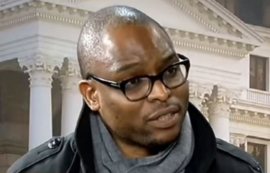
The National Assembly (NA) and National Council of Provinces (NCOP) have approved the 2022 Fiscal Framework and Revenue Proposals during separate plenary sittings of both Houses on Wednesday.
The Fiscal Framework and Revenue Proposals are part of the 2022 annual national budget, and were tabled before the National Assembly by Finance Minister, Enoch Godongwana, on 23 February 2022.
The framework was tabled in terms of Section 27 of the Public Finance Management Act, Act No. 1 of 1999 and Section 7 (1) of the Money Bills Amendment Procedure and Related Matters Act, Act No. 9 of 2009.
The Fiscal Framework is for a specific financial year and gives effect to the national executive’s macro-economic policy.
It includes a range of issues, including estimates of all revenue — budgetary and extra-budgetary specified separately — expected to be raised during that financial year and forecasts of borrowing for that financial year.
Parliamentary spokesperson, Moloto Mothapo, said Parliament’s agreement to the Fiscal Framework and Revenue Proposals follows a series of joint meetings of the Finance and Appropriations Committees of both Houses of Parliament, with Godongwana, the Director-General of National Treasury and senior National Treasury officials, as well as public consultations.
Mothapo said the budget presented by the Minister is not final, but a proposal that Parliament must scrutinise and approve.
“The process ensures that Parliament plays its crucial oversight role over the executive. Parliament’s Select and Standing Committees on Finance also held public hearings and received submissions from a wide range of organisations.
“These include the Congress of South African Trade Unions, the South African Institute of Chartered Accountants, the South African Institute of Tax Professionals, PricewaterhouseCoopers, the Healthy Living Alliance, South African Breweries, Institute for Economic Justice, as well as the Woman on Farms Project,” Mothapo explained.
The report, said Mothapo, states that stakeholders generally supported the 2022 Budget, particularly government’s continued commitment to consolidating public finances, while supporting the pandemic response, job creation, social protection and tax relief.
However, Mothapo said some stakeholders said government’s continued fiscal consolidation path is not sustainable and it comes at the expense of the well-being of the people of South Africa, and does not adequately address the fundamental crisis facing workers.
“Additionally, there were conflicting views on the proposed reduction of the Corporate Income Tax. The committees made several observations and recommendations.
“They welcomed and acknowledged that the national budget strikes a difficult balance between growing the economy, ensuring fiscal sustainability, maintaining expenditure over the medium term and providing tax relief to individuals, including companies,” Mothapo said.
He said the committees expressed concern about the looming fiscal risks.
They noted that the expected Gross Domestic Product (GDP) growth of 1.8% over the medium-term, on average, would not be sufficient to reduce poverty, inequality and the high unemployment rate.
“The committees further raised concerns about the structural constraints that have reduced the potential economic growth for the past decade and remain an obstacle to recovery. The committees recommended the speedy and practical implementation of economic reforms to increase job creation and reduce inequalities.
“They urged National Treasury to provide quarterly feedback on structural reforms and management of the electricity crisis that negatively impacted consumers and SMMEs.
“Furthermore, the committees also recommended the appearance of the Tax Ombudsman in the second quarter to respond to issues raised by stakeholders. They further called for the Public Procurement Bill to be brought to Parliament for National Treasury to address the legal and other challenges affecting this Bill,” Mothapo said.
SIU raids Lotteries offices in Kimberley
The Special Investigating Unit (SIU) has obtained a search and seizure warrant from the Kimberley Magistrate Court in the Northern Cape to raid the National Lotteries Commission (NLC) offices.
The warrant, which was obtained on Tuesday, authorises the SIU to search and seize evidence from the NLC Kimberly offices, in relation to the funding of non-profit organisations (NPO) meant to uplift communities in the province.
Accompanied by members of the Directorate for Priority Crime Prevention (Hawks), SIU investigators are currently raiding NLC offices to seize evidence that might assist with an ongoing investigation.
The SIU was reliably informed by whistle-blowers that NLC officials had allegedly enlisted the services of runners, who were tasked with the responsibility of scouting NPOs in the province and encourage them to apply for NLC funding.
Immediately after the funding was approved and released to NPOs, it is alleged that the runners, together with NLC officials, would share approximately 30% of the funding.
Fearing that the normal procedure of requesting documents, in accordance with the SIU Act 74 of 1996, might result in crucial evidence being compromised, the SIU approached the court for a search and seizure warrant to raid the NLC offices.
The SIU is looking to seize documents, laptops and computer hard drives.
The SIU was, in terms of Proclamation R32 of 2020, authorised by President Cyril Ramaphosa to investigate allegations of corruption and maladministration in the affairs of the NLC and the conduct of its officials.
The proclamation covers offences which took place between 1 January 2014 and 6 November 2020, the date of publication of this proclamation, or which took place prior to 1 January 2014.
It also covers any offences after the proclamation date that are relevant to, connected with, incidental to the matters or involve the same persons, entities or contracts investigated under authority of Proclamation R32 of 2020.