
Beitbridge border fence contractors ordered to pay back profits
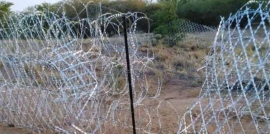
The Special Tribunal has ordered that the companies contracted to construct the 40km long Beitbridge border fence pay back any profits received for the project.
The construction of the fence was done as part of the emergency COVID-19 procurement during 2020 but soon after it was erected; it fell apart – prompting a Special Investigating Unit (SIU) investigation.
The investigation yielded evidence of irregularities in the awarding of the contracts to companies Caledon River and Profteam CC, including advance payments amounting to at least R21 million.
At least R40 million had been set aside for the project.
In her ruling, Judge Lebogang Modiba said the state and public were the “biggest losers” in the case and suggested that state officials also be held accountable for their actions.
“They have been deprived of the variety of public, social and economic benefits that flow from a solid border track at the Beit Bridge border and are saddled with a deficient border fence.
“Further corrective measures lie in holding the officials who designed, approved and implemented the Beitbridge Border Fence Project and its related procurement process and those who failed to take the appropriate steps to enhance the integrity of the fence,” Judge Modiba said.
She added that the order presents fair relief to all the parties involved.
“In the present circumstances, this relief…vindicates the values of fairness, equity, transparency, competitiveness and cost effectiveness that were disturbed when the [companies] were awarded the contracts unlawfully.
“It also entrenches the rule of law by ensuring that while the [companies] are not left worse of as a result of the invalidation of the contracts, they also do not benefit from unlawful contracts,” she said.
SIU spokesperson Kaizer Kganyago said the corruption-busting unit welcomed the judgement, which also ordered the two companies furnish the tribunal with “audited financial statements and debatement of account reflecting their respective income and expenditure in the contracts, supported by expert report.”
“Furthermore, the Special Tribunal ordered that [the companies] payback profits earned within 30 days of submitting the income and expenditure report. In the event of dispute in profits, the parties have been ordered to approach the Special Tribunal for an appropriate order on supplemented papers as necessitated by the circumstances,” he said.
South Africa records 800 new COVID-19 cases
South Africa has recorded 801 new COVID-19 cases in the last 24 hours, which represents a 5.5% positivity rate.
A statement issued by the National Institute for Communicable Diseases (NICD) said South Africa has since the start of the pandemic recorded 3 685 120 laboratory-confirmed cases.
The institute noted that due to the ongoing audit exercise by the National Department of Health, there may be a backlog of COVID-19 mortality cases reported.
The department reported 62 COVID-19 deaths, and of these 6 occurred in the past 24 to 48 hours, bringing the total number of confirmed fatalities to 99 609.
“The cumulative number of recoveries now stand at 3 564 491 with a recovery rate of 96.7%,” the department said.
Meanwhile, 32 126 152 vaccine doses have been administered in the country, with 92 015 administered on Monday.
Nkoana-Mashabane hosts dialogue with Limpopo women farmers
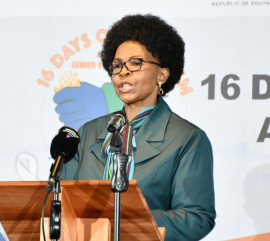
As part of International Women’s Day, Minister in the Presidency for Women, Youth and Persons with Disabilities, Maite Nkoana-Mashabane is set to host a dialogue session with women farmers in Limpopo today.
International Women’s Day is celebrated globally annually on 08 March to commemorate the cultural, political, and socio-economic achievements of women.
This year’s International Women’s Day is observed under the theme: “Gender Equality Today for a Sustainable Tomorrow”.
The Department of Women, Youth and Persons with Disabilities (DWYPD) said the dialogue brings together the global theme of attaining gender equality for a more sustainable future in the context of climate change, environmental and disaster risk reduction.
“Ensuring gender equality in volatile times ensures greater chance of sustainability and stability for future generations, while addressing global concerns like food security, poverty and hunger, and managing our response to climate change, unstable political climates, and cultural and other changes,” said the department.
The dialogues also forms part of a series of engagements that contribute to South Africa’s position at the 66th session of the Commission on the Status of Women (CSW66), which will take place from 14 to 25 March 2022.
In accordance with its multi-year programme of work (2021- 2024), the DWYPD said the CSW66 will consider “achieving gender equality and the empowerment of all women and girls in the context of climate change, environmental and disaster risk reduction policies and programmes,” as its priority theme.
“The department, as the custodian of government’s women empowerment and gender equality mandate, is charged with coordinating South Africa’s participation at the United Nation CSW session. South Africa [has] also secured Chairship of the Bureau for the 66th and 67th sessions of the Commission on the Status of Women in 2022 and 2023,” the department said.
According to the United Nations, advancing gender equality in the context of the climate crisis and disaster risk reduction is one of the greatest global challenges of the 21st century.
Women are increasingly being recognised as more vulnerable to climate change impacts than men, as they constitute the majority of the world’s poor, and are more dependent on the natural resources which climate change threatens the most.
The Minister will be joined by Limpopo Social Development MEC, Nkakareng Rakgoale who will representing the Premier’s Office.
SA must rectify its wrongs to build a capable State: Gungubele

Minister in the Presidency and chairperson of the National Planning Commission, Mondli Gungubele, says in order for South Africa to achieve the objectives of the National Development Plan (NDP), the country must redouble its efforts of building a capable, ethical and developmental State.
Addressing the NDP Public Lecture on Monday, Gungubele said building such a State requires strong leadership, a focus on people and strong implementation capability.
The Minister addressed the lecture under the theme, ‘Reclaiming & Building a Capable, Ethical, Professional & Developmental State’.
“[The theme] is in recognition of these factors and more… it is important to reclaim and build a capable State.
“This moment of crisis requires an integrated response, where government works hand-in-hand with institutions of higher learning, independent researchers, the private sector, civil society and labour, and collectively come up with development strategies to ensure that we recover from the current crisis and restore a thriving economy,” he said.
Gungubele said this is what the President refers to when he talks about the social compact.
The Minister challenged those in attendance to assist the country to develop a pathway to get back on track to social and economic recovery.
Consistent with the NDP imperatives, three of the seven priorities adopted by the sixth administration have a component of infrastructure development.
“Job creation, reduction of poverty and the growing gap between wealth and destitution require accelerated development, underpinned by speedy implementation of national programmes.
“The top priority of ‘A capable, ethical and development State’ underpins all seven priorities of the MTSF. This priority cherishes the ideal of a strong leadership, a focus on people and improved implementation capability,” the Minister said.
In terms of the implementation of the Economic Recovery and Reconstruction Plan (ERRP), the Minister said South Africa is now on the threshold of an important opportunity to creatively reshape its economic landscape.
He said the current conjuncture presents an opportunity to reset the South African economy and it is an opportunity to build a new, inclusive economy that benefits all South Africans.
“This is a moment for a permanent and decisive break with our past of low and declining growth, falling per capita incomes, low investment, as well as high and deeply entrenched levels of inequality, poverty and unemployment.”
Through the ERRP, he said the country is committed to growing the economy at a rate of 5.4%, reducing the unemployment rate to 6%, increasing investment as a share of GDP to 30%, reducing inequality as measured by the Gini Coefficient to 0.60, and the total eradication of poverty.
“Drawing from the NDP, which envisions a developmental, capable and ethical State that treats citizens with dignity, the MTSF [Medium-Term Strategic Framework] seeks to establish a public sector staffed with professional, responsive, people-centred and meritocratic public servants who enjoy high levels of trust amongst the citizenry,” the Minister said.
However, the Minister said as the NDP cautions, “a developmental State cannot materialise by decree, nor can it be legislated or waved into existence by declarations. It has to be consciously built and sustained”.
Power station breakdowns put power system under pressure

Breakdowns and shut downs at Eskom’s power stations has led to the implementation of Stage 2 load shedding.
According to the power utility, at least seven units were affected – putting the power grid under severe pressure.
“Medupi Unit 3 broke down, necessitating load shedding to be [implemented]…continuously until 5am on Wednesday. This adds to the multiple generating unit failures that occurred over the past 24 hours and has severely reduced available generating capacity.
“Since [Monday] morning, a unit each at Matla, Kendal, Matimba, Kusile and Grootvlei power stations tripped, while a unit each at Arnot and Hendrina power stations were forced to shut down. This, in addition to other units that had tripped during the weekend, reduced available generation capacity, forcing Eskom to rely heavily on emergency generation reserves to keep the lights on,” the power utility said.
Eskom explained that the current bout of load shedding will allow the power utility to replenish emergency generation reserves which have been used “significantly since the past weekend”.
“While we expect some generation units to return to service…Eskom appeals to all South Africans to help us limit the impact of load shedding by reducing the usage of electricity and to switch off all non-essential appliances,” Eskom said.
Meanwhile, President Cyril Ramaphosa has acknowledged that the power utility is facing serious challenges – some of which can be remedied through government’s procurement of additional power.
“Eskom is dealing with a very difficult situation. We are short of 4000MW so when they reach…their availability factor – which is low – then they are challenged because they don’t have an additional 4000MW.
“We are speeding up the acquisition of the 4000MW. Once we’ve got an additional 4000MW, we are in a much better position. This is important for the economy, for the people of South Africa. We want to see this resolved [but] there will be those hiccups, those ups and downs. But the matter is being addressed, is being handled,” he said.
The power utility is expected to brief the media on the current challenges facing the power grid on Tuesday.
Over 1 000 new COVID-19 cases recorded in SA

A total of 1 649 new COVID-19 cases have been recorded in South Africa in the last 24 hours, bringing the total number of laboratory-confirmed cases to 3 675 691.
The National Institute for Communicable Diseases (NICD) said the increase represents a 6.3% positivity rate.
“Due to the ongoing audit exercise by the National Department of Health (NDoH), there may be a backlog of COVID-19 mortality cases reported. The NDoH reports 18 deaths, and of these, six occurred in the past 24 – 48 hours. This brings the total fatalities to 99 430 to date.”
Meanwhile, 23 111 817 tests have been conducted in both the public and private sectors, with 12 548 694 tests done in private sector and 10 563 123 done in public sector.
Gauteng accounted for the majority of cases at 37% , followed by KwaZulu-Natal and the Western Cape, each accounting for 20% and 19%, respectively. Mpumalanga accounted for 7%; Free State, Eastern Cape and North West each accounted for 4%; Limpopo accounted for 3% and Northern Cape for 2% of the new cases.
In addition, there has been an increase of 49 hospital admissions in the past 24 hours.
Post office suspends mail service to Russia, Ukraine, Belarus

The South African Post Office (Sapo) has suspended the mail service to Russia, the Ukraine and Belarus.
In a statement on Wednesday, the Post Office said airmail remains available to 33 countries and surface mail to 51 countries.
“Customers who order items from other countries should include their cell phone number with their address details so that the Post Office is able to send them an SMS when the item is ready for collection.
“Customers who send items to other countries must make sure they do not send anything that is not allowed in the mail, which includes any arms, ammunition, explosives, liquids or items that could break and leak. No plant or animal material may be sent to other countries. For more information, please visit the website of the postal administration in the receiving country,” Sapo said.
The Post Office has encouraged customers to take care when packing items for dispatch abroad, as mail is transported in bulk.
“International items are delivered within an average of 10 workdays. For a quicker service, the post office offers the EMS service, which delivers items within 24 hours of arrival in the destination country.
“Customers can easily access the electronic customs declaration form on the Post Office website for quick clearance of parcels. The form is under ‘tools’ on the website www.postoffice.co.za,” Sapo said.
South Africans are entitled to two tax-free gifts from abroad per year, provided the value of each gift is below R1 400.
More information is on the SARS website at https://www.sars.gov.za/customs-and-excise/sending-or-receiving-goods-in-the-post/.
Roundtable discussions to prevent teenage pregnancy
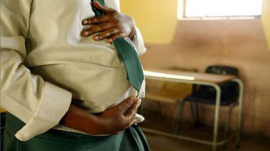
The Department of Social Development is hosting roundtable discussions countrywide to strengthen the existing child protection system to prevent teenage pregnancy.
The discussions, which started on Tuesday in Lusikisiki, in the Ingquza Hill District Municipality, aim to target the districts that have recorded the highest number of teenage pregnancies in the past two years. These are in KwaZulu-Natal, Gauteng, Limpopo and the Eastern Cape.
According to Statistics South Africa, the country recorded 34 587 teenagers who gave birth in the 2020/21 financial year.
The department’s Acting Chief Director: Child Protection, Neliswa Cekiso, said as a department tasked with the responsibility to care for and protect children, the high number of teenage pregnancies should be a cause for concern.
“Teenage pregnancy is a multifaceted problem that requires a comprehensive intervention,” Cekiso said.
Attended by representatives from the Departments of Social Development, Health, Basic Education and the South African Police Service, and traditional leaders, among others, the round table discussion agreed that there is a need for a holistic approach to address the challenge of teenage pregnancy.
Cekiso revealed that during 2019, KZN had 671 deliveries by children aged between 10-14 years and 661 deliveries in 2020.
The Eastern Cape had 671 deliveries by children aged between 10-14 years during 2019 and 661 deliveries in 2020. The 15-19-year-olds recorded 17 211 deliveries in 2019 from the Eastern Cape and 17 740 in 2020.
Cekiso noted that Section 110 of the Children’s Act, 38 of 2005, makes provision for reporting of suspected cases of abuse for purposes of triggering immediate response and measures to assist a child whose life is at risk.
She also emphasised that daily reported abuse disclosed by a child to a mandatory or non-mandatory adult “whether it happened a long time ago or recently, needs to be taken seriously and most importantly reported to the police or the Department of Social Development”.
“We all have an obligation as communities, parents, caregivers, teachers, health professionals to report suspected child abuse cases,” Cekiso said.
Noluthando Gwiji from the Eastern Cape Department of Health said while there are interventions and continuous campaigns by the department, the numbers are not going down which should be a serious concern for the country.
“There are times at Holy Cross Hospital in Flagstaff where 80% of deliveries are by children,” a concerned Gwiji said.
In order to ensure targeted interventions to the affected pregnant children, the National Department of Social Development has requested provincial departments to profile and assess the children so that adequate services can be provided, including investigation and referral to the South African Police Service, in instances of statutory rape.
The department has also engaged with the Directors General of Health and Basic Education so that current policies and programmes can be evaluated and improved, at a national level.
On 17 February 2022, the Department of Basic Education launched its policy on the prevention and management of learner pregnancy in schools in North West.
According to the United Nations Population Fund (UNFPA), teenage pregnancy is a global problem but occurs most often in poorer and marginalized communities.
Many girls face considerable pressure to marry early and become mothers while they are young.
The roundtable discussions will continue in KZN in March.
SA’s UN Ambassador welcomes Ukraine-Russia talks

South Africa has welcomed the commencement of talks between the Ukraine and Russia amid escalating armed conflict tensions between the two neighbouring eastern European countries.
Ambassador Mathu Joyini, South Africa’s Permanent Representative to the United Nations, in a statement said the country hoped that the discussions would lead to “a diplomatic solution that will result in a sustainable political solution”.
“South Africa is of the view that this armed conflict, like all others, will result in unnecessary human suffering and destruction, with global ramifications. In situations of conflict, the most vulnerable tend to suffer the most during and post the conflict.
“It is regrettable that at a time when the world is struggling to emerge from the effects of the COVID-19 pandemic, we are seized with a conflict that will further delay the world’s recovery.
“UN Secretary-General, António Guterres, reminded us of this when he stated that the conflict will have a huge impact on the ‘global economy in a moment when we are emerging from the COVID-19 pandemic and so many developing countries need to have space for the recovery’,” said Joyini.
Reforming Security Council
Joyini said the UN was founded after the horrors of the Second World War, with the aim of saving succeeding generations from the scourge of war. It is for this reason, Joyini said, that the Charter of the United Nations enjoins all member States to settle their disputes by peaceful means, in such a manner that international peace, security, and justice are not endangered.
“We stress that peace is best built through diplomacy and dialogue within the framework of the institutions of global dialogue, especially the United Nations. It is important for all nations to respect and uphold the principles of international law, including international humanitarian law and the provisions of the UN Charter.
“The UN is now in its 76th year of existence and the events of the last two weeks have again reminded us of the urgent need to reform the UN, especially the UN Security Council, which is long overdue. We need a Council free from the legacy of the Cold War so that it can genuinely be the space where the community of nations comes together to resolve conflict and build a more just and peaceful world.”
Joyini said South Africa has always appreciated the value that dialogue has in averting a crisis and de-escalating conflict.
This, she said, is in line with the country’s strong commitment to the peaceful resolution of conflict.
“In this regard, we also urge the Security Council to utilise existing tools at its disposal in support of the pacific settlement of disputes. We also believe that the Good Offices of the UN Secretary-General could make a positive contribution in finding a lasting solution to this conflict and should be utilised,” said Joyini.
She urged all parties to approach the situation with a spirit of compromise, with all sides upholding human rights, and abiding by their obligations under international law and international humanitarian law.
A diplomatic solution to the problem should address the security concerns of the parties, said the Ambassador.
“South Africa continues to support and encourage regional initiatives such as the Minsk Agreements, and we welcome the work of the Normandy Format, the Trilateral Contact Group and the Organisation for Security and Cooperation in Europe (OSCE).”
Joyini said the meeting was being held under the Uniting for Peace Formula, which required the General Assembly to meet if, and when, the Security Council is unable to act; however it remains necessary for the Security Council to exercise its responsibility fully in the current situation.
“The situation in the Ukraine should not be allowed to affect negatively other priorities of the international community and the rest of the work of the United Nations.
“We furthermore note with concern that not all situations of conflict have received the same attention. Indeed whilst there is this focus on the Ukraine, long-standing situations that the Security Council is seized with continue without resolution. It is necessary that we devote equal attention to other long-standing conflicts where the UN Charter and human rights are being violated.”
Equal treatment
She said South Africa endorses the statement issued by the African Union Commission expressing concern at the treatment given to African nationals and people of African descent at the borders of Ukraine, some of whom are not allowed to cross and move to safety.
“We urge European countries to take steps to resolve this situation, as all people have a right to cross international borders during times of conflict,” she said.
Meanwhile, Department of International Relations and Cooperation spokesperson, Clayson Monyela, said 28 South African students in the Ukraine had successfully left that country.
He said seven were now safely in Poland, and another 15 in Hungary.
“Four are still being assisted to cross into Poland, (while) two are in a town far from conflict zone (closest to Russia). There’s a plan to assist,” he said on his Twitter account on Tuesday.
Post Office announces days for R350 grant payments
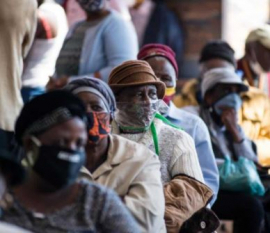
The South African Post Office (Sapo) has announced the days on which beneficiaries of the R350 Social Relief of Distress Grant (SRD) may collect their funds.
Old age, disability and childcare grants will be paid out on 3, 7 and 8 March 2022 while the rest of the month will be dedicated to paying out SRD grants.
In a statement on Wednesday, Sapo said the days use the last three digits of the beneficiary’s ID number, and the system is designed to spread beneficiaries over the days of the week.
Owing to the fact that old age, disability and childcare grants will be paid out on 3, 7 and 8 March, the following days will apply to those whose ID numbers end with the following digits:
- 09 March: 080 and 085
- 10 March: 081 and 086
- 11 March: 082 and 087
- 14 March: 083 and 088
- 15 March: 084 and 089
- 16 March: 080 and 085
- 17 March: 081 and 086
- 18 March: 082 and 087
- 22 March: 083 and 088
- 23 March: 084 and 089
- 24 March: 080 and 085
- 25 March: 081 and 086
- 28 March: 082 and 087
- 29 March: 083 and 088
- 30 March: 084 and 089
- 31 March: 080 and 085
- 01 April : 081 and 086
“The system will also make it easier for beneficiaries to comply with social distancing requirements. Each day of the week is reserved for different beneficiaries depending on the last three digits of their ID numbers,” it said.
No payments will be made on 21 March as it will be a public holiday.
The post office has introduced separate queues at its branches, also to reduce waiting time and to ensure social distancing.
“One queue is reserved for beneficiaries of the R350 grant while the other queue is for all other transactions. Where possible, official queue walkers will check ID numbers to ensure that the system is implemented,” Sapo said.
The post office has been made aware of instances where self-appointed queue marshals demand a bribe for a place in queues outside the branch.
“This practice is illegal and beneficiaries are encouraged to report it to the South African Police Service or to the Post Office’s Crime-buster hotline on 0800 020 070.
“Beneficiaries who applied for only their own grant from their cellphone can also withdraw the grant at Pick n Pay and Boxer supermarkets. If the same phone was used to apply for several grants, then the grant is available only from a post office,” Sapo.
For more information, clients are encouraged to call the South African Social Security Agency (SASSA) on 0800 60 10 11 from 08:00 to 16:00, Monday to Friday.