
Corruption cases are a top priority

National Director of Public Prosecutions, Advocate Shamila Batohi, says fighting corruption is the top priority of the National Prosecuting Authority (NPA).
The NPA head was updating Parliament’s Standing Committee on Public Accounts (SCOPA) on cases referred to the NPA by the Special Investigating Unit (SIU).
“The work of the SIU is just a fraction of the work, even that relating to corruption that the NPA does with so many priorities. But we have decided that the top priority for the next six months is going to be focusing on corruption. The wheels of justice are beginning to turn with regard to corruption. We are beginning to move slightly more quickly,” she said on Tuesday.
As a result of SIU referrals, the NPA currently has 41 cases on court rolls and there have been 41 guilty pleas. There are 23 other accused persons facing charges in courts, eight warrants of arrest have been authorised and there are a further two matters awaiting a decision.
Batohi reflected on her time in office saying it been an “extremely challenging three years” and acknowledged that the NPA would have preferred to have been “more down the line” when it comes to the number of successful prosecutions.
“What is very clear is that even though we’re not where we want to be, we are far from where we were. There’s been a lot of work that has gone [on] in the past three years and there’s still a lot of work to happen.
“We have a full leadership team at the helm of the NPA and a leadership team that is strongly committed to the rule of law, to accountability and to make sure that we hold people accountable not just for corruption but for all of the…different crime types that the NPA has to deal with,” she said.
Case referrals
The NPA head highlighted that although the SIU is mandated to refer cases to the NPA, the authority itself is not legally mandated to do investigations.
“That is something that we need to look at changing in terms of legislation because the NPA does not do criminal investigations although now with the proclamation of the ID (Investigating Directorate) there are some matters that the SIU has been seized with that the ID is dealing with where they have a mandate to investigate criminally.
“But most of the matters referred to the NPA creates the impression that they are ready for prosecutions and that the NPA must now take a decision to prosecute but that is not the case. As much as the work of the SIU is very important in terms of the link between the work that they did and the criminal investigations that must follow, basically what we do is forward these matters to the [Hawks] to investigate,” she said.
Batohi told the committee that it is “critically important” for different role players within the criminal justice system – including the SIU, the NPA itself and the Hawks – to be “pulling in the same direction” in order to further entrench the rule of law.
“We certainly need better coordination. We need better alignment of our performance indicators and various processes. We do need to all act with a joint sense of urgency.
“The rule of law in South Africa, I think, is on life support at the moment and we need to address this now. In order to do this in the criminal justice system, we need to draw on each other’s strengths and we need to respect the legal mandates of all of us within the criminal justice system which are very different but complimentary,” she said.
Turning to the NPA’s Investigating Directorate, Batohi said the unit is heading into an exciting new era and will be ramping up the fight against corruption.
“As the president said at SONA [State of the Nation Address], the ID is now poised to deliver on its mandate. It has been a very difficult and tough time trying to capacitate and set up the ID. But the fact that the Zondo Commission is now winding up its work…a number of resources are being migrated to the ID which will certainly boost its capacity to be able to deal with these cases much more effectively,” she said.
Committee condemns humiliation of pupil at Milnerton High
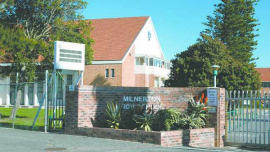
The Chairperson of the Select Committee on Education and Technology, Sports, Arts and Culture, Elleck Nchabeleng, has condemned in the strongest terms an incident where a black pupil was forced to bow on his knees before a fellow white pupil at Milnerton High School.
In a statement on Tuesday, Nchabeleng said the committee has called on the school and the Western Cape Provincial Department of Education to leave no stone unturned to get to the bottom of the matter and for the perpetrators to face the appropriate consequences.
According to media reports, the two male pupils had a fight over a bench during break time last week.
After the matter was reported to a teacher, the following day, the head of the school’s disciplinary committee made the black pupil get on his knees and bow to the white pupil several times.
Furthermore, the black pupil was made to raise his hands up and down while he was on his knees in front of some learners.
Expressing his anguish to other learners, the black pupil said the humiliation he suffered stripped him of his dignity.
“It is extremely shocking and disgusting to learn about incidents of this nature taking place at schools that are supposed to be places where seeds of non-racialism and non-sexism are sowed.
“The committee condemns this alleged humiliation in strongest terms and it should also be condemned by all at Milnerton High,” Nchabeleng said.
Six new mega social housing projects
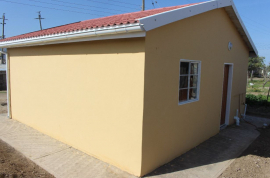
With the President citing infrastructure investment as a catalyst for growth and job creation in his State of the Nation Address, Human Settlements Minister, Mmamoloko Kubayi, has announced the construction of six mega social housing projects in the coming two years.
Kubayi made this announcement when she participated in a debate on the State of the Nation Address on Monday.
“There are six social housing projects which will be constructed over two years, starting in the financial year 2022/23.
“Five Social Housing Institutions and one other development agency will be funded through equity and debt financing to develop these projects,” she said.
The projects include:
- Fochville Extension 11 in the West Rand District Municipality, Gauteng. The proposed development will consist of 2 198 residential units, out of which 258 will be Social Housing Units (SHU). This project is expected to create 953 jobs;
- Hospital Street in Mujuba District Municipality, KwaZulu-Natal. The proposed development consists of 53 four-storey building blocks consisting of 1 056 units. This project is expected to create 3384 jobs;
- Germiston Extension 4 in Ekurhuleni Metropolitan Municipality, Gauteng. The project has planned 201 SHUs to accommodate 601 people. This project is expected to create 847 jobs;
- Kwandokuhle Social Housing Project in Gert Sibande District Municipality, Mpumalanga. The project involves construction of a total of 492 SHUs in Govan Mbeki Local Municipality in the Gert Sibande District Municipality, Mpumalanga province. This project is expected to create 1544 jobs;
- Hull Street Phase 1 in Francis Baard District Municipality, Northern Cape. The Hull Street Social Housing Project envisions delivering a total of 600 SHUs in two phases. This project is expected to create 1152 jobs, and;
- The Willow Creek Project is located in Ermelo, in the Msukaligwa Local Municipality in the Gert Sibande District Municipality, Mpumalanga province. The project entails the construction of 360 SHUs in the Ermelo Central Business District (CBD). This project is expected to create 1 062 jobs.
During his State of the Nation Address, President Cyril Ramaphosa announced that the Infrastructure Fund is now working with state entities to prepare a pipeline of projects with an investment value of approximately R96 billion in several sectors, including social housing.
On Monday, Kubayi said social housing is government’s most promising programme that will help to disrupt the apartheid spatial development and make cities more inclusive.
“The primary purposes of social housing are urban restructuring and regeneration, and increasing the supply of rental housing in good locations for low- to moderate-income earners.
“Social housing is financed with a combination of government funding, debt and equity making this subsector more dynamic and attractive for public-private partnership.
“It is for this reason that social housing has been identified as an integral part of the infrastructure investment, which is central to the success of the Economic Reconstruction and Recovery Plan.”
North West farmers encouraged to apply for hemp permits

North West Agriculture and Rural Development (NWDARD) MEC Desbo Mohono has encouraged local farmers and manufacturers to apply for hemp permits, in order to participate in the hemp industry.
Mohono said the hemp permit process follows a Cabinet decision taken in 2019 to have a plan for industrialisation and commercialisation of Cannabis, in order to increase economic growth, create jobs and poverty alleviation.
The decision followed an establishment of a committee to guide the development of a Cannabis Masterplan.
Although the Masterplan is still in process, Mohono noted that the industrialisation of hemp has been identified as a low hanging fruit in terms of the establishment of the Cannabis industry in the country.
She encouraged farmers to seize the opportunity and apply for hemp permits, in order to reap economic opportunities in the industry.
“The legalisation and commercialisation of Cannabis Sativa (Cannabis) has been on the forefront of public debate and on top of the agenda of policymakers globally. As a role player, the NWDARD did organise a webinar last year to engage stakeholders in a collaborative effort to advance the Cannabis Masterplan Implementation process.
“In that webinar, we learned that only few farmers had permits and at the time of our engagement, their permits had expired. I know we have very passionate farmers in the province and I urge them to follow the process and to apply for Hemp Permits,” Mohono said.
The Plant Improvement Act, 1976 (Act no 53 of 1976) and its regulations provide a legal framework for cultivation, distribution and sale of hemp propagating material in South Africa.
Any person who wants to engage in identified activities relating to hemp must be in possession of a hemp permit issued by the Registrar of the Plant Improvement Act.
Mohono noted that while the hemp application process is hosted by the National Department of Agriculture, Land Reform and Rural Development, the provincial department has identified a technical team meant to assist the local farmers with the application process.
The application process is opened to all interest groups and individuals, and application forms can be accessed through the National Department of Agriculture, Land Reform and Rural Development website www.dalrrd.gov.za
Delivering the State of the Nation Address (SONA) last Thursday, President Cyril Ramaphosa announced that government will review the policy and regulatory framework for industrial hemp and cannabis to realise the huge potential for investment and job creation.
President Ramaphosa highlighted that the hemp and cannabis sector has the potential to create more than 130 000 new jobs.
“We are therefore streamlining the regulatory processes so that the hemp and cannabis sector can thrive like it is in other countries such as Lesotho,” the President said.
No security threat to SA

Police Minister Bheki Cele has told a joint sitting of Parliament that there is no security threat to the country.
He said this when he participated in a debate on the State of the Nation Address on Monday.
“Allow me to reiterate and reaffirm our strong position as the security cluster, without fear of contradiction, that there is no threat to the stability of this country.
“I repeat, there is no threat to the stability of this country. Some components of the security services of this country may be limping but they are not down and they are certainly not out!” said the Minister.
This comes after President Cyril Ramaphosa said that following the report of the expert panel on the July 2021 unrest, government will begin a process of putting together a response plan to address the weaknesses that the report identified.
Participating in the debate, Cele said mopping up a mess that was deliberately created to weaken the country’s security agencies and law enforcement will take some time.
“But, rest assured, the work has started and it will be done. Those criminals who were hell bent on seeing this country go under, during the July attempted insurrection, failed.
“They failed because the police acted and did what they could in the most difficult of circumstances.
“The men and women in blue of this country, did all they could in the hardest of times. Our “security cluster” is functional; this is why our prisons are full as we speak. [Justice and Constitutional Development] Minister Ronald Lamola can attest to this. Those incarcerated criminals did not walk [in] there on their own free will,” said Cele.
Phaahla cautions against rushing to end state of disaster
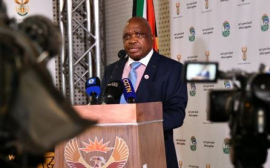
Health Minister, Dr Joe Phaahla, says before the country ends the National State of Disaster, there is a need to ensure there are enough measures in place to handle future COVID-19 waves.
He said this when he participated in a debate on the State of the Nation Address on Monday.
“As we are exiting the fourth wave of COVID-19, everyone is eager for this pandemic to come to an end. The reality, however, is that while we have learned more about the virus, we have more weapons and the virus is seemingly getting weaker, the war is far from over,” he said.
Phaahla said as the President stated on Thursday in the SONA, the country wants to get out of the disaster situation sooner rather than later.
In his speech, the President said the country is now ready to enter a new phase in the management of the pandemic.
“It is our intention to end the national state of disaster as soon as we have finalised other measures under the National Health Act and other legislation to contain the pandemic,” he President said.
He also said this was at the back of the fact that nearly 42% of all adults and 60% of everyone over 50 is fully vaccinated.
On Monday, Phaahla called for patience and cautioned against rushing to end the State of National Disaster.
“The truth, however, is that a rash and precipitate declaration of victory can lead to severe repercussions as we have seen in other countries.
“We want to make sure that as we exit the disaster, we have enough cautions and measures to handle the next variant and wave.
“Let us all embrace the way forward of the President when he said: ‘If we all get vaccinated, continue to observe basic health measures and remain ever vigilant, we will be able to get on with our lives even with the virus in our midst’.
“There can be no better summary, the future is in our hands. Let us not politic about COVID-19, the virus does not differentiate people on party loyalty or ideology.”
Eskom employee nabbed for theft

An Eskom employee is facing charges of theft after he was caught allegedly stealing transformer oil and power safety solvent gel at the power utility’s Rosherville premises in Johannesburg.
According to Eskom, the man was stopped by security personnel while attempting to leave the premises.
“The employee was caught…with three full drums of transformer oil, an empty one, as well as six containers of 5 litre power safety solvent gel for which he had no full removal permit. The South African Police Service was called and the suspect was apprehended and taken into custody.
“The Eskom security personnel discovered the theft upon inspection of the removal permit as part of their access control while the employee was attempting to leave the premises with the alleged stolen property. It was discovered that the permit only authorised the removal of two full drums of the oil and two empty ones but it contained nothing about the gel,” the electricity provider said.
The man has since appeared in court and will also face internal disciplinary action.
The power utility recently stepped up security at its premises with added measures such as drone patrolling, stricter access control and using intelligent cameras to track movements.
Eskom Gauteng’s Safety, Health, Environment, Risk, and Quality manager Kith Maitisa said the power provider is committed to fight acts of criminality both internally and externally.
“We are disappointed that one of our own is implicated in the alleged theft. Eskom remains committed to resource optimisation where we ensure that all material is channelled to its intended use. We will continue to heighten efforts to curb material loss and any criminal acts by anyone, including our employees,” he said.
He urged the community to report any electricity related criminal activities to police.
“We continue to urge all those who may be aware of any form of criminal acts by Eskom employees or anyone else, to anonymously alert us by calling the Eskom Crime line on 0800 112 722,” he said.
CDC creates investment-ready platform to boost aquaculture sector
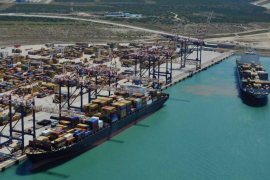
In an effort to unlock the aquaculture sector in the Nelson Mandela Bay municipal region, the Coega Development Corporation (CDC) has decided to develop a 440 hectare land-based aquaculture development zone (ADZ) to accommodate both freshwater and marine aquaculture.
“The overall purpose of the development is to create an investment-ready platform for planned commercial aquaculture operations to establish within the Coega Special Economic Zone (SEZ), thereby facilitating entrance into and boosting growth of the sector in the region,” the CDC said on Wednesday.
In August 2020, the CDC started construction on enabling infrastructure in Zone 10 of the leading SEZ to unlock approximately 100 ha (Phase 1) of the ADZ.
“The construction includes the development of road, electrical and stormwater infrastructure unlocking sites for both marine and freshwater aquaculture. This means that aquaculture investors can focus on developing their core business rather than raising capital for bulk infrastructure,” the CDC said.
The 440 ha ADZ is a greenfield development located inside the Coega SEZ adjacent to the deepwater Port of Ngqura.
“Being situated adjacent to the Indian Ocean with approximately 12 kilometres of coastline forming part of the boundary of the 9003 ha SEZ, it was inevitable that the CDC would pursue aquaculture as one of its targeted sectors for development,” the CDC said.
Following years of planning and assessment, the CDC identified Zone 10 of the Coega SEZ to develop a land-based ADZ.
“In 2014, an independent concept design and feasibility study designated Zone 10 as a favourable location for aquaculture development, with marine aquaculture being earmarked for the low-lying areas (i.e. closer to the ocean) and freshwater aquaculture for the higher-lying inland area in the zone,” the CDC said.
In addition, the CDC conducted market research, interacted extensively with the aquaculture specialists and operators, visited various aquaculture operations, and engaged with a number of potential investors.
As a result, in addition to marine aquaculture and following another feasibility assessment, the CDC decided to include intensive freshwater and brackish water aquaculture based on the feedback received and technological development to reduce water exchange and consumptive water use.
The CDC said aquaculture is one of the fastest-growing food sectors globally and is considered a key sector for future food production.
Over R13 million set aside for KwaSwayimane old age home construction
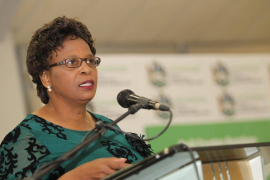
The KwaZulu-Natal Social Development Department has set aside over R13 million to build a fully-fledged old age home in KwaSwayimane under uMshwathi Municipality, KZN Midlands.
The construction of the old age home follows an appeal made by senior citizens to Social Development MEC, Nonhlanhla Khoza.
The area has been plagued by a number of cases of sexual abuse of senior citizens since 2012, resulting in the department building a day care centre to the tune of R22.3 million.
During a dialogue with the community of uMshwathi, hosted by the department in 2020, senior citizens in the area pleaded with government to protect them against criminals and ensure that they did not suffer neglect.
The senior citizens raised a concern that during the day they were safe, but suffered most attacks at night.
This week, Khoza embarked on Operation Siyahlola Monitoring Programme, where she visited KwaSwayimane Day Care Centre for older persons.
The programme, which was launched by KwaZulu-Natal Premier Sihle Zikalala in 2020, aims to improve government’s performance and making sure that people’s experience of government goods and services is pleasant, positive and one that leaves a lasting impression of government.
Khoza said the department has resolved to build a day care centre after a number of campaigns aimed at raising awareness about abuse and neglect of the elderly.
She said she is pleased with the reconfiguration of the day care centre, which is supposed to be completed to take in a few senior citizens.
However, the MEC said she is not happy that the first phase to start taking in residents has not started.
“We should be talking about the welfare and safety of the residents already occupying the first phase of the project,” she said.
Khoza cracked the whip on government officials and contractors for delaying the implementation of the first phase of the project.
She warned that while government gives opportunities to upcoming contractors, it is imperative that they produced good quality work.
“It is important to master the first phase, as we will be building the second phase of an old age home to accommodate over 100 residents. We cannot tolerate poor workmanship in building structures to be occupied by older persons. It is imperative that the home is well-equipped to take care of the sick,” Khoza said.
Khoza expressed her gratitude to the Gcumisa clan for availing land to build a fully-fledged facility to be occupied by senior citizens.
Umshwati Local Municipality Mayor, Mandla Zondi, who accompanied Khoza, commended the department for its commitment to safeguard the lives of the people.
“We are grateful that the department has been consistent in ensuring that even the municipality knows the plan. We are grateful that under Umgungundlovu District, as Umshwati Local Municipality, we were chosen to be the home of this first of a kind structure for older persons,” Zondi said.
Zondi added that the local leadership would be delighted if the department sourced skilled personnel [to work in the institution], to ensure that the facility runs professionally.
“With the Operation Siyahlola Programme, as government we aim at ensuring that the delivery of goods and services by government is pleasant. We are a government that wants to leave a lasting impression by addressing the imbalances of the past,” the Mayor said.
The facility is expected to be opened for occupation by 1 March 2022.
Commercial crimes courts hit 92% conviction rate
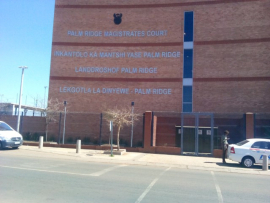
The Justice and Constitutional Development Department says Specialised Commercial Crimes Courts (SCCC) have thus far scored a 92% conviction rate in matters which have been finalised by verdict.
The courts were established and others enhanced following President Cyril Ramaphosa’s commitment to the establishment of such courts as a weapon to fight against rising serious commercial crimes and COVID-19 corruption.
Justice Minister Ronald Lamola said the specialisation of the courts has allowed for the courts to work effectively.
“When one looks at the number of matters heard and the conviction rate to date, it is clear that Specialised Commercial Crimes Courts are a crucial mechanism to ensure that complex commercial crimes, which often extend to corruption and white-collar crime, are prosecuted effectively in dedicated courts,” Lamola said.
According to ministerial spokesperson, Chrispin Phiri, the specialisation has also allowed for justice to be meted out efficiently.
“Much success has been derived from the existing SCCC model, which allows for close integration of the work between prosecutors and investigators, and dedicated courts which can, once matters are enrolled, process them speedily and effectively instead of matters having to await space on the open court roll.
“To date, the SCCU Clusters achieved an overall of 92% conviction rate for all cases finalised with a verdict,” Phiri said.
The department has established these courts in the Eastern Cape, Kwa-Zulu Natal, the North West, Limpopo, Mpumalanga and the Northern Cape, where there were previously none.
Those that already existed in other provinces have been enhanced.