
Godongwana urges SA to be conducive for investment

With South Africa being at risk of losing a potential multibillion rand investment by Ford, Finance Minister Enoch Godongwana has emphasised the important role that cities and provinces play in creating an enabling environment for investment.
“We need to get the basics right. This entails reducing regulatory constraints, providing effective services, as well as coordinating and sequencing economic interventions,” Godongwana said on Wednesday.
Addressing Parliament during the debate on the 2022 Fiscal Framework and Revenue Proposals, the Minister said the country could lose a potential multibillion rand investment by Ford for an electric vehicle plant.
“Ford has already invested R16 billion in the Tshwane Automotive Special Economic Zone, where it is producing its Ford Ranger model. This is the largest foreign direct investment project our country has seen in recent times, and has already created around 8 000 jobs.
“Ford intended to invest further in bringing its electric vehicle production to South Africa. This, however, has been put at risk because the City of Tshwane has been unable and perhaps unwilling to secure the electricity the new plant needs.
“The Tshwane example reminds us that a deficit of political will at municipal level makes it massively harder than it should be to create conditions for job-rich growth,” the Godongwana said.
Public sector wage bill
As part of addressing the public sector wage bill, a Public Sector Labour Summit is scheduled to take place at the end of this month.
The summit is an important opportunity for all stakeholders to engage honestly and transparently and chart a path towards a more sustainable public service and remuneration guidelines.
The Minister said much has been made of the $750 million loan that government took from the World Bank.
“The World Bank loan has no conditionalities attached. It does not in any way threaten the sovereignty of our country. We considered all forms of concessional and non-concessional funding necessary to address the shortfall between our revenue and our expenditure. We then chose an affordable option available to us,” the Minister said.
In this year’s State of the Nation Address, the President announced the extension of the Social Relief of Distress grant to March 2023.
“The President further indicated that in this period, detailed technical work and engagements will take place to identify the best options to replace this grant. In this regard, work is underway to review the grants system, with a view to developing an optimal support mechanism for grants recipients.
“The review will also inform our approach to long-term social security for South Africa,” the Minister said.
This includes considerations regarding:
- social assistance;
- social insurance;
- active labour policies, and
- artisan training for learners exiting vocational training, where the intention is to engage not only the private sector, but also municipalities and State-owned enterprises to equip learners in Technical and Vocational Education and Training (TVET) colleges with the relevant industry experience to enable them to transition to gainful employment.
SA records 1 867 new COVID-19 cases
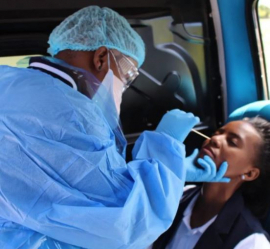
A total of 1 867 new COVID-19 cases have been recorded in South Africa in the past 24 hours, bringing the number of positive cases in the country since the start of the pandemic to 3 688 423.
According to a statement issued by the National Institute for Communicable Diseases (NICD), the majority of new cases were confirmed in Gauteng with 37% positive cases, followed by the Western Cape with 26% positive cases.
“KwaZulu-Natal accounted for 15%; Free State, Mpumalanga and North West each accounted for 5% respectively; Eastern Cape accounted for 4%; Limpopo accounted for 3%; and Northern Cape accounted for 1% of new cases,” the NICD said.
A total of 23 314 522 tests were conducted in both public and private sectors, including 12 666 705 conducted in private and 10 647 817 in public sectors.
Thirteen deaths have also been reported, and of these, 10 occurred in the past 24–48 hours, and bringing the total to 99 656 deaths.
“The cumulative number of recoveries now stand at 3 569 538 with a recovery rate of 96.8%,” the NICD reported.
A total of 32 332 691 vaccines has been administered in South Africa.
All NSFAS qualifying students to be funded this year

Higher Education, Science and Innovation Minister Blade Nzimande says all students that have been admitted to accredited programmes in institutions of higher learning will be funded for the 2022 academic year.
The Minister said this when Ministers in the Social Services Cluster responded to oral questions during a plenary of the National Assembly on Wednesday.
He said this after it emerged during a debate on the State of the Nation Address last month that there was a shortfall of nearly R10 billion in funding for the National Student Financial Aid Scheme.
“…all qualifying NSFAS students this year who have been admitted to accredited programmes at universities and colleges will be funded for the 2022 academic year,” he said.
Democratic Alliance Member of Parliament, Chantel King, had asked Nzimande, with reference to his commitment made during the resumption of the debate on the President’s State of the Nation Address on 15 February 2022, to provide the details of how the predicted R10 billion shortfall in funding for the National Student Financial Aid Scheme in the 2022 academic year will be covered in order to ensure that all eligible students will receive funding.
Nzimande said the National Treasury allocated an additional amount of R7.775 billion for the 2022/ 23 financial year.
A further amount of R1.5 billion will be reprioritised from the Department of Higher Education and Training’s 2022/23 budget.
“This allocation is in line with the projected R9.3 billion shortfall for NSFAS in the 2022/ 23 financial year.
“In addition, the National Treasury has allocated additional amounts in the Medium Term Budget Framework for the anticipated shortfall in subsequent years.”
He said this was done, however, at the same time as the department is working with a Ministerial Task Team appointed in 2021 to develop a comprehensive student financing model or student financial aid system that will bring certainty in terms of the different funding needs of the students.
The Minister said the hope is that such a model and the necessary policy frameworks would be finalised by the middle of the year in order to move forward.
Load shedding moves to Stage 4

Due to further failures of generation units, power utility Eskom has escalated load shedding from Stage 2 to Stage 4 on Thursday.
The power utility had implemented Stage 2 load shedding on Monday after seven units lost generating capacity over the weekend.
Currently, unplanned breakdowns at power stations amount to some 15 439 MW of lost power with at least 5505MW of planned outages underway.
In a statement, Eskom said at least four units ran into challenges on Tuesday evening – necessitating the need to escalate the severity of load shedding.
“Overnight a unit each at Kendal, Duvha, Camden and Kusile power stations tripped. Since then, we have returned four units to service. However, these units still need to ramp up to full output, which necessitates a high usage of emergency generation reserves today. This being the fourth day of extremely high diesel usage, the emergency reserves are being depleted faster than can be replenished,” the electricity supplier said.
Stage 4 load shedding will continue until 5am on Friday morning and will be followed by Stage 2 load shedding until Monday morning.
“Stage 4 load shedding will…give us the space required to replenish the emergency reserves and continue to manage the system safely. Eskom would like to apologise for the implementation of load shedding, and will continuously review the situation and act appropriately as circumstances change.
“Eskom appeals to all South Africans to help us limit the impact of load shedding by reducing the usage of electricity and to switch off all non-essential items,” the power utility said.
The power producer is expected to brief the media on developments at power stations today.
SA economy grows by 1.2% in fourth quarter of 2021
South Africa’s Gross Domestic Product (GDP) grew by 1.2% in the fourth quarter of 2021, Statistics South Africa (Stats SA) announced on Tuesday.
“The fourth quarter was upbeat, with personal services, trade, manufacturing and agriculture the key drivers of growth. An increase in demand for goods and services drove up the expenditure side of the economy, with exports and household expenditure the most significant contributors to growth,” said Stats SA.
The growth seen in the fourth quarter follows an upwardly revised 1.7% contraction (from 1.5%) in the third quarter of 2021.
Agriculture, forestry and fisheries led the growth statistics in that quarter by posting an increase of some 12.2% with the sector’s 2021 annual growth standing at about 8.3%.
Trade grew by at least 2.9%, manufacturing recorded an increase of about 2.8%, personal services added at least 2.7% growth and transport and communications grew by some 2.2%.
Stats SA said the fourth quarter growth spurred the GDP annual growth rate to about 4.9% after a “dismal” 6.4% contraction during 2020 when the country was hampered by the onset of the COVID-19 pandemic.
The electricity, gas and water supply industry has also decreased by 3.4% with construction also plummeting by at least 2.2% during the last quarter of 2021.
After showing growth during the second and third quarters, mining has slowed down by 3.1% during the last quarter.
“The higher than usual rainfall was good for agriculture, but not great for mining. The country produced less iron ore and coal in the fourth quarter, with heavy rains disrupting operations at opencast mines.
“Miners of gold, manganese ore, diamonds and chromium ore also recorded lower production figures,” Stats SA said.
Despite this, the sector remains the current bedrock of the economy posting annual growth of at least 11.8% during 2021, followed by agriculture (8.3%) and manufacturing (6.6%).
Household spending and exports
Statistics South Africa revealed that there was an increase in consumer demand in 2021’s last quarter – leading to an increase of at least 2.8% in household expenditure over that period.
“Reflecting the rise in trade activity on the production side of the economy, households increased spending across all product categories. The largest positive contributors to household expenditure were food and non-alcoholic beverages, restaurants and hotels, and furnishings and household equipment,” the agency said.
Exports grew by at least 8.5% in the last quarter and contributed at least 2.1% expenditure growth on the GDP.
“Exports… [were] driven mainly by precious metals and stones (gold, platinum and diamonds), base metals, and motor vehicles, parts and accessories. Imports were up too, on the back of increased demand for machinery and equipment, motor vehicles, parts and accessories and base metals,” Stats SA said.
The data-collecting agency warned that although the economy is showing signs of growth, it is still in a state of recovery.
“Despite these positive figures, real GDP has yet to recover to the level recorded in the second quarter of 2021, before civil unrest and stricter lockdown restrictions shook the economy in the third quarter.
“Real GDP continues to lag pre-pandemic levels too, with economic activity on par with the third quarter of 2017. The economy is 1.8% smaller than it was in the first quarter of 2020,” Stats SA said.
Department welcomes Beitbridge border fence judgement
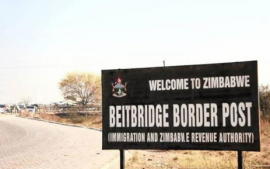
The Department of Public Works & Infrastructure (DPWI), has welcomed the judgement handed down with regards to the Beitbridge Border fence project.
The judgment was handed down by Judge Lebogang Modiba on Tuesday.
This as the department and Special Investigating Unit (SIU) had sought just and equitable relief in terms of section 172(1)(b) of the Constitution, including an order seeking to divest the contractors (Caledon River Properties (Pty) Ltd and Profteam CC) from any profits derived from the contracts relating to the 40km long fence.
The construction of the fence was done as part of the emergency COVID-19 procurement during 2020 but soon after it was erected; it fell apart – prompting an SIU investigation.
Judge Modiba has stated that “it is just and equitable to apply the no profit and no loss principle” and dismissed the right of the contractors to retain the profits arising from these contracts.
The judgement requires that the profits accruing to the contractors from the project be repaid to the DPWI. The department also noted the statement from Judge Modiba that further corrective measures lie in holding to account “the officials who designed, approved and implemented” the project.
With regards to these further corrective accountability measures, the DPWI’s Acting Director General, Imtiaz Fazel, confirmed that in February 2022 the State concluded its case in the majority of disciplinary hearings against the implicated DPWI employees.
The defendant employees are scheduled to finalise their response to the State’s case by the 8th April 2022.
In addition to these disciplinary processes, the acting Director General, has offered the Engineering Council of South Africa the DPWI’s full co-operation to investigate the conduct of professional engineers within and contracted or sub-contracted to the DPWI in this matter.
“I wish to assure our employees and the wider public that the Department of Public Works and Infrastructure is committed to clean governance and enacting consequence management where necessary. I gratefully acknowledge the assistance and bravery of the State’s witnesses from the DPWI, SIU and National Treasury in last month’s disciplinary hearings.
“As the DPWI works to improve delivery, communication and consequence management, we are seeking to play our part in rebuilding the confidence and trust that South Africans have in their government,” said Fazel.
Helen Joseph Hospital records an increase in Mental Health admissions

The Helen Joseph Hospital has recorded an increase in mental healthcare patients, with some patients coming from outside of the hospital’s feeder area.
This was revealed by the Gauteng MEC for Health, Dr Nomathemba Mokgethi, responding to a question in the legislature.
In a statement on Wednesday, the Gauteng Health Department said that as at January 2022, Helen Joseph had treated 876 patients at the Emergency Department compared to 80 in January 2021.
The department explained that at Ward 2 and 3, 1 395 people were treated by January 2022, compared to 620 in 2021, and the outpatient department had treated 520 patients by January 2022, compared to 244 by January 2021.
MEC Mokgethi said that the increase in admissions can be attributed to poor socio-economic circumstances aggravated by the COVID-19 pandemic, large scale use of illegal substances, and unwillingness of some families to take back members with mental health illness upon discharge.
She added that the temporary closure of sections of Charlotte Maxeke Johannesburg Academic Hospital (CMJAH) has also contributed to the increase in patients.
The MEC said various measures are being introduced at hospital to ensure the provision of care for the growing number of mental health patients.
“These include the increase of bed capacity as well as repurposing a temporary structure to house more patients. The hospital is also liaising with other psychiatric wards in other facilities to transfer patients whenever there is capacity,” Mokgethi said.
The MEC has pleaded with families who refuse to take back their loved ones with mental health illnesses to work with government and welcome their family members with care upon discharge from health facilities.
She noted that more needs to be done at various health facilities, however, the provincial government is making efforts to ensure that all facilities are up to standard.
Meanwhile, last week Mokgethi visited the newly opened psychiatric ward at Bheki Mlangeni District Hospital in Soweto.
“We are making efforts to ensure that psychiatric wards across our health facilities meet the standards and regulations of the Mental Health Care Act. The wellness of mental health patients is our top priority, thus the installing of 24-hour security cameras to monitor and ensure patient safety,” the MEC said.
Inclusive growth key to address gender equality
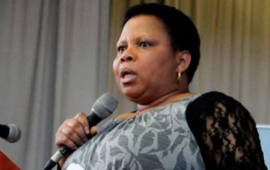
The Deputy Minister of Forestry, Fisheries and the Environment Maggie Sotyu says with women recognised as the most vulnerable to the impact of climate change, inclusive economic growth is key to addressing gender inequality.
Sotyu said this when she participated in the debate on International Women’s Day during a sitting of the National Assembly on Tuesday.
She said women are increasingly being recognised as more vulnerable to climate change impact than men as they constitute the majority of the world’s poor as they are more dependent on natural resources which climate change threatens the most.
“It is therefore important that inclusive economic growth is key to addressing unemployment, gender equality, health and other poverty-related issues,” she said.
Sotyu said government’s National Climate Change Adaptation Strategy, which was approved in 2020, defines the country’s vulnerabilities and outlines plans to reduce those vulnerabilities.
She also said that the strategy leverages opportunities and outlines required resources for such action, with demonstrating progress on climate change adaptation.
“It also outlines the set objections, interventions and outcomes to enable the country to give expression to its commitment on the Paris Agreement.
“As a guiding principle, our strategy aims to promote the participation of women, take gender differences and vulnerabilities to climate change into account and address the needs and priorities of both women and children,” she said.
Sotyu said the years 2020 and 2021 have been record-breaking for extreme weather events around the world with extreme weather that is more frequent, intense and widespread than experienced in past years.
She also said that the vulnerability to biodiversity loss and climate change impact are deeply connected to gender and sustainability interventions, responses and solutions need to consider gender issues if they are to fully meet the objects for which they were established.
“We are also promoting integration of gender issues in disaster resilient-related programmes, including promoting and requiring the generation of gender disaggregated data and analysis and the monitoring and evaluation of the specific impact these events have on women and girls.
“Furthermore, our department has developed a strategy towards gender mainstreaming in the environment 2016-2021 – the first of such sector strategy in the country – to provide strategic guidance for gender mainstreaming in the environment sector. This is with the purpose to ensure that initiatives in the sector are aimed to support the creation of policies that support gender analysis and mainstreaming during the development of new projects and including gender perspective into the whole project cycle management.”
SA records 1 436 new COVID-19 cases
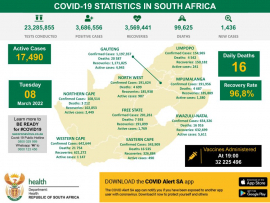
South Africa has recorded 1 436 new COVID-19 cases, which brings the total number of laboratory-confirmed cases to 3 686 556.
The increase represents a 5.5% positivity rate.
According to the National Institute for Communicable Diseases (NICD), the majority of new cases are from Gauteng (35%), followed by the Western Cape (23%).
KwaZulu-Natal accounted for 18%, the Eastern Cape 6%, North West 5%, Free State and Mpumalanga 4% each, Limpopo 3% and the Northern Cape accounted for 2% of new cases.
The Department of Health has reported 16 deaths and of these, zero occurred in the past 24 – 48 hours. This brings the total fatalities to 99 625 to date.
A reported 23 285 855 tests have been conducted in both public and private sectors.
In the public sector, 10 634 753 tests were conducted, while in private sector, 12 651 102 tests were conducted.
The cumulative number of cases by province are as follows: Gauteng 505, KwaZulu-Natal 257, North West 71, Free State 58 , Limpopo 41, Mpumalanga 58, Eastern Cape 81, Western Cape 334 and Northern Cape 31.
Workshops place Return of Earnings under the spotlight

The Return of Earnings (ROE) will be the central focus of three-day workshops hosted by the Compensation Fund.
The Gauteng workshops kick-off today at Riverside Sun in Vereeniging, then move to the Protea Hotel OR Tambo in Johannesburg on Thursday, with the last session to be held in the Manhattan hotel in Pretoria, on Friday.
The sessions will get underway at 9 am and conclude at 4 pm.
The Compensation Fund is an entity of the Department of Employment and Labour.
The sessions will include discussions on the inclusion of domestic workers in the Compensation for Occupational Injuries and Diseases (COID) Act, Amendment of the Employer Assessment Model and the latest developments within Compensation Fund.
The aim of the workshops is to create awareness on compliance with the ROE.
“The Department of Employment and Labour started the ROE advocacy session on 26/10/2021 in the Eastern Cape and more sessions have since been held in Western Cape, Northern Cape; KwaZulu-Natal, Free State, North West and Limpopo,” the department said.
The ROE sessions are open to human resource executives, practitioners and employers.
The department said the annual submission of ROEs are an obligation placed on each employer registered with the office of the Compensation Fund.