
Unemployment rises to 35.3%
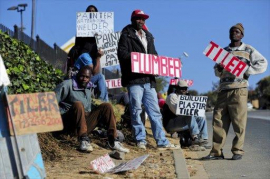
Unemployment in South Africa grew by 0.4 of a percentage point to reach 35.3% in the final quarter (Q4) of 2021, Statistics South Africa has revealed.
Releasing the Quarterly Labour Force Survey (QLFS) statistics on Tuesday, Statistician-General Risenga Maluleke said Q4 of 2021 showed that the number of employed persons increased by 262 000 to 14.5 million.
However, the number of unemployed persons also increased by 278 000 to 7.9 million, compared to the 3rd quarter of 2021.
“While the number of not economically active population decreased by 397 000 to 17.4 million during this quarter. The number of discouraged work-seekers decreased by 56 000 (1.4%) and the number of people who were not economically active for reasons other than discouragement decreased by 341 000 (2.4%) between the two quarters,” said the statistics agency during a press briefing at the Isibalo House in Pretoria.
Stats SA said the changes in the labour market resulted in the official unemployment rate increasing by 0.4 of a percentage point from 34.9% in Q3.
“The unemployment rate according to the expanded definition of unemployment decreased by 0.4 of a percentage point to 46.2 % in quarter 4 2021 compared to quarter 3 2021,” Maluleke said.
The agency said while the number of not economically active population decreased by 397 000 to 17.4 million during this quarter.
The 2021 Q4 report also reveals that the number of people who were not economically active for reasons other than discouragement decreased by 341 000 (2.4%) between the two quarters.
“These changes in the labour market resulted in the official unemployment rate increasing by 0.4 of a percentage point from 34.9% in the third quarter of 2021 to 35.3% in the fourth quarter of 2021 – the highest since the start of the QLFS in 2008.
“The unemployment rate according to the expanded definition of unemployment decreased by 0.4 of a percentage point to 46.2% in quarter 4 2021 compared to quarter 3 2021.”
Stats SA said formal sector employment increased by 143 000 jobs between Q3:2021 and Q4:2021, while the informal sector shed jobs by 48 000 in the same period.
Between the Q3 2021 and Q4 2021, a net increase in employment of 262 000, was mainly due to an increase recorded in Private households (129 000), Trade (118 000) and Community and social services (73 000). Decreases were observed mainly in Manufacturing (85 000), followed by Construction (25 000).
President Ramaphosa to present testimony at July unrest hearings
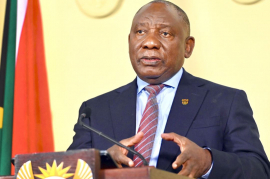
President Cyril Ramaphosa is expected to appear at the South African Human Rights Commission’s (SAHRC) National Investigative Hearing into the July 2021 Unrest in KwaZulu-Natal and Gauteng provinces on Friday.
“The President of the Republic of South Africa…will appear before the Hearing Panel and give testimony with regard to his responsibility as the Head of State and the Head of South Africa’s Executive with regard to the July 2021 unrest in KwaZulu-Natal and Gauteng Provinces,” the SAHRC said.
During the unrest, some 300 people were left dead and businesses as well as public infrastructure suffered at least R25 billon in damages – prompting the SAHRC to conduct the hearings which kicked off in KZN during November last year.
Ministers from the Justice, Crime Prevention and Security (JCPS) cluster have already appeared at the hearings as well as victims, high ranking police officials and other witnesses.
Meanwhile, the SAHRC’s Eastern Cape provincial office is expected to launch a report on violence in schools following a dialogue on the topic held last year.
“The launch aims to raise awareness on the continued rampant violence in schools. Recommendations and comments stemming from the dialogue will be ventilated with the relevant Departments in attendance.
“Further, a plan of action will be carved by all relevant stakeholders with the aim of a continued collaboration to ensure the curbing and eradication of violence in schools. The launch will target government departments, institutions, unions, community based organisations and civil society organisations,” the SAHRC said.
Climate change and fires

By Trevor Abrahams: Managing Director: Working On Fire
The United Nations Environment Program (UNEP) released a landmark report last week calling for a radical change in government spending on wildfires, shifting investments from reaction and response to prevention and preparedness.
Canadian researchers have also highlighted the growing challenge of wildland fires globally, concluding that the last decade saw the worst records in eight successive years for wildland fires across the globe.
Meanwhile in the Western Cape, the Department Forestry, Fisheries and the Environment, and the Expanded Public Works Programme funded Working on Fire (WoF) programme has attended some 70 fires already in the current summer fire season (1 December 2021 to date).
The UNEP report produced by more than 50 international researchers, including South Africans, estimates that the risk worldwide of highly devastating fires could increase by up to 57 percent by the end of the century, primarily because of the rate of global climate change.
The report calls for governments to dramatically shift their approach to preventing, rather than only focusing on fighting, fires, which they said would be more effective.
“There isn’t the right attention to fire from governments,” according to fire expert at the University of Cape Town and an author of the report Glynis Humphrey.
“We have to minimize the risk of extreme wildfires by being better prepared: invest more in fire risk reduction, work with local communities, and strengthen global commitment to fight climate change”, cautions Humphrey.
For the past 18 years, Working On Fire holds a proud record of contributing to combatting an average of 2 500 wildland fires annually in South Africa. Significantly, Working On Fire’s overall strategy has been to apply the principles of integrated fire management in order to reduce the frequency and impact of uncontrolled veld fires, in coherence with the UN report which recommends “two-thirds of spending in planning, prevention, preparedness and recovery, with one-third spent on response.”
Over almost two decades, WoF has worked consistently to create communities that are fire resilient by implementing Integrated Fire Management (IFM) principles. Given the fact that over 90 percent of unwanted fires are caused by human negligence, fire awareness education is a key principle of IFM. WoF hence devotes considerable amount of resources to education in fire prone communities, fuel load reduction through controlled burning and constructing fire breaks, early detection and rapid deployment.
The Fire Awareness Education Programme is directed at all sectors of our fire prone communities, especially children. It combines environmental education, fire and life safety education and disaster risk assessment and mitigation.
WoF recruits and trains young men and women from across South Africa, with a strong focus on marginalized communities. There are currently more than 5000 participants in the programme, 94% of whom are youth, 31% women (the highest level in any comparable fire service in the world) and 3% with disabilities.
WoF has trained and empowered firefighters to conduct and facilitate lessons for learners and educators, as well as community outreach activities. In addition, research is ongoing to ensure content, methodologies and techniques are current and relevant to local communities.
The UNEP report also recommends that governments collaborate with other countries with expertise in fire management.
WoF has over the years deployed firefighting teams to assist Chile, Indonesia and on four occasions, Canada. In its last deployment to Manitoba, Canada in August-September 2021, the Manitoba Minister for Climate and Conservation issued personal letters of appreciation to each of the 109 WoF personnel for serving with distinction in assisting their counterparts in Manitoba in containing the wildfires in the region.
In its fourth quarter edition 2021, the International Association of Wild Fire Magazine quotes a press release by the Manitoba government thanking the South African firefighters:
“The minister noted these firefighters were welcomed to the communities and brought professionalism and dedication to their jobs, as well as great team spirit shown through their colourful marching, chanting and singing at Richardson International Airport in Winnipeg upon their arrival, and when moving through the communities where they were deployed.”
All of this indicates that this was by far one of the most successful international deployments and indeed a huge vote of confidence for WoF. These young men and women represented our country with pride and dignity, their work ethic, professionalism, and fitness levels are highly regarded in Canada. It was a wonderful experience to see how they managed to work seamlessly alongside firefighting authorities from Manitoba Wildfire Services.
Aerial firefighting
An indispensable component to its firefighting success lies in WoF’s aerial firefighting capacity. While aerial resources are not a silver bullet and cannot extinguish fires as a stand-alone resource, they are an essential element of fire suppression activities in support of ground teams. Strategically targeted water drops cool the fire-line and enable ground teams to move in and snuff the flames.
WoF’s aerial firefighting partner is Kishugu Aviation. For the current summer season to date, 25 Kishugu aircraft supplied to WoF and other partners have flown 620 hours as part of efforts to contain fires.
The prediction for the future is grim in that the threat of wildland fires are likely to get worse. The time for preparation is now.
First published in City Press, Sunday 20 March 2022
Eating the state capture elephant one bite at a time

The National Prosecuting Authority (NPA) made a significant breakthrough this week in the ongoing effort to end impunity for high-level corruption. The preservation orders in the Optimum Coal Mine case are a demonstration that the wheels of justice in relation to complex crime are starting to turn in meaningful ways.
The case also demonstrates the multifaceted nature of the NPA’s response to complex corruption matters, which includes civil processes to preserve assets with the ultimate aim being to bring back the money stolen and looted during the state capture years.
The Gauteng High Court granted preservation orders to the Asset Forfeiture Unit (AFU) of the NPA against those who, in 2016, were involved in “financing” the purchase of Optimum Coal Mine (OCM) for R2.1-billion by the Gupta-owned Tegeta Resources.
The preservation orders – issued in terms of section 38 (2) of the Prevention of Organised Crime Act (POCA) – effectively prevents any further steps to remove or dispose of the OCM assets, as they are now regarded as having been bought with the proceeds of criminal activity.
A curator has been appointed by the court to provide a proper valuation of OCM. The curator will also find a purchaser at fair value – which is good news for all the people who have been concerned about the fate of the mine, and the community in which it is situated.
A mammoth heist
The scale of the “heist” at OCM is unprecedented, as demonstrated by the size of the preservation orders; at least R3.4-billion. This is the largest preservation order in the history of the NPA.
The NPA developed a well-coordinated case strategy that was implemented by a team of expert prosecutors, who successfully brought two applications. The first pertains to all the Gupta-owned Tegeta shares in OCM and Optimum Coal Terminal, and the entire OCM business. The second pertains to a claim of R1.3-billion from Templar Capital Limited in relation to OCM.
In respect of the second application, Templar’s owner, Daniel McGowan, had stated under oath that the funds advanced to his company derived from “money stolen from the South African government”. The funds in question were advanced by Griffin Line — a company nominally controlled by Ajay Gupta’s son, Kamal Singhala – and, in Mr McGowan’s words, “laundered via Mr Singhala on behalf of his father and wider family members”.
These funds were, in effect, part of the elaborate “washing machine” used by the Gupta family and their associates to launder billions of rands of money stolen from the people of South Africa, to fund the purchase of OCM.
Legitimising the proceeds of crime
The High Court rulings stop any further attempts to implement a so-called business rescue plan at OCM, which the NPA has long argued would effectively have legitimised the proceeds of crime.
Moreover, the OCM ruling is significant for a number of reasons:
The civil court orders clear the way for criminal proceedings against those involved in the various money-siphoning and money-laundering aspects of the Optimum deal.
It confirms the central role played by the Gupta family in structuring the various “loans” and transactions, through various business entities.
The names of Gupta-owned companies and associates litter our court documents, naming them as recipients of millions of rands stolen from the public purse, and misappropriated through front companies as “loans” and “advances”. These companies include well-known Gupta companies such as Sahara Computers, Islandsite Investments and the then-JSE listed Gupta flagship, Oakbay Investments.
It confirms the large-scale theft of public funds to build the Gupta empire – including the corruption and deception which took place at Eskom, where rules were broken to steal public funds by rushing through contracts, which would enable Tegeta to part-fund its purchase of Optimum Coal. It also confirms the misappropriation of pension money from the Transnet Defined Benefit Scheme, facilitated by Gupta facilitators such as Trillian and Regiments.
Finally, it demonstrates the effectiveness of the NPA’s Asset Forfeiture Unit (AFU), working with investigators in the Investigating Directorate (ID) from the DPCI, in applying the provisions of the POCA to deal with the proceeds of crime and corruption, whether through criminal or civil actions.
A well-coordinated approach
The rulings also demonstrate the coordinated approach of the NPA and the DPCI, and send a strong signal about the NPA’s growing capacity to deal with State Capture and ensure accountability for those involved, and to seize, recover and return the stolen money.
It is a first and meaningful step in asserting the NPA’s capacity to use all avenues at its disposal to ensure justice is delivered for the most complex crimes in our country. The next step is to obtain a forfeiture order which will allow the curator to sell the property to a legitimate buyer at the correct market value.
What’s next?
The matter has been handed to the NPA’s ID for further criminal investigation and prosecution.
Colleagues are already hard at work preparing case files against all implicated roleplayers, and will be building on the court orders this week to ensure that the case is effectively and fairly prosecuted.
A prosecution to hold accountable those responsible in this seminal case, will go a long way towards restoring confidence in the criminal justice system in SA, and will be a powerful demonstration to state capture looters, that crime in SA does not always pay.
*Advocate Ouma Rabaji-Rasethaba is Deputy National Director of Public Prosecutions: Asset Forfeiture Unit
Speaker welcomes court’s decision on motion of no confidence

The National Assembly (NA) Speaker, Nosiviwe Mapisa-Nqakula, has welcomed the Western Cape High Court’s ruling striking off the roll the African Transformation Movement’s (ATM) application to have a secret ballot in the motion of no confidence against the President.
The court decision follows ATM urgent application requesting for a closed vote on the motion.
The Speaker had previously declined on two occasions, after considering the guidance contained in the 2017 Constitutional Court Judgment, in the case between the United Democratic Movement vs Speaker of the National Assembly and others.
Parliamentary spokesperson, Moloto Mothapo, said in its letter dated 11 February 2022, the ATM had requested the Speaker to reconsider its request following the ruling of the Supreme Court of Appeal (SCA) in December 2021.
“The SCA, in December 2021, set aside the Western Cape High Court judgement that upheld the Speaker’s decision not to grant secret ballot to the ATM. The SCA found that the Speaker erred in placing an onus on the ATM to prove that the prevailing circumstances justified that a secret ballot procedure was warranted,” Mothapo said.
After carefully considering anew the issues raised in the ATM’s letters, dated 07 December 2021 and 11 February 2022, Mothapo added that the Speaker declined the ATM’s request on 16 February 2022.
“The ATM replied to the Speaker’s decision on 25 February 2022, asking her to ‘review’ her own decision. The Speaker duly responded on 09 March 2022, affirming her decision of 16 February. The ATM, on 14 March, took the Speaker’s decision to court for review,” Mothapo explained.
Mapisa-Nqakula welcomes court’s ruling, saying it confirms Parliament’s viewpoint that the urgency on the matter was self-created on the part of the ATM.
During court proceedings on Monday, the Speaker argued that the ATM was aware of her decision not to accede to its request to hold the vote in the motion of no confidence in the President utilising secret ballot since 16 February 2022.
She contented that the ATM had sufficient time to approach the courts from when that decision was communicated to it. Instead, the party elected to ask the Speaker to review her own decision and only approached the court more than three weeks after the decision was communicated.
The Speaker also disagreed with the ATM’s contention that her refusal to “review” her decision amounts to a fresh decision entitled to be reviewed by the court, as it affects the earlier decision of 16 February 2022.
The debate on motion of no confidence is scheduled for 30 March 2022 at 2pm in the National Assembly.
Alleged passport fraudsters appear in court

At least 27 people alleged to be involved in a fraudulent passport syndicate have appeared in the Krugersdorp Magistrate’s Court on charges of corruption.
National Prosecuting Authority (NPA) Gauteng regional spokesperson, Phindi Mjonondwane, explained that the alleged syndicate relied on South Africans selling their identities to them in exchange for a sum of money.
“Law enforcement authorities received a tip-off about the alleged passport making syndicate that works with Home Affairs officials, to identify South Africans that are willing to sell their identities for R500. The SA citizen’s details would then be used to produce a passport for foreign nationals and be sold at R40 000 each,” she said.
Mjonondwane said the 27 people were arrested following a multi-disciplinary sting operation.
“The arrest happened after a multi-disciplinary operation, involving the Hawks’ Serious Organised Crime Investigation, Cash In-Transit Task Team, Department of Home Affairs’ Anti-Corruption, and Johannesburg Central Tactical Response Team.
“The sting operation was conducted at the offices of the Krugersdorp Department of Home Affairs in the early hours of [last week] Friday,” she said.
The alleged fraudsters are expected back in court on April 5 for bail preparation investigations.
The accused will remain in custody until their next appearance.
Elsewhere, two men have been sentenced to life in prison for the murder of a 79-year-old woman in the Eastern Cape.
According to Eastern Cape NPA spokesperson, Luxolo Tyali, Mzoxolo Mpanda and Mluleki Madikizela carried out a hit on the order of the elderly woman’s neighbour who “believed she was practising witchcraft”.
“Mhlanyukwa Msongelwa paid Mpinda and Madikizela, as well as their accomplice Nathi Njilo an amount of R250 000 and a cow to have the grandmother killed. Njilo became the state witness in terms of Section 204 of the Criminal Procedure Act.
“On the night of 12 May 2019, the three men attacked the now deceased while she was sleeping at her home with her daughter and grandchildren. Msongelwa died after a stroke attack while in custody awaiting trial,” Tyali said.
SA presents an “immense” investment case
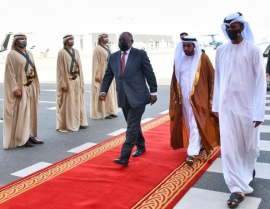
President Cyril Ramaphosa says South Africa is ripe with opportunities for among others, trade, investment and tourism.
The President was addressing the South Africa Day celebrations at Expo 2020 Dubai in the United Arab Emirates where Team South Africa is presenting all of its goods and services to prospective consumers and investors.
The visit to the country comes fresh after the SA Investment Conference nabbed at least R332 billion in investment pledges.
“The benefits of doing business in South Africa are immense indeed. We have a strong and well-regulated financial, banking and taxation system, world-class IT infrastructure, and a range of business and investor friendly regulations and policies.
“Most importantly, we have a ready and able workforce with the necessary skills and capabilities to take your business to new heights,” he said.
President Ramaphosa highlighted to the Expo that South Africa offers participation in a wide range of sectors – both traditional and modern.
“Our diverse industries include traditional sectors such as agriculture and agribusiness, clothing and textiles, automotive, mining, capital equipment, tourism, hospitality and manufacturing.
“You will also find on display our vast capabilities in renewable and clean energy, fintech, healthcare, digital technologies, defence and aerospace,” the President said.
He said Team South Africa’s pavilion at the Expo has showcased the country’s diversity not only “in terms of the rainbow nation that we are” but also the diversity of the economy.
“Over the past six months we have treated visitors to our Pavilion to a display of the rich talent, creativity and diversity in our country. From across our nine provinces there have been installations on music, dance, poetry, storytelling, theatre, films, design, fine arts and fashion.
“We have hosted companies producing a range of products, from armoured vehicles commonly used in UN Peacekeeping Missions; to an e-mobility van that highlights our capabilities in the electric car sector; to innovative products used in agro-processing,” he said.
According to President Ramaphosa, the pavilion is also using state of the art technology to deepen connections between potential clients and businesses from South Africa.
“Through QR codes that are on most of the products on display, potential buyers have been interacting with product manufacturers from South Africa and connecting with them for business opportunities.
“We are also excited that an e-commerce marketplace has been activated to give customers direct access to products produced in South Africa,” he said.
President Ramaphosa said the expo is an important opportunity to “reboot the global economy” following the devastation caused by the COVID-19 pandemic.
“[The Expo’s] importance is now greater than ever, as we strive to recover and rebuild in the wake of the pandemic. Our country’s founding father Nelson Mandela once said that when people are determined, they can overcome anything.
“As South Africa we are determined to recover from COVID-19, to grow our economy, and to build our country. And so we say once again, visit our Pavilion to see for yourself a country on the move, an economy that is diverse and growing, and a people ready to welcome you,” he said.
Appeals process for fishing rights allocation opens
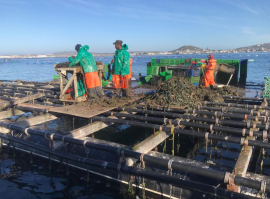
Minister of Forestry, Fisheries and the Environment, Barbara Creecy, has urged any applicant who is dissatisfied with the 2021 Fishing Rights Allocation Process (FRAP) to lodge an appeal.
“Appeals must be lodged electronically online on the prescribed Appeals Form through the FRAP 2021 website starting from the 29th of March 2022 until the closing date of 29th of April 2022,” the Department of Forestry, Fisheries and the Environment said on Sunday.
The Department has loaded all the Grant of Right Letter and Scoresheet on the 2021 Fishing Rights Allocation Process online platform for all the fishing sectors.
Applicants can with immediate effect, log on to the FRAP2021 Online Application Website (https://www.frap2021.co.za/) using their logon credentials to access and download their Grant of Right Letter and Scoresheet
Applicants who want to lodge appeals and need help can go to one of the nine decentralised offices which will be open from the 4-14 April 2022, at 8am – 4pm (including Saturday the 9th from 8am – 1pm.)
Appellants, who cannot access the online portal and/or for whatever reason are not able to visit any of the identified decentralised centres to appeal, can contact the department on telephone: 021 402 3727 or email to: FRAPenq_2020@environment.gov.za so that an alternative arrangement can be made.
Appeals received after the closing date of 29 April will not be accepted.
The General Policy on the Allocation of Commercial fishing rights 2021 and the Fisheries sector specific policies, makes provisions for any applicants or affected or interested person to appeal to the Minister against the decisions of the Delegated Authority in any respective fishing sector.
“The appeal may be lodged against an exclusion, a refusal to grant a right or against the decision, process, and/or methodology on quantum or effort.
“The Minister, as the appeal authority, will consider the facts and supporting documents as presented by the appellant as they were at the closing date for applications and will not take into account facts that came into existence thereafter,” the department said.
All appellants are required to retain a copy of their original appeals submitted to the department with proof of submission until the decision on appeals is made.
“Subject to the appeals received and the assessment thereof, the rights registers may change and the proportion of the available Total Allowable Catch (TAC), Total Applied Effort (TAE) or a combination thereof to successful and/or existing right holders may be adjusted upwards or downwards based on the outcomes so as not to exceed the approved TAC/TAE.
“The implementation of adjustments will differ per sector as outlined in the fishery sector specific policies. Should the appellants still not be happy with the decisions of the Appeals Authority, appellants may approach the courts for judicial review within 180 days after the appellant has been informed of the decision of the appellate authority,” the department said.
In the event applicants experience any challenges in accessing the online system and their outcomes, assistance can be requested telephonically on 021 402 3727 or email to: FRAPenq_2020@environment.gov.za.
Applicants who require IT support must contact 010 5002323 / 0800 0145304 or email frapitsupport@navayugainfotech.com.
Mine brings hope for Mokopane communities

Despite the myriad challenges facing the country, work continues to better the lives of several communities.
Ivanhoe Mines’ Platreef Mine situated just outside the town of Mokopane in Limpopo is a beacon of hope for local communities. This is especially true for young people from the 28 communities that surround the mine that began its operations in 2014/15.
The mine has provided young people with opportunities to further their studies while also granting them apprenticeships. Once they have completed their studies in the different fields relevant to the mine, the mine employs them. This in turn helps in reducing the high number of unemployment within local communities.
According to one of the mine’s senior managers, Sipho Manyeke, the mine is committed to employing local people, particularly women and young people. Platreef is ramping up work related to Shaft 2, which is currently under construction and the first 770-ktpa concentrator. This will result in more local employees and contractors being recruited.
“The Platreef mine is expected to employ approximately 2 500 full time employees at [a] steady state, and will employ roughly the same number of additional contractors during the construction period,” Manyeke told SAnews during a recent visit.
Ivanhoe indirectly owns 64% of the Platreef project through its South African subsidiary, Ivanplats, and is directing all mine development work.
Lucia Lebelo, Senior Manager responsible for Community Relations, said transformation is important for the mine.
“At Ivanplats, we view transformation as an opportunity creator and priority is given to women,” she said adding that the mine is committed to developing the skills of the workforce.
“Ivanplats has provided opportunities through scholarships, internships and learnerships for the local communities since 2014,” Lebelo said.
Thomas Ntlhane who hails from the nearby village of Sekgakgapane, became part of the mine after seeing an advert in a local newspaper that the mine was looking for people to be trained as artisans. He wasted no time in applying for the apprenticeship and he was called for an interview.
He then underwent training to become a diesel mechanic.
“The mine sent me for a three-year training [course] and upon completing my training, the mine employed me as a diesel mechanic. I service their cars and do maintenance work on the mine’s generators,” he explains.
Another young person who benefited from opportunities created by the mine is Prince Malatji, who comes from the nearby village of Tshamahansi. He joined the mine after he completed his apprentice training in electrical engineering in 2018.
“I thank Ivanplats for assisting me to realise my dream.”
Malatji is currently employed as a winder technician.
SA records 989 new COVID-19 cases
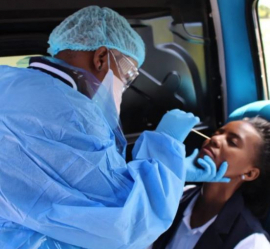
South Africa recorded 989 new COVID-19 cases, the National Institute for Communicable Diseases (NICD) has reported.
The figure brought the total number of laboratory-confirmed cases to 3 713 252 since March 2020. This increase represents a 5.9% positivity rate.
“Due to the ongoing audit exercise by the National Department of Health (NDoH), there may be a backlog of COVID-19 mortality cases reported. Today, the NDoH reports one death, which did not occur in the past 24 – 48 hours. This brings the total fatalities to 99 966 to date,” said the NICD on Sunday.
To date, 23 744 362 tests have been conducted in both public and private sectors.
The majority of new cases were from are from Gauteng (37%), followed by the Western Cape (29%).
KwaZulu-Natal accounted for 20%; Mpumalanga accounted for 4%; Eastern Cape and North West each accounted for 3% respectively; Free State accounted for 2%; and Limpopo and Northern Cape each accounted for 1% respectively.
“The proportion of positive new cases/total new tested today is 5.9%, which is higher than yesterday (5.7%). The seven-day average is 5.8% today, which is higher than yesterday (5.7%). The seven-day moving average daily number of cases has decreased,” said the NICD.