
AfCTA to be centre of local government
The African Continental Free Trade Area (AfCFTA) has been welcomed as a progressive platform to stimulate the continent’s wide inclusive and sustainable industrial development, amounting to $450 billion of regional income.
The development was welcomed during a two-day hybrid inaugural dialogue of the AfCFTA in Sandton. The dialogue was hosted by the South African Local Government Association (SALGA).
AfCFTA Secretary-General Wamkele Mene, United Cities and Local Government of Africa Secretary-General, Jean Pierre Elong Mbassi, Gauteng MEC of Economic Development, Agriculture, Environment, and Rural Development, Parks Tau, SALGA President Cllr Bheke Stofile and SALGA Gauteng PEC Chairperson, Cllr Jongisizwe Dlabathi, were among delegates at the event. Economists, policy and trade experts, as well as local government representatives were also in attendance.
On the AfCFTA negotiations and implications for Local Government, Department of Trade, Industry and Competition (DTIC), Chief Director Niki Kruger said the World Bank anticipates that AfCFTA would boost regional income by 7% or $450 billion. It was also expected to accelerate wage growth for women, and lift 30 million people out of extreme poverty by 2035.
Tau said the implementation of the AfCFTA treaty would take place at local government level.
Delivering the keynote address on Tuesday, Tau said it was “logical” that municipalities were “adequately capacitated and resourced to leverage the attendant opportunities from the Free Trade Agreement”.
He said: “Since this Free Trade Agreement signifies a game-changer, its impact rests in the integration of Africa into a single continental market for trade and exchange of goods and services with an accompanying free movement of entrepreneurs and enterprises.
“As the Gauteng Provincial Government, the objectives and intended outputs from the Free Trade Agreement certainly find practical expression through the Growing Gauteng Together 2030 (GGT2030) plan of action. This pragmatic provincial blueprint has specific action plans to expand intra-Africa trade, investment and commerce.”
Stofile said the agreement would “create a single market for goods and services, with free movement of businesspersons and investments across borders, which will strengthen trade and intra-African investment and cooperation”.
It was estimated that the agreement would boost intra-African trade by 52% by 2022, ultimately leading to the creation of an integrated African market and the realisation of the African Union Agenda 2063 towards an integrated, prosperous and peaceful Africa.
On Thursday, dialogue would zone in on innovative infrastructure financing.
Ukraine conflict fuels petrol, food price increases

Deputy Finance Minister David Masondo has warned that with South Africa being a net importer of oil, the persistent conflict in Ukraine is having a severe impact on fuel prices which, in turn, is driving up food prices.
Participating in a Parliamentary debate that looked at the economic impact of the conflict on the South African economy, Masondo said there is the prospect of persistent supply and demand imbalances, which risks driving inflation higher and tightening financial market conditions.
“Since the conflict, there have already been sharp increases in the prices of crude oil, maize, wheat, and sunflower oil futures contracts. This is likely to persist until a resolution to the conflict is found,” he said.
The Deputy Minister said higher fuel and grain prices erode the disposable income of consumers.
He said this as local fuel prices recently went up to more than R21 per litre for the first time ever.
“This increase is due to the higher global price of crude oil, which over the last month alone, has increased to above $110 per barrel, compared to around $80 per barrel at the beginning of 2022.
“As a net importer of oil, South Africa, is unfortunately at the mercy of the global oil prices.”
National Treasury working with the Department oto review fuel pricing
Masondo said the National Treasury is fully aware of the impact of these rising prices on the quality of the lives and the cost of living of South Africans, especially the poor, who spend a disproportionate share of their income on transport and food.
“This makes the work that we have embarked on with the Department of Mineral Resources and Energy to review the approach to fuel pricing that much more urgent.
“We are working tirelessly to complete the work as soon as possible,” he said.
Masondo said, however, that government cannot make any hasty decisions, as any changes that are made on fuel pricing will have a lasting impact on the industry.
“In the meantime, we encourage those industries that qualify for the diesel rebate on the fuel and road accident fund to apply for it.
“The higher global inflation prospects could lead to higher interest rates, with tighter financial conditions and reduced capital flows to emerging markets.
“The adverse effects of developments in Ukraine have not spilled over to South Africa significantly, with the Rand having depreciated by only 1.3 percent in wake of the conflict.”
Masondo called for the silencing of the guns and a return to meaningful dialogue, negotiation and compromise.
More state funds will be recovered – SIU
The Special Investigating Unit (SIU) says it is awaiting Special Tribunal adjudication on cases that could recover at least R2 billion which has been looted from public coffers.
This after the Special Tribunal ordered software company SAP to pay back at least R413 million to the Department of Water and Sanitation (DWS) after a licensing and support agreement between the two parties was declared unconstitutional and invalid.
According to SIU spokesperson, Kaizer Kganyago, the judgement serves as a warning for errant public servants and private companies.
“The SIU and DWS welcome the Special Tribunal order as it sends strong message to officials and companies doing business with the state that collusion and unethical business practice will not be rewarded.
“The outcome of the Special Tribunal order is a continuation of implementation of the SIU investigation outcomes and consequence management to recover financial losses suffered by state institutions. There are other matters enrolled in the Special Tribunal which are still awaiting adjudication to the combined value of R2.1 billion and will result in further recoveries for the state,” he said.
Kganyago added that department officials that were involved in the dodgy SAP contracts will not escape scrutiny.
“[The] SIU made disciplinary referrals to DWS against two senior officials. The SIU was informed that DC against one senior official has been concluded and judgment is expected within this week, while the DWS is considering disciplinary action against the other official.
“The SIU has also referred evidence pointing towards criminality to the National Prosecuting Authority, Asset Forfeiture Unit and South African Revenue Service,” Kganyago said.
Over 80 000 COVID-19 vaccines administered over 24 hours
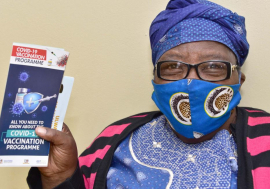
South Africa has recorded a 96.8% COVID-19 recovery rate, with a total of 83 194 vaccines administered in the last 24 hours.
“The cumulative number of recoveries now stand at 3 578 877 with a recovery rate of 96.8%,” the Department of Health said in a statement.
The report shows that 24 276 vaccines were administered in Gauteng, followed by Western Cape with 11 416 and Eastern Cape with 11 006 vaccines administered in the last 24 hours.
A total of 9 742 vaccines were administered in KwaZulu-Natal, Limpopo 7 968, Free State 6 129, North West 5 643, Mpumalanga 5 482, and Northern Cape 1 532.
The report also shows that a total of 18 445 Johnson and Johnson vaccines and 64 749 Pfizer vaccines were administered in the last 24 hours.
These include 6 344 first dose and 12 101 booster doses of Johnson and Johnson vaccines in the last 24 hours. A total of 16 949 first doses, 14 811 second doses and 32 989 booster doses of Pfizer vaccines were administered in the last 24 hours.
“A total number of individuals fully vaccinated in the last 24 hours [is] 21 155,” the department said.
South Africa has recorded 3 696 823 COVID-19 cases with 1 648 new cases reported in the last 24 hours, which represents a 5.2% positivity rate.
Two deaths have been reported and of these, one occurred in the past 24 – 48 hours, bringing the total fatalities to 99 727 to date.
CoGTA committee votes against proposed Disaster Management Amendment Bill
By majority vote, the Portfolio Committee on Cooperative Governance and Traditional Affairs (COGTA) has decided not to accept a motion of desirability on the proposed Disaster Management Amendment Bill.
This was a Private Member’s Bill sponsored by Dr PJ Groenewald of the Freedom Front Plus, which the Speaker had referred to the committee on 10 February 2021.
The Bill sought to constrain the perceived power of the executive in relation to the duration of a state of disaster by means of affording Parliament, provincial legislatures and municipal councils the exclusive power to extend the duration of a national, provincial and local state of disaster respectively. It also sought to allow legislatures to exercise greater oversight in respect of the management of disasters.
In a statement, the committee said: “Following consideration of extensive inputs received from interested stakeholders, the majority of committee members voted against adopting a motion of desirability on the bill.”
It said this was on the basis that the separation of powers would be violated if the legislature were allowed to encroach on executive functions. This, the committee said, included the declaration and extension of states of disaster, and the making of regulations pursuant to such a declaration.
The committee said the principle of the separation of powers was also emphasised in Parliament’s oversight and accountability model. The model outlines the current parliamentary oversight and accountability mechanism and practices, and highlights potential mechanisms to further strengthen oversight and accountability.
The model advises that “in conducting oversight and accountability, the principles of cooperative governance and intergovernmental relations must be taken into consideration, including the separation of powers and the need for all spheres of government and organs of State to exercise their powers and perform their functions in a manner that does not encroach on the geographical, functional or institutional integrity of government in another sphere”.
Members also cited the Helen Suzman Foundation case, wherein the court held that Parliament had properly delegated the regulation-making power in terms of disaster management to the executive, which fits into the broad constitutional scheme. Members also felt that the current accountability and oversight mechanisms provided in the Constitution are sufficient to address the gaps identified in the bill.
The committee has since tabled its report on the bill’s motion of desirability in the National Assembly, as per ATC No 33 of 8 March 2022.
The report is due to be scheduled for consideration and debate, and should the Assembly adopt it, it will have the force of a formal House resolution.
SALGA welcomes R28.9bn equitable share increase allocation
The South African Local Government Association (SALGA) has welcomed the R28.9 billion increase in the allocation of local government equitable share over the Medium-Term Expenditure Framework.
Briefing the Standing Committee on Appropriations (SCOA) in Parliament on Tuesday, SALGA said it had developed a guide on municipal financial management to improve the capacity of municipal officials on its interventions to assist local municipalities to better manage their finances and service their debts.
SALGA was providing the committee with its comments on the Division of Revenue, especially around local government.
In a statement, on capacity challenges, the Committee said it was “critical that anyone appointed to a position has the requisite skills to do it properly”.
“It is too late to train a person when they are already on the job without the required skills, the committee said. The committee welcomed SALGA’s interventions in training programmes for councillors and officials,” reads the statement.
The committee noted SALGA’s role in ensuring that municipalities manage their growing debt to state entities, such as Eskom. The committee further recommended that SALGA encourage municipalities to implement strict credit control measures to manage escalating debts.
The committee further noted that some municipalities have failed to register to receive indigent grants.
Committee Chairperson Sfiso Buthelezi, said: “The lack of spending on these conditional grants leads the National Treasury, in some instances, to withdraw the funds and these actions lead to dire consequences for poor people”.
Noting the increase in allocation of resources to local government and the challenges they face around revenue collection, the committee called on SALGA to intervene more to ensure that local municipalities have better audit mechanisms. The committee also recommended that SALGA should consider incentivising municipalities to manage their finances better.
The committee welcomed SALGA’s interventions to ensure economic recovery and the removal of red tape in local government. The committee also recommended that people with the necessary skills must be appointed to critical positions. The committee further requested regular progress reports on SALGA’s interventions to assist municipalities to manage their finances.
Diplomacy “key to end Ukraine crisis”

International Relations and Cooperation Deputy Minister, Candith Mashego-Dlamini, says diplomacy remains the key to a peaceful resolution to the Russia-Ukraine conflict.
The Deputy Minister said this when she participated in a Parliamentary debate on the conflict in the Ukraine on Tuesday.
“As a nation birthed through negotiation, South Africa is always appreciative of the potential dialogue has in averting a crisis and de-escalating conflict.
“In line with our strong commitment to the peaceful resolution of conflict, South Africa urges all parties to devote increased efforts to diplomacy and to find a solution that will help avert further escalation.
“The door of diplomacy should never be closed, even as conflict has broken out,” she said.
Mashego-Dlamini said South Africa’s approach on the Russia-Ukraine conflict has been based on the several key principles, which in turn are based on the country’s foreign policy.
This includes expressing deep concern at violation of the UN Charter and international law, the loss of life, the humanitarian impact and the forced displacement of people as a result of the war in Ukraine; and recognising that armed conflict will no doubt result in human suffering and destruction, the effects of which will not only affect Ukraine, but also reverberate across the world.
“No country is immune to the effects of this conflict. As the UN Secretary-General has indicated, the conflict will ‘have a huge impact on the global economy in a moment when we are emerging from the COVID [pandemic] and so many developing countries absolutely need to have space for the recovery’.
“South Africa emphasises respect for the sovereignty and territorial integrity of States,” said Mashego-Dlamini.
On 9 September 2021, BRICS leaders expressed concern at the continuing conflict and violence in different parts of the world.
The BRICS leaders reaffirmed their commitment to the principles of non-interference in the internal affairs of States and reiterated that all conflicts must be resolved by peaceful means, and through political and diplomatic efforts, in line with the international law of the UN charter.
Mashego-Dlamini said South Africa urged all parties to approach the situation in a spirit of compromise, with all sides respecting international law.
“Peaceful resolution of the matter can be achieved by all parties if diplomatic efforts to find a solution to the concerns raised by Russia resume.
“Currently, it is critical for all parties to uphold and protect human rights, and abide by their obligations in terms of international law and international humanitarian law.”
The Deputy Minister said South Africa continues to support and encourage regional initiatives such as the Minsk Agreements, and that SA welcomes the work of the Normandy Format, the Trilateral Contact Group and the Organisation for Security and Cooperation in Europe (OSCE).
“Noting that international action must create an environment conducive for diplomacy, dialogue and mediation, greater attention must be paid to bringing the sides closer to dialogue and not take them further apart.
“The international community should support engagement between the parties in a spirit of compromise, while de-escalating tensions, committing them to the cessation of hostilities, and building trust and confidence.
“As the government of South Africa, we urge all South Africans not to take sides in the conflicts between Russia and Ukraine, as this could go against our principles. In addition, South Africa has a good bilateral relations with both countries.”
Climate change poses risk to gender equality

The Deputy Minister of Forestry, Fisheries and the Environment, Makhotso Sotyu, says the loss of biodiversity and its knock-on effect on livelihoods poses a risk to African women, leaving them even more vulnurable to the negative effects of gender inequality.
Addressing a side event on ‘African Women Resilience in the Context of Climate Change’ during the Commission for the Status of Women (CSW66) in New York on Tuesday, Sotyu said climate change is causing massive livelihood losses and damages for African women, including through the loss of biodiversity, among others.
“South Africa agrees with many other African countries that advocate for a need to integrate gender perspectives into our design, funding, implementation, monitoring and evaluation of policies and programmes on climate change. We further agree on gender mainstreaming across sectors at all levels of government,” the Deputy Minister said.
On the one hand, she noted the recent devastating extreme weather events associated with flooding on the African continent, while on the other hand, drought is increasing food insecurity, and wildfires are destroying vast tracks of land.
“The threat of climate change-related events to agricultural production, food security and human settlements is a matter of grave concern for South Africa.
“The African rural farming communities of largely women will thus need to transform unsustainable production, consumption and land use patterns towards climate resilient agricultural practices,” the Deputy Minister said.
Reports tabled at the CSW show that human pressures will push one million species towards extinction in the coming years.
“If left unchecked, these interlinkages between climate change, biodiversity loss, desertification, land degradation, pollution and the COVID-19 pandemic could unleash devastating effects on humanity, especially for African women. The economic risks posed by climate change could widen the gender gap, including gender violence,” the Deputy Minister said.
Projected global greenhouse gas emission increases indicate that the world will exceed the global target of limiting temperature increases to well below 2 degrees by the end of the century. For Africa, this means a world that is 4 – 6 degrees Celsius hotter.
Furthermore, warming, ocean acidification and deoxygenating oceans, as well as rising sea levels, will particularly put pressure on many African coastal towns and local fishing communities.
“African countries are advocating for resources to implement climate action measures. This is because the burden of climate change falls heaviest on the most vulnerable sectors of society.
“Burden-shifting to developing countries and unilateral efforts to redefine and narrow eligibility for climate change support, as well as placing conditionality on support, are specific threats to gender rights in developing countries,” she said.
The Deputy Minister said much more needs to be done to fully realise the empowerment of women and girls, particularly in developing countries.
“We recognise and appreciate the important roles that women and girls are playing as effective, powerful leaders and change-makers for climate adaptation and mitigation. They are involved in sustainability initiatives around the world, in their communities, and their participation and leadership results in more effective climate action.
“As stated in the 2030 Agenda for Sustainable Development, to empower women and girls to have a voice and be equal players in decision-making related to climate change and sustainability is essential for sustainable development. Without gender equality today, a sustainable equal future remains beyond our reach,” she said.
Manhunt launched for correctional escapees

The South African Police Services (SAPS) and the Department of Correctional Services (DCS) on Tuesday launched a manhunt for four inmates who escaped from the Rooigrond Correctional Facility, near Mahikeng.
SAPS spokesperson Brigadier SB Mokgwabone said: “Investigations will be instituted and the circumstances relating to the escape will be revealed once investigations have been concluded”.
The inmates are Zacharia Francisco Nyalimate (Mozambican) convicted for house breaking and murder. He is serving 27 years.
Alfred Gwambe (Mozambican) convicted for house breaking, theft, possession of a stolen vehicle. He is serving 65 years.
Siyabonga Sithole (South African) convicted for rape, theft and house breaking and serving a life sentence, and;
Edward Madiba (South African) convicted for robbery, possession of firearm and serving 15 years.
The Department appealed to the public to assist with any information that may lead to the re-arrest of the four. “They are considered dangerous and if spotted, information should be shared with the nearest Police Station,” he said.
SAP R413m licensing agreement set aside

Software producing company Systems Applications Products (SAP) has been ordered to pay back at least R431 million in contract fees to the Department of Water and Sanitation (DWS).
This after the Special Tribunal declared a 2016 software license and support agreement between the two parties unconstitutional and invalid.
Furthermore, the tribunal ordered that:
- The Department may not use any of the software licensed under the 2015 and 2016 license agreements.
- SAP must pay the department an amount of R413 121 383 which represents the total amount the company received pursuant to the agreement.
- SAP must pay back at least R68 million in yearly maintenance fees paid by the department.
- SAP must pay the Department an amount of at least R263 million within five days of the order.
“For the avoidance of doubt, if the Special Tribunal determines that SAP is required to pay the Department more than R263 282 173. 78, because the Special Tribunal determines that SAP may not make some or all of the deductions that it submits it is entitled to make, then that further amount will be payable, together with interest running from the date of this order,” the court said.
The tribunal highlighted that the other issue that remains in dispute is if the software company is entitled to deduct payments it made to a third party during the execution of its duties.
“To enable the Special Tribunal to determine the issues, SAP will, within 15 court days of this order, file an affidavit solely dealing with the payments made to third party software companies and the factual basis for its contention that these expenses ought to be deducted from the amount to be paid to the Department of Water and Sanitation.
“[Within] 10 court days of receipt of the SAP’s affidavit, the SIU and the Department of Water and Sanitation will file their affidavits in answer thereto. The Presiding Member of the Special Tribunal shall be requested to convene a case management meeting within 10 court days of the expiry period thereto,” the court said.