
SA logs 21 157 new COVID-19 cases
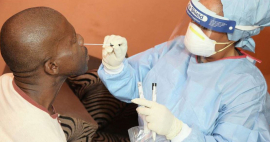
South Africa has detected 21 157 new COVID-19 infections, the National Institute for Communicable Diseases (NICD) said on Thursday.
According to the latest data, most of the cases were recorded in KwaZulu-Natal (5 241), Western Cape (4 597) and Gauteng (4 206).
This means there are now 3 374 262 laboratory-confirmed cases since the outbreak. The positivity rate currently stands at 29.1%.
The Department of Health said 75 more people lost their lives to COVID-19 complications, pushing the death toll to 90 662 since the outbreak.
In addition, there are now 9 202 patients receiving hospital treatment due to the respiratory disease after 411 were admitted in the past 24 hours.
The department announced that it administered 42 015 COVID-19 vaccines, 7 620 of which were given to children between the ages of 12 and 17.
This pushes the number of distributed vaccines since the start of the rollout programme to 27 778 860.
The latest data show that 15 488 743 (or 38.92%) adults are now fully jabbed in South Africa, while 17 747 890 over 18s have received at least one shot of the COVID-19 vaccines administered locally.
So far, 881 120 vaccines have been given to children aged between 12 and 17.
Globally, as of 23 December 2021, there have been 276 436 619 confirmed cases of COVID-19, including 5 374 744 deaths, reported to the World Health Organisation.
SAHPRA approves J&J booster shot

The South African Health Products Authority (SAHPRA) has approved the Johnson & Johnson (J&J) booster shot to be taken at least two months after the original dose for adults over the age of 18.
In addition, the local drug watchdog has also authorised the heterologous booster, also known as mix-and-match jabs, for those who had the Pfizer jab at least after six months after the second dose.
“The dosing interval for the heterologous booster dose is the same as that authorised for a booster dose of the vaccine used for primary vaccination,” said SAHPRA.
SAHPRA initially registered the J&J vaccine with conditions on 30 March 2021, in terms of section 15 of the Medicines and Related Substance Act (Act 101 of 1965).
On 10 December 2021, SAHPRA received an application to amend the dosing schedule for the J&J vaccine, allowing for a second dose at least two months after primary vaccination, and the use of heterologous booster immunisation following completion of primary vaccination with an approved mRNA COVID-19 vaccine.
“SAHPRA reviewed the safety and efficacy data provided, and has subsequently approved the COVID-19 vaccines Janssen second dose/booster dose,” SAHPRA said.
This comes after SAHPRA approved the administering of the third dose of the Pfizer COVID-19 vaccine for adults and children with a weak immune system.
This means all adults in South Africa are now eligible for an additional shot six months after the second dose, and it may be given at any point after that time.
The Health Department’s Deputy Director-General, Dr Nicholas Crisp, told media earlier this month that the first qualifiers for the booster shot will be eligible on 28 December.
“That is a couple of days before New Year’s, so we do not envisage introducing a major new programme on New Year’s Day or thereabout.
“So, from January, once the Ministerial Advisory Committee on Vaccines (VMAC) has aligned with this approval, we will get the recommendation and plan the appropriate rollout of boosters at that time,” he said.
According to the department’s data, since the start of the Sisonke programme, 230 488 second doses of the J&J vaccines have been distributed to healthcare workers who took part in the original study.
SAMRC records drop in COVID-19 fragments in wastewater
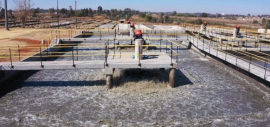
Scientists from the South African Medical Research Council (SAMRC) wastewater surveillance team are reporting a decline in concentrations of COVID-19 fragments in the majority of wastewater treatment plants.
“We are seeing this pattern of levelling or declining concentrations of SARS-CoV-2 RNA fragments in 89% of the wastewater treatment plants we are monitoring in urban areas including Buffalo City, Cape Town and Nelson Mandela Bay,” said Professor Angela Mathee, who is a member of the team.
In addition, she said 97% of wastewater treatment plants in rural areas in Limpopo, the Eastern Cape and the Western Cape are also showing a similar pattern.
The SAMRC’s wastewater surveillance team undertakes weekly sampling and analysis of wastewater from 72 wastewater treatment plants located in urban and rural areas across four provinces to support the management of COVID-19 in South Africa. These are situated in Gauteng, Limpopo, Eastern Cape and Western Cape.
“The declining concentrations of SARS-CoV-2 RNA fragments in wastewater corroborate what we’re seeing with COVID-19 cases around the country,” said Dr Renée Street, who plays a lead role in the team.
She cautioned, however, that while the levels of COVID-19 fragments are declining, they remain high and a cause for public health concern.
SAMRC President Glenda Gray has described this decrease as “very encouraging”.
“But this should not be viewed as an indication that we may drop our guard,” she warned.
Gray said human behaviour such as wearing masks, avoiding crowds and gatherings, holding essential gatherings outdoors or in well-ventilated spaces and hand hygiene are pivotal in controlling COVID-19 waves.
She also urged all to persist with these recommended and effective practices, especially during the current holiday season.
The Professor called on the nation to vaccinate, and for those who are eligible to take booster shots.
The National Institute of Communicable Diseases (NICD) said on Thursday that there has been a decrease in daily case numbers and percentage of people testing positive in Gauteng.
In addition, the NICD said infections are dropping in Limpopo, North West and Mpumalanga.
Family of soldier killed in Mozambique to receive his mortal remains
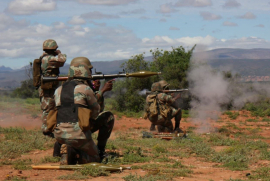
The mortal remains of Corporal Tebogo Edwin Radebe, who died after an attack by insurgents in Mozambique, will be handed over to his family on Thursday at the Air Base Force Waterkloof, Pretoria.
The South African National Defence Force (SANDF) was deployed in Cabo Delgado province as part of the Southern African Development Community (SADC) Mission in Mozambique (SAMIM), also known as Operation Vikela.
Radebe was part of Operation Vikela when the soldiers came under attack from the insurgents during an ambush east of Chai Village on Monday. Radebe succumbed to his injuries.
The Minister of Defence and Military Veterans, Thandi Modise, will form part of the Department of Defence Office officials who will formally hand over the remains to the family at the military procession ceremony.
According to a statement, Radebe, from Paul Roux in the Free State, was born on 6 June 1990 and served as a member of SANDF in Limpopo.
He is survived by his aunt, three siblings and two daughters. He was unmarried.
The Extraordinary SADC Summit of Heads of State and Government approved the deployment of SAMIM on 15 July 2021 as a regional response to support Mozambique to combat terrorism and acts of violent extremism.
The country has been plagued by continued acts of terrorism perpetrated on innocent civilians, women and children in some districts of Cabo Delgado.
SAMIM comprises troops deployed from eight personnel contributing countries from SADC, namely Angola, Botswana, Democratic Republic of Congo, Lesotho, Malawi, South Africa, Tanzania and Zambia, working in collaboration with the Forças Armadas de Defesa de Moçambique (FADM) and other troops deployed to Cabo Delgado to combat acts of terrorism and violent extremism.
Modise and her office have once again extended their condolences to the family, colleagues and friends of the deceased.
Funeral arrangements will be announced in due course, the SANDF said.
SA records 21 099 new COVID-19 cases
South Africa reported 21 099 new daily Coronavirus cases, the highest since the week began.
This means the country now has 3 353 106 confirmed cases, while the death toll stands at 90 587 after 99 more people lost their lives.
According to the National Institute for Communicable Diseases (NICD), KwaZulu-Natal, which is currently the epicentre of the fourth wave, accounted for 5 411 new infections.
It is followed by the Western Cape with 4 609 cases, 3 807 in Gauteng and 2 327 in the Eastern Cape.
“This increase represents a 30.6% positivity rate,” the NICD said on Wednesday, adding that the seven-day average was 29.8%, lower than the 30.1% that was recorded on Tuesday.
In addition, 9 324 COVID-19 patients are currently hospitalised, of which 593 were admitted in the past 24 hours.
According to the Department of Health, the cumulative number of people who have beat COVID-19 stands at 3 052 399, translating to a recovery rate of 91%.
Meanwhile, the department announced that it administered 58 349 new COVID-19 vaccines, of which 34 642 were first doses of either Pfizer or Johnson & Johnson vaccines.
This pushes the number of distributed vaccines since the start of the rollout programme to 27 733 331.
The latest data show that 15 463 240 or 38.85% adults are now fully jabbed in South Africa, while 17 728 079 over 18s have received at least one shot of the COVID-19 vaccines administered locally.
So far, 873 570 vaccines have been given to children aged between 12 and 17. Of these, 11 496 were administered since the last reporting cycle.
Summer rains boost dam levels in parts of SA
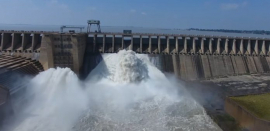
The recent rains that soaked most parts of the country have made a significant impact on water levels in some parts of the country, particularly the national average.
This is according to the Department of Water and Sanitation’s weekly state of the reservoirs report, which shows the impact of summer rains in some areas.
In a statement on Thursday, the department said this week’s report shows that water stored in the country’s reservoirs is at 88.7% this week, an upsurge from 84.6% last week.
“In Gauteng, the Integrated Vaal River System, with 14 dams, has recorded a meaningful increase, moving from 91% last week to 95.7% this week. The system was notably boosted by dams such as the iconic Vaal Dam, which is stable at 103.4%. The reserve dam, Sterkfontein, is equally full at 100.8%,” the department said.
In contrast, one major system in the Eastern Cape, the Algoa Water Supply System with five dams supplying water to Nelson Mandela Bay and surrounding areas, is still struggling to recover at 17.9%.
Kouga Dam recorded 15.6% this week, while Groendal Dam is at 24.6% and Impofu at 15.7%. The Amathole Water Supply System, with four dams supplying water to Buffalo City and Amathole District, is equally low at 29.8%.
As some areas across the country have not yet recovered from the drought effects, the department has reminded all water users that South Africa remains a water scarce country and efforts need to be doubled to inculcate the culture of saving the available water resources in efforts to ensure water security.
The department said its also aware of communities facing water shortages due to various challenges faced by Water Service Authorities.
Meanwhile in the Free State, the Bloemfontein Water Supply System, with four dams supplying water to Mangaung, has received a massive boost, climbing from 44.8% last year to 95% this week.
Rustfontein Dam is at 102.3%, while Groothoek is at 101.5%.
“The Polokwane Water Supply System, with dams supplying water to Polokwane and surrounding areas, is at 90.8% this week. In the system, Flag Boshielo Dam is at 88.7% and Ebenezer Dam is at 96.5%.
“Still in Limpopo, the Levuvhu Water Supply System, with dams supplying water to Thohoyandou and surrounding areas, is stable at 99.9% this week. Nandoni Dam is full at 101.6%, Albasini Dam is at 98.5% and Vondo Dam is at 92.4%,” the department said.
In KwaZulu-Natal, dams in Umgeni Water Supply System such as Spring Groove recorded (78.5%), Inanda (83.6%), Midmar (88.3%) and Nagle (92.2%) are stable.
As a result, the system is equally stable at 73.2%.
In Mpumalanga, the provincial water storage is at 87.4. Dams such as Witbank, Middelburg, Loskop are stable at 93.4%, 95.7% and 102% respectively.
The North West provincial water storage is at 71% and the Crocodile West Water Supply System, with dams supplying water to the province, is stable at 90.8%.
“The winter rains experienced in the Western Cape have left the Cape Town Water Supply System in a stable state at 96.4%. Some of the dams in the system such as Voëlvlei, Berg River and Theewaterskloof recorded 93.5%, 98.6% and 98.1% respectively,” the department said.
Motorist in viral social media video held for reckless driving

A man depicted driving recklessly in a video that went viral on social media has been arrested.
Investigators from the Road Traffic Management Corporation’s national anti-corruption unit identified the driver as businessman from Marble Hall in Limpopo.
The man was arrested on Wednesday and taken to the Kameeldrift police station in Gauteng where he was charged with reckless driving.
“A video of the reckless driver emerged on social media on 17 December and it showed a man protruding from the driver’s window of a moving vehicle along R573 Moloto Road. The man is expected to appear in court soon,” the Road Traffic Management Corporation (RTMC) said.
The man had been driving a red Range Rover.
Investigations into the matter are ongoing.
The RTMC has called members to the public to report reckless and negligent drivers on 0861 400 800 or to send WhatsApp messages to 083 293 7989.
“Law enforcement officers are working hard to clamp down on lawlessness on the roads this festive season. A total of 2 639 drivers have been arrested since the start of the festive season on December 1 for various offences.
“Members of the public are urged to work with the police to ensure that identify reckless drivers, speedsters and drunk drivers and face the full might of the law,” the RTMC said.
CGE urges NPA to act on statutory rape of learners
The Commission for Gender Equality (CGE) has called on the National Prosecuting Authority to take swift action against any perpetrators of statutory rape.
This as the Basic Education Department introduced a policy that will compel schools to report the impregnation of learners, younger than 16 years, by older men to the police.
The policy will come into effect in January 2022.
“The Commission has repeatedly called for the law to be applied to curb the growing scourge of statutory rape in South Africa, which has seen thousands of underage girls, some as young as 10 years, drop out of school due to early pregnancy.
“The Commission has confidence that the police and the National Prosecuting Authority (NPA) will play their part to ensure that every case of statutory rape is thoroughly investigated and successfully prosecuted,” it said in a statement.
The CGE called on community members to report any inappropriate relationships between children and adults.
“The Commission is also aware that the issue of teenage pregnancy is multi-sectoral and calls all role players and citizenry to be vigilant and report any relationship between an adult and a minor as part of the child protection initiative.”
The commission said with the holiday season upon the country, more vigilance is needed to curb any form of abuse.
“As citizens celebrate the festive holiday season, more women and young girls may fall victim to sexual and gender-based violence. The Commission calls for families and communities to report any incidents of abuse to the nearest police station.”
Government to accept applications for Taxi Relief Fund in 2022

Government will officially launch the application process for operators to access the Taxi Relief Fund next year.
In January 2022, Transport Minister Fikile Mbalula will officially launch the application process for operators to access the fund.
“At this launch, we will provide details of the application process, which will enable the department, with the support of the NEF, to start accepting applications from individual operators. The application window will remain open until midnight on 28 February 2022. No new applications will be accepted after this date,” Mbalula said.
This as government has resolved differences with the taxi industry on the conditions and the manner in which the funds for the Taxi Relief Fund were to be disbursed.
“I am pleased that we have since resolved these differences and have partnered with the National Empowerment Fund (NEF) to manage the disbursement of the funds on behalf of the department,” the Minister said on Monday.
In July 2020, Parliament allocated the R1.135 billion Taxi Relief Fund as a once-off payment to taxi operators to provide relief for the COVID-19 impact on the sector.
On 2 December, the Minister published Directions on the disbursement of the Taxi Relief Fund in the Government Gazette outlining the qualifying criteria for the fund.
“All taxi operators who meet the prescribed conditions are eligible to apply for the fund. This includes minibus-taxis, metered taxis and e-hailing partners, but not the e-hailing companies,” the Minister said.
The conditions which taxi operators must comply with in order to access the funds are:
- They must be South African or permanent residents;
- They must be in possession of a valid operating licence and
- They must be registered as a taxpayer with the South African Revenue (SARS).
“The application process and the call centre will be driven by a team of young people, recruited from the ranks of unemployed youth and trained by the NEF. This project will provide them with job opportunities and skills to ready them for the job market beyond the project,” Mbalula said.
Men urged to be role models in society
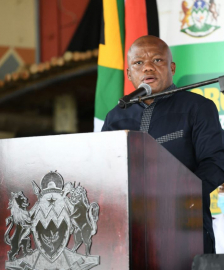
KwaZulu-Natal Premier Sihle Zikalala has called on men to be the bedrock of society by supporting the agenda of generation equality, while also supporting women empowerment.
“It is our earnest desire that we have men who are hungry for peaceful ways, respectable men who use amicable methods to solve pressing issues that face our families and societies,” Zikalala said.
The Premier called on men to fight patriarchy, end gender-based violence (GBV), as well as eliminate child abuse.
Zikalala said the province and the country need men who will be role models to boys, who will grow to respect, embrace and appreciate women and girls for who they are and not for what they can get from them.
“The underlying message is that we must work together in ensuring that the relationship between men and women reflects unity, collaboration, partnership and harmony.”
He emphasised that men should discuss frankly with each other the challenges they face, explore their fears and anxieties, and pay attention to their dreams and aspirations.
“Men need other men and women too to be a shoulder to cry on. They are only human, and also benefit from support and care from others. We need to do away with such myths that ‘men don’t cry.’ We do not want to create a society of men who feel their voices do not matter, who think no one takes their concerns seriously.
“It is very important that men talk about issues that affect their mental, psychological and physical well-being so that they are solved before they worsen. Real men unite to do positive things that build and fortify them.”
Importantly, Zikalala said it was never the culture in traditional Zulu society or many African societies to repress women and relegate their role to second-class citizens.
“Our history teaches us that women were revered and even worshipped. Before the planting season, our ancestors did rituals to the goddess of fertility and agriculture.
“It is really shameful and a disgrace that today, our mothers, sisters and daughters suffer at the hands of men and boys. Something has really gone wrong. This is not a society we can be proud of,” he said.
He urged amabutho to be exemplary to young boys by teaching them the true values, characters and responsibilities of being trustworthy men.
“Amabutho are a bedrock and strength of the Zulu nation, as the whole nation rely on their defence in times of war. As we confront this devastating war in the form of gender-based violence and femicide (GBVF), we rely on amabutho’s guidance, war tactics, discipline and determination to win the war against GBVF,” Zikalala said.
On Sunday, the Premier joined the community in Mbumbulu, south of Durban, to commemorate International Men’s Day under the theme, ‘Better Relations Between Men and Women’.
Joined by Social Development MEC, Nonhlanhla Khoza and Member of the Provincial Legislature, Bishop Vusi Dube; traditional leadership and religious leaders, amongst others, the Premier urged men to be the warriors that will be remembered to have restored the humanity and dignity of women.
“Please rise and be counted in the fight against this scourge which is a blight on our hard-won freedom and democracy. It is our role as men to improve gender relations and promote gender equality in the workplace, in businesses, government [and] communities,” he said.