
No COVID-19 infection spike after elections period
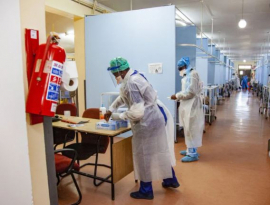
Health Minister, Dr Joe Phaahla, says the country did not experience any spikes in COVID-19 infections following the various election campaigns and Election Day.
The Minister was briefing the nation on Friday morning on the country’s fight against the COVID-19 pandemic and the department’s vaccination plan.
“Thus far, 11 days after the election campaign and also…voting day, we have not experienced any super spreader side effects after the campaigns and the election day.
“We were assured by the IEC [Independent Electoral Commission] about the [health related] preparations for the elections but we were concerned about the safety of campaigns by political parties but thus far, not a single district or a province has shown signs of a spike in COVID-19 infections,” Phaahla said.
The Minister added that the department and the National Institute of Communicable Diseases (NICD) continue to keep a close eye on any potential spikes.
Four week steadiness
According to Minister Phaahla, infection rates and hospitalisations have remained stable with daily infections ranging between 200 and 500.
“The positivity rate has also remained at an average of 1%. As of [Thursday] we still had relatively high 16 000 cases but quite a reduced number compared to the peak of the third wave. Patients in hospital remain high although again, lower than at the peak…just over 3000 patients in hospital with just over 270 in high care and just over 400 in ICUs with around 164 on ventilation,” he said.
The Health Minister said the fatality rate has also come down with reported deaths over the last 24 hours reaching 17 – considerably lower than the at least 300 per day reported during the peak of the third wave.
“But of course, we feel that 17 deaths from COVID is still one too many so at the end we would want to see a situation where nobody dies from this pandemic,” Phaahla said.
Fourth wave warning
Dr Phaahla warned that although COVID-19 related statistics remain low, the existence of the virus remains and it is “still causing a lot of harm”.
“A resurgence of infections which will introduce a fourth wave is expected as we can see in other countries – especially in some parts of Europe. Our national team is working with provincial teams to prepare for the inevitable fourth wave. We have to do everything possible to make sure we can delay it and make sure that even when it comes, it must have far less impact,” he said.
The Minister assured that health facilities are gearing up to:
- Ensure oxygen supply through Afrox which has made contingency plans.
- Making sure that beds are available.
- Securing equipment such as ventilators, PPE and other consumables.
He said the fourth wave is expected either in mid to late December or even in early January.
“While no-one can tell with certainty as to when this fourth wave will be coming, there’s no doubt that it will come driven by movement of people but also driven by variants.
“Our genomic sequencing scientists are monitoring any variants of concern…thus far they have not reported any alarm in terms of variants. They always tell us that the mutations are happening…but the question is, are they variants of concern? Thus far they have said not yet,” he said.
Trio caught in possession of police blue lights

An intelligence driven operation has resulted in the arrest of three people who were found in possession of police equipment including blue lights and two unlicensed firearms.
The three suspects aged 34, 35 and 36 were arrested on Thursday morning in a Golf 7 on Hendrik Potgieter road near Muldersdrift in an intelligence driven operation.
“Further information revealed the suspects have been terrorising law abiding citizens in Gauteng, Free State, North West and other neighbouring provinces. During their arrest, the suspects were found in possession of police equipment including handcuffs, blue lights and two unlicensed firearms as well as ammunition,” said the Directorate for Priority Crime Investigation (HAWKS).
Preliminary investigation has linked the suspects to an armed robbery committed in Klerkskraal in late October 2021.
While on scene, police received information that they had also allegedly robbed a foreign businessman in Heilbron, Free State.
Government targets 2 million unjabbed people above 60

There are more than two million adults over the age of 60 who are still unvaccinated, as the country gears for its second instalment of the Vooma Vaccination Weekend.
According to the Department of Health’s Vaccination Demand Task Team Lead, Dr David Harrison, government is working tirelessly to reach the elderly population, as they remain vulnerable in the ongoing COVID-19 pandemic.
“They have to be our priority and what we want to do is find ways to ensure that they come forward first and then extend that to the broader population,” he said on Thursday.
Harrison was speaking during the pre-vaccination weekend webinar hosted by the Government Communication and Information System (GCIS).
He said government was looking at incentives such as the R100 grocery voucher for all people who are aged 60 or older who get their first vaccination in November.
In addition, he said the country would have to find a range of other incentives and mechanisms that can minimise the effects of a possible strict lockdown and boost the economy.
According to the health expert, vaccination certificates are part of the motivation to attract more people to visit vaccination sites.
Meanwhile, if vaccination can reach two million the country would save over 8 000 hospitalisations and avert over 1 000 deaths.
However, the benefit-cost in terms of reducing hospital costs will be at least six to one.
“The return on investment for the country as a whole, the social and economic return will be much bigger.”
According to the doctor, the Vooma Vaccination Weekend, set to take place on 12 to 14 November was about local people advocating for the jab and making it part of everyone’s normal life.
President Cyril Ramaphosa has written to leaders in government, labour, faith-based organisations, traditional leaders, business and civil society partners to support the upcoming vaccination drive.
The first Vooma Vaccination Weekend in October led to an unprecedented level of engagement and active mobilisation across many districts in South Africa. It achieved 75% of its target of 500 000 vaccinations over the three days and the department hopes to achieve 100% this weekend.
“Now, our focus for the second boom of vaccination campaign must be in anticipation of the fourth wave to crush its power.”
Harrison said the country would like to build on the fact that three out of five people aged 50 and older have already been inoculated.
“That means already we’ve crushed half of that power of that fourth wave. Now let’s go all the way let’s make it five out of five before the end of the year, and we will significantly reduce the impact of the fourth wave,” he urged citizens.
He announced that 80% of the vaccination sites will be open this weekend to reach as many people as possible.
He also raised concerns that the uptake of the vaccine has “faltered”.
“So it’s a hard reality and one that we certainly have to confront head-on to understand why is it that we imagined that things would be a bit easier to get people to come forth. But in fact, it’s been tougher,” he added.
Chief Livhuwani Matsila of the Matsila Royal Family of Limpopo,said they were “surprised” by the number of elderly people going to vaccinate during the first phase of the rollout programme.
“But also somewhat, not so impressed with a younger generation, below age 50. They haven’t been going to the stations as much as the elders.”
The Chief has urged people to take the jab to help protect themselves from the pandemic.
Leading Catholic priest and political activist, Father Smangaliso Mkhatshwa, echoed Chief Matsila’s sentiments.
“I’ve had my two jobs already and also had fears and anxieties that plagued me before I decided to go ahead,” he said.
“You look at that injection that looks so long, at least on TV and the way it is plunged into someone’s arm.”
However, the Father overcame his fears and said he did not feel any pain.
“It was just like a little prick. There’s nothing new with being injected or vaccinated in South Africa. So, we need to fight the ignorance,” he said, encouraging citizens to come forward.
Load shedding moves to Stage 3

Load shedding has been downgraded from Stage 4 to Stage 3 this morning as Eskom’s emergency power reserves continue to recover from several breakdowns and trips at its power stations.
The power utility has been battling to keep the lights on with several factors – including an incident in Zambia which affected Southern Africa’s entire power system – adding to strain on the power system.
“The emergency generation reserves have shown significant progress over the past two days. Therefore load shedding will be reduced to Stage 3 from Wednesday…to Friday. Thereafter, Stage 2 load shedding will continue as previously communicated until 5am on Saturday. It is necessary to continue with load shedding in order to fully replenish the emergency generation reserves,” the power utility said.
Briefing the media on Tuesday evening, Eskom CEO Andre de Ruyter said there was context to the current situation facing the embattled power utility.
“For the past 24 months, Eskom management have consistently signaled that there is a lack of capacity in the country [and] that we need between 4000 to 6000 megawatts of capacity to be added to the grid as soon as possible.
“We are also faced with some challenges around procurement. In particular there are challenges around opportunities to expedite and accelerate the procurement of spares and of engaging with original equipment manufacturers in order to make sure that we can maintain our equipment and the spares that are required,” he said.
De Ruyter added that the situation is “exacerbated by a lack of predictable funding” which has left the power utility in a constrained financial position.
“[Eskom] finds itself in a very difficult situation to have the necessary funding available to enter into contracts. This requires us to start planning 24 months in advance for commitments and in the absence of predictable liquidity being made available, that presents a challenge for us,” he said.
Adding to the strain on the system, de Ruyter said, are municipalities which do not implement load shedding as required.
“During Stage 2 load shedding in particular, we saw a number of municipalities either not abiding by their obligations to implement load shedding or implementing it only [less than] what their commitment should be.
“This has put us in a position where instead of the roughly 2000MW we would expect from load shedding Stage 2…that we had to deepen our load shedding to Stage 4,” he explained.
The CEO said the power utility is in discussions with the erring municipalities to rectify the situation and the cooperation has improved since Stage 4 load shedding was implemented.
Addressing calls for him to be axed, de Ruyter said the power utility requires continuity in leadership and that he would not be stepping down.
“We serve at the pleasure and discretion of the board…and of course if [it] finds it appropriate for me to resign then that is their decision to make. We have had no discussions in this regard so far and I do not intend to resign. Given the current circumstances, it is probably more important to have continuity of management rather than to fall back into the trap that Eskom has been in over the past ten years when we had 11 different chief executives. That lack of continuity clearly has significantly contributed to instability within the organisatoin.
“I understand that there are frustrations that we are not achieving our objectives as quickly as we would have liked to but these frustrations will not be resolved…by changing [management] at this point in time”.
SARS revenue collection rates continue to soar
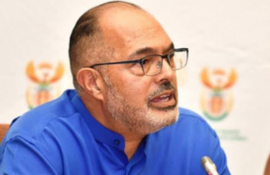
The South African Revenue Service (SARS) collection rates have once again recorded positive growth, collecting a gross R1.55 trillion in the past year.
Addressing Parliament on Tuesday, SARS Commissioner Edward Kieswetter that this comprised of a net of R1.25 trillion of the revenue estimate and that is R38 billion more than the revised estimate.
Refunds paid amounted to R300.6 billion, which is R20 billion more than 2019/2020.
He said: “Our specific compliance interventions to detect and deter non-compliance yielded R172 billion, which shows room to improve compliance levels across all tax types”.
This dovetails with SARS’ strategic objective of making it costly for those who are willfully non-compliant.
He said SARS was encouraged by the measured progress in rebuilding SARS as an institution transforming itself into a SMART Modern SARS.
In addition, R38.9 billion had been granted in COVID-19 relief measures and trade to the value of R2.6 trillion had been facilitated in accordance with the SARS mandate.
He confirmed that tax compliance levels were under strain, with a composite compliance level of 62.61%, compared to the previous year of 65.05%. The Public Confidence Survey point to favourable preference of tax morality but that has not seen an appreciable rise in compliance.
He said the tax base was broadening with 1.6 million taxpayers added to the SARS tax register that resulted in R4.6 billion added to the net collections for the year under review.
“Our strategic objective to make it easy and simple for taxpayers to comply has also yielded impressive results: 86.3% of SARS interactions done through digital channels such as eFiling and the MobiApp”.
The Commissioner warned however that the impact and prevalence of corruption and waste was not helpful in enhancing tax morale within society.
“In addition, 83.2% of standard taxpayers (3.4 million taxpayers) had received auto-assessments based on third party data available to SARS. All taxpayers needed to do was to click accept or edit.
“The effectiveness of these channels are also indicated by the fact that R1.55 trillion was collected via eFiling,” he said.
Accredited Economic Operator (AEO) programme
The SARS Commissioner said that in the Customs space the Accredited Economic Operator (AEO) programme granted 132 participants Preferred Trader status.
“Frontline interventions for Preferred Traders dropped by 22% in this period; 5.6 million Customs declarations were processed under 10 seconds which is 95% of declarations; while inspection times were reduced from 109 hours to 44 hours. Customs seizures amounted to R2.7 billion.”
SARS’ said its enforcement efforts were also yielding results in a difficult and challenging terrain.
“These efforts recovered R147 million from PPE fraud and there was a conviction rate of 96% rate through collaboration with the NPA. The organization is also working with all other enforcement agencies as well as other government agencies,” the revenue collector said.
High Wealth Individual Segment
It said its newly launched High Wealth Individual Segment had written 1400 direct letters to wealthy individuals and 275 had already been reviewed.
“Equally, SARS has also detected 26 000 unregistered taxpayers who have financial assets with economic activity in excess of R1m,” SARS said.
A focus area has been the compliance levels of the various segments, such as Employers; SMME; Large Businesses & International and High Wealth Individuals. In addition, compliance levels of tax products such as PAYE, CIT has been a concern, and SARS has embarked on focused programmes to address this trend.
Modernization programme
The Commissioner said “in order to deliver on its comprehensive programme and despite the financial constraints, SARS is investing 3% of its budgeted resources in its modernization programme so that it can remain abreast in a fast changing technology space”.
Kieswetter expressed his heartfelt appreciation to SARS staff for their “inestimable support in discharging the organisation’s mandate”.
He apologised to taxpayers who may have been unable to transact with the organization due to system challenges.
UIF disburses R6.4m to workers affected by July unrest

The Unemployment Insurance Fund (UIF) has commenced payments to the Workers Affected By Unrest (WABU) Relief Scheme and has so far disbursed R6.4 million to 1 402 workers that were affected by the July 2021 unrest in Gauteng and KwaZulu-Natal.
In a statement on Monday, the department said the payments were made from applications received from 10 employers whose applications were tested against stringent criteria which involves checking if workers have been registered and declared with the UIF, monthly contributions are up to date, as well as physical inspections of affected businesses.
Since the opening of the application process in August 2021, the UIF has received applications from 500 employers on behalf of close to 16 000 workers.
UIF Acting Commissioner, Advocate Mzie Yawa, said that from the 500 employer applications received, the UIF has paid 1 402 workers, which is not a great number considering that 16 000 workers have applied.
“We are however, not worried about this seemingly low number because it shows the robustness of our verification process, which ensures that only those who meet our standards are fit for payment. Due to hard lessons learned from COVID-19 TERS payments, the UIF has had to vigilantly carry out due diligence and thorough verification before making any payments,” Yawa said.
He said that already, the Fund has identified several WABU claims that have been submitted to other insurance companies where salaries are covered, some applied for and shall get help from the Industrial Development Corporation (IDC) which also covers salaries in their intervention. Yet some of these employers still applied for UIF’s WABU benefit.
“We have also noted that some employers have used false SAPS case numbers and luckily our system can pick up through checks that the cases are not genuine. We urge all to act honestly, these are hard-earned monies for vulnerable workers, not get rich quick schemes,” Yawa said.
Yawa added that some of the claims have been rejected because they have failed to meet the basic minimum requirements such as correct identity numbers, correct banking details, no UIF declarations and no UIF contributions found.
“We still have payments that bounce back due to incorrect banking details and we again appeal to employers to ensure that they supply us with correct bank accounts of their workers,” he said.
Meanwhile, the UIF recognises that some of the rejected applications are caused by genuine mistakes committed by employers and will communicate with them to make corrections for workers not to lose their benefits.
“The bulk of the applications have been picked up as beneficiaries from South African Special Risk Insurance Association (SASRIA) and Department of Trade and Industry and Competition, and the Fund is running checks if those claims cover salaries and wages – and if they do, they will be rejected to prevent double-dipping,” the statement read.
The WABU benefit is paid directly into the employee’s bank account and is calculated at a flat rate of R3 500.
The benefit is de-linked from the UIF’s normal benefits, meaning workers’ accumulated credits are not used to calculate the benefit amount payable to the beneficiary. This is to enable workers who have no credits to receive financial support whilst their workplaces are in the process of rebuilding or reopening.
Investigation into R200 million cocaine theft from Hawks offices
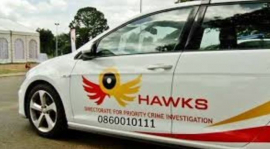
The Directorate for Priority Crime Investigation (Hawks) has launched an inquiry into the circumstances surrounding a break-in at its Serious Organised Crime offices in Port Shepstone where cocaine valued at R200 million was stolen.
At the behest of national Hawks head Lieutenant General Godfrey Lebeya, Deputy National Head, Lieutenant General Tebello Constance Mosikili will conduct the inquiry while the Detective and Forensic Service has been requested to investigate the theft.
Hawks spokesperson, Brigadier Nomthandazo Mbambo, in a statement said the incident was suspected to have occurred between 4pm on Friday and 7am on Monday.
She said a case of business burglary had been registered for further investigation.
“The suspects gained entry into the building by forcing open the windows. One of the safes in the office, which were used to store exhibits, was tampered with. The suspects stole 541kg cocaine drugs to the street value of R200 000 000 and ransacked the office where safes were kept,” she said.
No arrests have been made.
Taxpayers reminded to file returns ahead of deadline
The South African Revenue Service (SARS) has urged individual non-provisional taxpayers to file their income tax returns on or before the deadline of 23 November 2021.
In a statement, the revenue collector warned that penalties would be levied on taxpayers who fail to submit their income tax returns by this deadline.
“Taxpayers must note that according to changes in legislation, SARS will levy penalties from 1 December 2021 where one of more returns are outstanding.
“Before the change in the legislation, SARS could only levy penalties where two or more returns were outstanding. This older rule will remain in place for one more year for 2020 and earlier returns,” said the revenue service in a statement.
SARS Commissioner Edward Kieswetter said the filing of a tax return is a legal obligation for those taxpayers who are required to file and contributes towards a culture of voluntary compliance.
“But beyond the legal requirement to file a return, taxpayers who do the right thing are enabling government to meet the basic service needs of the poor and vulnerable by providing social grants and health care, amongst others,” he said.
He said SARS had put in place a number of upgraded digital channels that are available 24/7.
“This will help provide clarity and make it easy for taxpayers to meet the deadline of 23 November without any difficulty. These channels include amongst others, SARS eFiling, SARS MobiApp and an SMS service. More details are available on the SARS website,” he said.
Provisional taxpayers have until 31 January 2022 to fulfil all their filing obligations.
Looming global syringe shortage could hamper Africa’s vaccination rollout
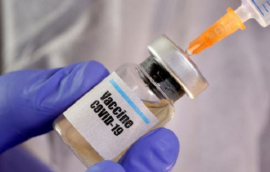
World Health Organisation (WHO) Africa Regional Director, Dr Matshidiso Moeti, says the COVAX facility is working to secure agreements for the production of syringes as shortages loom.
She was speaking during the organisation’s press briefing on the continent’s fight against COVID-19.
According to the United Nations Children’s Fund (UNICEF) the world faces a shortfall of “up to 2.2 billion auto-disable syringes” for COVID-19 vaccination and routine immunisation in 2022.
Moeti said although COVID-19 vaccine shipments have increased on the continent, the looming threat of syringe shortages could “paralyse progress” in the vaccination of communities.
“Already some African countries…have experienced delays in receiving vaccines and unless drastic measures are taken to boost syringe production, Africa faces a crisis.
“Syringe production both globally and locally in Africa, must be stepped up fast – countless African lives depend on it. The COVAX facility has been working to address this problem by securing agreements with manufacturers for the needle syringes and through better planning to avoid delivery [of vaccines] outpacing the supply of syringes,” she said.
According to Moeti, the UNICEF shortfall of up to 2.2 billion auto-disable syringes for COVID-19 vaccination and routine immunisation in 2022.
Africa’s fight against COVID-19
Moeti said 29 300 new COVID-19 cases were reported on the continent which indicates a 30% drop in new cases compared to last week.
However, ten countries are facing a resurgence of the virus.
In total, the virus has claimed more than 217 000 deaths and nearly 8.5 million cases have been reported
She says at least 77 million or 6% of people on the continent have been fully vaccinated – a far cry from higher income countries who have vaccinated more than 40% of their populations.
She said this, in part, points to some African countries needing to improve their readiness for vaccination rollouts.
With 50 million doses arriving in Africa this month alone and more expected to arrive, Moeti said the WHO is assisting African countries to step up their roll out plans.
“The WHO is conducting emergency support missions to help support five countries that are lagging behind, speed up and improve speed up and improve their COVID-19 rollouts with plans for missions for another 10 countries. Our experts are working with local authorities and partners on the ground to address the reasons for any hold ups and how best to address them,” she said.
Load shedding implemented to ‘maintain power system stability’: Eskom

Power utility Eskom has assured the public that its power systems are not on the brink of collapse.
This as the utility implemented stage four load shedding earlier this week due to the loss of at least 15 000MW of energy at power stations.
“Load shedding is implemented as a last resort to maintain the stability of the power system regardless of the stage of load shedding as the power system remains to be effectively controlled.
“Eskom would like to assure the public that there is very low probability of a system collapse, and therefore, no cause for alarm,” the entity said.
Meanwhile, the power utility has downgraded load shedding to stage two today (Friday) after bringing some generation units back into service by Thursday evening.
“The Koeberg, Medupi, Kriel, Duvha, Kusile and Tutuka power stations returned to service, helping to ease the current capacity constraints. Unfortunately, during this time, a unit each at Majuba and Arnot power stations tripped while a single unit at Matla was forced to shut down.
“While this allowed space to reduce the utilisation of emergency generation reserves, it is, however, still insufficient to end the current load shedding. The next two days will be used to further improve the emergency reserves in preparation for the week ahead.”