
Pay your municipal bill at the Post Office

The South African Post Office (SAPO) has reminded customers that payment for municipal bills can be made at any of its branches.
“There is no need to stress about an unpaid electricity bill if you go on holiday and you do not have cellphone banking. Customers can pay their municipal bills at any branch of the post office, no matter where they are in the country,” SAPO said on Wednesday.
Once payment is made at a branch, the customer will receive a valid receipt for payment of the account.
“This means no holiday makers will have to return to a dark home and make emergency arrangements to have their electricity reconnected.
“All municipal accounts on which the Post Office logo appear can be paid at the branches. Since all post offices are online, the account status is updated the next business day and it will thus not go into arrears,” SAPO said.
Motorists who receive a traffic fine with a logo of the post office while on holiday can also make the payment at any branch.
“Cards and cash are accepted as payment for the payment of all accounts at Post Office branches. Some municipalities, such as Nelson Mandela Bay, allow only debit cards and not credit cards.
“Most branches of the post office have a separate queue for customers who are there to collect their R350 South African Social Security Agency (SASSA) Social Relief of Distress (SRD) grant. The system of separate queues ensures that all customers wait for the minimum time,” it said.
Robust discussions on social cohesion, racism key to building the nation

As the country commemorates the 25th anniversary of the signing of the Constitution, citizens are encouraged to take part in conversations around social cohesion, anti-xenophobia, tribalism and racism aimed at building the nation.
During a webinar on Tuesday, South Africans were urged to have these valuable discussions in order to understand what is needed to achieve building a united nation.
The webinar on Social Cohesion, Anti-Xenophobia, Tribalism and Racism was hosted by Government Communication and Information Systems, in partnership with the Departments of Sport, Arts and Culture; Justice and Constitutional Development and the Institute of Race Relations.
It aimed to communicate the importance of social cohesion and nation building in diverse communities, as well as highlight the root cause of social intolerance and possible solutions.
In fostering SA’s social cohesion, the Department of Sports, Arts and Culture has initiated the Social Cohesion Advocates programme aimed at mobilising society in its entirety to work together to build a caring society based on shared values.
The department’s Edwin Cleophas said the programme’s vision is informed by advancing constitutional democracy, human rights and equality, promoting non-racialism, non-tribalism, Ubuntu and social solidarity.
“The Social Cohesion Advocates help us to feel that we belong in South Africa, make us feel proud of our country and increase our sense of identity and shared humanity, trust and respect for one another. [They] build respect and diversity. [They] help us to create a society in which everyone is valued, as enshrined in our Constitution,” Cleophas said.
Where there is a high level of social cohesion, Cleophas said, people help those who are marginalised and they care for one another.
“By working towards social cohesion, everyone living in SA benefits from that, and we are stronger working together, growing a strong healthy nation in which everyone can prosper. Each of us has a role to play as a powerful force in setting SA on a different path.”
The Social Cohesion Advocates have been hard at work, especially in areas where there are disruptions.
Cleophas said during the July unrest, the advocates were sent out to start building social cohesion among communities at the grassroots. They also assisted in quelling tensions in Phoenix by setting up dialogues and meetings with community leaders in order to deescalate tensions and find common ground to move past the struggles that took place there.
Weighing in on racism, Cleophas said many still struggle with it on a daily basis, whether it is structural, physically or mental oppression.
“Unless we undo the past patterns and institutional systemic negative enforcements that were left behind by apartheid, we won’t get anywhere. We have to firstly deal with the dark negative past, undo all of those and we can continue building the nation,” he said.
He said the rewards of what social cohesion advocates are doing have been more significant, as communities are more positive. He noted that economic empowerment is also taking place.
National Action Plan (NAP) to Combat Racism, Racial Discrimination, Xenophobia and Related Intolerance
Despite collaborative efforts to implement the National Action Plan, as mandated by Cabinet, the country continues to experience high levels of discrimination based on race, nationality, social, ethnic origin, culture, sexual orientation and gender.
“We have noted that one of the challenges in implementation of the NAP is the lack of coordination amongst departments and other agencies involved.
“When looking at the progress in a nutshell, I want to mention that the NAP is closely aligned to government’s Medium-Term Strategic Framework, in particular, priority of social cohesion and safer communities, which gives expression to Chapter 15 of the NDP [National Development Plan] 2030,” said Ntibidi Rampete from the Department of Justice and Constitutional Development while giving a progress report on the NAP.
Rampete said the department has been able to make significant progress in regards to some of the areas of the NAP, starting with progress in the Integrated Government Strategy on Public Education pertaining to anti-discrimination, which was finalised in March this year.
“The directory of service providers was also finalised. It is aimed at providing assistance to victims of racism, racial discrimination, xenophobia, homophobia and related intolerances.
“We also managed to complete a baseline study to determine the levels of racism, xenophobia, discrimination based on sexual orientation, gender identity and expression, racial incidents, inter-racial relations and perceptions of national identity. We plan to launch this study as part of the build-up activities towards the commemoration of… the Anti-Racism Week in March 2022.”
All government departments are responsible for promoting and implementing the NAP, together with other institutions and agencies.
On recommendations to improve, Rampete said there needs to be greater public awareness about discrimination faced by certain groups.
“We observed that there is a low level of trust in the police due to a number of historical reasons in SA. Vulnerable groups have had unpleasant encounters with the police force.”
Rampete said there is a need to improve the relationship between the police and society.
“Law enforcement officers need to undergo dignity and diversity training, or enhance the current training that is provided to promote compliance with the existing legislation framework and improve attitudes towards vulnerable groups.”
Government condemns rhino poaching

The Department of Forestry, Fisheries and the Environment has condemned the continued poaching of rhino, as this month’s statistics show that 24 rhino were poached since the beginning of December.
According to this month’s statistics, provinces that have reported carcasses include KwaZulu-Natal with six, Western Cape with four, Mpumalanga with seven and the Kruger National Park with seven.
“In the first 14 days of December, nine alleged poachers were arrested. The department commends the work being done by rangers and security officials over the festive period to stem the killing of rhino,” the department said on Tuesday.
The department will in early 2022 provide an update on the total number of rhino killed this year for their horn.
“Members of the public are encouraged to assist with any information that could lead to the arrest and prosecution of poachers by calling 10111 or the environmental crime hotline on 0800 205 005,” the department said.
Government responds to KZN military veterans’ housing challenges

Human Settlements Minister Mmamoloko Kubayi and KwaZulu-Natal Human Settlements and Public Works MEC, Jomo Sibiya, have undertaken to prioritise the delivery of houses for military veterans in the province over the next few months.
This is in response to the military veterans housing backlog, which has led to some of the veterans illegally occupying the Aloe Ridge social housing project in Pietermaritzburg.
Kubayi visited KwaZulu-Natal on Sunday to meet with all affected stakeholders of Aloe Ridge to find a lasting solution to facilitate the removal of illegally occupied social housing units in an “agreed approach”.
The Minister said while the department has a duty to look after people who qualify for fully subsidised government houses, they cannot promote the illegal occupation of private properties, anarchy and lawlessness.
“This affects service delivery and has no place in a democratic government. We don’t want eviction that will lead to bloodshed or loss of life,” Kubayi said.
The Minister has also condemned public servants who have taken advantage of the military veterans’ plight by allocating themselves units at Aloe Ridge.
“We have taken a decision that those public servants must either sign lease agreements or vacate, and hand over the keys to the social housing institution within seven days,” she said.
Other decisions taken and agreed upon with the military veterans include:
- The Department of Human Settlements to provide shelter to the indigent and military veterans, including those who are yet to be confirmed by the Department of Military Veterans until the construction of the BNG units is complete; and
- Accelerating the construction of houses within 12 months, [and] ensuring that every new housing project has a percentage allocated to military veterans.
Kubayi acknowledged that government needs to work hard to avert a situation where military veterans take the law into their own hands.
“We are a Constitutional democracy based on the rule of law. We remain committed to increasing the pace of housing delivery for all, including military veterans.”
Kubayi and Sibiya have further tabled a proposal to the Business Rescue Practitioners (BRP) of Aloe Ridge to agree on the staggered evacuation process and relief measures to ensure operational sustainability of the social housing institution — Capital City Social Housing — while measures are being put in place for a permanent solution.
Police officers implored to prioritise safety of women and children

Police Minister General Bheki Cele has called on officers to prioritise the safety of women and children as the country gears towards the festive season.
The Minister made the call during the first leg of the Safer Festive Season Inspection Tour in Thohoyandou, Limpopo, on Monday.
The area recorded the second highest number of rape cases in the country between July and September this year.
Cele was accompanied by Deputy Minister Cassel Mathale, National Police Commissioner General Khehla Sitole, and his management team.
During the visit, they monitored police operations as the province ushers in a season characterised by festivities, entertainment, travelling and shopping.
The Ministry said in the Vhembe District, Cele and the police management interacted with motorists at the multi-agency roadblocks set up to intercept crime on the roads, and also engaged shoppers and holidaymakers at the local malls in Thohoyandou.
Cele said while the high rape statistics were shocking, police in Thohoyandou and around the country must at all times prioritise assisting survivors of gender-based violence (GBV) in their time of need. He said they should ensure that perpetrators of these heinous crimes are arrested swiftly.
“I know there are many officers who go beyond the call of duty every day to help GBV victims. However, it is deeply disturbing that some chose to disgrace the service and subject victims to substandard treatment at police stations and in some instances, even turn people away. Yes, many of the rapes are happening in places where police cannot reach, such as private homes.”
He said when victims open cases and turn to police for help, it is the officers’ legal obligation to assist victims with outmost compassion and professionalism, “no matter what”.
“We expect this kind of service in all our police stations and those officers who fail to meet this instruction must be reported and shown the door,” said Cele.
Empowering officers to improve their services to victims and survivors of GBV was also important, he said.
However, some of these crimes can be prevented through police visibility in areas of leisure, since the National Crime Statistics indicates sexual assaults and attacks most likely occur in the vicinity where alcohol is consumed.
The Police Ministry said it is encouraged by the installation of dedicated GBV desks staffed by officers specifically trained to deal with these complaints and cases. GBV desks are already active at some of the identified Top 30 GBV hot spots across the country. The goal is to have one GBV desk at each police station.
The first day of the inspection tour saw the police top brass also visit the Malamulele police station, which was last month attacked and robbed by 10 armed suspects.
The gang made off with high calibre weapons and shotguns, as well as ammunition.
The Minister said it was unacceptable that those responsible were still at large.
“I’m calling on the police to step up their investigations into this robbery and find the stolen weapons before they are used to commit more crime. I have instructed the National and Provincial Commissioners to provide me with daily reports on the progress of the investigation.
“No one can afford to drag their feet on this case. Police must move with speed and make arrests soon,” he said.
The second instalment of the Safer Festive Season Inspection Tour will take place in Mpumalanga on Tuesday.
Five held for possession of unlicensed firearms

As part of efforts to ensure a safe festive season, Gauteng Traffic Police have arrested five people for the alleged possession of two unlicensed firearms.
“The confiscation of the illegal firearms augurs well in our quest to create a safer province, since most of them are used in the commission of serious and violent crimes,” Gauteng Traffic Police Spokesperson Sello Maremane said on Tuesday.
The suspects were arrested on Monday during a stop and search operation conducted on the N12 freeway in Zuurbekom as part of the Safer Festive Season operations.
The suspects comprising of one foreign national and four South Africans aged between 29 and 41 years were intercepted while driving a silver Ford Mondeor sedan.
The Gauteng Traffic Police has commended the officers for the swift arrest of the alleged criminals and for ensuring that Gauteng citizens are and feel safe during the heightened festive season period.
After the arrest, the suspects were detained at Bekkersdal police station. They are expected to appear in Westonaria Magistrates Court on Tuesday to face charges relating to unlawful possession of firearms and ammunition.
“The Gauteng Traffic Police calls upon the general public to work closely with the law enforcement authorities to expose criminal elements in their respective spaces to ensure a safer festive season,” Maremane said.
SA records 13 992 new COVID-19 cases
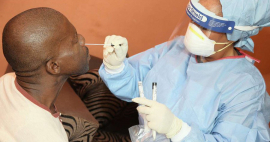
South Africa has recorded 13 992 new COVID-19 cases which brings the total number of laboratory-confirmed cases to 3 180 785.
According to the Department of Health, this represents a 31.0% positivity rate.
A further 11 COVID-19 related deaths were reported bringing total fatalities to 90 148 to date.
The National Institute for Communicable Diseases (NICD), a division of the National Health Laboratory Service says it continues to provide laboratory-based surveillance to inform the public health response towards COVID-19 in South Africa.
With regard to tests conducted, 20 283 906 tests were conducted in both public and private sectors.
In the private sector, 10 931 420 tests were conducted while 9 352 486 tests were conducted in the public sector.
The Department of Health says the majority of new cases are from Gauteng with 48%, followed by KwaZulu-Natal with 19%.
The Western Cape accounted for 10%, Free State and North West each accounted for 5% respectively, Eastern Cape and Mpumalanga each accounted for 4% respectively, Limpopo accounted for 2% and the Northern Cape accounted for 1% of new cases.
The cumulative number of cases by province are as follows: Eastern Cape 606, Mpumalanga 617, Limpopo 328, North West 713, Northern Cape 191, KwaZulu-Natal 2715, Western Cape 1 464, Gauteng 6 711 and Free State 647.
Call to aid victims of Eastern Cape storm
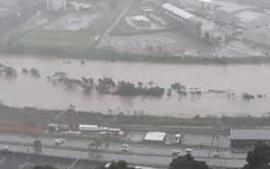
Human Settlements Deputy Minister, Pamela Tshwete, has directed a team to work with the Eastern Cape provincial department to provide urgent relief to the victims of a storm that destroyed housing structures in various wards of Mhlontlo and King Sabata Local Municipalities.
Hundreds of families were left destitute and six people reported dead after houses collapsed on them during severe storm.
About 19 people were also left injured and were transferred to hospital for treatment.
Tshwete said the disaster assessment has thus far revealed that the affected families need assistance with temporary shelter, food, clothes and blankets.
She called on all South Africans and the business community to extend a helping hand and partner with government in its efforts to provide relief to the affected households.
The Deputy Minister together with Eastern Cape Premier Oscar Mabuyane and Human Settlements MEC, Nonceba Kontsiwe visited Xhongorha and Sigubudwini Villages on Monday to assess the extent of the damage following the storm.
“We are deploying national and provincial teams to urgently assess the damage so that necessary programmes in response to this disaster can take place. We want to bring normality to the lives of people of these areas as quickly as possible,” Tshwete said.
She sent her deepest condolences to the families of the deceased.
“Losing a family member or loved ones always leave a lifetime mark and a wound that takes time to heal. We are a government that cares and will do everything in [our] power to reach those families that need us the most at this time,” Tshwete said.
Gauteng SAPS bemoan treatment of GBV victim by Mamelodi police

The management of the South African Police Service in Gauteng has expressed concern at a video circulating on social media platforms of a gender-based violence (GBV) victim complainant who could not get assistance in Mamelodi as the police station was closed.
The unidentified complainant then proceeded to open a case of domestic violence and assault at the Silverton Police Station.
Gauteng police spokesperson Brigadier Brenda Muridili in a statement said the Silverton police arrested the suspect in the early hours of 12 December 2021.
“The case docket as well as the arrested suspect were then transferred by the Silverton police to SAPS Mamelodi for further investigation as the incident occurred in Mamelodi,” she said.
A Mamelodi Detective who was allocated the case then charged the 46-year-old suspect with assault and before releasing him on a warning to appear in court on 30 December 2021
Muridili said preliminary investigations revealed that the Mamelodi Police Station was closed due to decontamination as there had been a COVID-19 case reported.
“The Community Service Centre was operating from the back entrance of the station,” she said.
She said the Mamelodi Station Commander, Brigadier Matji, has apologised for any inconvenience caused with regards to the closing of the police station.
“He has committed to ensuring that the next time the station has to be decontaminated, there will be clear and visible signage to direct clients to the place where the Community Service Centre will be operating.
“The Station Commander has also instituted an internal disciplinary investigation into the detective member that released the suspect on warning and failed to liaise with the complainant,” she said.
Thank you for the well wishes: President Rampahosa
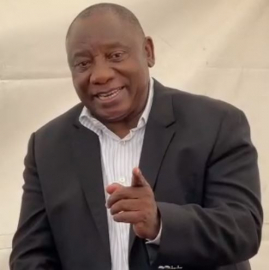
President Cyril Ramaphosa who remains in good spirits, has expressed his gratitude to everyone who has sent him well wishes following his COVID-19 positive result on Sunday.
According to the Minister in the The Presidency, Mondli Gungubele, the President remains in good spirits and continues to present with mild symptoms.
“The President’s infection is causing him to delay a vaccine booster shot which he was scheduled to receive this week,” Minister Gungubele said.
President Ramaphosa has reiterated his call to everyone in the country to be vaccinated, as vaccination dramatically reduces the chances of serious illness, hospitalisation or death.
The President tested positive for the virus on Sunday after feeling unwell following his address at the State Memorial Service of Former Deputy President FW de Klerk in Cape Town.
Deputy President David Mabuza has taken over all responsibilities of the president for the next week.