
SA detects close to 4 400 new COVID-19 cases

South Africa recorded 4 373 new COVID-19 cases on Tuesday, of which 3 143 were reported in Gauteng alone.
According to the National Institute for Communicable Diseases (NICD), this means there is now a total number of 2 968 052 laboratory-confirmed cases.
Meanwhile, data shows that the latest infections represent an increased 10.2% positivity rate.
According to the Council for Scientific and Industrial Research’s Ridhwaan Suliman, the seven-day average is up 311% week-on-week.
“Expect a large increase tomorrow [on Wednesday] post-weekend effect,” he warned.
There are currently 2 414 patients who are currently receiving COVID-19 treatment in hospitals across the country, with 119 admitted overnight.
In addition, 21 more people lost their battle to the disease.
The information is based on the 19 477 054 tests, of which 42 664 were conducted in the past 24 hours.
The NICD said it continues to monitor developments around the newly emerged Omicron variant.
“The number of new COVID-19 cases and the percent positivity continue to increase, likely due to the spread of the Omicron variant,” said the NICD Acting Executive Director, Professor Adrian Puren.
He said scientists are still trying to establish if this new variant has increased the ability to spread and/or developed ways to escape some of our immune responses.
He added, however, that the severity of Omicron is yet to be determined and urges citizens to be cautious and reconsider attending events that may become super spreader events, such as indoor gatherings in poorly ventilated spaces or large gatherings.
NICD’s Head of the Division of Public Health Surveillance and Response, Dr Michelle Groome, agreed that responsible actions and adherence to non-pharmaceutical interventions are key to limiting the impact of a fourth wave.
“COVID-19 vaccination remains key, and anyone over the age of 12-years who chooses to vaccinate is encouraged to follow through and join those who have already rolled up their sleeves.”
In addition, she has urged anyone who experiences COVID-like symptoms to self-quarantine and monitors their signs for at least 10-days.
“During the 10 days, you should avoid contact with others, continue to wear your mask and wash your hands often. Should any worrisome symptoms present, we recommend contacting your healthcare provider for assistance.”
Meanwhile, the Department of Health, said it administered 175 395 vaccine shots on Tuesday, pushing the total to 25 619 891.
In addition, the country is now home to 14 475 754 or 36.1% of fully vaccinated adults, while 477 131 children have received the first dose of the Pfizer vaccine.
Call to practice safe sex

The South African Bureau of Standards (SABS) has encouraged South Africans to engage in safe sexual practices by using SABS certified condoms.
This plea comes as the world observes World Aids Day, on 1 December, which serves as a reminder to everyone that HIV/AIDS is still prevalent and precautions are necessary.
According to Statistics South Africa, the total number of people living with HIV in 2021 was approximately 8.2 million.
“At the SABS, we take all matters of public health and consumer safety very seriously. While the world is focussing on fighting COVID-19, we also want to remind South Africans that the HIV pandemic also requires sustained attention and that all citizens should continue to use condoms and practice safe sex,” said SABS Lead Administrator Jodi Scholtz.
Scholtz said the SABS has a dedicated condom testing facility that ensures that all batches of condoms are tested in strict laboratory conditions, in accordance to stringent criteria and that consumers can rest assured that all SABS approved products are safe to use.
Should the SABS experience any sample failure, the entire batch of condoms will be disqualified to ensure that no defective products will enter the market.
The testing and certification of condoms, in South Africa, is mandatory. The SABS is the appointed certification body for the National Department of Health and National Treasury is contracted to conduct the testing and certification of all public health condoms.
The ‘SABS Approved’ mark appears on all government issued condoms, which are branded as MAX condoms. MAX condoms are available free to all South Africans at various distribution points.
Additional safety precautions by the user include a visual inspection to ensure that individual packets are not leaking, torn or broken, been exposed to extreme heat or expired.
Condoms help in the prevention of unwanted pregnancies and sexually transmitted infections, including HIV.
The SABS also certifies and tests other brands of condoms according to the criteria contained in SANS/ISO 4074: requirements for natural rubber latex condoms. MAX condoms are tested to SANS/ISO 4074 as well as additional criteria set by the National Department of Health and at a higher testing frequency, thus ensuring a superior quality.
Unemployment reaches 34.9%

The number of unemployed South Africans rose by 0.5% in the third quarter (Q3) of 2021, Statistician-General Risenga Maluleke has announced.
The rise saw the country’s unemployment reach 34.9%.
Releasing the Quarterly Labour Force Survey (QLFS) for the last quarter, Maluleke said during this period the number of employed persons decreased by 660 000.
Between July and September, 14.3 million people were in employment.
He said: “The number of unemployed persons decreased by 183 000 to 7.6 million compared to the second quarter of 2021. The number of discouraged work seekers increased by 545 000 (16.4%).”
The number of people who were not economically active for reasons other than discouragement increased by 443 000 (3.3%) between the two quarters resulting in a net increase of 988 000 in the not economically active population, the QLFS shows.
Maluleke said the changes resulted in the official unemployment rate increasing by 0.5 of a percentage point from 34.4% in the second quarter of 2021 to 34.9% in the third quarter of 2021.
This was the highest since the start of the QLFS in 2008.
Statistics South Africa (Stats SA) said the unemployment rate, according to the expanded definition of unemployment, increased by 2.2 percentage points to 46.6% in Q3, 2021, compared to Q2, 2021.
The statistics agency said the results indicate that the South African labour market was more favourable to men than it was to women.
“The proportion of men in employment is higher than that of women; more men than women are participating in the labour market as the labour force participation rate of men is higher than that of women; and the unemployment rate among men is lower than among women.
“The unemployment rate among women was 37.3% in the third quarter of 2021 compared to 32.9% among men according to the official definition of unemployment. The official unemployment rate among black African women was 41.5% during this period compared to 9.9% among white women, 25.2% among Indian/ Asian women and 29.1 among coloured women.”
Stats SA said employment decreased by 571 000 (5.6%) in the formal sector, by 65 000 (5.4%) in private households and by 32 000 (3.8%) in Agriculture in Q3, 2021, compared to Q2, 2021. Informal sector employment increased by 9 000 (0.3%) in the same period.
Maluleke said all industries experienced job losses between the last two quarters of 2021 except the finance industry which gained 138 000 jobs. The largest employment decrease was observed in Trade (309 000), followed by community and social services (210 000).
‘Unscientific’ travel bans must be resisted – President Ramaphosa

President Cyril Ramaphosa has slammed travel bans imposed on South Africa as countries around the world continue to react with apprehension to the emergence and reporting of the COVID-19 Omicron variant.
He was speaking during the Forum on China-Africa Cooperation (FOCAC), hosted by the Republic of Senegal on Monday.
President Ramaphosa said the imposition of travel restrictions on developing countries like South Africa further hinders those countries’ ability to recover from the economic devastation that the COVID-19 pandemic is causing.
He highlighted that China had demonstrated solidarity with the African continent in this regard.
“We need to resist unjustified and unscientific travel restrictions that only serve to further disadvantage developing economies. We wish to thank the People’s Republic of China for its unwavering support to Africa since the onset of the pandemic. We are confident we can continue to count on China’s support in the continental vaccine acquisition drive and in support for our proposal to the WTO,” he said.
The President also reiterated his call for the World Trade Organisation (WTO) to finalise deliberations on the waiver on COVID-19 vaccines and treatments.
“Our immediate and most pressing priority is to end the COVID-19 pandemic. Developing economies, including those in Africa, need to be able to access and manufacture their own vaccines. We need to finalise deliberations at the WTO on the temporary TRIPS waiver to make COVID-19 vaccines and treatments available to all,” he said.
President Ramaphosa emphasised that humanity is reaching a point where it must show solidarity and warned that failure to do so threatens to increase the chasm between richer and poorer countries.
“At this moment in humankind’s history, we must demonstrate our determination to leave no country behind. COVID-19 has forced us to confront global inequality. We have been galvanised into action against a world order where a country’s wealth is the difference between sickness and health, between life and death.
“Unless every country is able to meet its national aspirations, the gulf between developed and developing economies will only widen,” the President said.
Sino-African relations
On relations between Africa and China, President Ramaphosa said the formation of the Forum on China-Africa Cooperation (FOCAC) has generated considerable gains for both the continent and the Asian country.
“We have expanded trade and investment and cooperated in a number of fields on an equal basis with great respect for one another from Higher education and training to agriculture, from medical care to transportation.
“FOCAC has been a valuable platform for dialogue in our collective quest to bring about a more equitable international order and for amplifying Africa’s voice on the world stage,” he said.
The President said, however, that the trade deficit between Africa and China needs to be reduced – with more African products reaching Chinese shores and increased investments into Africa.
“Over the next three years we will be implementing the Dakar Action Plan. This will require that we recalibrate the Sino-Africa relationship with a greater emphasis on promoting sustainable development for the benefit of all.
“We call on China to increase infrastructure investment in Africa, especially in key sectors such as port, rail, energy and water, and to continue to support human capital development and technology transfer,” President Ramaphosa said.
He praised FOCAC as a “beacon of hope”.
“For us to fully reap its benefits, FOCAC must be strengthened and enhanced. The war on poverty, inequality and underdevelopment must define the next phase of the FOCAC partnership. This partnership must be used as an instrument for economic cooperation and development, in pursuit of the common prosperity we all seek”.
Play your part in the fight against GBVF

Justice and Constitutional Development Deputy Minister John Jeffery says the battle to eradicate Gender Based Violence and Femicide is one that government can lead but not fight alone.
He was speaking during a commemoration of the 16 Days of Activism for No Violence against Women and Children Campaign in KwaMashu, KwaZulu Natal, on Monday.
“We cannot rely on legislation only in trying to combat and prevent GBV – communities, civil society and religious institutions all have a role to play. We cannot combat GBV without the help of our communities, our teachers, our religious leaders, and our community activists. Every one of us has a part to play in combating GBV,” the deputy minister said.
Jeffery highlighted that where government can intervene is through legislation and through the courts.
He highlighted some of the steps that government has taken to fight the scourge.
“There are three new pieces of legislation which strengthen our response to GBV and the protection of survivors of GBV in significant ways. We have Sexual Offences Courts which offer a number of victim-support services such as, amongst others, court preparation services and intermediaries who convey questions and statements received from the court to the victim in a sensitive and age-appropriate manner.
“We make use of in-camera testifying services for children, persons with mental disabilities, and all traumatised victims, irrespective of age,” he said.
Jeffery urged society to join the fight against Gender Based Violence and Femicide by:
- Being an activist against GBV in our homes, communities, work and positions.
- Challenging cultures and practices that perpetuate gender inequalities and lead to the abuse of women and children at personal and societal level.
- Rejecting and reporting abusers – act and don’t look away.
- Not protecting abusers, report them.
- Challenging and denouncing cultural practices that perpetuate gender inequalities.
- Being sensitive and supportive to GBV victims – share helpful information and support causes near you.
- Seeking personal help to change harmful behaviour such as alcohol and substance abuse
- Teaching children values of respect and gender equality.
- Protecting children from exposure to violence and harmful content on internet and social media, including pornography and sexual solicitation.
- Developing policies that prevent and deal with gender based violence in your sector, workplace and communities.
- Organising targeted community outreach and dialogues on solutions towards a gender equal society.
COVID-19 and GBVF
Deputy Minister Jeffery said the COVID-19 pandemic is having an effect on the safety of women and children in their homes.
“The impact of COVID on all aspects of our lives has been immense. Every single person in this country has been affected…either having it themselves, losing a loved one, suffering the effects of long Covid, losing a job or their income, having to close their business or just struggling, in some way or another, to get through their daily lives.
“As we are facing a 4th wave, it is tough for all of us. And as people struggle to cope, many will turn to alcohol or substance abuse, which then leads to more domestic violence and GBV. That’s why we have tried to ensure that courts remain open and that domestic violence protection orders are heard and processed during all levels of the lockdown,” he said.
Victim and survivors of gender-based violence can call the Gender-Based Violence Command Centre toll-free on 0800 428 428 for assistance.
They can also contact the Command Centre by sending a “please call me” to *120*7867# with a request that a social worker contact them. They can also sms the word “help” to 31531.
E-tolls decision next year

The Department of Transport has denied reports that Cabinet has taken a final decision on e-tolls.
This after media reports suggested that Transport Minister Fikile Mbalula had announced during a meeting with the chairpersons and CEOs of Transport entities that the e-tolls would be scrapped.
According to the department, at the time, the Minister said the decision will only be made during the early months of 2022 and that any other reportage on the matter is “misleading and inaccurate”.
“The matter of e-tolls is receiving priority attention by Cabinet and will be finalised soon. The final determination is about how best to carry the cost burden of the Gauteng Freeway Improvement Project, while maintaining these roads in a pristine condition. We agreed with the Minister of Finance that the announcement of the final decision will be made during the Budget Speech in February 2022,” Mbalula had said.
According to the department, the matter of the e-tolls presents many impacts and challenges and is not “simply a matter of scrapping and not scrapping”.
“This impact includes a negative effect on the balance sheet of SANRAL (South African National Roads Agency) and its ability to maintain the non-toll road portfolio. Following robust engagements with the Gauteng Provincial Government, the National Treasury, and consideration of inputs from all stakeholders, a further exercise was mandated by Cabinet,” the department said in a statement.
SA records over 2 270 new COVID-19 cases overnight

South Africa’s COVID-19 caseload is edging closer to three million after 2 273 new infections were recorded in the past 24 hours.
According to the National Institute for Communicable Diseases (NICD), this pushes the total number of laboratory-confirmed cases to 2 963 679.
Data shows that the increase represents a 10.7% positivity rate, while Gauteng remains the worst-hit province after detecting 1 909 new cases on Monday.
According to the Council for Scientific and Industrial Research’s Ridhwaan Suliman, all provinces are now reporting a peak in additional infections, with Gauteng still the most concerning followed by the Western Cape.
“Case incidence up to 12 new cases per 100 000 in Gauteng and still below two [in the rest of the provinces],” Suliman tweeted, adding that new hospital admissions in Gauteng have been doubling every week.
Citing the Department of Health’s latest statistics, the NICD said 25 more people lost their lives to the respiratory disease, bringing the death toll to 89 822 since the outbreak.
In addition, the number of people receiving hospital treatment has since risen by 79 to 2 328 since the last reporting cycle.
Meanwhile, the department reported that South Africa has administered 166 074 vaccine doses on Monday, of which 26 866 were given to children aged between 12 and 17.
This means the country has now distributed 25 448 767 vaccine shots.
In addition, 14 384 276 adults have been fully jabbed, while 16 551 605 over 18s have received at least one dose of the vaccine that are currently being administered in the country.
In addition, the number of teenagers who have since taken the first dose of the Pfizer vaccine now stands at 445 401.
Globally, as of 29 November 2021, there have been 260 867 011 confirmed cases of COVID-19, including 5 200 267 deaths, reported to the World Health Organisation.
Petrol price pain at the pumps

South Africans will be paying more at the pumps from Wednesday when fuel prices are expected to increase.
According to the Mineral Resources and Energy Department, the price of petrol (both 93 and 95) will go up by 81c per litre, while the price of diesel 0.05% will increase by 72c and diesel 0.005% sulphur will increase by 75c per litre.
“The main reasons for the fuel price adjustments are due to…[t]he contribution of the Rand/US Dollar exchange rate. The Rand depreciated, on average, against the US Dollar during the period under review when compared to the previous one.
“The increase in the prices crude oil…[t]he average Brent Crude oil price increased from 82.50USD to 83.00USD per barrel during the period under review. The key driver is the higher global demand recovery amid a weaker supply response from non-OPEC and other oil producers,” the department said in a statement.
The department said other factors contributing to the increase include petroleum products prices around the world, the adjustments in the Regulatory Accounting System Industry Margins and the implementation of the Slate Levy.
Meanwhile, the wholesale price of illuminating paraffin has increased by 42c per litre, while the maximum retail price for illuminating paraffin has increased by 56c per litre.
The retail price for gas also increased by R1.83 per kilogram.
Most people in hospitals are unvaccinated, as Gauteng enters the 4th wave
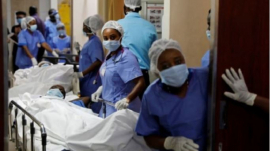
Gauteng continues to see continued high levels of COVID-19 cases and hospital admissions, as the fight against the Omicron variant begins.
According to Dr Waasila Jassat of the National Institute for Communicable Diseases, hospital admissions have mostly been recorded in Tshwane, in both the private and public sectors.
However, the other districts are also starting to show signs of the peak in those who land in hospital because of COVID-19 since the past week, with the unvaccinated more likely to seek hospital treatment or die.
“There’s a sharp week on week increase. And it’s important to note because as we know that when the hospitals become overwhelmed, there’s less capacity and more mortality.”
According to Jassat, who was speaking during a media briefing with Health Minister, Dr Joe Phaahla, the highest risk of admissions is still in the over 65 age group and has been peaking in all age groups over the last six weeks.
However, the percentage in the middle age group was low, while data shows that it was “very” high in young children.
“Of course, higher proportions of older people are being admitted, because they’re at risk for more severe disease,” she explained.
According to the data, the percentage of admissions with severe disease was higher in the older groups, while it hovers around 25% to 30% for those under 16s.
While there have been fewer deaths reported, she said the most fatalities have been in the older groups – 60 to 69 and over 80.
However, currently, in Tshwane, the proportion of patients presenting severe symptoms was low in the past weeks.
Meanwhile, the majority of patients admitted in Gauteng were unvaccinated, with a smaller proportion of patients admitted being fully or partially jabbed.
Jassat believes that other Gauteng districts and provinces need to start looking into surge preparedness.
“Interestingly also is that most admissions are unvaccinated individuals.”
According to the NICD’s data, 13% of these are vaccinated or partially vaccinated and 87% were unvaccinated who land in hospitals.
“And what we can see across the country is that there’s a much higher risk of death amongst those that are unvaccinated,” she explained.
However, she said it was unclear at this stage what proportion of admissions are related to the new variant and whether there was a more severe disease related to Omicron.
Jassat also raised concerns about the surge in paediatric admissions under two years since the start of the resurgence.
“We want to emphasise that we don’t vaccinate to protect ourselves from severe disease but we also vaccinate to protect those around us, particularly those who can’t vaccinate and given their children under 12 are not eligible to vaccinate.”
At this stage, she said the NICD was unsure if it was related to the current variant circulating at higher transmissibility, immunity gap with older people already vaccinated or younger people being more susceptible to contracting the virus.
“But what we do know is that vaccination of the adults around the children will not prevent the children from spreading as well.”
She also highlighted that most of the patients who died in hospital during the second and third waves are those who were presenting very late.
“They were quite sick and they were dying within the first day or second day of being admitted.”
She believes that the current resurgence requires more than hospital preparedness but community preparedness and early treatment.
Meanwhile, the NICD’s Dr Michelle Groome believes that Gauteng has entered the fourth wave.
“We’ve seen an increase in the number of cases in Gauteng and for all intents and purposes, Gauteng has entered the fourth wave.”
She called on the public to be vigilant in terms of non-pharmaceutical interventions, mask-wearing, social distancing, and avoiding large gatherings.
Minister Zulu tests positive for COVID-19
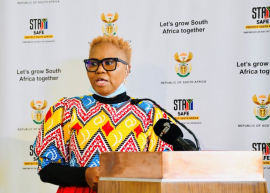
Minister of Social Development, Lindiwe Zulu, on Monday received results confirming that she has tested positive for COVID-19.
The Minister’s positive result comes in the wake of the detection of the new Omicron COVID-19 variant, which the World Health Organisation has declared a “variant of concern”.
The Minister has immediately started isolating and recovering at home, where she will continue carrying out her duties without disruptions.
“It all started with a scratchy throat and I didn’t suspect anything, but when it persisted, I took the COVID-19 test yesterday and received the results this morning. I am feeling well and I can attribute this to the fact that the virus found me fully vaccinated,” the Minister said.
As the Vooma Vaccination Weekend (3-5 December) approaches, the Minister has called on South Africans to take the virus seriously and to follow COVID-19 protocols at all times by wearing a mask, washing and sanitizing hands and keeping a social distance.
“As the President emphasised last night, vaccination is the most powerful tool we have and it is not too late to get vaccinated before the fourth wave hits us hard,” Zulu said.