
Load shedding to start at 2pm
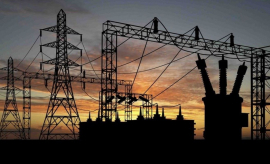
Eskom chief executive Andre de Ruyter has announced that the power utility will implement Stage 2 load shedding from 2pm this afternoon.
The announcement came during a media briefing in which de Ruyter had moved to assure the nation that the power utility was doing all it can to keep the lights on although there was an “increased risk of load shedding”.
“There have been additional developments, which shows that the system is very finely balanced and it’s a very dynamic situation that we have been dealing with.
“Due to the loss of Medupi, Kendal and Duvha units, we now have insufficient generating capacity at our disposal and as such we have no alternative but to implement Stage 2 load shedding from 2pm this afternoon until 5am on Saturday morning,” he said.
De Ruyter explained that currently, the power utility is in danger of depleting its diesel reserves which would create further risk to the system.
“We have a challenge with our remaining emergency reserves…our projected diesel reserves have put us in a position where we are likely to deplete our diesel reserves too quickly and that will create an undue amount of risk on the system and therefore we have to reserve our emergency reserves,” he said.
On Tuesday evening, the power utility said that the system was under “severe pressure” following the failure of at least five generating units at several power stations.
The entity had also warned that “load shedding [could] be required to be implemented at short notice”.
During the briefing, de Ruyter explained that several power stations had experienced unexpected breakdowns.
“[On Tuesday] we had two boiler tube leaks. One at Kusile and…Majuba [power stations] which forced us to take a unit each down and we had further trips at Kriel, Majuba and Matimba.
“These are very large units and they are quite crucial…but we managed to make our through peak hour without implementing load shedding but it again demonstrates how tightly balanced the system is,” de Ruyter explained.
At least three units have since returned to service while the remaining two are undergoing repairs.
SA records increase in flu cases between August and November
South Africa has recorded a steady increase in the number of influenza cases from 23 August, with a sharp growth in the week starting 1 November 2021.
The data shows that the total number of influenza cases detected by the syndromic sentinel surveillance programmes conducted by the National Institute for Communicable Diseases (NICD) has jumped from 68 to 226 during this period.
According to the NICD, this includes influenza-like illness (ILI) and hospitalised cases of pneumonia.
The statement released on Wednesday said both the NICD and private laboratories have received reports of clusters of influenza cases in schools and workplaces.
The public health institute said influenza A (H3N2), influenza A (H1N1) pdm09 and influenza B are seasonal influenza virus strains that are common in human populations.
Meanwhile, influenza A (H1N1) pdm09, also known as “swine flu” has been one of the circulating seasonal influenza strains following its emergence in 2009.
However, according to the institute, the word “swine flu” should not be used as it causes unnecessary panic.
“The clinical course of infection with this influenza strain and clinical management is similar to that of other influenza strains,” the NICD explained.
To date, the most commonly detected subtype and lineage are influenza B Victoria (87/226, 38.5%) followed by influenza A (H1N1) pdm09 (53/226, 23.5%) and influenza A (H3N2) (24/226, 10.6%).
Even though the detection rates for influenza exceed previous seasonal thresholds, the NICD said the absolute numbers remain relatively low.
According to the NICD, this could be because of reduced health-seeking behaviour following the SARS-CoV-2 pandemic.
“Although the majority of people with influenza will present with mild illness, influenza may cause severe illness, which may require hospitalisation or cause death, especially in individuals who are at risk of getting severe influenza complications,” said the NICD’s Medical Epidemiologist, Dr Sibongile Walaza.
Groups at an increased risk of severe complications of influenza include pregnant women, HIV-infected individuals, those with chronic illnesses or conditions such as diabetes, lung disease, tuberculosis, heart disease, renal disease and obesity.
In addition, the elderly between the ages of 65 and older and children under the age of two are more prone to contract flu as well.
“These groups should be encouraged to seek medical help early.”
The NICD’s Head of the Centre for Respiratory Diseases and Meningitis, Professor Cheryl Cohen, said the increase in influenza in the summer, which is not the typical time for the influenza season, is likely the result of relaxation of non-pharmaceutical interventions to control COVID-19.
“This is combined with an immunity gap due to influenza not circulating for two years in 2020 and 2021 in South Africa as a result of these interventions,” Cohen added.
She stressed that the flu vaccine remains the primary means for preventing seasonal influenza infection and should ideally be administered between March and April.
“It is never too late to vaccinate during periods when influenza is circulating, especially for individuals with underlying conditions which put them at increased risk of severe influenza illness or complications.”
To prevent contracting or spreading flu, avoid close contact with sick people. The NICD is also encouraging people to stay home when they are sick, cover their mouth and nose when coughing or sneezing, clean their hands regularly, avoid touching the mouth, eyes and nose and clean and disinfect common places.
National Assembly passes Second Special Appropriation Bill

A Parliament National Assembly (NA) hybrid sitting has passed the 2021 Second Special Appropriation Bill.
It will now go to the National Council of Provinces (NCOP) for concurrence, Parliament said on Tuesday.
In a statement, Parliament said the 2021 Second Special Appropriation Bill proposes to appropriate additional urgent funding allocations in the 2021/22 financial year, to the Votes of National Treasury, Social Development, Defence, Police, and Trade, Industry and Competition.
An amendment to the Bill enables the Minister of Finance to approve urgent expenditure for contingency funding. Section 213(2) of the Constitution provides that money may be withdrawn from the National Revenue Fund only in terms of an appropriation by an Act of Parliament.
The Bill was tabled in Parliament by the Minister of Finance on 23 August 2021 and was referred to the committees for consideration and report to the National Assembly, as prescribed in section 13 of the Act.
“In processing the Bill, section 4(4)(c) of the Act also requires the committees on Appropriations in both Houses to consult with the Financial and Fiscal Commission (FFC).
“In addition to consulting with the FFC, the committees also invited the Parliamentary Budget Office (PBO) to comment on the Bill. They also consulted with stakeholders directly affected by the Bill, namely the South African Special Risks Insurance Association.”
The 2021 Second Special Appropriation Bill proposed an additional R26.7 billion to Social Development to cater for the Social Relief Grant, inclusive of R500 million (inclusive of the R250 million allocated through section 16 (1) of the Public Financial Management Act) to the South African Social Security Agency for system enhancements to improve application and payment processes, including a strengthened eligibility assessment system.
Parliament said the Bill also proposed an additional R700 million to Defence to fund the deployment of military personnel to assist police with bringing order after the July 2021 riots, mainly in Gauteng and KwaZulu-Natal. The Bill also proposed an additional R1.3 billion to Trade, Industry and Competition to support businesses affected by the July riots. The NCOP is scheduled to debate the 2021 Second Special Appropriation Bill in December.
Meanwhile, at the same plenary sitting, the NA agreed to the Sectional Titles Amendment Bill, which seeks to amend certain provisions of the Sectional Titles Act, 1986 (Act No. 95 of 1986) (the principal Act). The Portfolio Committee on Agriculture, Land Reform and Rural Development, having deliberated on the content of the Bill, realised that it was necessary to amend provisions of the principal Act, which were not included in the Bill. The Bill will be sent to the NCOP for concurrence.
Report identifies role-players in wildlife crime ecosystem

Game rangers, vets, casino staff, construction and transport industry workers, as well as customs and other government officials, have been identified as role-players in the ecosystem of illegal trade in wildlife and wildlife products.
The finding was made by the South African Anti-Money Laundering Integrated Task Force (SAMLIT) in its profiling of role-players.
In a statement on Tuesday, the SAMLIT said the various actors, and the methods they used for illegal wildlife trade (IWT), have been captured in a report compiled by an expert working group. The SAMLIT working group focused on the money flows related to this trade.
It was established in 2019 by the Financial Intelligence Centre (FIC) as a public-private partnership between the banking sector and sector regulatory authorities.
“SAMLIT provides a platform for members to centralise information sharing, with a view to ensuring that necessary steps be taken to prevent, detect, investigate, and prosecute priority crimes in the financial sector,” read the statement.
It said, across the globe, these types of partnerships had increasingly been hailed as the best-suited response to address financial crimes.
Gerald Byleveld, Investec’s Financial Crime Compliance head and lead of the expert working group, said: “By collaborating to identify suspicious and unusual transactions, as well as the networks exposed when perpetrators use the financial system, we can preserve South Africa’s rich natural heritage by bringing these criminals to book.”
The work of SAMLIT had been commended by the Duke of Cambridge Prince William, in his role as President of the Royal Foundation’s United for Wildlife, which has supported the expert working group.
In a letter to SAMLIT, Prince William wrote: “This report and related initiatives by SAMLIT and the expert working group are great examples of how – by bringing the public and private sectors together – we can deliver a significant blow to the growing illegal trade in wildlife that is such a threat to our planet. I hope other countries will follow the leadership and commitment shown by you and your colleagues in South Africa, and I look forward to our continued partnership.”
The World Economic Forum had identified IWT as one of the most lucrative criminal enterprises globally, valued between US$7 and $23 annually.
“In this milieu, with its diverse wildlife, South Africa is a source and transit point for the illegal trade in wildlife and wildlife products,” reads the statement.
The report was compiled using research comprising stakeholder interviews, survey results from South African banks and money remitters, through data mining suspicious and unusual transactions and activity reports, and by reviewing investigated cases.
SAMLIT said through this work, profiles of the role players from the point of sourcing wildlife and wildlife products to their eventual export were identified. The report and its findings are important and will be critical for creating awareness about the illegal wildlife trade.
“Central to the report is that it also helps identify those involved in the money flows associated with IWT.
“The research confirmed, for example, that cash is used extensively in this trade at lower levels, and that perpetrators include game rangers, vets, casino staff, construction and transport industry workers, as well as customs and other government officials.
“It also revealed that payment methods and laundering tactics become much more sophisticated further up the supply chain,” it said.
Wildlife products most popularly traded out of South Africa include rhino horn, abalone, and pangolin, with ivory being moved through South Africa in transit to the East, with China and other Asian countries representing the largest markets. Pangolins are currently the most trafficked mammal as their meat is considered a delicacy, their scales are used in traditional medicine and their skin processed into leather products.
“This IWT report is a critical body of work, which proves that collaboration is the only way to fulfil SAMLIT’s objectives to increase the efficiency and effectiveness in combating financial crime. We are also encouraged, as this report proves what is possible in the future,” said SAMLIT Steering Committee Chairperson, Advocate Xolisile Khanyile.
Eskom, police, community join hands to fight crime
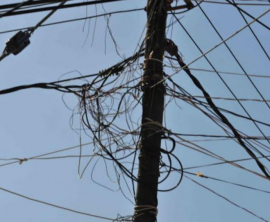
At least eight people have been arrested in relation to theft and vandalism of electricity infrastructure in Gauteng over the past two months.
That is according to state power utility Eskom.
The entity said the arrests are the fruits of a collaborative effort between itself and the South African Police Service (SAPS) and members of the community.
“The arrests follow Eskom’s efforts to address the increasing incidents of illegal electricity-related activities in the province. Sadly, two suspects lost their lives due to electrocution as they tampered with the electricity equipment in separate incidents,” the utility said in a statement.
Eskom said acts such as the theft of cables and vandalism of equipment hampers its ability to deliver on services.
“Copper [cable] theft costs the economy between R5 and R7 billion a year, and Eskom spends about R2 billion a year replacing stolen cables. Eskom in Gauteng continues to heighten security in hot spot areas across its areas of supply as cable theft often leads to prolonged power outages and compromises the quality of supply, which affects businesses, essential services, as well as the day-to-day lives of society.
“Such acts of criminality result in loss of revenue for Eskom, are unsustainable for the economy and endanger the lives of innocent people, including those of perpetrators,” the utility said.
Eskom said the prevalent types of electricity-related criminal acts are:
- Fraud;
- Stealing of electricity;
- Theft and vandalism of equipment;
- Unpaid bills and buying electricity from ghost vendors;
- Stealing electricity for personal use or third party consumption; and
- Conducting illegal connections and/or using electricity in an unregistered meter.
Eskom Safety, Health, Environment, Quality and Security Manager Kith Maitisa said the utility is working towards finding solutions to keep the utility’s infrastructure safe.
“We are investigating and implementing alternative measures that will assist us to prevent the theft and vandalism of our equipment. We also would like to thank communities that report such acts to Eskom and to the SAPS. With the collaboration with the law enforcement agencies, we will ensure that these criminals are arrested and brought to book.”
Report criminal activities such as illegal connections, theft and vandalism of electricity infrastructure to law authorities or contact the Eskom Crime Line on 0800 112 722.
Households urged to apply for free set-top boxes

The South African Post Office (SAPO) has reiterated its call for qualifying households to apply for free set-top boxes as the country prepares to migrate to digital broadcasting by 31 March 2022.
In a statement on Monday the Post Office said almost 60 000 households applied for a government subsidised television decoder in October 2021.
“Households that missed the registration deadline of 31 October may receive their decoder only after 31 March 2022. Households that applied earlier should receive their decoder before 31 March next year, when the old analogue television transmission will be switched off in all provinces. After that all television transmissions will be digital, and television sets will need a decoder to work,” SAPO said.
Last month’s provincial statistics show that the Eastern Cape is in the lead with 10 261 registrations, followed by the Northwest with 8 452 households registered, KwaZulu-Natal at 7 783, the Western Cape 7 561, Gauteng 6 994, Limpopo 6 867 and Mpumalanga 6 375.
“The switch to digital television transmissions is almost complete in the Free State, where 3 309 households registered and in the Northern Cape, where the conversion is practically complete, 1 300 households registered. Qualifying households are still welcome to apply at their local Post Office.
“Visit your local Post Office with your identity document, proof of address and proof that you earn R3500 per month or less. If you do not have proof of income or address, your post office will help you to complete an affidavit to confirm your address and income,” said the SAPO.
SAHRC commences hearings into July unrest
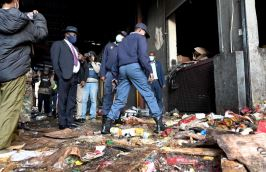
The South African Human Rights Commission (SAHRC) has this morning commenced the National Investigative Hearing into the July civil unrest.
At least 300 people were left dead with at least R25 billon in damages done to businesses and public infrastructure when the unrest rocked the Gauteng and KwaZulu-Natal provinces.
“The unrest has indeed deepened unemployment, poverty and rampant socio-economic inequality within South Africa. The unrest accordingly exacerbated, amongst other things, inequality between certain communities, unemployment levels, poverty, hunger and food insecurity.
“Also, of concern to the Commission, are reports that as many communities took to the streets to protect their neighbourhoods and businesses, allegations surfaced of the excessive use of force, racial profiling, assaults, arson, and killings in some places,” the Commission said in a statement.
The hearings into the unrest will be held over the next three weeks.
The SAHRC said it will “inquire into, make findings, report on and make recommendations and/or directives” concerning:
- The causes of the July unrest, with particular focus on Gauteng Province and KwaZulu-Natal Province.
- The causes of the alleged racially motivated attacks and killings following the unrest.
- The causes of the apparent lapses in law enforcement by state security agencies, particularly the SAPS and the role of private security companies in the unrest.
- The social, economic, spatial and political factors prevalent in the various affected areas and the extent to which these played a role in the unrest.
The panel overseeing the hearings are include panel chairperson Commissioner André Gaum supported by Commissioner Chris Nissen as his deputy and Commissioner Philile Ntuli as the chief panellist.
The SAHRC said external experts will be co-opted or appointed by the panel if required.
Government withdraws support from Miss SA pageant
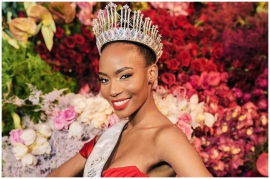
Government has withdrawn its support and that of South Africa for the Miss South Africa pageant after unsuccessful consultations on persuading the pageant to reconsider its decision to partake in the Miss Universe event scheduled to be held in Israel.
In a statement on Sunday, the Minister of Sport, Arts and Culture, Nathi Mthethwa, said while he appreciates the likely impact on the individual interest of the current Miss South Africa, he strongly believes that the reasons that require her withdrawal from Miss Universe far outweigh individual interests.
“If anything, by withdrawing, Miss South Africa’s reputation and overall standing will be far more advanced in South Africa and internationally in comparison to a once-off event that can prove disastrous to her future and public standing as a young, black woman,” the Minister said.
Government withdrew its support after consultations with the Miss South Africa pageant organisers failed.
“What appeared like engaging, constructive and progressive discussions during initial consultations was later met with an unpleasant demeanour that is intransigent and lacking appreciation of the potential negative impact of such a decision on the reputation and future of a young black woman.
“The atrocities committed by Israel against Palestinians are well documented and government, as the legitimate representative of the people of South Africa, cannot in good conscience associate itself with such,” the Ministry of Sport, Arts and Culture said.
Mthethwa said government’s first preference was to try to find common ground with the pageant organisers, and to issue a joint media statement.
“This has regrettably been unsuccessful, hence the decision now to publicly distance government and the people of South Africa from Miss SA pageant organisers’ stance on this matter.
“But even so, we still hope some common sense will prevail in the interest of the reigning queen, Lalela Mswane, and we remain open for discussions in that regard,” the Minister said.
Get the jab before the expected Fourth Wave, urges Minister
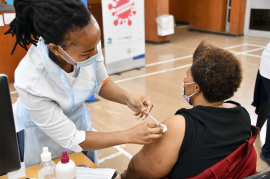
Health Minister, Dr Joe Phaahla, says the festive season coupled with the movement of people is expected to trigger the “inevitable” fourth wave of COVID-19 infections.
“This makes it more urgent that more and more people come forward to be vaccinated because we want everybody in our country to be protected from this inevitable fourth wave.
“If we all vaccinate, we can have a safe and enjoyable festive season. We call on all South Africans to head the Vooma [Vaccination Weekend] call and come forward and be vaccinated,” he said.
At least 23 million people in South Africa have received at least one jab with at least 70 000 doing so on Election Day; constituting just under 40% of the country’s adult population.
The Western Cape, Free State, Eastern Cape and Limpopo are close to reaching at least 50% vaccination of their populations.
Some 13 million people are now fully vaccinated.
The Minister said the vaccination rollout plan remains resilient with the department having enough capacity to vaccinate all eligible residents of the country against the virus.
“We can do this by the end of December. Our teams in the provinces are taking vaccines to the people over and above the fixed vaccination sites.
“As we start to use more and more of the one dose Johnson and Johnson vaccine, we will be able to cover more full vaccinations in the next few days and weeks,” he said.
Some 63% of the more COVID-19 vulnerable 60+ age group has been vaccinated; about 57% of those over the age of 50 have been vaccinated.
At least 250 000 children aged between 12 and 17 have now taken the vaccine.
The Minister said the country’s younger population between the ages of 18 and 34 were not taking up vaccination as well as hoped.
“The uptake…is worrisome [and] moving very slowly at the current moment with just under 25%. It is clear that in this population of young adults, fake news on social media is making a huge impact driving away [or] keeping away many of our young adults from vaccination.
“We are hoping that as we get closer to the festive season – because they will be more at risk because of social and entertainment activities – that many more of our young adults will come forward,” he said.
Sisonke study booster shots programme
The Minister revealed that at least 83 000 health workers have registered to participate in the programme.
“Out of those, just over 9 000 have already received their booster doses. We are hoping that all the 500 000 health workers who received the Sisonke one will come forward to participate in the Sisonke Two study.
“The results of this study will give us a better indication of the role of booster doses…how much immunity was waning and if so, how much additional strengthening of immunity will happen after the…booster doses,” he said.
Vaccination certificates
According to the Minister, more than three million vaccination certificates have been downloaded by vaccinated residents since the launch of the Vaccine Certificate system in October.
He added that the QR scanning technology – which allows users to create a code which verifies their inoculation status – is expected to be available from next week.
Minister Phaahla said although the certificates are now available in South Africa, not all countries would be accepting them as proof of inoculation.
“The reason is that countries have to come to an agreement on recognising each other’s certificates. So because this is still new and developing…even from our side we had not yet started negotiating with other countries because…the certificates still needed a lot of improvements.
“There are more security features which will be enhanced during the course of this month so as security features improve…we will be negotiating with countries and multi-lateral bodies,” he said.
No load shedding expected this weekend

Eskom Chief Executive André de Ruyter says the power utility does not expect to implement any load shedding this weekend.
This after the country was subjected to load shedding for most of this week including the longer and more frequent Stage Four.
“The load forecast for peak this evening is 27 198MW which does leave us with a slight shortfall which we will be able to make up with pump storage and diesel generation capacity.
“We also have 1250MW of units currently out that are returning to service before evening peak so that will significantly reduce the load on our open cycle gas turbines [OCGTs] tonight,” he said on Friday.
Planned load losses in the system amount to 6 659 MW and unplanned load losses amount to 11250MW.
De Ruyter said although some generation units are at high risk, this is not expected to impact Eskom’s ability to keep the lights on over the weekend.
“These [high risk units] are at Duvha [power station] which still has that high pressure heater leak…that’s about 575MW at risk and then a boiler tube leak at Kriel [power station] which is about 120MW at risk. So just under 900MW at risk of an immediate trip.
“That risk, we think, is manageable given the healthy state of our reserves and our dams are still looking very good…and our diesel capacity is also looking solid at the moment. So the outlook for the weekend is good…of course we will continue with system updates whenever there’s a need to inform the public about what is going on,” he said.
The Chief Executive added that Eskom is currently using nine gas turbines to produce electricity which in total consume at least 17 000 litres of diesel per minute.
“Diesel [turbines] are not intended to run at high load factors…but due to generation constraints, we currently have these units operating in order to make up for the shortfall in generation,” he said.
De Ruyter explained that more load shedding is experienced during the summer months because it is a period where the power utility conducts more maintenance.
“This is precisely in order to make available more capacity in winter when demand is higher.
“Second, the profile of demand during demand is very different. We have a very pronounced evening peak, which is quite short. Whereas in summer, there is a sustained high off-take of the demand on the system and that result in the units having to run harder for longer…that then tends to expose some of our units to more challenges,” he said.