
Department warns against fraudulent tender contract

The Department of Agriculture, Land Reform and Rural Development has warned members of the public about a fraudulent tender contract appointment letter to service providers to supply and install the fence around the Tafelkop Farm in Limpopo.
The fraudulent tender contract appointment letter is for the supply and installation of a 40 kilometre diamond mesh fence around the Tafelkop Farm in Ellias Motsoaledi Local Municipality within the Sekhukhune District Municipality in Limpopo.
In a statement, the department said the appointment letter had the correct department’s name and logo, but with a forged signature purported to belong to Mr L Mahloromela who is an official of the department.
However, the department said the incorrect email address and cellphone number is an attempted scam intended to extort money from the unsuspecting business people.
“According to the fraudulent letter, unsuspecting business people are asked to make an upfront payment of R3000 to secure appointment as a service provider to supply and install the fence. The fraudsters strictly require the money to be deposited into untraceable money market platform after which they disappear with the deposit,” the department said.
The content of the fraudulent letter reads: “The Managing Director, kindly inform the Director to contact me asap regarding the tender no: CONLP 00012 2121 2022. APPOINTMENT OF A CONTRACTOR TO SUPPLY AND INSTALL 40 KM DIAMOND MESH FENCE AROUND THE TAFELKOP FARM IN ELLIAS MOTSOALEDI LOCAL MUNICIPALITY, WITHIN SEKHUKHUNE DISTRICT MUNICIPALITY IN LIMPOPO PROVINCE’’.
According to the department, the bid was advertised on both the Construction Industry Development Board (CIDB) and it is still in the evaluation stage.
The department appealed to the public to ignore the letters and instead verify any information relating to tenders with the department.
“Members of the public are encouraged to contact the department directly using the correct departmental contact information which can be found on the official departmental website at www.dalrrd.gov.za,” the department said.
Man held for stolen rail track

A man has been arrested in Soweto for allegedly stealing a railway track.
He was arrested on Thursday by various law enforcement agencies who conducted search and seizure operations as part of the Okae Molao Operations.
The operation forms part of the Integrated Security Plan that was launched by Transport Minister Fikile Mbalula last year. The intelligence-driven plan is aimed at combatting rail and community crimes and to ensure that criminals are brought to book.
The joint operation includes the Passenger Rail Agency of South Africa (PRASA) Protection Service and Armed Response Unit.
During the operation, about 1.3 metres railway track was found inside a shack at Angola Squatter Camp in Nancefield, Soweto.
Prasa said vandalism and theft of rail infrastructure have come at a huge cost to commuters who rely on the rail passenger service.
“Theft and vandalism of rail infrastructure are considered economic sabotage, and PRASA will not tolerate any sabotage of its rail infrastructure,” the agency said.
Suspect nabbed for stealing Krugerrands worth R7.8m

A 54-year-old suspect is scheduled to make his first court appearance on a charge of theft in the Knysna Magistrates Court today.
Knysna detectives, assisted by the Tsitsikamma K9 Unit, closed in on a residence in Wilderness near George on Thursday. Police arrested a 54-year-old wanted man, who had been on the run since 2012 in connection with the theft of Krugerrands to the estimated value of R7.8million.
The arrest came after members of the police force followed up on a lead.
A warrant of arrest was issued by the Knysna Magistrates Court in connection with the theft that was allegedly perpetrated between May 2011 and March 2012.
Eden Cluster Commander, Brig Phumzile Cetyana, has commended the investigating team and the K9 Unit for their persistence to bring this suspect to book.
“This shows our commitment and demonstrates the lengthy arm of the law that will stop at nothing to bring culprits to account for their deeds,” Cetyana said.
SA records less than 4 000 new COVID-19 cases, with 139 deaths

South Africa recorded close to 4 000 new COVID-19 infections, the National Institute for Communicable Diseases (NICD) said on Thursday.
According to the NICD’s latest statistics, 3 962 more people tested positive for Coronavirus, pushing the tally to 3 572 860 since the first case was detected in South Africa.
The data shows that the increase represents a 10.6% positivity rate, with Gauteng accounting for 928 infections logged in the past 24 hours.
The province is followed by 813 cases in the Western Cape, 681 in KwaZulu-Natal and 412 in Limpopo.
Due to the ongoing audit exercise by the Department of Health, the country reported 139 deaths, of which 31 occurred in the past 24 to 48 hours. This brings the death toll to 93 846 to date.
Meanwhile, hospital admissions went up by 135 to 7 059 patients who are currently receiving treatment at health institutions across the country.
The NICD has encouraged South Africans to continue to get vaccinated for COVID-19, wear masks, gather in ventilated spaces, avoid unnecessary gatherings, keep a social distance of one metre or more and wash hands regularly in the day with soap and water.
According to the World Health Organisation, there are now 336 790 193 confirmed global cases of COVID-19 and 5 560 718 deaths reported to the agency.
DWS concerned about possible liquid gas chlorine shortages

The Department of Water and Sanitation (DWS) has raised concern about possible liquid gas chlorine shortages from its supplier based in Kempton Park, Gauteng, which could affect water supply.
“If this were to happen, liquid gas chlorine shortages would [possibly affect] the treatment of potable water and effluent water managed by Water Service Authorities (WSAs), metros and water boards,” department spokesperson, Sputnik Ratau, said.
Ratau said while the department has no intention of speaking on behalf of the chlorine gas supplier, it believes the supplier will do everything in its power to ensure that water supply and effluent water treatment are not negatively impacted by the shortages.
Ratau said to date, the department has not received any reports that water boards are experiencing shortages of chlorine in their operations.
“As the department, we hope that water boards, metros and WSAs have spare supplies that will last them until shortages subside. The latest report from the supply company indicates that production is stable at 80%,” Ratau said.
Ratau said as of Wednesday, the supply company was packaging chlorine for the City of Cape Town, in accordance with the existing agreement.
He said the department, through its provincial offices, will continue to track daily reports across the country to determine how the shortages are affecting the WSAs, metros and water boards, if at all.
“The department will monitor the developments and work with all affected parties, including the supply company, WSAs, water boards and water specialists to ensure the quality of the water supplied to water users and the receiving environment are not compromised,” Ratau said.
SA granted $750m World Bank development policy loan
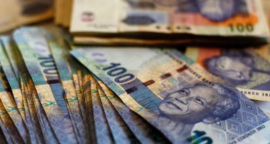
The National Treasury has welcomed a World Bank group board’s approval of South Africa’s request for a $750 million development policy loan (DPL).
The Treasury in a statement on Friday said the loan would support government’s efforts to accelerate its COVID-19 response, which was aimed at protecting the poor and vulnerable from the adverse socio-economic impacts of the pandemic. The response was also aimed at supporting a resilient and sustainable economic recovery.
It said DPL supports the implementation of South Africa’s Economic Reconstruction and Recovery Plan (ERRP) and was “well-aligned” with the World Bank’s Crisis Response Approach aimed at protecting lives, livelihoods and supporting a more inclusive and resilient growth path.
“It reflects priorities to modernise the country’s social protection and health services and to improve delivery systems which will apply even beyond the pandemic. It also enhances financial sector stability, specifically the establishment of a deposit insurance scheme. It further supports South Africa’s commitment to climate change,” said the Treasury.
Treasury Director-General Dondo Mogajane said the World Bank budget support is coming at a critical time for the county and will contribute towards addressing the financing gap stemming from additional spending in response to the COVID-19 crisis.
“It will assist in addressing the immediate challenge of financing critical health and social safety net programs whilst also continuing to develop our economic reform agenda to build back better.”
The department said the was a low interest loan that contributed to the government’s fiscal relief package while reinforcing South Africa’s decisions on how best to provide relief to the economy and those worst affected by the current crisis.
The loan complemented support by the International Monetary Fund, the African Development Bank, and the New Development Bank as part of the Government of South Africa’s broader financing strategy to access external financing from international financial institutions.
Marie Françoise Marie Nelly, World Bank Country Director for South Africa, said the bank had partnered with government to provide “much needed relief from the impacts of the most serious economic crisis South Africa has experienced in the past 90 years, while tackling long-standing challenges to growth and development”.
“This support aims to put the country on a more resilient and inclusive growth path by leveraging South Africa’s strength to mitigate the effects of the COVID-19 crisis through their strong social safety net and by advancing critical economic reforms.
“This financing builds on our new World Bank Group Country Partnership Framework (CPF) 2022 – 2026, jointly developed with the government in July 2021, to help stimulate investment and job creation.”
The bank said the country, as the second largest economy in Africa, South Africa’s economic performance had “spill-over effects on other countries in the region,” saying its recovery and successful economic development would provide an economic boost to the whole region.
World Bank Group COVID-19 Response
Since the start of the COVID-19 pandemic, the World Bank Group had deployed over $157 billion to fight the health, economic, and social impacts of the pandemic, the fastest and largest crisis response in its history.
The financing was helping more than 100 countries strengthen pandemic preparedness, protect the poor and jobs, and jump start a climate-friendly recovery. The Bank was also supporting over 50 low- and middle-income countries, more than half of which are in Africa, with the purchase and deployment of COVID-19 vaccines and is making available $20 billion in financing for this purpose until the end of 2022.
Public warned against job scam
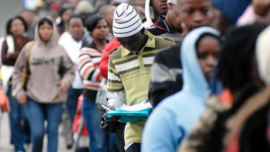
KwaZulu-Natal Social Development MEC, Nonhlanhla Khoza, has warned job seekers about scammers posing as government officials and selling jobs to unsuspecting members of the public.
In a statement, the department warned there is a group of people calling desperate and unsuspecting job seekers and promising them jobs in the department in exchange for R9 000.
The scammers are said to be targeting residents in the areas of Southern Cluster, including Ugu, Harry Gwala and Umgungudlovu Districts.
“Their modus operandi include contacting individuals and parents of job seekers and enticing them to pay in order to secure jobs for their children,” the department said.
Khoza has urged people to be very careful of the criminals promising them jobs, emphasising that government jobs are not for sale.
“We would not ask people seeking employment to pay for any job in the department. In the department, we follow a fair and transparent recruitment process where jobs are advertised in newspapers and other public platforms. People are then urged to apply for jobs and go through the process of interviews,” Khoza said.
She reiterated that no fee needs to be paid in order to secure any permanent employment within government.
“We are very concerned that these [scammers] mislead desperate people to pay money via instant money transfer at stores to a cellphone number, cash-send and eWallet for them to get jobs,” Khoza said.
The MEC called on all victims of the scam to immediately open criminal cases with the police, while the department also looks at ways to deal with this matter.
“We are going to work closely with the SAPS in order to ensure that we furnish investigators with all information they need to trace these criminals because they are fleecing desperate people, denting the image of the department.
“We urge all those who have been scammed to give all information to the law enforcement agencies so that the criminals can be arrested,” Khoza said.
She further urged communities to be wary of individuals who ask them to pay for jobs.
“The department advertises in newspapers, including its website, when there are jobs available. At no stage will government officials ask individuals seeking employment to pay.
“We encourage people to follow all proper channels when we advertise jobs to apply through these reliable media,” she said.
Khoza said the department has been furnished with detailed phone recordings where one of the scammers pursued a job seeker to deposit money immediately, in order to secure a job with the department.
Ongoing heavy rains classified as national disaster
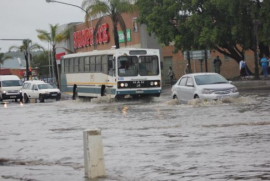
The National Disaster Management Centre (NDMC) has classified the damaging recent inclement weather in parts of the country as a national disaster.
The heavy summer rain has claimed over 80 lives, with damage to property, infrastructure and the environment caused by flooding, strong winds, sink holes, and landslides.
In a statement, the Department of Cooperative Governance and Traditional Affairs said the NDMC was working closely with provinces and all affected organs of state and continues to receive reports on the extent of the damage caused.
CoGTA spokesperson Lungi Mtshali in statement said the decision to classify the weather pattern as a national disaster came after consultation with all provinces and other relevant roleplayers on the extent of the damages.
He said the classification was in line with the mandate of the Head of NDMC under section 23 of the Disaster Management Act, 57 of 2002.
“This classification is done to confirm that the situation is regarded as a disaster and is of a magnitude that exceeds the capacity of affected municipalities and Provinces to deal with.
“It further assigns primary responsibility to the national sphere of government for the coordination and management of the disaster and enables organs of state in all spheres to assist in dealing with the disaster and its consequences,” he said.
The department said the classification would activate the provisions of section 19 (6) of the Division of Revenue Act 2021 to enable all affected accounting officers to redirect/repurpose their allocations and to access Department of Cooperative Governance disaster grants to deal with the effects of the disaster.
It urged the public to continue observing weather warnings as issued regularly by the South African Weather Service and to practice safety measures in the face of continuing rains and resultant storms and flooding incidents.
“A special plea is particularly made to those who are located in low lying areas to take precautionary measures including relocation away from those risky areas,” said Mtshali.
NCCC considering way forward on National State of Disaster

President Cyril Ramaphosa says the National Coronavirus Command Council (NCCC) is considering whether or not the country will continue with the National State of Disaster legislation currently in place.
The National State of Disaster was declared by Cooperative Governance and Traditional Affairs (COGTA) Minister, Dr Nkosazana Dlamini Zuma, as a response to the onset of the COVID-19 pandemic in March 2020,nearly two years ago.
“We are examining how best we should handle the state of disaster in this period where the infections have tapered down and to see the efficacy of using the State of Disaster legislation or utilising other measures.
“The National Coronavirus Command Council is examining exactly that to see whether we can use health protocols, health regulations to move forward in our management of this pandemic,” President Ramaphosa said.
The President said the legislation has allowed government to navigate through the COVID-19 pandemic and its impact.
“Many have challenged in the courts the utilisation of the State of Disaster but I think since the disaster descended on our country we have managed the process rather well… Of course there is a good argument to be put forward that now that we are where we are, should we not examine and look at other methods [or] other instruments that can be utilised,” he said.
President Ramaphosa said the decision on whether to continue on with the National State of Disaster is a “collective process” however, and any decision on it must be based on rationality.
“[We] are a free country, people have every right to advocate for the dropping of the State of Disaster instrument.
“We are government, we’ve got to be very rational in everything that we do so we are examining that. If [we do not drop the legislation] then we will have a very rational explanation to say why we should continue with the State of Disaster legislation,” he said.
KZN dam levels continue to increase

The Department of Water and Sanitation says KwaZulu-Natal dam levels continue to increase week on week and stand at 81.7% – a jump from last week’s 78.5%.
This is according to a weekly report on the state of reservoirs issued by the department.
KwaZulu-Natal, like most parts of the country, has seen a lot of rain which means dams in the province have been filling up.
The department’s spokesperson, Sputnik Ratau, said the increase in dam levels is welcomed, although it did come as a surprise.
“We normally expect rainy weather and therefore filled up dams during February and March as those months are more the rainy ones in the seasons.
“However, we still welcome the water in our dams. We would like to continue to remind South Africans that although dams are full, we must continue to use water sparingly,” Ratau said.
The Umgeni Water Supply System is looking healthy at 94.1%, which is a considerable jump from 91.4%.
Inanda dropped by 2% landing at 102.4%, while Midmar remained at 101.5%.
Driel Barrage, Zaaihoek and Bivane were all unchanged at 87.2%, 75.4% and 72.9% respectively.
Woodstock took a dip from 96.1% to land at 95.5%.
Spring Grove passed the 100% mark and is currently at 103.%, while Hazelmere dropped to just above the halfway mark at 53,.% from 65.0% last week.