
DIRCO expects India Cricket tour to SA to go ahead
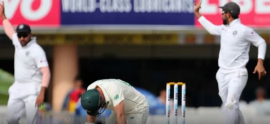
The Department of International Relations and Cooperation (DIRCO) says it expects the international cricket series between India and the Proteas in South Africa to go ahead following concerns that the tour may be put in jeopardy due to the emergence of the Omicron COVID-19 variant.
The Indian ‘A’ side – or team competing in the second tier of international cricket – is already in the country and is competing in the three unofficial tests; the first of which has already been played.
A statement released by DIRCO said India’s touring party and the Proteas remain in a “bio-secure environment” to secure the health of players and staff alike.
“India’s decision to show solidarity by choosing to continue with the tour of the Indian A Team stands in contrast with a number of countries who have decided to close their borders and to restrict travel from Southern African after South Africa announced the detection of the new Omicron variant.
“The South African Government has expressed its appreciation to the Board of Control for Cricket in India (BCCI) for allowing the tour to continue and for not letting travel restrictions negatively impact on international sports,” the department said.
The senior Indian national team is scheduled to arrive in the country in early December in anticipation of competing in three Test matches, five One Day Internationals and four Twenty20 (T20) International matches.
The department highlighted that the Indian team’s tour marks an important moment in South African history.
“The tour…marks the 30th anniversary of South Africa’s readmission to international cricket. In 1991, India became the first country to host a South African Cricket Team after South Africa was banned from international cricket in 1970 by the International Cricket Council (ICC), following a resolution taken against the then South African government’s apartheid policy,” the department said.
According to the department, a celebration to commemorate the anniversary will be held on 2 January next year and will “highlight the strong ties between South Africa and India”.
Protect domestic tourism during 4th wave, urges Minister Sisulu

Protecting the country’s domestic tourism has been identified as the main priority after South Africa was placed on a travel ban by several countries, following the identification of the Omicron COVID-19 variant.
This was consensus reached by relevant stakeholders during an urgent meeting with the Tourism Minister Lindiwe Sisulu on Sunday.
In a statement, the Ministry said the meeting was held to identify how public and private sector stakeholders could proactively collaborate to mitigate the effects instituted by the travel bans. The travel bans came after the South African Health Department revealed the discovery of the variant last week.
The Ministry said in the meeting that the red listing of South Africa and other SADC countries was a “knee jerk reaction” that would negatively impact the peak inbound tourism period.
Prof. Marc Mendelson, infectious diseases and HIV medicine head at the Groote Schuur Hospital, provided a scientific perspective on what the next steps would be in determining the extent to which vaccines would be effective against the new variant.
Minister Sisulu said the meeting was the first of many the Ministry would be holding as a public-private tourism sector war room to deal with crises such as this.
The team, she said, would also address legacy issues that hinder the extent to which tourism could contribute to South Africa’s economy.
The war room was expected to meet regularly to roll out and follow up on practical actions adopted by industry stakeholders to deal proactively with challenges that beset the sector.
She said the immediate priority was to preserve domestic tourism over the upcoming festive season to secure livelihoods.
“While we await scientific certainty surrounding this new variant, the impact to Brand South Africa and the deep tourism value chain has been devastating,” she said.
To this end, the Ministry said stakeholders in the meeting provided several alternatives. These included reducing the size of indoor gatherings, expanding curfew and prioritising vaccination to mitigate the impact on the country’s healthcare system.
Rosemary Anderson, chairperson of FEDHASA said there was no question that South Africans needed to get vaccinated as a “matter of urgency”.
She said: “We depend on tourism for jobs and livelihoods.”
Anderson added that the country could not afford a repeat of December 2020 where restaurants and hospitality businesses bore the brunt of COVID-19 regulations.
“Our industry has had to endure being thrust from wave to wave for the past 20 months and it simply isn’t sustainable to keep businesses open and livelihoods intact. It is up to South Africans to do their part and help us keep our doors open by complying with the protocols and getting their #jab4tourism,” she said.
TBCSA, SATSA, SAACI and Cape Town Tourism were among industry associations that attended the session.
Pistorius transferred to facilitate dialogue with Steenkamp family
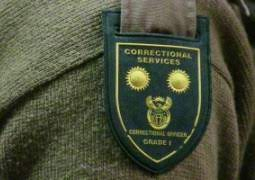
The Department of Correctional Services (DCS) has confirmed the transfer of convicted murderer Oscar Pistorius to a correctional centre in Gqeberha to start a dialogue with the family of his victim, model Reeva Steenkamp.
The disgraced Paralympic gold medalist was transferred from the Kgosi Mampuru Correctional Facility in Tshwane where he is serving a 13-year sentence following the 2013 murder of Steenkamp – his girlfriend at the time.
“The transfer is necessitated by the need to commence with the processes of a victim offender dialogue as the victims are based in Gqeberha. Offenders participate in the victim offender dialogue as part of their rehabilitation path wherein they are able to acknowledge the harm they have caused to their victims and the society at large,” the department said in a statement.
The department emphasised that the move and victim offender dialogue is not a parole process but one that is undertaken prior to consideration for parole.
“This is an internal process and it is our humble plea that all participants be allowed to partake without undue pressure to disclose contents of the engagement. Victim offender dialogues are sensitive, emotional and inconsolable hence they are presided by highly-trained officials who ought to ensure that all parties derive value from the process.
“DCS is unable to pre-empt the timeframe as this will be guided by the level of preparedness by all participants”.
SAA cancels Mauritius flights following travel ban
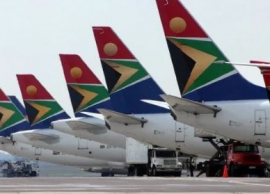
South African Airways has cancelled all of its flights to and from Mauritius following the imposition of a travel ban on South Africa by the Mauritian government.
Restrictions were also placed on at least five other Southern African countries after the Omicron variant was identified by South African scientists last week.
SAA interim CEO Thomas Kgokolo said despite efforts to help passengers – who were still allowed to travel to the island by Sunday – the airline was forced to cancel the inbound flight.
“After long planning with the team in ensuring that we dispatch a bigger aircraft to and from Mauritius to ensure that we serve as many customers as possible…we’ve received notification from the Mauritian government imposing further restrictions prohibiting all incoming travellers from South Africa.
“The SAA team remains committed in fulfilling travel plans. We have made flexible changes to accommodate all our customers who have been affected by all these unforeseen travel restrictions,” Kgokolo said.
The CEO added that customers who were scheduled to travel to the island country will be assisted by the airline.
“Our customers are allowed one free change on their alternate future travel date. We regret the inconvenience caused to you and your loved ones. We hope to be able to revert to normal operations.
“It has been a long two days in the airline industry and it’s been no different for South African Airways,” he said.
The airline assured customers travelling to other countries that it will offer vouchers and refund to customers should any new travel restrictions be implemented on the country.
“We are mindful that change is our new normal, and we need to be as agile as possible to meet our customer needs and keep travellers informed of changes in regulations pertaining to travel restrictions as and when imposed by countries that SAA flies to,” Kgokolo said.
SA records 2 858 new COVID-19 cases, over 80% detected in Gauteng

South Africa has reported 2 858 new COVID-19 cases, according to the National Institute for Communicable Diseases (NICD) figures.
This was 362 fewer infections logged than the previous day.
According to the data, this takes the total number of registered cases involving COVID-19 to 2 961 406 since the outbreak.
Gauteng remains the hardest-hit province after 2 308 were confirmed to have contracted the virus, followed by 148 cases in the Western Cape, 102 in KwaZulu-Natal, 91 in the North West, 89 in Mpumalanga, 51 in Limpopo, 25 in Free State, 23 in the Northern Cape and 21 in the Eastern Cape.
Addressing the nation on Sunday, President Cyril Ramaphosa said identification of Omicron, which is also known as B.1.1.529, a “Variant of Concern” coincides with a sudden rise in COVID-19.
“This increase has been centred in Gauteng, although cases are also rising in other provinces.”
Citing the recent statistics, the President said the country recorded an average of 1 600 new cases in the last seven days, compared to just 500 new daily infections in the previous week.
“The proportion of COVID-19 tests that are positive has risen from around 2% to 9% in less than a week. This is an extremely sharp rise in infections in a short space of time,” he added.
He announced South Africa is expected to experience the fourth wave early in December.
Meanwhile, the number of patients who are receiving hospital treatment has risen to 2 232, of which 18 were admitted in the past 24 hours.
In addition, the death toll is now sitting at 89 797 after six people succumbed to the disease, while the country has a recovery rate of 96.2%.
According to the Department of Health, South Africa administered 11 898 COVID-19 vaccines on Sunday, of which 2 546 were given to children.
This means the country has now distributed 25 288 417 doses to date.
Meanwhile, South Africa is now home to 14 296 371 fully vaccinated adults, while 417 854 adolescents have received their first dose of the Pfizer vaccine.
Globally, as of 26 November 2021, there have been 259 502 031 confirmed cases of COVID-19, including 5 183 003 deaths, reported to the World Health Organisation.
National Assembly disappointed by Omicron travel restrictions on SADC countries
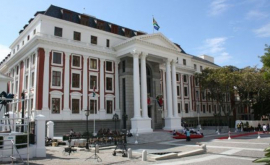
National Assembly Speaker, Nosiviwe Mapisa-Nqakula, has expressed disappointment at the travel restrictions imposed on certain African countries, including South Africa, by some countries in light of the identification of the new COVID-19 variant.
The Omicron variant was identified by South African scientists last week.
The identification of the variant has created panic around the world, resulting in inbound and outbound travel bans against southern African countries.
Mapisa-Nqakula expressed her disappointment at the 7th Brics Parliamentary Forum which was held on the side-lines of the 143rd Assembly of the Inter-Parliamentary Union (IPU) currently underway in Madrid, Spain.
She is leading a six-member multiparty delegation of the South African Parliament to the Assembly.
She said that COVID-19 was entrenching stereotypes in ways that could never have been imagined. The travel restrictions, which were not informed by science, were essentially a punishment for world class science and responsible global citizenship as well as transparency and openness, the Speaker said.
She concurred with the South African government’s assertion that, as a responsible global citizen, the country was duty-bound to report any new variants of concern to the international community, which has been done without fail due to country’s world-class expertise and monitoring.
The Speaker was accompanied to the meeting by other members of the South African Parliamentary delegation to the IPU, Deputy Chairperson of the NCOP Sylvia Lucas, House Chairperson for International Relations Madala Ntombela, EFF Chief Whip Mr Floyd Shivambu and ANC parliamentarian Judith Tshabalala.
Also making remarks to the meeting, Lucas stressed that women, African women in particular, continued to be disproportionately affected by the economic crisis created by the COVID-19 pandemic, which include poverty, unemployment and economic exclusion.
“Women’s quality of life has depreciated as this pandemic threatens to reverse some of the important advances and gains that we have made as women,” she said.
During the same session, Shivambu cautioned against the agenda of certain nations to undermine the unity of the Brics.
The Brics Parliamentary Forum is constituted by the National Congress of the Federative Republic of Brazil, the Federal Assembly of the Russian Federation, the Parliament of the Republic of India, the National People’s Congress of the People’s Republic of China, and the Parliament of the Republic of South Africa.
It was founded, among other things, to strengthen and promote contacts at the leadership level of chambers, committees and groups of parliamentarians; perform inter-parliamentary exchanges and hold regular expert consultations; and create and develop new inter-parliamentary cooperation mechanisms.
Basic Education sector makes progress in implementing inclusive education
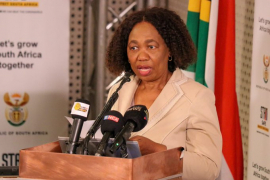
Basic Education Minister Angie Motshekga says that much progress has been registered in fulfilling the Education White Paper 6 directives since it was introduced in 2001 but more effort is still required to leapfrog to the next level.
The Minister was speaking at an Inclusive Education Summit on Monday, jointly hosted by the Department of Basic Education (DBE) and the Department of Women, Youth and Persons with Disabilities (DWYPD).
The objectives of the summit are to acknowledge the progress made and the gaps that still exist in the implementation of inclusive education.
The Minister said that government’s commitment to inclusive education is derived from the Education White Paper 6 which calls upon it to provide quality education and support to all children with disabilities.
Motshekga said that the White Paper also directed the sector to mobilise out-of-school children and youth of school-going age to take up their right to basic education.
“I am happy to report that we did the advocacy work as required, assisted by a range of industry bodies and civil society organisations, for which we thank you. As a testament to our efforts to date, 137 332 and 121 461 learners, compared to 64 000 and 77 000 learners in 2002, are enrolled in special and ordinary schools, respectively,” Motshekga said.
The Minister said that they have dedicated capacity in all nine Provincial Education Departments (PEDs) to manage inclusive education guided by Basic Education experts based in Pretoria.
“For instance, we have established District-Based Support Teams and School-Based Support Teams to coordinate inclusive education support services for teachers and learners.
“As a collective, these professionals advance the ideal of inclusive education, share best practices and craft and monitor implementation plans for the sector,” she said.
Recently, the minister says the focus has shifted towards implementing Policy on Screening, Identification, Assessment and Support.
For instance, during 2020/21, she said 22 074 Individual Support Plans (ISP) were developed to address learners’ educational needs at the school level.
“We had to convert and designate at least 500 public ordinary primary schools as full-service schools in terms of the policy. However, by the end of 2018, we had already designated 848 full-service schools, not just in 30 education districts required in the White Paper 6, but in all education districts.
“It is very rare in government work to say the following, as a sector, we exceeded the target of designating 500 schools as full-service ones by 348,” the Minister said.
The sector had to designate or covert several special schools into resource centres in thirty designated districts as per the directives of the White Paper and to date 373 out of 435 special schools serve as resource centres, providing outreach services to full-service and ordinary schools.
Learners with Severe to Profound Intellectual Disability
A part of the sector’s work of ensuring access to education for Learners with Severe to Profound Intellectual Disability (LSPID), Minister Motshekga said that 500 special care centres have been audited.
She said that the department has developed and field-tested the Learning Programme for this category of learners.
“So far, 280 transversal itinerant team members have been trained to deliver the Learning Programme. We have at least 3 423 learners with severe to profound intellectual disabilities who now utilise the Learning Programme and access therapeutic services,” Motshekga said.
Diversification of curriculum offerings
Minister Motshekga said that great strides have been made on the diversification of curriculum offerings to cater to diverse educational needs.
“We now offer the South African Sign Language (SASL) as a matric subject. For instance, 44 learners in eight of the 17 schools for the Deaf that offer Grade 12 wrote the first National Senior Certificate (NCS) examination in SASL Home Language in 2018,” she said.
In 2019, the Minister said the number increased to 101 learners in 15 schools who wrote the National Senior Certificate examination.
In the year 2020, 140 candidates from five provinces, including Eastern Cape, Free State, Gauteng, KwaZulu-Natal and Western Cape, wrote the National Senior Certificate examination.
Meanwhile, the sector continuously offers specialised training to teachers to meet the needs of specific disabilities such as Braille, South African Sign Language, Autism and other inclusive educational programmes.
“I am happy to report that 2 295 teachers have been trained in Braille, 2 714 on South African Sign Language, and 4 724 have received training on Autism,” Motshekga said.
The sector has also provided inclusive education training programmes to some 35 354 teachers in the sector.
Sitole speaks out on July unrest
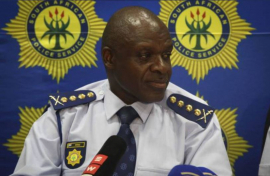
National Police Commissioner, General Khehla Sitole, says police could have done better to respond to and mitigate the damage done by the July unrest.
He was speaking during an appearance at the South African Human Rights Commission’s National Investigative Hearing into the unrest which claimed at least 300 lives and caused at least R25 billion in damage to businesses in Gauteng and KwaZulu-Natal.
The hearing is being held in KwaZulu-Natal and is expected to conclude on 3 December.
Evidence leaders at the hearing grilled the National Commissioner on the public violence and criminality which broke out during the unrest and whether or not the police carried out their Constitutional mandate to prevent crime and protect those living in South Africa.
“It won’t be correct to say that we might have violated…the Constitution. But it would be correct to say we did not do enough. But there were great achievements during this unrest and there were those incidents that were foiled and prevented. But at the very beginning we were not equal to the task to prevent.
“There is where we did quite well but it was not enough,” he said.
Sitole highlighted that one of the biggest challenges facing police during that period was the lack of enough police officers on the ground in hot spot areas.
“There was a…human capital crisis. But at the same time, there was a need for the deployment of your capital resources like your Nyalas as well as water cannons. But then there was also a need to fly members for deployment which required air support. And as a result, I called all the support role players. They were convened and given assignments to say let us see where we are required to deploy both physical and human resources,” he said.
According to Sitole, those police officers who were deployed were resourced.
“The members who were deployed were properly equipped and everyone who was sent down to provide support was given the equipment. But we needed to have more members and if we had more members we would have had more [equipment] and I think our presence and pressure would have been felt in a quicker way,” he said.
Sitole added that as the unrest unfolded, police moved to put in an operational plan to quickly quell the violence in the two provinces.
“The operational plan…and the purpose was to provide a response to the unrest which already broke out and it was flowing from the national crime combatting process.
“The plan was executed because the deployments kicked off through it and part and parcel of one of the deliverables…was the assembling of an investigative response that lead to putting together an investigation team and that’s where we started effecting arrests. [The plan] also included the deployment of intelligence in other areas which were not affected yet. Eventually we managed to stabilise the unrest which then overlapped to normalisation,” he said.
Sitole assured the commission that although some challenges still persist in human resources, the police would be much more prepared to face another unrest of July’s magnitude.
“We would have enough resources including the corporate renewal of crime intelligence in order to intensify the capacity of…intelligence. Then I can give the assurance that yes, we will be able to provide a response. But we will still need to continue with the growth of the organisation because we must contend with the growing population,” he said.
Sitole is expected to make another appearance before evidence leaders before the conclusion of the hearings next week.
Post Office works on improving service

The SA Post Office (Sapo) is working hard to improve its service, while paying out social relief of distress grants to thousands of South Africans.
In a statement on Monday, the Post Office said the facility that allows customers who collect their grant from Pick ‘n Pay and Boxer supermarkets is gaining popularity.
“In the last week of October 2021, a total of 334 000 people withdrew their grant from a Post Office branch. Just over 59 000 (8.4%) withdrew their grants from a Pick ‘n Pay or Boxer supermarket.
“Where possible, the SA Post Office has introduced separate queues for grant beneficiaries to ensure that customers who visit their post office for a regular transaction are served as quickly as possible,” Sapo said.
Transaction speed at post office counters has been improved by a national network upgrade project.
A total of 1 270 out of 1 329 sites (97%) are now fully commissioned with new equipment and upgraded connectivity.
The remaining 59 sites either require alternative solutions or they are so remote that no viable infrastructure is available.
“The Post Office has countered the reduction of revenue brought about by the COVID-19 restrictions with a cost-saving drive. At the end of August 2021, expenses for the financial year stood at 88% of the budgeted amount.
“Further steps to reduce the company’s fixed costs in the long run are being implemented, such as voluntary severance packages,” Sapo said.
Set-top boxes
The Post Office has reiterated its call to qualifying households to apply for a free subsidised television decoder.
In October 2021, almost 60 000 households applied for a subsidised decoder.
“The Northern Cape was the first to switch to digital signals only; the analogue signals interfered with the satellite signals of the Square Kilometre Array in the area.
“A South African identity document, proof of address and proof of income are required to apply. If you do not have proof of address or income – for example, if you are unemployed – your local post office will help you to complete an affidavit to confirm these,” Sapo.
SIU recovers at least R1.8bn
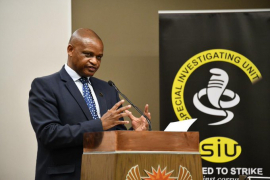
The Special Investigating Unit (SIU) has recovered cash and assets worth at least R1.8 billion in the past financial year.
This was revealed during the unit’s recent presentation of its annual report to the Portfolio Committee on Justice and Correctional Services.
According to SIU head, Advocate Andy Mothibi, the unit has also handed at least 15 investigative reports to President Cyril Ramaphosa for consideration.
“From the Presidency’s side, there is a decision that has been taken to release the SIU reports to the State institutions [they concern]…
“The speed with which consequence management is done requires an improvement because although it’s happening, it’s happening at a slow pace,” he told Parliament.
Mothibi assured the committee that the unit is committed to “dealing with the culture of impunity” in government and State entities.
“The culture of impunity can be dealt with only when consequence management is implemented.
“We would like to ensure that that part is dealt with, so that anyone – in any part of the organisation – is dealt with when they are found to be in the wrong.”
Mothibi said in the courts and the Special Tribunal, the unit had scored victories wherein it successfully reviewed and set aside at least R7 billion in government contracts and administrative decisions.
Also in the courts, SIU investigations have led to the submission of evidence in cases involving at least R64.8 billion in State finances.
Mothibi said the Special Tribunal is an “important forum” for the speedy conclusion of civil proceedings.
“At the moment, there about 40 cases that have been issued at the Special Tribunal with a contract value of about R5 billion. Those cases are still to be adjudicated… to ensure that we recover from those contracts that have been set aside.
“Given the delays that we have observed in the past [in] taking matters to the high court, it is really questionable whether we would have achieved this speeding up of civil proceedings (sic)… The tribunal has been a game changer in ensuring that we speed up civil litigation and recoveries.”
Mothibi said the unit has once again received a clean audit – the fifth in a row.
“We look forward to upholding an important clean audit status for the future, as it attests to overall good governance in the institution. The SIU would not have achieved this clean audit and other outcomes without the continued commitment and hard work of all SIU members.
“We will continue to, at all times, uphold the principles of good governance, sound financial management, sound risk and legal management, integrity and prudence in all that we do and in the decision-making process.”