
Former Gauteng Health officials arrested in R221m corruption case

Former Gauteng Health senior and executive officials are among nine suspects expected today to appear before court as police pounce on those who allegedly fleeced the department of R221 million, between 2006 and 2010.
In a statement, the Directorate for Priority Crime Investigation (Hawks) said the group, who handed themselves over on Tuesday, was among private individuals and entities charged with fraud, corruption, money laundering and a pattern of racketeering activity perpetuated against the department.
“Eight of the nine have handed themselves over at SAPS Johannesburg Central for processing and will thereafter appear at Johannesburg Magistrate court. The ninth is said to be out of the country and the process of applying for his extradition is in progress,” said Hawks spokesperson Brigadier Nomthandazo Mbambo.
She said the development formed part of the second leg of investigation into allegations of gross irregularities committed at the Gauteng Department of Health (GDoH), between the period of 2006 and 2010.
The case was referred to the Hawks Serious Corruption Investigation unit by the Special Investigation Unit (SIU) in September 2011 for further criminal investigation.
Mbambo said the department awarded several contracts to an entity or juristic person which was initially meant for a period of two years, at a cost of R68 million (incl. VAT) per annum. “However, this amount was allegedly overspent to the tune of R221 million without any consequences to the individuals involved,” she said.
The main contract was the establishment of a “Project Management Unit (PMU)” which was first awarded on 4 July 2007 and was extended again on the 17 February 2009 for another three years without putting it out on an open tender and at a cost of approximately R273 million per annum.
Several senior and executive officials of the department allegedly received gratifications from the main service provider and subcontractors in the form of cash, loans, gifts and all-expense paid holiday, local and international trips. It is further alleged that none of the Gauteng Health Department officials ever declared such gifts.
The first leg of investigation was concluded in October 2020, when four senior officials from the Gauteng Health Department, Sybil NgcoboSybil Ngcobo, Mmakgosi Mosupi, Valdis Romaano and Obakeng Mookeletsi were charged for similar offences and appeared at the Palm Ridge Magistrates Court for corruption charges worth R1.2 billion tender. They will appear again on 28 January 2022.
National Hawks Head, Lieutenant General Godfrey Lebeya, applauded the team for the arrest and said: “Although this investigation had challenges of its own, I am satisfied that our prioritisation has resulted in securing the attendance of the accused who shall also face the charge of pattern of racketeering activity which is in general terms organised crime.
“The investigation team and prosecutors are commended for the efforts invested in the matter since prioritisation.”
Mchunu calls for the speedy delivery of services
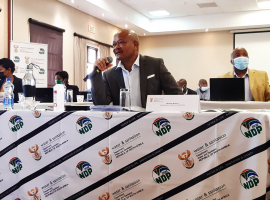
Water and Sanitation Minister Senzo Mchunu has called on the department to plan and identify what is most important and urgent that can be addressed with the available resources within reasonable time.
“There is never a time when the clock is not moving. We need to plan and see what is most important and urgent that can be achieved with the available resources as well as within reasonable time. Our office needs to call a meeting urgently with COGTA [Cooperative Governance and Traditional Affairs] to align the priorities. We need to synergize and align our planning to ensure that we deliver on our mandate,” he said.
The Minister made the call as he and his deputies David Mahlobo and Dikeledi Magadzi began a three-day working visit to Mpumalanga on Monday.
This as the Minister reiterated that South Africa does not have a water crisis. He called for the development and costing of plans with clear timeframes.
The purpose of the visit is to engage stakeholders to fully understand the status and challenges encountered in the delivery of efficient and effective water and sanitation services in the province.
The working session includes engagements with the Department of Water and Sanitation (DWS) Provincial Office, Mpumalanga Provincial Government led by Premier Refilwe Mtsweni-Tsipane, local government, water agencies, water board, water services authorities, water user authorities, irrigation boards and other sector stakeholders.
The DWS said the engagements emphasised the need for integrated planning to address the challenges in water and sanitation issues in the province.
Meanwhile, Mpumalanga Cooperative Governance and Traditional Affairs MEC Busisiwe Shiba emphasised the need to “tighten the screws” in the quest to deliver services to the communities. She also highlighted the challenges in relation to non-functional and non-compliant wastewater treatment works and the need for urgent action to respond to these challenges.
Deputy Ministers Mahlobo and Magadzi also emphasised the need for coordinated and proper planning to effectively deliver services to communities.
Magadzi reiterated the urgency for water to be delivered to people, irrespective of who is involved while Mahlobo stated that projects must have clear timeframes and deadlines and must be costed.
Premier Mtsweni-Tsipane in her presentation stated that water and sanitation services are a thorn in the flesh of the province.
“We are seeing population growth in the province, and this is putting pressure on the bulk services,” she said.
The visit to Mpumalanga is the Minister’s seventh provincial visit.
Fourth wave sees ‘stark’ increase in COVID-19 infections in children under five
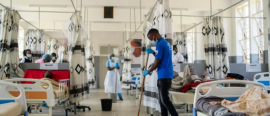
The fourth wave has sparked an increase in hospital admissions in children under the age of five, the National Institute for Communicable Diseases (NICD) said.
In a briefing led by Health Minister, Dr Joe Phaahla, the NICD’s Dr Waasila Jassat said there has been a rise in children who are in hospital for COVID-19 in both the public and private sectors.
While most hospital admissions were initially recorded in Tshwane, Jassat said there are now starting to see an increase in other Gauteng districts as well.
“The week on week in cases and admissions is higher than we’ve seen it before,” she told the media.
While children may have not been “heavily” affected by the COVID-19 pandemic in the past with fewer admissions, recent data shows a different story during the current resurgence that is driven by the new Omicron variant.
According to Jassat, who leads the NICD’s hospital surveillance for COVID-19, during the third wave, there have been more admissions in young children under five and teenagers from 15 to 19.
“And now at the start of the fourth wave, we’ve seen quite a sharp increase across all age groups, but particularly in the under-five. The trend that we see now is different to what we saw before.”
While the numbers may still be slightly lower in children, she said the hospital admissions for those under five are now second-highest and second only to the incidence in those over 60.
“Just anecdotally, a paediatrician in a Tshwane hospital shared with us that all the children that were admitted from 12 to 18 years old were not vaccinated even though they were eligible. And that the younger children less than 12 who are not eligible for vaccination, none of the parents except for three were vaccinated.”
In the Capital, most patients who landed in hospital during the first two weeks in the third wave were mostly elderly people between the ages of 50 and 60.
“However, in the fourth wave, you can see most admissions on younger people less than 40 years and particularly stark differences in the zero to four age group where there were fewer admissions in the third wave in the early part of the fourth wave.”
In Tshwane as well, Jassat said there are already over 100 admissions in children under the age of four in the first two weeks of the current wave.
According to the NICD Head of the Division of Public Health Surveillance and Response, Dr Michelle Groome, there is also now an increase in infections and hospital admissions in Limpopo, North West, Mpumalanga, Eastern Cape and other provinces as well.
Meanwhile, she said it was important to highlight the importance of surge preparedness to also include paediatric beds and staff.
In addition, she told the media that scientists are still waiting for additional data on the severity of the disease, while early evidence shows that this variant is more transmissible and that there is some degree of immune escape.
“There is a possibility of people who have already been infected being reinfected,” she added.
However, she believes that vaccination will prevent severe disease in people who may be infected even after receiving the jab.
Department of Health’s Chief Director, Ramphelane Morewane, said the department is paying special attention to the paediatric wards to ensure this area is adequately covered and making sure that there is enough oxygen.
Health Minister urges citizens to get COVID-19 jab, as cases rise
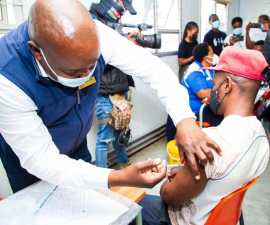
Health Minister, Dr Joe Phaahla, has urged citizens to not let their guard down and vaccinate as the number of new COVID-19 infections is on the rise.
South Africa recorded 11 535 new Coronavirus cases in the past 24 hours compared to the 2 465 that was recorded on Thursday last week.
“The numbers over the last seven days and the curve depicting them, there is a much steeper upward curve than has ever been seen in the last three waves,” the Minister said on Friday.
In addition, over the last seven days, the spike that started in Gauteng has now spread in all nine provinces with numbers increasing in the Western Cape, KwaZulu-Natal, Limpopo, North West and Mpumalanga.
Free State and the Northern Cape are still the only two provinces that are seeing low numbers, he said.
New cases peaked by more than 300% in the last seven days, with a positivity rate of 22% on Thursday from 1% to 2% two weeks ago.
Meanwhile, Phaahla said preliminary data shows that the new Omicron variant was highly transmissible, including infecting people who are vaccinated. However, causing mostly mild illness, especially among the jabbed.
“At this stage, the trend is a rapid rise in cases but we hope mild cases will continue to dominate.”
He told the media that those who are not jabbed and young people below 40 years, most of whom have not received the vaccine, dominate hospital admissions.
According to the Minister, Gauteng, which is currently the epicentre, is working with the national team to ensure the provision of services for those who will become seriously ill.
He also raised concerns about healthcare workers who may catch the virus and isolate, which will lead to staff shortage.
Phaahla pleaded with citizens to be more vigilant and apply all the health and safety measures.
“While we’re saying, ‘what is government going to do?’ I think all of us individually and collectively, we could even reduce the level to which even regulatory intervention could be required by simply especially, just the wearing of masks.”
The key factor, according to the Minister, was to avoid big gatherings such as end of year functions and birthday parties, especially if they are indoors.
Meanwhile, Phaahla urged people who have tested positive or are still waiting for their results to stay at home.
“Going to queue whether it’s for medicines or groceries is very irresponsible. We should, all of us, condemn that and advise people to keep away from mixing with other people.”
The Minister has described vaccination as not just an option but also a matter of saving lives, livelihoods and the lives of health workers and the nation as a whole.
He once again used his platform to call on everyone above the age of 12 to get the jab.
“This fourth wave which we have started can be managed without too many casualties and loss of lives, if we observe safety measures, the biggest risk being gatherings especially indoors,” he added.
Above all, he said lives could be saved if eligible people are inoculated.
“While there are still many questions around Omicron, the evidence thus far is clear that like all previous variants, our best protection against serious illness and death is vaccination.”
Didiza welcomes opening of black-owned Klein Goederust winery
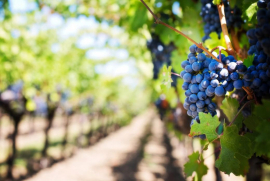
Agriculture, Land Reform and Rural Development Minister, Thoko Didiza, has welcomed the opening of a 100% black-owned winery by the children of a farm labourer.
In a statement, the Department said the 116-year-old Klein Goederust, which was solely acquired from the savings of many years by the son of a farm labourer, is the first and only 100% black-owned wine farm in Franschhoek.
“The opening of a wine tasting room and restaurant at Klein Goederust farm is testimony to government’s efforts of ensuring equitable access and participation of black people in the wine value chain and the wine industry,” said Didiza in a statement.
The Klein Goedrust wine tasting room and restaurant official opens its doors on 3 December 2021.
The owner and Chief Executive Officer of the 10-hectare Klein Goederust farm, Paul Siguqa, acquired the farm in 2019 in a dilapidated state. In the last three years he focused on land and soil analysis, correction and planting of new vines with the help of government. He also renovated historic buildings on the farm.
Siguqa said he embarked on the project “to change the narrative that children of farm labourers are condemned to[a] life of working on white-owned farms and can never really own part of this industry”.
The Minister also emphasised that the opening of Klein Goedrust will contribute positively to the wine and tourism industry of Franschhoek, and that of the Western Cape. The government assisted Siguqa with a tractor and an irrigation system.
Neighbouring farms and Franschhoek Tourism have warmly welcomed the opening of Klein Goedrust and have shown support, and the owners of the neighbouring La Motte Wines have offered to mentor Siguqa, said the department.
25 year sentence for Fort Hare student murderer

Convicted murderer, Alutha Pasile, who was found guilty of brutally killing and dismembering the body of 23-year-old Fort Hare student Nosicelo Mtebeni has been sentenced to 25 years in prison for her murder.
Pasile, 25, was sentenced in the East London High Court on Thursday after pleading guilty to her murder and to attempting to defeat the ends of justice on Monday.
He was sentenced to a further ten years in prison for the second charge.
Pasile claimed in his guilty plea that he had found text messages on Mtebeni’s cellphone which led to him attacking her during a confrontation.
National Prosecuting Authority Senior State Advocate Nickie Turner said although Pasile pleaded guilty, he still showed a lack of remorse for her murder.
“He had no choice but to plead guilty to both counts in view of the fact that the hands and head of the deceased were found in his flat together with the equipment purchased by him for the purposes of dismembering her.
“[Mtebeni] was reduced…to a mere thing that was going to be cut for the self-serving purpose of avoiding detection. His self-interest and lack of empathy at her death is blood chilling and grotesque,” Turner said.
Meanwhile, the Commission for Gender Equality’s chairperson Tamara Mathebula welcomed the sentence and urged courts to mete out justice with “speed and efficiency” in cases involving gender based violence and femicide.
“South Africa is experiencing unprecedented levels of violence against women and girls, and this calls for aggressive and speedy resolution of police investigations and court cases.
“With just less than ten years left before 2030 and the GBV scourge escalating at the current pace, South Africa will likely miss the Sustainable Development Goal target [to end gender based violence by 2030] and that will be a poor reflection of the country’s efforts in the fight against violence on women. That would render the country’s commemoration of Women’s Month and 16 Days of Activism as useless,” Mathebula said.
Travel restrictions delay Christmas mail

The South African Post Office (SAPO) says Christmas mail leaving the country will be delayed due to the international travel restrictions.
Travel restrictions were imposed on South Africa after the detection of the Omicron variant of the COVID-19 virus.
In a statement on Wednesday, the SAPO said cargo space on aeroplanes is limited due to the cancellation of some international flights. The Post Office estimates that mail leaving South Africa may be delayed by up to 14 days.
“Only surface mail is currently available to the United States of America. The post office expects that the airmail option will again become available in January.
“Mail to Botswana, Zimbabwe, Zambia, Malawi, Tanzania, Lesotho, Namibia, Eswatini and Mozambique is not affected at this time. Items posted from South Africa by 5 December 2021 to these countries should reach their destination before Christmas,” it said.
The SAPO has advised customers who are sending items to foreign countries to do so as soon as possible.
“Customers should package international items securely as mail is transported in bulk and to include the mobile phone number of the recipient with the address details.”
SARS to appeal tax information release court ruling

The South African Revenue Service (SARS) will appeal the recent Gauteng High Court in Johannesburg judgment ordering the release of former President Jacob Zuma’s tax information.
On Wednesday, SARS said it had received the decision after Commissioner Edward Kieswetter received “carefully considered” legal advice.
Another consideration in the decision was a strong recommendation from the relevant SARS governance committee.
In a statement, SARS said it was appealing the order and opposing the confirmation by the Constitutional Court of the unconstitutionality of the Promotion to Access to Information Act and Tax Administration Act.
“The judgement as it currently stands, if left unchallenged, would undermine the sacrosanct principle of the confidentiality of taxpayer information, which is the bedrock upon which the work of SARS and other international revenue authorities is based,” said SARS.
Kieswetter said: “The public can be assured that SARS will defend the principle of confidentiality on behalf of every single taxpayer. Every taxpayer is equal before the law, and we will apply the laws relevant to SARS without fear, favour or prejudice.”
As the matter is now before the courts, SARS said it would refrain from commenting further.
Department readjusts petrol price

The Department of Mineral Resources and Energy (DMRE) has announced the readjustment of the price of both 93 and 95 ULP and LRP grades.
“The DMRE regrets to announce that the adjustment of the petrol price announced on Monday, 29 November was erroneous,” said the department on Wednesday.
On Monday, the department announced that the price of petrol (both 93 and 95) will go up by 81c per litre taking the price to R20.35 a litre in Gauteng as of Wednesday.
On Wednesday, the department announced that the price of petrol has risen by 75 cents a litre instead. This means that a litre of 95 ULP in Gauteng, which currently costs to R20.35 will now cost R20.29.
“The 6 cents difference is due to the fact that the adjustment of wages for service station workers had already been implemented in September 2021. Although it is for the very first time that such an error has occurred in the history of basic fuel price determination in South Africa, the DMRE profusely apologises for the inconvenience caused. The rest of the fuel prices are correct,” said the department.
It added that the reasons for the fuel price adjustments remain as communicated.
The price of diesel 0.05% increased by 72c and diesel 0.005% sulphur will increase by 75c per litre.
“The main reasons for the fuel price adjustments are due to…[t]he contribution of the Rand/US Dollar exchange rate. The Rand depreciated, on average, against the US Dollar during the period under review when compared to the previous one.
“The increase in the prices crude oil…[t]he average Brent Crude oil price increased from 82.50USD to 83.00USD per barrel during the period under review. The key driver is the higher global demand recovery amid a weaker supply response from non-OPEC and other oil producers,” the department said in a statement.
The department said other factors contributing to the increase include petroleum products prices around the world, the adjustments in the Regulatory Accounting System Industry Margins and the implementation of the Slate Levy.
Meanwhile, the wholesale price of illuminating paraffin has increased by 42c per litre, while the maximum retail price for illuminating paraffin has increased by 56c per litre.
The retail price for gas also increased by R1.83 per kilogram.
Hawks pounce on vessel ferrying R240 m worth of cocaine

Hawks’ National Head, Lieutenant General Godfrey Lebeya, has lauded his team’s recovery of a 600kg cocaine cache with a street value of R240 million at the Durban harbour.
The Hawks’ Serious Organised Crime Investigation team made the recovery after receiving information about an MSC vessel that was sailing from the South America to South Africa transporting containers with wooden flooring boards which had cocaine concealed within the consignment.
“On arrival, the container was searched. It was discovered that between the boards, there was large black sports bags, each with bricks of cocaine,” said Hawks spokesperson Brigadier Nomthandazo Mbambo.
No arrests have been made at this stage pending the ongoing investigation.
“I appreciate the efforts by the members of the DPCI [Directorate for Priority Crime Investigation] in disrupting the supply of drugs. With the cargo safely in good hands, we shall now be focussing on the perpetrators,” said Lebeya.
He said he had further appointed a team on the recommendation of the Deputy National Head to cover ground in dealing with the drugs that were stolen in a burglary incident.