
Mthethwa rejects objections into Eastern Cape name changes
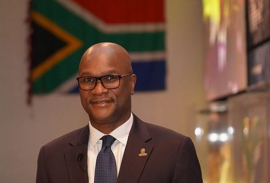
Sport, Arts and Culture Minister Nathi Mthethwa, has rejected objections raised on recent geographical name changes in the Eastern Cape.
In February the Department of Sport, Arts and Culture gazetted twenty-three names that Minister Mthethwa had approved on geographical name changes in the Eastern Cape.
The name changes included the change of names of Port Elizabeth to Gqeberha, Uitenhage to Kariega, King Williamstown to Qonce, East London Airport to King Phalo Airport and Port Elizabeth Airport to Chief Dawid Stuurman International Airport.
Following the gazetting of the names, the Ministry and the Department received a number of objections as follows: three boxes with petition signatures of 12,402 residents of the Nelson Mandela Bay were sent through to the office of the Executive Mayor.
The Ministry also received 690 emails with objections to the name changes that had been gazetted. These objections are provided for in section 10 of the South African Geographical Names Act 118 of 1998.
In a statement on Sunday, the department said the objections varied from claims that insufficient consultation was done at the local level, alternative names had been ignored, that the renaming would drive away tourists, or that the money spent on renaming could be better spent on service delivery.
There were also claims that the new names have nothing to do with the people of Nelson Mandela Bay Metropolitan Municipality or are a duplication of existing place names.
The Minister requested the South African Geographical Names Council (SAGNC) to go through all the objections and advise him accordingly.
The Council submitted evidence to the Minister that consultation was done throughout the province by the Provincial Geographical Names Committee before recommendations of geographical names were submitted to the SAGNC.
The SAGNC further advised the Minister that all provisions of the SAGNC Act 118 of 1998 were followed at all processes during the consideration of the names gazetted on 23 of February 2021.
After receiving the advice of the SAGNC and after applying his mind to the merits of all the objections, the Minister decided that all the objections do not merit the review of the decisions on geographical names gazetted on 23 February 2021. Thus, all the objections were rejected.
“The Minister would like to reiterate that one of the main purposes of the SAGNC Act 118 of 1998 is to transform South Africa’s naming landscape and ensure that the names of places in South Africa reflect the languages, culture and heritage of the majority of the people of this country, instead of reflecting the country’s colonial and apartheid past.
“The renaming of geographical features is also done in line with the Truth and Reconciliation Commission (TRC), which recommended the renaming of geographical features after those who contributed towards the attainment of freedom and democracy as part of symbolic reparations,” said the department.
The department said South Africa needs to accelerate the transformation of the names of places “we live in so that we can bequeath to our children and grandchildren a country whose place names reflect their language, culture and heritage.”
Vaccination of teachers, support staff to start on Wednesday
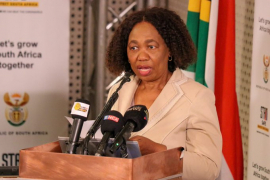
The COVID-19 vaccination of teachers and support staff will start this Wednesday until a day before the schools close to mark the end of the second term on 8 July 2021.
Basic Education (DBE) Minister Angie Motshekga made the announcement during a recent media briefing on the basic education sector’s response to the impact of COVID-19 on schooling.
“Those to be vaccinated are all PERSAL staff (as at April 2021) in DBE (educators, administrative and support staff) at all public schools; irrespective of their age; School Governing Body (SGB) appointed teachers, and those teachers employed by independent schools registered in terms of the South African Schools Act,” Motshekga said.
Motshekga said 582 000 people are to be vaccinated over 10 to 14 days, including weekdays and weekends; or 7 to 10 days, if it is weekdays only.
“A strict registration process will be followed, if you are PERSAL staff member, your details have already been captured onto the Electronic Vaccination Data System (EVDS); lists for SGB appointees and independent school educators will be uploaded onto the EVDS.
“On-site data capturing will be required for individual’s cell numbers; and medical aid details. There will be no on-site registrations, meaning that people not bulk uploaded in the EVDS, cannot be registered on-site; and therefore, cannot be vaccinated. Should this happen to you, the on-site officials will help you on the steps to be followed for assistance,” Motshekga explained.
She added that the Departments of Health and Basic Education at provincial and district levels, will also work together to link schools to identified vaccination sites; and the verification of basic education staff – where the EVDS is offline due to power outages, will require a list or letters signed-off by the staff respective principals.
Exclusion criteria
The Minister however, noted that there are some people, who may not qualify to be vaccinated, and these may include, but not limited to any person who had contracted COVID-19 in the past 30 days; any person who was vaccinated using another vaccine (Pfizer or Johnson & Johnson, under Sisonke); or any person who had received a flu vaccine in the past 14 days.
She said during the deliberations with the Department of Health, it was further agreed that the vaccination programme must cover staff who transport children to and from schools; staff who support the school feeding scheme; staff who do remote learning programmes (TV and Radio); and staff of teacher unions, and other contracted staff who provide security, do cleaning and other functions at school.
“Vaccination is voluntary but highly recommended so that everybody can be protected. Let us work together on this fight against COVID-19 in our spaces. Everybody is expected to make their own transport arrangements. Where there are challenges, schools will need to assist.”
The Minister made a clarion call to school communities to “Drop all, and vaccinate!”
Management of COVID-19 cases in schools
Motshekga also urged all schools to apply the Standard Operation Procedures (SOPs) when managing COVID-19 related cases, and that every school must have a COVID-19 committee, a COVID-19 file, and compliance officers.
She reiterated that doing business under COVID-19, means that one needs to also strike a balance between saving lives and livelihoods.
In the case of the Basic Education Sector, she said the department needs to do all it can to prevent a potential academic disaster.
“At all times, we follow the advice of public health experts, who are supporting us in the management of the impact of COVID-19. We believe that schools must remain open and in saying so we are not insensitive to the concerns raised about the rising infections.
“The position is that we continue to handle COVID-19 cases according to the differentiated strategy, on a province by province, school-by-school basis. While there are disruptions in the sector, the majority of our schools remain fairly stable. Our social partners and key stakeholders expressed the same view in our engagement earlier today,” the Minister said.
She said the department will however, take guidance from structures, including Ministerial Advisory Committee, and Cabinet on this matter, as part of a wider approach in the fight against COVID-19.
There has to be scientific reasons for all decisions that are taken, she said.
President Ramaphosa calls for COVID regulations compliance

President Cyril Ramaphosa has called on South Africans to do their bit to limit the impact of the unravelling third wave of the COVID-19 pandemic.
“We may be tired of this persistent enemy, but it is not yet tired of us. The threat to health and lives is evident as people become ill and some die. So we must do what we can, as individuals, as families and communities, as unions and employers, and as government, to limit the toll,” the President wrote in this week’s edition of his newsletter.
“When the virus surges to this extent, the economy also faces challenges. Workers have to isolate or quarantine, people stop going out for recreation or shopping, tourism comes to a standstill, and workplaces have to spend more money to prevent infections,” he said.
In Monday’s newsletter, the President said it was incorrect to speak about a trade-off between lives and livelihoods.
“Rather, we need to invest our time, effort and resources to control the pandemic to see a payoff, in terms of both falling case numbers, reduced deaths and economic recovery.”
He noted that the climb in new cases has been extraordinarily rapid and steep over the past few weeks. The number of daily new cases jumped from below 800 in early April, to over 13,000 in the past week.
“In other words, it increased more than fifteen-fold from the last low point.”
He said by now “we all know what we have to do to bring the rate of infection down, and we must act with great discipline to protect our people and our livelihoods.”
He urged the public to continue to avoid social gatherings of all kinds, whether for family, friends, business or recreation.
The President said those who can work from home to do so while also urging the public to wear masks while also keeping one and half metres apart from others.
“Although we find ourselves in the middle of winter, we need to ensure good ventilation when indoors or in public transport, for instance by opening windows.”
He said South Africa has experienced pandemics before, most notably HIV/AIDS.
“We have managed to reduce new HIV infections by more than half since 2010. Our people know that we can control contagions, but it requires all of us to act together over time. It is not a task only for the vulnerable or the healthcare system. It requires every South African to do their part, to accept that we cannot go back to pre-pandemic days but must rather build a new normal that is safe for us all.”
The battle, he said, can be won “but it will take persistence and discipline.”
Rising cases in Gauteng
The President expressed concern at rising COVID-19 cases in Gauteng.
“As always with COVID-19, there are huge differences between different parts of the country. Right now, Gauteng is by far the hardest hit. This week, the number of new cases exceeded the peak in both previous waves, and it has not started to decline yet. As a result, hospitals are reaching capacity, and healthcare workers are exhausted.
“Gauteng looks small on the map. But it is home to one in five South Africans and two-fifths of our economy. As an economic hub, many people travel to and from this province. We need to turn this around urgently, or lives and livelihoods will be seriously under threat.”
Vaccination programme
Government, he said, plans to provide vaccinations for the vast majority of adults in South Africa by the end of the year, saying this was crucial for people to get the jab once they became eligible.
“Our priority in this phase is to vaccinate all five million people over the age of 60. This week, we also plan to start vaccinating half a million educators and others in the sector since their work requires social contact and is vital for our children, our economy and our future,” he said.
“All of us need to work to ensure a fast and smooth rollout of the vaccine campaign. If our family members, friends, neighbours or employees need help, we should support them in registering and getting to vaccine sites. We will only be able to effectively contain this disease when we succeed in rolling out vaccinations on a large scale,” said the President.
“Our country has experienced many hardships in the past. However, we overcame them by understanding the challenges we faced, developing appropriate strategies, and implementing them together. As we have done before, we need to work as one to prevent infections and reduce the effects of this virus on us.”
Studies show good immune response to J&J vaccine
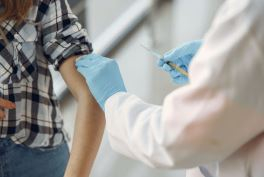
Studies are showing a good immune response to the Johnson & Johnson (J&J) single-dose COVID-19 vaccine.
The South African Medical Research Council (SAMRC) collaborated with J&J on the investigator-led collaborative Sisonke Study, which saw close to 500 000 healthcare workers receiving the single-dose vaccine under the Sisonke Study.
The lead investigator in the Sisonke Study and SAMRC Chief Executive Officer, Professor Glenda Gray, said the side-effects observed are similar to those in other parts of the world, and other vaccines.
“So, there’s no real difference that we’re seeing,” she said at a media briefing on Friday.
Meanwhile, these vaccines – whether it is a J&J or Pfizer – will reduce the risk of severe disease.
“They may not protect you from infection but they do protect you or reduce your risk from severe disease,” said Gray.
According to the Professor, they are following up on all the healthcare workers that had breakthrough infections – cases where fully vaccinated individuals test positive for Coronavirus – and they are currently adjudicating them to see if their illness was mild or severe.
“However, most of the breakthrough infections have been mild and only a handful have been severe,” Gray said.
Most breakthrough infections have been due to the variant that is currently driving the third wave in the country, Gray said.
Researchers are also looking at boosters for the J&J vaccine, about six months after the first vaccination.
In the meantime, Gray said “sub-studies” are being conducted with the single-dose vaccine, looking at HIV infected healthcare workers; pregnant and lactating women, and healthcare workers with comorbidities to understand their immune response compared to other parts of the world.
According to Gray, healthcare workers who have been vaccinated will have a reduced risk of getting severe disease.
“We still believe that healthcare workers must use the personal protective equipment. They must use masks, wash their hands and observe social distancing,” said Gray.
Police officers to get vaccinated after teachers

Police officers are next in line to get vaccinated after the inoculation of teachers.
This is according to the Health Department’s Dr Nicholas Crisp, who said this second major vaccination programme is now at an advanced stage of planning.
“It will be rolled out immediately upon the completion of the teacher [vaccination],” he said on Friday.
Crisp, who is a Deputy Director-General (DDG) in the department, managing the distribution of COVID-19 vaccines, said they have identified 145 000 officials and 36 000 civilians working in the police service.
Vaccination sites will be set up at police stations, in collaboration with licenced pharmacies.
Crisp announced that another vaccination programme will aimed at the South African National Defence Force (SANDF) and Correctional Services.
“SANDF has its own military health services and will be vaccinating their own members,” said Crisp.
Inmates, said Crisp, will be vaccinated through Correctional Services, while the staff will receive their vaccines through the same programme run by the Department of Public Service and Administration with the Government Employees Medical Scheme (GEMS).
“There are a lot of parallel processes in terms of volume of vaccines.”
Besides the Pfizer vaccines that are already in the country, Crisp said the country will receive an additional two million that will be delivered soon.
In addition, he said Johnson & Johnson (J&J) is expected to start delivering more vaccines after the United States Food and Drug Administration (FDA) halted the distribution of the contaminated jabs.
So far, the country has already inoculated over two million citizens and government is determined to prioritise frontline workers.
“What has constrained us has been the lack of the availability of vaccines and we know if we want to get to more people, we need more sites and more vaccines,” said Crisp.
Teachers
Crisp confirmed that the country received the 300 000 J&J vaccines earmarked for teachers on Thursday.
The department is targeting 582 000 public, private and school governing body-appointed teachers.
“Most of them have already been vaccinated because some of them are over 60, while others work as psychologists or registered as healthcare workers.
While the 300 000 vaccines will not be enough to cover all the teachers, Crisp said the next consignment is due to arrive next week from a similar source in the US.
The Basic Education Department is arranging for schools to get designated vaccination sites, and will arrange for transport to get them to these centres.
Crisp reminded teachers to carry their IDs and medical aid cards (for those who have them).
Suspects arrested for fraudulent vehicle registrations

Nine suspects are expected to appear in the Johannesburg Central Magistrate’s Court today for their involvement in registering stolen vehicles fraudulently in Gauteng.
The suspects, which were arrested on Thursday, are between the ages of 32 and 62-years-old.
The Hawks’ integrated team based in Cape Town that includes Serious Organised Crime Investigation, Serious Corruption Investigation and Road Traffic Management Cooperation (RTMC) made the arrests during a second leg of a project driven investigation.
The suspects were arrested from the three vehicle licensing departments where they worked as registration personnel in Roodepoort, Langlaagte and Krugersdorp (Mogale City) licencing departments.
This followed an in-depth investigation by the Hawks team, which identified several stolen vehicles, which had been fraudulently re-registered into the National Traffic Information System (Natis) as re-builds.
During the first leg of investigation eight syndicate members including their ring leaders, were dealt a major blow when they were arrested from February this year consecutively between Cape Town and Johannesburg.
It was further established that these employees from the department of transport allegedly aided the syndicate in ensuring that the stolen vehicles were re-registered.
The eighteenth suspect, a girlfriend to the Gauteng based ring leader was arrested on Wednesday for her alleged involvement in the syndicate.
She appeared in the Johannesburg Magistrate’s Court yesterday and was released on R40 000.00 bail.
She is expected to appear in the same court again on the 23 July 2021.
All seventeen recovered vehicles that were sold to innocent and unsuspecting buyers and who purchased these vehicles from second-hand car-dealers, as well as on roadside car-sales through a gentlemen’s agreement, were seized and handed over to the rightful owners.
The National Head of the Directorate for Priority Crime Investigation, Lieutenant General Godfrey Lebeya lauded the elite investigating team for their exceptional skills.
Lesufi condemns shooting of Buyani Primary School principal
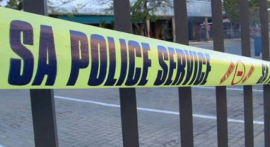
Gauteng MEC for Education, Panyaza Lesufi, has condemned the fatal shooting of the Buyani Primary School Principal in Finetown, Johannesburg, on Friday.
“We are extremely shocked and outraged at the news of the school shooting in Finetown this morning. Without even knowing the motive for this heartless act, we condemn the shooting of the principal of Buyani Primary and send our condolences to his family, friends and colleagues,” Lesufi said in statement.
Initial reports indicated that the deceased was shot dead on school premises this morning.
Lesufi has called on law enforcement agencies to pull all the stops to ensure the perpetrators are brought to book.
The MEC will visit the school.
“Our Psycho-Social Unit will also visit the school to provide all the necessary assistance to learners and educators,” he said.
Military health practitioners to assist Gauteng

Government has employed the help of the South African National Defence Force to fight the spread of COVID-19 in Gauteng, as the number of COVID-19 cases continues to peak.
“After a conversation with the President and the Minister of Defence and Military Veterans, we’ve requested additional capacity to assist Gauteng,” said Acting Health Minister, Mmamoloko Kubayi-Ngubane, on Friday.
Kubayi-Ngubane was updating media on the latest developments concerning the COVID-19 pandemic and the country’s vaccination rollout plan.
On Thursday, Gauteng recorded 7 502 new COVID-19 cases out of the 11 767 that were detected.
The Minister said government is concerned about the province, which is currently the country’s epicentre.
In the meantime, the Minister said military personnel will also be involved in mass community testing, screening and contact tracing, and lending a hand at hospitals.
She announced that the military health service will deployed in Gauteng from today.
“This will ensure that we can ease the burden of the healthcare workers in the province, where they are seriously under pressure,” said Kubayi-Ngubane.
In addition, she said the closure of Charlotte Maxeke Johannesburg Academic Hospital continues to put undue pressure on the already strained healthcare system.
However, the department is working around the clock to bring the hospital into full functionality after the fire that gutted the facility in April.
The department has since issued a circular requesting that non-critical and non-urgent surgeries be postponed to pay attention to COVID-19 patients, while the province has managed to increase bed capacity to 4 000 from 3 000.
The Minister said South Africa has since surpassed the two million mark in terms of the number of people who have been vaccinated.
“The higher the number of the people we’re able to vaccinate, the better we will manage the pandemic.”
She has since called on people to not lower their guard but adhere to strict non-pharmaceutical protocols.
Over 100 houses allocated to District Six claimants

Agriculture, Land Reform and Rural Development Minister, Thoko Didiza, has announced that 108 housing units has been allocated to District Six claimants as part of Phase three of the District Six Redevelopment Project.
In a statement issued on Thursday, Didiza said a total of 139 claimants, who were dispossessed, have received their new homes in previous phases.
“[On Friday] the Land Claims Commission will begin the administrative process of engaging with the 108 claimants who have been allocated dwellings. These claimants will be informed of the process and they will be able to view their allocated dwellings. They will also be given an opportunity to accept or reject the dwellings,” Didiza said.
Didiza announced that the process of returning to District Six for the 108 claimants will take place from 24 June to 16 July 2021.
The Minister noted that a portion of the returning claimants are the originally dispossessed individuals, who applied for special needs, where applications were assessed by an Independent Selection Panel, followed by an appeal process.
The criteria included people who were originally dispossessed, age, those with ill health status and the most impoverished.
“The Commission has received a total of 34 appeals and the process has been concluded. Other claimants to receive dwellings in this phase were selected from the official list in order of the date of lodgement. Since there are more than 1000 claimants who opted for dwellings, further redevelopment will be ensued,” the Minister explained.
The houses in Phase 3 include a mix of apartments and houses that have been built along the original street network of District Six.
The homes have a minimum of three bedrooms and are designed to cater for family units, and allow for future expansion, to add more space by the users, if required.
Didiza said this was done to encourage as many of the originally dispossessed families to return to District Six, and to protect against ‘gentrification’.
The residential units are supported with public spaces, paved streets, and roads with street lighting and parking.
The roads comprise a series of low traffic streets linking to adjacent access routes, parking areas doubling up as play courts, with a mix of surface treatments, including permeable paving.
“A new access route was constructed to link Hanover and Constitution Streets. Landscaping consists of trees and street furniture. The design has incorporated many of the original heritage elements of District Six to resonate with original character of this historic area,” Didiza said.
The Minister said the construction of the remaining units will be carried out in two major build to be completed in August 2024, where all remaining claimants will be accommodated.
SA logs 11 767 new COVID-19 cases, with 100 deaths

Gauteng has recorded 7 502 new COVID-19 cases out of the 11 767 that were detected in the last 24 hours.
According to the National Institute for Communicable Diseases (NICD), this represents a 22.6% positivity rate.
“The total number of cases today is lower than yesterday but higher than the average number of new cases per day over the seven preceding days. The positivity has increased from yesterday,” the NICD said on Thursday.
The majority of new infections are from Gauteng (64%), followed by the Western Cape (11%) and North West (6%).
Meanwhile, a further 100 COVID-19 related deaths have been reported, bringing the tally to 58 323.
In addition, the total number of laboratory-confirmed cases now stands at 1 786 079.
The information is based on the 12 383 955 tests of which 52 118 were conducted since the last reporting cycle.
The NICD said 1 974 more people were admitted to hospitals on Thursday, pushing the number of patients who are currently receiving treatment to 8 832.
According to the latest data, 1 974 099 people have been vaccinated.
Globally, as of 17 June 2021, there have been 176 693 988 confirmed cases of COVID-19, including 3 830 304 deaths, reported to the World Health Organisation.